Yes—used correctly, humor can absolutely help with test anxiety in med school. But it’s a tool, not a cure.
Let me cut past the fluffy wellness posters and tell you what actually works, what’s nonsense, and how to use humor without sabotaging your studying.
What Test Anxiety Really Is (And Why Med Students Get Crushed by It)
Test anxiety isn’t just “being nervous.” It’s a specific combo of:
- Physiological overactivation (heart racing, sweating, stomach doing Cirque du Soleil)
- Cognitive noise (catastrophic thoughts, blanking, “I’m going to fail and ruin my life”)
- Behavioral fallout (avoidance, procrastination, doom-scrolling UWorld stats instead of reviewing)
You’re in med school, so the stakes are artificially inflated on everything:
- Exams linked to scholarships, remediation, or even dismissal
- National boards (USMLE, COMLEX) that feel like they define your career before it starts
- A culture where everyone pretends they’re fine while quietly unraveling
So your brain learns: “Exams = threat.”
Threat → sympathetic surge → anxiety → performance drops → more threat.
Humor doesn’t magically remove the threat. But it can break that loop long enough for your prefrontal cortex to come back online.
How Humor Actually Helps Your Brain Under Stress
This isn’t just “laugh and feel better.” There’s real physiology and psych behind it.
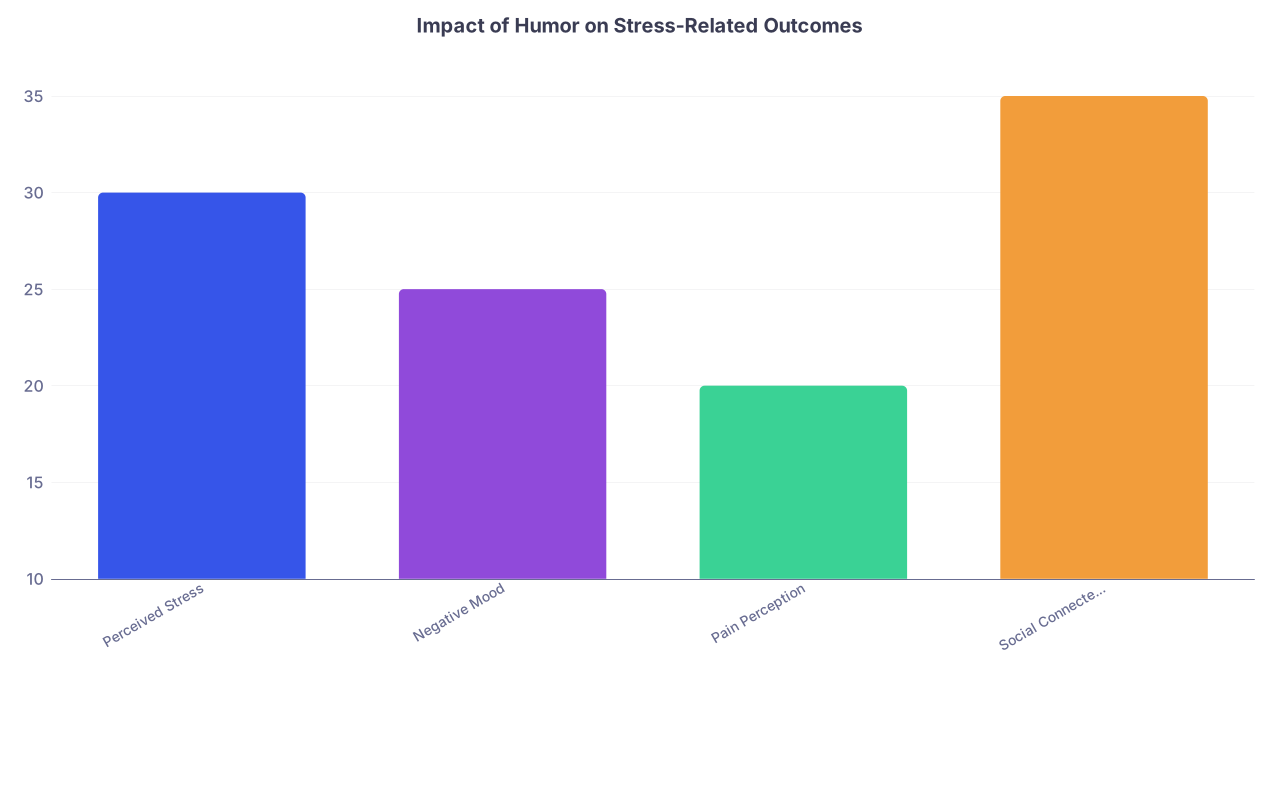
| Category | Value |
|---|---|
| Perceived Stress | 30 |
| Negative Mood | 25 |
| Pain Perception | 20 |
| Social Connectedness | 35 |
Humor can:
Turn down your stress response (a bit)
Laughter shifts you away from pure fight-or-flight. You won’t go from panic to zen monk, but you can downgrade from “fully on fire” to “manageable heat.” That’s often enough to recall information instead of staring blankly at a multiple-choice question.Interrupt catastrophic thinking
If your inner monologue is, “If I miss this test I’ll never match derm,” a well-placed joke reframes that spiral. Self-deprecating but reality-based humor can make the thoughts feel less absolute and more… ridiculous.Give you a sense of control
When you can joke about something, your brain interprets it as “maybe this isn’t 100% fatal.” That sense of agency is huge for anxiety.Build social connection
Shared laughter with classmates signals, “You’re not the only one terrified.” Social support is one of the most consistently protective factors against burnout and anxiety.Make brutal tasks slightly more tolerable
Binging Anki cards with a friend who keeps making Step question memes? You’re more likely to keep going, and consistency beats heroic, miserable cram sessions every time.
So yes, humor helps. But only if you use it strategically.
The Right Ways to Use Humor for Test Anxiety
Here’s the part you actually need: what to do.
1. Use “light” self-deprecating humor, not self-destruction
There’s a difference between:
- “If I miss one more nephron detail I’m transferring to art school.”
vs - “I’m so stupid I shouldn’t be allowed to touch a stethoscope.”
The first one: fine.
The second: you’re training your brain to believe that.
A good rule: Your jokes should make you feel lighter, not smaller.
Try lines like:
- “If I don’t pass this exam, at least my Plan B is stand-up comedy about failing this exam.”
- “I know 50% of cardiology; unfortunately the test is on the other 50%.”
You’re acknowledging the stress without declaring yourself doomed.
2. Pair humor with actual coping tools, not instead of them
If humor is your only strategy, you’re just distraction-wrapping a real problem.
Combine humor with:
- Solid study plan
- Sleep that isn’t a fantasy
- Some movement (walks, quick workouts)
- Basic CBT-style skills (challenging catastrophic thoughts, breathing, etc.)
Think of humor as a “booster,” not the engine.
3. Build micro-moments of humor into your study routine
Don’t wait until you’re in a pre-exam meltdown. Bake humor into the process.
Examples that actually work for med students:
Ridiculous mnemonics
The more absurd, the better. The weirder the mental image, the stronger the memory. GI bugs as Pokémon. Cytokines as dysfunctional roommates. Whatever sticks.Question review with a friend who has a dark sense of humor
You go over missed questions and turn each mistake into a (slightly) funny “case report”:
“24-year-old student with acute inability to read the actual stem question, likely due to chronic hubris…”Humorous timers or breaks
50 min study, 10 min break where you watch one absurdly funny short video. Not a 90-minute YouTube spiral. One.Make your own “roast deck”
An Anki tag where the extra field includes your own sarcastic note to your future self:
“Yes, you missed this again. Yes, it’s still hyponatremia. No, it’s not that complicated.”
4. Use humor during the exam without derailing yourself
You actually can use humor in the middle of a test without looking unhinged.
Concrete tactics:
When you see a ridiculously long stem, mentally say:
“Ah yes, a novella with four useless lab values and one relevant clue. Classic.”
Then hunt the one clue. The joke keeps you from immediately panicking.When you blank on a detail:
“Of course they asked this obscure enzyme. USMLE writers really said: therapy is too accessible these days.”
Then you calmly eliminate choices instead of freezing.
You’re not trying to be funny to others; you’re using humor to stop your brain from going full disaster mode.
5. Use shared humor to lower the group temperature
Your classmates are probably as anxious as you are. Most just don’t admit it.
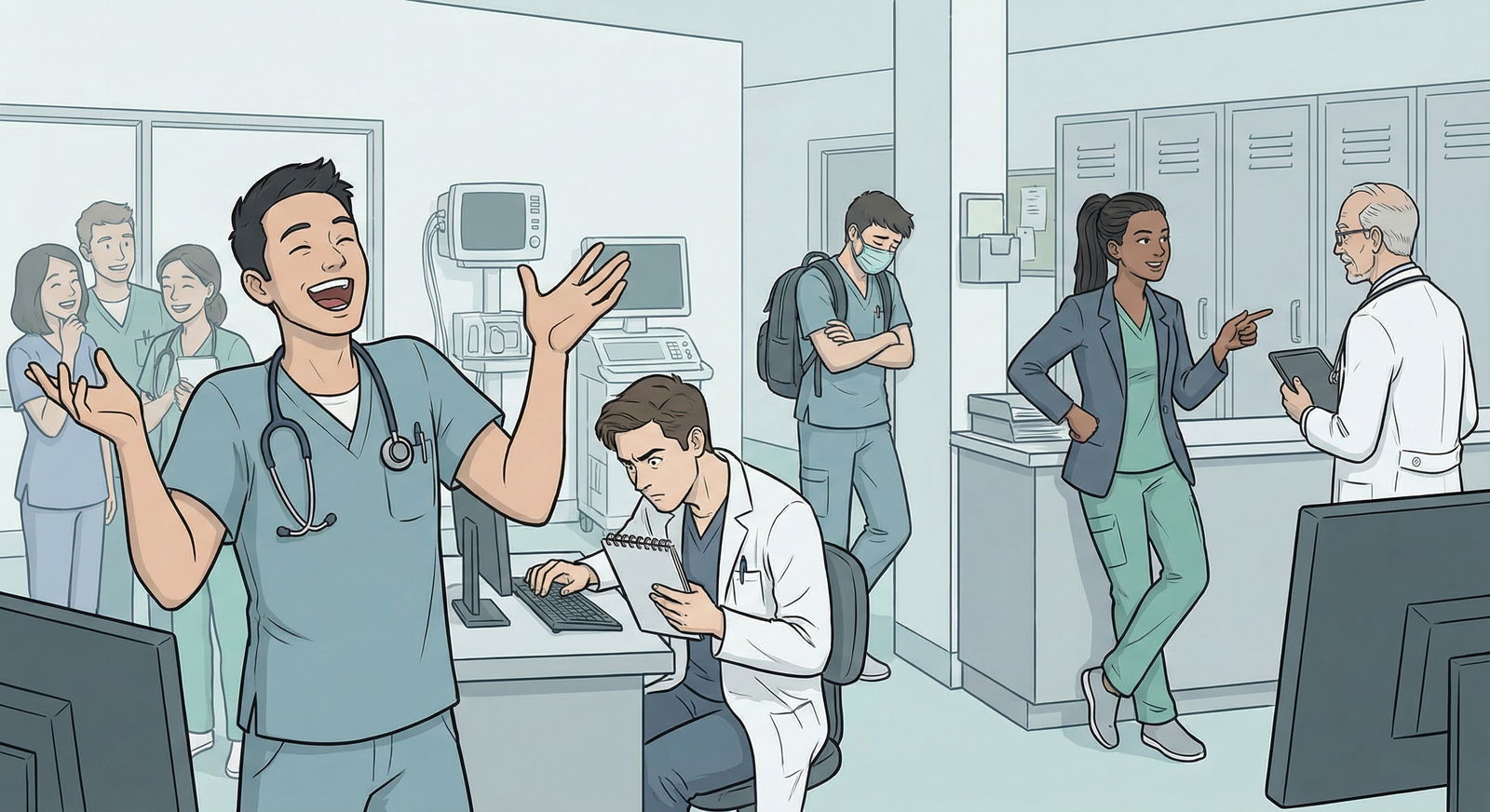
Things that help the whole group:
Group chat where memes are only posted after certain study milestones
(“Finish 40 questions, unlock 3 memes.” Gamify it.)Study groups that allow 2–3 minutes of joking at the start, then serious work
Laughter → reset → focus.Post-exam decompression where you laugh about the absurd stuff
“Did anyone else see that question that read like a bad fanfic between parathyroid hormone and vitamin D?”
The rule: Humor should reduce shame and isolation, not feed a competition spiral.
Where Humor Backfires (And You Need to Be Honest With Yourself)
Humor isn’t always helpful. Sometimes it’s straight-up avoidance dressed as personality.
Here’s where it goes wrong:
1. Constant self-roasting instead of self-respect
If most of your jokes are about how you’re incompetent, stupid, or hopeless, that’s not humor. That’s rehearsed self-hatred.
You will eventually believe what you repeat.
If your friends always respond with awkward silence instead of laughing, that’s a red flag.
2. Joking as an excuse not to take anxiety seriously
“I’m so anxious haha I just won’t sleep and live on coffee and vibes.”
No. Chronic test anxiety is not a meme. It’s a treatable issue. If you’re throwing up before exams, can’t eat, or are constantly on edge, you don’t need better jokes—you need proper support.
3. Dark humor that crosses into hostility
Punchline test: who’s the target?
- Anxiety, the exam, the absurd medical system → usually fine.
- Specific classmates, patients, or yourself in a dehumanizing way → not fine.
Humor that chips away at empathy will wreck you later on the wards. I’ve watched residents regret the culture they normalized as students.
4. Using comedy to dismiss people who are struggling more than you
If a classmate says, “I’m really not okay about this exam,” and your only response is,
“Lol same,” and you move on, that’s not bonding. That’s avoidance.
You can say: “Same, I’ve been anxious too. What’s helped me a bit is joking about it, but also I started talking to counseling. Have you considered that?”
Humor + actual care.
A Simple Framework: “3F” Humor For Test Anxiety
If you want something structured, use this:

| Step | Description |
|---|---|
| Step 1 | Notice Anxiety Spike |
| Step 2 | Basic coping first - breathe, ground, step out |
| Step 3 | Apply 3F |
| Step 4 | Find - Spot something absurd or exaggerated |
| Step 5 | Flip - Turn thought into light, reality-based joke |
| Step 6 | Focus - Return to question or plan |
| Step 7 | Seek extra support if pattern repeats |
| Step 8 | Can I Function? |
Find
Catch the ridiculous part of the situation or your thought.
“Wow, my brain is treating this cardio quiz like a tiger attack.”
Flip
Turn it into a quick, light joke that doesn’t trash you as a person.
“Cool, if I fail this quiz, I guess I’ll just become the world’s most overqualified barista.”
Focus
Immediately return attention to what you were doing: the stem, the Anki card, the plan.
No doom spiral, no meme rabbit hole.
Do that enough times and your brain stops pairing “exam” with “impending existential collapse.”
What About Long-Term Effects? Does Humor Change Anything Big Picture?
There’s no giant RCT titled “Memes vs No Memes in USMLE Performance.” But related data from health professions and psychotherapy is pretty consistent:
- Humor improves perceived stress and mood
- It strengthens alliances (between therapist-patient, teacher-student, peers)
- It makes painful, repetitive tasks more sustainable
- It doesn’t fix underlying pathology by itself
So what’s the honest verdict?
Humor won’t:
- Replace actual studying
- Fix severe anxiety or panic disorder
- Make terrible exam policies fair
- Turn a 190 into a 270 purely by vibes
But humor can:
- Help you show up consistently to the work
- Keep anxiety from spiking into full shutdown
- Make you feel less alone and less broken
- Give you some control in a system that often feels dehumanizing
That’s not trivial. That’s the difference between barely hanging on and being able to push through a brutal year without snapping.
A Quick Reality Check: When You Need More Than Humor
If you see any of this, stop trying to “joke your way through it” and get real support:
| Sign | What It Suggests |
|---|---|
| Panic attacks before/during exams | Possible panic disorder |
| Persistent insomnia for weeks | Significant anxiety/burnout |
| Nausea, vomiting, or fainting | Severe performance anxiety |
| Skipping exams or rotations | Avoidance reaching impairment |
| Thoughts of self-harm or hopelessness | Emergency mental health need |
That’s not weak. That’s you being a clinician about your own brain.
Most med schools have:
- Free or low-cost counseling
- Confidential mental health services
- Disability/accommodations offices that can adjust testing conditions
Use them. You’d refer a patient. Be at least that kind to yourself.
Pulling It Together: How to Start Using Humor Today
If you want a concrete starting point, here’s a simple 3-step plan:
Modify your inner commentary
Next time you feel the anxiety rise while studying, pause and rewrite the thought as a brief, slightly funny, but still respectful line. Nothing vicious. Just enough to take the edge off.Add one small humor ritual to your study routine
For example:- Every 25 cards, you get to look at one med meme
- You add one absurd mnemonic a day for something you keep missing
Share one honest, funny-but-true line with a classmate
Something that says, “This is hard, I’m stressed, but I’m still here.” That’s the line you walk with good humor: honest about the pain, but not consumed by it.
FAQ: Humor and Test Anxiety in Med School
1. Can humor actually improve my test scores, or just make me feel better?
Indirectly, it can improve scores by keeping your anxiety below “brain freeze” level and making consistent studying more tolerable. It’s not magic, but if humor keeps you from burning out, blanking, or avoiding practice questions, your performance benefits.
2. Is dark humor okay for coping with med school stress?
Up to a point. Dark humor about the system or your own stress is common in medicine. But when it becomes demeaning toward patients, specific peers, or yourself, it starts eroding empathy and self-respect. Use this filter: if it would horrify you to see it screen-shotted on a projector in grand rounds, maybe not.
3. What if my classmates don’t share my sense of humor?
Fine. You don’t need everyone to find the same things funny. Use humor privately (inner monologue, personal mnemonics, memes you don’t blast in the class GroupMe) or with the 1–2 people who get you. Humor is a tool; it doesn’t have to be a group project.
4. How do I know if I’m using humor as avoidance?
If joking always replaces studying, talking about your anxiety, or seeking help, that’s avoidance. If you notice, “I make jokes and then still do the work,” you’re probably using humor in a healthy way. If you make jokes and then doom-scroll instead of reviewing, that’s a problem.
5. Are there specific types of humor that work best for test anxiety?
Playful, self-aware, and slightly absurd humor works best. Think: exaggerating the situation, poking fun at the exam format, or using silly mnemonics. Harsh self-insults, sarcasm aimed at vulnerable people, or constant nihilistic jokes about life being pointless tend to make anxiety worse long term.
6. What’s one thing I can do today to test whether humor helps me?
During your very next study block, pick one high-stress moment—maybe a missed question or a confusing explanation. Notice your first anxious thought, rewrite it as a light, slightly funny line, say it to yourself, then immediately refocus on the task. Do that three times today and see if your overall tension drops even a bit.
Open your question bank or Anki deck right now and add one absurd, funny-but-memorable note to a card you keep missing. That’s your first rep of using humor as a real study tool—not just a distraction.