
Most “medical humor” people post publicly is a disciplinary complaint waiting to happen.
Let me be blunt: if you’re asking “how much medical humor is safe to post on public social media?” the safe zone is dramatically smaller than you think. Not because people are humorless, but because patients, licensing boards, HR, and program directors don’t care that “it was just a joke” once it crosses certain lines.
I’ll walk you through exactly what’s usually OK, what’s flat-out dangerous, and how to stay funny without nuking your career.
The One-Sentence Rule That Will Save Your License
Here’s the simplest framework:
If there’s any chance a reasonable patient could feel mocked, exposed, or unsafe because of your post, it does not belong on public social media.
Doesn’t matter if:
- You changed the age and gender
- You didn’t list the diagnosis
- “Everyone does it” on MedTwitter or TikTok
If the vibe is “laughing at patients / coworkers / specific situations with real people,” you’re in the danger zone.
What’s almost always safe:
- Jokes about yourself (your fatigue, your screwups, your impostor syndrome)
- Jokes about the system (EMR clicks, insurance, bureaucracy)
- Broad, de‑identified experiences that cannot possibly be linked to a real person
What’s almost never safe:
- Jokes about specific patients, visits, or shifts
- Anything that could be interpreted as mocking a clinical complaint, demographic group, or mental health condition
- Videos/images in clinical spaces with people or identifiers in the background
That’s the backbone. Now let’s get into detail.
What Types of Medical Humor Are Generally Safe?
We’ll start with what you can do. Because you don’t have to be boring.
1. Self-deprecating humor
Mock yourself, not your patients.
Safe examples:
- “My brain at 3 am: You should really double-check that potassium. My body: You should really become an accountant.”
- Meme of a skeleton labeled “me waiting for the EMR to load.”
Why this is safe: The target is you or your profession’s experience, not a vulnerable person.
Bad version of the same thing:
“Me when a frequent flyer shows up for the 4th time this week” with an eye-roll GIF.
Now you’re mocking a specific patient category. Different story.
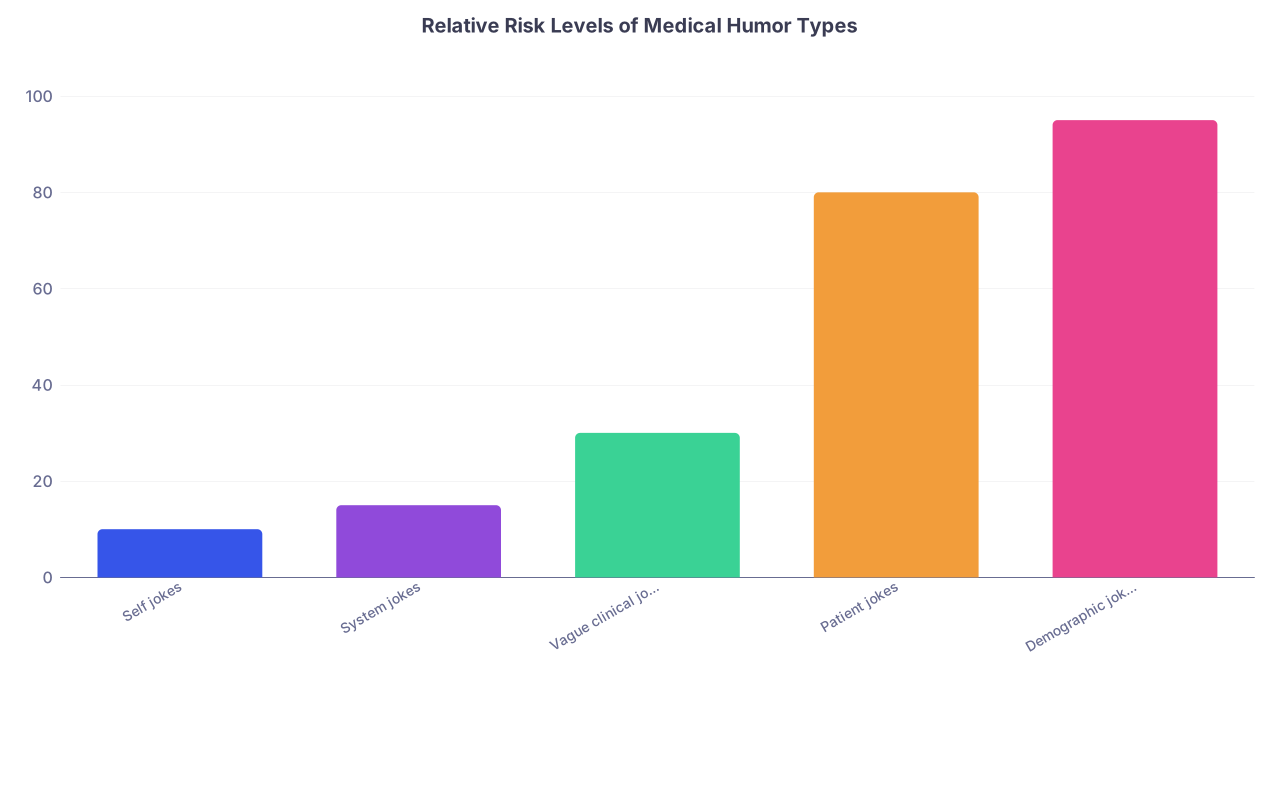
| Category | Value |
|---|---|
| Self jokes | 10 |
| System jokes | 15 |
| Vague clinical jokes | 30 |
| Patient jokes | 80 |
| Demographic jokes | 95 |
(Think of those numbers as “risk points,” not percentages.)
2. System/administration jokes
Safe territory as long as you don’t violate institutional social media policies.
Examples:
- “I went into medicine to help people. Instead I help check boxes.”
- Meme: Split screen—left “Ideal day in clinic” (doctor talking to patient), right “Actual day” (doctor drowning in prior auth forms).
This kind of content rarely gets you in trouble with patients. The risk is mainly institutional if you’re directly naming your hospital and dragging it nonstop.
3. Generalized, de-identified experiences
Key words: generalized and non-specific.
OK example:
“Why does every night shift have one mystery abdominal pain that resolves the second labs come back normal?”
Not OK version:
“This 19-year-old last night with ‘10/10 pain’ scrolling TikTok in the hallway…”
Now you’re describing a real person, time frame, and potentially identifiable behavior.
A good test: if your coworkers could plausibly guess which patient/shift you’re talking about, it’s too specific.
What Will Get You in Real Trouble (Even If You Meant Well)
Here’s the part most people underestimate. Boards and employers care about perception and professionalism, not your intent or follower count.
1. Anything that even smells like PHI
HIPAA is not just “don’t post names.” It’s anything that could reasonably identify a patient.
Risky elements:
- Unusual diagnosis
- Specific time window (“last night’s trauma,” “New Year’s Eve psych case”)
- Distinctive demographics (“90-year-old ballerina,” “local politician”)
- Location details (“only neurosurgeon in town,” “rural ED 40 miles from anywhere”)
From case reviews I’ve seen, boards and hospitals have disciplined people for posts like:
- “The 23-year-old who came in with a broomstick where the sun don’t shine…”
- “CPR on a 6’8 linebacker at 2 am was not in my workout plan.”
No names. Still too specific. Still unprofessional.
2. Mocking or diminishing patients or conditions
The fastest way to complaints is making any group feel mocked or dismissed.
Red-flag categories:
- Substance use disorder
- Obesity
- Mental health crises
- “Frequent flyers”
- Underserved populations
A common excuse is “but I’m venting.” You can vent. With your colleagues, in private, off social media. Not on a public platform where your patient’s cousin might see your meme and recognize the scenario.

3. Filming or photographing in clinical spaces
This one is getting people burned a lot recently.
Risky behaviors:
- Filming TikToks in hallways, nurses’ stations, or patient rooms
- Photos with charts, computer screens, doors with room numbers, or body parts in the background
- “Dance videos” in uniform with active patient areas visible
Even if you think “no one is identifiable,” regulators and administrators are far less generous in their standards than you are.
Basic safe rule:
If you’re in scrubs or a white coat in a clinical building, assume it’s not OK to film content unless your institution explicitly allows it and you’ve locked down the area.
4. Dark humor about death, codes, trauma
Let me be clear: dark humor is common among clinicians. I’ve sat in call rooms where the jokes would annihilate a normal person. It’s a coping tool.
That does not translate to public platforms.
Things that are dynamite:
- Jokes about specific resuscitations or failed codes
- Posts like “the sound of ribs cracking during CPR is my morning coffee”
- Trauma bay humor, even if you think it’s vague
The public doesn’t see this as “coping.” They see it as cruel and dehumanizing. Complaints follow. Boards respond.
If you need that outlet, keep it in private spaces with trusted colleagues. Never in the public square.
The 5-Question Filter: Use This Before You Post Anything Funny
If you remember nothing else, use this checklist.
Before posting any medical humor on public social media, ask yourself:
Could any real patient think this might be about them?
If yes, don’t post.Does this make patients, families, or a vulnerable group the butt of the joke?
If yes, don’t post.Would I be comfortable with this post printed out and read aloud at a licensing board hearing with my name on it?
If no, don’t post.Would I be OK with my program director, department chair, or hospital CEO seeing this screenshot in tomorrow’s inbox?
If no, don’t post.Is there anything here that could be construed as violating confidentiality, mocking suffering, or undermining trust?
If yes, don’t post.
This isn’t paranoia. Complaints often come from:
- Other staff
- Ex‑coworkers
- Family members of patients
- Random followers who share it widely with “look how this doctor talks about patients”

| Step | Description |
|---|---|
| Step 1 | Think of medical joke |
| Step 2 | Do not post |
| Step 3 | Probably safe to post |
| Step 4 | Includes any patient detail? |
| Step 5 | Punchline about patients or groups? |
| Step 6 | Comfortable at board hearing? |
Public vs Private: Where to Put the Spicier Stuff
You don’t need to be “PG-rated forever.” You just need to know where to put what.
Think of three zones.
| Zone | Audience | Humor Intensity | Recommended Content Type |
|---|---|---|---|
| Public feeds | Anyone | Low | Self + system jokes |
| Semi-private | Closed groups | Medium | Vague clinical, coping humor |
| Private chats | 1:1 / small DM | High | Venting, dark humor (still smart) |
1. Public feeds (Twitter/X, TikTok, Instagram, public Facebook, YouTube)
Default: Very conservative.
Think:
- Your “professional persona”
- Would be quoted in news article
- Might be screenshotted without context
Stick to:
- Jokes at your own expense
- System frustrations
- Broadly relatable medical school/residency content that doesn’t describe real clinical events
2. Semi-private spaces (closed Facebook groups, private Discords, Slack, closed forums)
Slightly more leeway, but don’t be dumb. Screenshots travel.
You can be a bit more candid with:
- Generic clinical stories with time and details blurred beyond recognition
- Shared “we’ve all been there” moments about the job
But still avoid anything that looks like mocking real patients or revealing potentially identifying details. People have been outed and disciplined from “private groups” more times than I can count.
3. Truly private chats (Signal, WhatsApp, text threads with trusted friends)
This is where most real venting and dark humor should live. Even here, assume:
- Screenshots exist
- Friendships can end badly
- Legal discovery in extreme cases can pull old messages
So still don’t type the absolutely worst thing you’re thinking. Say it in a call. Or go for a walk with a friend. But if you’re going to push any boundaries, keep it here, not on TikTok.
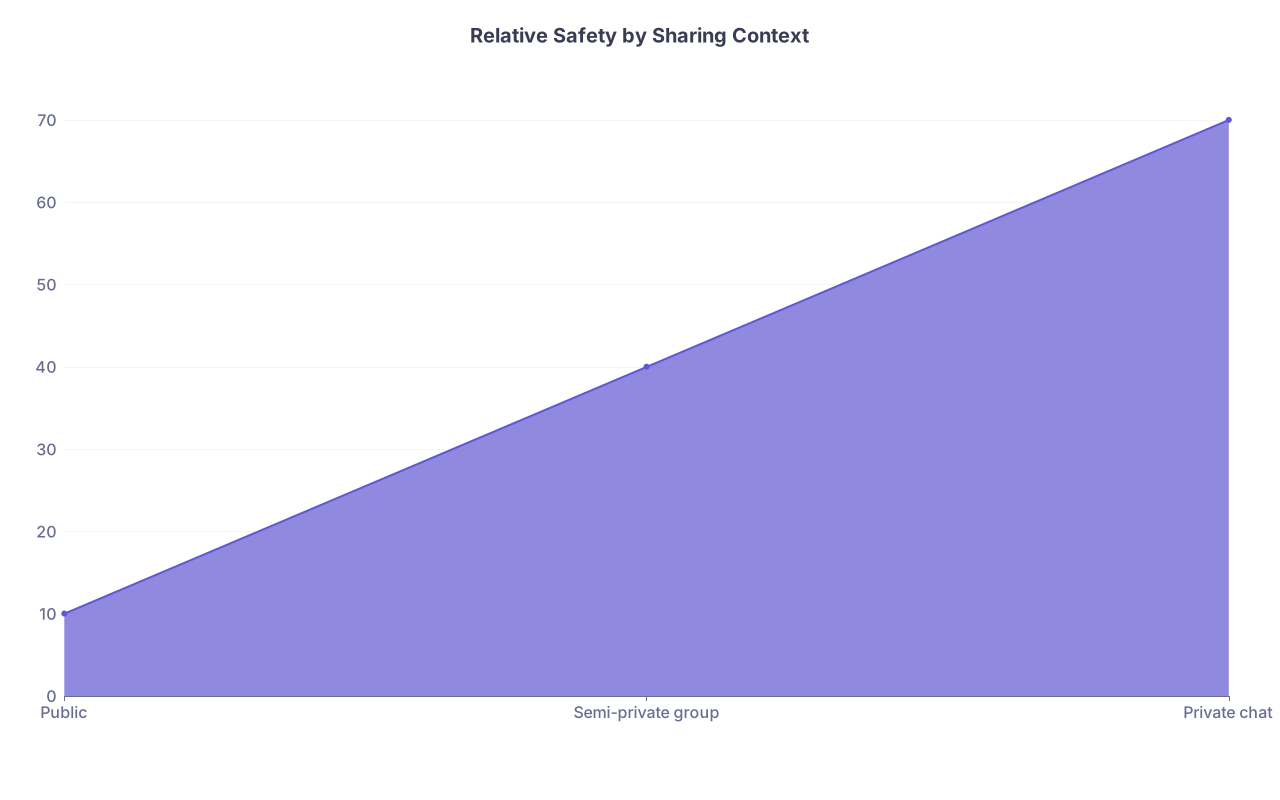
| Category | Value |
|---|---|
| Public | 10 |
| Semi-private group | 40 |
| Private chat | 70 |
Practical Posting Guidelines You Can Steal
Here’s a concrete framework you can use going forward.
Create a mental separation: “Clinician brain” vs “Content brain.”
Clinician brain: ethics, confidentiality, professionalism.
Content brain: humor, relatability, engagement.
Clinician brain always gets veto power.Avoid real-time posting about shifts.
“Last night in the ED…” is riskier than “Once, years ago…”
Time blurring is your friend. Specific time stamps aren’t.No screenshots of charts, messages, or internal systems.
Even “funny” EMR alerts or patient portal messages can be identifying.If you’re not sure, rewrite the joke so the subject is you.
Instead of: “Why do patients always Google their symptoms and argue with me?”
Try: “Me vs Dr. Google: 0–37 this week.”Know your institution’s social media policy.
Some are draconian. Some are weirdly chill. You need to know which you’re dealing with before you start your “med meme” account.
FAQs
1. Is it safe to post funny “de-identified” patient stories if I change age, gender, and details?
Not on public social media, no. “De-identified” is a legal standard, not “I changed a couple of things.” If anyone reasonably familiar with the case could recognize it, it’s not truly de-identified. For storytelling (books, blogs), you can get closer with heavy composite cases and significant time delay, but for day-to-day social media? Way too risky.
2. What about sharing funny things patients say, without any other details?
On a public feed, I’d still say avoid it. Context is everything. “A kid today told me my stethoscope looks like a snake” is probably harmless. “Patient today said they’d rather die than stop smoking” is not. The problem is once you normalize quoting patients for laughs, it’s easy to slip into mocking territory. Safer to keep “patient quotes” out of your public humor entirely.
3. Can I post videos in scrubs if I’m not showing patients or hallways?
Yes, with caveats. Filming at home or in a neutral, non-clinical setting while wearing scrubs or a white coat is usually fine. Filming at work—even in an “empty” room—carries risk if there are charts, logos, room numbers, or sounds in the background. Also, never film during patient care time. Boards and employers hate “you had time to make TikToks but not return calls.”
4. What if my account is anonymous?
Assume it’s not. “Anon” accounts are routinely unmasked by coworkers, exes, or online sleuths. All it takes is one local detail, one photo reflection, or one offhand comment. If your posts would be a problem with your name attached, anonymity is not a real shield.
5. I see other doctors posting edgy patient-related humor and they’re fine. Why should I hold back?
Because you’re not seeing the ones who got silently disciplined, warned, or fired. I’ve watched residents scramble after a “funny” post reached the dean’s office via a parent complaint. And you don’t know who has institutional backing, media training, or just hasn’t been reported yet. “Other people are doing it” is a terrible defense in front of a board.
Bottom line:
- Keep public medical humor focused on you and the system, not real patients or specific cases.
- If it might make a reasonable patient feel mocked or unsafe, it doesn’t belong on public platforms.
- Use public feeds for low-risk jokes, private chats for venting, and remember: screenshots last longer than your sense of humor about a disciplinary letter.