The blunt truth: Sharing memes in residency group chats can be totally professional—or career‑limiting—depending on how you do it.
Most programs run on WhatsApp/GroupMe/Slack now. Those chats are where call swaps happen, codes get debriefed, and yes, memes get dropped at 2 a.m. after a brutal cross-cover night. You’re not wrong to ask where the line is. I’ve seen people boost morale with a perfect night float meme. I’ve also seen people get quietly sidelined after one dumb, “jokey” screenshot.
Let’s sort this out like adults.
The Short Answer: Yes, if You Follow a Few Hard Rules
If you want the headline rule set, here it is:
You can share memes in residency group chats and still be perceived as professional if:
- The meme is G-rated or PG at worst
- It doesn’t target patients, specific colleagues, or attendings
- It’s not about protected characteristics (race, gender, sexuality, religion, disability, etc.)
- It wouldn’t make you sweat if your PD, the CMO, or the state board saw it
- It doesn’t violate HIPAA in any way (including indirect identifiers)
- It fits the purpose of that specific group chat
Miss on any of those and you’re not being “edgy.” You’re being reckless.
Know Your Audience: There Are Really Three Types of Chats
Most residents treat all chats the same. That’s the first mistake.
| Chat Type | Main Purpose | Meme Risk Level |
|---|---|---|
| Official Program | Admin & logistics | High |
| Team/Service | Daily work & updates | Medium |
| Close Friends | Emotional support | Lower |
1. Official Program Chat (PDs, chiefs, coordinators included)
Use this rule: This is an email with emojis.
Professional updates, schedule changes, wellness announcements. A very occasional tame meme is fine if it’s clearly in line with the culture (e.g., chief posts a PG-rated match meme, or a wellness reminder with a silly GIF).
Safe memes here:
- “It’s July 1, protect the patients” but done as a gentle, self-deprecating resident meme
- A generic “post-night shift zombie” meme that doesn’t mention patients or specific events
- Light specialty humor: pager going off again, endless EMR clicks, coffee dependency
Things that do not belong here:
- Anything you’d hesitate to say in a town hall
- Anything that pokes fun at specific staff groups (nurses, consultants, hospitalists, etc.)
- Dark jokes about death, codes, suicidality, substance use
- Screenshots of patient charts, notes, or messages—even if “de-identified”
If your PD or GME office ever screenshots a chat for documentation, this is the one. Treat it like discoverable communication—because it is.
2. Team/Service Chat (your current rotation, usually just residents + maybe fellows)
This is more casual but still semi-professional. This is where most memes fly—and where most problems start.
Ask three questions before you hit send:
- Is everyone here roughly at the same level (all residents), or are there attendings/fellows?
- Is this meme about our work or about our patients? (The second is much riskier.)
- How well do I actually know the least familiar person in this chat?
Good uses:
- “Post-call brain” memes on the last day of a brutal block
- Group-bonding memes about shared pain: prior auths, consult bounces, endless discharge summaries
- A funny reminder about something legit (e.g., med rec, sign-out, team photo)
Disastrous uses:
- Jokes about a specific patient’s condition, behavior, or outcome—even if not “identifiable”
- “Roasting” another service (cards, ortho, anesthesia) in a way that could be screenshotted and forwarded
- Anything involving substances, self-harm jokes, or reckless behavior (“clinic notes powered by wine”)
You might think, “But everyone here gets it.” No. You think everyone here gets you. You’re wrong about at least one person.
3. Close Friends Chat (your 3–5 “inner circle” co-residents)
This is where the really dark humor usually lives.
Here’s the part you won’t like: HIPAA and professionalism don’t stop here. The legal and ethical rules are identical, even if the social stakes feel lower.
Still forbidden:
- Any patient details: age + condition + time frame is enough to identify someone
- Unit nicknames for patients (e.g., “the SBO guy,” “frequent flyer in 402”)
- Photos from the hospital with people/equipment/monitors visible in the background
But yes, in practice, this is where:
- People drop “I’m dead” memes about consult piles
- Share PG-13-ish jokes about call schedules and fatigue
- Vent about institutional nonsense and EMR horror
You’re human. You’re burned out. Fine. Just remember: all it takes is one friendship blow-up and one “let me show you what they say in their doctor group chat” moment and you’re in front of a professionalism committee.
The Hidden Landmines: What Actually Gets People in Trouble
It’s almost never the meme that you post that burns you. It’s the second-order effect.
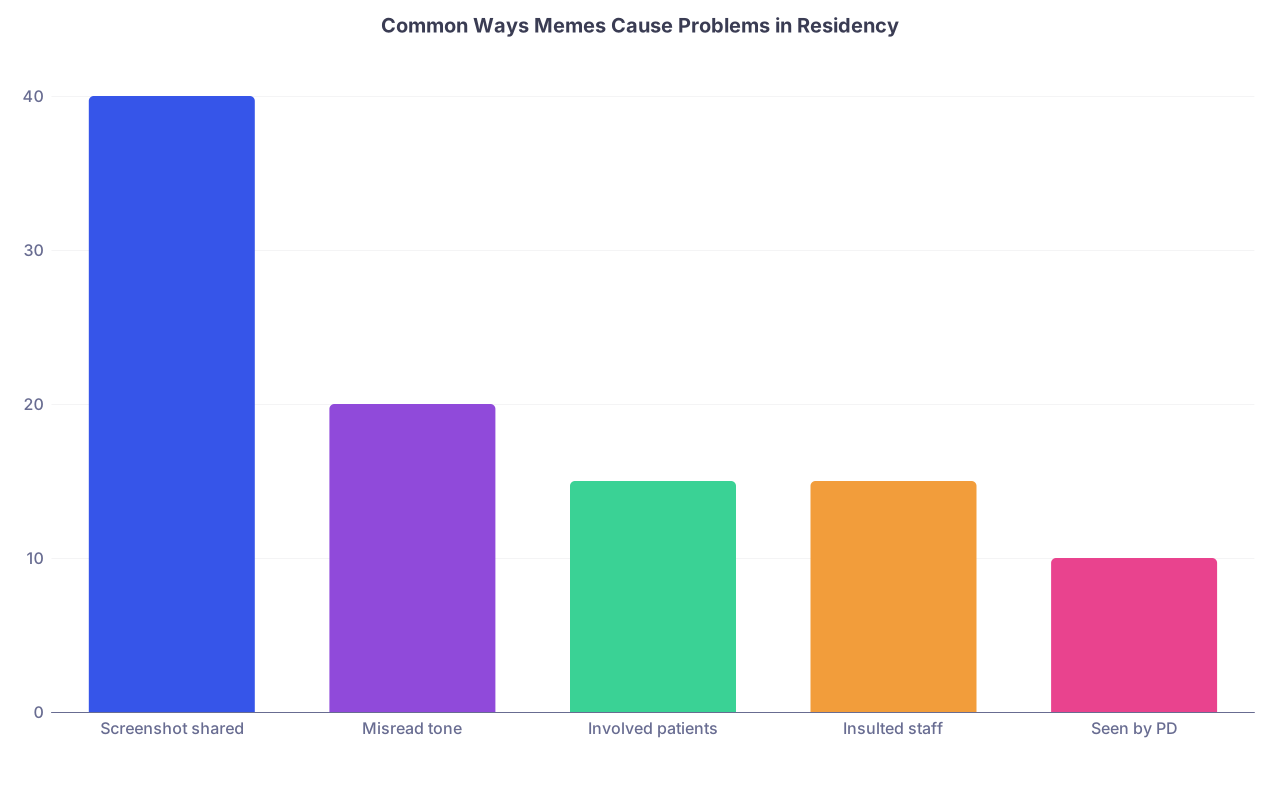
| Category | Value |
|---|---|
| Screenshot shared | 40 |
| Misread tone | 20 |
| Involved patients | 15 |
| Insulted staff | 15 |
| Seen by PD | 10 |
The usual failure modes:
Screenshots travel
Someone thinks your meme is hilarious, screenshots it, and sends it to a co-resident not in the group. That person forwards it to a friend on another service. Eventually it reaches someone who’s offended. Or someone in leadership. You have zero control once it leaves the chat.Context is lost
What felt like “clear sarcasm after a rough shift” becomes “evidence this resident doesn’t care about patients” when it’s shown without surrounding messages.You forget who’s in the group
That chat you started intern year with just four PGY-1s? The chiefs got added. Then the PD. You scroll halfway up and see your own R-rated meme from 18 months ago staring back at you. Too late.Someone in the group is privately struggling
Dark humor about burnout and suicide might be how you cope. For someone else, it goes straight to their program director as a concern. Or it hits too close to home.Unintentional biases surface
“It’s just a joke about the ‘non-compliant’ patient” looks very different when the patient’s demographics align with communities that have historically been harmed by medicine. That’s exactly how residents end up with professionalism write-ups.
What Is Usually Safe? A Practical Filter
You want a quick test? Use this three-level filter:
Content filter – Is the meme:
- Clean (no sexual content, slurs, or graphic stuff)?
- Free of specific patient or staff references?
- Not mocking a group of people (patients, nurses, consultants, administrators)?
Visibility filter – Would you be okay with:
- Your PD seeing it?
- Your name attached in a residency program email?
- It being shown during a hospital investigation?
Timing filter – Is now the right time?
- Not directly after a bad outcome or sentinel event
- Not during an ongoing investigation or complaint
- Not in the middle of a serious thread (e.g., a safety incident debrief)
If it passes all three, send it. If you’re hesitating, that hesitation is your answer.
Specialty Culture Does Not Protect You
Yes, some specialties lean heavier into dark humor.
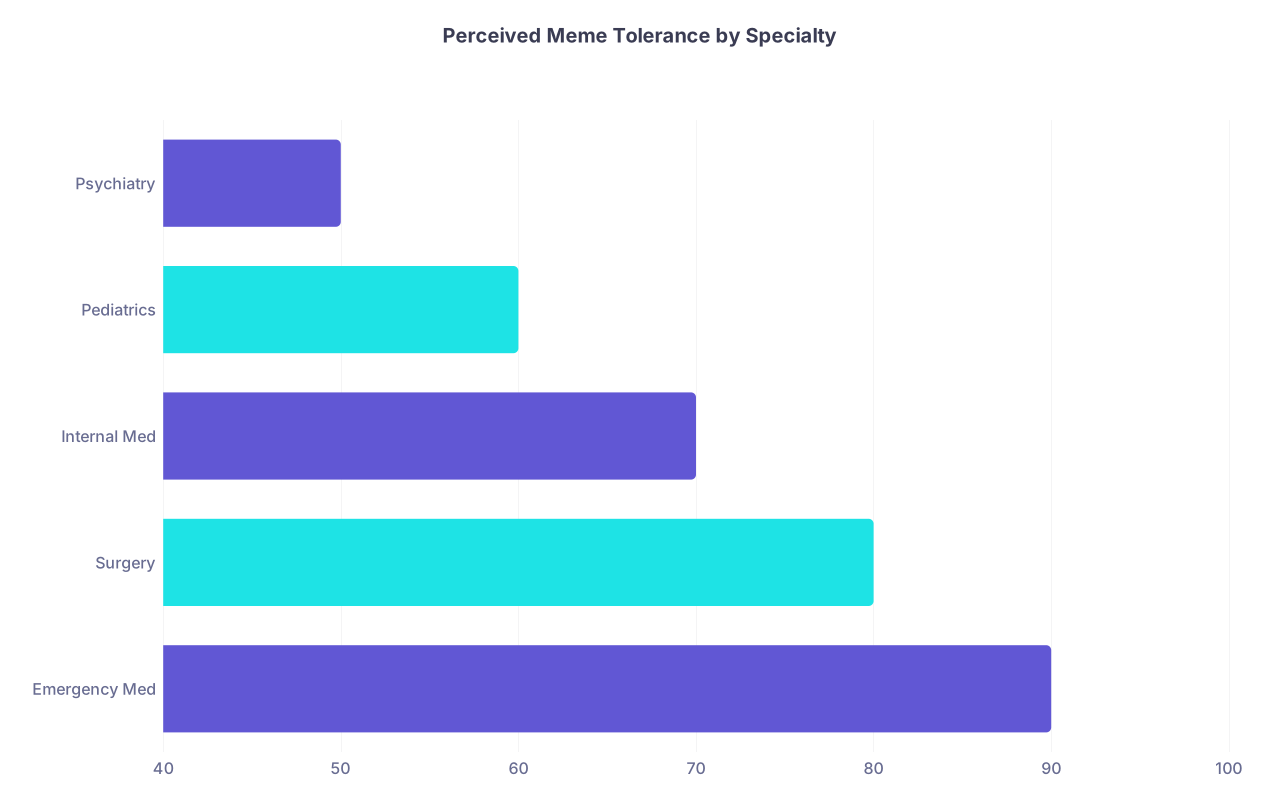
| Category | Value |
|---|---|
| Emergency Med | 90 |
| Surgery | 80 |
| Internal Med | 70 |
| Pediatrics | 60 |
| Psychiatry | 50 |
Emergency medicine, surgery, anesthesia—those chats can be savage. But don’t confuse cultural tone with formal protection. GME committees and state medical boards don’t care that “this is how it is in ortho.” They care about:
- Professionalism
- Patient respect
- HIPAA
- Institutional reputation
You can absolutely have specialty-flavored humor that’s still professional. “We intubate, we chill” is fine. A meme making fun of an actual intubation complication? No.
HIPAA and Screenshots: The Legal Stuff You Actually Need To Care About
You don’t have to be writing an H&P to trigger HIPAA. A meme in a chat can be a violation if:
- It contains any patient data, even if “de-identified” to you
- It references a specific case that’s locally recognizable (“the ECMO patient from last night,” “the drunk in bay 3”)
- It includes photos from a patient care area with monitors, wristbands, or faces visible
I’ve seen people get formal written warnings for:
- A “funny” screenshot of a MyChart message in a resident chat
- A photo from the ED with a patient stretcher blurred but the name still visible on the monitor
- A “de-identified” story that everyone on that service knew was Mr. X in 614B
If you want an easy rule: If the meme involves the actual hospital building, computer screens, or case details—don’t send it.
Building a Healthy Meme Culture in Your Program (Yes, Really)
You can actually use memes in a way that helps your program.

| Step | Description |
|---|---|
| Step 1 | Find a meme |
| Step 2 | Do not share |
| Step 3 | Share only in trusted small group |
| Step 4 | Save for different chat |
| Step 5 | Share in group |
| Step 6 | Contains patient or staff details |
| Step 7 | Ok for PD to see |
| Step 8 | Matches chat purpose |
Some programs even have:
- A designated “memes + wellness” channel/group separate from official comms
- Ground rules: no patients, no personal attacks, PG/PG-13 only
- Chiefs who lead by example—sharing safe, self-deprecating memes that normalize struggle without disrespect
You don’t have to become the meme police. But if you’re a senior or chief, you’re setting culture whether you like it or not. People will take your tone as the bar.
Red Line Examples: Just Don’t Do These
To make this concrete, here are scenarios that are flat-out unprofessional:
- “We almost lost that septic patient, lol medicine is wild” meme, posted the same day, in a group with interns and seniors
- A meme mocking an “annoying family” in the ICU, even if no identifiers are used
- Screenshotting an attending’s bizarre Epic note and roasting it in the resident chat
- Dark meme about “ODs keeping night float interesting”
- Meme implying one nurse or specific service is lazy/incompetent
- Any joke that uses a stereotype about patients (weight, language, insurance status, immigration, etc.)
If you see this happening regularly in your program, that’s not “bonding.” That’s a professionalism problem waiting to explode.
How to Course-Correct If You’ve Already Sent Something Questionable
You hit send. It didn’t land. Or you realized 10 minutes later it was dumb.
Do this:
- Own it quickly: “Reading that back, that was not cool. Sorry everyone.”
- If it involved a specific person or group, apologize directly too.
- Don’t justify. Don’t overexplain. Just show you get it and adjust.
Most people, including PDs and chiefs, care less about a single misstep and more about whether you show judgment and growth.
The Bottom Line
Memes aren’t unprofessional by default. Immaturity, cruelty, and HIPAA violations are.
If your meme:
- Respects patients and colleagues
- Keeps your program’s reputation intact
- Wouldn’t terrify you in front of a committee
…you’re fine. And honestly, a well-timed, harmless meme can be exactly what keeps a sleep-deprived team from falling apart.
If you want a simple action for today: scroll back through your main residency group chat. If there’s anything you’ve posted that would make your stomach drop if your PD highlighted it in a meeting…screenshot it for yourself as a reminder, and fix your filter going forward.