32% of residency program directors say an applicant’s online presence has helped them, not hurt them.
That’s from the 2023 AAMC data on how programs use social media and internet searches in residency selection. The narrative you usually hear is the opposite: “One meme and your career is over.” That’s not what the numbers—and actual PD behavior—show.
Let’s pull this apart like an over-interpreted p-value.
What Programs Actually Do With Your Online Presence
First, the hard data.
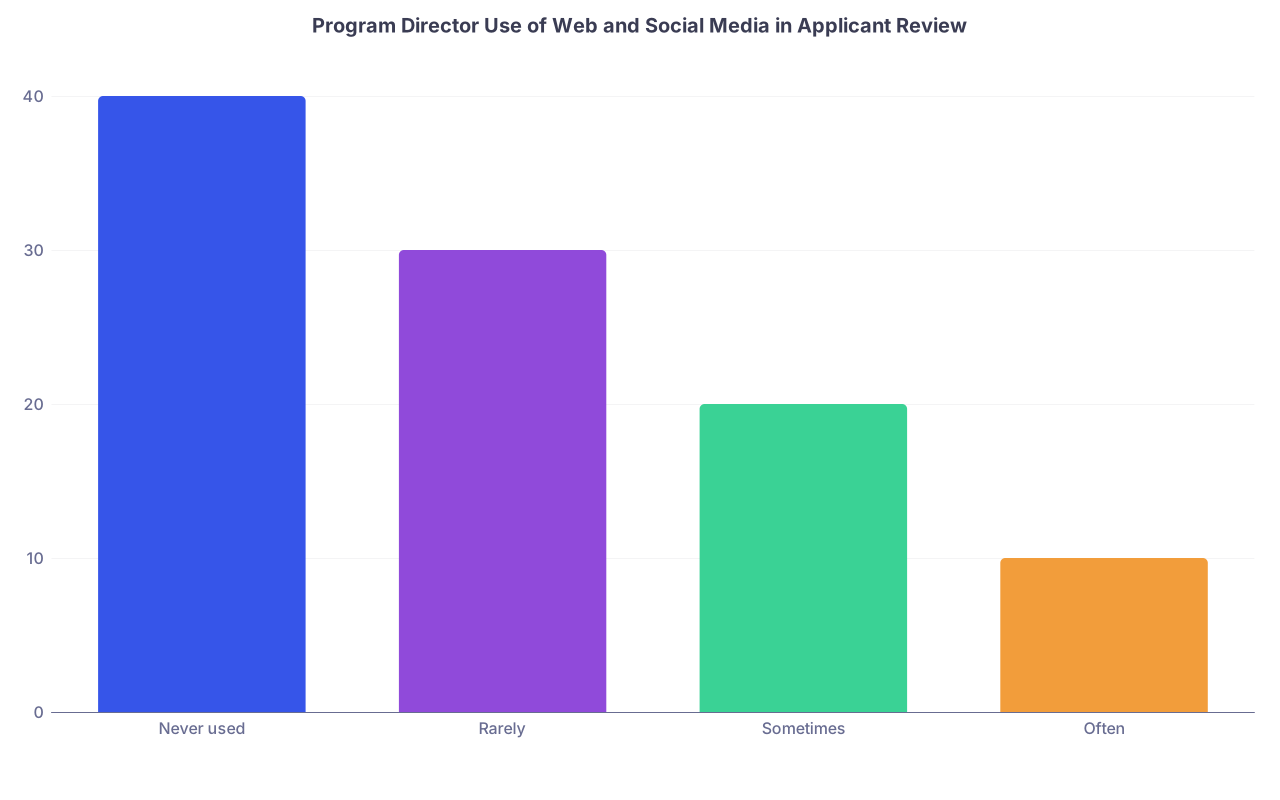
The AAMC and NRMP have repeatedly surveyed program directors (PDs) about social media and online searches. The headline isn’t “PDs stalk every Instagram story.” It’s closer to: “PDs are busy and only care when there’s a problem—or a big positive.”
| Category | Value |
|---|---|
| Never used | 40 |
| Rarely | 30 |
| Sometimes | 20 |
| Often | 10 |
Roughly (numbers vary by specialty and year, but the pattern holds):
- Around 40% of PDs report they never use web/social media in evaluating applicants.
- Another big chunk use it “rarely” or only when they already have concerns.
- A minority report “sometimes” or “often” looking applicants up.
And crucially: among those who do look:
- Most report it either confirms what they already thought or is irrelevant.
- A non-trivial group say it has helped applicants stand out positively—especially for professionalism, advocacy, or teaching content.
So where do memes fit into this?
They don’t show up in the survey as “memes,” obviously. What PDs consistently flag are:
- Unprofessional behavior
- Patient privacy violations
- Illegal or clearly unethical activity
- Bigotry, harassment, or discriminatory content
“Had memes on Instagram” is not a category.
The myth is: any humor online is risky.
The reality: context and pattern matter far more than format.
The Meme Panic: Why Everyone Is Overreacting
You’ve probably heard some version of this:
“A PD saw a single joke tweet and blacklisted the student.”
I’ve sat in actual selection meetings. That’s not how it goes. What happens instead:
Someone on the committee:
“Hey, did anyone see this applicant’s TikTok? There’s some…interesting stuff.”
Then one of three things:
- Everyone’s already unimpressed → social media is just another reason to move on.
- Everyone loves the applicant → they either ignore it or someone asks the applicant about it directly.
- Applicant is borderline → social media behavior might tilt things slightly one way or another, but rarely in isolation.
The problem is that med students hear terrifying one-off anecdotes, strip them of all nuance, and then create a blanket rule:
“No memes. No personality. LinkedIn or death.”
That’s not “professional.” That’s just fear-driven and wrong.
What PDs Actually Hate (Hint: It’s Not Jokes)
Let me be blunt: most PDs don’t care that you posted a meme about pre-rounding at 4:30 am.
They do care about patterns that suggest:
- You have poor judgment
- You don’t understand boundaries
- You’re likely to create headaches for the program, the hospital, or the PR office
A few concrete examples I’ve seen brought up as real problems:
- A student posting a bloody trauma bay photo with patient-identifying details blurred “kind of, but not really.”
- A TikTok showing a patient in the background, even if “just a silhouette.”
- Repeated posts mocking specific attendings, nurses, or patient groups.
- Racist, sexist, or homophobic jokes—especially if they’re a pattern, not a one-off from high school.
That’s what actually gets flagged.
Now, contrast that with common medical memes:
- “CT surgery residents when you page them before 5 am” with a stock photo of a raging Godzilla.
- “My face when the attending says ‘This is a pimp-free zone’” with a reaction gif.
- Light self-deprecating humor about burnout, coffee, and call rooms.
PDs and faculty live in the same universe. They’ve seen (and shared) this stuff in their group chats. They’re not scandalized by a Kermit-sipping-tea meme about prior authorizations.
The line isn’t “no memes.” The line is: no content that calls your judgment or basic decency into question.
The Quiet Upside: Humor as a Signal, Not a Liability
Here’s the contrarian piece few people talk about: for the right programs, smart humor can actually help you.
I’ve heard PDs say variations of:
- “Her Twitter was actually impressive—funny but insightful. I got a sense of who she is.”
- “His Instagram reels explaining nephrotic vs nephritic with jokes? Our residents love that kind of teaching style.”
- “She runs a meme account but is very careful—no patient references, nothing punching down. Shows she gets boundaries.”
Humor, done well, signals:
- Emotional intelligence – you can read the room, understand what’s relatable, and still respect limits.
- Cultural fit – some programs explicitly value people who bring levity to a very dark job. (Ask any EM or ICU resident’s group chat.)
- Communication skills – being able to explain or highlight issues through humor is a teaching and advocacy tool.
There’s a reason some of the most respected physician voices on social media—think of prominent EM or IM docs—use memes and jokes all the time. They’re not “less professional” because of it. They just know where the line is.
Public vs Pseudonymous: Two Different Risk Profiles
Now let’s talk strategy, not superstition.
There’s a big difference between:
- Your named, easily searchable public profile (full name, institution, photo)
- A pseudonymous meme account that doesn’t obviously link to you
- Your private accounts locked to a small circle
Most students conflate all three and apply the same level of terror. That’s lazy risk assessment.
Here’s a clearer breakdown:
| Setup Type | Typical Risk | Main Concern |
|---|---|---|
| Real-name public profile | Medium | Judgment, optics, patterns |
| Pseudonymous meme account | Low–Medium | Doxxing, leaks, screenshots |
| Private locked account | Low | Friends screenshotting posts |
| No social media presence | Low | Lost opportunity to stand out |
You don’t have to quit the internet. You have to understand that screenshots exist, and that PDs are less worried about “does this person laugh at memes” and more worried about “will this person put my hospital on the front page of Reddit for the wrong reasons.”
If your main account has your full name, school, and “MS3 at [Institution]” in the bio, everything on there has to pass the “would I comfortably explain this joke to the PD in an interview?” test.
If you run a meme account under a non-identifiable handle, don’t reference your exact school/hospital/floor/attendings, and avoid anything that could be a HIPAA issue, your risk is dramatically lower. Not zero, but low.
Where People Actually Get Burned
Let me walk through the common real failure modes. Because it’s not “had an anesthesia meme page.”
1. Patient privacy and clinical content
This is the fastest way to go from “funny” to “unmatchable.”
- Posting a picture in the ED with a “blurred” patient that’s still recognizable.
- Sharing highly specific case details that could identify someone locally, especially rare cases.
- Joking about a specific patient population in a way that feels mocking rather than observational.
You think “no names, so it’s fine.” The lawyers and institutions do not agree.
2. Bigotry or punching down
I’ve seen committees screen-capture:
- Jokes about “drug-seeking” patients as if they’re subhuman.
- Mockery of obese patients, mental illness, or houseless patients.
- Edgy “dark humor” that is essentially just cruelty wearing a meme format.
That’s not “they can’t take a joke.” That’s programs saying: “We’re not putting someone like this in front of vulnerable patients and staff.”
3. Extreme unprofessional behavior
If your public TikTok is basically:
- Drunk/high content
- Open bragging about cheating, cutting corners, or gaming the system
- Content that shows flagrant disregard for policies
then yes, that can absolutely tank you. Not because it’s on TikTok, but because it proves poor judgment.
Notice: none of these are about “had a meme” or “liked a joke post.” They’re about who you’re showing yourself to be.
How PDs Think About “Professionalism” in 2026, Not 1996
There’s a lazy boomer take that “doctors shouldn’t be online at all.” That’s dying out. Slowly, but it is.
Most PDs under 55:
- Know memes exist
- Are on some combination of Twitter/X, Instagram, TikTok, or Reddit
- Understand that younger physicians use humor as a coping mechanism and as cultural commentary
They’re less concerned with “never joke publicly” and far more concerned with:
- Do you understand public vs private?
- Can you be critical of medicine without being reckless?
- Are you using humor to humanize the job or to demean people?
Many PDs actually like seeing applicants who can communicate like modern humans rather than sterile LinkedIn robots.

Practical Filters: Which Memes Are Fine, Which Are Dumb
Here’s a more useful framework than “memes are dangerous.”
Before you post anything on a public or easily linkable account, run it through these filters:
-
- Could any patient/person reasonably recognize themselves or their case?
- Is there any clinical image or environment where a patient is visible, even in the background?
Punching direction filter
- Are you joking up (systems, insurers, bureaucracy, abstract “medicine”), sideways (your own cohort), or down (patients, marginalized groups, specific non-physician staff)?
- Jokes punching down age badly. And quickly.
Screenshot filter
- If this screenshot was emailed to your PD, would you feel compelled to say, “That’s taken out of context…”?
- If your explanation starts with, “Well, among my friends we all know that…,” don’t post it.
Pattern filter
- One slightly edgy joke in a sea of reasonable content? Probably fine.
- A feed that’s 90% bitterness, contempt, and sneering at patients and colleagues? That’s a personality signal.
You don’t need a ban on memes. You need a ban on laziness and self-sabotage.
Using Humor Strategically Instead of Fearfully
If you want to keep your humor and not shoot yourself in the foot, here’s a smarter approach.
1. Make your “real-name” profile selectively human, not sterile
Show you’re a person, but a person with judgment:
- Occasional medical humor that’s general, not case-specific.
- Posts about studying, burnout, and life as a trainee that don’t expose real patients or colleagues.
- Thoughtful commentary with wit, not just rage.
For example: a meme about prior auth being a boss-level fight in the game of medicine? Fine.
A meme about “dumb noncompliant diabetics”? Terrible.
| Category | Value |
|---|---|
| Policy/system satire | 80 |
| Self-deprecating trainee humor | 75 |
| General medical memes | 70 |
| Jokes about patients | 20 |
| Bigoted or discriminatory jokes | 5 |
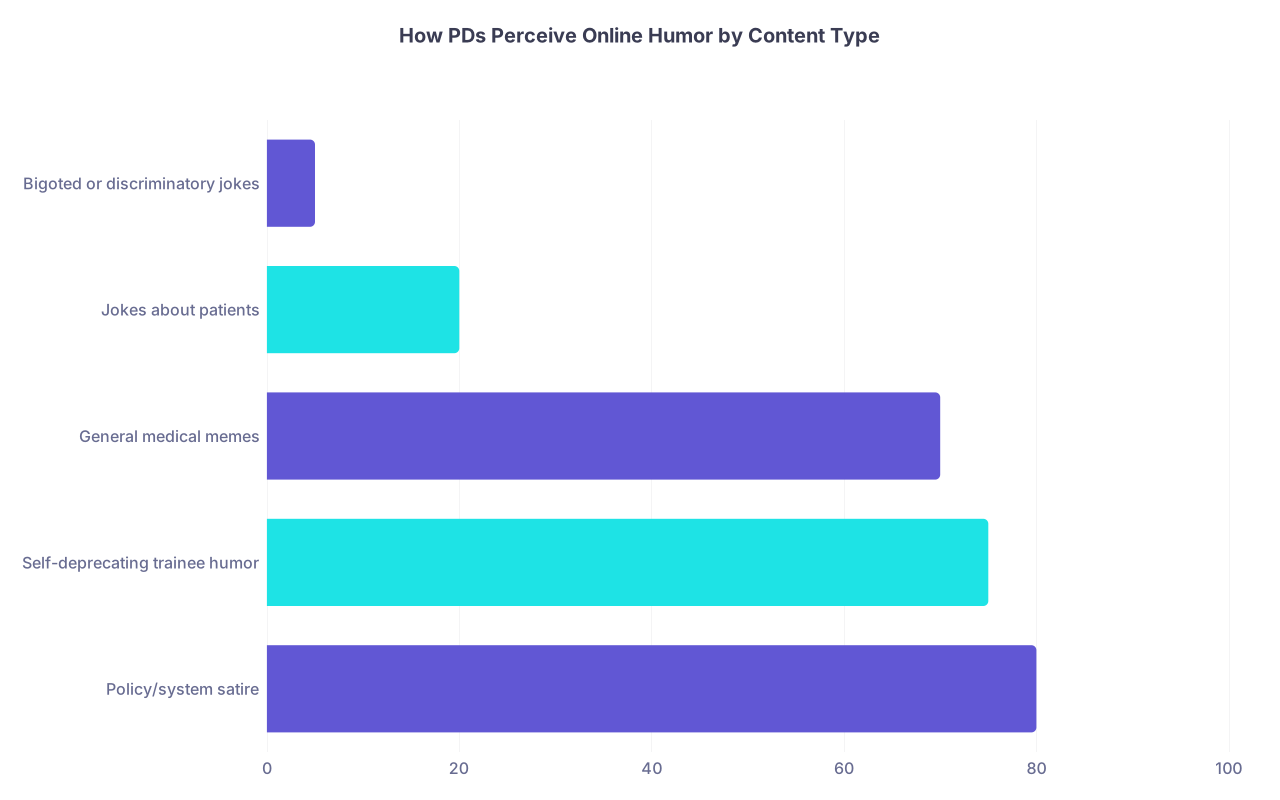
(Values indicate approximate percentage of PDs likely to view content as acceptable or neutral, based on survey trends and faculty interviews—not exact numbers, but representative of the hierarchy.)
2. If you run a meme account, treat it like a loaded weapon
- Lose any clear identifiers: institution name, exact city, year of training.
- Never post about a case close in time, and never with unique details.
- Assume at least one follower is a colleague who might screenshot you at some point.
Use it for culture, not gossip. For systems critique, not personal attacks.
3. Be ready to own it if asked
If your public account has memes and a PD brings it up, the worst answer is, “Oh, that’s just a stupid joke account, don’t look at that.”
A better answer sounds like:
“Yeah, I use humor a lot to deal with the stress of training. I’m very careful to avoid patient-related content or anything that crosses professional lines. I see it as a way to build community and talk about systemic issues in a way people actually pay attention to.”
Now your memes look intentional, not impulsive.
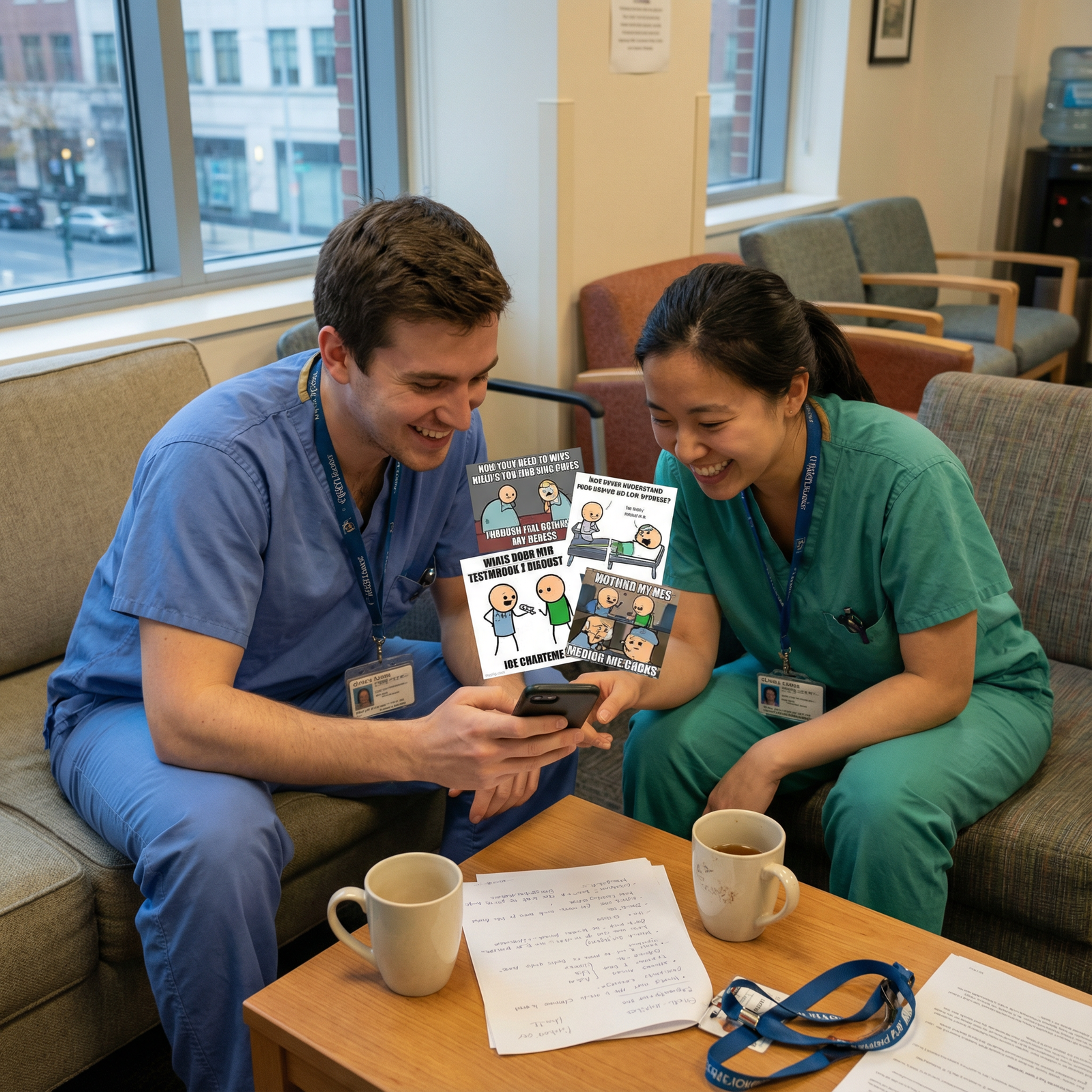
The Future: PDs Will Only Get More Online, Not Less
The direction of travel is obvious.
You are not entering a world where physicians are offline monks. You’re entering a world where:
- More attendings and PDs have Twitter/X, Instagram, and TikTok.
- Medical centers are investing in social media presence and branding.
- “Digital professionalism” is starting to mean how you use the internet, not whether you hide from it.
Done right, your online humor can be an asset:
- Show you’re not a robot.
- Demonstrate you understand the culture of modern medicine.
- Build a small audience that proves you can communicate with the public.
Done wrong, it brands you as reckless, cruel, or immature. But that’s about your character, not the meme format.

| Step | Description |
|---|---|
| Step 1 | Have meme idea |
| Step 2 | Do not post |
| Step 3 | Keep private or do not post |
| Step 4 | Post on public profile |
| Step 5 | Any patient or case details? |
| Step 6 | Punching down at patients or groups? |
| Step 7 | Comfortable if PD sees screenshot? |

The Nuanced Truth, Without the Fear-Mongering
Let’s strip this down.
- PDs don’t “hate memes”; they hate unprofessional judgment. The problem isn’t humor. It’s cruelty, HIPAA violations, and public stupidity.
- Smart, well-bounded humor can actually help you. It signals communication skills, cultural fluency, and humanity—if you keep patients and vulnerable groups off-limits.
- You don’t need to erase your personality. You need to assume screenshots are forever, and post like someone who plans to still be proud of their online self when they’re signing “Attending Physician” in ten years.