I’m Not Naturally Funny – Can I Still Bond with My Future Team?
What happens if you show up to residency and realize… you’re the least funny person on your team?
Because that’s what it feels like medicine is sometimes: one giant, rolling group chat of inside jokes, dark humor, and people who are “on” 24/7. The intern who has a one‑liner for everything. The attending who roasts themselves on rounds. The co‑resident who can turn a code brown into a comedy special.
And then there’s you. Quiet. Slow with comebacks. Your brain goes blank the second someone looks at you expecting a joke.
So here’s the fear: if you’re not naturally funny, are you just… doomed to be the awkward, forgettable one that no one really clicks with?
Let me say this very, very clearly: no. You are not doomed. But you are thinking about this in the way a lot of anxious applicants do—assuming everyone else in medicine is secretly a stand‑up comedian and you’re the only normal human.
Let’s tear that apart a bit.
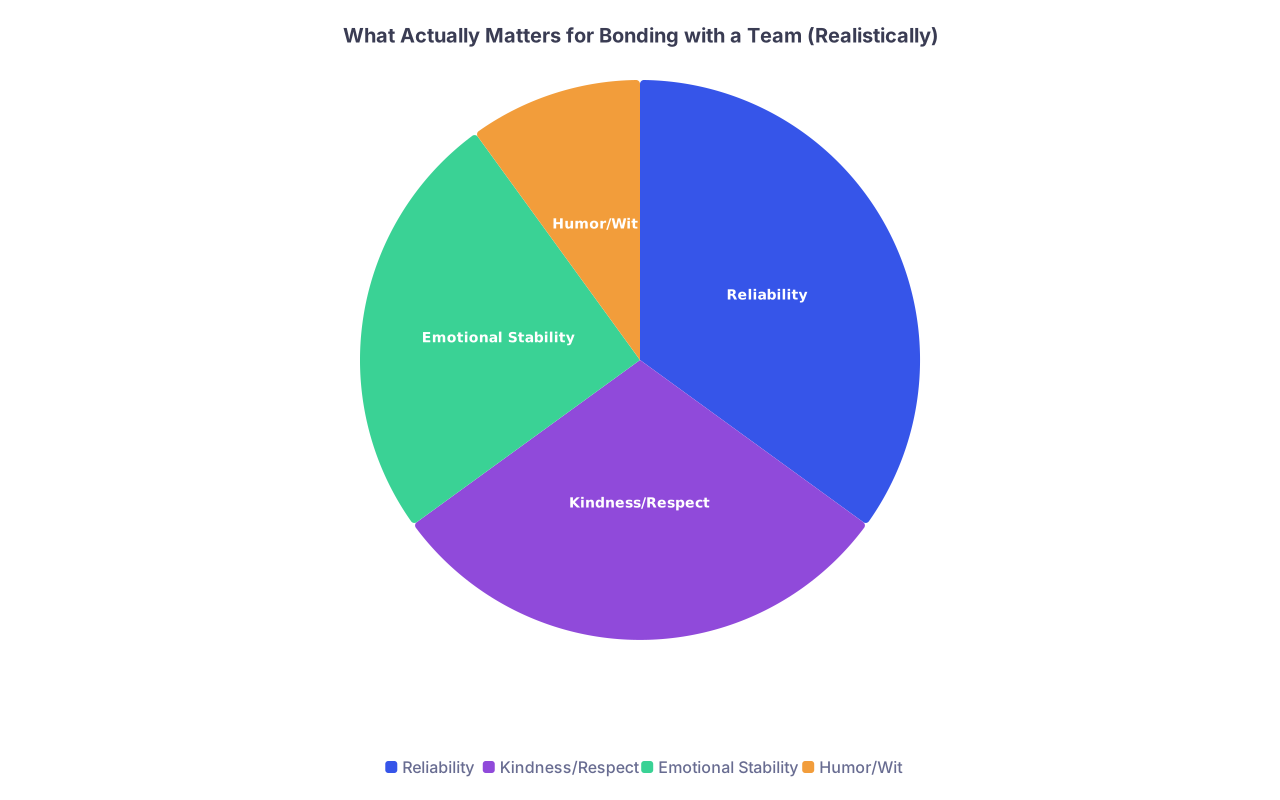
| Category | Value |
|---|---|
| Reliability | 35 |
| Kindness/Respect | 30 |
| Emotional Stability | 25 |
| Humor/Wit | 10 |
Myth: “If I’m Not Funny, No One Will Like Me”
This is the script I hear over and over:
- “All the residents on my sub‑I were hilarious. They were constantly roasting each other. I just smiled and laughed. I felt invisible.”
- “On my interview trail, everyone seemed… effortlessly witty. I said maybe three safe, boring things all day.”
- “What if my future team thinks I’m uptight or boring because I don’t crack jokes?”
You’re mixing up “being socially fluent” with “being a comedian.”
There are residents who are objectively not funny at all… and still deeply loved.
Think of the person on your rotation who:
- Always double‑checks orders for you
- Notices when you haven’t eaten and covers while you grab food
- Quietly cleans up after procedures, no announcement
Those people? Everyone wants them on their team. Nobody cares that they’re not dropping punchlines.
The dirty little secret: a lot of “funny” people in medicine are actually just:
- Loud
- Comfortable with teasing
- Less anxious about saying something dumb in public
That’s not better. It’s just different.
Your anxiety is telling you humor is the main currency. It’s not. The main currencies are:
- Safety (“Can I trust you to not throw me under the bus?”)
- Competence or at least effort (“Are you trying and improving?”)
- Emotional vibe (“Do I feel calmer or more stressed when you walk in?”)
Humor is like extra credit. Nice, but not required.

What Actually Bonds Teams (That Has Nothing to Do with Jokes)
You know what people remember at 3 a.m. on night float? Not who was funniest. Who showed up.
Let’s be blunt about the traits that really make people want you on their team long‑term:
You do what you say you’ll do
If you say you’ll follow up that lab, you actually follow it. If you say you’ll check on the patient’s pain control, you go back and do it. This sounds basic, but in the chaos of residency, it’s gold.You don’t make things harder emotionally
You don’t constantly complain during admits. You don’t snap at the nurse who pages. You don’t roll your eyes at the med student. People will forgive “not funny.” They won’t forgive “exhausting.”You’re safe to be around
People can be honest with you:
“I’m drowning.”
“I think I messed that up.”
“I have no idea what’s happening right now.”
If your vibe says, “You’re not going to laugh at me or spread this around,” that’s bonding.You’re willing to be a real human
You don’t need to perform humor. You can say:
“Yeah, that code shook me more than I expected.”
“I don’t know how people do this long term without burning out.”
Being emotionally real is a way deeper connector than being “the funny one.”
Humor is one tool. Connection is the goal. You’re allowed to meet the goal using different tools.
| Situation | Non-funny Way to Bond |
|---|---|
| Post-code debrief | Honest comment about what scared you |
| Long night shift | Offering to grab coffee or snacks |
| Awkward silence on rounds | Asking about weekend plans or hobbies |
| Tough patient family meeting | Quiet “You did a good job” afterward |
“But What If I Make Things Awkward When I Try to Be Funny?”
Yeah. That’s the other fear, right?
You finally work up the courage to join the banter, say something half‑baked, and then… dead silence. Or a polite smile. Or worse, someone misreads your attempt at sarcasm as mean.
So you stop trying and think, “Yep, confirmed. I’m just not funny.”
Let me be cruelly honest: forced humor is worse than no humor. People can feel when you’re trying too hard. And you can feel it, which just makes you more anxious and more robotic.
What you actually want is this:
- Comfortable, light presence
- Occasional small comments that show you’re there with the group
- A sense of timing that feels natural, not like you’re trying to audition for a Netflix special
So instead of “be funny,” switch the internal command to “be warm.”
Examples of low‑risk, non‑funny ways to join in:
- Someone tells a wild patient story (HIPAA safe, obviously). You don’t need a punchline. You can just say:
“That’s unreal. How did you not just walk out and quit?” - The team is laughing about how cold the hospital is. You:
“I swear they’re trying to preserve us like specimens.”
(Mild. Silly. Fine.) - Everyone’s complaining about overnight pages. You:
“The 3 a.m. Tylenol page lives rent free in my soul.”
None of this is genius. But it signals, “I’m sharing this moment with you,” and that’s enough.
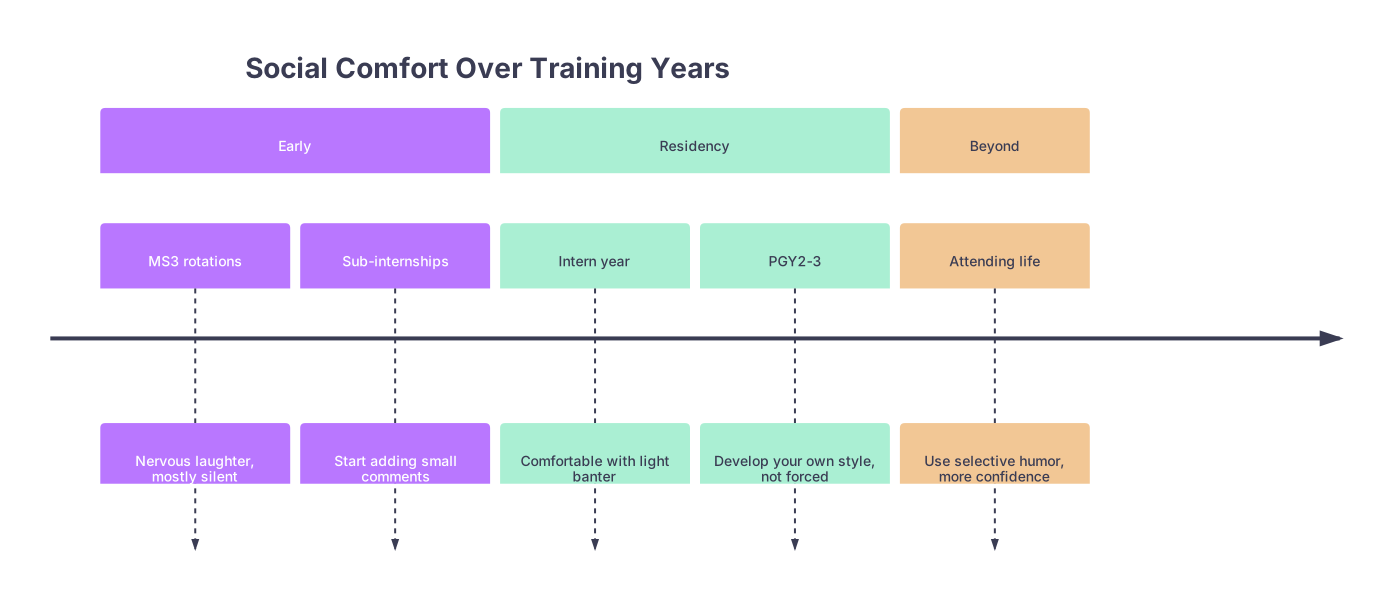
| Period | Event |
|---|---|
| Early - MS3 rotations | Nervous laughter, mostly silent |
| Early - Sub-internships | Start adding small comments |
| Residency - Intern year | Comfortable with light banter |
| Residency - PGY2-3 | Develop your own style, not forced |
| Beyond - Attending life | Use selective humor, more confidence |
You Actually Don’t Know Yet Who You’ll Be Socially in Residency
Another thing anxiety likes to pretend: your current social comfort level is permanent.
No. You haven’t even seen your “doctor version” fully yet.
Residency compresses and accelerates a lot of stuff, including:
- How fast you get close to people
- How quickly you collect shared experiences
- How many “we survived that together” moments you rack up
Those “I’m not funny” feelings you have now are based on:
- Brief interactions on interviews
- Rotations where you were basically a guest
- Environments where you were being evaluated constantly
That’s not the same as being embedded in a team for months, half‑delirious, eating stale crackers at 2 a.m. while writing notes. Over and over, I’ve watched very quiet, “unfunny” people:
- Loosen
- Develop a very specific, dry style
- Become the person others go to when they want a calm laugh, not a performance
You may never be the loudest voice in the room. You might always need to warm up before you joke. That’s fine.
You’ll still change. You’ll get more reps. You’ll get more comfortable. Your humor (or at least your lightness) will grow, even if it never looks like the extrovert’s version.
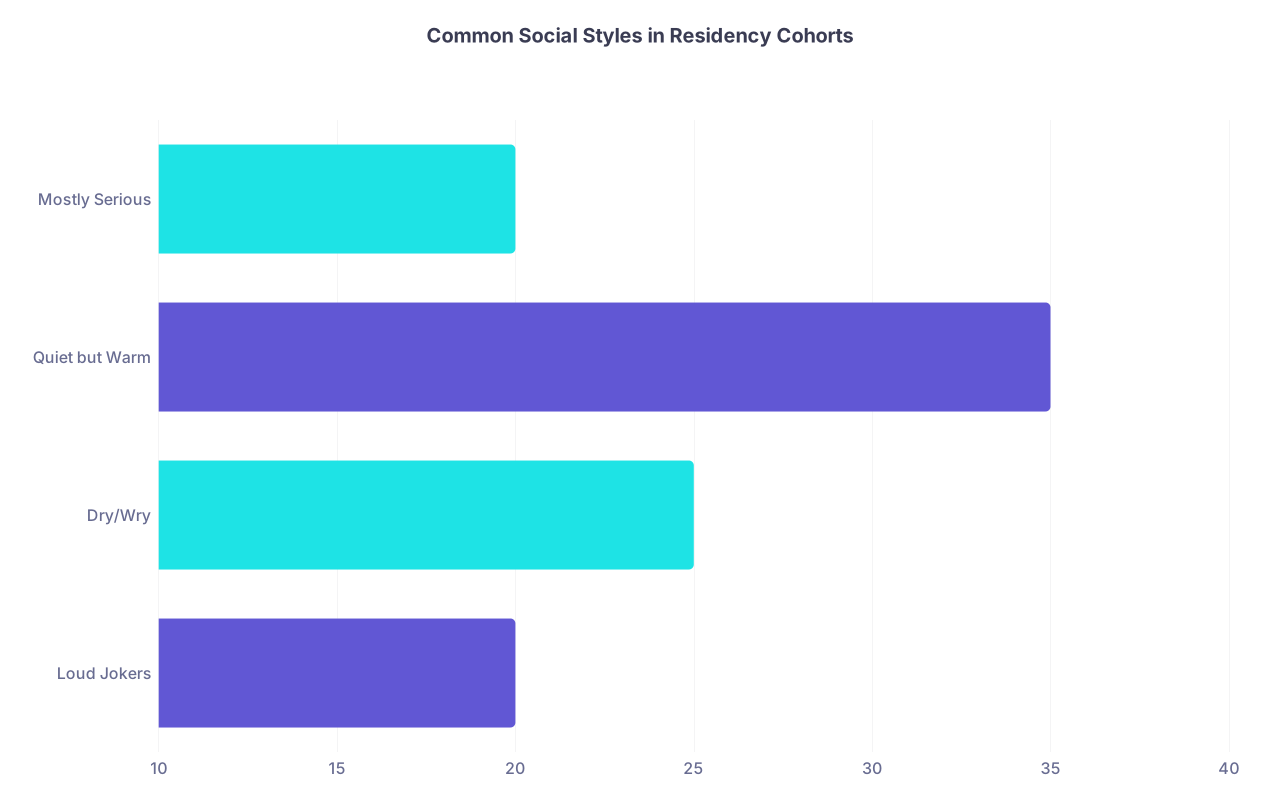
| Category | Value |
|---|---|
| Loud Jokers | 20 |
| Dry/Wry | 25 |
| Quiet but Warm | 35 |
| Mostly Serious | 20 |
Dark Humor, Boundaries, and “Do I Have to Joke About Everything?”
You’ve probably already seen it: the dark jokes about codes, the gallows humor about bad outcomes, the weird memes that would horrify non‑medical friends.
And maybe you’re thinking:
- “I don’t like that kind of humor. Does that mean I won’t fit in?”
- “What if they’re laughing and I just feel… gross?”
Here’s the reality:
You’re allowed to have a different line.
You don’t have to:
- Laugh at stuff that makes your stomach drop
- Make jokes about patients, death, trauma if that’s not you
- Prove how “unbothered” you are by horrors of the job
If someone says something dark and you feel off, you can respond in a neutral way:
- Small, noncommittal smile, then change the subject
- “Yeah… that case is going to stick with me for a while.”
- “I get why we joke, but man, that was rough.”
Honestly? A lot of people agree with you but think they have to play along. You might quietly be the one giving permission to be more human.
Humor is a coping mechanism. It’s not mandatory. You are not failing some “doctor test” if you don’t turn every trauma into a punchline.

How to Bond Without Being “The Funny One”
Let’s get practical. You want to feel less like a background character and more like a real member of the team. Without turning into someone you’re not.
Here’s what actually works:
Lean into curiosity, not comedy
People love talking about themselves more than they love hearing jokes. Ask:
“How did you end up in this specialty?”
“What’s been your favorite rotation so far?”
“If you weren’t in medicine, what do you think you’d be doing?”
You’d be shocked how many friendships start this way.Name shared misery in simple language
Not a joke. Just a shared observation:
“This is my third cup of coffee and I still feel like I’m underwater.”
“I didn’t know it was possible to be this tired and still form sentences.”
That’s bonding. You’re acknowledging the moment together.Offer micro‑kindnesses
- “I’m grabbing water—do you want one?”
- “I can print that for you while you finish your note.”
- “Do you want the computer closer to the patient so you can see the telemetry?”
No punchline. No spotlight. Massive relationship points.
Develop your version of lightness
Your style might be:- Dry
- Self‑deprecating (but not self‑destructive)
- Observational
- Silly and soft
You don’t have to be quick. You just have to be real.
Accept that sometimes you’ll be quiet
There will be days when you’re too tired, too overwhelmed, or the banter is just moving too fast. You know what? It’s okay. Being quietly present is still part of the team.

The People You Actually Want to Work With Long-Term
Here’s the underrated point: the residents and attendings who require you to be funny to accept you?
You don’t want those people as your core supports anyway.
The ones you want in your corner:
- Notice the work you do, not just the jokes you don’t make
- Appreciate your steadiness on bad days
- Don’t make your anxiety worse by expecting constant performance
You’re not auditioning to be the team clown. You’re auditioning to be the person they’re relieved to see on the schedule.
That role has room for:
- The quiet one
- The thoughtful one
- The “occasionally says one perfectly timed deadpan line and everyone loses it” one
You’re allowed to be that.
FAQ (Exactly What You’re Probably Still Worried About)
1. What if everyone in my program turns out to be super extroverted and I’m the only quiet, not‑funny one?
That will feel awful for a bit. I won’t sugarcoat that. But even in “extrovert‑heavy” programs, there are always a few quieter residents, and people naturally gravitate into sub‑groups. You don’t need to vibe with everyone. You just need a handful of people you feel okay around. And strangely, a lot of extroverts love having a calmer, more grounded friend who isn’t competing for the spotlight.
2. I use humor mostly in self‑deprecating ways. Is that bad in residency?
Some mild self‑deprecation is relatable. But if every joke is at your own expense—“I’m the dumb one,” “I’m useless,” “I’m such a disaster”—people start worrying about you or, worse, they start believing it. In a high‑stakes environment like medicine, it can undermine how others see your competence. Keep it light and occasional. Not your whole personality.
3. What if my humor never comes out around people I don’t know well?
Then let it not come out at first. Your only job early on is to be safe, kind, and reliable. Over weeks to months, as you start to feel less observed and more included, your real personality will leak through. That’s normal. You’re not broken because your jokes don’t appear on day one.
4. Is it weird to practice social stuff, like having small “go‑to” comments or questions?
Not weird. Smart. A lot of socially fluent people are secretly running scripts they’ve refined over years. You can absolutely have 3–4 default questions, a couple of light comments about the day, and some safe, low‑stakes lines you lean on. It won’t make you fake; it just gives your anxiety something to hold onto so you can show up.
Open your notes app right now and write down three simple, non‑funny things you could say on a future team (a question, an observation, a small kindness you’ll offer). That’s your starter kit. You don’t need to be funny—you just need to be there.