
The way you use humor at work can quietly wreck your reputation long before anyone tells you.
You’re in medicine. You’re supposed to be resilient, unflappable, “part of the team.” Humor feels like oxygen on a suffocating call night. But there’s a line between coping and career suicide, and a lot of people cross it without realizing until it shows up in evaluations, promotion decisions, or whispered side comments in the chief’s office.
Let’s talk about the memes, jokes, and “dark humor” habits that actually hurt you—clinically, professionally, and sometimes legally. And how to avoid being the cautionary tale everyone talks about next year.
1. The Myth of the “It’s Just Dark Humor” Defense
You are not the first person to think: “Everybody jokes about this stuff; it’s how we cope.”
Here’s the problem: the people who will judge your career don’t see it that way.
I’ve watched this exact pattern play out:
- Intern cracks an “ED boarding” meme in front of a senior attending.
- Attending forces a chuckle, moves on.
- Two weeks later: “Professionalism concerns. Appears flippant about patient suffering.”
No confrontation. No lecture. Just a permanent sentence in MedHub.
Dark humor feels safe because:
- You see senior residents do it.
- There’s a private group chat where everyone posts “unshareable” memes.
- People laugh. Laughter = approval… right?
Not really. What’s actually happening:
- Some people are laughing because they’re uncomfortable.
- Some are mentally labeling you: “poor judgment,” “immature,” “doesn’t get it.”
- Some are silently done with you. You will never know.
And when you say, “It’s just dark humor,” here’s what faculty hear:
- “I prioritize my own relief over how I appear professionally.”
- “I don’t understand that others might not feel safe around this.”
- “I think my intent matters more than the impact.”
The defense that “we all do it” doesn’t work when the person evaluating you is the 1 out of 5 who doesn’t. Or the 1 out of 10 who’s had a personal tragedy related to the joke you just made.
That’s the point: you never know who’s in that 10%.
2. Where Humor Becomes a Career Risk (The Unwritten Rules)
Most people underestimate how fast an “innocent meme” becomes a documented problem.
Here are the high-risk zones that repeatedly burn people:
2.1 The Group Chat That Isn’t Really Private
You think:
- “It’s just co-residents.”
- “It disappears in 24 hours.”
- “We don’t use names.”
Reality:
- Screenshots live forever.
- Screenshots get forwarded.
- Screenshots end up in professionalism committees.
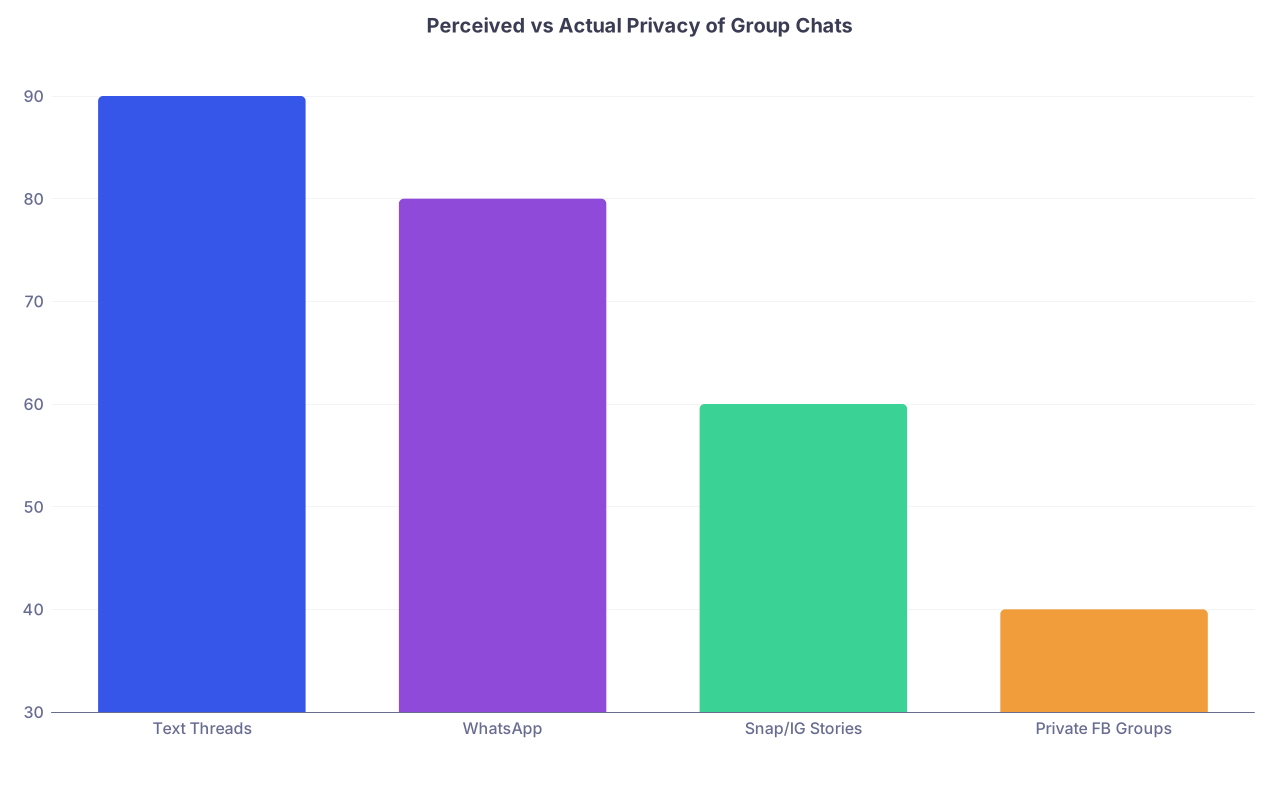
| Category | Value |
|---|---|
| Text Threads | 90 |
| 80 | |
| Snap/IG Stories | 60 |
| Private FB Groups | 40 |
(Values here = percentage of people who think it’s private, not who are correct.)
Every year somewhere:
- A program director gets a PDF of screenshots.
- There are patient details. Or mocking comments about nurses. Or a photo from a room that shows identifiers in the background.
- Someone says, “We didn’t think anyone would share it.”
Do not build a career that can be destroyed by someone scrolling up and hitting “forward.”
2.2 “We Were Just Blowing Off Steam in the Workroom”
Another favorite disaster:
Residents joking about patients, families, or nurses at the station. They assume:
- “No one is really listening.”
- “We’re behind the desk, it’s fine.”
- “We’re just joking with each other.”
You know who hears?
- The nurse who’s been holding a 50-minute family conversation together.
- The respiratory therapist who just coded the same patient you’re mocking.
- The medical student who’s now afraid of you.
- The patient’s family walking by the door at exactly the wrong moment.
Almost no one will confront you directly. They’ll just:
- Avoid working with you.
- Mention your name when leadership asks, “Any professionalism concerns?”
- Drop a single line in a 360 eval: “Sometimes insensitive comments around patient care.”
That single line can outweigh pages of “hard-working” and “good knowledge base.”
2.3 Humor About Vulnerable Groups
This is the easiest way to get yourself labeled unsafe and biased:
- Jokes about language barriers.
- “Frequent flier” memes that mock homeless, substance use, or psych patients.
- “Social admission” memes that dehumanize.
You may think it’s “medical community dark humor.” It reads as:
- “This person will care less about certain groups of patients.”
- “This person may cut corners with vulnerable populations.”
- “This person doesn’t see systemic injustice; they blame the patient.”
Those are not small accusations. Those are “we won’t rank you high” and “we can’t promote you” accusations.
3. The Subtle Ways Humor Changes How People Trust You
Here’s what most trainees miss: people don’t diagnose you all at once. They collect small data points, then quietly decide if you’re trustworthy.
Your humor is one of those data points.

3.1 The “Not Serious” Label
Even if nobody is “offended,” constant joking builds a very specific mental file:
- “Funny. Not serious.”
- “Great on nights. Not someone I’d put on the toughest cases.”
- “Good energy. Maybe not chief material.”
People rarely say this out loud. You’ll see it in:
- Who gets the difficult but high-yield consults.
- Who gets invited to research.
- Who gets leadership roles.
When leaders are deciding: “Who can I trust in a crisis?” they do not picture the person who always has a meme ready.
3.2 The “Won’t Protect Me” Concern
Faculty and nurses think in risk terms:
- “If something goes sideways in this case, who’s in the room?”
- “If the family complains, who was at the bedside?”
- “If this ends up in court, who documented and who spoke?”
If your humor targets:
- Colleagues
- Nursing
- Admin
- Certain patient groups
People start to ask: “Will this person protect me or throw me under the bus with a joke later?”
They might still laugh to your face. They absolutely will not choose you for sensitive conversations, complex family meetings, or high-profile patients.
3.3 The “Boundary Issues” Red Flag
If you joke about:
- HIPAA-adjacent stuff
- Graphic patient details
- Deaths and bad outcomes
Even without identifiers, some people translate that to: “This person doesn’t maintain emotional or professional boundaries.”
Strong boundary maintenance = trust. Sloppy humor = boundary doubt.
Once someone doubts that, you rarely get full trust back.
4. Humor That Crosses Into Ethical and Legal Disaster
This is where it stops being “career damage” and starts being “reportable event.”
4.1 Anything That Even Smells Like HIPAA
You already know “don’t post patient info.” That’s the kindergarten level.
More advanced mistakes I’ve seen:
- Posting an OR board with names blurred but room numbers and times visible.
- Posting a “funny” radiology image with a timestamp and unit visible.
- Posting a photo “from work” where the patient’s bracelet, chart, or monitor is in the background.
You might think it’s anonymous. Someone in your hospital can probably identify them. That’s enough.
| Post Type | Why It’s Dangerous |
|---|---|
| Blurred OR board | Dates/room numbers can identify |
| “Crazy case” x-ray | Unique injury patterns are traceable |
| Hallway selfie with monitors | Bed labels, dates visible |
| “Wild night in the ED” bed photo | Layout recognizable to staff |
| Ventilator/ECMO setup shot | Time + location + rare case = ID |
The test isn’t “can you identify them?” It’s “could anyone with internal knowledge identify them?”
That’s the medicolegal line.
4.2 Recorded Humor = Permanent Evidence
Another professional self-own: recorded “funny” content.
- TikToks in call rooms joking about patients.
- Reels dancing in the hallway outside an isolation room.
- Skits making fun of “difficult” families or nurses.
You may think you cleaned your account before applying for fellowship. Someone already downloaded it.
Programs increasingly:
- Search names + “doctor meme,”
- Look at tagged videos,
- Check mutual followers.
One bad clip that screams “this person doesn’t take patient dignity seriously” will overshadow an entire CV.
4.3 Humor in Documentation and Messaging
Do not do this:
- “Patient appears to be exaggerating symptoms.”
- “Patient claims ‘10/10’ pain while eating chips comfortably.”
- “Frequent flyer known to staff.”
I’ve literally seen charts with “frequent flyer” written. Those charts became evidence.
Imagine that note read aloud in court. Or to the family.
Same for internal messaging:
- Slack
- Teams
- EMR messaging systems
Those are discoverable. You don’t want your sarcasm printed in a legal exhibit binder.
5. Acceptable vs Dangerous Humor: A Practical Filter
Let’s be real: you’re not going to be humorless. Nor should you. Humor helps people survive residency.
The trick is knowing where the cliff-edge is.
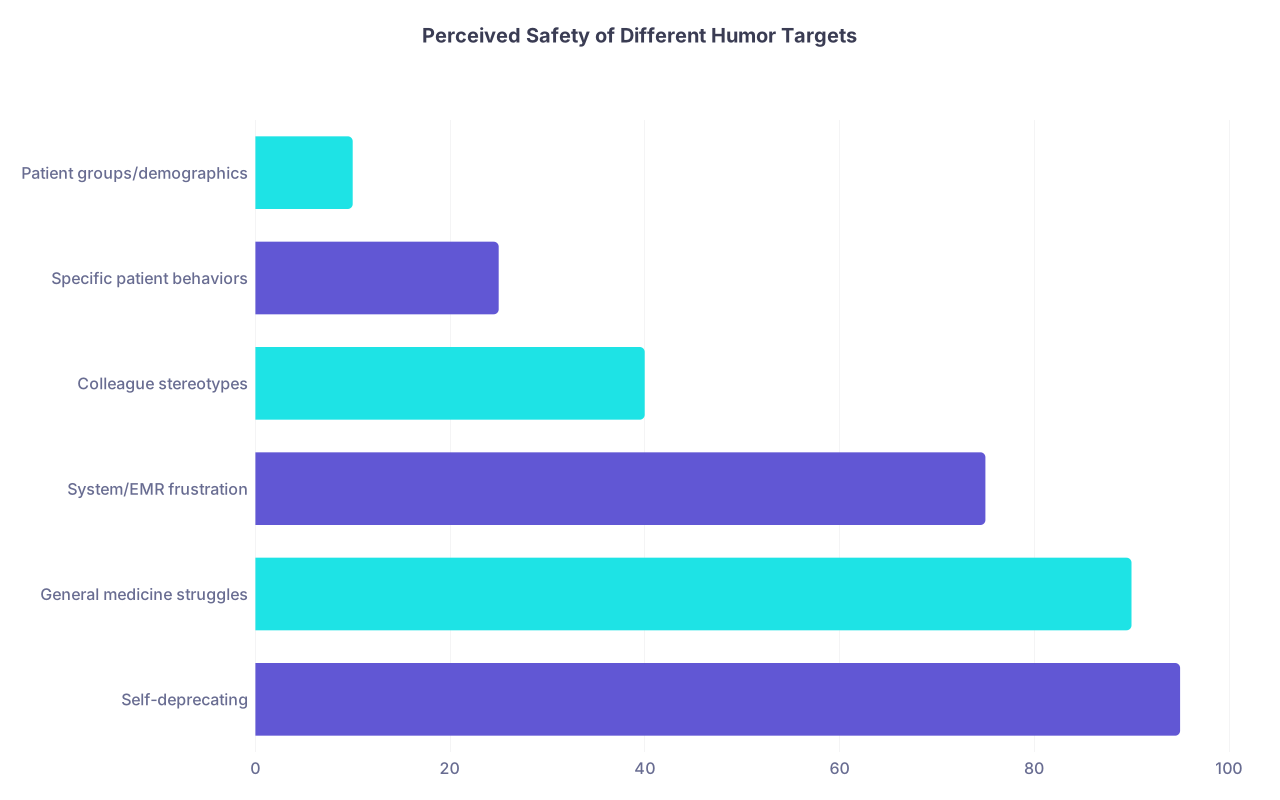
| Category | Value |
|---|---|
| Self-deprecating | 95 |
| General medicine struggles | 90 |
| System/EMR frustration | 75 |
| Colleague stereotypes | 40 |
| Specific patient behaviors | 25 |
| Patient groups/demographics | 10 |
(Values = rough “career safety” rating out of 100.)
5.1 Humor That’s Usually Safe
Safer categories (when done thoughtfully):
- Self-deprecating: “My pre-round notes look like ransom letters after 28 hours.”
- System-focused: “EMR crashed again during sign-out, obviously.”
- Universal training pain: “Everyone’s SOAP note gets longer before it gets shorter.”
- Medicine-in-general absurdity: The number of logins, the pager that never dies, the cafeteria “food.”
The key: punch up or sideways, not down.
5.2 Humor That Is Career-Limiting
Risky to dangerous:
- Jokes about patient weight, hygiene, intelligence, language, education.
- Memes about “drug seekers” or “noncompliant patients.”
- Any humor about specific tragedies—suicide, overdose, fetal demise, pediatric deaths.
- Ethnic, cultural, or religious stereotypes (yes, even “jokes everyone makes” in your group).
And a special category: nurse-bashing memes.
You might think you’re “venting.” Hospital leadership hears: “This physician doesn’t respect the team.” That kills your reputation fast.
6. Building Humor Habits That Won’t Backfire
Humor isn’t the problem. Thoughtless humor is.
Here’s how to keep your sanity and your reputation intact.

6.1 Create Two Separate Channels in Your Life
Blunt truth: You need a firewall.
Professional-facing humor
- What you say at work.
- What appears on any identifiable social media.
- What you’d be fine seeing in a faculty group email.
Private, truly trusted humor
- One to three people you deeply trust, outside your evaluative hierarchy.
- Offline conversations. No recordings, no screenshots, no posts.
- This is where the really dark stuff goes, if it must.
If you’re using Instagram, TikTok, or Twitter/X for “doctor memes” under your real identity, assume your PD, chair, and future fellowship PD have already seen it.
6.2 The “Would I Read This in Court?” Test
Before you share, ask yourself:
- Would I be okay with this meme/phrase being:
- Read aloud to the patient?
- Read aloud to the patient’s mother?
- Printed in a courtroom with my name under it?
- Attached to my promotion file?
If the answer is anything less than a confident yes, don’t share it in a recordable medium. That includes:
- Chat apps,
- Email,
- Social media,
- EMR messaging.
6.3 Use Humor to Connect, Not Dismiss
Good humor in medicine can actually strengthen your career:
- Joking with a scared patient about the gown that never ties properly.
- Lightly teasing a colleague you know well about their 17th coffee of the day.
- Laughing with nurses about the chronically broken blood pressure machine.
Notice the pattern:
- Nobody’s dignity gets stripped.
- Nobody’s pain is minimized.
- You’re sharing the burden, not shoving it onto someone.
7. The Long Game: How Humor Affects Your Future in Medicine
You’re not just protecting your first job. You’re protecting Future You—attending, leader, potential program director, maybe even department chair.

| Step | Description |
|---|---|
| Step 1 | Training Years |
| Step 2 | Trusted by Team |
| Step 3 | Professionalism Concerns |
| Step 4 | Invited to Lead Projects |
| Step 5 | Limited Opportunities |
| Step 6 | Leadership Roles |
| Step 7 | Stagnant or Exit |
| Step 8 | Humor Style |
7.1 Your Reputation Scales With You
If you’re “the funny resident” who sometimes crosses the line, people shrug.
If you’re “the funny attending” who crosses the line… now you’re:
- A potential HR problem.
- A liability risk.
- Setting the cultural tone for trainees.
Same jokes, different power dynamic, bigger consequences.
If you ever want to:
- Run a residency program,
- Sit on hospital committees,
- Lead a division,
you’ll need people to believe you have judgment. Humor is one of the first places they look for signs you don’t.
7.2 Burnout, Cynicism, and Joke Content
Another trap: letting your humor show your burnout before you even admit you’re burned out.
Common signs:
- Your jokes are mostly contemptuous.
- You’re always mocking patients or families, rarely mocking the system.
- You’ve stopped finding anything in medicine sincerely meaningful, and it shows.
Faculty pick up on this. They’ll say things like:
- “I worry they’re becoming cynical.”
- “Seems detached and resentful.”
- “Might be at risk for burnout.”
And guess what that can affect?
- Letters of recommendation (“excellent fund of knowledge, some concern about cynicism”).
- Leadership opportunities (“not sure they’re in a good place emotionally to take this on”).
Sometimes you don’t need to “fix your humor.” You need to fix your workload, your sleep, or your support system.
8. Practical Red-Flag Checklist
If you see yourself in too many of these, tighten things up. Now, not later.
You might be in the danger zone if:
- You’d be embarrassed if your PD saw your meme page.
- You’ve ever said, “Don’t screenshot this.”
- You’ve ever added, “But for real though, don’t share this,” after a joke.
- You group-text photos from work—even if you think they’re anonymous.
- Nurses seem colder around you since a joke you made.
- A junior trainee has gone quiet after you shared something “edgy.”
- You’ve had even one evaluation comment about “professionalism” or “sensitivity.”
- People frequently say, “You’re wild, I can’t believe you said that.”
None of these alone mean you’re doomed. But ignore them and you’re volunteering to be the story older faculty tell as a warning.
FAQ (Exactly 3 Questions)
1. Is all dark humor bad, or is there a safe way to use it?
Dark humor itself isn’t automatically bad. What matters is where, with whom, and how traceable it is.
Safer approach:
- Keep the darkest humor offline and unrecorded.
- Share only with people you know extremely well and trust fully.
- Don’t direct it at specific patients, families, or vulnerable groups.
- Use it to acknowledge your own distress, not to devalue someone’s suffering.
If you wouldn’t want a transcript of the conversation handed to your PD, keep it out of digital spaces.
2. What should I do if I already posted questionable memes or jokes online?
Don’t panic. But don’t ignore it.
- Immediately delete anything that could be seen as mocking patients, families, or colleagues.
- Lock down privacy settings, but don’t rely on them.
- Stop posting borderline content under your real identity.
- If it ever comes up in an interview or meeting, own it: “I realized some of my past posts didn’t reflect the physician I want to be. I removed them and updated my boundaries around professional humor.”
People can forgive past stupidity. They’re less forgiving of ongoing, uncorrected stupidity.
3. How do I push back if my co-residents constantly share inappropriate memes?
You don’t have to be the humor police, but you also don’t have to cosign it.
Options:
- Quietly stop reacting. No likes, no comments, minimal engagement.
- Change the subject or redirect when things get too far: “Yikes, switching topics, how’s everyone surviving nights?”
- If you’re closer to someone, offline: “Hey, just a heads up, some of the stuff in the chat could burn people if it gets out. I’m tightening up what I react to.”
- If the chat is really bad and you don’t feel safe in it, leave. You can simply say: “Trying to cut down on screen time and group chats—catch you all in person.”
Your goal isn’t to reform the entire culture. It’s to avoid letting someone else’s poor judgment take your career down with them.
Key points, stripped down:
- Humor isn’t neutral; people read it as a direct window into your judgment and boundaries.
- Anything recorded—chat, note, social media—must pass the “courtroom and patient-family” test.
- Keep your darkest coping humor offline and away from evaluative eyes; build a career that no screenshot can destroy.