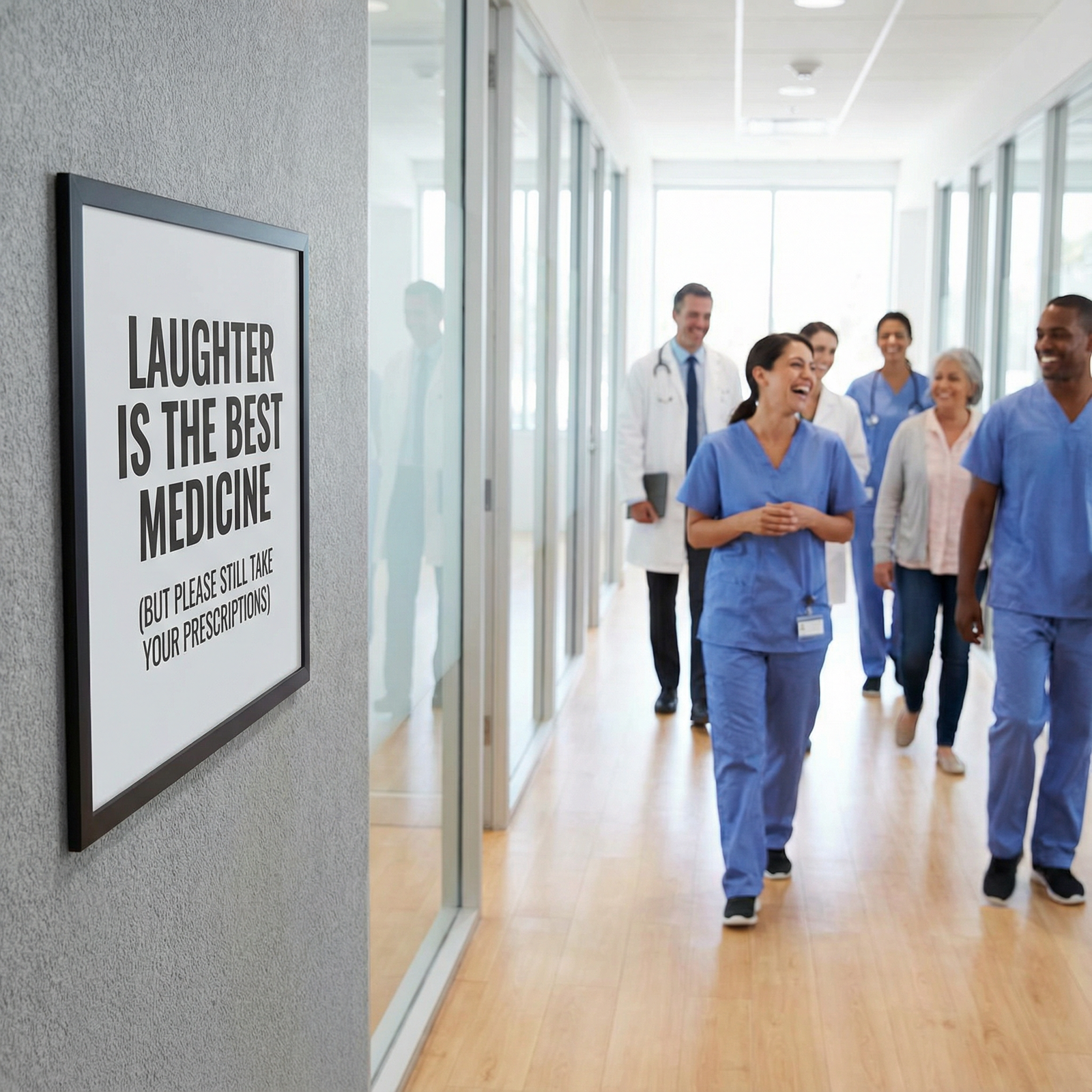
The fastest way to ruin a graduation dinner is with a bad roast. The second fastest is with a boring one.
A funny but respectful roast is a procedure. Treat it like you would a central line: prep, checklist, clear landmarks, and strict respect for no‑go zones. Do that, and you get a room full of cackling seniors and teary-eyed faculty instead of awkward silence and program director damage control on Monday.
Here is the stepwise protocol.
1. Set Your Objective (And Your Red Lines) Before You Write a Single Joke
Most people start by trying to be “funny.” That is wrong. You start by deciding your mission and your boundaries.
Your mission at a medical graduation roast should be:
- Celebrate your classmates and faculty
- Bond through shared misery and absurdity
- Lightly puncture egos that are already inflated
- Leave everyone feeling closer, not smaller
If a joke does not serve that, it goes.
Now set hard red lines. Non‑negotiables. Write them down.
Absolute No‑Go Topics
If you ignore this section, you will end up in a meeting with GME.
Your roast does not touch:
- Race, ethnicity, nationality
- Religion
- Sexual orientation or gender identity
- Body size or physical appearance
- Immigration status
- Mental health diagnoses
- Addiction history
- Fertility, pregnancy loss, or family trauma
- Any actual patient harm or adverse event that still lives in someone’s nightmares
If you are thinking “but they themselves joke about this,” I do not care. You are on a mic. In a semi‑professional context. The standards are different.
Yellow-Light Topics (Handle With Extreme Care)
These can be used, but only as you-focused or system-focused, not them-focused:
- Burnout → “We all looked 10 years younger on orientation day” (fine); “Sarah had a nervous breakdown every call” (not fine)
- Relationship status → “All of us collectively ghosted our non-med friends for 3 years” (fine); “John cannot keep a relationship longer than a rotation” (not fine)
- Money → “We owe more than a small country’s GDP” (fine); “Dr. X is here only for the paycheck” (not fine)
If you are not 100 % sure it is safe, drop it. There are a thousand other angles.
Practical step today: Open a blank document and write two lists at the top: “Mission” and “Red Lines.” That is your guardrail for everything that follows.
2. Know Your Audience Like You Know Your Favorite Pathway
A roast for a PGY-3 internal medicine class is not the same as a roast for a med school graduation with deans, parents, and donors.
You adjust your dosage.
| Audience Mix | Humor Level | Risk Tolerance | Key Adjustments |
|---|---|---|---|
| Residents only (no faculty) | Highest | Moderate | More insider, darker humor |
| Residents + faculty (no families) | Medium-high | Moderate-low | Keep it professional-adjacent |
| Full graduation (families, admin) | Medium | Low | PG-rated, explain inside jokes |
| Departmental dinner with chairs | Medium-low | Very low | Focus on warmth over savagery |
Before you start writing, answer these concretely:
Who is in the room?
- Program director? Chair? Hospital CMO?
- Kids? Grandparents? Donors?
What is the dress code?
- Black tie → keep it cleaner
- Backyard BBQ → slightly looser, but still professional
How long do you have?
- 5–7 minutes is perfect. Over 10 and you are holding the schedule hostage.
What is the “culture” of the program?
- Some surgery programs live on brutal gallows humor (still not an excuse to be cruel).
- Some pediatrics departments are so wholesome a “single malt at 10 am” joke will land wrong.
If you have any doubt, ask the chief resident or program coordinator:
“Hey, for my roast bit, how clean are we supposed to keep it on a scale from ‘hospital newsletter’ to ‘unrecorded comedy club’?”
3. Structure the Roast Like a Tight 7-Minute Set, Not a Rambling Sign-out
Bad roast speeches die because they wander. Good ones have bones.
Use this simple structure:
Opening (30–60 seconds)
- Establish you are on their side
- Quick, safe laughs to relax the room
Shared Experience Bits (2–3 minutes)
- Group jokes about your class’s journey
- Night shifts, pager PTSD, cafeteria food, EMR hell
Individual “Roast but Hug” Moments (2–3 minutes)
- 3–6 people or archetypes, max
- Each with a gentle jab + a sincere compliment
Future-of-Medicine Callback (1–2 minutes)
- Tie it back to where you are all headed
- Hopeful and a little absurd
Warm Closing (30–60 seconds)
- Gratitude
- One callback to an earlier joke
- Land on appreciation, not sarcasm
Example Skeleton
Opening:
“Four years ago we walked in bright-eyed, well-rested, and fully convinced we would never use a note template. That lasted… one admission.”Shared Experience:
“We have collectively responded to approximately 14 million MyChart messages, 13 million of which could have been answered with ‘please schedule an appointment.’”Individual Roasts:
- “To Dr. Patel, whose sign-outs are so thorough we are pretty sure Epic is scared of her.”
- “To Dr. Smith, who drinks enough coffee to qualify as a walking clinical trial.”
Future-of-Medicine:
“In 20 years, someone here will be pioneering AI-assisted care. Someone will be a program director. And someone will still be reminding the intern, ‘Please, for the love of all that is holy, finish your notes before you go home.’”Closing:
“Jokes aside, I would trust each of you with my family. Which is probably the most sincere thing a bunch of jaded residents can say.”
4. Build Jokes That Punch Up, Not Down
Roasts go wrong for one main reason: punching down. Making fun of exposed insecurities, power gaps, or vulnerabilities.
You avoid that by aiming at:
- Behaviors, not identities
- Habits, not trauma
- Shared burdens, not private pain
- Systems and institutions, not patients
Safe and Effective Target Types in Medical Humor
You almost never get in trouble making fun of:
- EMR systems (“Epic” becoming “Epically slow”)
- Pager life (“That phantom vibration at 3 am we all still feel”)
- Call nights and cross-cover chaos
- Cafeteria food / night float meals
- Absurd administrative requirements
- Ridiculous note templates and checkboxes
- Universally hated workflows (prior auths, anyone?)
, Shared struggle, Individual quirks, Personal life, Appearance, Trauma/Health](https://cdn.residencyadvisor.com/images/articles_svg/chart-safe-targets-vs-risky-targets-in-a-medical-roast-4890.svg "Safe Targets vs Risky Targets in a Medical Roast")
| Category | Value |
|---|---|
| Systems jokes | 95 |
| [Self-deprecating](https://residencyadvisor.com/resources/medical-humor/using-self-deprecating-humor-to-connect-with-patients-safely) | 90 |
| Shared struggle | 85 |
| Individual quirks | 75 |
| Personal life | 20 |
| Appearance | 5 |
| Trauma/Health | 0 |
On individuals, stick to professional quirks and lovable patterns:
- The attending whose favorite phrase is “one more question” at 6:59 pm
- The senior who writes 3-page differentials for viral URIs
- The co-resident whose stethoscope is always “somewhere in the workroom”
Formula that works almost every time:
Tease the quirk → Exaggerate it absurdly → Land on the strength behind it.
Example:
“Sarah has the most detailed medication reconciliations in the program. Pharmacy calls her to check doses. We tease her about it, but let us be honest: half of us are alive today because she caught what we missed.”
5. Collect Material Like a Clinician: Systematic, Not Creepy
Do not rely on your memory the night before. You will default to the most obvious (and often riskiest) jokes.
Two weeks before the event, start a simple capture system.
Stepwise Material Collection
Create a running note called ‘Roast Ideas’
- In your phone, Notion, whatever you actually use
- Sections: “Shared Experiences,” “People,” “Faculty,” “Future”
During the day, jot down lines and moments
- The code pager going off during someone’s graduation photos
- A senior saying, “We have time for one more question,” at 7 pm clinic
- That one attending who prefaces every terrible situation with “This will be a good learning opportunity”
Ask 2–3 trusted people for input
- “What is the most ‘us’ moment from this year?”
- “If you had to describe our class in one inside joke, what would it be?”
Filter immediately through your red-line rules
- If you hesitate, trash it
- You rarely regret the joke you did not tell
Be extra cautious of jokes that reference:
- Specific patients
- Specific medical errors
- Specific conflicts with staff
You can twist those into de-identified, generalized system jokes, but you do not tell war stories as comedy. They hit wrong.
6. Write the Roast: Draft, Then Perform It Out Loud
You are not writing an essay. You are writing something to be performed. That changes how you draft.
Step 1: Write the “Clean Transcript” First
Forget about being hilarious for a moment. Write:
- Your opening welcome
- 3–5 shared-experience bits
- 3–6 individual roast-but-hug lines
- 1–2 future-of-medicine bits
- Your closing gratitude
Make sure:
- Every person you reference gets a net-positive portrayal
- There is at least one moment that will feel touching, not just snarky
- You are under 1,000–1,200 words. More than that and you will run long.
Step 2: Layer in Punchlines and Rhythm
Now fix the language. Make it tight and oral:
- Use short, punchy sentences before punchlines
- Put the funniest word at the end of the sentence
Weak:
“Dr. Chen always wears fun socks which are really colorful.”
Stronger:
“Dr. Chen’s socks are louder than the code blue alarm.”
- Use “rule of three”: normal, normal, absurd
Example:
“By PGY-3 we had mastered three skills: ordering coffee, ordering CT scans, and ordering each other to ‘just copy forward my note.’”
Step 3: Out-Loud Rehearsal
This is non-negotiable.
Practice:
- Alone once, full run-through
- Then in front of 1–2 trusted friends (ideally from medicine but not your entire class)
Ask them specifically:
- “Where does this feel mean, not funny?”
- “Where does it drag?”
- “What joke felt like an inside joke that needed more context?”
Cut ruthlessly. 70 % of your humor will come from delivery, not word count.
7. Delivery: How to Actually Stand Up There and Not Die
You are a clinician. You can stand through a 12-hour trauma shift. You can stand through 7 minutes at a mic.
Before You Go Up
- Two deep belly breaths while the speaker before you finishes
- Decide on one physical anchor: one hand on the lectern, or mic in one hand, the other relaxed by your side
- Check your first line. That is all you need to remember cold. Once you are moving, momentum will carry you.
While You Are Speaking
Start slow. Slower than feels natural.
Adrenaline will make you speed up. Fight it.Look at people, not at your script.
- Use bullet points or large font if you need notes
- Glance down, grab your next line, eyes back up
Pause after punchlines.
If they are laughing, let them. Do not talk over your own laughs.If a joke bombs, move on immediately.
No nervous “wow, tough crowd.” Just next line. You are not in a club; you are at a ceremony.Enjoy your own material a bit.
A grin at a shared memory tells the room: “We are in this together.”
8. Handling the Line Between Funny and Disrespectful in Real Time
Even with prep, something can land sideways. Someone may look uncomfortable. Or you may suddenly realize mid-sentence that a line feels harsher than it did on paper.
Here is how you fix it without derailing everything.
Live Micro-Correction Moves
Softening pivot
If you feel a line land a bit harshly, immediately follow with a compliment or a self-burn.
“We tease Dr. Lee about running every morning before rounds. But honestly, some of us get winded walking from the workroom to the bathroom.”Audience temperature check
If the room goes quiet or “oof,” do a quick reset:
“Okay, okay, I am going to stick to making fun of Epic from now on; it cannot complain to HR.”Drop the edgier jokes mid-speech
You are not obligated to say everything you wrote. If the first slightly-spicy joke hits flat in a conservative room, mentally skip the rest of that category.
Avoiding the “Mean Spiral”
The danger with roasts is escalation. One sharp joke lands, people laugh harder than you expected, and you are tempted to push it further.
Do not. You push funnier, not meaner. Funnier usually means more specific and more absurd, not more personal.
Example escalation:
- Start: “Our class drank a lot of coffee.”
- Funnier: “We drank so much coffee Starbucks put us on their quarterly earnings call.”
- Dangerous: “Some of us drank so much coffee we worried about their arrhythmia risk.” (Now you are hinting at health issues.)
9. Make It a Tribute, Not a Takedown: The “Roast + Toast” Pairing
Your goal is not pure comedy. It is a sendoff. You anchor that with a deliberate “roast + toast” structure for key people.
How to Do “Roast + Toast” Properly
For each person or group you highlight:
- Identify a benign, recognizable quirk
- Exaggerate it 1–2 beats
- End with a clear statement of appreciation or respect
Example for a program director:
“Dr. Martinez has two modes: ‘You are doing great’ and ‘Let us pull the outcomes data.’ We live in fear of the second one. But truly, no one here fought harder for our education or our days off when the schedule looked impossible.”
Example for co-residents:
“To my co-residents: we have seen each other at our worst—3 am, coffee-stained, mascara running, arguing with radiology about a stat CT chest. If I am ever unlucky enough to end up admitted here, I want this chaotic, brilliant group arguing about my care.”
You want people leaving thinking: “They roasted us, but they clearly love us.” If they just remember the burns, you miscalibrated.
10. Tie It to the Future of Medicine Without Sounding Like a TED Talk
Since this is “Miscellaneous and Future of Medicine,” let us fix a common mistake: people swing from snarky humor to stiff inspirational nonsense.
You can talk about the future and still keep it wry and grounded.
Good Angles for “Future of Medicine” Jokes
- Technology in practice
- “In 10 years, half our job will be arguing with AI about why the patient is not a horse with Cushing’s.”
- Administrative bloat
- “No matter what innovations come, I am confident one thing will remain: a 17-click process to order Tylenol.”
- Your classmates’ trajectories
- “Future chiefs, future chairs, future ‘I left clinical medicine for tech and now work remote from a cabin’ people—this room has all of them.”
Then flip to sincere:
“In all seriousness, the future of medicine is not AI, or new drugs, or whatever billing system we will all be cursing in 2035. It is you. The people who stayed up absurd hours, who apologized to every patient we kept waiting, who kept showing up when it would have been easier not to. The future is in good hands, even if those hands are slightly tremory from too much coffee.”
Keep it short. One or two paragraphs. This is a roast, not a keynote.
11. Post-Event Debrief: How to Know If You Hit the Mark (and Improve Next Time)
Yes, you will do this again—at fellowship, at departmental dinners, at retirements. Learn from each one.
Within 24–48 hours:
Ask 2–3 people for blunt feedback.
- “On a 1–10, how balanced was that between funny and kind?”
- “Was there any line that landed wrong?”
Watch any recording once.
Brutal, but useful. Note:- Where you rushed
- Where you mumbled
- Which jokes hit hardest (they surprise you sometimes)
File your script away.
Mark what worked. A lot of those structures can be adapted for future events.
You are building a professional skill: being the person who can lighten a room while still sounding like a grown-up.
12. Quick Safety Checklist Before You Step Up to the Mic
Run through this the day of:
- No jokes about protected characteristics or personal trauma
- No specific identifiable patients or errors
- Every “roast” line pairs with an honest compliment
- At least 50 % of the set is shared experience, not individuals
- Timing under 7–8 minutes in rehearsal
- You have your first line and last line memorized
- You have water, not just a drink, next to you
If you tick all of those, you are in safe territory.
Do This Today
Open a new document and write just three things:
- One sentence about the mission of your roast
- Three bullet points of “shared experiences” you might joke about
- One “roast + toast” line for a classmate or faculty member (quirk + compliment)
If you can get that on the page tonight, you already have the spine of a roast that will land the way it should: funny, a little sharp, and deeply respectful.