
Modern call culture is broken when it pretends you can grind all night and stay human without intentional coping rituals. You cannot. The teams that survive call with their sanity intact do one thing better than everyone else: they engineer tiny, repeatable moments of humor and ritual into the chaos.
Not toxic positivity. Not “just be grateful you have a job.”
I am talking about weaponized micro-jokes and concrete team rituals that:
- Lower the temperature when everything is on fire
- Quietly protect patient safety
- Keep your brain functioning at 03:47 when the ninth page hits
You do not need a nicer lounge. You need a playbook.
This is that playbook.
1. The Real Problem with Call (And Why Jokes Are Not Optional)
Call nights are not just “long shifts.” They are a perfect storm of:
- Sleep deprivation
- Cognitive overload
- Constant interruptions
- High stakes decisions with incomplete data
- Emotional whiplash (code here, new cancer diagnosis there, social mess in the ED)
Left unmanaged, that combination does three things:
- Blows up cognitive performance (yes, even if you “feel fine”)
- Erodes team trust (“Why did you snap at me?” “You ordered what?”)
- Makes people quit medicine in their head at 4 a.m.
Humor and ritual sound soft. They are not. They are:
- Micro-reset buttons for your nervous system
- Shared language that cuts through tension
- Memory anchors when your brain is fried
You are not going to “be less tired.” You are going to get better at building scaffolding around that fatigue.
Let’s get specific.
2. Micro-Jokes: Tiny, Repeatable, Safe
Micro-jokes are not full comedy routines. They are 2–5 second, predictable patterns your team uses on purpose. The key is repeatability and safety.
Core Rules (Follow These or It Backfires)
Never punch down
- No jokes at the expense of patients, nurses, RTs, environmental staff, or juniors.
- Punch up: bureaucracy, EMR, the pager, “the system,” yourself.
Keep it ritualized
- Same phrase, same trigger.
- You want it automatic, not creative. Creative is work. Ritual is autopilot.
Make it short
- If it takes longer than 5 seconds, it is a conversation, not a micro-joke.
Now, here is a menu you can actually implement tomorrow.
A. The Pager Personality Bit
Trigger: Pager goes off with that awful shrill tone.
You reply (out loud, to your team, not the caller):
- “Ah yes, my toxic relationship is calling.”
- Or: “The EMR wants to speak with you about your extended warranty.”
- Or for the truly fried: “That is the sound of joy leaving my body.”
Purpose:
- Externalizes the stressor (pager = villain, not colleague).
- Quick shared eye-roll before the serious part.
- Zero impact on speed of response.
B. The “Attending Voice” Move
Trigger: You are about to make a serious call to ICU/attending/consult. Team is tense.
Micro-joke:
- Someone says: “All right, everyone, attending voice on in 3, 2, 1…”
- Or: “Activate Professional Mode.”
People literally straighten up, clear their throat, and switch from exhausted mumble to clear, slow speech.
It is silly. It also improves communication quality.
C. The Order Set Roast
Trigger: You open a ridiculous, bloated order set at 2 a.m.
Micro-joke options:
- “Behold, the ancient scrolls of unnecessary labs.”
- “I for one welcome our checkbox overlords.”
- “If I click all of these, do I ascend to another billing level?”
You still review carefully. But humor stops you from blindly checking every box just to be done.
D. The “Call Night Hat” or Badge
Trigger: Start of night shift.
Ritualized bit:
- One person wears a ridiculous-but-acceptable item: a clean scrub cap with cartoon organs, a “night shift” pin, a small sticker on their badge.
- The rule: Only the on-call senior (or “captain”) wears it.
Micro-joke:
- “All hail the Captain of Bad Decisions.”
- “Whoever wears the hat must decide the pizza toppings and tie-break clinical debates.”
It marks who is “it” without sounding hierarchical. Also good for orientees and nurses: they know who to grab in a crisis.
3. Rituals That Actually Hold You Together
If you remember nothing else, remember this: No team survives call by vibes alone. You need structure.
Rituals are pre-agreed behaviors at key points in the night. They lower friction and decision fatigue.
A. The 10-Minute Launch Huddle
If your team is not doing this, start tonight.
Right after sign-out, before anyone runs off:
Set roles clearly (yes, even if “everyone knows”)
- Who holds the admit pager
- Who fields floor calls
- Who is procedure point
- Back-up plan if one person gets slammed
Name your “three true priorities”
- The sickest patient(s) you must see first
- Any time-sensitive tasks (e.g., recheck K, follow pending CT, family meeting in the morning)
- What absolutely must be done by sign-out vs what can safely slide
Pick your check-in times
- Example: “Meet at 23:00 and 03:00 at the workroom or send quick update text.”
- If someone is missing at check-in, you actively find out why. Not optional.
Micro-joke layer:
- Call it something dumb but consistent: “Night Council,” “The Summit,” “War Room,” “The Fellowship of the Ring.”
- “All right, Fellowship, 3 a.m. council right here unless someone is literally tubing someone.”
This sounds trivial. It is not. It prevents people from silently drowning.

| Step | Description |
|---|---|
| Step 1 | Sign-out ends |
| Step 2 | 10-min Launch Huddle |
| Step 3 | Assign roles and priorities |
| Step 4 | Night work |
| Step 5 | Midnight Micro-Huddle |
| Step 6 | 3 a.m. Micro-Huddle |
| Step 7 | Pre-dawn Reset |
| Step 8 | Structured Sign-out |
B. The “Midnight Micro-Huddle”
At around 23:00–00:00, five minutes in person if possible.
Agenda (fast, blunt):
- 1-sentence status from each: “Floor calls okay, two admits pending,” “ICU stable, still waiting on CT.”
- Identify who is drowning.
- Redistribute one concrete task.
Micro-joke hook:
- Start with a ritual phrase:
- “Welcome to tonight’s episode of ‘Nothing Is Ever Simple.’”
- “Okay, disaster report, go.”
Then business. Humor first, then serious.
C. The 3 a.m. “Vital Signs Check” (For People, Not Just Patients)
03:00 is when weird decisions happen. Catheters ordered that nobody can explain at 08:00. Antibiotics for “maybe something” that never existed. Arguments over nonsense.
You bake in a ritual.
Three quick questions for each team member:
- “Have you eaten in the last 4 hours?”
- “Do you need the bathroom?”
- “Are you missing something critical that is circling your brain?”
If anyone answers “no” or “yes” in the wrong place, you fix one thing:
- Swap pagers for 10 minutes so someone can eat/pee.
- Quick co-sign for one decision the person is spiraling about (“Should we move her to step-down now or are we overreacting?”).
Micro-joke:
- Call it “human vital signs.”
- “Time to check the most unstable patients on the unit: us.”
Sounds cheesy. Works insanely well.
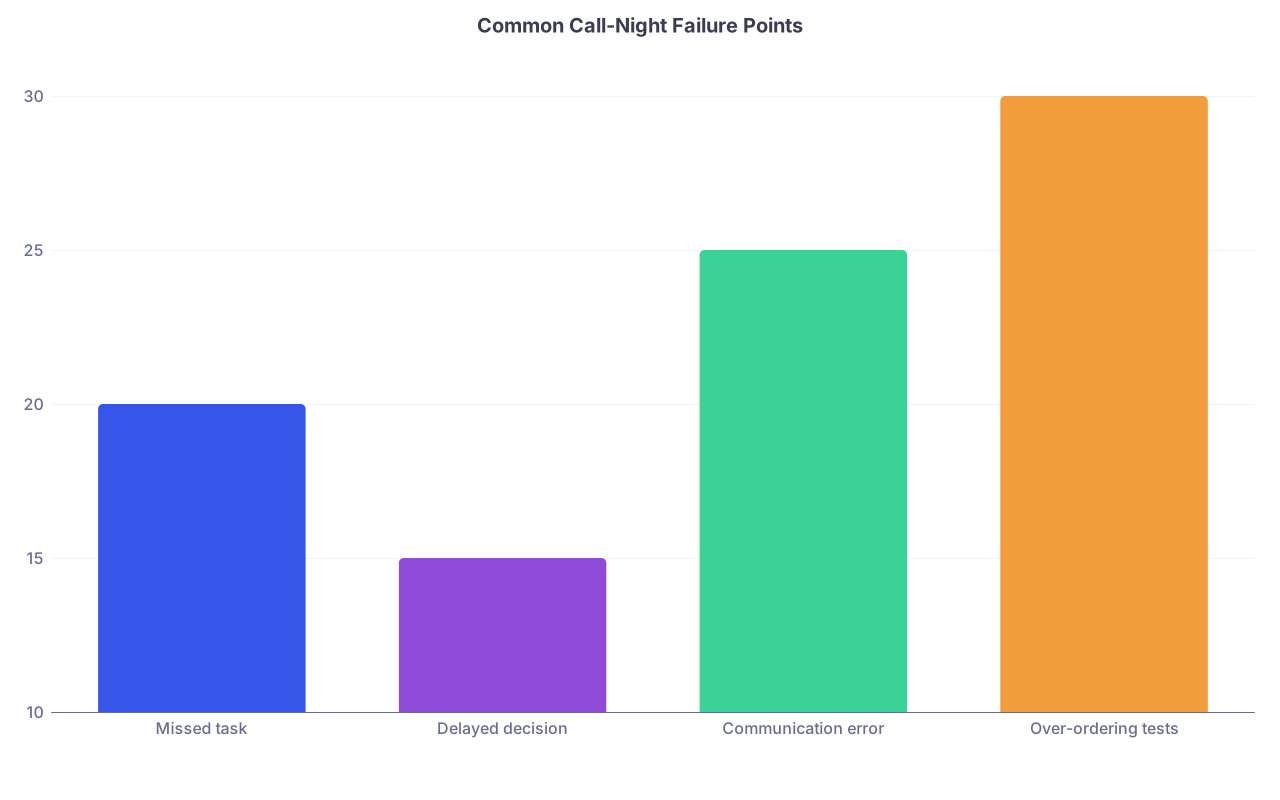
| Category | Value |
|---|---|
| Missed task | 20 |
| Delayed decision | 15 |
| Communication error | 25 |
| Over-ordering tests | 30 |
4. Micro-Habits That Make Humor Possible (Not Just Awkward)
You can try to introduce jokes into a dysfunctional team and it will fall flat. You need a few baseline habits so humor does not feel like an interruption or disrespect.
A. The “No Surprise Snaps” Rule
Everyone on call gets one sentence to declare a low fuse:
- “I am on 30 hours and caffeine only. If I sound short, it is fatigue, not you.”
- “Warning: 10/10 tired. Ask me to repeat things if I look confused.”
This declaration is itself a ritual. It massively reduces the chance someone misreads a tired tone as hostility.
Then you can layer micro-jokes safely.
B. Standard Phrases That De-Fuse Tension
Consider adopting stock lines your team agrees on:
- When someone snaps:
- “Okay, that sounded harsh. Do we need 10 seconds or are we good?”
- When you realize you were too sharp:
- “That came out sideways. My bad. I am just cooked.”
You normalize repair. Then humor is not sitting on top of resentment.
C. Permission to Opt Out
Not everyone wants to be in the bit. That is fine.
You explicitly say as a senior:
- “We use some dumb lines to keep ourselves awake. If you are not in a joking mood at some point, just say ‘no bit right now’ and we will drop it.”
Then people know they can draw a line without being labeled “no fun.”
5. Concrete Ritual Ideas You Can Steal (And How to Run Them)
Here is the practical menu. Pick 2–3. Implement deliberately for a month. Do not attempt all at once.
| Ritual Name | Time | Main Benefit |
|---|---|---|
| Launch Huddle | Start | Roles, priorities, safety |
| Midnight Micro-Huddle | 23:00–00:00 | Redistribute workload |
| 3 a.m. Vital Signs | 03:00 | Prevent bad decisions |
| Pre-Dawn Reset | 05:00–06:00 | Clean sign-out and tasks |
| Call Artifact | Anytime | Morale, team identity |
A. Pre-Dawn Reset (05:00–06:00)
Most teams either sprint blindly through this window or mentally check out. Both are bad.
Pre-dawn reset is a 15–20 minute block for:
Scan task lists
- What will burn someone if not done before sign-out?
- What can safely be handed off with a clear plan?
Identify “landmines”
- Families expecting updates at 08:00
- Patients likely to decompensate this morning
- Weird pending tests that nobody will remember
Micro-education (1 minute)
- One pearl: “Diffuse alveolar hemorrhage vs pneumonia quick differentiation.”
- Or: “When you see X on the BMP, always think about Y.”
Micro-joke:
- “Welcome to the Pre-Dawn Audit of Regrettable Orders.”
- “This is where we decide what we want future us to think of us.”
It turns the ugliest hour into something intentional.
B. The “Call Artifact” Tradition
Create a physical tradition. Humans respond to objects.
Examples I have seen work:
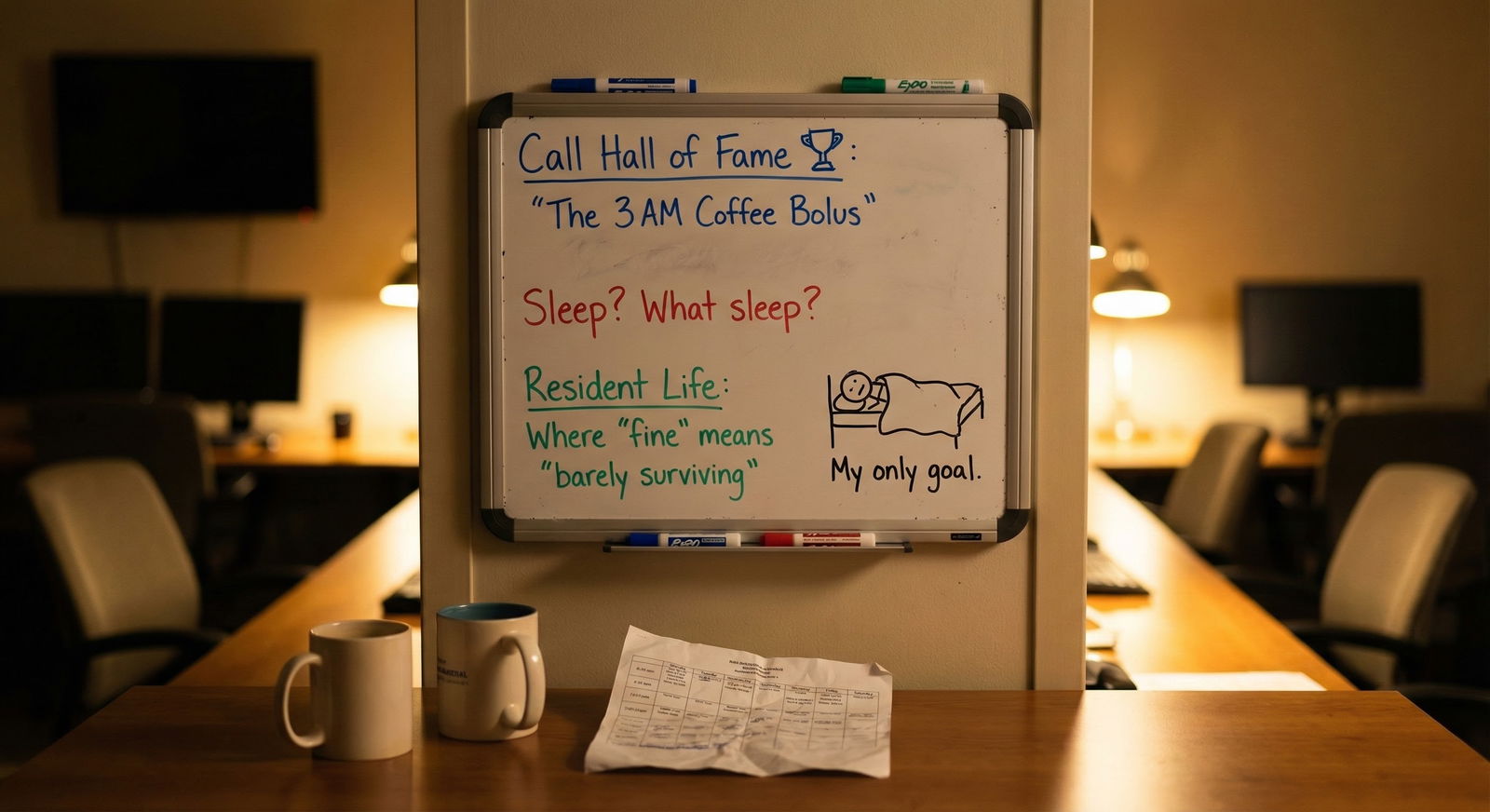
A small whiteboard or page titled “CALL HALL OF FAME / SHAME”
- HOF: funniest autocorrect, most absurd consult question, weirdest page.
- “Shame” for yourself only, not individuals: e.g., “Ordered CT with contrast on patient with contrast allergy (caught before scan, thank God).”
A tiny object passed between call teams
- Plastic dinosaur, rubber brain, small stress ball.
- Write a micro-note when you pass it: “Survived 3 codes and a broken CT scanner. You got this.”
This is not childish. It is a tangible sign that you belong to something that existed before you and will exist after you. That lowers burnout.
6. Specialty-Specific Twists (Because Call Is Not One-Size-Fits-All)
Different services have different stress patterns. Adjust the rituals accordingly.
A. Internal Medicine / Hospitalist
Pain point: Cognitive overload + volume.
Try:
“One absurd thing per night” ritual
- At 04:00, each person names the most absurd but harmless thing from the night: “Patient who thought telemetry leads were stealing his data,” “The consult for ‘patient looks weird.’”
- You laugh. You let it go. You do not carry it home.
“Admission Template Joke”
- Every admission, you end your presentation to the team with the same line:
- “And that completes tonight’s personalized, artisanal CHF exacerbation.”
- Or: “Diagnosis: Classic, textbook ‘Nobody Knew They Were This Sick Until Today’ syndrome.”
- Every admission, you end your presentation to the team with the same line:
Keeps you from resenting yet another CHF/COPD/UTI.
B. Surgery
Pain point: Chaos + hierarchy + pager hell.
Try:
-
- After last case at night, before running to floor calls, 2–3 minutes:
- Quick debrief: one thing that went well, one thing to do differently next time.
- Micro-joke: “Any feelings need to be expressed before we go back to pretending we do not have them?”
- After last case at night, before running to floor calls, 2–3 minutes:
The “scalpel horoscope”
- One person draws a quick doodle on the board (scalpel, suture, etc.) and gives a one-line “prediction” for the night:
- “Today you will over-bleed but ultimately prevail.”
- “Beware of the consult that says ‘just a quick look.’”
- One person draws a quick doodle on the board (scalpel, suture, etc.) and gives a one-line “prediction” for the night:
Stupid? Yes. Memorable? Also yes.
C. Emergency Medicine
Pain point: Constant interruptions + emotional whiplash.
Try:
“New patient, new brain” ritual
- Before opening a new chart, one deep breath and one line:
- “Okay, clean slate.”
- Or: “New chart, no assumptions.”
- Before opening a new chart, one deep breath and one line:
“Disposition haiku” game (brief, safe, off whiteboard, no PHI):
- After a run of tough dispositions (admits vs discharge arguments), the attending or senior does a 5-second haiku-style summary:
- “Three consults later / Everyone agrees on plan / Miracle occurred.”
- You keep it non-identifying and respectful. It forces you to compress the chaos into something small and digestible.
- After a run of tough dispositions (admits vs discharge arguments), the attending or senior does a 5-second haiku-style summary:
D. ICU
Pain point: High mortality + moral injury.
You tread carefully here. Humor must never undermine the gravity.
Try:
- “Debrief + one human detail” after a death or major event
- Quickly review the case (what happened, defensible decisions).
- Each person can share one human detail they want to remember: “She loved gardening,” “His wife held his hand the whole time.”
- Then, optionally, one line of dark-but-respectful humor at your own expense:
- “My resuscitation hair was doing the most tonight.”
- “I apparently only know how to say ‘okay’ during codes.”
You acknowledge the weight. Humor targets your awkwardness, not the patient.
7. Protecting Safety While Using Humor
Let me be blunt: if your “jokes” lead to missed orders, shoddy notes, or hostile vibes, you are not being funny. You are being unprofessional.
So you build guardrails.
A. The “Serious Mode” Phrase
Your team agrees on a phrase that instantly shuts down all joking.
Examples:
- “Serious mode.”
- “No bit right now.”
- “Hard stop.”
When someone says it, everyone:
- Drops jokes
- Slows speech
- Confirms orders and plans explicitly
You use it for:
- Codes / RRTs
- High-risk procedures
- Big family meetings
- Conversations with high-stakes consultants
You want a crisp on/off switch.
B. The “Read-Back Ritual” (Yes, You Still Need This)
Any high-risk order or plan gets a mandatory read-back. You attach a quick habitual line:
- “Okay, doing the boring but life-saving thing: read-back.”
Then:
- “1 liter LR bolus now, trend lactate q4, repeat BMP at 06:00, move to step-down if MAP < 65 despite fluids.”
You are allowed to be bored by it. You are not allowed to skip it.
C. Emotional Escalation Protocol
If a joking environment is masking actual distress, you need a way to surface it.
You can set this rule in your group:
- If anyone says “I am not okay with jokes about this,” that topic becomes off-limits for the rest of the night. No debate.
You err on the side of over-respecting that line.
8. How to Introduce This Without Sounding Like a TED Talk
You are not going to hold a 45-minute seminar on “micro-jokes.” You will get rolled eyes.
Here is how you roll it out in real life:
Pick one ritual + one micro-joke.
Example: Launch Huddle + “attending voice in 3, 2, 1…”Pilot for two weeks.
- Same phrase, same pattern, every call.
- Ask nurses to hold you to the huddle and check-ins.
Quietly adjust.
- If a joke lands poorly, retire it.
- If the timing of the huddle is bad for your unit, shift it by 30 minutes.
Codify once it works.
- Add to a simple one-page “Call Culture” doc for your service.
- Include: when we huddle, what our safety phrases are, what our rituals are.
Hand it down.
- Every July, one session for new interns: “This is how we do nights here.”
- Make it clear: this is as non-optional as “how to enter orders.”
This is how you build culture instead of relying on personality.
9. The Future: Building Humane Call Systems On Purpose
If you are in any position of leadership, here is what you should be thinking:
- Humor and ritual are not “extras.” They are part of fatigue mitigation strategy.
- You should expect every service to have:
- Named check-points on call
- Standard safety phrases
- Shared micro-jokes that are vetted as safe and professional
You can even integrate this into orientation or wellness curricula without making people groan, if you are concrete.
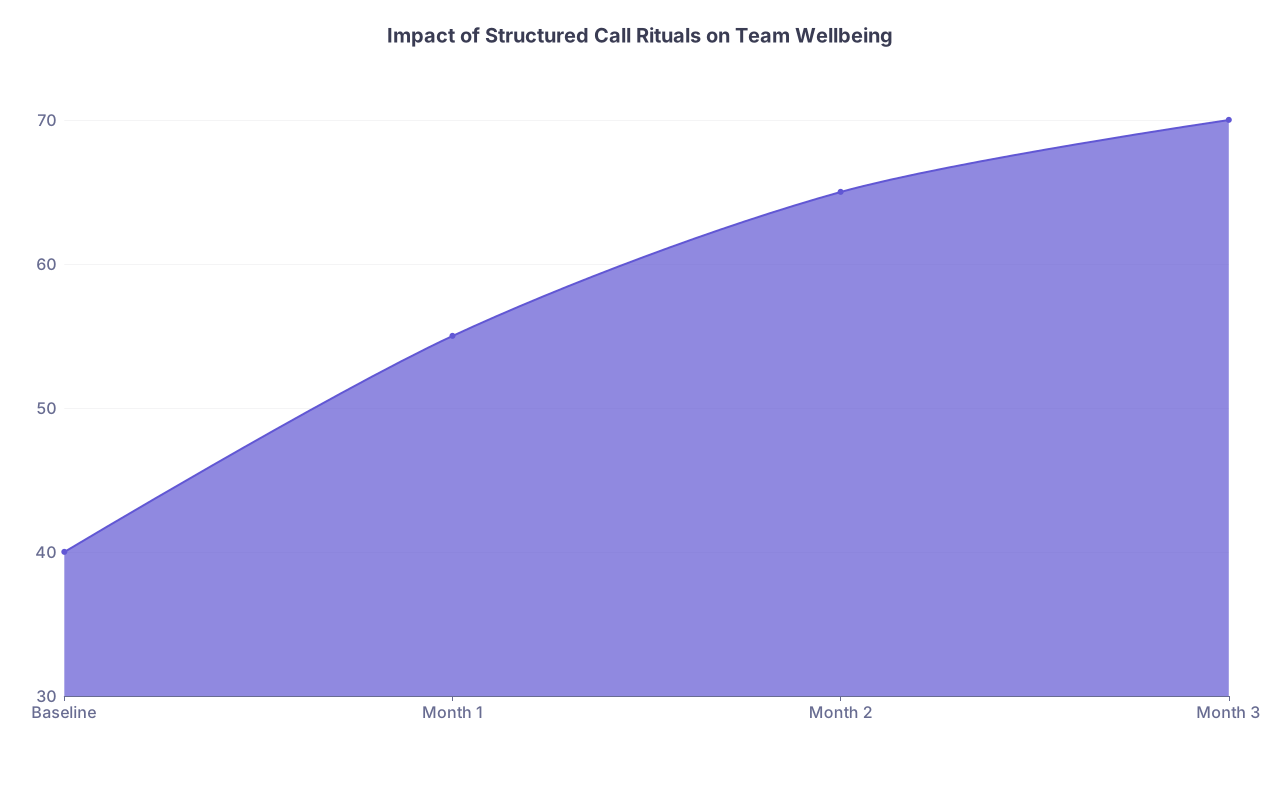
| Category | Value |
|---|---|
| Baseline | 40 |
| Month 1 | 55 |
| Month 2 | 65 |
| Month 3 | 70 |
(Example: composite scores for perceived team support / reduced burnout after adopting structured rituals and micro-jokes.)
10. What You Can Do Tonight
No abstractions. Here is your move-set for the next call:
Before sign-out
- Decide: What is our 10-minute launch huddle going to look like?
- Agree on roles, priorities, and one check-in time.
Pick one micro-joke
- Example: “attending voice in 3, 2, 1…” before big calls.
- Or “human vital signs” at 03:00.
Declare safety phrases
- “Serious mode” = no jokes.
- “No bit right now” = I am at capacity.
After the night
- Spend 5 minutes: What helped? What was annoying? What will we keep?
Then repeat next call, slightly refined.
You do not fix call with inspirational posters. You fix it with concrete scripts, tiny rituals, and shared language that turns a group of exhausted individuals into an actual team.
If you remember only three things:
- Call will never be easy, but it can be designed to be less destructive.
- Micro-jokes and structured rituals are not fluff; they are cognitive and emotional life-support.
- Pick 2–3 tools from this playbook, run them consistently for a month, and your nights will feel measurably less brutal—for you and for your patients.