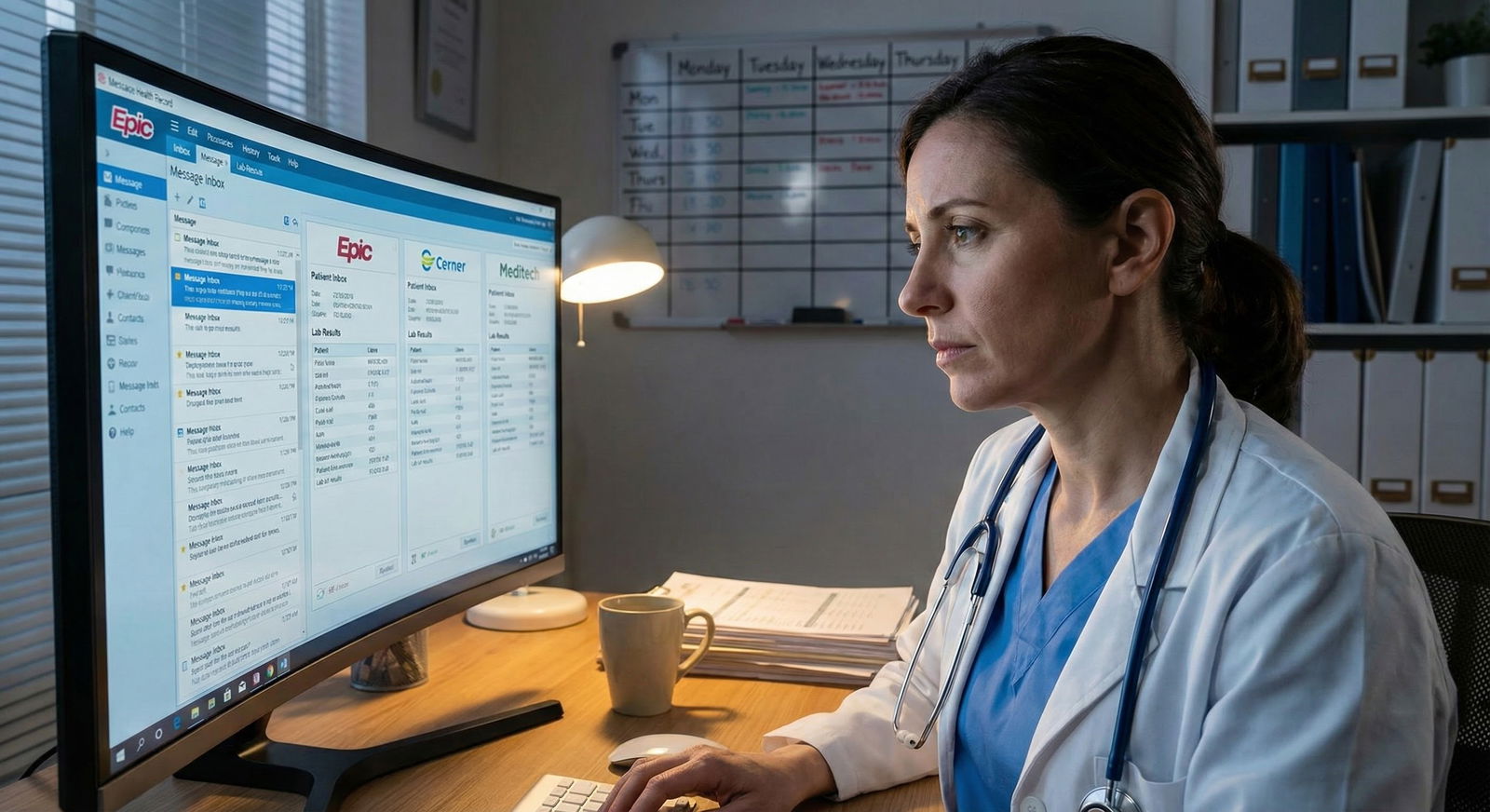
The fear of looking slow in clinic is pushing new attendings into unsafe territory.
Let me say the quiet part out loud: the pressure to look “efficient” with a new EHR can make you dangerous. Not because you’re careless. Because you’re human, tired, and terrified of looking incompetent in front of nurses, MAs, colleagues, and patients who assume you should already know all this.
You’re not lazy. You’re not dumb. You’re just in a system that pretends EHR learning curves don’t exist.
Let’s unpack this like someone who’s actually been in clinic, staring at 25 unread inbox messages with a MA knocking, “Your 10:15 has been roomed.”
The Real Fear: It’s Not Just About Being Slow
You’re not just afraid of being a little behind.
You’re afraid of:
- The MA sighing when you’re still in with the 9:00 at 9:35
- The senior partner joking, “Epic slowing you down again?” in that not-really-joking way
- Your RVUs dropping and someone deciding you’re “not a good fit”
- Making a mistake because you rushed through orders or didn’t finish a med rec
- The patient losing confidence because you’re clearly fighting the computer
And underneath all of that:
“If I’m this slow, maybe I’m not cut out for this job.”
I’ve watched brilliant new attendings go home in tears because of this. Not patient care. Not complex differential. Clicks. Screens. Templates. The stupid “encounter not signed” message at 10:30 PM.
You’re not imagining the stakes. They’re real. But you have way more control than you think, if you’re deliberate about how you handle the learning curve.
What Actually Makes EHR Learning Dangerous
The danger isn’t that you’re slow.
The danger is what people do to not look slow.
Here are the patterns I’ve seen repeatedly in new attendings trying to survive a new EHR:
Rushing order entry to catch up on the schedule
Skipping double-checks. Ordering the wrong med from a 15-item look-alike list. Forgetting to adjust default doses. Clicking “sign all” without scanning carefully because three staff members are waiting on you.Deferring charting to “later” — then being too exhausted to remember details
Doing half the note now, the rest at 10 PM at home. Now your recall is worse, your subtle findings are blurry, and your documentation gets sloppier when you’re cognitively fried.Using someone else’s note templates you don’t truly understand
Autopopulated physical exams that aren’t fully accurate. ROS fields that say “all negative” when you didn’t actually ask. You look faster. On paper. But you’re building a legal time bomb.Copy-forward chaos
Copying from the last visit “just this once,” then forgetting to fix key changes. I’ve seen people get burned for documenting a normal neuro exam in a patient who was actually obtunded that day. Not because they didn’t know. Because they were rushed, using shortcuts they hadn’t mastered.Ignoring inbox – because you can’t face it
Abnormal labs, patient messages about red flag symptoms, refill requests with dangerous interaction potential… buried under “lab result viewed” and pharmacy faxes. Easy to miss when you’re just trying to survive the day.
So yeah, your fear makes sense. But notice: the problem isn’t “being slow with EHR.”
It’s trying to look fast before you’re safe.
That’s the shift you need: protecting your right to be slow, temporarily, so you don’t do stupid, unforced errors that come from pretending you’re not a beginner with this system.
](https://cdn.residencyadvisor.com/images/articles_svg/chart-how-new-attendings-actually-spend-time-during-ehr--5317.svg "How New Attendings Actually Spend Time During EHR Learning")
| Category | Value |
|---|---|
| Face-to-face | 40 |
| EHR clicks | 30 |
| Inbox | 10 |
| [After-hours charting](https://residencyadvisor.com/resources/medical-technology-advancements/terrified-of-afterhours-charting-realistic-expectations-after-residency) | 20 |
How to Buy Yourself Safety Without Looking Completely Incompetent
You can’t say, “Sorry, I’m just going to be terrible for six months.”
But you can structure things so you’re safer while you get faster.
1. Negotiate your ramp-up — even if you’ve already started
If you’re early in the job or just starting a new system (Epic, Cerner, Athena, whatever), you need a ramp-up plan. And yes, you can ask even if you feel like it’s too late.
Here’s the script for your medical director / dyad partner:
“I want to make sure I’m practicing safely while I get efficient in this EHR. For the next 6–8 weeks, I’d like to slightly reduce visit volume or have blocked slots mid-morning and mid-afternoon. That way I can close notes and double-check orders in real time rather than rushing and risking errors. Once I’ve stabilized at X patients per day with same-day note completion, we can bump back up.”
This sounds mature, safety-focused, and productivity-minded. Not weak.
If they push back with, “Everyone had to figure it out,” reply with:
“I’m fully committed to ramping up. I just don’t want my learning curve to put patients at risk or generate errors that create more work for staff or billing later.”
Translating: errors cost them money and complaints. Slowing slightly now is cheaper than fixing chaos later.
2. Build protected “catch-up” micro-blocks into your schedule
You’re probably not getting a magical half-day of admin time every clinic day.
But you can get:
- One 15-minute blocked slot mid-morning
- One 15-minute blocked mid-afternoon
- One end-of-session 15–20 minute buffer before the last slot or before leaving
Those aren’t luxuries. They’re brakes. Brakes prevent crashes.
Use these blocks only to:
- Finish notes on the 1–2 prior patients
- Clean up pending orders, refills, and imaging requests
- Fix documentation that’s half-baked before you forget what you meant
You’ll feel tempted to squeeze in another patient. Don’t. That’s how your day bleeds into your night.
3. Adopt “one patient, one complete chart” as your hill to die on
This one’s painful when you’re worried about speed, but it will save your sanity:
Do not leave the room without completing at least 80–90% of that encounter.
Practically:
- Enter orders while you and the patient are talking through the plan
- Type a brief A/P in front of them, talking as you go:
“I’m writing this down exactly as we discussed so we’re on the same page.” - At the very least, finish: diagnosis codes, key orders, and a skeleton note structure before you stand up
What this does:
- Shrinks what you have to do later to small clean-up, not reconstruction
- Reduces “what was that patient’s second complaint again?” at 10 PM
- Shows the patient you’re being thoughtful, not distracted
Yes, you’ll feel slower in the beginning. But your after-hours time will shrink sooner, and your error rate will be lower.
You’re Allowed To Use Shortcuts — But Not Blindly
Shortcuts aren’t the enemy. Blind shortcuts are.
Here’s the hierarchy I recommend, from safest to riskiest:
| Shortcut Type | Relative Risk |
|---|---|
| Smart phrases/macros | Low |
| Personalized templates | Low-Medium |
| Problem-based A/P lists | Medium |
| Copy-forward notes | High |
| Cloning entire visits | Very High |
Smart phrases you actually understand
Start here. Create:
- A generic HPI phrase for chronic disease follow-ups (HTN, DM, CKD)
- A few exam snippets that reflect what you actually do
- A structure for assessment/plan that you fill in, not auto-populate
Yes, it’s annoying to build at first. But every single phrase you build is an investment that pays back daily.
Templates from colleagues — but with edits
Taking someone else’s Epic “dot phrases” or note templates is fine if you:
- Delete any physical exam or ROS elements you don’t consistently do
- Remove absolute phrases like “all ROS systems reviewed and negative” unless that’s true
- Read every single autopopulated section before you sign for the first 1–2 weeks
If it doesn’t match how you actually practice, fix the template. Don’t fix your behavior to match a bad template just because it “looks thorough.”
Copy-forward with bright red rules
Copy-forward should have hard rules in your brain:
- Never copy-forward assessments/plans without re-writing for that day
- Never leave last visit’s physical exam untouched if there’s been any significant change
- Force yourself to scroll through every section that was copied, eyes on screen, consciously asking: “Is this true today?”
If you’re too rushed to do that? Then you’re too rushed to copy-forward safely.

| Step | Description |
|---|---|
| Step 1 | Open Chart |
| Step 2 | Review Problem List |
| Step 3 | Confirm Med List |
| Step 4 | Room Patient and Take History |
| Step 5 | Enter Orders in Real Time |
| Step 6 | Document Assessment Plan |
| Step 7 | Complete Core Note Before Leaving Room |
| Step 8 | Use Micro Block to Finalize |
| Step 9 | Sign Encounter Same Day |
Managing the “Everyone Is Watching Me” Panic
Let’s talk about the social anxiety piece, because that’s half the battle.
You’re convinced:
- The MA thinks you’re incompetent
- The nurse is rolling their eyes outside the door
- The senior attending down the hall thinks you’re slow and weak
- Patients are silently judging your typing speed
Reality check:
Most of them are too busy fighting their own battles with the EHR, short staffing, and admin nonsense to obsess over how many minutes you’re in a room.
But since that anxiety is not going away by logic alone, use scripts.
What to say to patients when EHR slows you down
Instead of awkward silence or nervous babbling:
“I’m using a newer version of our system, and I’m going a bit slower to make sure I don’t miss anything in your chart. If I pause for a second, it’s just me double-checking that your meds and orders are exactly right.”
You just reframed “slow and incompetent” as “careful and thorough.”
That’s a win.
What to say to staff who seem impatient
Keep it short, calm, and matter-of-fact:
“I’m still getting used to this build of the EHR, so I’ll be a bit slower on the back end for a few weeks. I’d rather be safe with orders than fast and fixing mistakes later.”
If someone makes a snippy comment, you can even say:
“If you see any shortcuts in the system that you think I’m not using yet, I’m open to learning. I just want to be careful.”
You’ve turned criticism into collaboration. Now if they keep being jerks, that’s on them, not you.
Building a Realistic Path From “Slow and Panicked” to “Efficient Enough”
You don’t need to be an EHR wizard. You just need to get to “efficient enough that my slowness isn’t dangerous or destroying my life.”
Here’s a realistic arc over ~3 months:
Weeks 1–2:
- Shortened templates
- Simple smart phrases
- Full notes in room, painfully slow
- Still doing some notes after hours
Weeks 3–4:
- Volume increased slightly
- Most core charts done before leaving clinic
- Inbox triage routine building (labs/meds first, then messages)
- Discovering 2–3 new shortcuts per week (batch sign, default orders, favorite meds)
Weeks 5–8:
- Standard visit types have near-automatic flows
- More selective about copy-forward
- After-hours charting shrinking, not gone yet
- You’re still slow compared to the 20-year partner, but you’re not flailing
By 3 months, you’re not thinking about every click. You’re still not the fastest, but you no longer feel exposed. The fear dials down from 10/10 to maybe 4–5/10.
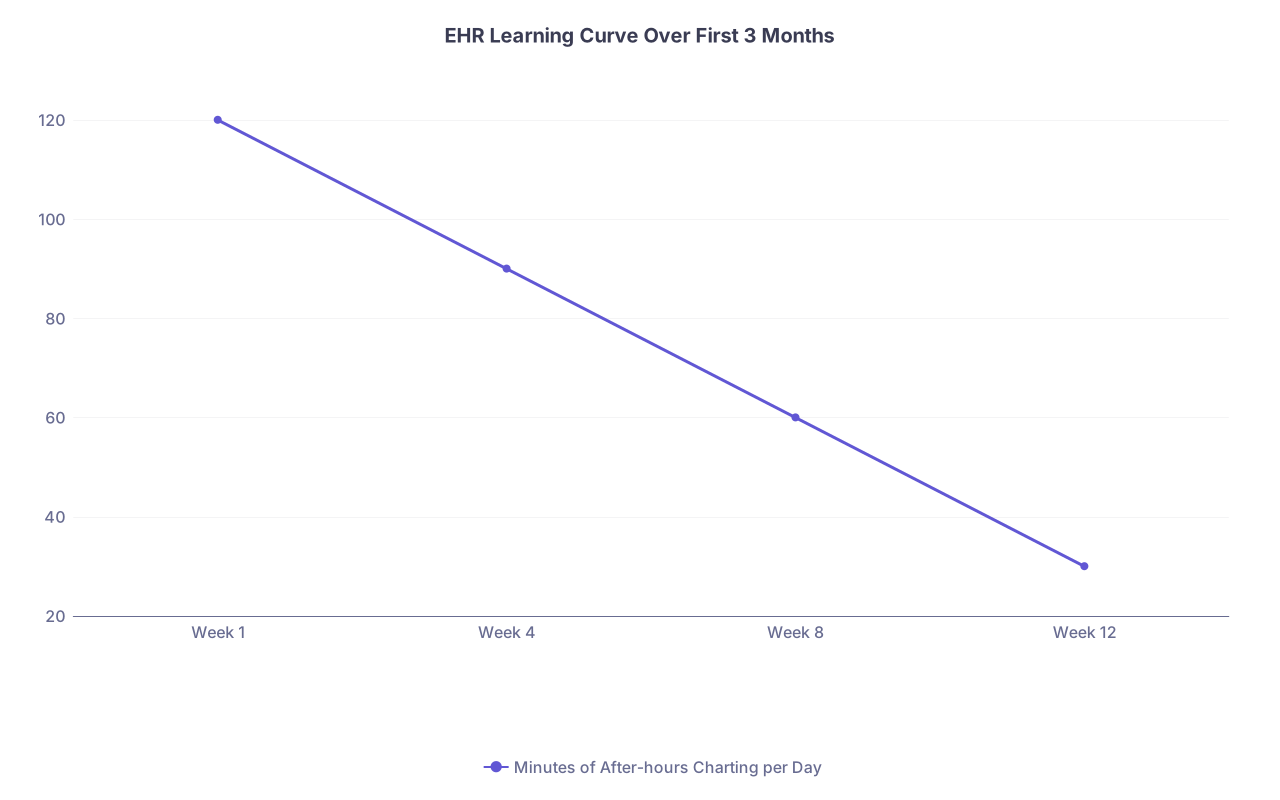
| Category | Minutes of After-hours Charting per Day |
|---|---|
| Week 1 | 120 |
| Week 4 | 90 |
| Week 8 | 60 |
| Week 12 | 30 |
FAQ – Exactly the Stuff You’re Afraid to Ask Out Loud
What if my colleagues think I’m incompetent because I’m slow with the EHR?
Then they’ve forgotten what it’s like to be new, or they’re covering their own insecurities. Competence is clinical judgment, communication, and safety. EHR speed is a skill, not intelligence. The people who actually matter — leadership, risk management, good nurses — care far more that you’re accurate than that you shave 3 minutes off a visit.Is it better to finish charts at home so I don’t keep patients waiting?
Not if “at home” means exhausted, half-remembering, and rushing through documentation at 11 PM. A short wait in clinic with safe, in-the-moment documentation is almost always better than pristine on-time flow with inaccurate or incomplete notes. Mix both: keep visits moving, but don’t leave everything for later. Aim to leave only cleanup, not reconstruction, for home.What if my RVUs are low while I’m still learning the EHR? Will they fire me?
In most reasonable practices, there’s an expectation of a ramp-up period. If your compensation is heavily productivity-based, you must have that ramp-up conversation early and document expectations. Being open about safety and long-term productivity is way better than silently drowning, then getting labeled “underperforming” with no context.I’m terrified of missing labs or critical inbox messages because I’m overwhelmed. What do I do?
Create a non-negotiable inbox routine: two specific times per clinic day (e.g., 11:30 and 4:30) plus a quick scan before you leave. Sort by priority: abnormal labs/diagnostics, refills, symptom messages, then FYIs. If possible, ask for staff filters or protocol standing orders to offload low-risk stuff. And if the volume is insane, document it and escalate — “This volume is affecting my ability to safely respond to critical results” is a patient safety issue, not a personal failing.Everyone else seems to have perfect notes and be out on time. Why am I the only one struggling?
You’re seeing the highlight reel, not the reality. You don’t see them clicking from home, on weekends, or using shaky templates they built years ago. A lot of “perfect” notes are just cloned text with legal and clinical landmines buried in them. Don’t compare your early, honest process to someone else’s 10-year shortcut stack.How do I know when I’m “good enough” with the EHR?
When three things stabilize: 1) You can see a normal clinic day without more than ~30–45 minutes of after-hours work, 2) You’re consistently closing most charts the same day, and 3) Your error rate (wrong meds, missing labs, documentation mismatches) is low and getting rare. You don’t have to love the system. You just have to reach the point where it’s not the main source of your anxiety or risk.
Key points, so you don’t have to re-read all this:
- Being slow in a new EHR is not the danger. Pretending you’re not slow — and cutting safety corners — is.
- You’re allowed to ask for a ramp-up, use protected micro-blocks, and prioritize “one patient, one nearly-complete chart.” That’s not weakness; it’s risk management.
- Shortcuts are tools, not magic. Build your own, understand them, and stay allergic to blind copy-forward.
You can be safe, a little slow, and still a damn good doctor. The speed comes. The judgment and caution you’re using right now? That’s what actually keeps patients alive.