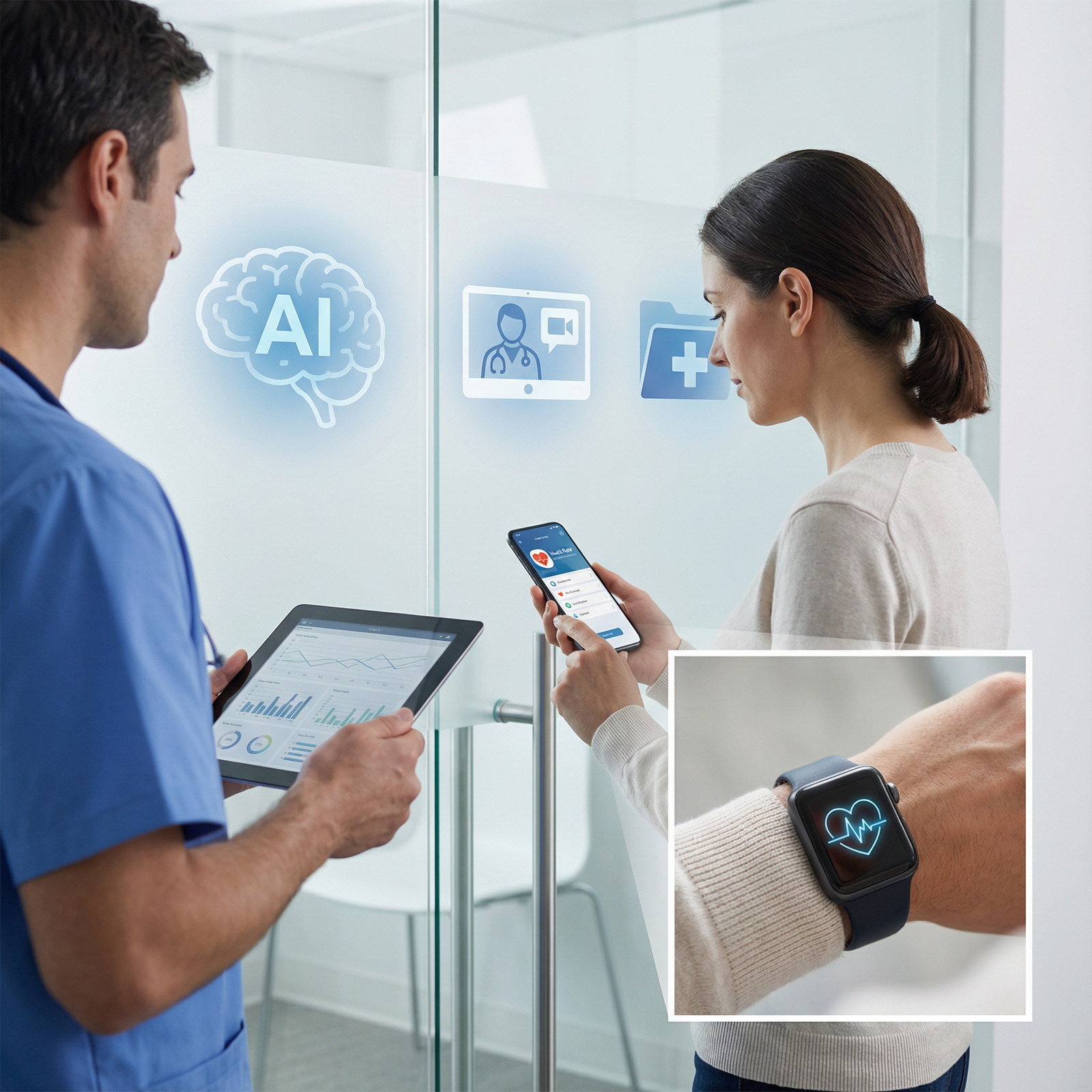
You are in clinic on a Tuesday afternoon. You’re already four patients behind. Your next visit is a 35‑year‑old with “palpitations” who sits down, skips the chief complaint, and launches:
“I’ve been tracking my heart rhythm with this,” they say, waving an off‑brand smartwatch you’ve never seen before. “Look, it says I’ve been in AFib like… a lot.”
The “ECG” tracing on their phone looks like a cartoon. The app logo screams more marketing than medicine. They are clearly anxious. They clearly trust this thing. And you… do not.
You also know you have about 12 minutes, your note from the last visit isn’t done, and your in‑basket has 18 unread “My watch says I have AFib” messages waiting.
This is where you live now. Post‑residency, attending life, real clinic, real time pressure. Patients using devices and apps you don’t trust—and expecting you to interpret them like a lab result.
Here’s how to handle that situation without blowing up rapport, burning time you don’t have, or putting yourself at medico‑legal risk.
1. First move: separate the relationship from the device
Your first job is not to evaluate the gadget. It’s to protect the relationship.
If you immediately say, “Yeah, I don’t trust that thing,” you’ve just told them, “I don’t trust something you trust.” They’ll hear it as a judgment on their judgment.
Instead, I start here:
“Thank you for bringing this in and showing me what you’re seeing. Let’s walk through it together.”
That one sentence does a few things:
- Validates their effort and concern.
- Signals collaboration, not dismissal.
- Buys you a few seconds to decide how much of this data you’ll engage with.
Then I pivot quickly to the clinical story:
“Before we get deep into the device data, tell me in your own words what you’ve been feeling—what symptoms you’ve noticed, and when.”
You’re telling them, politely, that their lived experience matters more than the gadget’s interpretation. You’re also anchoring the visit in something you actually trust: their history and your exam.
You do this because:
- Symptoms + context > unaudited consumer algorithm
- It keeps the visit from turning into a tech troubleshooting session
- It gives you medically documentable material even if you discount the device data
If they push back (“But look, it says AFib!”), I use something like:
“I definitely want to see what it’s showing you. I also know from experience that these devices sometimes label normal things as abnormal. So I use them as a clue, and then I confirm with medical‑grade tools when needed.”
That’s diplomatic, honest, and sets the hierarchy: medical‑grade confirmation is the standard.
2. Quick triage: is this data I can partially trust, or total garbage?
Not all wearables are equal. Your response depends heavily on which bucket this thing falls into.
Here’s how I mentally sort it during the visit.
| Device/App Type | Trust Level for Clinical Decisions |
|---|---|
| FDA‑cleared ECG (e.g., Kardia) | Moderate to High (within limits) |
| Major brand watch ECG (Apple) | Moderate (screening, not diagnosis) |
| FDA‑cleared BP cuff | High (if used correctly) |
| Generic heart rate/AFib app | Low |
| Sleep staging, stress scores | Very Low |
If it’s an FDA‑cleared device (AliveCor, Apple ECG feature, Omron BP with clearance), I’m more willing to:
- Look at specific tracings
- Align it with symptoms and use as a supporting piece of evidence
- Document that I reviewed it as ancillary data
If it’s a no‑name “AI arrhythmia detector” with wild claims:
- I treat it like a poorly calibrated screening questionnaire
- It may prompt me to ask more questions—not to assume diagnoses
- I do not let its “diagnosis” stand in the chart as fact
The phrase I use a lot:
“I treat this as a clue, not a conclusion. It might help us know what to look for, but we still need to confirm things using medical‑grade testing.”
That line keeps patients on your side, while quietly demoting the device.
3. Scripted, diplomatic ways to say “I don’t trust this”
You need a few stock phrases. Otherwise you end up improvising and either over‑promise or sound condescending.
Here are ones that work and do not blow up the visit:
“These devices are great at collecting a lot of numbers. They’re less great at interpreting those numbers accurately.”
“This watch is designed for wellness and personal tracking, not for making formal medical diagnoses. So I don’t rely on it the same way I do an EKG in the clinic.”
“I’m glad you’re paying attention to your health. I want to use that interest, but I also need to be honest about what this device can and cannot tell us.”
“Right now, the medical evidence shows that this type of device is pretty good at flagging possible issues, but it also has a lot of false alarms. So we use it as a reason to look closer—not as proof of a disease.”
For the really sketchy ones:
“I’m not comfortable using this app’s output to make decisions about your care because it’s not been properly validated or regulated. I’d rather base our decisions on tests that are known to be accurate.”
Notice the pattern:
- Affirm their engagement
- Critique the device’s limitations, not the patient’s choice
- Recenter clinical standards and evidence
4. What to actually do with bad or dubious data
So the watch/app is low‑trust. What’s your operational plan?
Step 1: Anchor in the basics
Always go back to:
- Detailed history
- ROS focused on red flags
- Physical exam, appropriate vitals
- Your differential—without the device
Document this clearly. If the wearable raised a concern (e.g., AFib), specifically document what you do and don’t see clinically.
Example:
“Patient presenting with concern for AFib based on consumer wearable alerts. No palpitations, syncope, chest pain, dyspnea. HR regular on exam, vitals stable. No irregularly irregular rhythm noted.”
You’re creating a clear dividing line between consumer concern and clinical findings.
Step 2: Decide: ignore, use as prompt, or formally evaluate?
In practice, I mentally sort visits like this:
- Symptomatic + device alerts + concerning story → formal testing (ECG, Holter, event monitor, labs, maybe referral)
- Asymptomatic + device alerts + benign exam → shared decision about how far to chase it
- Pure device noise (e.g., wild sleep stage metrics, “stress” score) → education and reassurance, no medical workup
I usually explain the reasoning explicitly:
“You’ve been having palpitations and your watch is flagging AFib. Even though I’m not sure how accurate the watch is, your symptoms plus your age and history tell me it’s reasonable to check a formal heart rhythm monitor.”
Or:
“Your watch is flagging ‘AFib’ but you’re not having symptoms, your exam is normal, and these particular devices do throw a lot of false alarms. We can go two ways:
- Option A: We get a formal monitor for a few days to be certain.
- Option B: We hold off unless you develop symptoms like X, Y, or Z.
What feels right to you?”
You’re using the device as the trigger for a risk conversation, not as the determining factor.
5. Protecting yourself medico‑legally without sounding defensive
Here’s the part that makes most early attendings nervous: documentation.
Patients now send huge data dumps via portal. If something real is hiding in there and you ignored it, you worry about being blamed.
You can’t analyze every 5‑second heart rate fluctuation, but you also don’t want a chart that looks like you blew them off.
Here’s a clean way to document:
Name the device and limitations.
“Patient presented data from an XYZ smartwatch app, which is a consumer wellness device and not validated for formal arrhythmia diagnosis.”Describe what you did with it.
“Reviewed screen captures of reported ‘AFib’ episodes. Tracings are low resolution and not interpretable to the level of diagnostic ECG.”State your clinical assessment and plan independent of the device.
“Given patient’s symptoms of intermittent palpitations and risk factors, will obtain 24‑hour Holter monitor regardless of consumer device data.”
Or, if you choose not to chase it:
“Given lack of symptoms, normal exam, and limitations of consumer wearable AFib detection (high false positive rate), no immediate cardiac workup is indicated. Advised patient to monitor for concerning symptoms (chest pain, dyspnea, syncope, sustained irregular heartbeat) and to seek urgent care if they occur.”
That chart tells any future reviewer: I heard the concern, I understood the data source, I didn’t blindly trust it, and I made a reasoned clinical decision.
6. Handling the portal deluge: set expectations early
After a few months in practice, you realize the real problem isn’t the one patient in front of you. It’s the 30 others sending daily screenshots from their rings and watches.
If you’re not proactive, this will eat your evenings and your sanity.
You need rules, and you need to say them out loud.
In‑person, I might say:
“I’m glad you’re tracking your health—that can be really useful. To keep things safe and manageable, here’s how I usually work with wearable data:
- If something from your device worries you, send a brief message describing your symptoms and attach one or two of the most relevant screenshots.
- I’m not able to interpret full data exports or daily logs outside of visits—it’s just too much information and not designed as a medical report.
- When we need a detailed review, we’ll schedule a visit so we can go through it properly.”
That boundary sounds reasonable because it is. You’re not tech‑phobic; you’re making it clear you are not an unpaid data scientist on call.
Document a version of this in your note or clinic handouts. And if your system allows, set an auto‑reply for messages tagged “wearable data” that lays out these expectations.
7. Conversations with the “true believers”
Every clinic has them now: the biohacker, the quantified self devotee, the “My ring knows my body better than any doctor” patient.
Arguing head‑on with their tech devotion is a waste of time. Your best move is to reposition your role, not fight the device.
A few lines that help:
“I’m not here to compete with your technology. I’m here to interpret it in the context of your biology, your history, and the medical evidence. The device sees numbers. I’m looking at the whole human.”
“Devices are very good at measuring things. They’re not good at asking, ‘So what? Does this matter? Do we need to act?’ That’s what I help you sort out.”
“I’m glad you’re engaged with your health data. My job is to make sure we don’t over‑treat noise or under‑treat real signals.”
If they say, “This app is FDA approved!” when it’s just “registered” or not cleared at all, I’ll calmly correct:
“There are a few different levels of FDA involvement. Some devices are just registered as low‑risk wellness tools. Others go through actual clearance or approval processes with clinical testing. This one falls into the lower category, so I can’t treat it like a diagnostic test.”
You’re not attacking their intelligence. You’re teaching them the difference between marketing and regulation.
8. When you actually can harness the wearable
Not all wearable data is garbage. Sometimes, if you guide it, it can help.
Common areas where I will lean in a bit:
- Heart rate trends with exercise tolerance in cardio/metabolic patients
- Step counts / activity levels in obesity, post‑MI rehab, deconditioning
- Semi‑structured BP logs from validated home cuffs
- Basic rhythm strips from Apple Watch or Kardia when captured during symptoms
Key word: guided.
You set specific targets and interpretation rules:
“Let’s use your watch to track your daily steps. Our first goal is a 7‑day average above 6,000. Don’t worry about the ‘calories burned’ or ‘VO2 max’ it suggests—I’m not using those. We’ll just look at the weekly step trend.”
Or:
“If you get that ‘irregular rhythm’ alert again, try to capture the ECG tracing and then send me one screenshot with a brief note about how you felt at that moment. If this keeps happening, we’ll get a formal monitor.”
You are limiting what parts of the device’s output you’re willing to consider and clearly stating it.
9. Clinic workflow: staying sane with tech‑heavy patients
If your patient population is very tech‑heavy, you’ll drown in this unless you build micro‑systems.
A few practical tactics I’ve seen work in real clinics:
Ask MA or nurse to ask one screening question at intake: “Do you have any home or wearable readings you want the doctor to consider today?” If yes, they note “See device” and maybe snap one representative photo into the chart. This heads off the 5‑minute show‑and‑tell.
Timebox device review in your own head. For example: “I will spend max 2 minutes scrolling this app. If it’s not immediately clear and relevant, I pivot back to my usual evaluation.”
Create a reusable dotphrase (smartphrase) for documentation:
- “.WEARABLELIMITS – Patient uses consumer wearable. Explained device is not medical‑grade; will use data as supplemental only. Noted potential for false positives/negatives. Plan based on clinical evaluation as documented.”
You paste, you tweak one sentence, you move on. That saves you several minutes of typing each time.
10. When the patient flatly says, “But my device is never wrong”
At some point, you’ll hit someone who sees their watch as gospel. Pushing harder with facts doesn’t work; it just hardens their position.
You reframe around values and decision‑making under uncertainty:
“I wish any single tool were 100% right all the time—would make my life simple. In reality, every test in medicine has false positives and false negatives. Even hospital ECGs miss things sometimes.
So I think about two questions:
- What’s the chance this is a real problem?
- What are the risks of chasing it vs not chasing it?
With your situation, here’s how I see those tradeoffs…”
Then you lay it out in plain language: what tests would entail, what they cost (time, anxiety, maybe money), what you’re worried about if you ignore vs investigate.
If they still insist:
“I hear that you place a lot of trust in this device. I’m not comfortable making a diagnosis solely based on it, but I’m willing to order [X reasonable test] to help us both feel more confident. Beyond that, I’d be stepping outside what I believe is good, evidence‑based care.”
That’s the line. You’re respecting them, but you’re also making it clear your license is not subordinate to their phone.
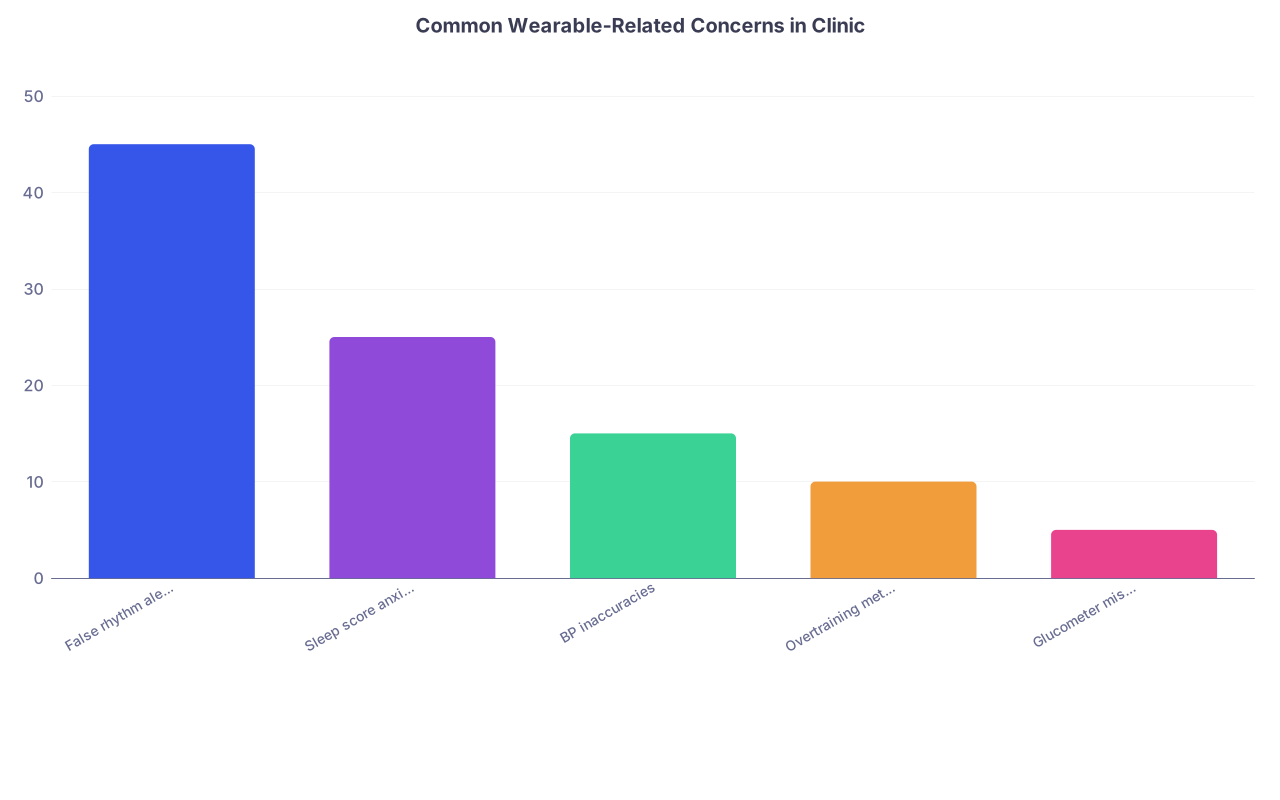
| Category | Value |
|---|---|
| False rhythm alerts | 45 |
| Sleep score anxiety | 25 |
| BP inaccuracies | 15 |
| Overtraining metrics | 10 |
| Glucometer mismatch | 5 |
11. Talking to your group or system about this
If you’re in a larger practice or health system, you shouldn’t be reinventing this solo. The workload and medico‑legal exposure are shared.
Things worth pushing for at the group level:
- A brief guideline on wearable data in your clinic handbook: what’s considered clinically actionable, what isn’t.
- EHR smartphrases standardized across clinicians so you’re not each writing your own disclaimers.
- Patient‑facing education: a one‑page “How we work with your wearables” handout or portal message.
This also protects you. If the group has a stated policy that consumer wearables are considered screening tools only and not diagnostic tests, you’re standing on a shared, defensible standard.

| Step | Description |
|---|---|
| Step 1 | Patient presents wearable data |
| Step 2 | Take symptom history |
| Step 3 | Order medical grade tests |
| Step 4 | Explain device limits |
| Step 5 | Document device as supplemental |
| Step 6 | Set portal data expectations |
| Step 7 | Concerning symptoms or risk? |
12. The bottom line: what to remember on a busy clinic day
When you’re five patients behind and someone opens their app, keep three things in your head:
Protect the relationship first. Validate their concern, critique the device—not the person. Use phrases like “clue, not conclusion” and “wellness tool, not diagnostic test.”
Anchor in real medicine. History, exam, risk factors, and validated tests still run the show. Use the wearable as a trigger for a conversation, not as a lab result to act on blindly.
Set boundaries and document clearly. Limit how much data you’ll review, say it out loud, and chart that you considered the device, acknowledged its limitations, and based decisions on clinical judgment.
Do those three consistently, and you’ll handle “My device says…” visits without wrecking your schedule, your rapport, or your liability.