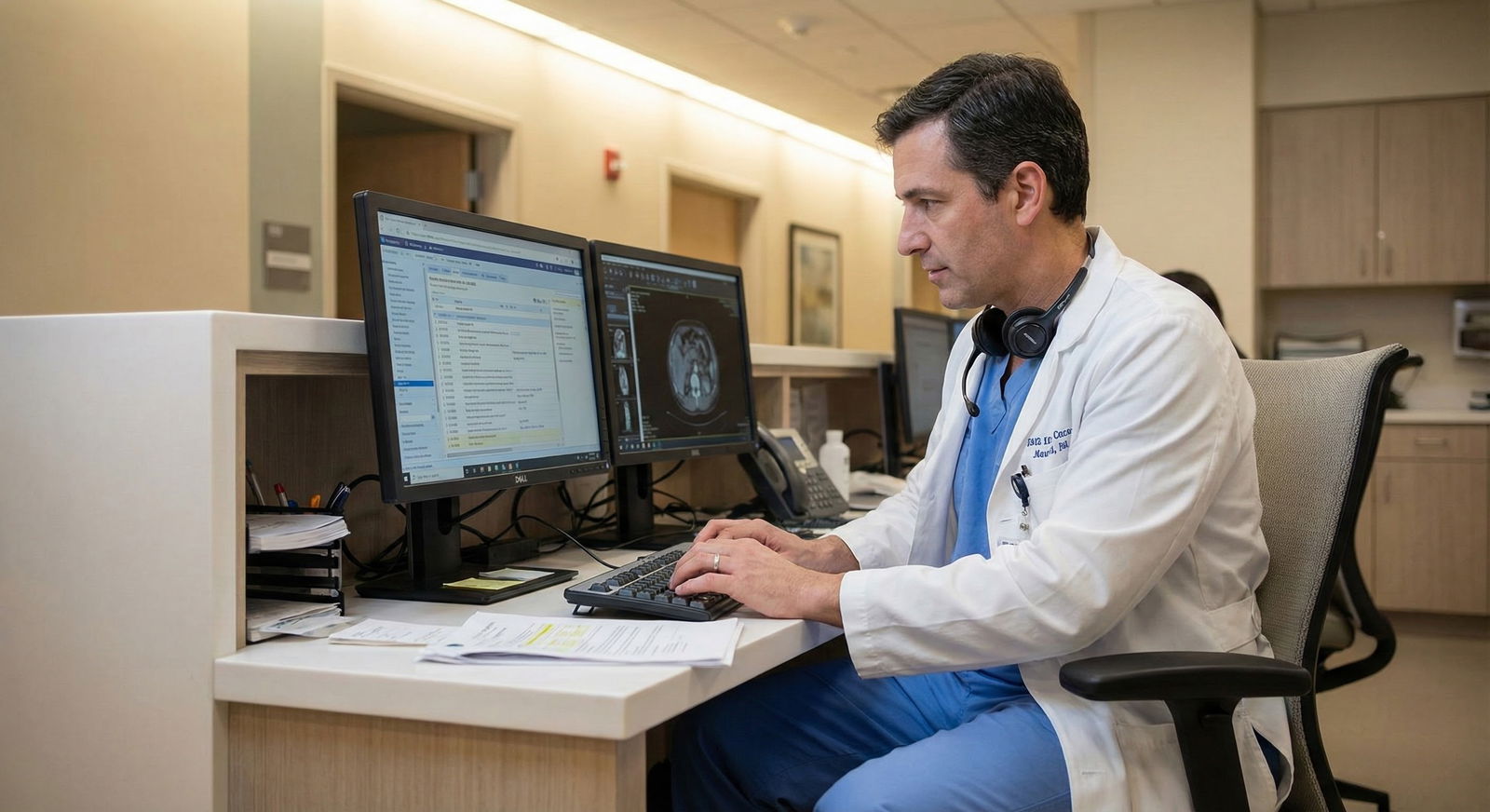
The shock of going from Epic to a low‑tech hospital will break people who assume “the EHR is the job.” It is not. Your brain is the job.
Here’s how you survive—and actually do well—when you’ve trained in a shiny academic center on Epic and now you’re at a place with a home‑grown EHR, paper orders, or some clunky Meditech/Cerner variant that looks like Windows 95.
1. Accept the Reality Fast (Or You’ll Be Unsafe)
You cannot fight the system and do good work at the same time. If you show up thinking, “This is so stupid, why don’t they just get Epic?” you will:
- Miss how things actually get done
- Alienate the nurses and unit clerks who can save you
- Make dangerous assumptions (like “oh, of course they auto‑check allergies” — maybe they don’t)
You need a 48–72 hour mental reset:
- Stop comparing everything to Epic out loud. People already know their system is old. They’ve heard the Epic pitch from multiple C‑suites and sales reps.
- Decide your priorities: safety, efficiency, sanity. In that order.
- Tell yourself: “I’m going to learn this system as well as I knew Epic. That’s my job this month.”
The tech will feel like a downgrade. The autonomy and speed of decision‑making probably will not. Trade-offs.
2. Your First Week: Concrete Survival Moves
Your first week determines whether you flail for six months or you get competent in three weeks.
A. Map the “Hidden System” with Three Questions
For every task you do (admit, discharge, order imaging, call a consult), ask:
- “Where does this get documented?”
- “Who else sees it and how?”
- “What is the failure point people here actually worry about?”
Example: You’re used to Epic where a cardiology consult is an order + message. At your new place:
- Maybe it’s a paper consult sheet in a wall slot
- Or an order that prints on a physical printer in the cardiology office
- Or a direct phone call plus a note in a separate messaging system
Ask a senior nurse: “If I need a stat cardiology consult at 2 am, what’s the actual fastest way people do it here?” That phrasing gets you real answers, not policy answers.
B. Shadow the Right People (Not Just IT)
IT will show you the “official” workflow. Core, but incomplete.
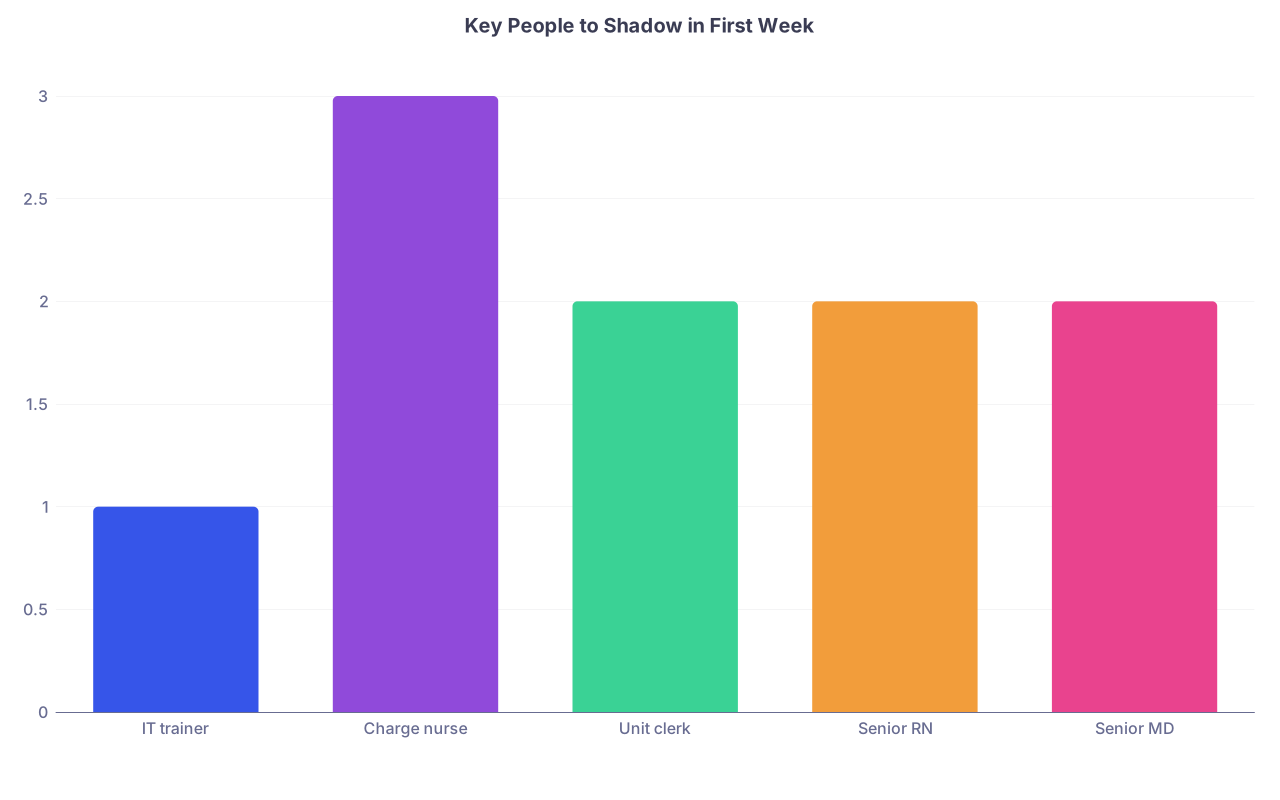
You also need 1–2 hours each with:
- A charge nurse on your main unit
- A unit clerk or ward secretary
- A senior night nurse (if you work nights)
- One long‑time hospitalist or ED doc who’s known to be efficient, not burned out
You ask them:
- “Show me how you place/track stat labs.”
- “How do you know imaging actually happened?”
- “Where do things get lost here?”
Take notes. This is gold.
| Category | Value |
|---|---|
| IT trainer | 1 |
| Charge nurse | 3 |
| Unit clerk | 2 |
| Senior RN | 2 |
| Senior MD | 2 |
Values = relative importance (higher is more essential for real workflow knowledge).
C. Build Your “Day 1–3” Checklist
Hand‑write or type a one‑page cheat sheet you keep in your pocket or on your workstation:
- How to admit (what buttons/forms, where H&P lives, where to put admitting diagnosis)
- How to discharge (med rec, follow‑up orders, discharge instructions)
- How to order:
- Labs
- Imaging
- Meds (scheduled vs PRN vs one‑time)
- How to call a consult and how it’s actually acknowledged
- Where to see:
- Vitals
- I/O
- Micro results
- Old imaging from years ago
In Epic, half of this is “obvious” because the UI guides you. In low‑tech systems, there are 2–3 extra steps per action, and they’re not always visible.
3. Rebuilding Your Workflow Without Epic Crutches
Epic spoils you: smart phrases, order sets, automatic med reconciliation prompts, all labs in one view. Lose that, and suddenly you feel like your IQ dropped 20 points.
You fix that by externalizing the structure Epic used to provide.
A. Use Physical or Simple Digital Checklists
Make the most boring thing in the world: laminated checklists. But they work.
Example: Daily rounding checklist for an inpatient doc:
- New labs? (CBC, BMP, relevant others)
- New imaging?
- Consultant recommendations?
- Antibiotic day #? De‑escalate?
- Lines/tubes? Still needed?
- VTE prophylaxis?
- Diet / mobility / PT-OT?
- Discharge barriers?
In Epic, you could half‑rely on BestPractice Advisories and flowsheets nudging you. Here, you have to remind yourself. A 20‑second checklist per patient keeps you from missing things.
B. Create Your Own “Smart Phrases” Outside the EHR
If your system has terrible templates, do this:
- Build common note templates in a text expander (PhraseExpress, TextExpander, AutoHotkey, even basic copy‑paste documents).
- Example blocks: H&P skeleton, progress note, ICU daily note, discharge summary shell.
Keep them simple. No one cares how pretty your note is; they care if it’s readable and contains the plan. Especially in low‑tech systems where other clinicians can’t click through endless tabs.
C. Standardize Your Admission and Discharge Flow
Low‑tech systems are dangerous at transitions.
For admissions, pick a fixed sequence (you follow it every time):
- Review outside records (if available) – often manually scanned PDFs or faxed pages.
- Open vitals, labs, meds – even if hard to find; build muscle memory.
- Full H&P note in your template.
- Core order bundle you essentially recreate:
- IV/PO fluids
- Diet
- VTE prophylaxis
- Code status
- Pain control
- Bowel regimen
- PT/OT if indicated
- Nursing communication (special instructions that may not exist as orders).
You’re basically rebuilding your own “admit order set” in your head and notes.
For discharges:
- Always do discharge med list with the actual med bottles or a printed list when possible, not just what the EHR says. Low‑tech med reconciliation is often bad.
- Confirm follow‑up appointments are actually scheduled, not just “advised.” Ask the nurse or unit clerk: “How do patients here actually leave with appointments?”
- Double‑check you issued every script needed (pain meds, new chronic meds, short steroid courses).

4. Staying Safe When You Can’t Trust the System Fully
The scariest thing in low‑tech hospitals: fragmentation. Allergies in one database, meds in another, old records in a binder, vitals in a paper flow sheet.
You act like the safety net. Not the EHR.
A. Double‑Source Critical Data
Allergies, home meds, dialysis schedule, anticoagulation, last echo, prior stress test – don’t trust a single source.
You:
- Ask the patient or family directly
- Ask the nurse what they have
- Check whatever record system exists
- For high‑risk stuff (warfarin, DOACs, insulin), skim prior notes/med lists if at all possible
If there’s a conflict, you document: “Home meds unclear; patient reports X, prior med list shows Y. For safety, will do Z and confirm with pharmacy.”
That matters medicolegally and practically.
B. Build Your Own Red‑Flag System
Low‑tech EHRs often lack meaningful alerts or over‑alert so much you ignore everything. You cannot rely on them to catch:
- Renal dosing issues
- QT‑prolonging combos
- Duplicate anticoagulation
- High‑risk drug interactions
So you:
- Use a reliable external drug interaction checker (Lexicomp, Micromedex app) for tricky combos.
- Create your own mental red‑flag list: “I always manually check dosing for vancomycin, aminoglycosides, NOACs in CKD, chemo agents, and insulin drips.”
You’re not going to check every interaction for every Zofran dose. But when your spidey sense tingles, listen to it.
C. Don’t Overestimate the Lab and Imaging Systems
At high‑tech places, Epic messages you when stuff finalizes. In low‑tech setups:
- Results may print on paper in the nursing station
- Or appear in a separate lab viewer that does not push alerts
- Or not be visibly flagged as “new” vs “old”
Solution:
- For critical labs or imaging that matter today (e.g., CTA chest, troponins, cultures), you set personal reminders: write it on your list, or even a timed phone reminder.
- Ask nurses, “How do you get notified of critical results here?” Then mirror their method.
5. Working With Nurses and Staff Who Know the System Better Than You
If you do this right, the nurses, unit clerks, and techs will cover 80% of your learning curve. If you do it wrong, they’ll quietly let you drown.
A. Say This, Not That
Bad: “Wow, I can’t believe you’re still on [old system]. At my residency we had Epic, it was so much better.”
Better: “I trained on Epic, so this is new for me. You all know this system way better than I do—if you see me doing something the long or wrong way, please tell me. I’ll be grateful, not offended.”
Then prove it by actually changing your behavior when they help.
B. Learn Their Pain Points and Help Where You Can
Ask the nurses on day 2–3:
- “What drives you most crazy about how doctors use this system?”
- “What are small things I can do in my notes or orders that make your life easier?”
Common things you’ll hear:
- “Put the plan in a clear, numbered list at the top of your note.”
- “Don’t bury changes in meds at the bottom.”
- “If a patient is NPO or needs isolation, write it clearly in orders and notes.”
These are tiny adjustments that buy enormous goodwill.
| Action You Take | Why It Helps Them |
|---|---|
| Clear, bulleted plan at top of notes | Faster to see orders/tasks |
| Call for big plan changes, not just note | Avoids missed instructions |
| Write specific PRN parameters | Less paging for clarification |
| Confirm discharge time early | Helps them coordinate work |
| Clarify code status early in stay | Reduces confusion in emergencies |
6. Adapting Your Documentation Standards (Without Burning Hours)
You cannot write 12‑page “Stanford‑style” notes in a low‑tech EHR with no templates and slow loading. You will hate your life and still miss key data.
You shift strategy.
A. Go for “Readable and Defensible,” Not “Epic‑Pretty”
Your note should answer, for any reader:
- What is this patient here for?
- What are the active problems today?
- What’s the plan for each problem?
- What are we watching for?
You do not need to paste in 3 pages of lab values. The system already has them (somewhere). Summarize instead:
“Labs: WBC 13 -> 10, Hgb stable 9–9.2, Cr 1.1 (baseline 1.0), lactate down from 3.5 to 1.8.”
Fast to write. High signal. Legally fine.
B. Use Consistent Structures
Even without smart phrases, you can keep the same internal format every time. Example progress note format:
- Subjective (1–2 lines)
- Objective (vitals summary + key findings)
- Assessment/Plan by problem
If every note looks the same, nurses and consultants quickly know where to find what they want.
C. Be Strategic With Copy‑Forward
If your system has any copy‑forward or clone feature, use it—but clean aggressively:
- Delete irrelevant prior problems
- Update numbers and timelines
- Avoid “day 6 of day 4” sepsis errors that make you look sloppy and confuse everyone
If the system has no copy‑forward: accept it. Short, focused notes beat bloated novels.
7. Speed and Sanity: Getting Back to “Epic‑Level Efficiency”
You will be slower for 2–4 weeks. That’s fine. The danger is staying slow for 6–12 months because you never deliberately optimize.
A. Track What’s Slowing You Down
For a week, when you feel friction, jot down the category:
- “Finding old imaging takes forever”
- “Med reconciliation is chaos”
- “Ordering usual admit bundle is clunky”
At the end of each shift, pick one friction point and solve or partially solve it.
Examples:
- Create a “shortcut list” of commonly used imaging exams with exact ordering names.
- Make your own med rec checklist you follow with every patient.
- Store your common admission orders as a text block you paste and then adjust.
Small optimizations compound very quickly.
B. Use Tech Outside Their Tech
The hospital might be low‑tech. You don’t have to be.
You can (within HIPAA, obviously):
- Use a personal, offline note app with generic templates (no PHI) for your H&P and daily note skeletons.
- Use set phrases in text expanders for common statements: “Discussed risks/benefits of anticoagulation including bleeding; patient agrees to proceed.”
- Keep a secure, personal reference library: common order sets translated into this hospital’s language, phone numbers, typical consultant preferences.
C. Accept “Good Enough” and Protect Your Off‑Time
The temptation in a clunky EHR is to stay late “fixing” notes and cleaning up every detail. Don’t. You’ll burn out fast.
Your bar:
- Safe
- Clear
- Legally defensible
- Not perfect
If your notes and orders meet that standard, go home.
| Period | Event |
|---|---|
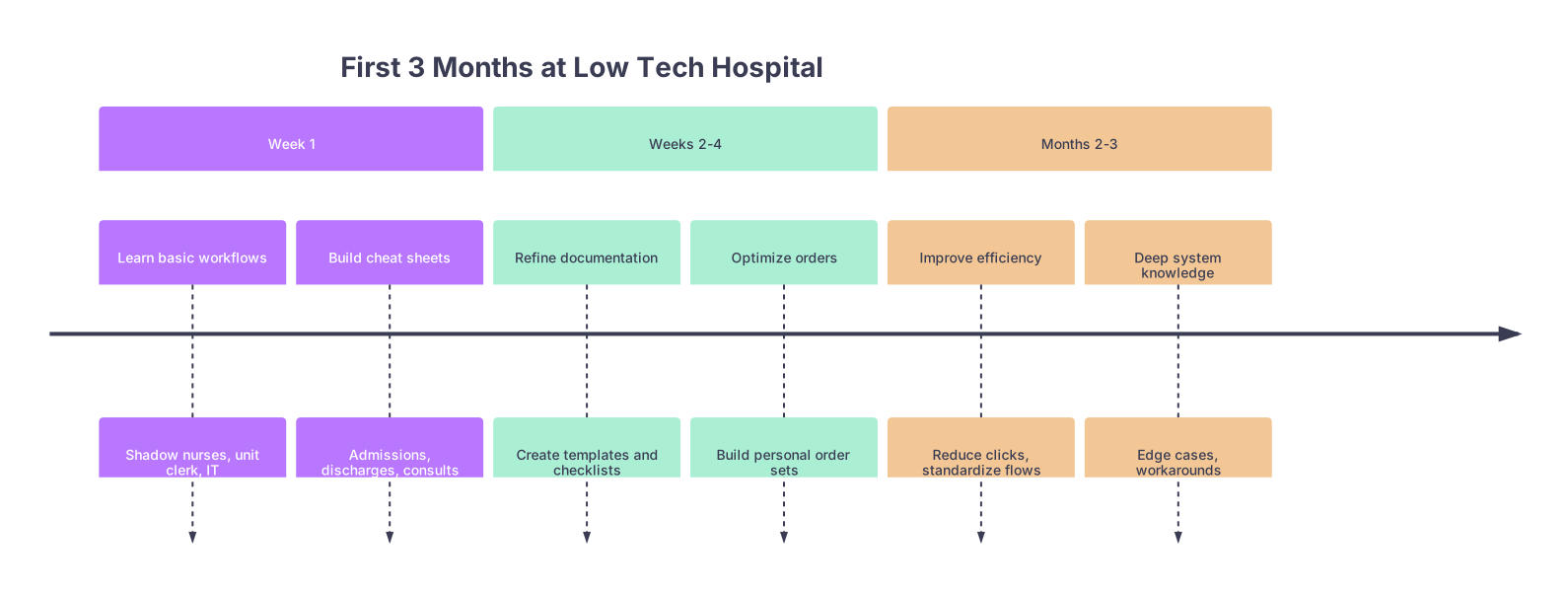
| Week 1 - Learn basic workflows | Shadow nurses, unit clerk, IT |
| Week 1 - Build cheat sheets | Admissions, discharges, consults |
| Weeks 2-4 - Refine documentation | Create templates and checklists |
| Weeks 2-4 - Optimize orders | Build personal order sets |
| Months 2-3 - Improve efficiency | Reduce clicks, standardize flows |
| Months 2-3 - Deep system knowledge | Edge cases, workarounds |
FAQ (Exactly 3 Questions)
1. Should I push my new hospital to adopt Epic or another modern EHR?
Not in your first 6–12 months. You’re brand‑new; you don’t know the politics, the budget, or the failed IT projects from five years ago that scarred everyone. First, master their existing system and become someone people trust. Later, if you stay and have political capital, you can join or start an IT/physician advisory group and give practical input. But coming in hot as “the Epic person” is a fast way to be ignored.
2. How long does it usually take to feel comfortable in a low‑tech system after Epic?
If you’re intentional, about 3–4 weeks to feel “not lost” and 2–3 months to be efficient. The people who struggle for a year are the ones who keep mentally living in Epic, refuse to build their own checklists/templates, and don’t lean on nurses and clerks to learn how the place really works. If you treat it like learning a new language and practice daily, the curve shortens dramatically.
3. Is it ever unsafe enough that I should just leave and find a more modern hospital?
Yes. If, after a few months, you see repeated, systemic safety failures that leadership shrugs off—labs not reported, imaging lost, med errors baked into workflows—and your attempts to raise concerns go nowhere, you should seriously consider leaving. Tech can be primitive and still safe if people are disciplined. But if the culture accepts dangerous workarounds as “just how we do it,” that’s not a tech problem, that’s a patient safety problem. You do not need to sacrifice your license and conscience for a hospital that refuses to improve.
Key points:
- Stop comparing everything to Epic and learn how this hospital truly works—through nurses, clerks, and your own checklists.
- Rebuild structure outside the EHR: physical checklists, simple templates, personal “order sets,” and red‑flag habits for safety.
- Optimize deliberately over the first 2–3 months; accept “safe and clear” over perfect, and protect your time and sanity.