Is Mindfulness ‘Unscientific’? A Look at the Trials Physicians Cite Wrong
Why do so many smart physicians dismiss mindfulness as “woo” while quoting trials they clearly have not read past the abstract?
Let me be direct: in medicine, mindfulness has a PR problem created less by yoga influencers and more by clinicians who repeat half-remembered sound bites from bad journal clubs. You’ve probably heard some of these:
“Mindfulness is just placebo.”
“The studies are all tiny and low quality.”
“Once you control for expectations, the effect disappears.”
“It’s unscientific – it’s basically spirituality.”
Most of that is wrong or at least badly outdated.
The real story is messier. Some mindfulness research is garbage. Some is excellent. And some of the “classic” trials people cite as proof for or against mindfulness are interpreted backwards.
Let’s walk through what the data actually shows – and what your colleagues are usually getting wrong when they condemn or worship mindfulness.
The First Myth: “There’s No Real Evidence”
This one dies in about 30 seconds if you actually look at the literature after 2010 instead of recycling a 2007 review you saw in residency.
There are now dozens of randomized controlled trials and multiple meta-analyses on mindfulness-based interventions (MBIs), mainly:
- MBSR (Mindfulness-Based Stress Reduction)
- MBCT (Mindfulness-Based Cognitive Therapy)
- Various mindfulness-based programs adapted for pain, oncology, cardiology, burnout
Not all created equal, obviously. But “no evidence” is simply false.
Here’s the level of data we’re actually dealing with.
| Area | Evidence Summary |
|---|---|
| Depression relapse | Strong, multiple RCTs, meta-analyses |
| Chronic pain | Moderate, RCTs vs active controls |
| Anxiety symptoms | Moderate, consistent small–medium effects |
| Burnout in clinicians | Emerging, small RCTs, mixed results |
| Blood pressure | Weak–moderate, heterogenous trials |
The trial many people misquote
A classic example: the 2014 JAMA Internal Medicine meta-analysis by Goyal et al. People love to say, “Even JAMA showed mindfulness doesn’t work better than placebo.”
That’s not what the paper said.
What the meta-analysis actually found:
- For anxiety and depression, mindfulness vs non-specific active controls (things like health education) produced small to moderate effect sizes (around 0.3–0.4).
- That’s similar in magnitude to what we accept for many pharmacologic interventions in mild–moderate mood symptoms.
- For pain, modest reductions in pain severity and improved quality of life.
The authors did flag methodological limitations, risk of bias, and heterogeneity. Fine. You should too. But saying “it’s no better than placebo” is lazy and wrong. They didn’t even test mindfulness vs true placebo in most trials; they compared it to other credible interventions.
So if you’re comfortable prescribing SSRIs for mild–moderate depression but call mindfulness “unscientific,” you’re not being evidence-based. You’re stating a preference.
What Physicians Consistently Get Wrong About the Trials
Most of the bad takes I hear at conferences or on rounds boil down to four misunderstandings.
1. Confusing “not a miracle” with “no effect”
I’ve heard variations of this in hospital hallways:
“Oh yeah, didn’t that big trial show mindfulness was no better than CBT / meds / whatever?”
Translation: “The effect size wasn’t massive, so I mentally filed it as negative.”
In reality, a lot of mindfulness work shows:
- Modest symptom reductions
- Similar effect sizes to first-line psychological therapies
- Often with lower side-effect burden and decent durability, especially in depression relapse
The MBCT trials for recurrent depression are a good example. Multiple RCTs have shown that MBCT is about as effective as maintenance antidepressants for preventing relapse in patients with 3+ prior episodes. Not perfect, not a panacea, but pretty solid.
Calling that “unscientific” while praising marginal effect sizes in other areas of medicine is hypocrisy dressed up as skepticism.
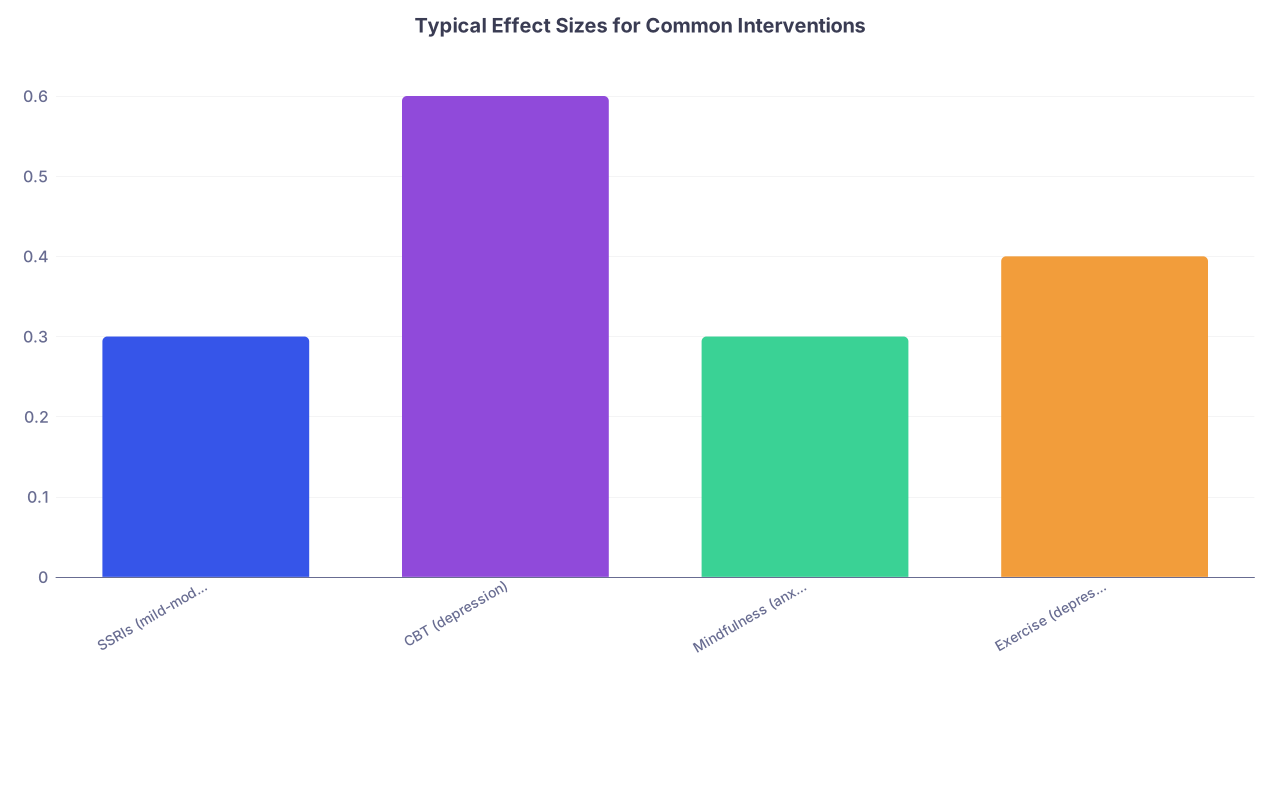
| Category | Value |
|---|---|
| SSRIs (mild-mod depression) | 0.3 |
| CBT (depression) | 0.6 |
| Mindfulness (anxiety/depression) | 0.3 |
| Exercise (depression) | 0.4 |
2. Ignoring the control condition
“This trial only compared mindfulness to waitlist.”
Right. And when a CBT trial does that, you don’t immediately call CBT “unscientific.”
The control group matters. A lot. A mindfulness effect vs:
- Waitlist: usually larger
- Education / psychoeducation: smaller
- Active psychotherapies (e.g., CBT): often comparable
The problem isn’t that mindfulness “fails”; it’s that most clinicians never read what it was compared to. They just remember “wasn’t impressive” and move on.
You’d never accept that level of sloppiness for an oncology trial. But for anything involving breath and attention? Suddenly nuance dies.
The “Placebo” Argument: Shallow Skepticism
The most common throwaway line I hear:
“Mindfulness is just a placebo effect plus social support.”
There are three problems with this.
1. Placebo effects are not trivial – and they affect everything
If you’re going to dismiss mindfulness because of expectation effects, you need to apply the same standard to:
- PT referrals
- Nutritional counseling
- Half of what’s called “lifestyle medicine”
- Honestly, a nontrivial chunk of outpatient prescribing
Expectancy and therapeutic alliance are built into virtually every intervention we deliver. They are not an argument against mindfulness. They are part of why it works, like everything else.
2. We do have active-control and dismantling trials
There are trials that attempt to separate out specific mindfulness practice from:
- Group support
- Education
- Relaxation
- Generic stress management
They’re imperfect, but some show that explicit mindfulness training adds incremental benefit over and above generic stress management or relaxation.
Are these effects huge? No.
Do they exist? Yes.
Is that more “woo” than what we accept for a lot of our standard-of-care behavioral interventions? Not really.
3. The “it’s just placebo” line is cherry-picked
What skeptics usually do is grab one trial with a null result vs a strong active control, then generalize to the entire field. They don’t do that with statins, where we have discrepant primary prevention vs secondary prevention narratives. They don’t do it with psychotherapy either.
But breath and awareness? Suddenly one null trial “proves” the whole concept is fake.
This isn’t skepticism. It’s taste dressed up as evidence.

Where the Evidence Is Actually Strong – And Where It’s Weak
If you strip away the marketing and the backlash, here’s the landscape.
Stronger territory: depression relapse, some chronic pain, mild–moderate mood symptoms
MBCT for depression relapse prevention in recurrent depression has some of the more robust data:
- Multiple RCTs vs maintenance antidepressants
- Reduced relapse risk particularly in patients with more prior episodes or higher baseline reactivity
- Health economic analyses in some settings showing reasonable cost-effectiveness
For chronic pain, especially back pain and some musculoskeletal conditions, MBIs often:
- Reduce pain interference and distress
- Improve function and quality of life
- Sometimes lower pain intensity modestly
Not every trial is positive. But the signal is consistent enough to say: this isn’t magic, but it’s clinically useful for some patients.
For anxiety, insomnia, stress, mild–moderate depressive symptoms, the story is similar: small to moderate effects, especially when the program is standardized and delivered with some fidelity (not “download an app and hope”).
Weaker or overhyped territory
This is where the “woo” crowd and the “everything is placebo” crowd both screw it up.
- Oncology survival: Very weak. Mindfulness can improve quality of life, distress, sleep. But claims about extending survival are mostly fantasy.
- Cardiovascular events: BP may improve modestly in some groups; hard outcomes data is thin at best.
- Dramatic physician burnout fixes: You’ve probably seen the hospital that offers resilience modules instead of staffing. The evidence that an 8-week mindfulness course reverses structural burnout is pretty terrible. It helps individuals cope. It does not fix broken systems.
If you hear a hospital administrator quoting “mindfulness reduces physician burnout by 60%,” you’re hearing selective reading of underpowered, short-term, self-report outcomes in highly selected volunteers.
Yes, that’s a thing.
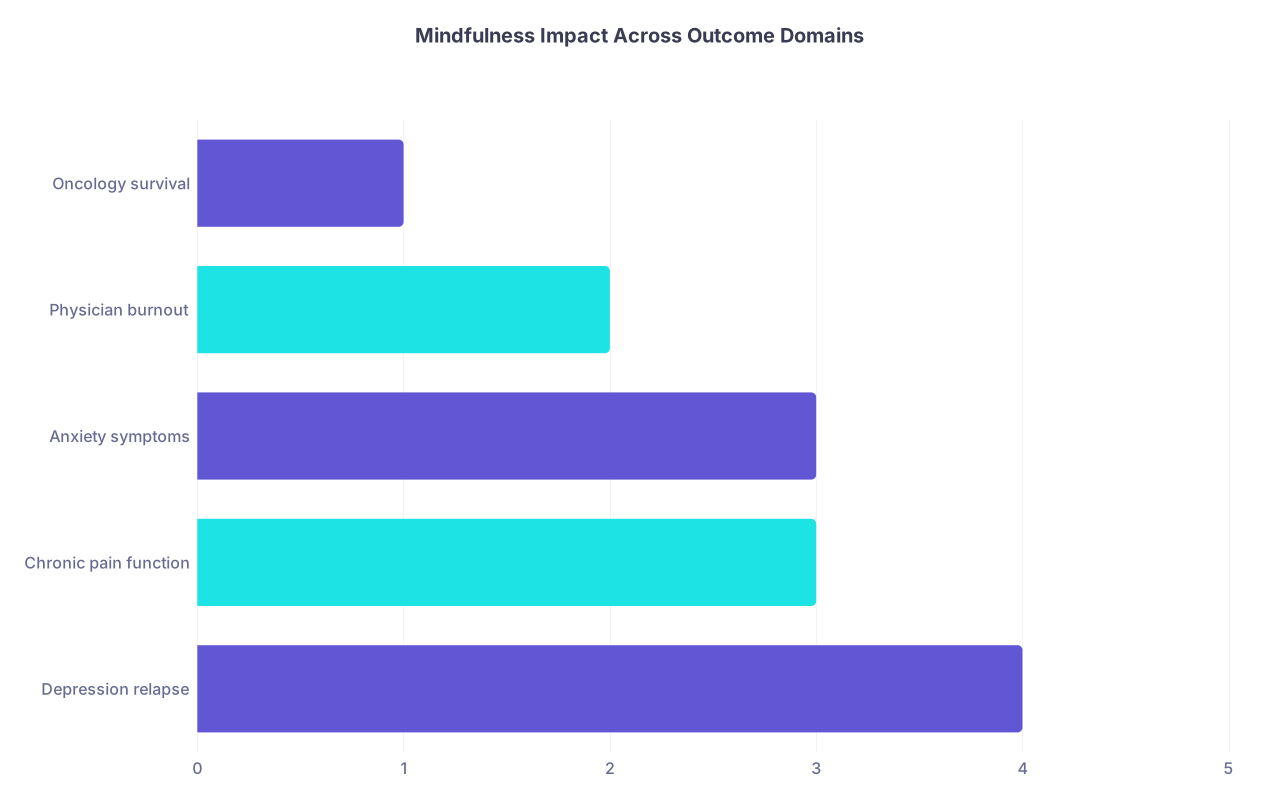
| Category | Value |
|---|---|
| Depression relapse | 4 |
| Chronic pain function | 3 |
| Anxiety symptoms | 3 |
| Physician burnout | 2 |
| Oncology survival | 1 |
(Scale: 1 = very weak, 5 = strong and consistent evidence)
The “Unscientific” Label: Usually About Culture, Not Data
Let’s be honest. When a cardiologist calls mindfulness “unscientific,” they’re rarely making a rigorous methodological critique.
They’re reacting to the cultural packaging.
Mindfulness got exported to Western medicine wrapped in:
- Retreat centers
- Soft voices and bells
- Spiritual language from Buddhism
- Corporate wellness programs
You know what it did not get wrapped in?
- Pharmacokinetics
- Receptor diagrams
- Mechanistic biomarkers
So physicians assume it’s unscientific because it doesn’t look like what they were trained to respect. That’s not evidence. That’s aesthetic bias.
The irony is that the underlying mechanisms are exactly the sort of things medicine already cares about:
- Attention regulation
- Emotion regulation
- Reduced rumination
- Altered appraisal of pain and distress
- Changes in default mode network activity and connectivity in imaging studies
Yes, the neuroscience data is preliminary and full of overinterpretation. But it’s not “nothing.”

The Trials Physicians Cite Wrong – Specific Patterns
I keep hearing the same mis-citations over and over. The details vary; the pattern does not.
Pattern 1: “That big meta-analysis showed no benefit”
You ask which one. You get either a blank stare or a fuzzy “the JAMA one.”
Often they’re referring to:
- The Goyal JAMA IM 2014 meta-analysis, which actually found small to moderate benefits; or
- A specific trial with an active control where mindfulness did not outperform a high-quality comparator, but did show meaningful within-group improvement
The misrepresentation: turning “not superior to another good treatment” into “no effect.”
You’d never do that with two BP meds that show equivalence. But mindfulness seems to license sloppy thinking.
Pattern 2: “It’s all low-quality trials”
There are absolutely low-quality MBI trials. Tons of them. Underpowered, badly controlled, poorly described.
But that is also true of:
- Many psychotherapy trials
- Many exercise and lifestyle interventions
- A shocking number of early-phase pharmacologic studies
Yet we do not throw out entire domains because early trials were messy. We look for the better-designed RCTs, larger samples, clear protocols.
In mindfulness, those exist. MBSR and MBCT have far more standardization than the typical “stress management” mush you see in primary care research.
Pattern 3: “I tried an app; it didn’t help my burnout, so…”
Anecdote is suddenly admissible evidence: “I downloaded Headspace during fellowship. Still wanted to quit. Therefore mindfulness is bogus.”
By that logic, every SSRI is garbage because you’ve had a few patients who didn’t respond.
Your personal failure to sit with your breath for 10 minutes after a 28-hour call doesn’t invalidate an entire body of randomized trials any more than my one patient with refractory hypertension invalidates ACE inhibitors.
Ethics: What Are You Actually Telling Patients?
This is where it stops being an academic debate and becomes an ethical problem.
If you tell a patient:
“Mindfulness is unscientific; it’s basically placebo”
…while there is RCT-level evidence that a structured mindfulness program may help their chronic pain, recurrent depression, anxiety, or stress symptoms with minimal downside, then you are not being “rigorous.”
You’re potentially misinforming them because you have not updated your own knowledge.
On the flip side, if you promise:
“Mindfulness will cure your cancer / reverse your heart disease / fix your burnout”
…you’re doing the same thing in the opposite direction. Abusing the data to sell hope or justify institutional neglect.
The ethical stance is annoying because it requires nuance:
- Mindfulness is not a panacea
- It has non-trivial but modest evidence for several clinically meaningful outcomes
- It’s reasonable as an adjunct, often not as a sole treatment
- It should not be used to paper over structural harms (unsafe staffing, toxic cultures)
That’s the reality. Not as fun as a hot take, but much closer to the truth.

| Step | Description |
|---|---|
| Step 1 | Patient with symptoms |
| Step 2 | Consider MBCT |
| Step 3 | Consider MBSR or pain-focused MBI |
| Step 4 | Offer MBI as adjunct |
| Step 5 | Address system + optional MBI |
| Step 6 | Modify or avoid |
| Step 7 | Discuss realistic benefits and limits |
| Step 8 | Primary complaint |
| Step 9 | Contraindications? |

A Quick Reality Check for Your Own Practice
If you want a sanity filter for yourself, here’s a blunt one.
Before you call mindfulness “unscientific,” ask:
- Have I read at least one major meta-analysis or several RCTs from the last 10–12 years, not just a headline?
- Do I hold mindfulness to the same standard I apply to exercise prescriptions, diet advice, or generic “stress management”?
- Am I reacting to the data – or to my distaste for the way mindfulness is marketed?
Most physicians fail at least one of those. Often all three.
If you actually read the better trials and meta-analyses, you end up with a view that sounds something like:
“Mindfulness-based programs are structured psychological / behavioral interventions with modest but meaningful benefits in several areas, comparable to other accepted non-pharmacologic treatments. The evidence is mixed in some domains, stronger in others, and overblown by both fans and critics.”
Not very Instagrammable. But accurate.
The Bottom Line
Three points, no fluff:
- Mindfulness is not “unscientific.” The field has plenty of low-quality work, but also solid RCTs and meta-analyses showing small–moderate benefits, especially for depression relapse, anxiety, stress, and some chronic pain outcomes.
- The trials many physicians quote as “negative” usually show that mindfulness is comparable to other active treatments, not useless. Misreading equivalence or modest effect sizes as “no effect” is bad science.
- Ethically, dismissing mindfulness as placebo or overselling it as a cure are both distortions. The honest position is boring but correct: it’s a reasonable, evidence-supported adjunct for selected patients – not magic, not nonsense.