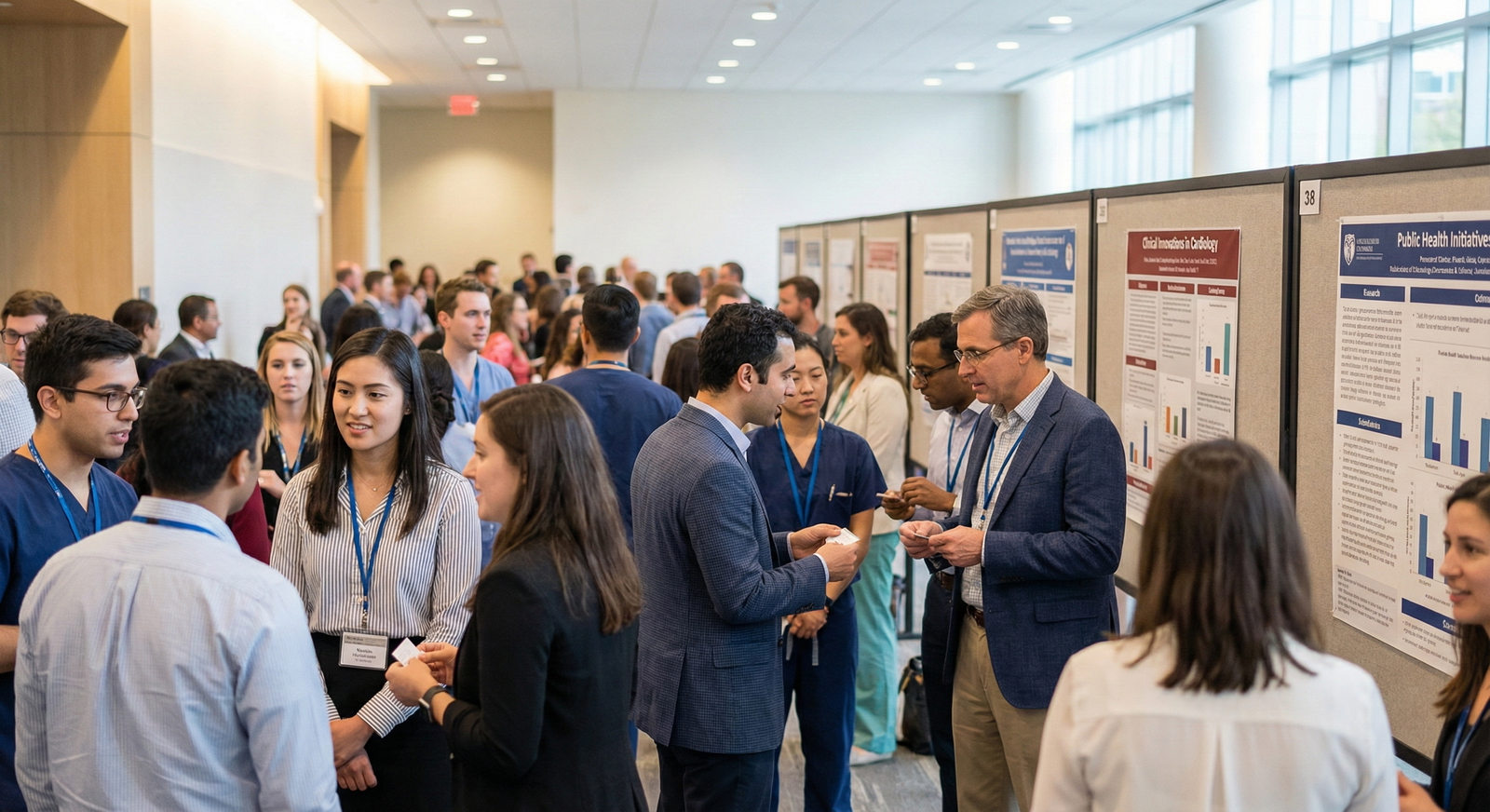
Networking in medicine can feel mysterious and intimidating, especially if you are an international medical graduate (IMG) trying to break into a competitive specialty like otolaryngology (ENT). Yet for the otolaryngology match, meaningful relationships can be as important as scores and publications. This IMG residency guide will walk you through how to build a smart, authentic networking strategy tailored to ENT, even if you’re starting from zero contacts and from outside the U.S. system.
Why Networking Matters So Much in Otolaryngology for IMGs
Otolaryngology–head and neck surgery is a relatively small, tight‑knit specialty. Many residency programs know each other well, faculty move within a small circle, and word-of-mouth carries real weight. For international medical graduates, networking in medicine is often the single most powerful way to bridge the “credibility gap” that comes from training outside the U.S.
How networking influences the ENT residency journey
For an IMG, effective medical networking can:
Get you in the door for research or observerships.
ENT departments are cautious about whom they bring into the OR or lab. A faculty recommendation or introduction dramatically increases your chances.Turn you from an unknown applicant into a known quantity.
When your name is familiar—because you did an away rotation, worked on a project, or met someone at a conference—your application is less likely to be overlooked.Generate strong, personalized letters of recommendation.
ENT selection committees want detailed, specialty-specific letters from U.S. otolaryngologists. Networking is how you earn those.Provide honest advice on your competitiveness and strategy.
Mentorship in medicine is critical. A trusted otolaryngology mentor can help you decide where to apply, whether to take an extra research year, and how to address weaknesses.Create advocates in the selection committee room.
Someone you impressed during a research year, sub‑internship, or conference can literally say, “I know this applicant; they will do great here.”
Unique networking challenges for IMGs in ENT
As an international medical graduate in ENT, you may encounter:
- No home ENT program or limited exposure at your medical school
- Visa or funding constraints limiting away rotations or in‑person networking
- Less familiarity with U.S. etiquette for professional communication
- Fewer alumni connections in U.S. otolaryngology
The goal of this ENT‑focused IMG residency guide is to show you how to overcome these barriers systematically.
Foundations of Effective Networking in Medicine for IMGs
Before you attend your first conference or send your first email, you need a clear strategy. Networking is not randomly collecting business cards; it is purposeful relationship‑building.
Step 1: Clarify your ENT narrative
You will be more memorable if your story is clear and consistent. Reflect on:
Why ENT?
Be specific: head and neck oncology, otology, laryngology, pediatric ENT, facial plastics, global surgery, hearing health, airway.Why you as an IMG?
Maybe you have experience in under-resourced health systems, strong research in a particular subspecialty, or advanced surgical skills from your home country.Your top 2–3 strengths.
Examples: research productivity, work ethic, technical skill, communication with patients, multilingual ability.
Have a concise “professional introduction” ready (30–45 seconds), something like:
“I’m Dr. [Name], an international medical graduate from [country] with strong interest in otology and hearing health. I’ve been involved in clinical research on chronic otitis media, and I’m currently seeking opportunities for research and clinical observerships in otolaryngology as I prepare for the otolaryngology match.”
You will use variations of this at conferences, in emails, and during meetings.
Step 2: Understand what good networking looks like
Effective networking in medicine is:
- Mutual – you look for ways to contribute (research help, language skills, data collection).
- Long‑term – you follow up regularly, not only when you need something.
- Specific – you ask concrete, realistic questions, not “Can you get me a residency spot?”
- Professional – you respect time, show gratitude, and maintain boundaries.
- Authentic – you build genuine interest and rapport, not flattery.
Ineffective networking is:
- Sending generic mass emails asking for “any opportunity”
- Asking strangers directly for letters of recommendation or personal favors
- Not following up after someone helps you
- Disappearing when you do not immediately get what you want
Building Your ENT Network Before, During, and After Application Season
Think of networking as a multi‑year process, not a last‑minute strategy. Here’s how to approach it at each stage.

Pre‑Application Phase: Laying the groundwork
1. Use your immediate environment first
Even if you do not have a home ENT program, ask:
Internal medicine, surgery, or pediatrics faculty:
“Do you know any otolaryngologists at U.S. institutions, or former residents who matched in ENT, whom you’d be willing to introduce me to?”Alumni network:
Check if any graduates from your school matched into U.S. otolaryngology, surgery, or related fields. Email them politely asking for 15–20 minutes of advice and insights.
Keep your first request light: guidance, not favors.
2. Identify ENT programs and faculty aligned with your interests
Use:
- Residency program websites
- PubMed (search “otolaryngology [your clinical interest]”)
- Professional societies (AAO‑HNS, AAFPRS, ASPO, AHNS, etc.)
Create a simple spreadsheet with:
- Faculty name and email
- Subspecialty (otology, rhinology, laryngology, H&N, pediatrics, facial plastics)
- Institution and country
- Your specific reason for interest (paper you read, talk you attended)
- Date and result of contact
This prevents disorganized or repeated outreach.
3. Cold emailing for research and observerships
Well‑structured emails are a core part of medical networking for IMGs.
Key principles:
Use a clear subject line:
“Prospective IMG seeking otology research opportunity – brief inquiry”
“International medical graduate interested in rhinology research / observership”Keep it short and personalized:
- Who you are (IMG, location, USMLE status)
- Why you are interested in them (mention specific paper/talk)
- What you’re seeking (research collaboration, volunteer work, observership)
- Reassure about your commitment and logistics (availability, time zone, visa status if relevant)
- Attach CV (1–2 pages, well formatted)
If you don’t hear back in 10–14 days, you may send one brief, polite follow‑up. Then move on.
Even if a faculty member can’t offer an opportunity, they might recommend colleagues or share advice—that still grows your network.
Conference Networking: Maximizing In‑Person and Virtual Events
Conference networking is one of the highest-yield strategies for an IMG in ENT.
Key ENT‑related conferences to explore:
- AAO‑HNSF Annual Meeting (American Academy of Otolaryngology—Head and Neck Surgery Foundation)
- Triological Society meetings
- Subspecialty meetings:
- AHNS (head & neck)
- AAFPRS (facial plastics)
- ASPO (pediatric otolaryngology)
- COSM meetings (various societies together)
If travel is difficult, look for virtual attendance options, which became more common after COVID-19 and often still exist in hybrid form.
How to prepare before a conference
- Review the program and flag sessions in your interests.
- Note faculty you’d like to meet and where they’re presenting (panels, posters, courses).
- If you already have a contact or mentor attending, let them know you’ll be there and ask if you could briefly say hello in person.
Bring:
- A simple, clean CV (paper or digital PDF on your phone)
- A short list of questions you want to ask (about research, fellowship paths, or ENT residency strategy)
How to introduce yourself at conferences
When approaching a faculty after their talk or at a poster session:
- Wait for a natural pause.
- Introduce yourself: “Dr. [Name], thank you for your talk. I’m [Your Name], an international medical graduate from [country] interested in [subspecialty].”
- Give one specific compliment or question about their work.
- If appropriate, mention you’re seeking research or mentorship in that area and ask if they have any suggestions.
- Ask permission to follow up by email.
You are not asking for a job in that moment; you are starting a professional conversation.
Following up after conferences
Within 48–72 hours:
- Send a concise email:
- Thank them for speaking with you
- Mention 1 specific thing you learned or enjoyed
- Briefly state your interest and goals
- Ask if they would be open to a short Zoom/phone call or advice on next steps
This is how conference networking turns into ongoing mentorship in medicine.
Building Mentorship and Sponsorship in Otolaryngology
Networking is most valuable when it leads to mentorship and, eventually, sponsorship.
- Mentor: Gives guidance, feedback, and support.
- Sponsor: Uses their influence to actively advocate for you (e.g., recommending you for a position or speaking up in selection meetings).
Both are critical in a competitive field like ENT.

How to find mentors in ENT as an IMG
Potential mentors can be:
- Research supervisors (even if projects are remote)
- Faculty from observerships or visiting scholar positions
- Residents or fellows in ENT (near‑peer mentors)
- Subspecialty faculty you meet at conferences
- Alumni from your school now working in ENT or related fields abroad
You may have different mentors for research, clinical skills, and career strategy.
When you first request mentorship:
Be clear about your goals:
“I’m hoping to improve my research skills in laryngology and develop a long‑term plan for the otolaryngology match as an IMG.”Set expectations politely:
“Would you be open to brief check‑ins every 1–2 months by email or video to review my progress and get your guidance?”Show commitment:
Update them on completed tasks and next steps. Mentors invest more when they see you implement advice.
Turning mentorship into opportunities
To build trust and move toward sponsorship:
Deliver on every assignment.
If you help with data collection, IRB submissions, or manuscript drafting, be reliable and communicate proactively.Ask for feedback and act on it.
This signals growth and maturity.Offer help, don’t just request it.
You might:- Screen articles for a systematic review
- Help with international collaborations
- Translate materials if relevant to your native language
Be patient and professional.
Strong letters of recommendation and active advocacy generally follow sustained collaboration, not a single interaction.
When and how to ask for letters of recommendation
Once you’ve worked with someone for several months and they know your performance well:
Ask directly and respectfully:
“Based on our work together, would you feel comfortable writing a strong letter of recommendation for my otolaryngology residency application?”Provide:
- Your updated CV
- Draft of your personal statement
- ERAS photo (if available)
- A brief summary of the specific projects or rotations you did with them
- A list of programs you’re applying to (if requested)
Give plenty of time (ideally 4–6 weeks before deadlines).
Even if they say no, treat it professionally. Not all mentors can write strong letters; honesty is better than a weak or generic letter.
Leveraging Digital Platforms for ENT Networking as an IMG
Physical distance should not limit your network. Thoughtful online networking can be powerful if done professionally.
Using LinkedIn and X (Twitter) for otolaryngology networking
- Optimize your profiles
Use a professional headshot.
Headline example for LinkedIn:
“International Medical Graduate | Aspiring Otolaryngologist (ENT) | Interested in Otology & Hearing Health | Clinical Research”Add:
- Education, USMLE status, degrees
- Research experience and publications
- ENT‑related conferences and courses
- Follow and engage
Follow:
- ENT departments (e.g., “[Institution] Otolaryngology”)
- Influential otolaryngologists and residents
- ENT societies (AAO‑HNS, Triological Society, subspecialty societies)
Engage respectfully:
- Like and comment on academic posts
- Share ENT articles with brief educational summaries
- Congratulate people on publications, honors, or presentations
- Direct messages
You may send short messages like:
“Dear Dr. [Name], I’m an international medical graduate with a strong interest in [subspecialty]. I’ve followed your work on [topic] and found your recent paper on [specific detail] particularly insightful. As I prepare for the otolaryngology match, I’d be grateful for any brief advice you may have on building a research profile in this area. If appropriate, I’d appreciate the chance to ask 2–3 questions by email.”
Keep expectations modest and always respect time.
Participating in virtual ENT education and networking events
Look for:
- Webinars hosted by ENT societies
- Virtual grand rounds open to guests
- Online journal clubs or case conferences
You can:
- Ask thoughtful questions via chat
- Email the organizer afterward thanking them and introducing yourself
- Offer to help with future virtual events or student interest activities
This kind of consistent presence helps you become recognizable in the otolaryngology community before you ever apply.
Putting Your Network to Work During the Otolaryngology Match Cycle
When you enter the application phase, your network can serve several specific functions.
Strategy consulting: choosing programs and planning a research year
Mentors can help you:
Decide whether to apply directly, or first pursue:
- A dedicated ENT research fellowship
- A preliminary surgical year
- A transitional internship followed by re-application
Identify programs historically more open to international medical graduates.
Prioritize locations where you already have relationships (research collaborations, away rotations, observerships).
Away rotations and sub‑internships
For a U.S.‑IMG or those able to secure a visa:
- Away rotations (sub‑Is) allow programs to see you clinically—your work ethic, team behavior, and communication.
- A strong performance can lead to:
- U.S. ENT letters of recommendation
- Advocates during rank list discussions
Your existing mentors can:
- Help you decide where to rotate
- Email colleagues to indicate they know and support you
- Set expectations so you maximize the experience
If you cannot do formal rotations due to visa or institutional restrictions, observerships and research‑based clinical exposure can still help—though letters carry different weight.
Interview season: leaning on your network
Your network can help you prepare for:
Common ENT interview questions, including:
- “Why ENT, and why our program?”
- “Tell me about your research.”
- “How will you handle transitioning from your home country to the U.S. system?”
- “What will you do if you don’t match?”
Program‑specific culture and priorities
Mentors and residents can share insider details that help you tailor your answers.Post‑interview communication etiquette
Senior mentors can advise on whether and how to send thank‑you notes or update letters in a professional, non‑pushy way.
After Match Day—regardless of outcome
Whether you match into ENT, SOAP into another specialty, or plan to reapply:
Maintain relationships.
Send brief updates: new publications, completed degrees, future plans.Show resilience and professionalism.
Mentors are more likely to continue supporting applicants who respond to setbacks maturely.If you did not match, ask your network for honest feedback on:
- Application strengths and weaknesses
- Whether to consider a different specialty
- How to strengthen your profile for a second ENT application
Remember: in networking, how you handle adversity often leaves a stronger impression than how you behave when everything goes well.
Common Mistakes IMGs Make in ENT Networking—and How to Avoid Them
To close this IMG residency guide on a practical note, here are pitfalls to avoid in ENT networking, along with better alternatives.
1. Being overly transactional
- Mistake: Emailing a faculty for the first time and asking, “Can you give me a letter or spot in your program?”
- Better: Start by expressing genuine interest in their work, asking for advice, and offering to contribute to research or education projects.
2. Sending copy‑paste messages
- Mistake: Generic emails unchanged except for the name.
- Better: Include one specific reference to their paper, talk, or subspecialty interest. Tailor your ask to that context.
3. Ignoring non‑faculty contacts
- Mistake: Only trying to network with department chairs or big‑name professors.
- Better: Build relationships with:
- Residents and fellows
- Research coordinators
- Department administrators
They often know about opportunities first and can advocate for you.
4. Poor follow‑through
- Mistake: Missing deadlines, not replying to emails, or vanishing after someone helps.
- Better: Communicate clearly, confirm receipt of important instructions, and send a short thank‑you when a project concludes or when you reach a milestone (e.g., publication accepted).
5. Underestimating cultural nuances
As an international medical graduate:
Learn U.S. norms around:
- Email tone (polite but concise, not overly formal or emotional)
- Titles (use “Dr.” or “Professor” unless explicitly told otherwise)
- Time zones and promptness
When unsure, ask your mentor or a near‑peer IMG who has already navigated the system.
By avoiding these errors and focusing on steady, thoughtful networking, you increase your chances of entering the otolaryngology match as a known, trusted candidate—not just a file in a large application stack.
FAQ: Networking in Medicine for IMGs in Otolaryngology (ENT)
1. I have no ENT contacts at all. Where should I start?
Start locally and virtually:
- Ask faculty in surgery or internal medicine if they know any otolaryngologists they could introduce you to.
- Search for alumni from your school who matched into ENT or related surgical specialties.
- Join ENT‑related sessions at general medical conferences (in‑person or virtual).
- Create a professional LinkedIn profile and follow ENT departments and societies; engage with their content.
Your first goal is not a research job or letter; it is a single conversation that leads to another.
2. How many conferences should I attend as an IMG interested in ENT?
There is no magic number. Aim for quality over quantity:
- If funding is limited, prioritize one major ENT meeting (such as AAO‑HNSF Annual Meeting) where many programs are represented.
- If you have active research, try to present at at least one recognized ENT or head & neck meeting, which looks strong on your CV and opens doors for networking.
- Use virtual sessions to supplement in‑person networking, especially early in your journey.
3. Can I build a strong ENT network entirely online if I can’t travel to the U.S. yet?
Yes, but it requires consistency and professionalism:
- Join virtual grand rounds, webinars, and journal clubs hosted by U.S. ENT departments or societies.
- Reach out to faculty about remote research projects—systematic reviews, database studies, or collaborative manuscripts.
- Stay active on academic social media, sharing and discussing ENT research respectfully.
- When borders open or your visa situation improves, aim to convert those virtual connections into observerships or in‑person visits when possible.
Many IMGs have built successful ENT networks starting entirely online.
4. When should I start networking if I plan to apply for ENT residency in 2–3 years?
Start now. For competitive specialties like otolaryngology, a realistic timeline is:
- 2–3 years before application:
Begin general networking, explore subspecialty interests, secure initial research roles. - 1–2 years before application:
Deepen collaborations, attend conferences, aim for abstracts/posters, and cultivate mentors. - 6–12 months before application:
Solidify letters of recommendation, choose away rotations or research fellowships if needed, and refine your application with advisor input.
Long‑term, steady networking is far more effective—and less stressful—than last‑minute efforts during the application season.
Thoughtful networking in medicine is not manipulation; it is professional relationship‑building that benefits everyone involved—patients, trainees, and the specialty as a whole. For the international medical graduate aspiring to otolaryngology (ENT), understanding and practicing strategic networking can transform you from an outsider into a valued future colleague in this close‑knit field.