Why Networking Matters So Much in Dermatology
Dermatology is one of the most competitive specialties in the allopathic medical school match. For any MD graduate residency applicant, strong test scores and research are crucial—but they are often not enough on their own. In dermatology, who knows you and what they know about you can significantly influence:
- Your chances to secure away rotations and sub‑internships
- The quality of letters of recommendation you receive
- Opportunities to join impactful research projects
- Invitations to present or collaborate at conferences
- How your name surfaces during residency rank meetings
In a small specialty like dermatology, the professional community is tightly interconnected. Faculty talk to each other across institutions, program directors know each other well, and your reputation travels—sometimes much faster than you expect.
For an MD graduate in dermatology, medical networking is not about schmoozing or being extroverted. It is about building authentic, professional relationships that:
- Help you learn and grow clinically and academically
- Provide trusted advocates for your career
- Allow you to contribute meaningfully to the field
This article will walk you through a structured, practical approach to networking in medicine—with a special focus on dermatology—during the transition from medical school to residency and beyond.
Understanding the Dermatology Networking Landscape
Dermatology has unique features that shape how networking works in this field. Knowing the terrain will help you be strategic.
1. A Small, Highly Interconnected Community
Compared with many other specialties, dermatology has:
- Fewer residency spots nationwide
- Relatively small departments at most institutions
- National subcommunities (e.g., pediatric derm, procedural/cosmetic, complex med derm, dermatopathology)
This means:
- A mentor at your home program might personally know faculty at several of your top‑choice programs.
- Program directors often reach out informally to colleagues for “off the record” impressions of applicants.
- Your performance and professionalism on one dermatology elective can echo through multiple programs.
Implication for you: Every interaction—with attendings, fellows, residents, coordinators, and peers—is a networking opportunity that can shape your derm match trajectory.
2. Research as a Networking Engine
Dermatology is research‑heavy. Many successful applicants:
- Publish multiple case reports, series, or original research
- Present posters or talks at national meetings
- Join multi‑center collaborations
Each of those activities inherently involves medical networking:
- You work closely with a faculty mentor or PI
- You interact with residents and fellows on the project
- You email with co‑authors and collaborators at other institutions
- You meet peers and senior clinicians at conferences
Implication for you: Think of research not just as a CV builder, but as an opportunity to build long‑term professional relationships.
3. The Power of Professional Societies
Dermatology has robust national and subspecialty organizations, such as:
- American Academy of Dermatology (AAD)
- Society for Pediatric Dermatology (SPD)
- American Society for Dermatologic Surgery (ASDS)
- Skin of Color Society (SOCS)
- Women’s Dermatologic Society (WDS)
- American Contact Dermatitis Society (ACDS)
These societies offer formal and informal mentorship medicine programs, committees, and leadership opportunities—even for students and residents. Engaging with these is a direct path to high‑value networking.
Foundations of Effective Networking as an MD Graduate
Before diving into conferences or cold emails, it helps to clarify what good networking looks like in medicine.
1. Shift Your Mindset: From “What Can I Get?” to “How Can I Contribute?”
Superficial networking focuses on asking for favors: a letter, a rotation, a research slot. That approach feels transactional—and people sense it.
Effective dermatology networking is relationship‑centered:
- Show genuine curiosity about others’ work.
- Ask thoughtful questions: “How did you get interested in complex medical dermatology?”
- Offer help: literature review, data collection, editing manuscripts, helping with patient education materials.
Faculty are more likely to invest in MD graduates who demonstrate initiative, reliability, and curiosity, not just ambition.
2. Clarify Your Short‑ and Long‑Term Goals
Knowing what you want from your derm career helps you:
- Identify which mentors or societies to prioritize
- Decide which conferences to attend
- Choose which invitations to say “yes” to
Consider:
- Are you leaning toward academic dermatology, private practice, or a hybrid?
- Are you drawn to cosmetic procedures, complex medical derm, dermatopathology, peds derm, skin of color, or surgery?
- Do you envision heavy clinical work, significant research, or a balance?
You do not need to commit early, but having a working hypothesis helps direct your networking energy.
3. Build a Professional Digital Footprint
Your online presence is part of your networking toolkit. At a minimum:
LinkedIn
- Add a professional headshot.
- List education, research, presentations, and memberships.
- Connect with residents and faculty you meet; send a short personalized note.
Professional email etiquette
- Use a simple, professional address (e.g., firstname.lastname@domain).
- Create a consistent, concise signature block with your current position and contact information.
Optional: Professional profile page
- Some MD graduates create a one‑page site or portfolio (via a simple website builder) listing their research, interests, and CV. This can be linked in emails.
Key point: Faculty and programs may Google you. Ensure what they see aligns with the image of a serious, committed future dermatologist.
Strategic Networking During Medical School and the Match Process
Even if you’ve already graduated, understanding (or retroactively strengthening) these elements can still help your MD graduate residency path and derm match outcome.
1. Maximize Networking at Your Home Institution
If your allopathic medical school has a dermatology department, start there.
Ways to plug in:
Attend grand rounds regularly
- Introduce yourself briefly to the chief resident or a faculty member afterward.
- Ask 1–2 thoughtful questions about a case or topic.
- Over time, your consistent presence builds familiarity.
Request a department point person
- Ask the residency program coordinator or a faculty member:
“Is there someone who typically advises students interested in dermatology?” - Schedule a 20–30 minute meeting to discuss your goals and get advice.
- Ask the residency program coordinator or a faculty member:
Join or create a student interest group
- Dermatology interest groups often host talks, dermoscopy workshops, or journal clubs.
- Being on the leadership team can organically connect you with faculty and residents.
Example introduction at grand rounds:
“Dr. Lee, I’m [Name], an MD graduate from [School]. I’ve been attending grand rounds this month and am very interested in dermatology. I appreciated your discussion of drug‑induced hypersensitivity. Would it be okay if I emailed you to ask about getting involved in research on complex medical derm?”
2. Use Research as a Doorway to Mentorship
Research is one of the most powerful forms of mentorship medicine in dermatology.
How to initiate:
Identify potential mentors
- Check your department’s website for faculty whose interests match yours.
- Look for recent publications and ongoing projects.
Send a focused email (3–5 short paragraphs max):
- Who you are (MD graduate, background)
- Why you’re interested in their area of work
- Briefly highlight relevant skills (statistics, prior research, language skills, etc.)
- Propose a short meeting to see if you could help with ongoing or new projects
Deliver on small tasks
- If you’re given a paper to summarize, do it well and on time.
- High follow‑through is the most powerful networking signal you can send.
Networking benefits:
- Mentors learn your work ethic and clinical reasoning.
- You naturally interact with residents, fellows, statisticians, and co‑authors.
- Co‑authorships increase your visibility, especially when you present at conferences.
3. Away Rotations and Sub‑Internships: Networking in Real Time
If you complete dermatology away rotations, treat them as extended job interviews and prime networking opportunities.
Key strategies:
Be present and prepared
- Arrive early, stay engaged, read about cases you see.
- Know patients’ histories before you walk into the room with your team.
Engage with residents and attendings
- Ask if you can help with small tasks: literature searches, draft clinic notes, assemble teaching slides.
- Express interest in attending their lectures, journal clubs, or research meetings.
Follow up afterwards
- Send brief thank‑you emails to attendings and residents you worked with closely.
- Mention a specific case or learning point you appreciated.
This kind of professionalism and curiosity often leads to strong letters of recommendation—and to faculty advocating for you in derm match discussions.
Conference and Professional Society Networking: Turning Events into Opportunities
Conferences and societies are networking accelerators—especially critical in a small field like dermatology.
1. Choose Your Meetings Strategically
For an MD graduate residency applicant, high‑yield meetings include:
National-level
- AAD Annual Meeting
- Subspecialty conferences (ASDS, SPD, SOCS, WDS, etc.)
Regional and local
- State or regional dermatologic societies
- Institutional or regional research symposia
If funds are limited, prioritize meetings where:
- You’re presenting a poster or talk (built‑in conversation starter)
- Your top‑choice programs and faculty are likely to attend
- There are formal mentorship or networking events
2. Prepare Before You Go
Effective conference networking starts well before you step into the venue.
Action checklist:
Review the program schedule and:
- Highlight sessions led by faculty from programs you’re interested in.
- Star any mentoring luncheons, resident‑student sessions, or networking receptions.
Make a short list of 3–7 people you’d like to meet:
- Faculty with similar research interests
- Program directors or associate PDs
- Leaders in societies (e.g., chairs of committees you might join)
Reach out in advance when appropriate:
“Dr. Patel, I’m an MD graduate very interested in acne and skin of color research. I’ll be attending AAD and noticed you’re speaking on isotretinoin in diverse populations. If you have 10 minutes sometime during the conference, I’d be grateful for the chance to briefly introduce myself and learn how trainees can contribute to this area.”
Even if they don’t reply, you’ve put your name on their radar.
3. Make the Most of In‑Person Interactions
When you’re at the conference:
Attend early‑morning and smaller sessions
- These often create more intimate settings to ask questions and interact with faculty.
Ask concise, thoughtful questions during Q&A
- “In patients with skin of color on biologics, do you adjust your monitoring strategy compared to lighter phototypes?”
- Then, introduce yourself briefly afterward.
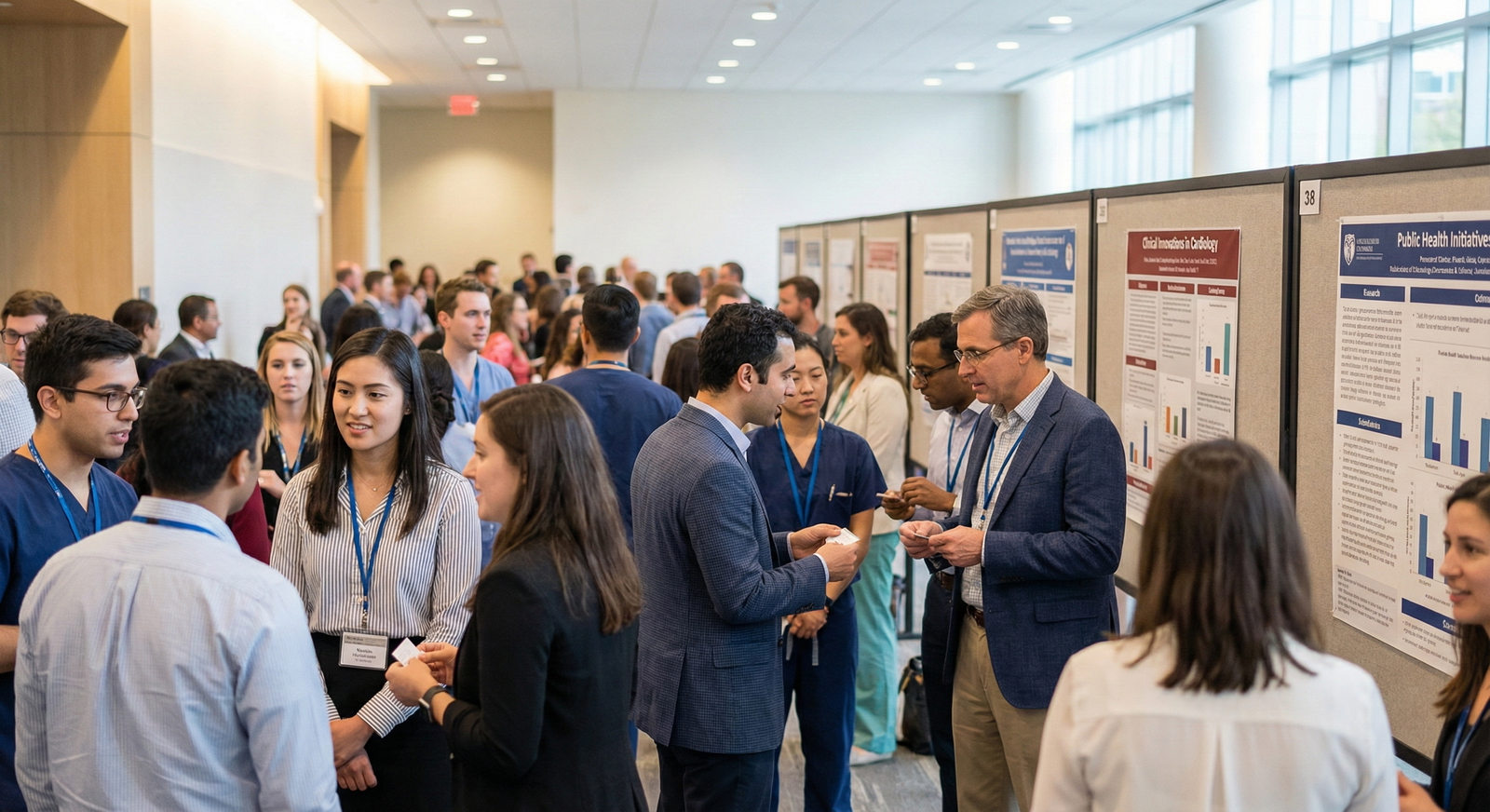
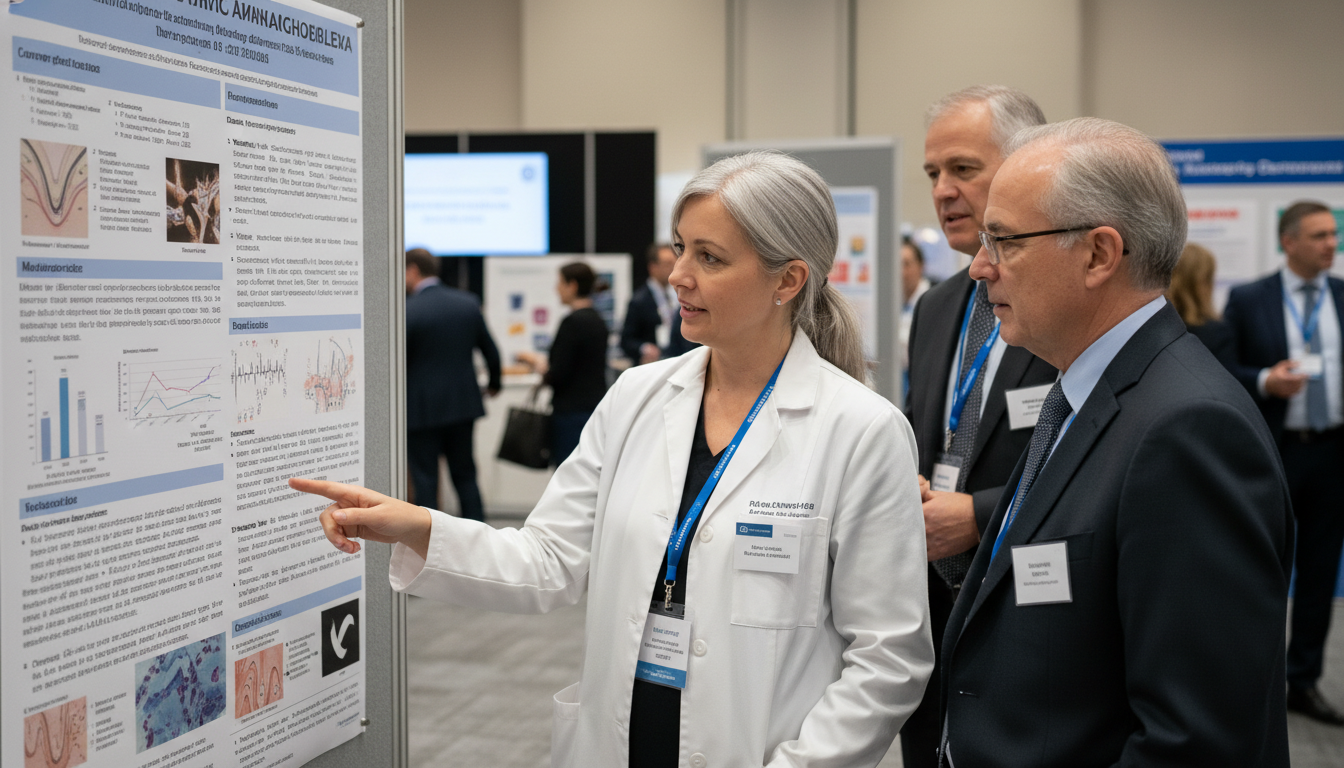
Use poster sessions as structured networking
- If you’re presenting, stand by your poster during your assigned time, smile, and engage.
- If you’re visiting posters, ask presenters about their work; you’re also networking with peers who may become future co‑residents or collaborators.
Join society mentorship events
- Many organizations have structured mentorship medicine programs for students and residents, pairing you with a faculty mentor. These can lead to multi‑year relationships and opportunities.
4. Follow Up Thoughtfully
What you do after the conference often matters more than what you did at it.
Within 3–5 days, send individualized follow‑up emails:
- Thank them for their time.
- Mention a specific detail from your conversation.
- If appropriate, ask 1–2 concrete questions or propose a next step (e.g., joining a project, attending their virtual journal club).
Connect on LinkedIn with a short note:
“Dr. Nguyen, it was great speaking with you after your talk on hidradenitis suppurativa at AAD. I especially appreciated your comments on multidisciplinary care. I’d love to stay connected and follow your work.”
Sincere, specific, and brief follow‑up is how one‑time encounters become professional relationships.
Building and Sustaining Mentorship in Dermatology
Mentorship is the backbone of networking in medicine. For an MD graduate preparing for dermatology residency, you ideally want a small team of mentors, each serving different roles.
1. Types of Mentors You Need
Career mentor
- Helps you think about big‑picture choices: academic vs. private practice, fellowship, long‑term goals.
- Often a senior dermatologist with broad experience.
Research mentor
- Guides you through study design, writing, and publication.
- Crucial for building a strong academic profile and derm match competitiveness.
Near-peer mentor
- Dermatology residents or recent graduates who understand the current match landscape.
- Provide practical, updated advice on applications, interviews, and day‑to‑day residency life.
Identity‑ or interest‑concordant mentor (when possible)
- For example, women in dermatology, underrepresented in medicine (URiM) mentors, LGBTQ+ mentors, or mentors focused on skin of color, global health, etc.
- These mentors can provide both professional and personal support.
2. How to Ask for Mentorship Without Making It Awkward
Initially, think in terms of “mentoring conversations”, not lifelong commitments.
Instead of:
“Will you be my mentor?”
Try:
“I really admire your career path in pediatric dermatology and complex medical cases. Would you be open to a brief meeting so I can ask for your advice on my next steps as I prepare for dermatology residency?”
If the relationship grows organically over repeated interactions, you can later say:
“You’ve been incredibly helpful over the past year; I really view you as a mentor—thank you.”
3. Be a High‑Value Mentee
Mentors are more likely to invest in you when:
- You prepare before meetings (have questions, updates, and specific decisions to discuss).
- You follow through on what you say you’ll do.
- You update them periodically on how their advice helped you.
Example of a concise update email:
“Dr. Santos, thank you again for your guidance on my research focus. I followed your suggestion to submit the psoriasis quality‑of‑life project to AAD; it was accepted as a poster. I also reached out to Dr. Kim about joining her outcomes study. I really appreciate your mentorship.”
This transforms the relationship from a one‑time favor to ongoing collaboration.
Networking as a Dermatology Resident and Beyond
Once you secure a dermatology residency, networking doesn’t stop; it evolves.
1. Inside Your Residency Program
Your co‑residents and faculty are your core professional network.
- Show up prepared for conferences, journal clubs, and clinics.
- Volunteer for teaching opportunities with students or internal medicine residents.
- Join departmental quality improvement, curriculum, or diversity committees.
These roles naturally increase your visibility and connect you with more people—while also strengthening your CV.
2. Cross‑Institutional Collaboration
Many dermatology residents build networks through multicenter projects:
- Multi‑institutional registries or studies
- Consensus guideline groups
- National resident task forces within societies
These projects connect you to residents and faculty at other institutions, which can be invaluable when you later apply for fellowship or jobs.
3. Transitioning Toward Fellowship or Practice
As you approach the end of residency:
- Lean on your mentor network to explore fellowship options (dermpath, Mohs, peds derm, etc.) or job opportunities.
- Attend interviews and site visits with a “networking mindset”—even if you don’t choose a particular practice, those physicians remain part of your professional community.
- Stay engaged with societies and conferences; early‑career committees are an excellent way to broaden your network.
The same skills you used to strengthen your derm match prospects will now help you secure positions that align with your long‑term goals.
Common Pitfalls and How to Avoid Them
1. Being Overtly Transactional
If every interaction is framed around what others can do for you (letters, interviews, positions), people will sense that.
Fix: Approach each interaction asking, “How can I learn from or contribute to this person or community?” The advocacy you’re hoping for often follows naturally once trust is established.
2. Over‑Networking Without Depth
Collecting business cards or LinkedIn connections without follow‑through leads to shallow relationships.
Fix: It’s better to have 10 meaningful professional relationships than 100 superficial ones. Prioritize consistent follow‑up with a smaller core network.
3. Neglecting Professionalism
In a small field like dermatology, unprofessional behavior spreads quickly: being late, not answering emails, missing deadlines, gossiping, or posting inappropriate content online.
Fix: Treat every interaction—especially during rotations and conferences—as part of your long‑term professional reputation.
4. Waiting Too Late to Start
Some MD graduates wait until the final months before applying to derm residency to start networking. That compresses the timeline and limits the authenticity of relationships.
Fix: Start as early as you can—but also remember: it is never “too late” to improve your network. Even after graduation, you can still:
- Reconnect with prior mentors
- Join societies and attend meetings
- Ask to participate in ongoing research
- Build relationships during a gap or preliminary year
FAQs: Networking in Medicine for MD Graduates in Dermatology
1. I’m an MD graduate without a strong derm department at my medical school. How can I still build a network?
You can:
- Reach out to dermatology departments at nearby institutions for observerships, electives, or research collaborations.
- Attend regional or national dermatology meetings and introduce yourself to faculty and residents there.
- Join national societies (e.g., AAD, SOCS, WDS) and participate in their student/trainee programming and mentorship initiatives.
- Use email strategically to connect with faculty who publish in areas you’re interested in; offer to assist with projects remotely.
Over time, these contacts can provide mentorship, letters, and guidance—even if they’re not at your home institution.
2. How does networking actually impact my dermatology residency match chances?
While no one can guarantee a derm match, strong networking can:
- Lead to meaningful research experiences that strengthen your application.
- Help you secure away rotations and sub‑internships at programs that might otherwise be difficult to access.
- Result in personalized letters from dermatologists who know your work ethic and clinical abilities.
- Ensure that, during rank meetings, someone at the table can say, “I’ve worked with this applicant and they’re excellent.”
The allopathic medical school match for dermatology is highly competitive; networking gives you trusted advocates in the process.
3. I’m introverted and find networking uncomfortable. Can I still succeed?
Absolutely. Many outstanding dermatologists are introverted. You don’t need to be the loudest person in the room; you need to be:
- Genuine – Focus on 1:1 or small‑group conversations rather than large receptions.
- Prepared – Have a few questions or topics ready when you meet someone.
- Reliable – When you commit to tasks, do them well and on time.
Think of networking as relationship‑building through shared work and interests, not as forced socializing.
4. How much time should I realistically devote to networking while also studying and doing research?
During intense periods (e.g., USMLE studying, heavy rotations), aim for low‑burden, high‑impact activities:
- 1–2 emails per month to maintain or develop relationships.
- Attending your department’s grand rounds when possible.
- A brief follow‑up after any meaningful interaction (e.g., after someone gives you advice or feedback).
During lighter periods (e.g., research blocks, post‑graduation gap year), you can increase your engagement:
- Attend conferences and society events.
- Take on collaborative projects.
- Schedule mentorship meetings monthly or quarterly.
The key is consistency over time, not perfection in any single week or month.
Thoughtful, sustained networking in medicine can transform your dermatology journey—from MD graduate residency applicant to confident, connected dermatologist. By approaching each interaction with curiosity, professionalism, and a commitment to contribute, you position yourself not only for a stronger derm match, but also for a more fulfilling, supported career in this uniquely interconnected specialty.