Why Networking Matters So Much in PM&R
As an MD graduate aiming for a career in Physical Medicine & Rehabilitation (PM&R), you’re entering one of the most relationship-driven specialties in medicine. The allopathic medical school match for PM&R has become increasingly competitive, and success is no longer based only on scores and CV lines. Your ability to build, maintain, and grow a professional network can substantially influence:
- Where you match for residency (or fellowship)
- The quality of your clinical training
- Research and leadership opportunities
- Your long‑term career direction (academic vs. private practice vs. hybrid)
- Access to niche subspecialties (sports, pain, brain injury, SCI, pediatrics)
- Referrals and job opportunities after residency
In PM&R—also known as physiatry—teamwork is central. You will work daily with neurologists, orthopedic surgeons, therapists, psychologists, case managers, and social workers. Your professional success will often depend on whether these people know you, trust you, and want to work with you. Strategic networking in medicine is how you make that happen intentionally, rather than by accident.
This article will walk you through a structured approach to networking as an MD graduate interested in PM&R residency, from pre‑match through residency and early attending life. We’ll focus on practical strategies you can start using immediately.
Laying the Foundation: Identity, Goals, and Story
Before you go to a single conference or send a single email, you need clarity on who you are and where you’re heading. Effective medical networking isn’t about collecting business cards; it’s about building authentic, mutually beneficial relationships around a coherent professional identity.
1. Define Your PM&R Identity (Even If It’s Early)
You don’t need a fully formed 10‑year career plan, but you should have a preliminary “professional identity” you can clearly articulate. Consider:
Clinical interests
- Example: “I’m especially interested in neurorehab and spasticity management”
- Or: “I’m exploring the intersection of sports medicine, adaptive athletics, and musculoskeletal ultrasound”
Practice setting interests
- Academic center, VA system, community hospital, sports medicine practice, etc.
Career values
- Teaching, research, innovation, leadership, work‑life balance, advocacy, disability rights, global health
Summarize these in 2–3 sentences. This becomes your networking “anchor” and will inform how you introduce yourself.
Example identity statement
“I’m an MD graduate pursuing PM&R residency with strong interests in traumatic brain injury and interdisciplinary neurorehab. I enjoy teaching and would like a career in an academic setting that integrates patient care, resident education, and some clinical research.”
2. Craft a Clear, Concise “Professional Introduction”
You’ll use this repeatedly—for conferences, emails, mentorship meetings, and interviews. Aim for 20–30 seconds:
- Who you are
- Where you are in training
- Your key interests in PM&R
- What you’re looking for or working on now
Example
“Hi, I’m Dr. Patel. I just graduated from an allopathic medical school and I’m applying to PM&R residency this cycle. I’m particularly drawn to spinal cord injury and adaptive sports. I’m hoping to learn more about academic career paths in physiatry and how to get involved in related research and advocacy.”
Practice saying this out loud until it’s natural and flexible enough to adapt to different contexts.
3. Build a Basic Professional “Infrastructure”
Before you start actively networking in medicine, make sure you appear organized and professional online and on paper:
Updated CV (2–3 pages, clearly formatted, one consistent font)
Simple, clean email signature, for example:
Name, Degree | PM&R Residency Applicant
Email | Phone | City
Optional: LinkedIn URLProfessional LinkedIn profile
- Headshot (neutral background, clinic-appropriate attire)
- Clear headline: “MD Graduate | PM&R Residency Applicant | Interested in Neurorehabilitation & Adaptive Sports”
- Brief About section (3–5 sentences)
This infrastructure reinforces your professionalism when people look you up after meeting you or receiving your email.
Conference Networking: Turning Events into Opportunities
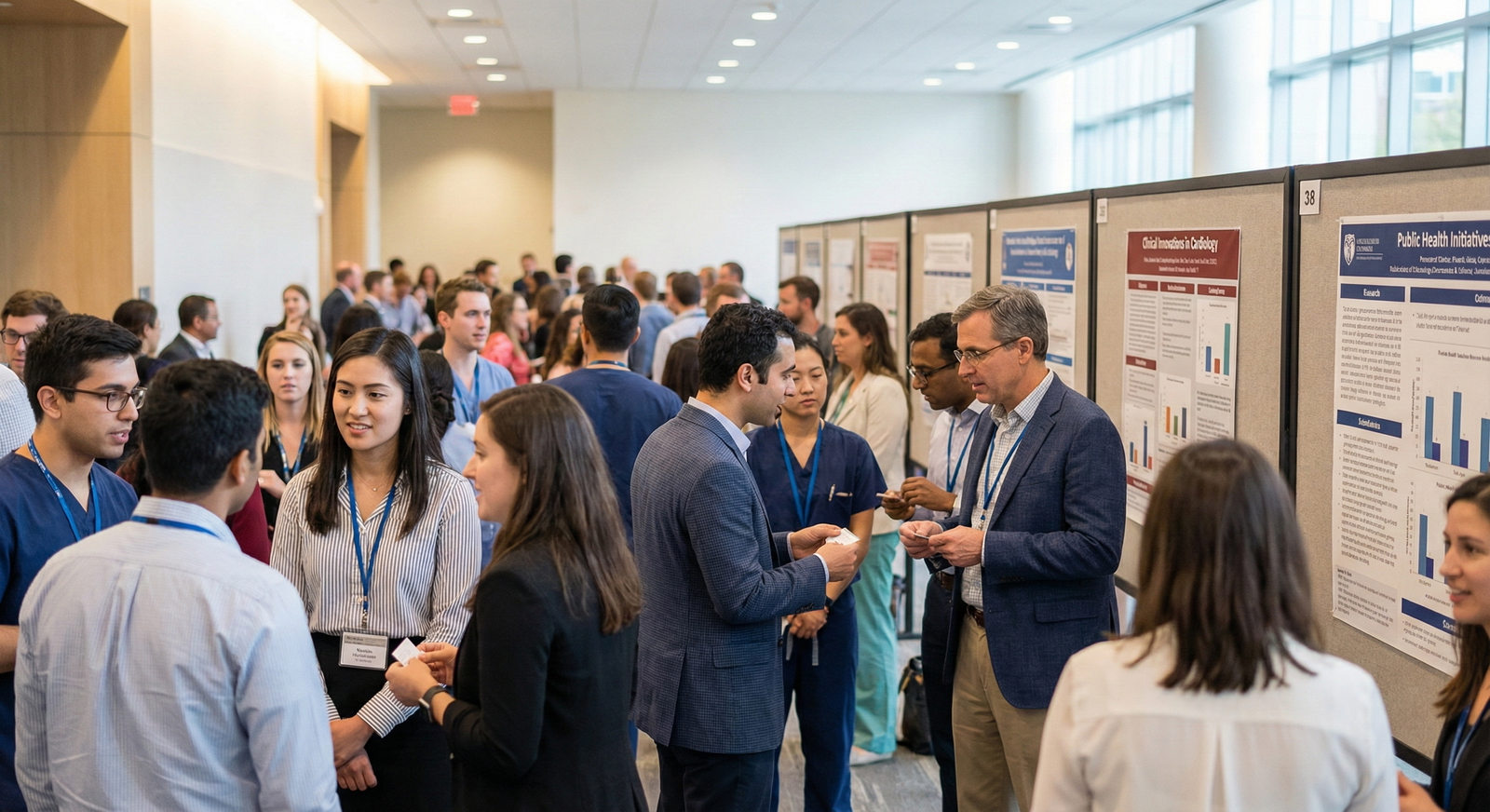
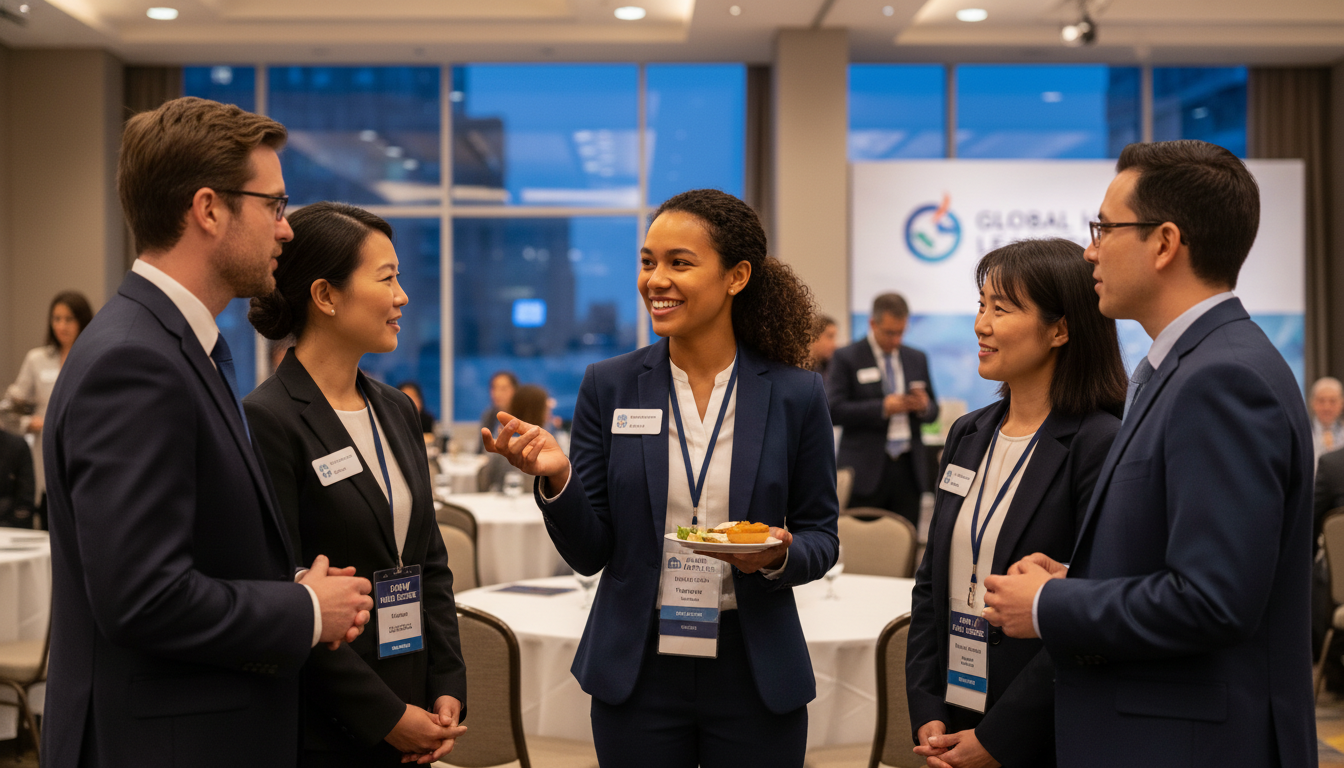
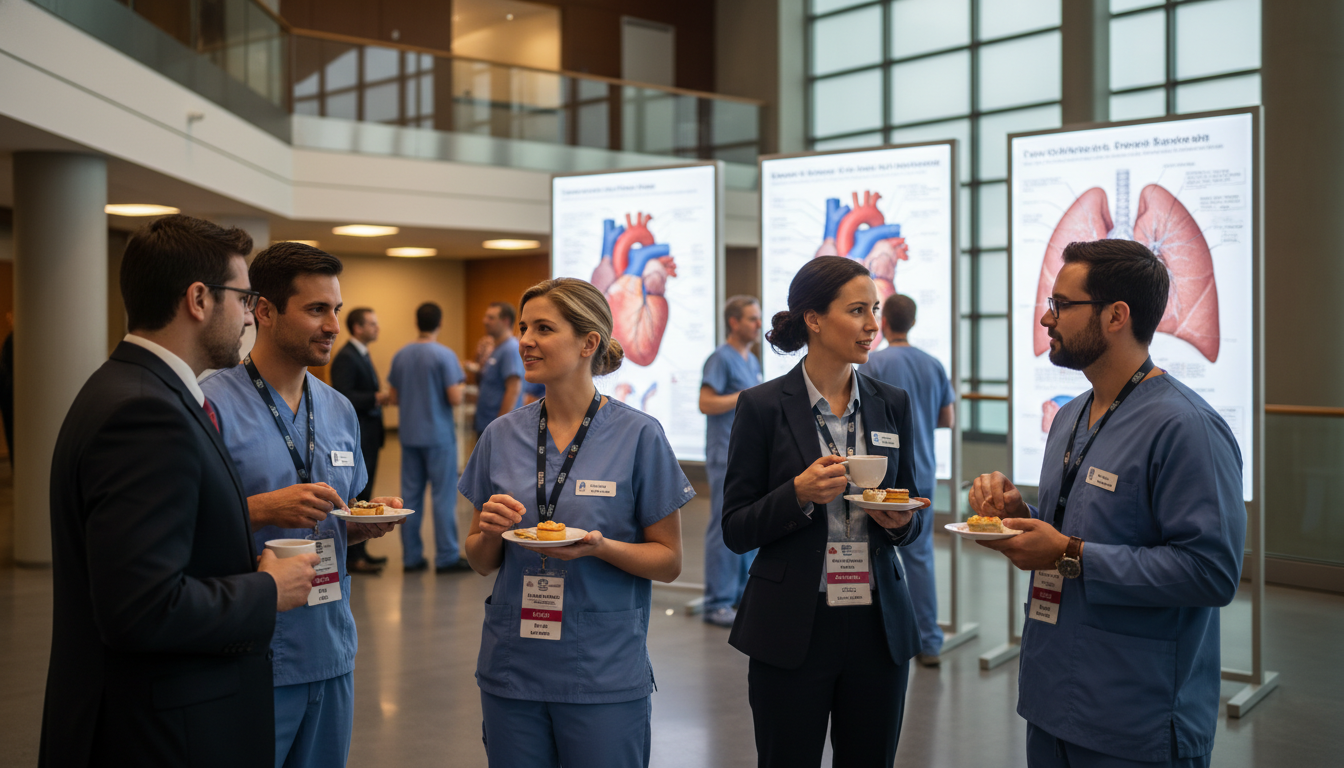
Conference networking is one of the most efficient ways to expand your PM&R network quickly—if you approach it intentionally. For MD graduates interested in the physiatry match, national and regional meetings can significantly impact your visibility and opportunities.
1. Know Which Conferences Matter for PM&R
Key organizations in PM&R include:
AAPM&R (American Academy of Physical Medicine & Rehabilitation)
The largest PM&R conference in the U.S., a central hub for the specialty.AAP (Association of Academic Physiatrists)
Strong focus on education, research, and academic careers.Subspecialty and related meetings
- AAPM (pain medicine)
- Sports medicine conferences
- Brain injury, spinal cord injury, stroke, or neurorehab societies
- Local/state PM&R societies or rehab consortia
For an MD graduate preparing for PM&R residency, attending at least one major national PM&R meeting (AAPM&R or AAP) within 1–2 years of applying can be extremely valuable.
2. Prepare Before You Go
Treat conference networking like a rotation or exam—preparation drives outcomes.
a. Scan the program early
Identify:
- Sessions and workshops relevant to your interests
- Talks or panels by faculty at programs you’re considering
- “Meet the Program Director” or residency fair events
- Student/resident-focused sessions
b. Make a short target list
Create a list of 5–10 people you’d like to connect with:
- Program directors or APDs of PM&R programs
- Faculty whose research overlaps with your interests
- Residents at programs on your rank list
- Leaders in areas like sports, SCI, or TBI if that interests you
Note their roles, affiliations, and why you want to meet them. This guides how you approach them and what you’ll talk about.
c. Prepare a few talking points
For each person or session, jot a few points:
- A paper of theirs you found interesting
- A question about their institution or subspecialty
- A brief “ask” (e.g., “May I email you for advice on X?”)
This turns vague “I should network” into targeted, higher‑yield conversations.
3. How to Approach People at Conferences
Approaching busy faculty or program directors can feel intimidating, but most expect and welcome these interactions.
Practical script for approaching a faculty member after a talk:
Wait until the initial cluster of questioners thins out.
Step forward with a clear, polite introduction:
“Dr. Martinez, thank you for your talk. I’m Dr. Lee, an MD graduate applying to PM&R this year, very interested in neurorehabilitation…”
Add a specific comment or question:
“…I found your discussion on early mobilization after stroke especially useful. In my sub‑internship we had limited access to dedicated rehab beds. Do you have suggestions for how a resident can advocate effectively for earlier rehab involvement in that setting?”
Close with a small, concrete next step:
“Would it be alright if I emailed you to ask a few more detailed questions about training in neurorehab at your institution?”
Most faculty will say yes, especially if you’ve shown genuine interest and preparation.
4. The Residency Fair: How to Stand Out Professionally
The residency fair at major PM&R conferences is an important tool for the allopathic medical school match, particularly if:
- You’re coming from a school without a home PM&R program
- You’re switching into PM&R from another specialty
- You’re geographically flexible and want to explore widely
Tips for the residency fair:
Dress sharp but comfortable: business or business‑casual with a name badge clearly visible.
Have your introduction ready (20–30 seconds, as above).
Ask thoughtful, program-specific questions, such as:
- “How early in training do residents get exposure to EMG or ultrasound?”
- “What percentage of your graduates pursue fellowship, and in what areas?”
- “How do residents get involved in teaching or scholarly projects?”
Collect cards or take phone photos of program brochures; immediately jot a 1–2 line note (e.g., “Strong SCI program, PD likes early research involvement”).
5. Follow-Up After the Conference
Conference networking has little value without follow-up.
Within 5–7 days:
- Send brief, personalized emails to key contacts:
- Thank them for speaking with you
- Reference a specific part of the conversation or talk
- Mention 1–2 sentences about yourself and your goals
- Suggest or request a next step if appropriate (e.g., “I’d love your advice on X,” “May I send you my CV for feedback on pursuing Y?”)
Example follow‑up email:
Subject: Great to meet you at AAPM&R – PM&R residency advice
Dear Dr. Johnson,
It was a pleasure speaking with you after your session on spasticity management at AAPM&R. I appreciated your insights on integrating botulinum toxin injections with intensive therapy programs.
As an MD graduate applying to PM&R this cycle with a strong interest in neurorehabilitation, your description of resident involvement in your spasticity clinic was especially helpful. If you’re open to it, I’d be grateful for any advice on how an applicant can best demonstrate readiness for neurorehab-focused training.
Thank you again for your time and teaching.
Sincerely,
[Name], MD
PM&R Residency Applicant
[Email] | [LinkedIn URL]
Archive these emails in a designated “PM&R networking” folder so you can revisit them later.
Building Mentorship and Sponsorship in Physiatry
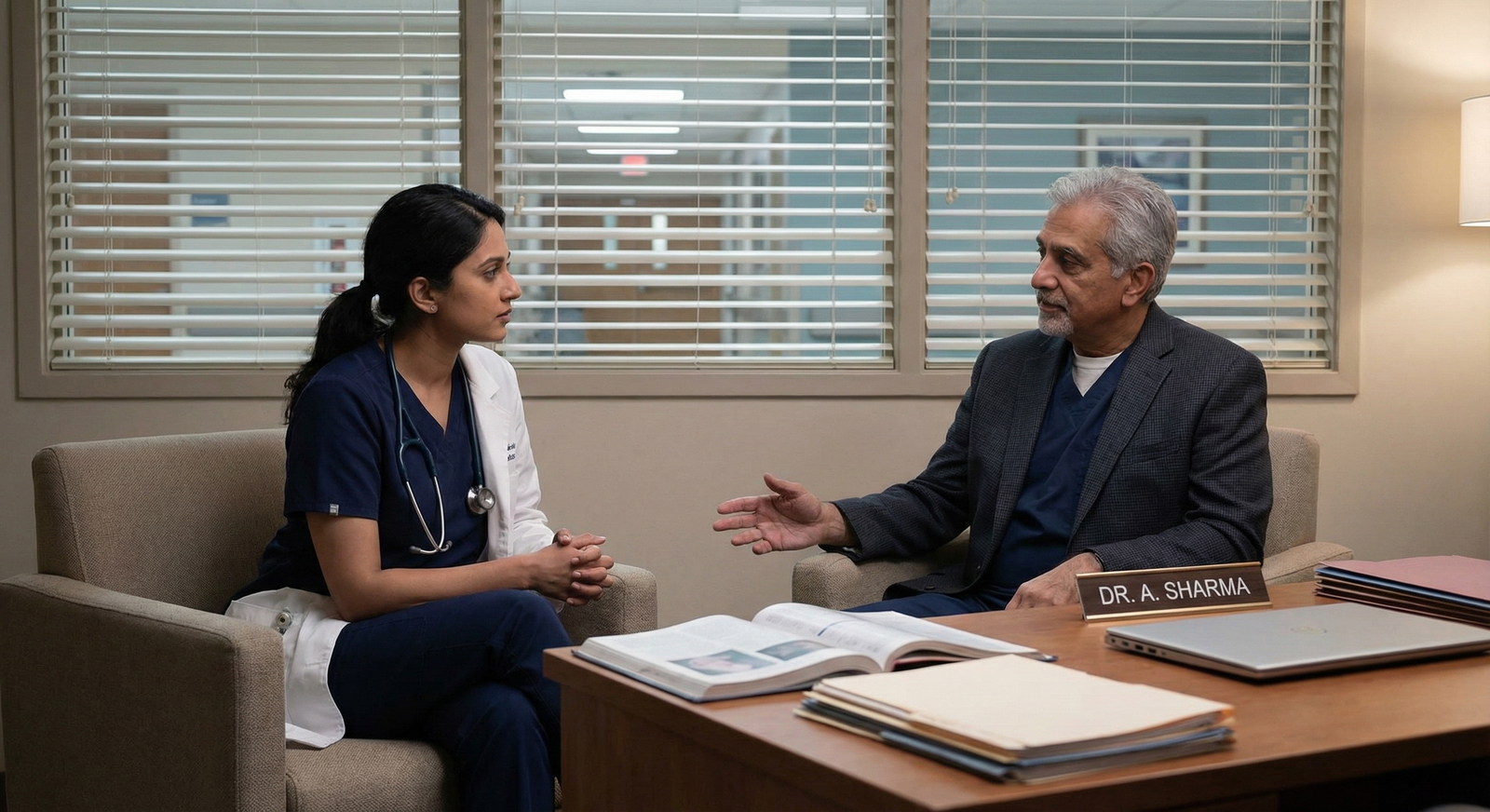
Mentorship in medicine is powerful, and in a relatively small specialty like PM&R, it can be career‑defining. But many MD graduates misunderstand mentorship and wait passively for mentors to appear. You’ll make more progress if you’re deliberate.
1. Understand the Types of Mentors You Need
You will likely need several mentors, each serving different roles:
Career mentor (macro‑level)
Helps you think through big‑picture decisions: choosing PM&R, selecting residency programs, academic vs. community career paths.Content or skills mentor
Guides you in specific domains: neurorehab, sports, pain, EMG, ultrasound, research methodology.Process mentor
Helps with practical steps: the physiatry match strategy, ERAS, personal statement, interviews.Peer and near‑peer mentors
Senior residents, recent graduates, or fellows who can give real‑time, concrete advice on immediate challenges.
Think of this as building a mentorship board rather than relying on one “perfect” mentor.
2. How to Find Mentors When Your School Lacks PM&R
If your allopathic medical school has no PM&R department, you can still build strong mentorship medicine relationships:
Reach out to nearby or regional PM&R departments
- Check university websites for faculty with your interests.
- Request a brief virtual meeting: “I’m an MD graduate applying to PM&R from a school without a home program. Could I schedule 20–30 minutes of your time to ask your advice on preparing for a career in PM&R?”
Use professional organizations
- AAP and AAPM&R often have mentorship programs for students and early graduates.
- Join relevant sections (e.g., Traumatic Brain Injury, Sports Medicine, Pain) and ask how to connect with mentors.
Leverage online communities
- PM&R interest groups, specialty-specific forums, and alumni networks.
- Be professional, clear, and concise when reaching out.
3. How to Be a Great Mentee
Strong mentors are selective; they invest in people who show follow-through and respect their time.
Best practices:
- Prepare for meetings: send a brief agenda or list of questions in advance.
- Do your homework: don’t ask questions you can easily answer with a quick search.
- Follow through: if your mentor suggests a paper, resource, or contact, read it or follow up—and briefly let them know you did.
- Give feedback: “Your suggestion to contact Dr. X led to a great phone call and I’m now joining their research project. Thank you again—this has been incredibly helpful.”
Over time, consistent behavior like this turns a casual advisor into a committed mentor—and often a sponsor who will actively advocate for you in the physiatry match and beyond.
4. When and How to Ask for Letters of Recommendation
Your PM&R network is especially important when it comes to letters of recommendation for residency.
Ideal letter writers:
- PM&R attendings who have supervised you clinically
- Research mentors in PM&R or related fields
- Subspecialists (neurology, orthopedics, pain) who can speak to your rehab-relevant skills and attributes
How networking helps:
- Longitudinal mentorship leads to deeper, more specific letters (as opposed to generic “did well on rotation” letters).
- Conference and research networking can connect you to faculty who might invite you for rotations or projects, which becomes the foundation for a strong letter.
How to ask:
- Ask early (4–8 weeks before ERAS deadlines).
- Provide your CV, draft personal statement, and a 1‑page summary of your contributions and goals.
- Ask explicitly: “Would you feel comfortable writing a strong letter of recommendation for my PM&R residency application?”
If they hesitate, that’s valuable information; consider asking someone else.
Everyday Networking During PM&R Rotations and Residency
Some of the most valuable medical networking happens quietly in hallways, sign‑out rooms, and interdisciplinary rounds—especially in PM&R, where you work with large teams and multiple disciplines.
1. Treat Every Rotation as a Networking Opportunity
Whether it’s a PM&R elective, away rotation, or required rehab consult month, assume people are forming opinions about your future potential.
Behaviors that build a strong reputation:
- Show up on time, consistently prepared.
- Be reliably kind and respectful to everyone, from therapists to nurses to administrative staff.
- Demonstrate curiosity about functional outcomes, not just acute medical issues.
- Volunteer appropriately for tasks: “I’d be happy to call the family to update them,” “I can help with that discharge summary.”
People remember learners who make the team’s work easier and the patient’s experience better.
2. Ask for Feedback and Career Advice in Real-Time
Rather than waiting for formal evaluations:
- Ask attendings: “I’m strongly considering PM&R. Based on what you’ve seen this week, are there skills you think I should develop further before starting residency?”
- Ask residents: “What surprised you most about PM&R residency? Anything you wish you had done differently as an applicant?”
These conversations do two things:
- Improve your performance.
- Deepen relationships and show maturity and teachability—highly valued in residency applicants.
3. Build Multi-Disciplinary Relationships
In PM&R, your “extended network” includes:
- Physical, occupational, and speech therapists
- Psychologists, neuropsychologists
- Recreational therapists, orthotists, prosthetists
- Case managers and social workers
These professionals may not write residency letters, but they:
- Provide rich learning opportunities (e.g., gait analysis, wheelchair evaluations, cognitive rehab strategies).
- Can later become collaborators or advocates in system-level projects.
- Expand your understanding of the rehab continuum of care, enriching your interviews and future practice.
A simple practice: on each team you join, ask at least one non‑physician professional to explain an aspect of their work in depth. Thank them and apply what you learn clinically.
4. Networking as a Resident: Building Toward Your First Job
Once you’re actually in PM&R residency, networking remains critical:
- Attend national meetings annually if possible.
- Present posters or workshops—these are excellent conversation starters.
- Get involved in committees (resident sections, quality improvement groups, advocacy committees).
- Keep an updated list of people you’ve worked with who might serve as references for jobs or fellowships.
By PGY-3, you should be:
- Known by name to several faculty outside your home institution (through conferences, research, or committee work).
- Comfortable emailing or calling mentors for advice about fellowship vs. direct job placement.
- Building visibility in your niche (e.g., following up on a TBI research line, or being “the ultrasound person” in your residency).
Strategic Use of Online Platforms and Professional Presence
Medical networking no longer happens only in hospital hallways and conference centers. Your digital presence matters—especially for an MD graduate who might not have in-person access to many PM&R faculty.
1. LinkedIn for the PM&R-Bound MD Graduate
LinkedIn is underused by medical trainees, but increasingly important for:
- Connecting with PM&R alumni from your medical school
- Finding physiatrists working in your ideal practice setting
- Discovering collaborators for research or QI projects
- Showcasing your interests in rehabilitation, disability advocacy, or sports medicine
Optimize your profile for PM&R residency:
- Headline: “MD Graduate | PM&R Residency Applicant | Interested in [Subspecialty]”
- About section: 3–5 sentences summarizing who you are, your PM&R interests, and what you’re looking for.
- Experience: include rehab-related rotations, research, teaching, volunteer work (adaptive sports, disability clinics, etc.).
- Skills and accomplishments: highlight team-based care, communication, leadership, and project involvement.
Connect strategically (not randomly) with:
- PM&R attendings you’ve worked with
- Residents and fellows you meet at conferences
- Alumni in physiatry from your school
- Faculty whose work you genuinely follow
Always add a short personal note with connection requests.
2. Email Etiquette in Medical Networking
Networking lives or dies on your email habits.
Key principles:
Subject lines clear and specific:
- “MD Graduate Interested in PM&R – Request for Brief Meeting”
- “Follow‑up from AAPM&R – Neurorehab Career Advice”
Professional salutation and sign‑off.
2–3 short paragraphs, maximum.
Ask for something realistic: a 15‑20 minute Zoom call, advice on 1–2 questions, permission to send your CV, etc.
If no response after 10–14 days, one polite follow‑up is reasonable; after that, move on.
3. What Not to Do Online
Avoid:
- Posting venting or unprofessional comments about patients, programs, or colleagues.
- Mass‑messaging generic requests for help (“Can you get me an interview?”).
- Over-tagging faculty on social platforms or repeatedly messaging when they have not engaged.
Your digital footprint should reflect the same professionalism and respect you bring in person.
Pulling It All Together: A Networking Roadmap for the PM&R‑Bound MD Graduate
To help you convert this into action, here’s a simplified roadmap from pre‑application through early residency.
Pre‑Application (6–18 Months Before ERAS)
- Clarify your PM&R identity and interests.
- Build your professional infrastructure (CV, email signature, LinkedIn).
- Identify 1–3 potential mentors; set up introductory calls.
- Attend at least one PM&R‑related conference if feasible; participate in medical networking at residency fairs.
- Start a simple spreadsheet tracking:
- Names, roles, institutions
- How/where you met
- Topics discussed
- Possible next steps
Application Year
- Deepen relationships with existing mentors; meet 2–3 more.
- Ask for letters of recommendation early.
- Keep in touch with conference contacts, updating them on your progress and expressing gratitude.
- On interviews, treat every day as networking: residents, coordinators, and faculty talk to each other.
During PM&R Residency
- Attend national meetings when possible; present posters or talks.
- Volunteer for resident roles that expose you to leaders (chief roles, education committees, QI projects).
- Stay connected with early mentors; some will become collaborators or sponsors.
By approaching networking in medicine systematically, you transform “chance encounters” into a supportive, enduring professional community that carries you through the physiatry match, residency, and your first attending job.
Frequently Asked Questions (FAQ)
1. I’m an MD graduate from an allopathic medical school without PM&R. Can I still be competitive for PM&R residency?
Yes. Many successful physiatrists came from schools without a home PM&R program. For you, medical networking and deliberate exposure are especially important. Prioritize:
- Away rotations at PM&R residency programs
- Early contact with physiatry faculty through conferences or regional institutions
- Clear, well‑articulated reasons for choosing PM&R
- Strong letters from PM&R physicians you’ve worked with (even if at outside institutions)
Your story should show that you proactively sought out the specialty despite structural limitations.
2. How much does conference networking really matter for the physiatry match?
Conference networking is not mandatory, but it can be high‑yield. Benefits include:
- Face‑to‑face contact with program leadership and residents
- Insights into program culture beyond what websites show
- Opportunities to join research or educational projects
- Stronger, more personal letters of recommendation over time
For an MD graduate trying to break into PM&R—especially from a school without PM&R—at least one major conference can significantly expand your options.
3. What if I’m introverted or uncomfortable with “networking”?
You don’t need to be extroverted to be effective at networking in medicine. Focus on:
- One‑on‑one or small‑group conversations rather than big social events
- Thoughtful questions and active listening
- Prepared, brief introductions so you’re not improvising under pressure
- Follow‑up via email, where you may feel more comfortable
Remember: strong networking is more about curiosity, respect, and reliability than charisma.
4. How do I maintain connections without feeling like I’m “using” people?
Think of networking as relationship‑building, not transaction‑seeking. To maintain authentic connections:
- Share updates: “I matched into PM&R at X—thank you again for your advice.”
- Express gratitude specifically, not generically.
- Offer value where you can—small things count: sharing a relevant article, offering to help with a project, or connecting them with a colleague.
- Stay in touch periodically (a couple of times per year) rather than only when you need something.
Most mentors and colleagues want to see you succeed. When you approach networking with integrity, curiosity, and a long‑term view, it feels collaborative rather than exploitative—for both sides.