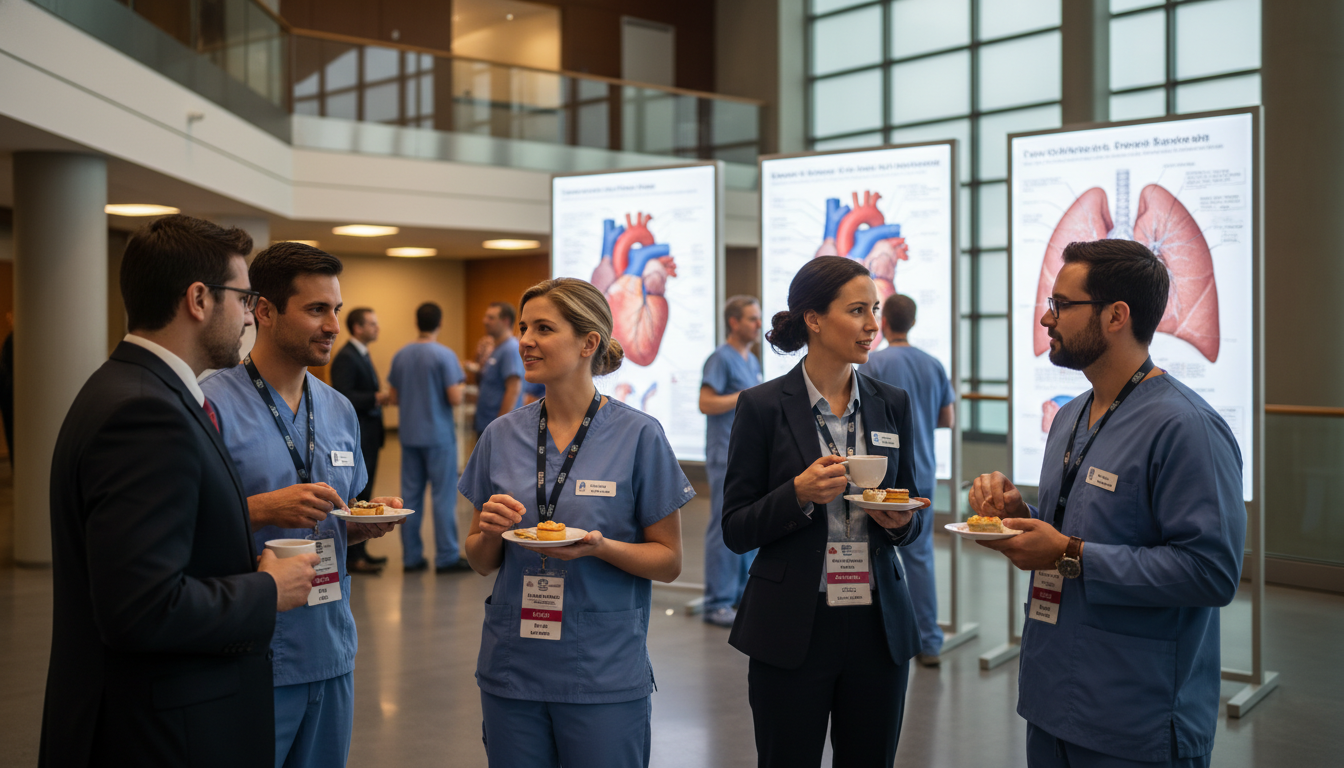
Why Networking Matters So Much for US Citizen IMGs in EM–IM
For a US citizen IMG (an American studying abroad), networking in medicine is not a “nice-to-have”—it is one of the most powerful tools you have to level the playing field.
Emergency Medicine–Internal Medicine (EM–IM combined) is a small, competitive niche. Programs know each other well, faculty talk regularly, and reputations travel fast. When your medical school name is less familiar to program directors, your relationships can become your strongest currency.
Well-executed medical networking can help you:
- Get honest feedback on your competitiveness for EM–IM combined programs
- Learn which programs are IMG-friendly and which prefer US grads only
- Secure meaningful away rotations and observerships with real responsibility
- Earn strong, credible letters of recommendation from EM and IM faculty
- Have advocates who will email program directors on your behalf
- Navigate rank lists and match strategy with insider insight
For US citizen IMGs, especially those in Europe or the Caribbean, networking is also about visibility. You’re not on the same campus as most residency recruiters. People are not walking through your hospital easily. You must reach out intentionally and build a presence in the EM and IM communities.
This article focuses on practical, step-by-step approaches to networking in medicine tailored specifically to:
- US citizen IMGs
- Targeting Emergency Medicine–Internal Medicine combined training
- Navigating the unique challenges of applying from outside the US system
Understanding the EM–IM Combined Landscape as a US Citizen IMG
Before building a networking strategy, you need a clear picture of the emergency medicine internal medicine training world.
What Makes EM–IM Combined Programs Unique
EM–IM combined programs:
- Are 5-year integrated residencies with dual board eligibility in EM and IM
- Have small class sizes (often 2–6 residents per year)
- Tend to be based at academic medical centers or large teaching hospitals
- Often emphasize critical care, complex medical decision-making, trauma, and continuity of care
- Attract applicants who are:
- Interested in ICU/ED overlap
- Considering future roles in hospital leadership, academic medicine, or fellowship (e.g., critical care, toxicology, ultrasound)
Because these programs are small, direct contact matters more. A single strong recommendation from a trusted faculty member at an EM–IM site can carry enormous weight.
Specific Challenges for US Citizen IMGs
As a US citizen IMG in this space, you may encounter:
- Limited EM–IM specific rotations at your school or hospital
- Fewer home-institution mentors who understand the EM–IM combined pathway
- Program directors unfamiliar with your school’s curriculum, grading, and rigor
- Visa issues off the table (a plus), but still competing with US grads and non-US IMGs with extensive US clinical experience
Networking is how you:
- Show that you understand the combined pathway
- Demonstrate consistent interest in both EM and IM
- Build connections with faculty who are already respected in EM–IM circles
Core Networking Strategies: Foundations for US Citizen IMGs
1. Clarify Your Story Before You Network
Before you attend conferences or email faculty, get very clear on your personal narrative:
- Why EM? Why IM? Why EM–IM combined specifically?
- Why are you an American studying abroad instead of in the US?
- How has your IMG training made you resilient, adaptable, or resourceful?
- What career direction do you see: academic, community, critical care, global health, administration, ultrasound, etc.?
Having a concise, honest, and coherent story makes conference networking, mentorship medicine conversations, and residency interviews feel more natural.
Example 30-second pitch for a US citizen IMG in EM–IM:
“I’m a US citizen studying medicine in [country], drawn to both the fast-paced, procedural side of emergency medicine and the complex diagnostic and longitudinal aspects of internal medicine. I see myself eventually practicing at an academic medical center with a focus on critical care and medical education. I’m particularly interested in EM–IM combined training because it will allow me to bridge acute care in the ED with ongoing management of high-risk medical patients. I’m actively seeking mentors and clinical opportunities in EM–IM in the US.”
2. Treat Networking as a Professional Skill, Not Social Guesswork
Networking in medicine often feels vague to students, but it’s simply:
- Identifying people who can teach or guide you
- Approaching them respectfully
- Maintaining contact in a structured, low-pressure way
For US citizen IMGs, an effective networking plan should include:
- Faculty networking (EM and IM)
- Conference networking (ACEP, SAEM, AAEM, ACP, SCCM, EMRA, AAIM)
- Resident networking (current EM–IM residents, chief residents)
- Peer networking (other American studying abroad classmates applying to EM, IM, or EM–IM)
You don’t need to be extroverted. You need to be consistent.

Practical Networking Tactics: Step-by-Step for EM–IM–Bound IMGs
A. Build a Targeted Contact List
Create a simple spreadsheet with columns such as:
- Name
- Role (EM faculty, IM faculty, EM–IM program director, resident, etc.)
- Institution
- How you know them (rotation, conference, email outreach, research)
- Last contact date
- Next planned step
Populate it with:
Faculty at your current institution
- EM attendings, IM attendings, and any dual-trained physicians
- Ask around: “Is anyone here trained in EM–IM?” or “Anyone who knows about EM–IM programs?”
EM–IM combined program leadership from:
- Program websites (PD, APD, core faculty)
- EMRA and AAIM resources listing combined programs
US-based mentors from:
- Prior observerships, electives, or research
- Alumni of your medical school now in US residencies (especially EM, IM, and EM–IM)
B. Cold Emails That Actually Get Responses
When emailing busy faculty or program staff, keep it:
- Short
- Specific
- Respectful of time
Cold email template for mentorship in EM–IM:
Subject: US Citizen IMG Seeking Guidance on EM–IM Combined Training
Dear Dr. [Last Name],
My name is [Your Name], and I am a US citizen IMG currently in [Year] at [Medical School] in [Country]. I am strongly interested in Emergency Medicine–Internal Medicine combined training and hope to apply in the upcoming match.
I came across your name through [program website / publication / recommendation from X], and I am very interested in your perspective as an [EM–IM faculty / PD / EM–IM graduate]. I would be grateful for 15–20 minutes of your time for brief mentorship about how an American studying abroad can best prepare for EM–IM applications, particularly regarding rotations, letters, and demonstrating fit for combined training.
I understand you have a very busy schedule and would be happy to work around your availability or connect via Zoom/phone at your convenience.
Thank you for considering my request.
Sincerely,
[Your Full Name]
[Medical School, Graduation Year]
[USMLE Step scores if appropriate]
[Email] | [Phone] | [LinkedIn, if professional]
Even if only 20–30% respond, each one can significantly shape your trajectory.
C. Medical Networking Through Away Rotations and Observerships
For EM–IM combined, where you rotate matters:
- Seek US-based EM and IM rotations at institutions with EM–IM programs when possible.
- If you can’t get into the combined program itself, rotate in its EM or IM department. Faculty talk.
Use your network to:
- Identify which institutions are open to US citizen IMGs
- Learn the best time of year to rotate (often summer/early fall for letters)
- Clarify expectations to earn a strong SLOE (Standardized Letter of Evaluation) in EM
On rotation, networking means:
- Arriving early, staying late when reasonable, volunteering for procedures
- Asking for feedback: “What can I do to function more like an intern on this rotation?”
- Politely requesting:
- “Would you be comfortable writing me a letter of recommendation if I continue to perform well over the rest of the rotation?”
These relationships frequently lead to:
- LORs from EM or IM faculty
- Introductions to EM–IM program directors at the same or nearby institutions
- Invitations to research projects or case reports
D. Research and Scholarly Networking
You do not need a massive research portfolio, but being involved in academic work in EM or IM helps you network upward.
Steps:
Ask faculty (locally or via email/Zoom) if they are working on:
- Case reports
- QI projects
- Chart reviews
- Education projects
Emphasize:
- Your flexibility across time zones
- Willingness to handle data entry, literature reviews, or drafting sections
Aim for:
- Posters at EM or IM conferences
- Short publications where you can be a co-author
Each project expands your circle of contacts and gives you natural reasons to attend conferences and network further.
E. Leveraging Residents and Recent Graduates
Residents—especially current EM–IM residents—are often more accessible than faculty and may give you candid insights.
Ways to connect:
- Email EM–IM program leadership asking:
- “Is there a resident who might be willing to speak with me about the combined program and path as a US citizen IMG?”
- Use LinkedIn or institutional pages to identify EM–IM residents who are also US citizen IMGs or IMGs generally.
Ask residents:
- How their program views US citizen IMGs
- What made their application stand out
- Which aspects of mentorship medicine helped them most
- How to frame your IMG background positively in interviews
Offer to follow up with a short thank-you email and a brief update later. Small touches keep a weak tie alive.
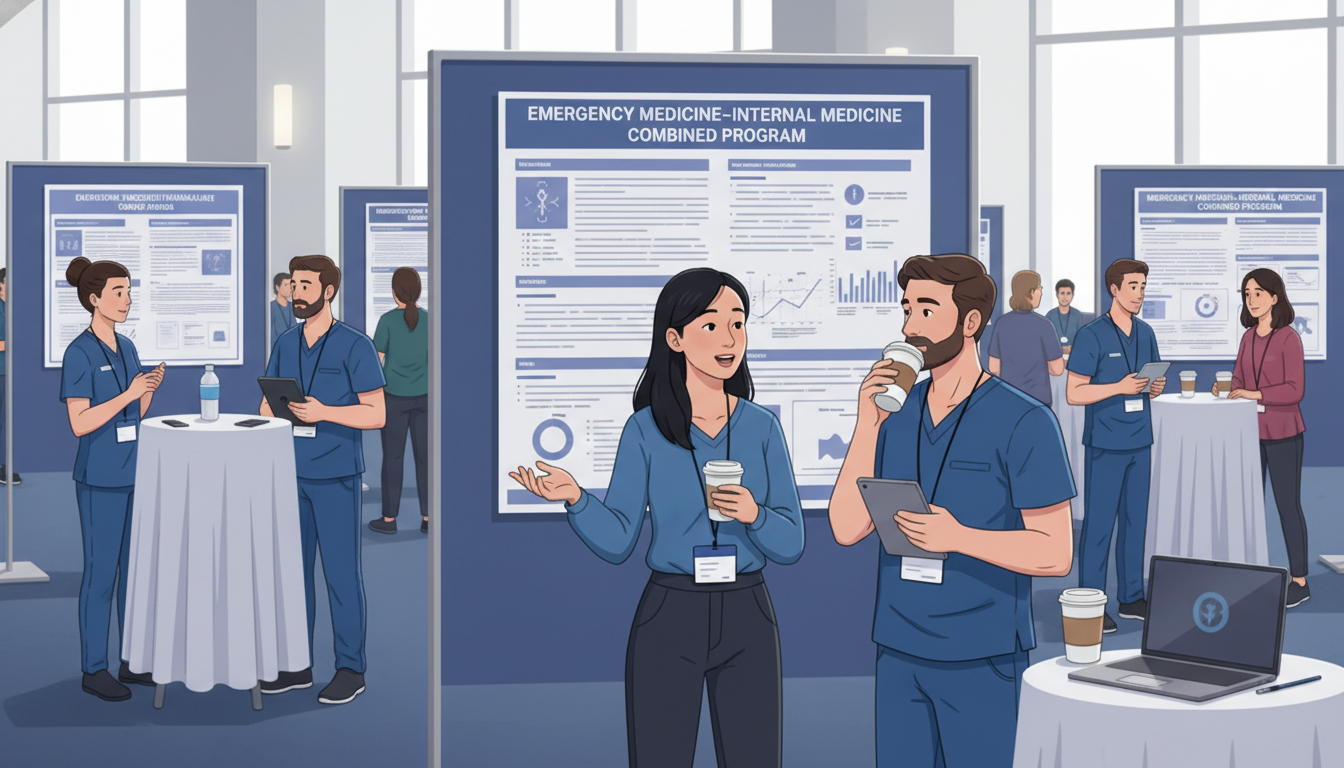
Mastering Conference Networking: High-Yield for EM–IM Hopefuls
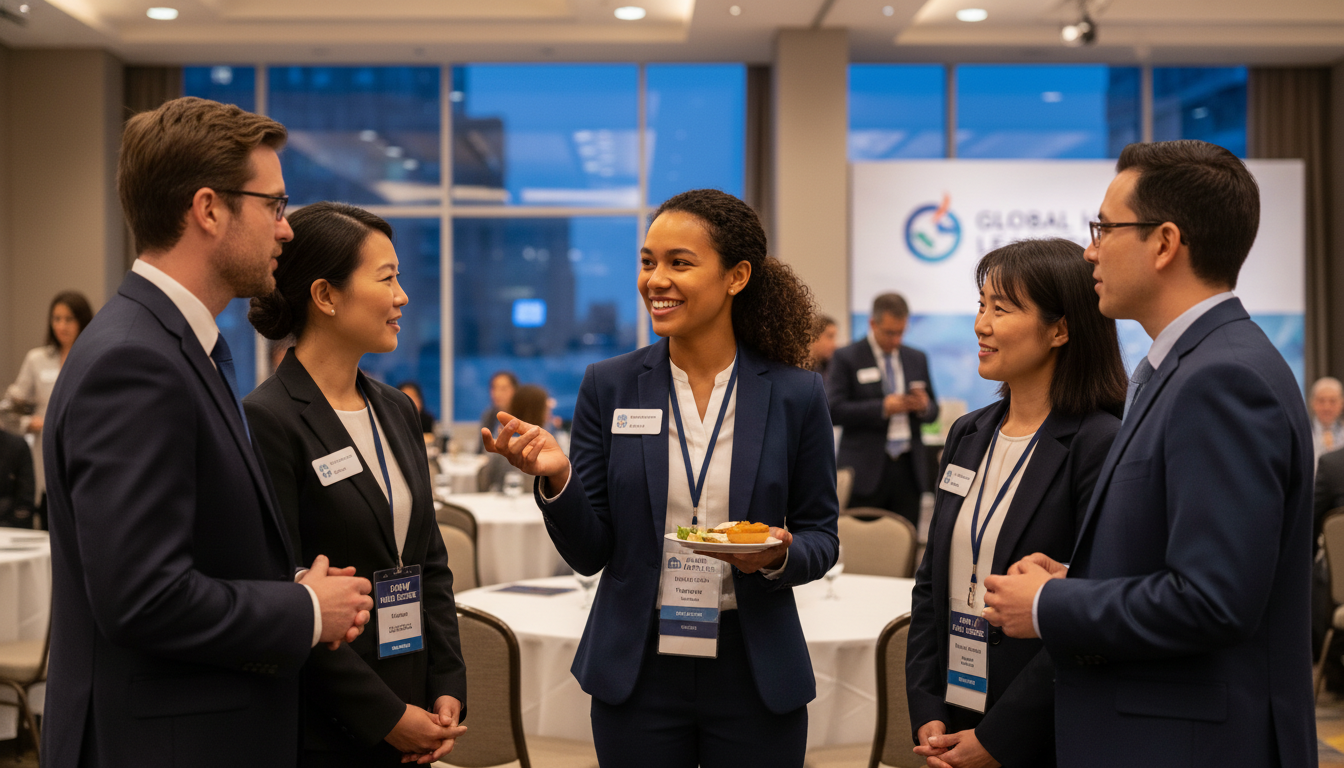
Conference networking is one of the highest ROI activities for US citizen IMGs aiming for EM–IM.
Key conferences to consider:
- Emergency Medicine: ACEP, SAEM, AAEM, EMRA events
- Internal Medicine: ACP, AAIM
- Critical Care/ICU: SCCM (Society of Critical Care Medicine)
- Student/Resident-focused: EMRA/ACEP joint events, regional EM or IM meetings
Before the Conference: Prepare Like an Exam
Define your objectives:
- Meet at least 3 EM–IM faculty or residents
- Identify 2–3 potential mentors for long-term guidance
- Learn about specific programs and their expectations for US citizen IMGs
Research attending programs/faculty:
- Look up which EM–IM programs have booths, posters, or faculty presenting
- List names and sessions you want to attend
Prepare your tools:
- Professional email signature and updated CV
- LinkedIn profile with clear headline (e.g., “US citizen IMG aspiring EM–IM resident | [School] Class of 20XX”)
- 30-second and 1-minute versions of your personal story
During the Conference: How to Actually Talk to People
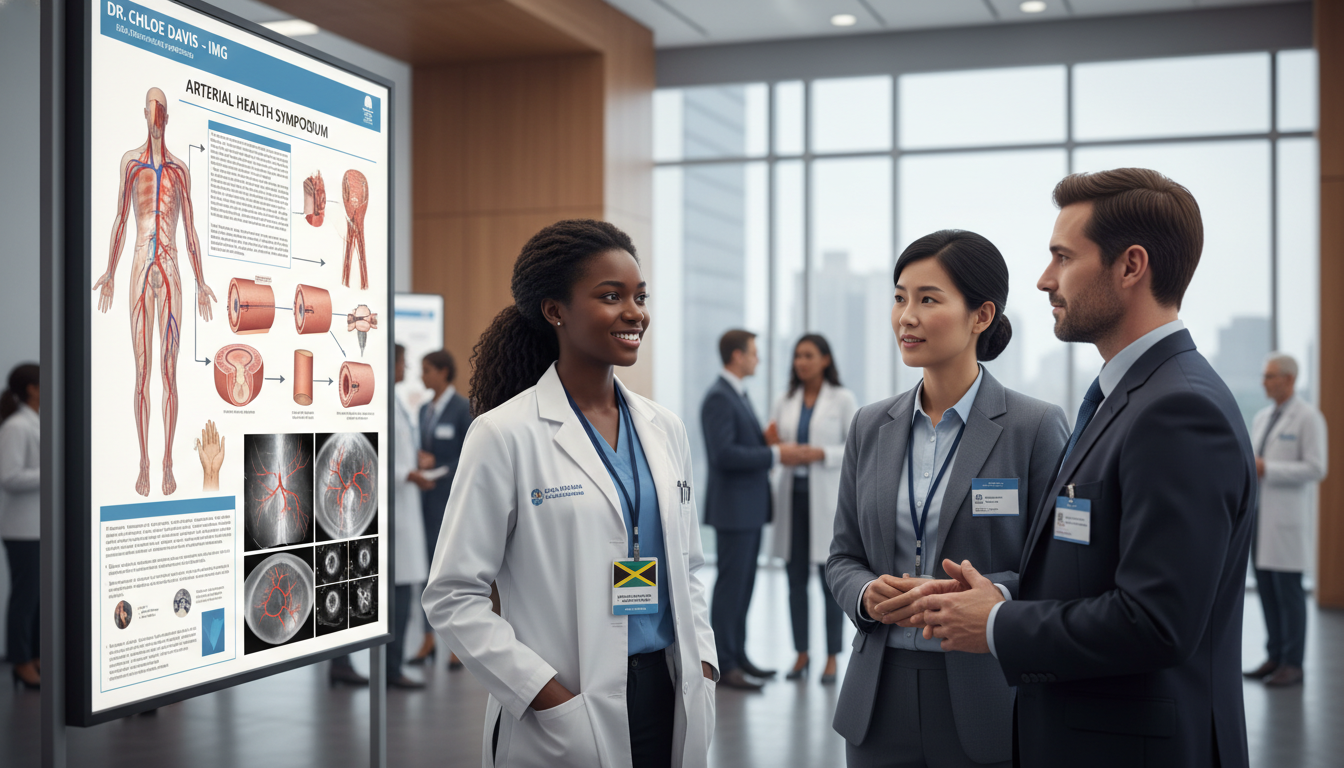
Approach faculty at posters or after talks:
- Wait until they’re less crowded
- Open with something specific:
- “I really enjoyed your talk on [topic], especially your point about [detail]. I’m a US citizen IMG interested in EM–IM combined training. Would you have a moment for a quick question about your program?”
Sample questions to ask:
- “How does your program view applicants who are US citizen IMGs?”
- “What do you like to see in an EM–IM applicant beyond scores?”
- “What rotations or experiences are most helpful to show fit for combined training?”
- “Is there someone at your institution you recommend I contact for mentorship?”
Do not immediately ask for a letter or a spot. Focus on building a genuine connection. Show curiosity and insight.
After the Conference: Follow-Up Is Where Many IMGs Fail
Within 48–72 hours:
- Send a brief thank-you email:
- Remind them who you are and where you met
- Mention a specific point you learned
- If appropriate, ask if you may reach out periodically with brief updates
Example follow-up email:
Dear Dr. [Last Name],
It was a pleasure meeting you at the [Conference Name] after your talk on [topic]. I appreciated your insight on how EM–IM combined training prepares residents for careers in [critical care/leadership/etc.].
As I mentioned, I am a US citizen IMG at [School] planning to apply for EM–IM in [Year]. Your advice about seeking US-based EM and IM rotations and focusing on strong letters from dual-exposure experiences was very helpful.
If you are open to it, I would be grateful to keep in touch and occasionally seek your guidance as I prepare my application.
Thank you again for your time and mentorship.
Sincerely,
[Your Name]
This is how conference networking turns into mentorship medicine, and mentorship turns into advocates.
Building and Sustaining Mentorship in Medicine as a US Citizen IMG
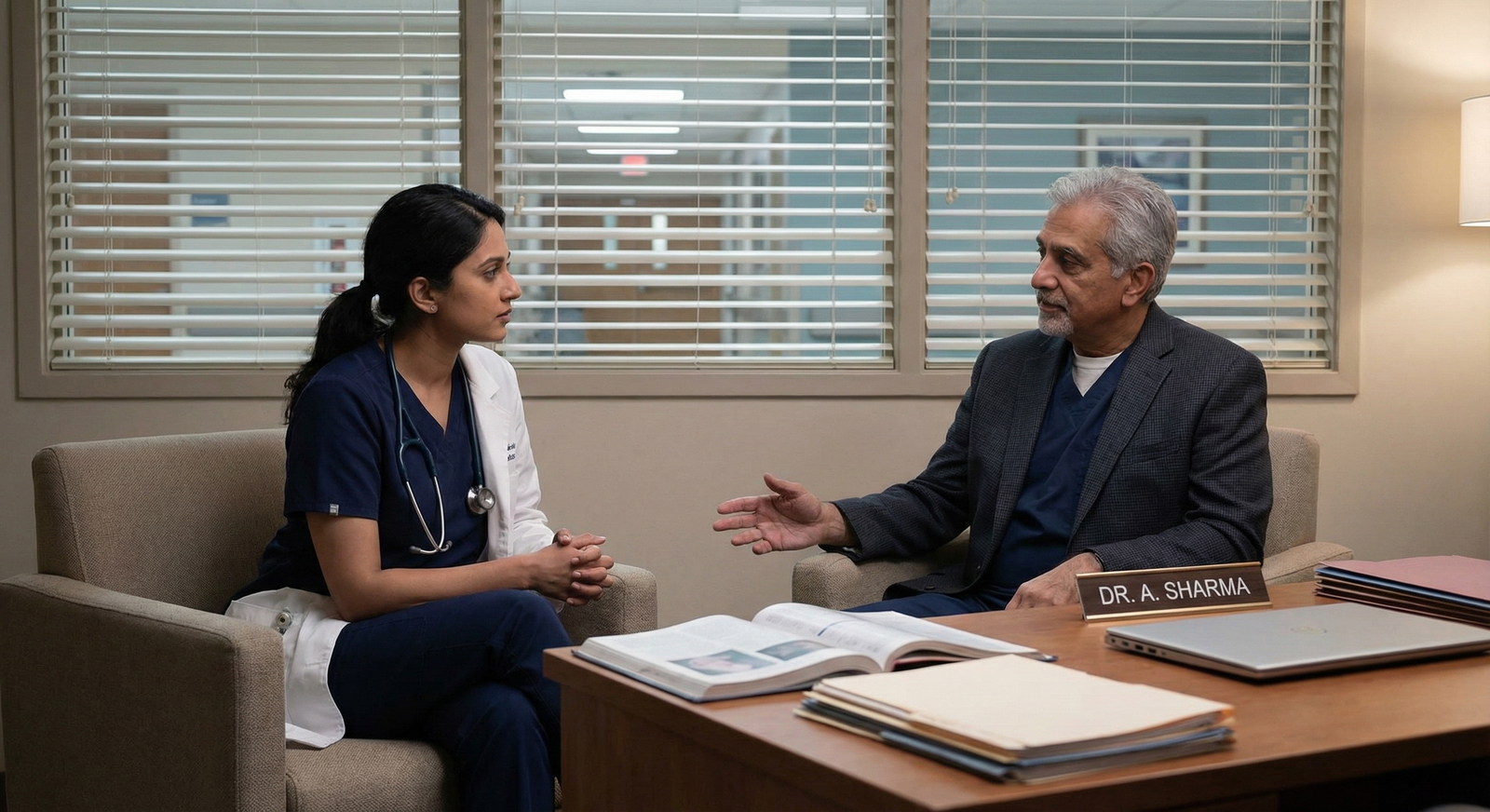
Mentorship medicine is especially crucial when your home institution lacks strong EM–IM exposure.
Types of Mentors You Should Aim For
As a US citizen IMG, aim to build a small “board of advisors”:
Primary Career Mentor (EM–IM focus if possible)
- Helps with big-picture trajectory, specialty fit, and career planning
Application Mentor (often EM or IM faculty in the US)
- Reviews your CV, personal statement, and ERAS application
- Advises on program list strategy and interview prioritization
Peer Mentor (a few years ahead of you)
- A current EM, IM, or EM–IM resident
- Offers practical advice about the match process, rotations, and daily life
Local Support Mentor (at your own institution)
- Provides letters related to your clinical performance at your school
- May not be in EM–IM but understands your strengths as a trainee
They do not all need to be EM–IM faculty. Some may be in EM alone, some in IM alone, and some outside the US.
How to Be a Good Mentee
To maintain strong mentor relationships:
Be prepared:
- Send a brief agenda before calls or meetings
- Provide your CV and specific questions
Respect their time:
- Start and end on time
- Limit email chains and be concise
Act on advice when possible:
- Then update them on results (“I followed your suggestion and…”)
Express genuine gratitude:
- A short thank-you after major milestones (e.g., interviews, Match Day) goes a long way
This kind of professionalism makes faculty more willing to advocate for you with program directors and colleagues.
Putting It All Together: A Sample 12–18 Month Networking Plan
For a US citizen IMG targeting EM–IM combined, here is a realistic timeline:
18–12 Months Before Application (Late MS2/Early MS3 or Equivalent)
- Clarify your interest in EM–IM; draft a personal narrative
- Identify at least 10–15 faculty and residents to contact for informational interviews
- Join relevant organizations: EMRA, ACEP, SAEM, ACP
- Begin low-barrier research or QI projects in EM or IM
12–6 Months Before Application
- Schedule US-based EM and IM clinical experiences (ideally at or near EM–IM programs)
- Attend at least one national or regional conference to begin robust conference networking
- Secure at least 1–2 mentors who know your background and goals well
6–3 Months Before Application
- Work on strong US-based SLOEs and IM letters
- Keep mentors updated; ask for feedback on CV and personal statement drafts
- Refine your program list with advice from mentors, including which EM–IM and categorical EM/IM programs to target
Application Season
- Let key mentors know once you’ve submitted ERAS
- Politely inform them of interviews at their or affiliated institutions (they may advocate subtly on your behalf)
- Continue brief, respectful communication with contacts met through conference networking and rotations
After Interviews and Match
- Thank mentors and advocates individually
- Offer to speak with more junior US citizen IMGs following your path—become part of the networking chain
- Stay in touch with your network as you start residency—these connections will continue to matter for fellowship and jobs
FAQs: Networking in Medicine for US Citizen IMGs in EM–IM
1. As a US citizen IMG, is it realistic to match into EM–IM combined?
Yes, it is possible, but more competitive than categorical IM and often similar or more competitive than EM alone. Programs are small with limited positions. Your chances improve if you:
- Have strong US clinical experience in both EM and IM
- Secure robust letters from US EM and IM faculty (ideally at EM–IM or academic centers)
- Use effective medical networking to show genuine, informed interest in the combined pathway
- Apply broadly, including categorical EM and IM programs as part of a balanced strategy
2. How many conferences should I attend to help with conference networking?
Even one major EM or IM conference can be transformative if you prepare well and follow up effectively. More is helpful if resources allow, but quality of engagement matters far more than quantity. Focus on:
- Planning your targets in advance
- Attending EM–IM–relevant sessions and poster presentations
- Introducing yourself to faculty and residents with specific, informed questions
3. What if I’m introverted and uncomfortable with networking in medicine?
Networking does not require being outgoing; it requires being intentional and respectful. As an introverted US citizen IMG, you can:
- Start with one-on-one emails and Zoom calls rather than large group events
- Prepare scripts and questions in advance so you’re not improvising
- Leverage written communication (email, LinkedIn) for follow-up and updates
Many excellent physicians are introverted. Your preparedness and sincerity will matter more than your personality style.
4. How do I avoid coming across as “using people” for letters or favors?
Approach networking in medicine as the start of long-term professional relationships, not transactions. You can:
- Show genuine curiosity about their work and career path
- Ask for advice and feedback, not just letters or introductions
- Update mentors on your progress and express sincere gratitude
- Offer value where you can (e.g., assist with research, share relevant articles, help junior students later)
Over time, relationships that begin with simple questions can evolve into mentorship and advocacy—this is normal and healthy in academic medicine.
Networking in medicine is one of the most powerful levers a US citizen IMG can pull to succeed in the EM–IM combined arena. With intentional outreach, thoughtful conference networking, and well-maintained mentorship, you can turn geographic and institutional distance into a story of initiative, resilience, and connection—exactly the qualities EM–IM programs look for in their future residents.