Why Networking Matters So Much for US Citizen IMGs in Nuclear Medicine
Networking in medicine isn’t just “nice to have” for a US citizen IMG—it’s a critical strategy to overcome structural disadvantages in the nuclear medicine match. As an American studying abroad, you often start with:
- Less visibility among US program directors
- Limited access to home-institution mentors in nuclear medicine
- Fewer organic chances for medical networking compared with US MD students
Nuclear medicine is a relatively small specialty. That’s both a challenge and a major opportunity:
- Challenge: Fewer programs and fewer spots mean every impression counts.
- Opportunity: Because the field is small, people know each other; one strong advocate can open multiple doors.
Effective networking can:
- Turn a cold application into a familiar name.
- Secure away rotations, research opportunities, and personalized letters.
- Help you understand which programs are realistic and how to tailor your application.
- Connect you with mentors who can advise you on visas (if needed), timelines, and strategy as a US citizen IMG.
This article focuses on practical, step-by-step strategies to build a targeted, credible, and sustainable medical network in nuclear medicine—where you should be, who you should know, and what to say once you get there.
Building Your Core Network: Mentors, Sponsors, and Peers
Before thinking about national conferences or big-name program directors, you need a core network—a small, reliable circle of people who know you well and can advocate for your nuclear medicine residency goals.
1. Secure a Primary Career Mentor in Medicine
Your first goal isn’t necessarily a nuclear medicine physician; it’s someone who:
- Understands US residency pathways (ideally familiar with IMG issues).
- Is accessible and responsive.
- Is willing to discuss your progress regularly (e.g., every 3–6 months).
This might be:
- A US-trained radiologist at your medical school’s affiliated hospital.
- An academic physician at a US institution where you did an observership.
- An internist or surgeon who has placed multiple students into US residencies.
How to approach them (email template):
Subject: Request for Career Guidance as US Citizen IMG Interested in Nuclear Medicine
Dear Dr. [Name],
I am a US citizen medical student studying at [School, Country], currently in my [year]. I am strongly interested in pursuing a career in nuclear medicine and US residency training.
I greatly respect your experience with [US residency/IMG mentorship/academic leadership], and I would be grateful for the opportunity to receive your advice regarding my career path, particularly as a US citizen IMG.
Would you be open to a brief 20-minute Zoom or phone call in the coming weeks? I would like to discuss how to position myself for nuclear medicine residency, potential research or observership opportunities, and any specific steps you would recommend.
Thank you very much for considering this request.
Sincerely,
[Full Name]
[Medical School, Year]
[US Phone/WhatsApp/Email]
Once they agree:
- Prepare 3–5 focused questions.
- Ask if they’re comfortable being a longitudinal mentor and meeting occasionally.
- Keep them updated with short, periodic emails (every few months) about your progress.
2. Identify a Nuclear Medicine–Specific Mentor
For nuclear medicine residency specifically, you need at least one mentor who:
- Practices nuclear medicine (or dual board-certified in radiology and nuclear medicine).
- Can explain the landscape of programs, combined pathways, and career options.
- Potentially introduces you to colleagues at other institutions.
Where to find them:
- Nuclear medicine or radiology departments at US hospitals where you did rotations.
- Faculty lists of nuclear medicine programs—look for “education director” or “program director.”
- Conference sessions (EANM, SNMMI, RSNA) and online webinars.
When you contact them, mention clearly that you are a US citizen IMG and specify:
- Graduation year
- Current location
- USMLE status
- Concrete interest in nuclear medicine (research, clinical cases, electives)
3. Build a Peer Network of Other US Citizen IMGs and Nuclear Medicine Applicants
Peers are invaluable for:
- Sharing experiences with programs and away rotations.
- Reviewing each other’s CVs, personal statements, and ERAS applications.
- Emotional support during the nuclear medicine match process.
Where to find peers:
- Facebook or WhatsApp groups for US citizen IMG applicants.
- Reddit communities (e.g., r/IMGreddit, r/medicalschool, r/radiology).
- Specialty interest groups (nuclear medicine or radiology) at your school or online.
Do not underestimate this group: a co-applicant today may be a chief resident or attending who helps your career later.
Strategic Medical Networking Channels for Nuclear Medicine
Your time and financial resources are limited, so you must prioritize high-yield medical networking channels that align with your nuclear medicine goals.

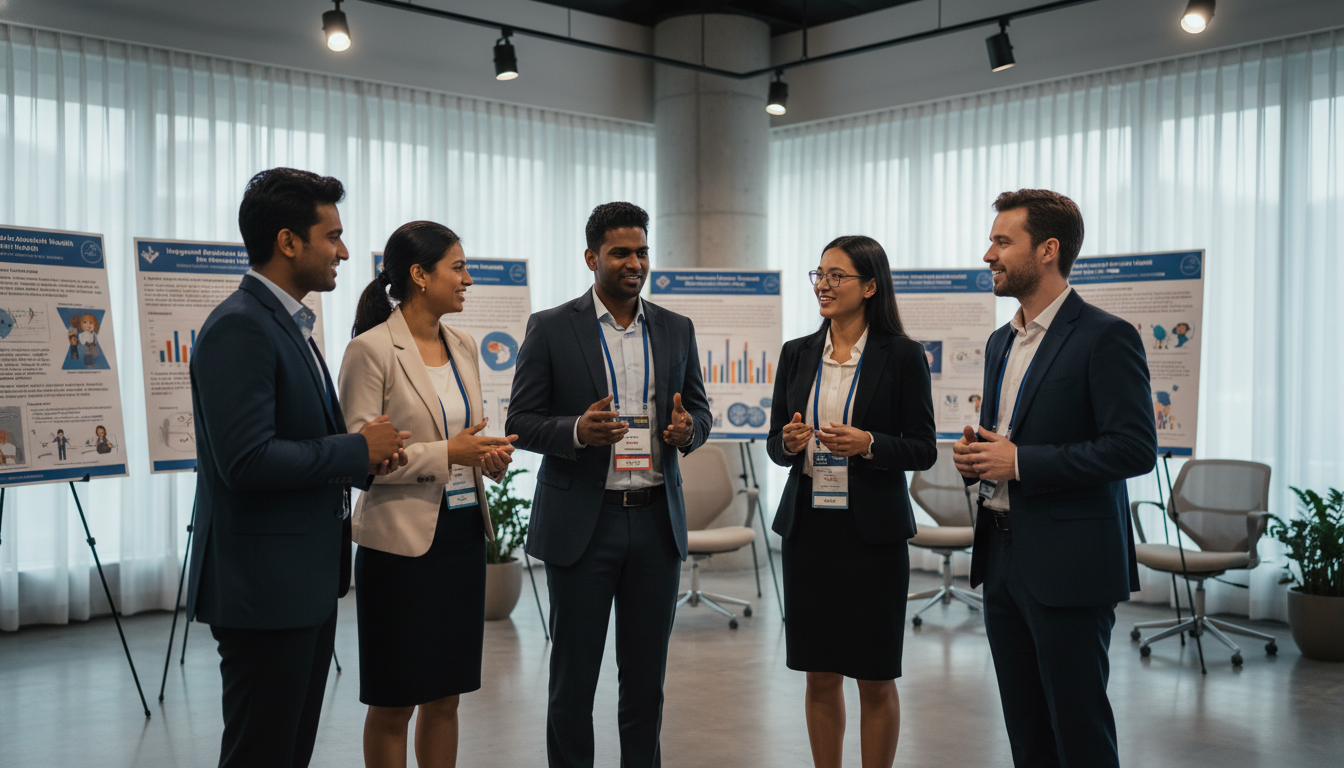
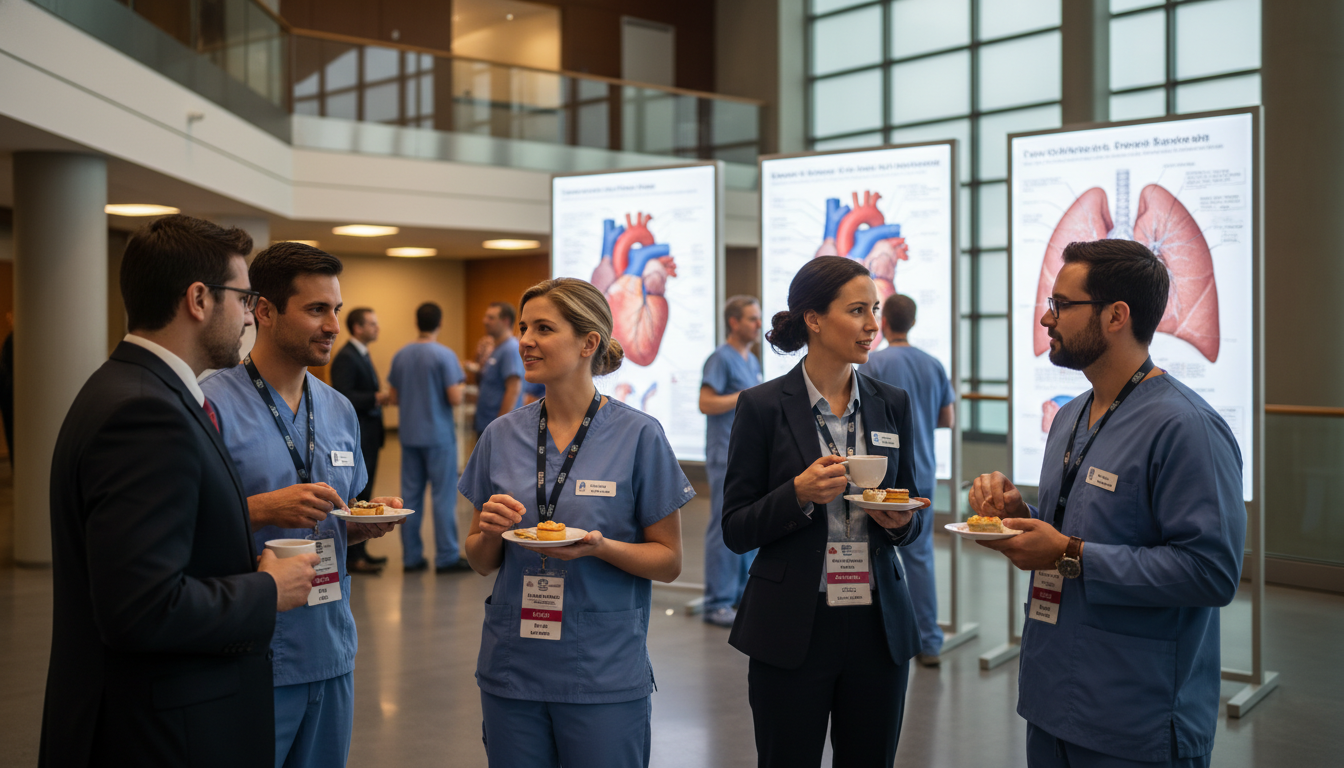
1. Conference Networking: Where Nuclear Medicine People Actually Meet
Conferences are one of the most efficient ways to meet many people in a short time.
Key meetings for nuclear medicine:
- SNMMI (Society of Nuclear Medicine and Molecular Imaging) Annual Meeting
- RSNA (Radiological Society of North America) – strong nuclear medicine presence
- EANM (European Association of Nuclear Medicine) – especially useful if you’re an American studying abroad in Europe
- Regional SNMMI chapters (e.g., SNMMI Mid-Atlantic, SNMMI Pacific Northwest)
How to Prepare for Conference Networking
Register strategically
- If money is an issue, apply for trainee travel grants or student discounts.
- If you have a poster or abstract, your networking yield goes up significantly.
Research attendees and programs in advance
- Look at the program: identify nuclear medicine residency program directors (PDs), associate PDs, and education leaders.
- Make a target list of 5–10 people you’d like to meet.
Create a professional “elevator pitch” (30–45 seconds)
Include:- Who you are (US citizen IMG, school, year).
- Your interest in nuclear medicine (e.g., PET/CT, theranostics, neuroimaging).
- What you’re seeking (mentorship, research, understanding residency paths).
Example:
“Hi, I’m Sarah Thompson, a US citizen IMG in my 5th year at [University] in [Country]. I’m very interested in pursuing nuclear medicine residency in the US, particularly in theranostics and PET/CT imaging. I’m trying to learn more about the pathways and how applicants like me can strengthen their profiles. I’d love to hear your perspective on what stands out to program directors.”
Approach people at the right times
- During poster sessions (especially near nuclear medicine education or residency topics).
- After a session where they spoke (approach at the podium, walk with them to the hallway).
- At trainee or “meet the experts” networking events.
How to Follow Up After Conference Networking
Within 48–72 hours:
- Send a short email reminding them who you are and where you met.
- Mention 1–2 specific things you learned from them.
- If appropriate, ask one concrete question or express interest in keeping in touch.
Example:
Dear Dr. [Name],
It was a pleasure meeting you at the SNMMI annual meeting after your session on [topic]. I’m the US citizen IMG from [med school, country] who asked about nuclear medicine residency pathways.
I appreciated your advice about gaining exposure through research and observerships. If you’re open to it, I would be grateful to stay in touch and perhaps seek your guidance as I prepare for the nuclear medicine match over the next [X] years.
Thank you again for your time and insight.
Best regards,
[Name]
Over time, this can lead to observerships, letters, and introductions.
2. Digital Networking: LinkedIn, Email, and Department Websites
Digital tools are often more important for a US citizen IMG or an American studying abroad than for US-based students—because you can’t always be physically present.
LinkedIn for Nuclear Medicine Networking
Optimize your profile:
- Headline example:
“US Citizen IMG | Medical Student | Aspiring Nuclear Medicine Physician | Interest in PET/CT & Theranostics”
- About section: Briefly mention:
- US citizenship
- Medical school abroad
- USMLE status
- Nuclear medicine interests
- Long-term career goals
Use LinkedIn for:
- Connecting with nuclear medicine attendings and fellows.
- Engaging with posts by SNMMI, RSNA, and program directors.
- Following nuclear medicine departments at target institutions.
When sending a connection request, always add a short note:
“Dear Dr. [Name], I’m a US citizen IMG and medical student at [school] interested in nuclear medicine residency. I’ve been following your work on [topic]. I would appreciate the opportunity to connect and learn from your posts and publications.”
Direct Email Outreach to Nuclear Medicine Programs
Most nuclear medicine and radiology departments list faculty emails publicly. You can:
- Inquire about observerships.
- Ask whether they accept US citizen IMG applicants for elective rotations or research.
- Express interest in their nuclear medicine residency program.
Keep emails highly specific and respectful of their time. Attach:
- 1-page CV (max 2 pages for longer careers).
- Optional: USMLE score report (if strong and relevant).
3. Leveraging Institutional and Alumni Networks
Even if you study abroad, your medical school and undergraduate institution can be powerful sources of support.
Medical School Channels
- Ask your dean’s office or international office for a list of alumni in US radiology/nuclear medicine.
- Contact alumni with brief, focused emails asking for:
- 15–20 minute informational conversations (not asking directly for “a spot”).
- Advice on programs that are IMG-friendly.
- Strategies they used for US observerships or research.
Undergraduate and Personal Networks
If you completed college in the US:
- Check your university’s premed or alumni networks for contacts in radiology, nuclear medicine, or internal medicine/oncology who refer to nuclear medicine regularly.
- Even if they’re not in nuclear medicine, they may introduce you to someone who is—this is a classic example of indirect medical networking.
Turning Networking into Concrete Opportunities
Networking should translate into actual steps that advance your nuclear medicine residency application: research, clinical exposure, letters, and strategic guidance.

1. Research in Nuclear Medicine and Molecular Imaging
Research is especially important in nuclear medicine, which has a strong academic and technological focus.
High-yield research options:
- Projects in PET/CT, SPECT/CT, or theranostics (e.g., Lu-177, I-131).
- Outcome studies comparing imaging modalities.
- Case series or case reports with unique nuclear medicine findings.
- Quality improvement projects in imaging workflows, radiation safety, or appropriateness criteria.
How networking helps:
- Mentors can connect you with ongoing projects where an extra pair of hands is useful.
- Conference contacts may invite you to join multi-center projects.
- Even a small role (data collection, image review, literature search) can lead to presentations and publications.
For an American studying abroad, you might:
- Work on projects at your home institution (even if not labeled as “nuclear medicine,” such as oncology or cardiology studies using nuclear imaging).
- Collaborate remotely with US-based researchers through Zoom and shared databases.
- Use your dual perspective (US citizen + international training) as an advantage in global imaging or practice pattern research.
2. Observerships and Electives in Nuclear Medicine
A US nuclear medicine or radiology observership is extremely valuable if:
- You lack US clinical experience.
- You want letters from US physicians in your targeted field.
- You want program directors to see you as more than a test score.
How to obtain observerships:
Use conference and email networking to identify departments that:
- Have active nuclear medicine sections.
- Have accepted IMGs before.
In your email, clearly state:
- That you are a US citizen IMG (this reassures them regarding immigration/visa issues).
- Proposed dates and duration.
- Your goals (exposure to nuclear imaging, learning about theranostics, etc.).
Be flexible:
- Even a general radiology observership with exposure to nuclear medicine can help.
- If a formal observership isn’t possible, ask for shadowing days or a 1–2 week visit.
3. Strong Letters of Recommendation Through Relationships
Letters of recommendation (LoRs) from people who truly know you carry far more weight than generic letters from big names.
To earn strong LoRs:
- Show up consistently (on time, engaged, prepared) during rotations or research.
- Ask for feedback and act on it.
- Demonstrate sincere interest in nuclear medicine, not just “any residency.”
When you are ready to ask:
- Approach attendings who’ve observed your work closely.
- Remind them of specific cases or projects you worked on together.
- Provide a CV, personal statement, and a short bullet list of experiences you hope they can emphasize (professionalism, reliability, analytical thinking, etc.).
Networking contributes because:
- A mentor who knows PDs can amplify their letter with personal calls or emails.
- If your mentor is well connected in the nuclear medicine community, their endorsement can carry across multiple programs.
Advanced Strategies: Positioning Yourself as a Known Name in Nuclear Medicine
Once you’ve built a basic network and gained some exposure, you can focus on standing out among US citizen IMGs and other applicants.
1. Build a Mini-Brand Around Nuclear Medicine Interests
This doesn’t mean self-promotion for its own sake; it means being intentional about how people perceive your professional interests.
You might choose a focus such as:
- Theranostics and targeted radionuclide therapy
- PET/CT in oncology or neurology
- Cardiac nuclear imaging
- AI and quantitative imaging in nuclear medicine
Then:
- Attend related sessions at conferences.
- Do small projects or case reports in that area.
- Share articles, abstracts, or conference takeaways on LinkedIn with short, thoughtful comments.
- Ask mentors: “Are there any projects in [your focus area] where I could contribute?”
Over time, people may associate your name with that niche—helping you become “the theranostics-focused US citizen IMG” instead of just “another applicant.”
2. Join Nuclear Medicine and Radiology Societies Early
For medical networking:
- Join SNMMI as a student/trainee member.
- Participate in trainee committees, interest groups, or online journal clubs.
- Attend virtual webinars and ask brief, thoughtful questions in Q&A.
Being active in societies:
- Puts you in front of leaders who may sit on residency selection committees.
- Provides chances to volunteer (abstract review, social media, webinar moderation), which leads to more contacts.
- Shows commitment, which is especially important as an American studying abroad trying to connect with US-based nuclear medicine.
3. Seek Mentorship and Sponsorship in Medicine—Not Just Friendly Advice
There’s a difference between mentorship in medicine (guiding your growth) and sponsorship (actively advocating for you).
Signs someone is acting as a sponsor:
- They introduce you via email to their colleagues (“I’d like you to meet an excellent student…”).
- They recommend you for a research position or observership.
- They reach out to PDs or selection committee members to vouch for you.
To foster sponsorship:
- Deliver on all commitments (deadlines, quality of work).
- Communicate your goals clearly, including your timeline for the nuclear medicine match.
- When appropriate, ask:
“Do you know of any programs where a US citizen IMG like me may be a good fit for nuclear medicine or diagnostic radiology with a strong nuclear medicine component?”
Sponsors are rare, but one strong sponsor can dramatically alter your trajectory.
Common Pitfalls and How to Avoid Them as a US Citizen IMG
Networking errors can quietly hurt your chances. Be deliberate in avoiding them.
1. Being Too Transactional
If every conversation is some version of “Can you help me get a spot?,” people will withdraw.
Instead:
- Focus on curiosity and learning first.
- Offer value where you can (e.g., help with data collection, literature summaries, or presentations).
- View networking as a long-term professional relationship, not a one-time request.
2. Ignoring Non–Nuclear Medicine Contacts
Internal medicine, oncology, cardiology, and surgery all interface with nuclear medicine. Don’t neglect:
- Referring physicians who may send many patients for nuclear imaging.
- Researchers in related fields (oncology, neurology, cardiology).
- Radiology attendings who can open doors to nuclear medicine sections.
A broad network outside nuclear medicine expands your opportunities and can lead indirectly to nuclear medicine connections.
3. Underestimating Cultural and Communication Differences
As an American studying abroad, you may:
- Have adapted to different communication norms (formality, hierarchy).
- Be unsure how direct to be when asking for help.
General tips:
- Be polite but clear. Don’t assume people understand you are asking for mentorship unless you say so.
- Respect time zones and working hours when scheduling calls.
- Practice concise self-introductions and questions; many US physicians have limited time.
FAQs: Networking in Medicine for US Citizen IMGs in Nuclear Medicine
1. As a US citizen IMG, when should I start networking for nuclear medicine residency?
Ideally:
- 2–3 years before graduation: Start exploring the field, joining societies, and attending webinars.
- 1–2 years before graduation: Begin serious conference networking, research involvement, and reaching out to potential mentors.
- Within 1 year of applying: Focus on solidifying LoRs, observerships, and targeted connections at programs you plan to rank.
Earlier is always better, but even if you’re late in the timeline, strategic connections can still help—especially if you already have solid exam scores and some imaging exposure.
2. Is it better to network with radiology or nuclear medicine faculty if I’m unsure about my path?
Both are valuable:
- Nuclear medicine faculty provide deep insight into dedicated nuclear medicine residency, theranostics, and advanced imaging.
- Radiology faculty can advise on diagnostic radiology positions with strong nuclear medicine components and might know combined pathways.
If you’re undecided, be honest about it. You can say:
“I’m very drawn to nuclear medicine and molecular imaging, and I’m still exploring whether that means a dedicated nuclear medicine residency or a diagnostic radiology pathway with a strong nuclear medicine focus.”
3. How important is conference networking compared to research for the nuclear medicine match?
For a US citizen IMG, both matter, but in different ways:
- Research provides concrete achievements (presentations, publications) that strengthen your CV.
- Conference networking converts your name and work into personal connections, which can lead to interviews, mentorship, and informal advocacy.
Often, they work together: you present research at a conference, then meet PDs and attendings who remember your work and your face.
4. What if I’m shy or introverted—can I still be effective at medical networking?
Yes. Effective medical networking is more about consistent, respectful, and thoughtful communication than about being outgoing.
Practical tips:
- Set modest goals at conferences (e.g., “I will have meaningful conversations with 3 new people each day”).
- Prepare your self-introduction and a few questions in advance.
- Use email and LinkedIn to follow up—written communication can be easier for introverted personalities.
- Focus on 5–10 strong relationships instead of trying to meet everyone.
Networking in medicine as a US citizen IMG interested in nuclear medicine residency is challenging—but entirely achievable. With targeted conference networking, smart use of digital tools, and deliberate mentorship and sponsorship strategies, you can transform yourself from an unknown name on a list into a recognized, promising future nuclear medicine physician.