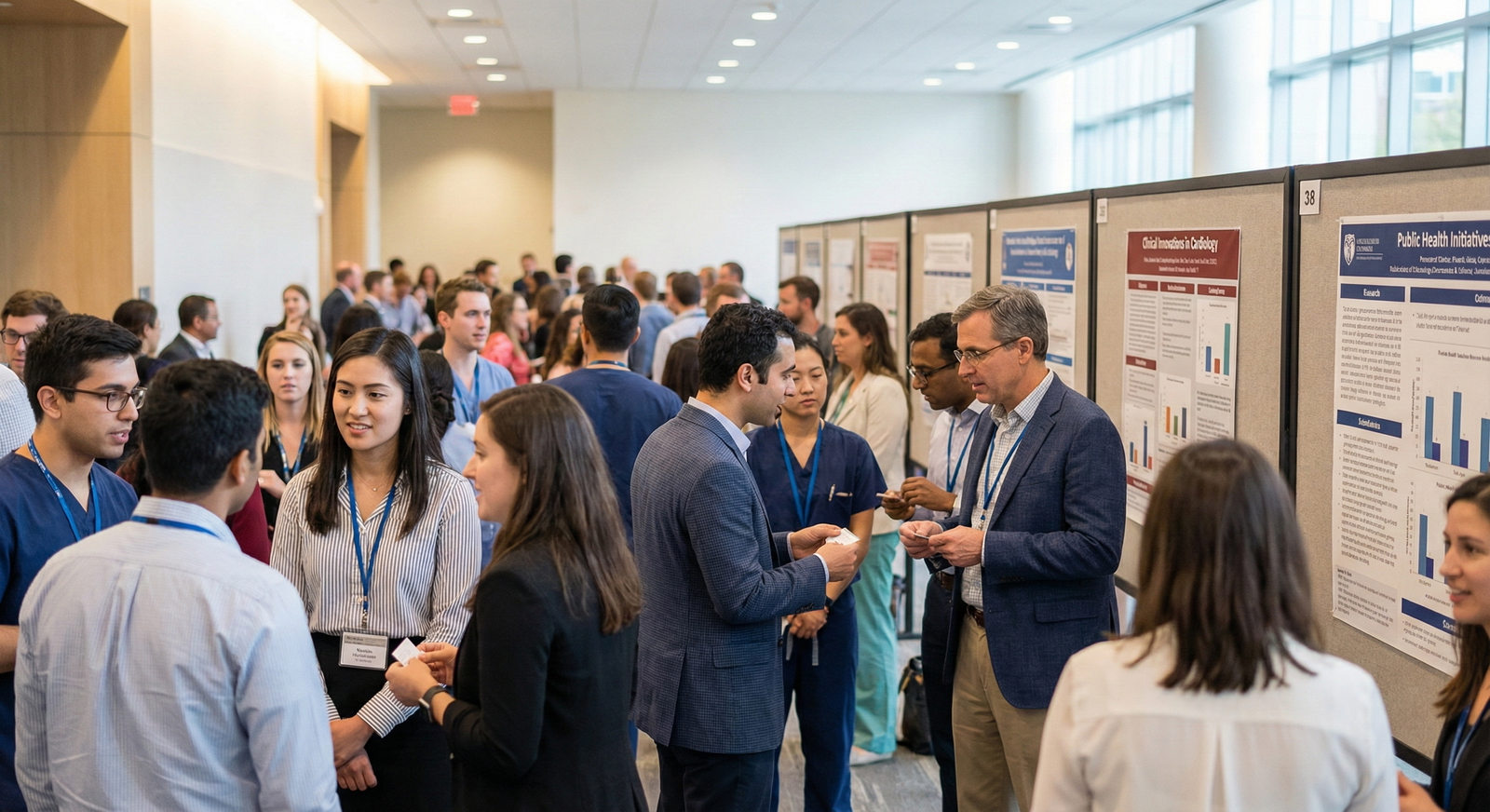
Networking in medicine is one of the most powerful tools you have as an MD graduate interested in addiction medicine. Strong connections can open doors to residency positions, an addiction medicine fellowship, research collaborations, and leadership roles in shaping substance use policy and clinical practice. Yet many allopathic medical school graduates reach residency and early practice with no formal training in how to network effectively—or comfortably.
This article breaks down what intentional networking looks like for you as a soon-to-be or current MD graduate in addiction medicine, how it directly supports your career, and step-by-step strategies you can start using today.
Why Networking Matters So Much in Addiction Medicine
Addiction medicine is a rapidly evolving field with growing opportunities—and persistent stigma. That makes medical networking not just helpful but essential.
1. A Small, Specialized Community
Compared with internal medicine or general psychiatry, the addiction medicine community is relatively small and tightly interconnected. Leaders in the field often:
- Sit on multiple committees or guideline panels
- Direct or influence addiction medicine fellowship programs
- Oversee major research or quality improvement initiatives
- Advise health systems, government agencies, and nonprofits
In such a compact ecosystem, people tend to know each other—or know someone who knows you. Thoughtful networking helps you become a recognized name and face among the clinicians, researchers, and advocates working in substance use disorders.
2. The Hidden Job and Training Market
Many opportunities in addiction medicine are not widely advertised or are filled through word-of-mouth:
- Addiction medicine fellowship positions (especially off-cycle spots)
- Research assistant or co-investigator roles
- Hospital-based or community program positions in substance use disorder (SUD) treatment
- Funded quality improvement (QI) or implementation projects
When program directors, division chiefs, or mentors think, “We need someone for this,” they draw from their networks first. If you’ve invested in medical networking, your name is more likely to come up.
3. Reputation and Trust in a Stigmatized Field
Because addiction medicine involves vulnerable patients, controlled substances, and complex psychosocial issues, trust and reputation are critical. Your professional network is one of the most effective ways to build both:
- Colleagues vouch for your clinical judgment and professionalism
- Supervisors can affirm your commitment to evidence-based practice and harm reduction
- Mentors can endorse your readiness for leadership roles
Structured networking—done with authenticity and respect—helps others see you as a reliable, compassionate physician in this field.
4. Career Growth Beyond the Bedside
Addiction medicine spans far more than direct clinical care. It intersects with:
- Public health and epidemiology
- Policy and legislation (e.g., overdose prevention, decriminalization, parity laws)
- Correctional health and forensic systems
- Homelessness and social support programs
- Health technology and telehealth platforms
Networking connects you to people working at these intersections, which can lead to:
- Advisory roles in government or NGOs
- Participation in guideline development
- Media and public education opportunities
- Start-up or digital health involvement
Especially if you see yourself in leadership, policy, or academic roles, networking is a non-optional skill.
Building Your Core Network: From MD Graduate to Early Specialist
Your networking strategy should match your career stage. As a new MD graduate from an allopathic medical school (or recent resident), you’re typically in one of three positions:
- Applying to an addiction medicine fellowship
- Exploring addiction medicine while in another residency (e.g., internal medicine, family medicine, psychiatry)
- Transitioning into practice with a strong interest in substance use treatment and advocacy
Here’s how to build a solid foundation in each scenario.
1. Start Where You Are: Local and Institutional Connections
Your home institution is the easiest and most natural place to start. Look for:
- Addiction consult services
- Inpatient SUD consult or liaison teams
- Outpatient addiction clinics or MAT/MOUD programs
- Psychiatry or behavioral health departments with SUD emphasis
- Public health or population health departments working on overdose or harm reduction
Action steps:
- Ask your program director or clerkship leader:
- “Who in our institution is leading addiction medicine efforts?”
- “Is there an addiction consult team or SUD-focused clinician I could shadow or meet?”
- Request an introductory meeting (30 minutes) with identified faculty.
- Clarify your goals in advance: fellowship exploration, research involvement, clinical exposure, or mentorship.
A simple outreach email might look like:
Dear Dr. [Name],
I’m a [PGY-1 internal medicine resident / recent MD graduate] with a strong interest in addiction medicine. I’ve been particularly drawn to [specific aspect—e.g., hospital-based care for people with opioid use disorder, integrated behavioral care, harm reduction].
I would be grateful for the chance to speak with you briefly about your career path and any advice you might have for someone pursuing addiction medicine training and fellowship. If you have 20–30 minutes available in the coming weeks, I’d be happy to work around your schedule.
Sincerely,
[Your Name]
[Training program, contact info]
This single email, multiplied by a few carefully chosen recipients, can start a web of connections.
2. Leverage Your Allopathic Medical School Match Network
Your allopathic medical school match experience is already a network-building event. Use it intentionally:
- Keep contact with classmates who matched into psychiatry, internal medicine, family medicine, and emergency medicine—many will later intersect with addiction care.
- Stay in touch with faculty who wrote strong letters for you; they may connect you to addiction medicine colleagues elsewhere.
- If your medical school had any SUD-related curriculum, identify the course directors and ask for introductions to national colleagues.
If you’re already in residency, reach back to your medical school mentors with updates:
- “I’ve been working more closely with our addiction consult service and am considering addiction medicine fellowship.”
- “Do you know any addiction medicine fellowship directors or faculty I could speak with?”
Academic medicine is built on such introductions.
3. Use Online Networks Strategically (Not Passively)
Social and professional platforms can be powerful for substance abuse training and networking in medicine—if used intentionally.
LinkedIn:
- Build a clean, professional profile with a focus on addiction medicine interests.
- Follow major organizations (ASAM, AAAP, AMA, SAMHSA).
- Connect with conference speakers you hear (send a short personalized note).
X (Twitter) / Bluesky / Threads (if used professionally):
- Follow addiction medicine leaders, fellowship programs, and journals.
- Engage respectfully with discussions on SUD care, harm reduction, or policy.
- Share conference takeaways or research summaries (evidence-based, no PHI).
Institutional listservs or Slack/Teams channels:
- Join any addiction, psychiatry, or public health interest groups.
- Volunteer for small tasks (e.g., helping with a journal club or QI project).
Online presence amplifies your visibility beyond your geographic region.

Conference and Event Networking: Turning Encounters Into Relationships
Conference networking is one of the most concentrated ways to meet people in addiction medicine. But without a plan, it’s easy to wander through sessions and leave with only a tote bag and a stack of unused business cards.
1. Choose the Right Meetings
For someone aiming at addiction medicine fellowship or a career in SUD care, prioritize:
- American Society of Addiction Medicine (ASAM) Annual Conference
- American Academy of Addiction Psychiatry (AAAP) Annual Meeting
- Relevant American Psychiatric Association (APA) or Society of General Internal Medicine (SGIM) sessions focused on substance use
- State or regional addiction conferences and opioid response summits
- Public health meetings (APHA, state health department events) with SUD tracks
Many of these offer reduced fees or scholarships for residents and fellows—another reason networking helps, as mentors can alert you to such opportunities.
2. Prepare Before You Arrive
Treat conference networking like a procedure: prepare, perform, and follow up.
Before the conference:
Review the program and circle:
- Sessions on topics you care most about (e.g., medications for OUD, stimulant use disorders, harm reduction, justice-involved patients).
- Poster sessions featuring early-career researchers—these are often peers and near-peers.
- Panels featuring potential mentors or fellowship program directors.
Identify 5–10 people or programs you’d like to meet:
- Fellowship directors
- Investigators whose work aligns with your interests
- Clinicians leading innovative models of care
Send 2–4 short emails ahead of time:
- “I’ll be attending ASAM this year and hope to connect briefly if you have a few minutes between sessions.”
Most people won’t respond—but even a few yeses create anchor points at the meeting.
3. How to Introduce Yourself Without Feeling Awkward
You don’t need a perfect elevator pitch, but you do need a clear, concise self-introduction. For example:
“Hi, I’m Dr. [Name], a PGY-2 in internal medicine at [Institution]. I’m very interested in addiction medicine and particularly in [e.g., hospital-based MOUD initiation / SUD care in primary care / co-occurring psychiatric illness]. I’ve really appreciated your work on [specific paper, talk, or initiative].”
A few tips:
- Lead with your current role (MD graduate, PGY level, or new attending).
- Include your specific interest in addiction medicine—not just “I’m interested in addiction,” but “I care a lot about [specific] aspect.”
- Reference something concrete about their work to show you’re informed and genuinely interested.
4. Turning a Brief Conversation Into an Ongoing Connection
Before you walk away from a meaningful interaction, consider:
- Asking: “Would it be okay if I followed up by email with a couple of questions about [fellowship applications, research, career paths]?”
- Requesting: “Do you know anyone working on [your area of interest] whom you’d recommend I talk to?”
- Writing a note in your phone immediately: name, institution, topic of conversation, and any follow-up plan.
After the conference:
- Send a brief email within 3–7 days:
- “Thank you for taking a few minutes to speak with me at ASAM. I appreciated your advice about [X]. I’m currently [Y] and am considering [addiction medicine fellowship / research path]. If you have time in the coming weeks, I’d be grateful for a short Zoom call to ask a couple more questions about [Z].”
- Connect on LinkedIn or other professional platforms (with a note referencing where you met).
Consistent, polite follow-up is where many people fail; doing it well sets you apart.
Mentorship and Sponsorship in Addiction Medicine
Networking is not just about collecting names; it’s about cultivating meaningful, bidirectional relationships. In medicine, that often means mentorship and, when you’re fortunate, sponsorship.
1. Understanding the Difference
Mentor:
- Offers advice, feedback, and guidance.
- Helps you think through decisions and develop skills.
- Often spends time reviewing your work (CVs, statements, manuscripts).
Sponsor:
- Actively advocates for you when you’re not in the room.
- Recommends you for opportunities (talks, committees, leadership roles).
- Often more senior and influential in the field.
You typically find a mentor first, and over time, some mentors organically evolve into sponsors.
2. Finding the Right Mentors in Addiction Medicine
You may benefit from multiple mentors instead of one “perfect” one:
- Clinical mentor: Supervises your patient care, teaches you evidence-based SUD treatment.
- Research mentor: Guides you through projects, publications, and grant opportunities.
- Career mentor: Helps you navigate big decisions (fellowship vs. practice, academic vs. community).
- Identity or experience-based mentor: Shares aspects of your lived experience (e.g., underrepresented in medicine, first-generation physician, physician-parent).
For addiction medicine specifically, look for mentors who:
- Actively work in SUD treatment (clinical or research), not only adjacent fields.
- Demonstrate non-stigmatizing, patient-centered language and behaviors.
- Show willingness to involve trainees in projects.
To initiate a mentorship relationship:
- Start with a low-commitment request (e.g., a 20–30 minute advice meeting).
- Come prepared with:
- A brief CV
- A one-page summary of your goals and interests
- 3–4 specific questions (e.g., “How can I best prepare for an addiction medicine fellowship application?”)
3. Being a Good Mentee
Mentors are more likely to invest in you if you:
- Respect their time: show up prepared and on time, with a clear agenda.
- Follow through: if they suggest a paper to read, read it; if they offer introductions, email those contacts.
- Provide updates: brief periodic emails (“I submitted the abstract we discussed. Thank you again for your guidance.”).
- Offer value where you can: you may help with data collection, literature reviews, drafting sections of a manuscript, or presenting at journal club.
This is the foundation upon which sponsorship often develops—when a mentor realizes, “I can trust this person to do high-quality work and represent my team well.”

Networking for Addiction Medicine Fellowship and Early Career Jobs
If you plan to pursue an addiction medicine fellowship, networking can directly influence your trajectory—from understanding programs to securing strong letters and interviews.
1. Understanding the Landscape of Addiction Medicine Fellowship
Addiction medicine fellowship opportunities span:
- Academic medical centers
- Community hospitals
- VA systems
- Public hospitals
- Integrated health systems and HMOs
Networking helps you:
- Learn about the “culture” and strengths of different programs.
- Identify which programs emphasize research vs. clinical training vs. policy.
- Discover off-cycle or upcoming positions not widely advertised.
Use your network to ask targeted questions:
- “Which programs are particularly strong for hospital-based addiction consult services?”
- “Where is there good exposure to justice-involved populations?”
- “Which fellowships include strong buprenorphine, methadone, and extended-release naltrexone training?”
2. Getting on the Radar of Program Directors and Faculty
You don’t have to wait until you submit your application to connect with fellowship leadership.
Strategies:
- Attend sessions or virtual open houses hosted by programs.
- Introduce yourself briefly and mention your interest area.
- Follow up by email:
- “I enjoyed your overview of the fellowship and am particularly drawn to your clinic for [e.g., pregnant individuals with OUD]. I’m currently [your role] and plan to apply in [cycle]. Would you be open to a brief call to discuss whether my background and interests might be a good fit for your program?”
Additionally:
- Connect through mutual contacts: “Dr. [X] at [your institution] suggested I reach out to you given my interest in [Y].”
- Ask if there are opportunities to attend a virtual case conference or grand rounds.
These interactions may not guarantee an offer, but they can make your application more memorable and aligned with program strengths.
3. Using Networking to Strengthen Your Application
Networking can:
- Help you tailor your personal statement to specific program strengths and philosophies.
- Lead to substantive experiences (research, QI, elective rotations) that enrich your CV.
- Yield stronger letters of recommendation from recognized addiction medicine faculty.
For example:
- You meet a faculty member at a conference who invites you to help with a small project on buprenorphine initiation in the ED.
- Over 6–12 months, you collect data, co-author a poster, and gain meaningful exposure to clinical addiction medicine.
- That faculty member later writes a detailed letter for your addiction medicine fellowship applications—and may even contact program directors on your behalf.
4. Transitioning Networking Skills to Early Career Practice
Once you complete training, networking continues to matter:
- Finding positions that incorporate addiction treatment into internal medicine, family medicine, psychiatry, or hospitalist roles.
- Connecting with local public health departments, syringe service programs, or community organizations.
- Joining statewide or national committees on overdose prevention, medication policy, or substance use screening.
Even if you don’t pursue formal addiction medicine fellowship, a strong network can help you build a career in which SUD care is a primary and respected component.
Practical Networking Strategies You Can Start This Month
To turn all this into action, here are concrete steps you can implement immediately as an MD graduate interested in addiction medicine.
1. One-Page Networking Plan
Write down:
Short-term goal (6–12 months):
- e.g., “Secure strong mentorship and at least one research or QI project in addiction medicine.”
Medium-term goal (1–3 years):
- e.g., “Match into an addiction medicine fellowship,” or “Develop expertise in SUD treatment within my primary specialty.”
Networking targets:
- 3 local faculty (home institution)
- 3 non-local faculty (identified via conferences, literature, or introductions)
- 3 peers (residents/fellows interested in addiction medicine)
2. Monthly Networking Habits
Aim to do the following each month:
- Attend one addiction-related talk, grand rounds, or webinar.
- Reach out to one new person (or re-engage someone you’ve met previously).
- Contribute to one activity—journal club, small project, teaching session, or committee meeting—related to addiction care.
These small steps, compounded, build a robust network over time.
3. Effective Use of Email and Follow-Up
General email principles:
- Clear subject lines: “PGY-1 IM Resident Interested in Addiction Medicine – Request for Advice”
- Short, specific asks:
- “Would you have 20–30 minutes to discuss career paths in addiction medicine?”
- “Could I assist with any ongoing SUD-related projects as a way to gain experience?”
Follow-up:
- If no reply after 10–14 days, send a polite follow-up once.
- After a meeting, send a brief thank-you plus 1–2 summary points or actions you’ll take.
- Periodically update mentors on outcomes of their advice (publications, applications, new roles).
4. Being Genuine and Ethical in Networking
Networking is not about transactional behavior or self-promotion at all costs. Particularly in medicine—and especially in addiction care—credibility depends on authenticity and integrity.
Keep in mind:
- Focus on mutual interests and shared goals (better patient care, improved systems, stronger evidence).
- Don’t overstate your experience or skills; be honest about your level and your aspirations.
- Protect patient privacy; never share identifiable or sensitive case details in networking spaces.
- Credit others appropriately for their mentorship, ideas, or collaboration.
When you approach networking as relationship-building in service of patients and the field, it feels less like “working a room” and more like joining a community.
FAQs: Networking in Medicine for MD Graduates in Addiction Medicine
1. I’m introverted and dislike “networking.” Can I still build a strong network?
Yes. Many excellent clinicians and researchers in addiction medicine are introverted or quiet by nature. You don’t need to be the most outgoing person in the room; you need to be:
- Prepared with a clear self-introduction
- Curious about others’ work
- Reliable in following through after small interactions
One-on-one conversations, thoughtful emails, and sustained collaboration can be far more powerful than trying to impress a large group.
2. I’m not sure yet if I want an addiction medicine fellowship. Is it too early to network?
It’s not too early—and in fact, early exploration is ideal. You can frame your outreach honestly:
“I’m exploring whether addiction medicine might be a good fit for me and would appreciate your perspective.”
Networking while you are undecided helps you gather information, clarify your interests, and structure your residency or early practice experiences to keep multiple doors open.
3. How do I balance networking with clinical responsibilities and exams?
Treat networking as a small but regular part of professional development:
- 1 hour per week (or 2–3 hours per month) is often sufficient.
- Integrate it into existing activities (e.g., staying 15 minutes after grand rounds to introduce yourself to a speaker).
- Protect your core study and patient-care time first; networking works best when it’s sustainable, not exhausting.
Over time, many networking activities—research, QI, teaching—can also strengthen your CV and deepen your clinical understanding, so they’re not truly “extra.”
4. Can networking help me if I’m coming from a less well-known program or a non-traditional path?
Absolutely. If you trained at a smaller or less recognized institution, or if you’re transitioning from another specialty, networking is especially valuable:
- It allows people to see you beyond your institution name or CV.
- You can demonstrate your dedication, insight, and work ethic in real interactions.
- Mentors and sponsors can help translate your strengths to fellowship directors or hiring committees.
Consistent, genuine engagement—over months and years—often matters more than where you started.
By approaching networking in medicine as a skill you can learn, rather than a personality trait you either have or don’t, you position yourself strongly for a meaningful career in addiction medicine. Each conversation, conference, email, and collaboration is a chance to join and shape a community devoted to better care for people with substance use disorders—and to build the professional life you envision as an MD graduate in this vital field.