
Why Networking Matters So Much in Medicine-Psychiatry
Medicine-psychiatry combined training sits at a powerful intersection of two worlds. You speak both the language of hospitalist medicine and the language of psychotherapy and psychopharmacology. That dual fluency is a huge asset—but only if the right people know it.
In med psych residency, networking is not just “being social.” It’s a strategic, long-term professional skill that:
- Opens doors to competitive fellowships (consult-liaison, addiction, geriatrics, palliative, etc.)
- Connects you with mentors who understand combined training
- Helps you build multidisciplinary teams (IM, psych, neurology, palliative, ED, social work)
- Leads to research, QI, and leadership opportunities
- Positions you for hybrid careers (academic, integrated care, leadership roles)
- Protects against isolation and burnout by building a support system
Because medicine psychiatry combined programs are relatively small and niche, medical networking is especially critical. There are fewer “default” paths, fewer nearby role models, and less standardization in career paths. Most med-psych graduates who land dream jobs, build innovative services, or shape policy did it through a web of relationships—not a single application or email.
This guide breaks down, step-by-step, how to build that web during residency, focusing on:
- Everyday networking on the wards and in clinics
- Conference networking for med psych residents
- How to approach mentorship in medicine with a combined lens
- Leveraging online platforms, alumni, and collaborations
- Networking for specific goals: fellowships, academic careers, community roles
Foundations: Rethinking “Networking” for Med-Psych Residents
Many residents hear “networking” and picture awkward small talk at conferences. For a medicine-psychiatry combined trainee, the mindset needs to be different and much more intentional.
Networking = Relationship-Building, Not Self-Promotion
A practical working definition:
Networking is the deliberate cultivation of professional relationships that create mutual value over time.
It’s not:
- Collecting business cards or LinkedIn connections you never contact
- Only talking to “famous” people
- A one-way attempt to get something (a letter, a research spot, a job)
It is:
- Showing up consistently
- Being curious and helpful
- Staying in touch over years
- Making it easier for people to think of you when opportunities arise
Why Networking Is Different for Med Psych Residency
Med psych residents have unique strengths—and unique challenges:
Strengths
- Broad clinical exposure (ICU, wards, CL, outpatient, psych ED, integrated clinics)
- Systems thinking: you naturally notice interfaces between services
- High value in collaborative roles (CL psych, integrated primary care, population health)
- Often perceived as flexible, adaptable, and creative
Challenges
- Fewer role models with your exact training path
- Some faculty may not fully understand what medicine-psychiatry combined means
- Career paths are more heterogeneous (no single “standard” job)
- Risk of being siloed: medicine people see you as “the psych person”; psych people see you as “the med person”
Networking helps you tell your story clearly and repeatedly enough that others understand your dual expertise and remember you for appropriate opportunities.
Crafting a Clear Med-Psych “Professional Identity”
You need a concise way to explain what you do and where you’re headed—an “elevator pitch” you can adapt to different contexts.
Template:
“I’m a [PGY level] in the medicine-psychiatry combined program with interests in [specific area: e.g., integrated care, CL psych, substance use in medically complex patients]. I’m especially excited about [1–2 concrete problems or populations], and I’m looking to [do X—research, QI, program development, fellowship] in that space.”
Example:
“I’m a PGY-3 in our med-psych residency. I’m especially interested in how serious mental illness affects management of chronic medical conditions, like heart failure and COPD. I’d love to get involved in projects that improve transitions between inpatient medicine and outpatient psychiatry clinics.”
Refine this over time. Networking conversations are easier when you can articulate who you are and what you care about in 2–3 sentences.
Everyday Networking in Residency: Making the Most of Your Daily Work
Some of your most powerful networking will happen far from national conferences—on rounds, in sign-out rooms, and in the hallway after interdisciplinary meetings.
On Medicine Rotations: Position Yourself as the “Bridge”
On inpatient medicine, ICU, or subspecialty services:
Introduce yourself clearly.
“I’m the med-psych resident on the team this month; I have a particular interest in how psychiatric comorbidities influence medical outcomes.”Ask consult teams about their challenges.
When psych consults see your patient:
“I’m dual trained—what’s the biggest barrier you see when working with medically complex patients like this? I’m really interested in improving that interface.”Offer to present.
- Noon conference: “Psychotropics in medically complex patients”
- Journal club: articles on delirium, catatonia, or integrated care
- Team huddles: a 5-minute teaching point on capacity evaluation or agitation management
Presentations position you as the local expert and start conversations with attendings who might later become mentors or collaborators.
- Follow up when someone shows interest.
If an attending says, “We really need a better system for managing patients with psychosis and diabetes,” respond with:
“I’d love to talk more. Could I email you to find a time to discuss ideas for a small QI project?”
On Psychiatry Rotations: Highlight Your Medical Expertise
On inpatient psych, CL, ED psych, or outpatient psychiatry:
Make your medicine background visible.
“I did a recent block on the heart failure service; I’d be happy to help think through the medical side of this patient’s management while we’re addressing their depression.”Volunteer for cross-cutting topics.
Examples:- Metabolic syndrome with antipsychotics
- Collaborative care models
- Medically unexplained symptoms and somatic symptom disorders
- Psychopharmacology in renal or hepatic impairment
Join committees or working groups.
Many departments have:- Quality and safety committees
- Integrated care initiatives with primary care
- Population health or high-utilizer task forces
Your dual perspective is a selling point.
Interdisciplinary Networking: Your Built-In Advantage
Medicine-psychiatry combined residents often work with:
- Social work
- Case management
- Pharmacy
- Nursing leadership
- Palliative care
- Addiction services
These teams:
- See where the system is broken
- Know who the problem-solvers and champions are
- Are often eager for physician allies
Practical moves:
Stay 5 minutes after an interdisciplinary meeting to say:
“I’m in med-psych and really interested in how we can better coordinate for patients like the one we just discussed. If there are any working groups or projects around this, I’d love to help.”Follow up with an email:
“Thank you for your insights in today’s huddle regarding high-utilizer patients with frequent ED visits. If there are ongoing initiatives in this area, I’d love to learn more and see if I could contribute from the med-psych standpoint.”
This is medical networking in its most organic form—built on shared clinical problems.

Conference Networking: Turning Meetings into Career Accelerators
In a small field like med psych, conference networking can be career-defining. Organizations like the American Association of Directors of Psychiatric Residency Training (AADPRT), American College of Physicians (ACP), American Psychiatric Association (APA), and Academy of Consultation-Liaison Psychiatry (ACLP) all have med-psych relevant content and communities.
Some institutions also have specific medicine psychiatry combined sections or interest groups at these meetings.
Before the Conference: Preparation is 80% of the Work
Clarify your goals.
- Find mentors in CL or integrated care?
- Explore fellowship options?
- Present a poster and meet potential collaborators?
- Learn about a specific niche (e.g., perinatal, addiction, transplant psychiatry)?
Study the program.
- Highlight sessions and symposia that overlap with:
- Med-psych
- Integrated care / collaborative care
- Psychosomatic medicine / CL
- Population health, severe mental illness, health services research
- Look for:
- “Medicine-psychiatry” or “combined training”
- “Interface of medicine and psychiatry”
- Topics like delirium, catatonia, somatic symptom disorders, medically complex SMI
- Highlight sessions and symposia that overlap with:
Profile key people.
- Identify 5–10 people whose work you admire
- Read at least one abstract or paper from each
- Prepare 1–2 thoughtful questions per person
Schedule short meetings. Sample email (2–3 weeks in advance):
Subject: Med-Psych Resident Attending [Conference Name] – Brief Meeting?
Dear Dr. [Name],
I’m a [PGY level] medicine-psychiatry resident at [Institution]. I’ve followed your work on [specific paper/topic] and am very interested in [relevant area]. I’ll be attending [Conference Name] and wondered if you might have 10–15 minutes for a brief conversation about career paths in [CL/integrated care/etc.].I know these meetings are busy and completely understand if time is limited. If feasible, I’d be grateful for any opportunity to learn from your experience.
Best regards,
[Name, MD]
[Program, Institution]
Even if only 2–3 respond, those conversations can be pivotal.
During the Conference: How to Actually Network
1. Use your med-psych identity.
When introducing yourself:
“I’m in a medicine-psychiatry combined residency; I’m especially interested in [X].”
Many people will immediately recognize your unique vantage point and ask questions. That’s your opening.
2. Ask high-yield questions.
Examples:
- “If you were starting out today as a med-psych trainee, what would you focus on?”
- “Where do you think the biggest gaps are in care for medically complex patients with serious mental illness?”
- “What skills would you prioritize during residency to be effective in your type of role?”
3. Attend smaller sessions and interest groups.
- Special interest groups on integrated care, CL, or primary care-mental health integration are networking goldmines.
- Introduce yourself at the end:
“I’m a med-psych resident and this is exactly the space I want to work in.”
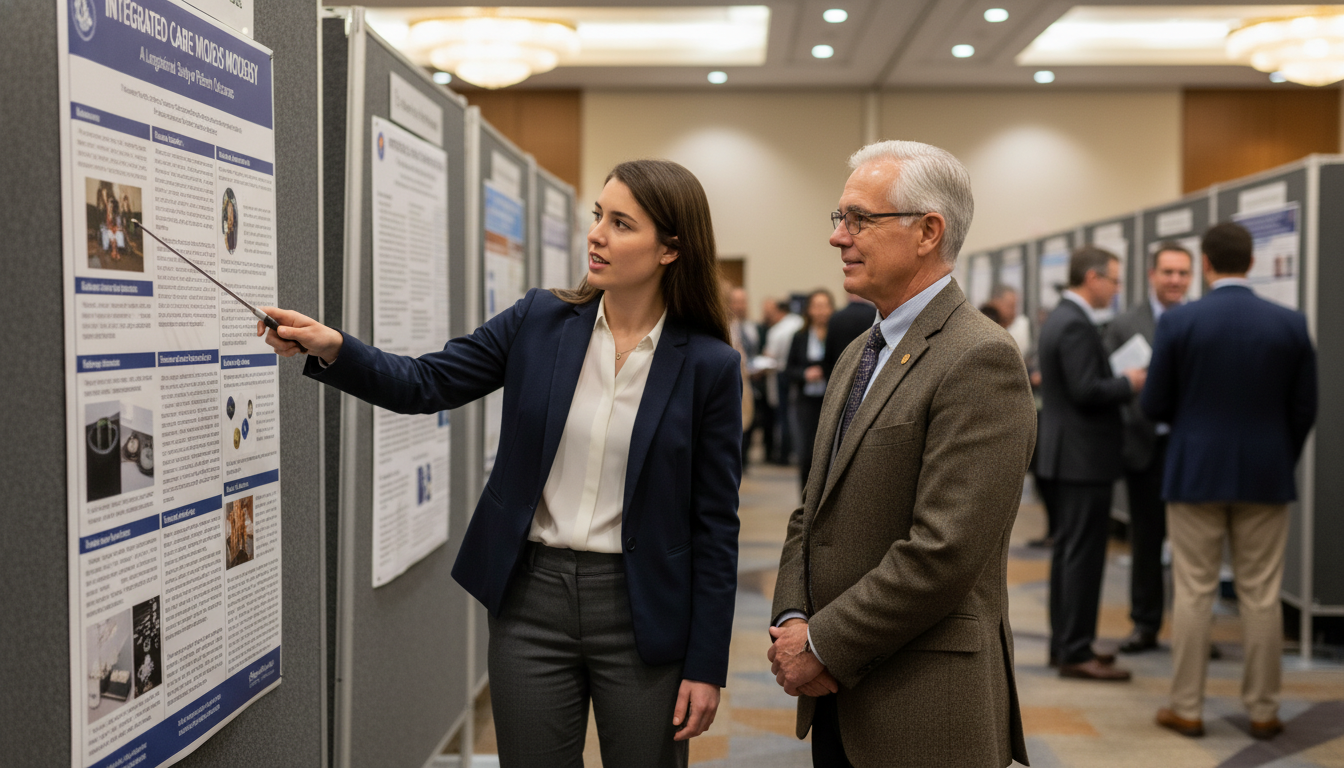
4. Present if you can.
- Even a small case report or QI poster:
- Gives you a reason to talk to others (“Come by my poster on X”)
- Establishes subject-matter interest
- Becomes a natural conversation starter with potential mentors
5. Collect contacts—and annotate them. After meeting someone:
- Write in your notes app: name, institution, what you discussed, and 1 next step.
- Examples of “next steps”:
- Send them your poster
- Ask for a paper recommendation
- Request feedback on a project idea
After the Conference: Cementing Relationships
Networking only matters if it persists beyond the meeting.
48–72 hours after:
Send short, specific follow-up emails:
“Thank you again for taking the time to speak with me at ACLP. I especially appreciated your perspective on [X]. I’ve attached the poster we discussed and would welcome any thoughts if you have time.”
Connect on LinkedIn or another appropriate platform with a personalized note.
2–3 months later:
- Provide an update:
“I wanted to share that I started a small QI project on [topic we discussed], inspired by our conversation. If you’re open to it, I’d value your perspective on our proposed measures.”
People remember residents who follow through.
Mentorship in Medicine for Med-Psych Trainees: Building Your “Board of Directors”
One of the most strategic forms of medical networking during residency is seeking mentorship in medicine. For combined training, expecting a single “super-mentor” to cover everything is unrealistic. Instead, aim for a mentorship team—your personal “board of directors.”
Types of Mentors You Need as a Med-Psych Resident
Clinical mentors (medicine and psychiatry)
- Help refine your clinical judgment in complex cases
- Model integrated thinking
- May write letters for fellowship or jobs
Aim for:
- 1–2 in internal medicine (hospitalist, subspecialist, or outpatient IM with integrated interest)
- 1–2 in psychiatry (CL, general adult, addiction, or other overlapping area)
Career mentor with a hybrid or systems role
- A CL psychiatrist, integrated care leader, population health or quality leader
- Helps you see beyond individual cases to system-level opportunities
Scholarly mentor
- Guides you in:
- Research methodology
- QI design
- IRB navigation
- Manuscript or abstract writing
- Doesn’t have to be dual-trained; they can bring methodological skills while you bring the med-psych lens.
- Guides you in:
Peer mentors
- Senior residents or recent graduates (especially from medicine psychiatry combined programs)
- Offer practical advice: scheduling electives, choosing rotations, navigating politics, and avoiding burnout
How to Approach Potential Mentors
The most effective mentor relationships are built on specific, time-limited requests at first.
Example outreach email:
Subject: Med-Psych Resident Seeking Brief Career Advice
Dear Dr. [Name],
I am a PGY-[X] medicine-psychiatry resident at [Institution]. I’ve really admired your work in [specific area—e.g., integrated inpatient services, CL, high-utilizer programs], and I’m exploring how to build a career at the interface of medicine and psychiatry.Would you be open to a brief (20–30 minute) meeting to discuss your career path and any advice you might have for a med-psych trainee interested in [X]? I’d be happy to send a short summary of my background and interests beforehand.
Thank you for considering this,
[Name, MD]
[Program, Institution]
If the conversation goes well, you can later ask:
“Would you be comfortable if I occasionally reached out with questions or updates as I think about my career path?”
Making Mentorship Relationships Work
Come prepared.
- Send a brief 1-page CV and a paragraph on your goals before meetings.
- Bring 3–4 specific questions.
Respect time.
- End meetings on time unless the mentor clearly extends.
- Follow through on any next steps you agree to.
Provide updates.
- Mentors are more invested when they see you acting on their advice.
Diversify.
- It’s normal to have different mentors for clinical, research, and career planning.
- Let them know who else is on your “team” if you’re comfortable; it shows you’re intentional.
Strategic Networking for Your Post-Residency Path
Your networking strategy should evolve as you progress through med psych residency. Think about it in stages.
PGY-1 to Early PGY-2: Exploration and Exposure
Goals:
- Learn what’s possible with medicine psychiatry combined training
- Meet faculty across medicine and psychiatry
- Observe which roles resonate with you
Networking actions:
- Volunteer for resident committees that have cross-disciplinary membership (e.g., quality/safety, wellness, diversity).
- Ask attendings, “Who else should I talk to if I’m interested in X?”
- Attend local/regional conferences if national travel isn’t feasible yet.
Late PGY-2 to PGY-3: Focus and Skill Development
Goals:
- Narrow down interest areas (e.g., CL, SMI+chronic disease, addiction, transplant, neurology/psych interface)
- Build 1–2 small scholarly or QI projects
- Identify likely fellowship or job directions
Networking actions:
- Present at least once (local or national).
- Seek a formal mentor in your primary area of interest.
- Start informational interviews with alumni of your program—especially those with med-psych backgrounds.
PGY-4 to PGY-5: Positioning for Transition
Goals:
- Solidify fellowship or job targets
- Obtain strong letters of recommendation
- Ensure your network understands your skills and career goals
Networking actions:
- Have explicit conversations with mentors about your plans:
“I’m planning to pursue CL fellowship with a focus on medically complex SMI; what programs or people should I be talking to?” - Ask mentors to connect you with colleagues at other institutions.
- Attend conferences with a clear plan of which program directors or leaders you want to meet.
Alumni and Informational Interviewing
Alumni from med psych residency or from your institution can be invaluable:
- Ask your program leadership or GME office for alumni contact lists.
- Reach out with:
“As a current med-psych resident, I’m curious how you navigated your career path to [current role]. Would you be open to a 20-minute Zoom call?”
Key questions:
- “What surprised you about working as a med-psych trained physician?”
- “What do you wish you had done differently in residency?”
- “Which skills ended up being most essential in your current role?”
These are medical networking conversations that also serve as free, customized career coaching.
Using Digital Tools and Platforms to Extend Your Network
In-person networking is essential, but online tools can dramatically extend your reach.
LinkedIn and Professional Profiles
Create a clear, professional LinkedIn profile:
- Headline: “PGY-3 Medicine-Psychiatry Resident | Interested in Integrated Care & Consultation-Liaison Psychiatry”
- Summary: 3–4 sentences about your background, interests, and goals
- Add your presentations, posters, and publications
Use LinkedIn to:
- Connect with people you meet at events
- Join groups related to integrated care, CL, or mental health in primary care
- Follow leaders in medicine-psychiatry combined fields
Professional Societies and Listservs
Join organizations with med-psych relevance:
- Academy of Consultation-Liaison Psychiatry (ACLP)
- American Psychiatric Association (APA)
- American College of Physicians (ACP)
- Any specialty society aligned with your interests (e.g., addiction, palliative, geriatrics)
Many have:
- Resident/fellow sections
- Mentorship programs
- Listservs where you can observe conversations about clinical dilemmas, policy, and research
Social Media (Used Strategically)
If you use X (Twitter) or other platforms professionally:
- Follow clinicians and researchers in your interest areas.
- Share your work respectfully (e.g., “Honored to present our QI project on X at [Conference].”)
- Engage with content thoughtfully (ask questions, thank authors for insightful threads, share resources).
Always maintain confidentiality and professionalism—assume everything is public and permanent.
Frequently Asked Questions (FAQ)
1. I’m introverted and dislike “networking.” Can I still be successful in med psych?
Yes. You don’t need to be extroverted to build a strong network. Focus on:
- 1:1 conversations instead of large receptions
- Asking thoughtful questions rather than “working the room”
- Following up reliably over time
Many of the most effective networkers are quiet, observant, and highly dependable.
2. How early in med psych residency should I start thinking about networking?
Start in your first year, but keep it low-pressure. Initially, you’re exploring:
- What careers exist at the medicine–psychiatry interface
- Which attendings you naturally connect with
- What kinds of problems or patient populations excite you
Formal networking for specific goals (like a particular fellowship) can wait until late PGY-2 or PGY-3, but relationship-building is cumulative—the earlier you begin, the more organic it feels.
3. What if my institution has very few medicine-psychiatry combined faculty?
This is common. You can:
- Seek mentors who are psych-only or med-only but work at important interfaces (CL, palliative, primary care mental health).
- Use conferences and professional societies to meet med-psych specific mentors, even if they’re at other institutions.
- Leverage virtual meetings and email to maintain those relationships.
You don’t need all mentors under your own roof; a distributed network can be a strength.
4. How do I avoid seeming opportunistic when asking for help or mentorship?
Be transparent, respectful, and reciprocal:
- Acknowledge the person’s time and expertise.
- Be specific about what you’re asking (e.g., “20–30 minutes for career advice,” not vague “mentorship”).
- Follow through on advice and share outcomes.
- Offer help where appropriate (e.g., data collection on a project, drafting a protocol).
Most faculty remember what it was like to be in your position and are happy to support a motivated, sincere resident—especially in a unique field like medicine-psychiatry.
Networking in medicine, especially in the context of med psych residency, is less about collecting contacts and more about building a community around the problems you care about most. If you consistently show up, ask good questions, and follow through, your network will grow—and so will the opportunities to shape a career at the heart of the medicine–psychiatry interface.