Understanding the Networking Landscape in Cardiothoracic Surgery as a Non‑US Citizen IMG
For a non-US citizen IMG (international medical graduate), cardiothoracic surgery residency is one of the most competitive and relationship‑driven pathways in medicine. Your CV, scores, and research matter deeply—but who knows you, trusts you, and is willing to advocate for you often becomes the deciding factor.
Networking in medicine, especially in a niche, high‑stakes field like cardiothoracic surgery, is not about superficial small talk. It’s about building a reputation as a reliable, intellectually curious, and collaborative future colleague. For a foreign national medical graduate, this is also about overcoming distance, visa issues, and limited access to traditional pipelines.
This article will walk you through the specific networking strategies that work in cardiothoracic surgery, with a focus on non-US citizen IMGs. You’ll learn how to:
- Map out influential people and key institutions
- Build relationships before you set foot in the US
- Use conference networking and digital tools strategically
- Leverage mentorship in medicine to gain visibility
- Turn short rotations or observerships into long‑term professional alliances
Throughout, we’ll highlight realistic examples relevant to heart surgery training and cardiothoracic surgery residency.
The Reality: Why Networking Matters Even More for Non‑US Citizen IMGs
High stakes and limited spots
Cardiothoracic surgery in the US is a small world:
- Limited integrated (I‑6) residency positions
- Small number of traditional fellowship spots
- Programs are high-risk in their selection: training a CT surgeon requires major institutional resources
Because of this, program leadership often prefers applicants who:
- Have been personally observed in the OR or on service
- Are vouched for by trusted colleagues
- Have a track record of reliability within their professional network
For a non-US citizen IMG, you are often unknown to these networks. Your medical school may not be recognized, and your home country’s training system may be poorly understood. Thoughtful medical networking is how you close this gap.
Additional barriers for foreign national medical graduates
As a foreign national medical graduate, you may face:
- Visa limitations (J‑1 vs H‑1B) that make some programs hesitant
- Fewer US clinical months to interact with faculty
- No alumni pipeline at target programs
- Less familiarity with unspoken cultural norms in US academic medicine
Networking is how you:
- Find programs that are IMG‑friendly and visa‑friendly
- Identify faculty who will actively advocate for you
- Receive coaching on what’s realistic and where to focus your effort
- Learn how decisions are actually made in cardiothoracic surgery residency selection
Think of networking not as “extra,” but as a core strategy to compensate for structural disadvantages.
Building Your Foundation Before You Arrive in the US
Even before you travel to the US, you can begin intentional, strategic networking in medicine within cardiothoracic surgery.
Step 1: Clarify your narrative and niche
Effective networking starts with clarity about who you are and what you want. In a crowded field, a vague story is forgettable. A focused narrative is memorable.
Reflect on:
- Why cardiothoracic surgery? Be specific (e.g., “valvular surgery,” “congenital heart disease,” “lung transplantation”).
- What have you already done related to heart surgery training?
- Research projects
- Audits or quality improvement
- Assisting in cardiac ORs during internship
- What unique perspective you bring as a non-US citizen IMG?
- Experience with rheumatic heart disease
- Exposure to high‑volume surgery with limited resources
- Language and cultural skills relevant to diverse US populations
Create a 2–3 sentence “professional headline” you can use in conversations and emails. For example:
“I’m a non-US citizen IMG from Brazil with two years’ experience in adult cardiac surgery and several projects in outcomes research for valve surgery. I’m working toward cardiothoracic surgery residency in the US and building my portfolio in clinical research and imaging.”
The clearer your narrative, the easier it is for others to remember and advocate for you.
Step 2: Build a professional online presence
Before you start reaching out, ensure people who search your name see something professional, coherent, and aligned with your goals.
Key platforms:
- LinkedIn
- Professional photo
- Clear headline: “Foreign national medical graduate aspiring cardiothoracic surgeon | Research in [X]”
- Concise summary emphasizing your CT interests, research, and goals
- List publications, presentations, and honors
- ResearchGate / Google Scholar
- Keep your publications and projects updated
- Link to these in your email signatures and LinkedIn
- X (Twitter) – now very powerful for academic networking
- Follow leading CT surgeons, societies, and journals
- Engage thoughtfully with content (comment on articles, share insights)
Make sure your online profiles are consistent across platforms and reflect your cardiothoracic focus clearly.
Step 3: Identify key people and societies in cardiothoracic surgery
Treat this like mapping a new city:
Major US professional societies
- STS – Society of Thoracic Surgeons
- AATS – American Association for Thoracic Surgery
- WTS – Women in Thoracic Surgery
- CHEST, ACC, and others with cardiothoracic sessions
Key CT training programs
- Look at top integrated cardiothoracic surgery residency and fellowship sites
- Identify:
- Program directors
- Associate program directors
- Research directors
- Faculty with an interest in education or global surgery
IMG‑friendly / visa‑friendly places
- Search program websites and match lists for prior IMGs or non‑US graduates
- Ask senior IMGs online which programs are open to foreign national medical graduates
Start a simple spreadsheet with columns such as:
- Name
- Role
- Institution
- Interest (e.g., aortic surgery, congenital)
- Email/Twitter handle
- Connection status (cold email sent, reply received, ongoing)
This becomes your networking roadmap.

Strategic Online Networking: Email, Social Media, and Remote Research
Online networking is often the first door for a non-US citizen IMG. Done well, it can lead to observerships, remote research roles, and mentorship in medicine.
Crafting effective cold emails
Many IMGs send emails that are too long, too generic, or too demanding. You want short, respectful, and specific messages.
Principles:
- Subject line: clear and honest
- Example: “Prospective IMG interested in CT outcomes research – brief request”
- Email body: 150–200 words max
- Show you know who they are and why you chose them
- Make one specific ask that is easy to answer
Example cold email framework:
Dear Dr. [Name],
My name is [Name], a non-US citizen IMG from [Country], currently [position]. I am strongly interested in cardiothoracic surgery, particularly [sub‑interest], and I have [X] publications in this field.
I have read your recent work on [briefly mention one paper or topic], and it aligns with my interests in [Y]. I am hoping to explore remote research opportunities or ways to contribute to ongoing projects in your group while I prepare for US training.
Would you be open to a short 10–15 minute virtual meeting to discuss whether there might be any role, even at a junior or volunteer level, where I could add value to your work?
I understand your time is very limited and would be grateful for any advice you can offer. I have attached my CV for reference.
Sincerely,
[Full Name]
[LinkedIn or Google Scholar link]
You should expect a low response rate; 10–20% is normal. That’s why volume and persistence—without being pushy—matter.
Using X (Twitter) for cardiothoracic networking
Academic medicine has shifted heavily to X:
- Follow:
- @AATSHQ, @STS_Residents, @WTSWomen, key CT journals
- Individual surgeons at programs of interest
- Don’t just “like” – contribute:
- Share short summaries of articles you read
- Comment thoughtfully on threads about training, techniques, or research (e.g., “As a foreign national medical graduate hoping to pursue heart surgery training, I found this thread on mitral repair techniques very educational because…”)
- Over time, people notice consistent, mature engagement. When you later send an email, you are no longer a complete stranger.
Remote research as a networking bridge
For many non-US citizen IMGs, remote research is the most realistic entry into US academic circles.
Why it helps:
- Regular Zoom or email communication with CT faculty
- Opportunity to prove reliability: meeting deadlines, handling data carefully, writing drafts
- Natural reason to request letters of recommendation later
How to suggest it:
- In your emails or calls, emphasize:
- Prior research skills (statistics, basic coding, data cleaning, literature review)
- Your time availability each week
- Willingness to start with low‑visibility work and earn trust
Example:
“I have experience with basic statistical analysis in SPSS and R, and I am comfortable with systematic literature searches. I can dedicate 10–15 hours per week and am happy to begin with data cleaning or chart review tasks.”
Remote research mentors can later:
- Introduce you to other CT faculty
- Invite you for in‑person research years
- Support your cardiothoracic surgery residency application with credible letters
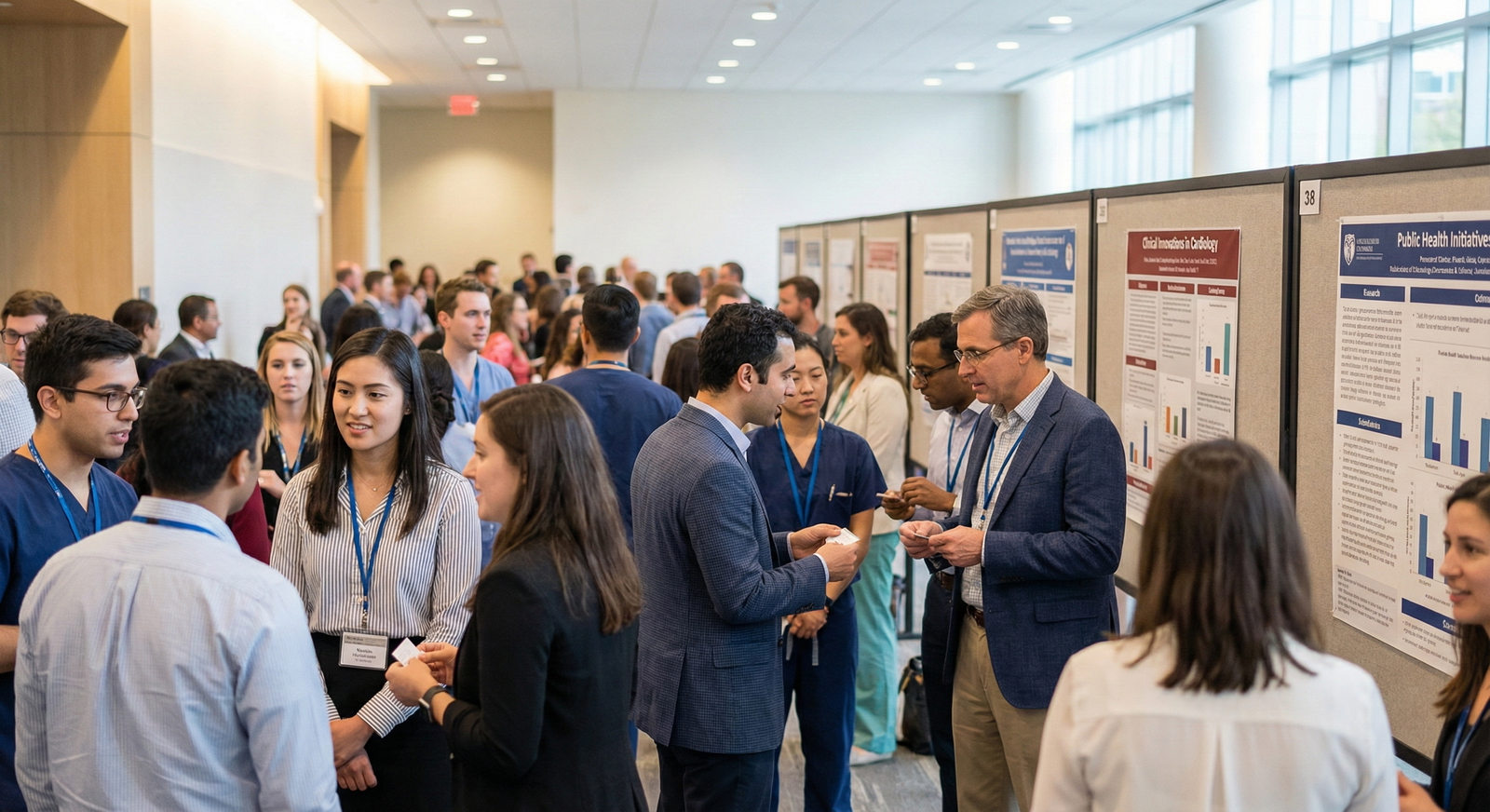
Making the Most of Conferences and In‑Person Encounters
Conference networking is one of the most powerful tools in your journey—if you prepare strategically.
Choosing which conferences to attend
As a non-US citizen IMG, each trip is expensive and often complicated by visas. Choose meetings that maximize impact:
Major CT conferences:
- STS Annual Meeting
- AATS Annual Meeting
- Specialty‑focused meetings (e.g., Western Thoracic Surgical Association, regional CT societies)
General surgery or cardiac surgery meetings where CT faculty gather:
- ACS Clinical Congress
- ACC or other cardiovascular meetings with surgical tracks
Look for:
- Resident and medical student tracks
- Mentorship sessions or speed networking
- Sessions explicitly about career development or residency/fellowship pathways
Preparing before you go
1. Contact people in advance
Two to three weeks before the conference:
- Email faculty you’ve interacted with online:
- “I will be attending [Conference] and would be grateful for 10 minutes to introduce myself in person.”
- If you have abstracts, list the session times and invite them:
- “If your schedule allows, I’ll be presenting [Title] on [date/time]. I’d be honored if you could attend.”
2. Research who will be there
- Check the conference program for:
- Program directors, selection committee members, and CT residency leaders
- Make a shortlist (5–10) of people you most want to meet
- Prepare two questions for each person that show:
- You know their work or role
- You are serious and have done homework
Approaching people at conferences
For many IMGs, this is the most intimidating step. A simple, respectful structure helps:
Observe context
- Don’t interrupt someone clearly rushing, on the phone, or in a private conversation.
- Good moments: After they finish a talk, during poster sessions, walking between sessions.
Introduce yourself clearly
- “Dr. [Name], my name is [Your Name]. I’m a non-US citizen IMG from [Country], very interested in cardiothoracic surgery and particularly [sub‑field]. I appreciated your talk on [topic].”
Ask a short, specific question
- “For someone in my position as a foreign national medical graduate, what would you prioritize to eventually become competitive for training in your field?”
- “Do you recommend any particular research pathways for an IMG aiming for an integrated CT residency?”
Close the interaction politely
- “Thank you so much; I don’t want to take more of your time. Would it be alright to email you later with one or two more questions? I’d be very grateful for any guidance.”
Then follow up within a week, referencing your brief meeting.
Presenting at conferences: double value
If you can get even a poster acceptance:
- Your name appears in the program, signaling engagement with the field
- It provides a natural reason to talk to faculty:
- “I have a poster on [topic]. I’d love your brief feedback.”
This transforms you from “random student” to “junior colleague presenting work.”

Mentorship and Long‑Term Relationship Building in Cardiothoracic Surgery
Networking is how people discover you; mentorship is how they invest in you.
Types of mentors you need
For a non-US citizen IMG in cardiothoracic surgery, aim for a mentorship team, not a single hero.
Career mentor (big-picture)
- Helps you make strategic decisions: research years, visa options, whether to apply integrated vs general surgery first
- Often a CT faculty member or senior surgeon who understands the training system
Research mentor
- Works with you on projects, manuscripts, and presentations
- Provides tangible outputs for your CV and letters of recommendation
- Can be in cardiology, anesthesia, or critical care if they collaborate with CT surgeons
Peer mentor / near‑peer
- Current residents, recent matches, or postdocs
- Offers practical advice: exam timing, ERAS strategy, cultural and communication tips
Visa‑savvy mentor (not always a physician)
- Could be a program coordinator, IMG advisor, or senior IMG who has navigated visas
- Helps you understand realities of H‑1B vs J‑1 and which programs are open to foreign national medical graduates
How to turn a contact into a mentor
A mentor usually begins as a simple contact. The relationship deepens when:
- You demonstrate reliability and follow-up
- You ask for guidance—and then act on it
- You keep them updated on your progress
Example process:
- Initial interaction at conference or via remote research.
- Email afterward:
- “Based on your advice, I have started [X]. I’m now considering [Y]. Could I ask your opinion on this decision?”
- Update them every 3–4 months:
- “I wanted to share that I recently [submitted a paper/started an observership/achieved Step score]. Your previous guidance was very helpful.”
Over time, they start thinking of you as “my mentee,” which makes it easier for them to:
- Introduce you to other colleagues
- Advocate for you with program directors
- Write strong personalized letters
What mentors look for in mentees
To maintain these relationships, show:
- Reliability – you do what you say you will do, by the agreed deadline
- Responsiveness – you reply to emails within a reasonable timeframe
- Respect for time – you come prepared to meetings, with an agenda and concise questions
- Growth – you learn from feedback and show visible improvement
Mentorship in medicine works best when mentors feel their investment leads to tangible progress.
Turning Rotations, Observerships, and Research Years into Real Opportunities
In-person time at a US institution is often the highest value networking opportunity for a non-US citizen IMG.
Before the rotation or research year
- Research the department
- Know the names and interests of CT faculty
- Understand the structure: who runs the service, who directs residency
- Clarify your goals
- Do you want letters of recommendation?
- Are you aiming for future research positions?
- Do you want to get your name on a paper?
Share your goals with your immediate supervisor in a humble way:
“My long‑term goal is cardiothoracic surgery residency in the US. I hope to earn strong letters by working hard and contributing meaningfully to the team and to research. If there are any particular expectations you have of students who receive letters, I’d appreciate knowing them so I can strive to meet them.”
During the experience: how to stand out
On service or in the lab, networking means how you work, not just who you meet.
- Show up early, stay a bit late, and be available
- Read about the surgeries on the list the next day
- Offer help with small but important tasks:
- Organizing case logs
- Preparing brief presentations on topics
- Helping with data collection
Be the person everyone describes as:
- “Dependable”
- “Curious and humble”
- “Team‑oriented”
- “Safe and careful”
These adjectives find their way into letters and hallway conversations with program leadership.
Asking for letters and advocacy
Toward the end of your time:
- Identify who knows your work best (not necessarily the most famous person).
- Ask in person or by email:
“Dr. [Name], I’m applying for cardiothoracic surgery residency and would be honored if you might feel able to write a strong letter of recommendation on my behalf. If you feel you haven’t seen enough of my work, I fully understand and would still be grateful for your advice.”
- Provide:
- your CV
- a draft of your personal statement
- a summary of projects or cases you’ve been involved in with them
When possible, ask if they can also:
- Email or call program directors at specific places
- Introduce you to colleagues at other institutions
In tight specialty fields like cardiothoracic surgery, word‑of‑mouth advocacy can be as important as the written letter.
Practical Networking Plan: A 12–18 Month Roadmap
To make this concrete, here’s how a non-US citizen IMG could structure networking efforts around heart surgery training and cardiothoracic surgery residency over 12–18 months.
Months 0–3: Foundation
- Build and polish LinkedIn, ResearchGate/Google Scholar, and X profile.
- Map 10–15 CT programs of interest and key faculty.
- Send 20–30 targeted cold emails seeking remote research or advice.
- Join major societies as a medical student/trainee member if possible.
Months 4–8: Research & Relationship Building
- Start at least one remote research project if possible.
- Communicate regularly with your research mentor.
- Present virtual posters at smaller meetings if travel is not feasible.
- Engage weekly on X with CT surgeons and societies.
Months 9–12: In‑Person Exposure
- Aim to attend at least one major CT‑relevant conference.
- Submit abstracts from any completed or ongoing projects.
- Network intentionally with:
- Program directors
- Residents from target programs
- Early‑career CT faculty
- Explore observerships or in‑person research positions.
Months 12–18: Consolidation and Application
- If possible, complete a US‑based research year or clinical rotation.
- Secure 2–3 strong letters specifically from people in or connected to CT surgery.
- Ask mentors to review your personal statement and program list.
- Request that mentors reach out to specific programs on your behalf.
This roadmap is flexible, but the principle remains: networking actions should be consistent and cumulative, not last‑minute.
Frequently Asked Questions (FAQ)
1. As a non-US citizen IMG, is it realistic to match directly into an integrated cardiothoracic surgery residency?
It is possible but extremely challenging. Most integrated CT programs favor US graduates with strong home‑institution support. For a foreign national medical graduate, more common pathways are:
- General surgery residency → cardiothoracic fellowship
- Research years in cardiac surgery → general surgery or CT match
Networking is crucial to identify which programs are genuinely open to IMGs, which visas they accept, and what additional steps (e.g., multi‑year research) they expect before you can be competitive.
2. How many conferences should I attend for effective medical networking?
Quality matters more than quantity. For a non-US citizen IMG with limited funds and visa constraints, 1–2 high‑yield conferences over one to two years can be enough to:
- Present research
- Meet key mentors
- Learn the culture and landscape
Focus on pre‑planning meetings, presenting at least one poster or talk, and following up thoroughly afterward. That creates more impact than attending multiple meetings passively.
3. What if I’m shy or my English is not perfect—can I still network effectively?
Yes. Many IMGs share these concerns. You don’t need to be charismatic; you need to be:
- Prepared (know who you’re speaking to and what you’ll say)
- Respectful and concise
- Genuinely interested in learning
You can draft scripts in advance, practice with friends, and start with written communication (email, X, LinkedIn). Clear, polite English— even if not fluent—is perfectly acceptable in academic medicine.
4. How do I avoid seeming “pushy” when following up with busy surgeons?
A good rule is:
- Wait 7–10 days after the first email
- Send one brief follow‑up:
- “I just wanted to gently follow up on the email below in case it was missed. I would still be very grateful for any advice you can offer.”
- If no response after two attempts, move on.
Don’t send frequent reminders or long messages. Diversify your outreach so you’re not dependent on one person. Most surgeons understand that non-US citizen IMGs must be proactive; they only object to excessive or demanding messages.
By approaching networking in a deliberate, respectful, and sustained way, you can transform your status from “unknown foreign national medical graduate” to a recognized, mentored, and supported candidate in the tight‑knit world of cardiothoracic surgery. Your technical preparation for heart surgery training is essential—but the relationships you build will determine where and how you get the chance to use those skills.