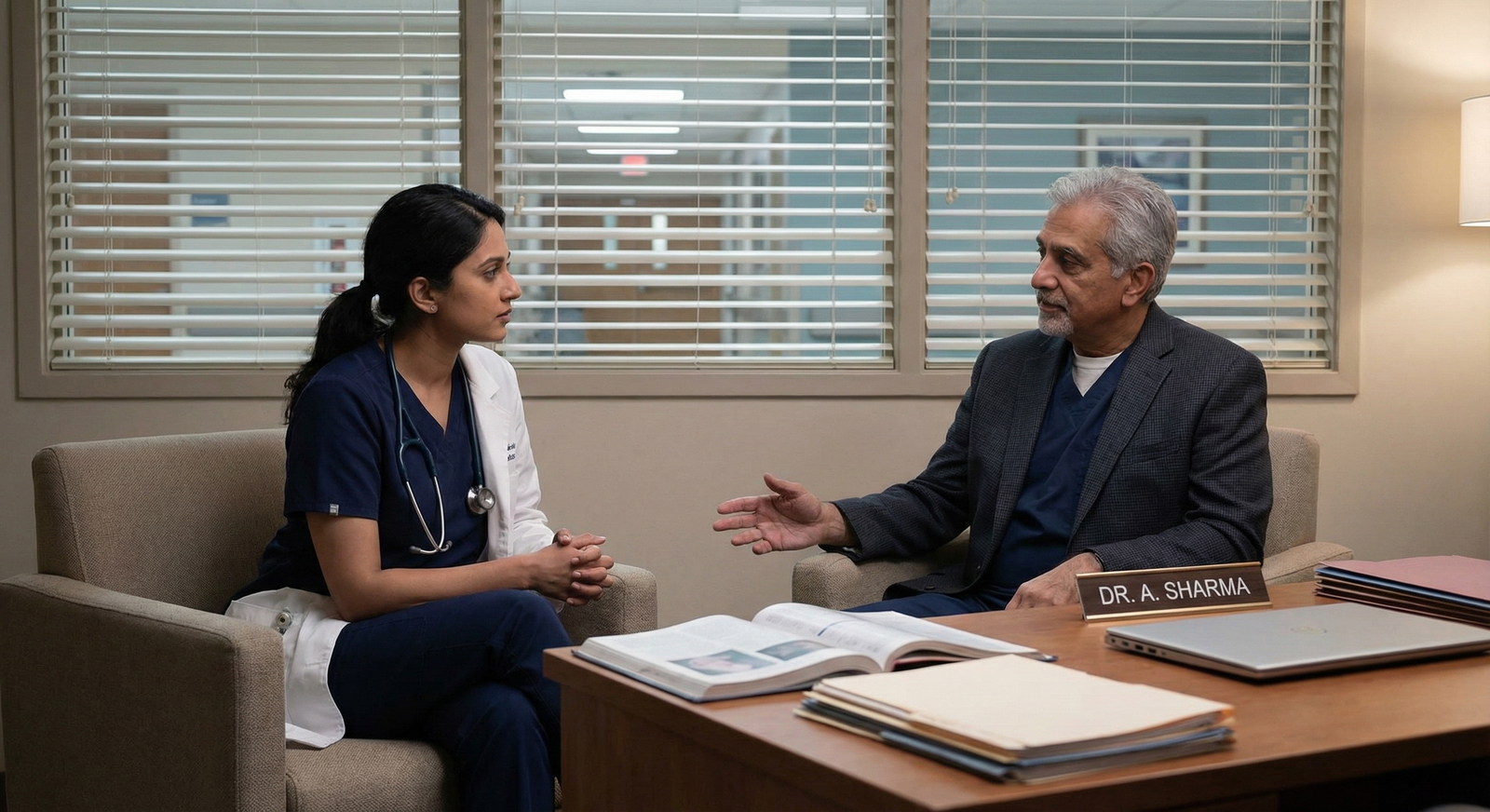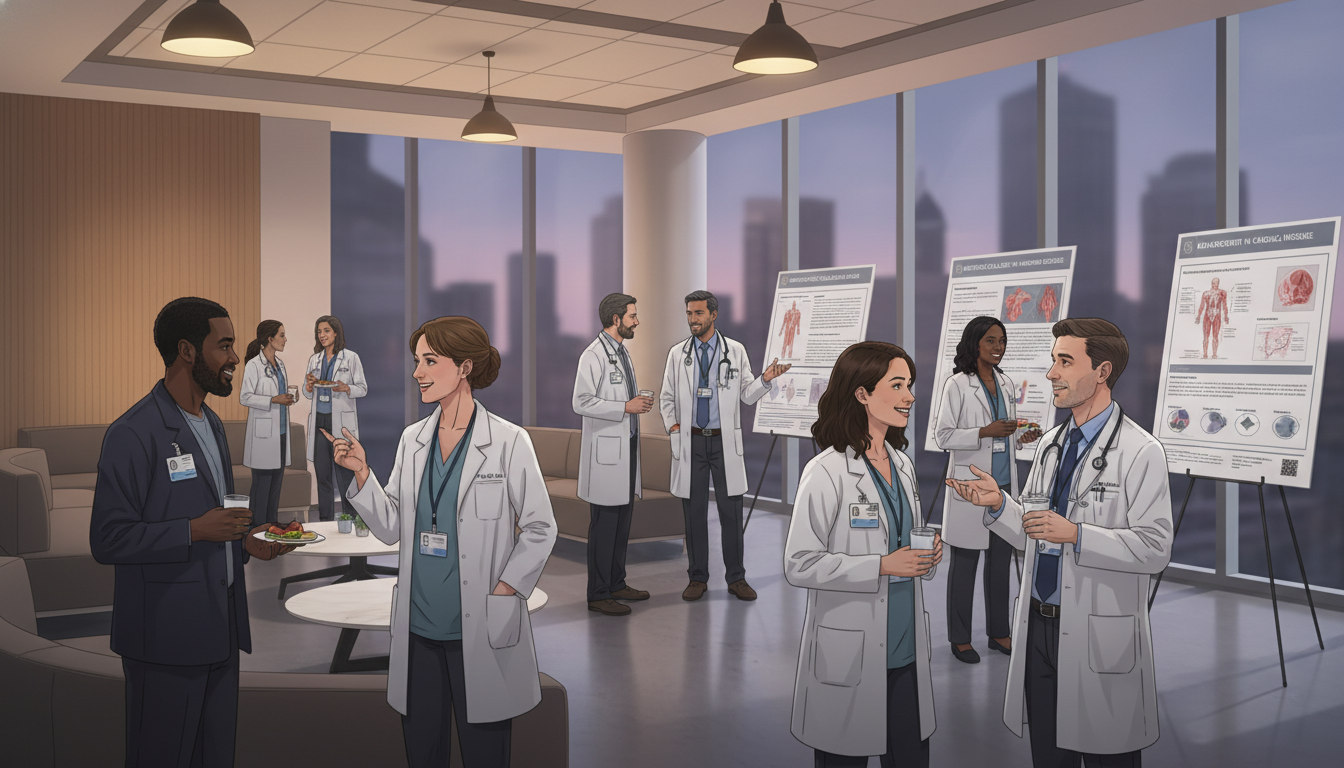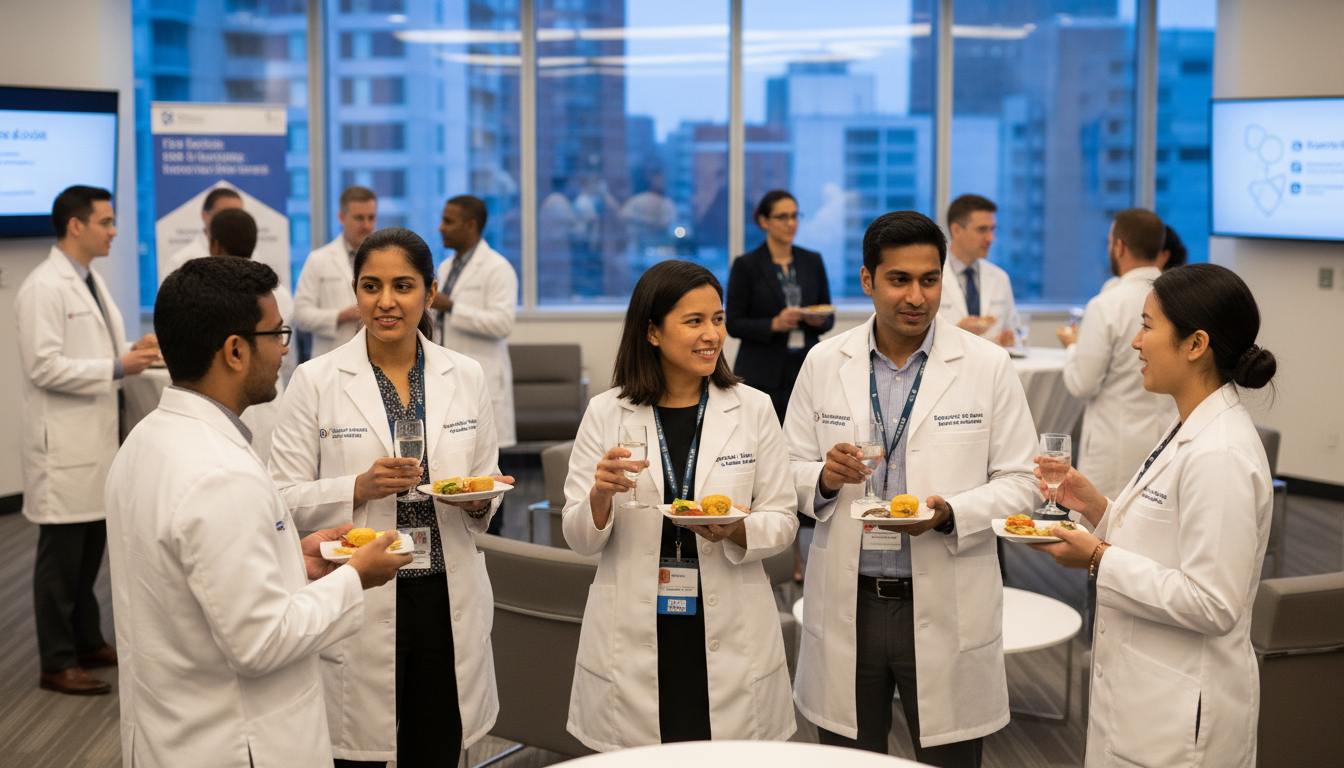
Why Networking Matters So Much for Caribbean IMGs
For a Caribbean IMG, strong academics and exam scores are necessary—but rarely sufficient—to secure a competitive residency position in the United States or Canada. What often separates successful applicants is not only what they know, but who knows them and how well.
Networking in medicine is not superficial “schmoozing.” It is the intentional process of building professional relationships that:
- Open doors to clinical electives and observerships
- Lead to strong, personalized letters of recommendation
- Provide early information about residency opportunities and program culture
- Help you find mentors who guide your career decisions
- Create a long-term support system during a challenging journey
For Caribbean medical students—whether from SGU, AUC, Ross, Saba, or other schools—geography and perception can be barriers. You are often far from major US centers, and you may feel you need to “prove” yourself more than US MD or DO students. Strategic networking can help bridge that gap and significantly improve your Caribbean medical school residency outcomes.
Think of networking as part of your professional skill set, just like history-taking or reading an ECG. It is learnable, improvable, and essential.
Mindset and Foundations: How to Approach Networking as a Caribbean IMG
Before diving into tactics, you need the right mindset. Poor networking often comes from misunderstandings about what networking is—and isn’t.
Networking is Relationship-Building, Not Transaction-Hunting
Unproductive mindset:
- “I need to meet someone who can get me a residency spot.”
- “If this attending can’t write me a letter, they’re not worth my time.”
Productive mindset:
- “I want to learn from people ahead of me and find ways to contribute.”
- “Relationships form over time; the opportunity often comes later.”
- “I’m building a professional reputation, not just trying to collect favors.”
Residency program directors, attendings, and residents are good at detecting insincerity. Focus on curiosity, contribution, and consistency, rather than immediate personal gain.
Understand the Unique IMG Context
As a Caribbean IMG, you need to be especially strategic about:
- Geography: You may rotate in multiple US states and hospitals. This is an opportunity (wider network), but also a challenge (relationships are shorter and fragmented).
- Perception: Some faculty may have limited experience with Caribbean graduates. Your professionalism, preparation, and communication will shape how they perceive not only you—but often your school.
- Time: You usually have fewer “protected” networking opportunities than US MD students. You must be deliberate: every rotation, conference, and interaction counts.
Core Principles for Networking in Medicine
Show Up Consistently
People help those they know, see, and trust. Show up to conferences, grand rounds, student interest group events, and teaching sessions—even when attendance is optional.Be Reliable and Professional
Nothing builds trust faster than being the person who:- Replies promptly and respectfully
- Shows up early
- Follows through on commitments
Give Before You Ask
Offer your help—data collection for a study, editing a manuscript, assisting with a quality improvement project—before you ask for letters, introductions, or elective spots.Play the Long Game
Some connections may not “pay off” for years. Residents become attendings; co-students become decision-makers. Networking is career-long, not just residency-season-long.
Building Connections Within Your School and Clinical Rotations
Your strongest and most impactful network often starts where you are: classmates, faculty, and attending physicians in your rotations. These people are much more likely to advocate for you than someone you met once at a conference.
1. Networking with Faculty and Attendings During Rotations
Every clinical rotation is a networking opportunity. Not through forced small talk, but through excellence and visibility.
Be the Student Everyone Wants on Their Team
Concrete behaviors that build your reputation:
Prepare before each day
- Review common conditions you’ll see that week (e.g., CHF, COPD, PNA in internal medicine).
- Know your patients’ labs and imaging before rounds.
- Read up on one topic per patient each day and mention it concisely.
Take ownership (within your level)
- Volunteer to call consults (with supervision), follow up on results, or update families.
- Ask: “Is there anything else I can take off your plate?”
Communicate clearly
- Present patients in a structured, concise way.
- Ask focused, thoughtful questions—e.g., “Would you mind sharing what factors you considered when deciding between X and Y for this patient?”
When attendings see that you make their day easier and care about learning, they are far more likely to help you later.
Turn Rotations into Relationships
Don’t let the relationship end on the last day.
At the end of the rotation:
- Thank your attending personally:
“I really appreciated the chance to work with you, especially your teaching on X. I learned a lot about Y from your approach.” - Ask if they’d be comfortable if you stay in touch as you prepare for applications.
- Thank your attending personally:
After the rotation:
- Send a brief thank-you email within 48 hours.
- A few months later, update them:
“I’m applying in internal medicine this cycle and will be doing an elective at XYZ Hospital. I wanted to thank you again—your teaching on A and B has been very helpful.”
Later, when you request a letter or ask for advice, you’re not appearing out of nowhere.
When (and How) to Ask for Letters of Recommendation
A strong letter of recommendation often decides how programs evaluate a Caribbean medical school residency applicant.
- Ask near the end of a rotation when your work is fresh in their mind.
- Be specific and respectful:
“Dr. Smith, I’ve really enjoyed working with you this month. I’m planning to apply in internal medicine. Would you feel comfortable writing me a strong letter of recommendation?”
If they hesitate or seem lukewarm, it’s better not to push. You want advocates, not neutral letters.
Provide them:
- Your CV
- Personal statement draft
- ERAS/CaRMS ID
- A bullet list of patients or cases you managed that demonstrate your skills
This makes it easy for them to write a detailed and supportive letter.
2. Networking with Residents and Fellows
Residents and fellows are often your most accessible and valuable networking allies.
They can:
- Give you honest insights into program culture
- Suggest research or QI projects
- Introduce you to attendings
- Offer practical tips for USMLE/COMLEX, CaRMS, or NRMP strategies
How to Build Relationships with Residents
- Be helpful:
- Offer to pre-round on extra patients.
- Volunteer to help with gathering literature or preparing a presentation.
- Express interest genuinely:
- “I’m considering internal medicine and would love to hear how you chose your program.”
- Ask for specific advice:
- “If you were in my shoes as a Caribbean IMG, what would you focus on in the next 6–12 months to become a stronger applicant?”
Many residents, especially those who were IMGs themselves, remember how hard the path can be and are very willing to help.
3. Your Classmates and Alumni: The “Hidden” Network
Your peers are also part of your medical networking network—and often overlooked.
Classmates:
- May rotate at different hospitals, hear about opportunities, and share contacts.
- Future residents in various programs who can later flag your application.
Alumni:
- Especially crucial for schools like SGU where SGU residency match data shows graduates across many US states and specialties.
- Alumni can:
- Explain how they matched from your specific school
- Offer insight into specific programs
- Sometimes help you secure an elective or observership.
Practical tip:
- Join your school’s alumni networks on LinkedIn and school-hosted platforms.
- Reach out to alumni at programs you’re targeting with a short, respectful message asking for informational conversations.

Leveraging Conferences and Organized Events: Mastering Conference Networking
For many Caribbean IMGs, conference networking is the most direct way to access a broader professional community in North America. Done right, a single conference can create dozens of meaningful connections.
Choosing the Right Conferences
Prioritize:
Specialty-specific national meetings
- e.g., American College of Physicians (ACP), American Academy of Family Physicians (AAFP), American College of Surgeons (ACS), American Psychiatric Association (APA).
Regional or state conferences
- Often more intimate, giving you more access to program directors and faculty.
Student and resident sections
- Most major societies have groups specifically for medical students and residents with networking events.
If you’re targeting internal medicine in the Northeast US, for example, attending a local ACP or state internal medicine meeting can be more impactful than a broad national event unrelated to your goals.
Preparing Before the Conference
Conference networking starts weeks before you arrive.
Research attendees and programs
- Identify which hospitals and residency programs will be represented (from conference website or social media).
- Make a short list:
- Top 5–10 programs of interest
- Key people: program directors, associate program directors, education chiefs
Prepare your “story”
- A concise 20–30 second introduction:
- Who you are (name, Caribbean medical school, year)
- What you’re interested in (specialty, geography)
- A brief highlight (research focus, leadership, or clinical interest)
Example:
“My name is Daniel Lewis, I’m a fourth-year medical student from St. George’s University, originally from Trinidad. I’m very interested in internal medicine and health disparities research and hoping to match in the New York area.”- A concise 20–30 second introduction:
Print business cards or prepare a digital card
- Include:
- Name, medical school, expected graduation year
- Email and phone
- LinkedIn profile
- Specialty interest (optional, but helpful)
- Include:
Have your CV updated
- You likely won’t hand this out casually, but you may be asked to send it afterward.
How to Approach People at Conferences
Many IMGs feel awkward introducing themselves. Use structured strategies:
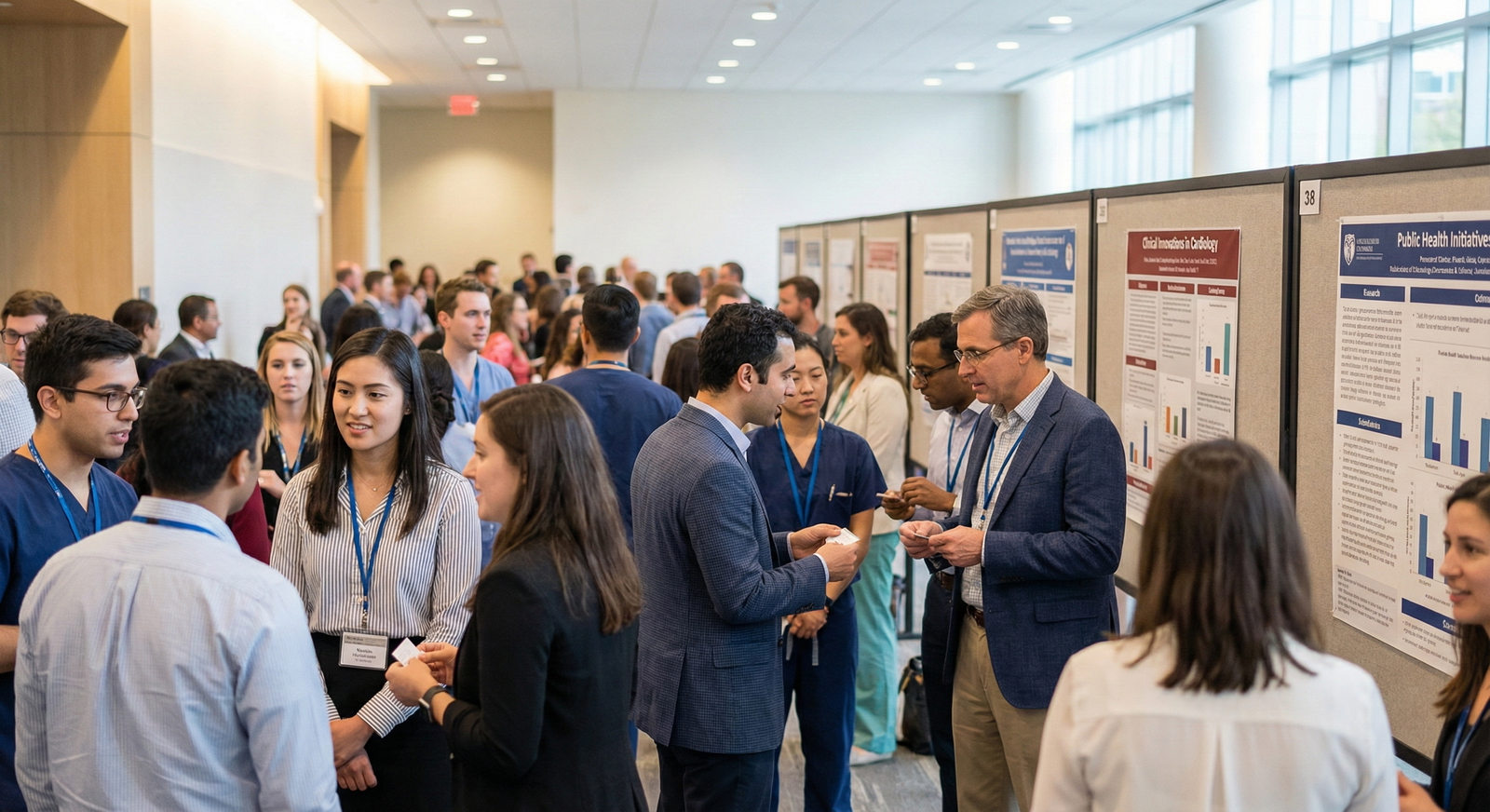
At Poster Sessions
Poster sessions are often the best starting point.
- Approach posters in your specialty or research area.
- Ask the presenter:
- “What was the main question you were trying to answer?”
- “What was most surprising about your results?”
- If it goes well:
“I’m a Caribbean IMG very interested in internal medicine and research. Would you be open to a brief follow-up email if I have more questions about getting involved in projects like this?”
Note: Residents and fellows often present posters. They may connect you to their attendings and programs.
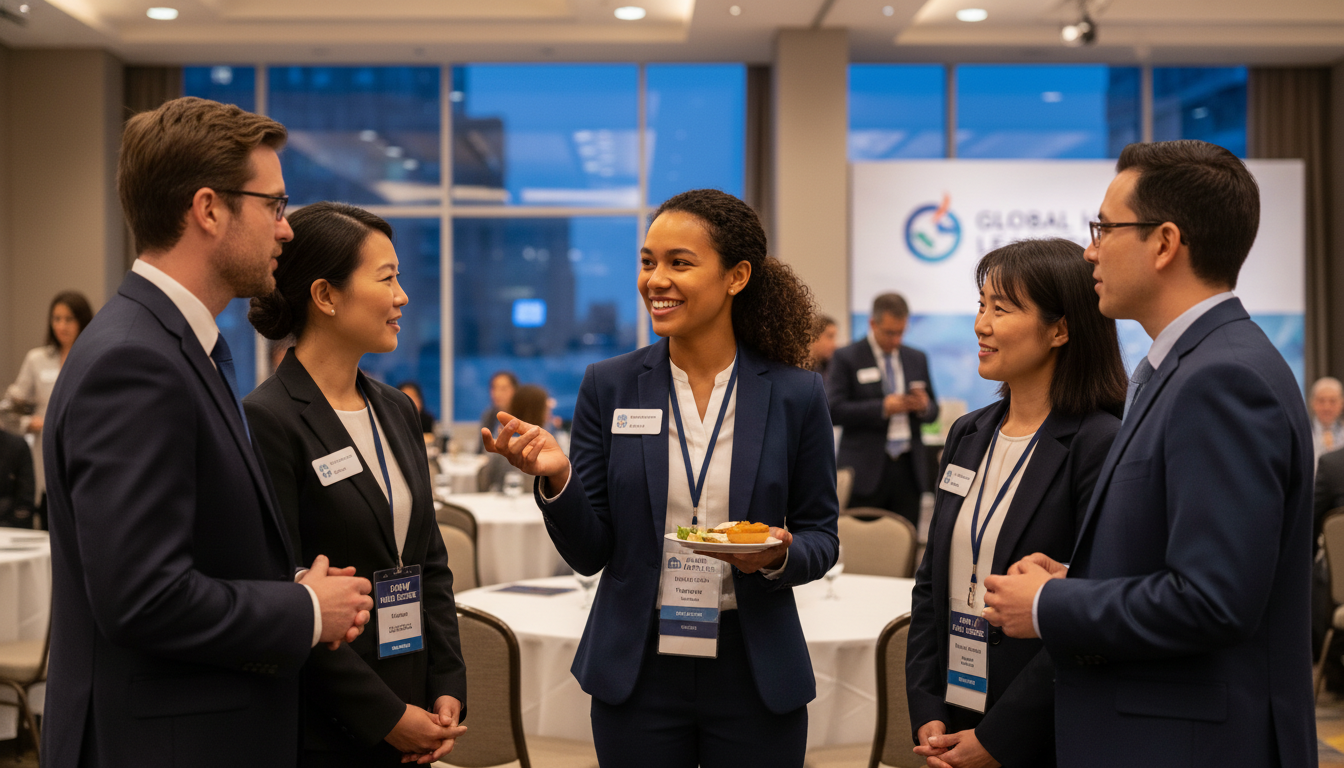
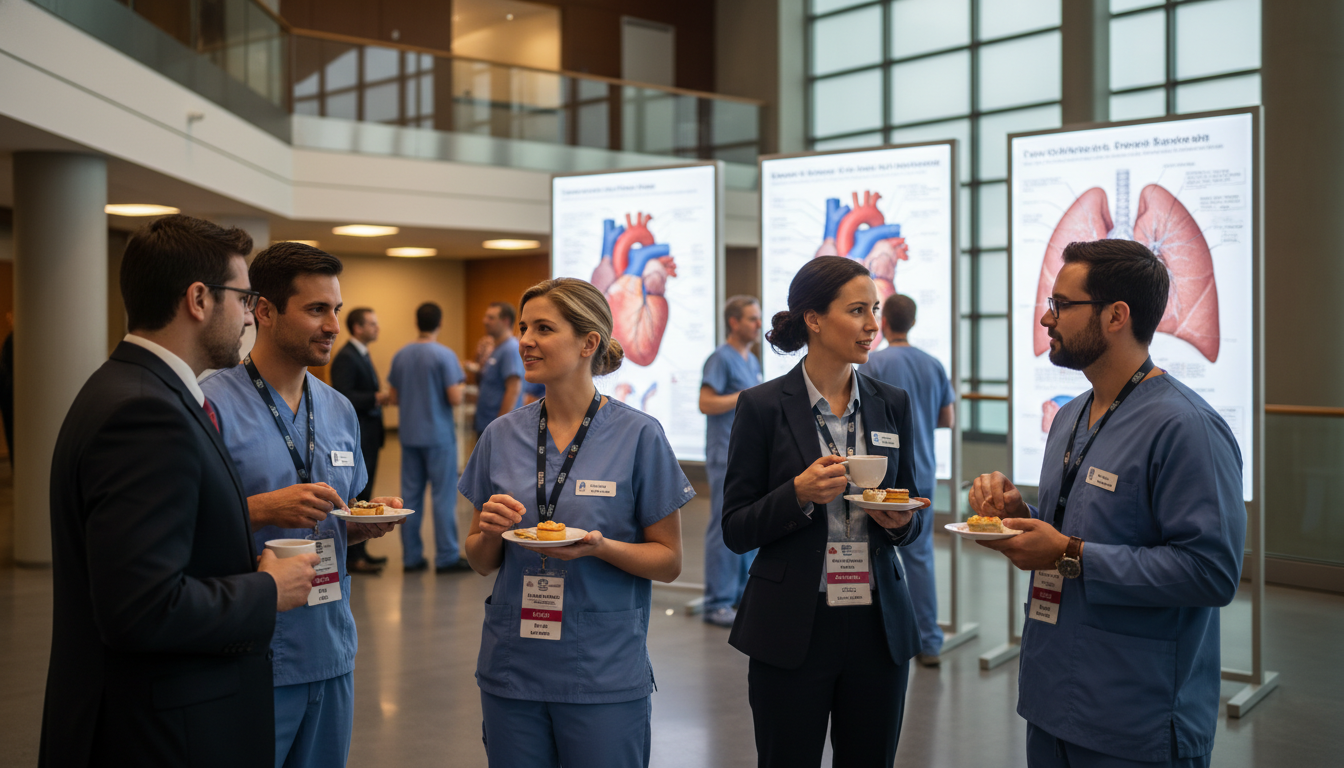
During Breaks and Social Events
When you recognize a program name badge or a specialty of interest:
Use a simple opener:
- “Hi, I noticed you’re from [Program Name]. I’m a Caribbean IMG interested in [specialty]. I’ve heard good things about your program—do you have a moment to share what you think sets it apart?”
Ask thoughtful questions:
- “What qualities make a resident thrive at your program?”
- “Do you have experience working with Caribbean-trained IMGs in your residency?”
Remember: You’re not asking, “Can you get me a spot?” You’re learning and building rapport.
Following Up After Conferences
Follow-up is where conference networking usually fails or succeeds.
Within 3–5 days:
- Send a short email:
- Remind them who you are and where you met.
- Mention something specific from your conversation.
- Express appreciation and, if appropriate, ask one specific follow-up question.
Example:
Subject: Pleasure meeting you at ACP – St. George’s IMG interested in IM
Dear Dr. Patel,
It was a pleasure meeting you at the ACP regional meeting last weekend. I really appreciated your insights about how your program supports IMGs and your advice on building a strong clinical portfolio.
I’m a fourth-year student at SGU applying to internal medicine this coming cycle and would be grateful for any additional suggestions you may have about standing out as a Caribbean graduate.
Thank you again for your time and guidance.
Sincerely,
Daniel Lewis
St. George’s University, Class of 2026
Over time, these small, professional touchpoints turn acquaintances into advocates.
Mentorship in Medicine: Finding, Building, and Using Mentorship Effectively
Mentorship medicine is one of the most powerful forms of networking. A good mentor:
- Guides your decision-making (specialty choice, electives, research)
- Helps you avoid common IMG pitfalls
- Opens doors to their network
- Often becomes a lifelong professional ally
Types of Mentors You Should Seek as a Caribbean IMG
Ideally, you will have more than one mentor, each playing a different role.
Career Mentor
- Helps you make big decisions: specialty, geography, research vs. clinical balance.
- Often an attending in your field of interest.
Process Mentor (Application/Strategy)
- Knows the US or Canadian residency system well.
- Helps with choosing programs, ERAS/CaRMS strategy, interview prep.
Peer or Near-Peer Mentor
- A resident or recent graduate who was a Caribbean IMG and has just matched.
- Provides practical tips and emotional support.
Research or Academic Mentor
- Guides you in scholarly work to strengthen your CV.
- Might not be in your final specialty but can still be extremely valuable.
How to Find Mentors as a Caribbean IMG
During clinical rotations
- Notice which attendings enjoy teaching and take interest in students.
- After a few positive interactions, you might say:
- “I’ve found your teaching incredibly helpful, especially on X. I’m still shaping my career path as a Caribbean IMG. Would you be open to a brief meeting to discuss your career path and get some advice?”
Through alumni networks
- Search LinkedIn for “[Your School] + [Specialty] + MD” in target cities.
- Send a short message requesting a 15–20 minute virtual conversation about their path.
Professional societies
- Many have mentorship programs or IMG sections.
- Sign up and be proactive in initiating contact.
How to Be a Good Mentee
Be prepared and focused
- Bring specific questions or decisions to each meeting.
- Respect their time (start and end on time; don’t ramble).
Follow through
- If your mentor suggests, “Reach out to Dr. X” or “Draft a personal statement focusing on Y,” do it.
- Update them on results: “Your advice to Z led to this outcome.”
Show appreciation
- A sincere thank you message (especially after major milestones like the SGU residency match or other match successes) goes a long way.
Over time, your mentors will often become your strongest advocates with program directors and selection committees.
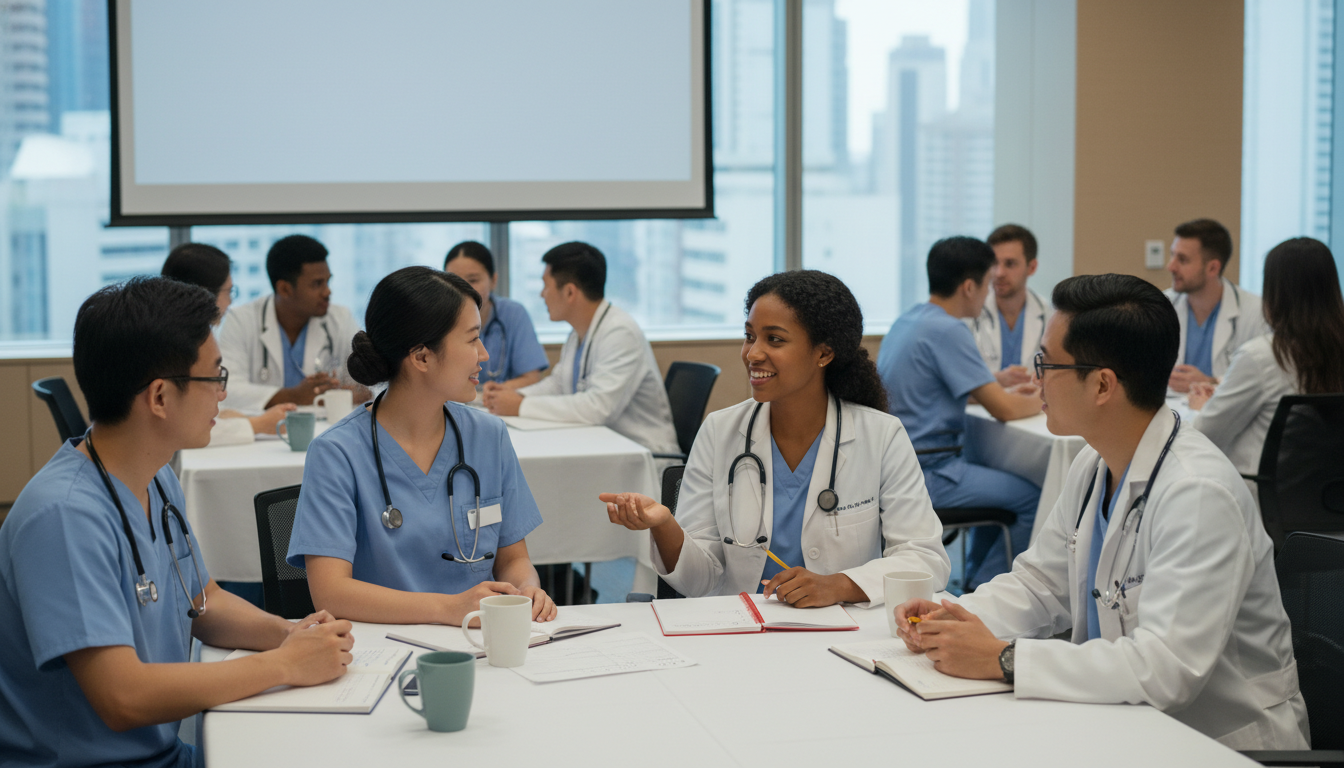
Online and Ongoing Networking: Social Media, Email, and Digital Presence
In modern medicine, your network is not limited to who you can meet in person. Thoughtful online presence can significantly expand your medical networking reach.
Using LinkedIn and X (Twitter) Professionally
Create a complete, professional profile:
- Clear headshot
- Concise headline: “Final-year medical student | Caribbean IMG | Interested in Internal Medicine & Health Disparities”
- Brief summary including your school, goals, and specific interests.
Connect with:
- Attendings and residents you’ve worked with
- Alumni from your Caribbean school
- Professionals you meet at conferences
Engage:
- Share your presentations, posters, or reflections on clinical experiences (while maintaining patient confidentiality).
- Comment meaningfully on posts from leaders in your field.
X (Twitter)
- Many specialties use X heavily for academic networking.
- Follow:
- Program accounts
- Department chairs
- Researchers in your interest area
- Engage by:
- Asking clarifying questions about threads
- Sharing interesting journal articles with brief commentary
Email Etiquette for Networking
As an IMG, you will send many professional emails—for observerships, research, mentorship, and more.
Key points:
- Subject line: Clear and concise.
- “Caribbean IMG interested in cardiology research – inquiry”
- Opening: Use proper titles and formal greetings.
- “Dear Dr. [Last Name],”
- Body: 3–5 short paragraphs max. Include:
- Who you are (school, year, country, exam status if relevant)
- Why you are reaching out (specific and respectful)
- What you’re asking for (a brief meeting, advice, opportunity)
- Closing: Professional and polite.
- “Sincerely,” or “Best regards,” followed by full name and contact information.
If they don’t respond after 10–14 days, one polite follow-up is acceptable. If still no reply, move on—don’t insist.
Turning Networking into Residency Success: Strategy and Execution
Networking is only valuable if it translates into concrete progression toward your goal: matching into a good residency program as a Caribbean IMG.
Align Networking with Your Target Specialty and Region
You can’t be everywhere and meet everyone. You must prioritize.
- Clarify your top 1–2 specialties by the end of your core rotations.
- Identify 1–2 geographic regions where you most want to train (e.g., Northeast US, Midwest, Ontario).
- Use these preferences to:
- Choose which conferences to attend
- Decide which alumni to approach
- Target which hospitals for electives and observerships
Use Networking to Strengthen Key Application Components
Clinical Experience
- Network with coordinators and faculty to secure US clinical rotations in your target region/specialty.
- Ask residents and attendings for suggestions on where Caribbean IMGs have been successful previously.
Letters of Recommendation
- Identify attendings early in rotations who might be good letter writers.
- Demonstrate consistent excellence to earn strong letters.
Research and Scholarly Work
- Ask mentors and residents if they have any ongoing projects you can help with.
- Even small contributions (data entry, literature review) can lead to abstract authorship or poster presentations over time.
Program Insight
- Use your network to:
- Find out which programs are IMG-friendly.
- Understand how programs view Caribbean applicants.
- Get inside tips for interviews and ranking decisions.
- Use your network to:
Example: How Networking Can Shape a Caribbean IMG’s Path
Consider a hypothetical SGU student, Maria:
- In 3rd year, Maria connects well with an internal medicine attending during a core rotation. She asks to stay in touch and later requests a letter, which becomes one of her strongest.
- Through a resident from that rotation, she hears about an opportunity to present a case at a regional ACP meeting. She networks at the conference and meets faculty from a mid-sized IM program in the Midwest.
- She follows up by email, keeps in touch, and later requests an elective at their hospital. During the elective, she works hard, builds rapport with the team, and secures a second strong letter.
- By the time ERAS opens, the program knows her as “the SGU student who did great on our elective and presented at ACP,” not just another name on a list.
- On interview day, several residents already recognize her and advocate for her. She later matches there.
None of this is luck alone; it’s structured, intentional networking aligned with clear goals.
Frequently Asked Questions (FAQ)
1. I’m shy and introverted—can I still be effective at networking in medicine?
Yes. Many excellent physicians are introverts. You don’t need to be the loudest voice in the room to network effectively. Focus on:
- One-on-one conversations rather than large groups.
- Asking thoughtful questions and listening carefully.
- Following up by email, where you may feel more comfortable.
Quality and consistency matter more than how “outgoing” you appear.
2. Is it appropriate to mention I’m a Caribbean IMG when networking?
Yes—and often helpful. Being transparent allows others to give targeted advice and share their experiences working with or training Caribbean IMGs. When you mention it, focus on your strengths and goals, not on defensiveness:
“I’m a final-year student from [Caribbean school] with a strong interest in [specialty]. I’d really value your perspective on how I can best position myself for residency in [region].”
3. How early in medical school should I start networking?
Start now, wherever you are in your training:
- Pre-clinical years:
- Network with faculty at your school, join interest groups, attend virtual conferences.
- Core rotations:
- Focus heavily on relationships with attendings and residents.
- Final year:
- Deepen existing relationships, strategically engage with programs and mentors.
Networking is cumulative; starting earlier gives you more time to build trust and credibility.
4. How do I balance networking with studying for USMLE or other exams?
You should not sacrifice exam performance for networking; both are essential. Instead:
- Schedule small, regular networking blocks (1–2 hours per week) for:
- Emails, LinkedIn updates, short calls with mentors.
- Use existing activities—rotations, conferences, interest groups—as your primary networking spaces, rather than adding many separate events.
- Intensify networking efforts after major exam milestones when you have more bandwidth.
Done thoughtfully, networking will amplify your efforts, not compete with them.
Strategic, authentic networking can transform your journey from a Caribbean medical school to a successful Caribbean medical school residency placement. By building intentional relationships, aligning them with your career goals, and following through with professionalism and persistence, you can turn your status as a Caribbean IMG from a perceived disadvantage into a story of resilience, initiative, and growth.