Understanding Networking in Medicine as a US Citizen IMG
Networking in medicine is not just “being social.” It is the deliberate process of building professional relationships that create opportunities for mentorship, collaboration, learning, and, ultimately, residency placement and career growth.
For a US citizen IMG—an American studying abroad at a foreign medical school—networking is often the single most powerful tool to close the gap between you and U.S. medical graduates. You may not have a home program, local alumni network, or regular access to U.S. faculty. Effective medical networking helps you:
- Get clinical electives and audition rotations in the U.S.
- Secure letters of recommendation from U.S. attendings
- Learn unspoken expectations of different programs
- Receive targeted guidance from residents and faculty
- Get your name recognized before your ERAS application arrives
- Find research and quality improvement (QI) opportunities
- Build long-term mentorship in medicine
You do not need to be naturally extroverted to network well. You do need a plan, persistence, and a professional, respectful approach.
This article breaks down a practical strategy tailored specifically for US citizen IMGs who want to network effectively in U.S. medicine—before, during, and after residency applications.
Foundation: Preparing Your Professional Identity
Before you show up to a conference, email an attending, or ask for mentorship, you need to be clear on who you are, what you want, and how you present yourself. That professional “core” will make networking interactions smoother and more authentic.
Clarify Your Story as a US Citizen IMG
Programs and mentors will naturally be curious about your path as an American studying abroad. You should have a clear, concise narrative:
- Why did you choose to study medicine abroad?
- How has this path shaped your skills, resilience, and perspective?
- Why are you committed to practicing in the U.S.?
- What is your current career interest? (e.g., Internal Medicine with a focus on cardiology; Pediatrics with an interest in advocacy; General Surgery with a focus on trauma, etc.)
Create a 2–3 sentence “professional snapshot” you can use when introducing yourself:
“I’m a US citizen IMG currently in my 5th year at [School] in [Country]. I’m interested in Internal Medicine with a long-term goal of working in academic hospital medicine. I’ll be applying for [Match Year] and am especially focused on finding opportunities to get more exposure to U.S. inpatient medicine and research.”
This becomes your default intro in emails, conferences, and conversations with potential mentors.
Polish Your Core Materials
Before heavy networking, prepare these essentials:
Updated CV (1–2 pages):
- US-style format (reverse-chronological, clear headings)
- Includes US clinical electives, research, leadership, and volunteer experiences
- Highlight international and cross-cultural strengths
ERAS-style personal statement draft (if within 12–18 months of applying):
- Even if not final, a solid draft helps clarify your narrative and goals
Professional email:
- Use a simple address like firstname.lastname@…
- Avoid unprofessional handles
LinkedIn profile:
- Professional photo
- Headline like “US Citizen IMG | [School] | Aspiring [Specialty] Resident”
- Basic summary and experience
Think of these as your “professional infrastructure.” When you meet someone and they say, “Send me your CV,” you want to be ready within hours, not weeks.
Strategic Conference Networking: Turning Events into Opportunities
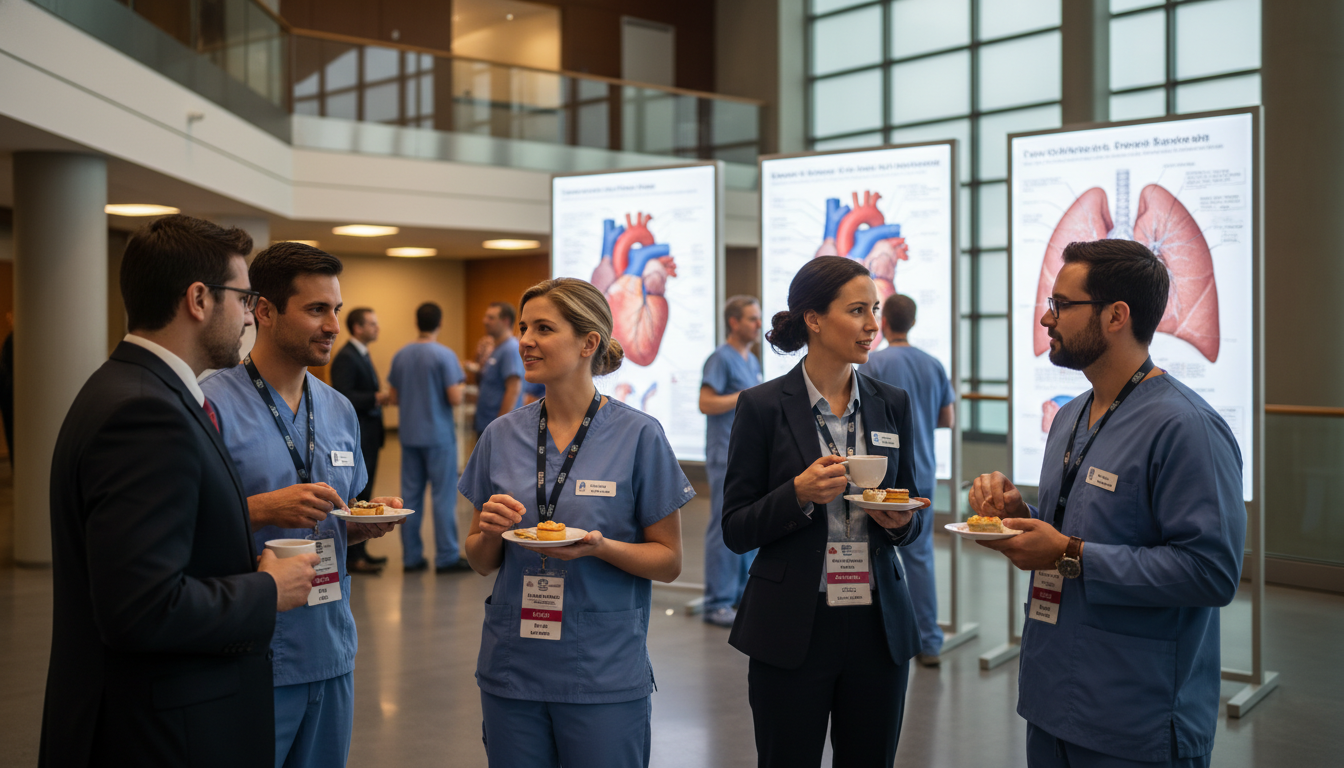
Conferences are some of the highest-yield environments for medical networking—especially for IMGs without strong home institution support. They gather program directors, faculty, residents, and students in the same physical space, often with dedicated networking events.
Choose the Right Conferences
As a US citizen IMG, prioritize:
Specialty-specific national or regional conferences
Examples:- Internal Medicine: ACP, SGIM, regional society meetings
- Surgery: ACS, regional surgical societies
- Pediatrics: AAP
- Psychiatry: APA
- Family Medicine: AAFP
Conferences with IMG-friendly or student-specific programming
Look for:- Sessions titled “Pathways to Residency,” “IMG Forum,” “Careers in [Specialty]”
- Student/resident sections with reduced fees
Local/state society meetings during visiting rotations
If you are rotating in a certain city, check local medical society calendars.
If cost is a barrier, search for:
- Student/trainee discounts
- Abstract-based travel scholarships
- Virtual registration options (now common and often cheaper)
Prepare Before You Attend
Treat a conference like a clinical rotation: preparation multiplies your return.
Review the program and attendee list (if available):
- Identify:
- Programs you are interested in
- Sessions led by program directors (PDs) or residents
- Panels on residency, career paths, or research
- Identify:
Set clear goals: Examples:
- “Have real conversations with at least 3 residents and 2 attendings in my specialty.”
- “Ask 2 people for permission to follow up by email.”
- “Learn about the culture and expectations at 3 target residency programs.”
Prepare concise self-introductions and questions:
- A 15-second version: name, status, specialty interest
- A 60-second version: plus your path as a US citizen IMG and career goals
Useful questions:
- “How would you describe the culture of your program?”
- “Are there ways IMGs can get involved with your institution, such as electives or research?”
- “What do you wish applicants understood better about your specialty?”
Plan your logistics:
- Dress code: business casual to business formal (default to slightly more formal)
- Business cards (optional but helpful)—include name, email, LinkedIn
- Notetaking system (phone notes or small notebook) to record names and key details
How to Approach People at Conferences
Networking at conferences can feel intimidating, especially as an American studying abroad who may not know anyone. Use these strategies:
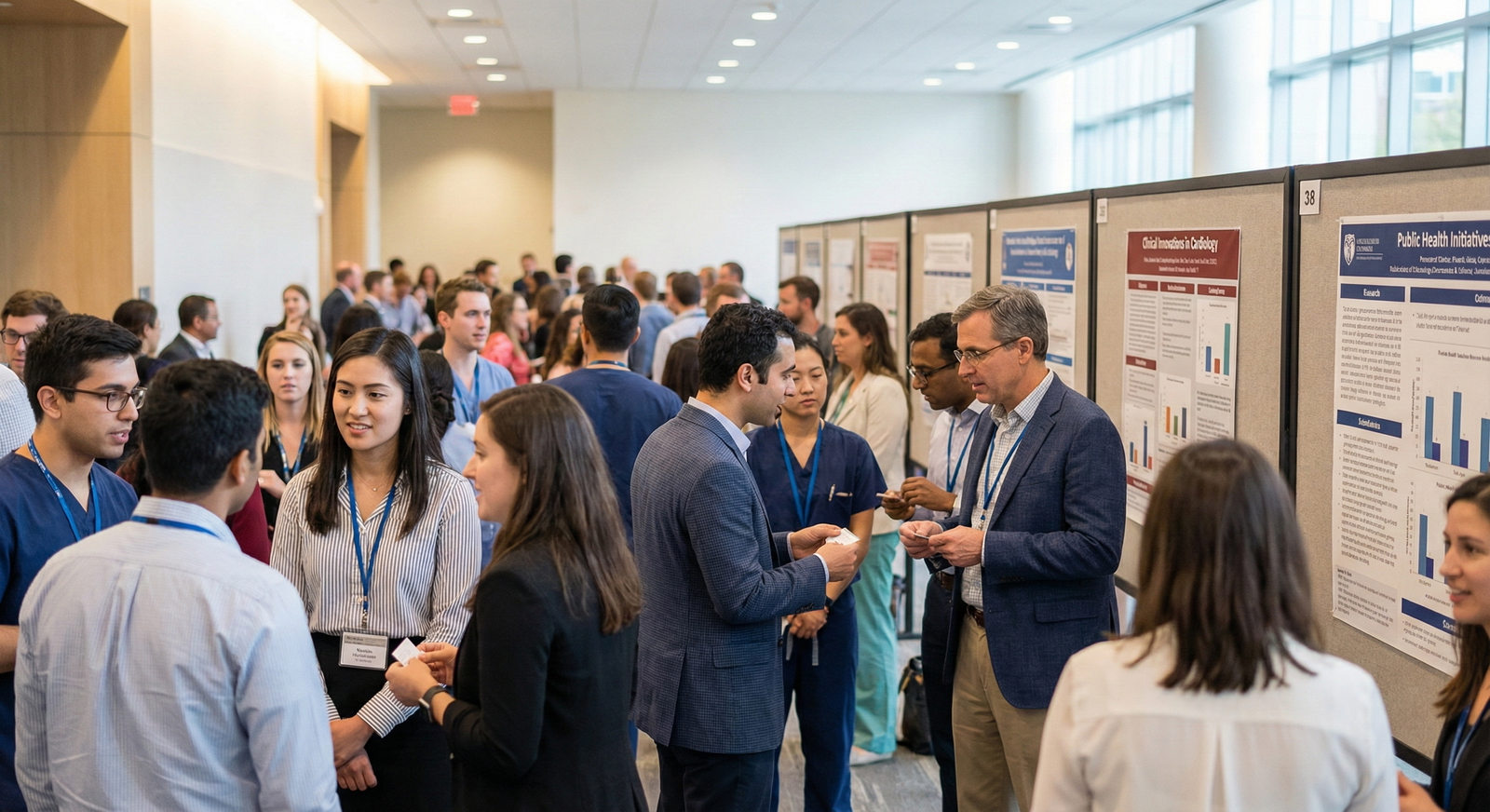
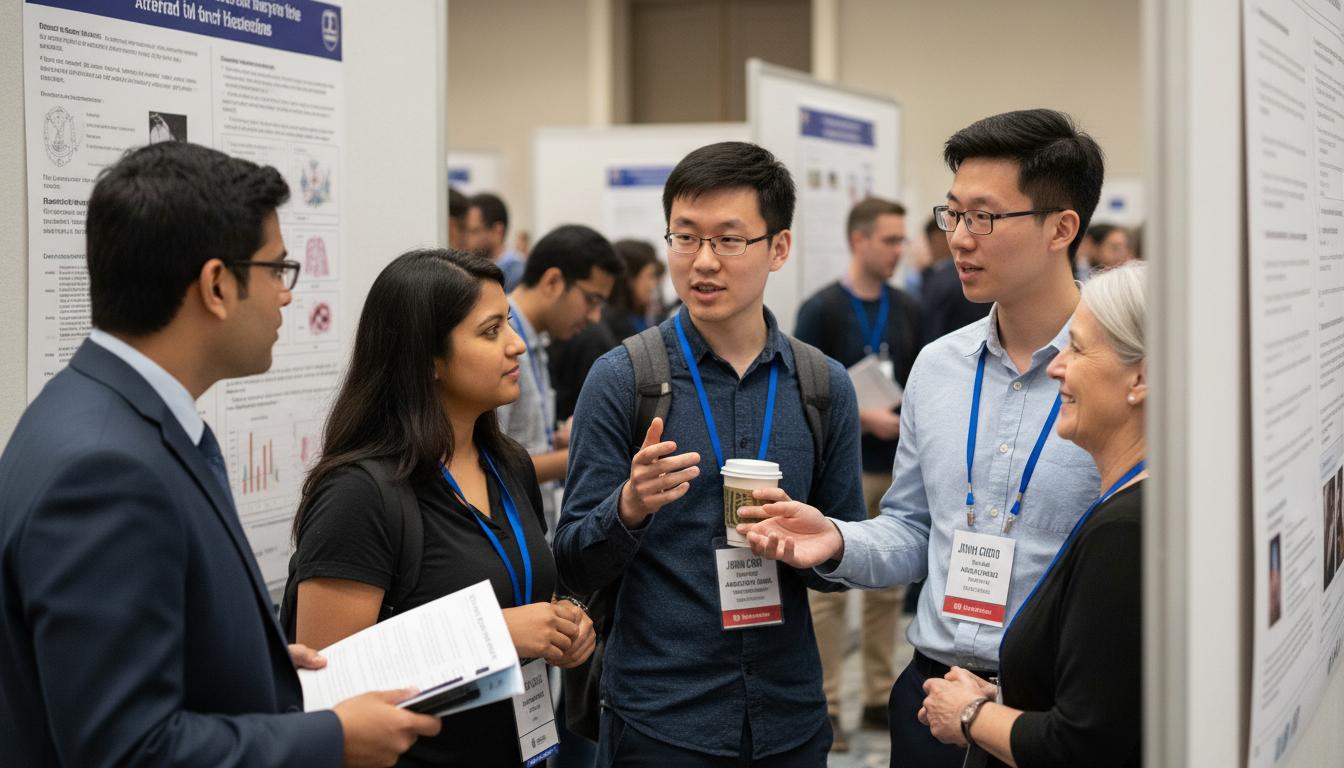
Start at poster sessions.
- Presenters expect to be approached.
- Ask them about their projects, methods, or experience as a resident/attending.
- Then naturally mention your background:
“I’m actually a US citizen IMG studying in [Country], interested in [Specialty]…”
Open with observation-based comments:
- “I really enjoyed your talk on X—would you mind if I asked a quick question?”
- “I noticed you’re from [Institution]; I’ve been looking into your program.”
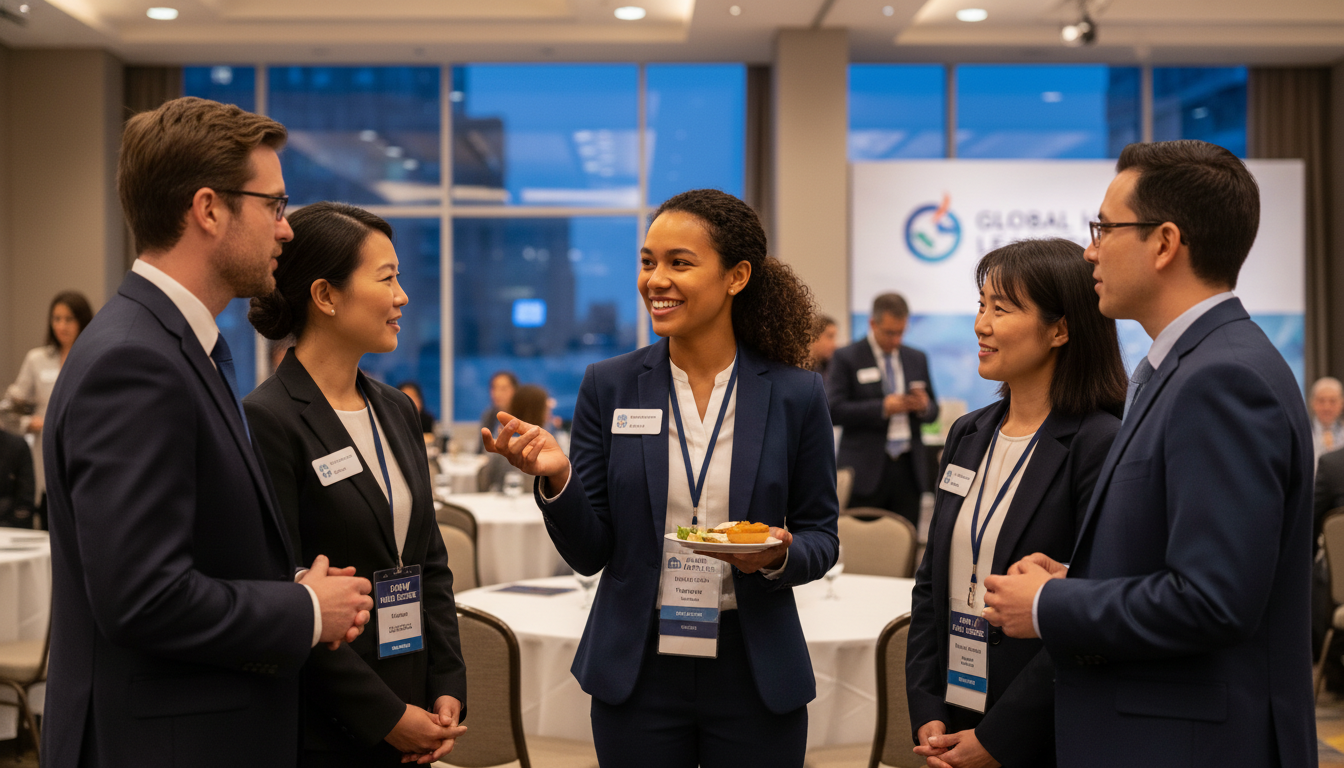
Join group conversations at receptions:
- Look for clusters with open body language and one or two people speaking.
- Introduce yourself briefly and listen first.
Be specific about follow-up, not immediate favors:
- Instead of: “Can you help me get an interview?”
- Use: “Would it be okay if I reached out by email to ask for advice on how I might strengthen my application as a US citizen IMG considering your specialty?”
Example: Productive Conference Interaction
You attend a residency-focused panel where Dr. Smith, an IM program director, speaks. After the session:
You approach Dr. Smith:
- “Dr. Smith, I really appreciated your comments on selecting applicants with strong clinical reasoning. I’m a US citizen IMG studying at [School] in [Country], interested in Internal Medicine. Would you have a minute for a quick question?”
You ask:
- “From your perspective, what are the most meaningful ways someone in my situation can demonstrate they’re ready for U.S. residency training?”
You listen carefully, respond briefly, then close with:
- “Thank you, this is really helpful. Would it be alright if I emailed you in the future if I have more questions as I get closer to applying?”
Later, you send a short, professional follow-up email referencing the conversation and asking 1–2 targeted questions.
This entire exchange is respectful, low-pressure, and more memorable than handing out your CV cold.
Building Long-Term Mentorship in Medicine
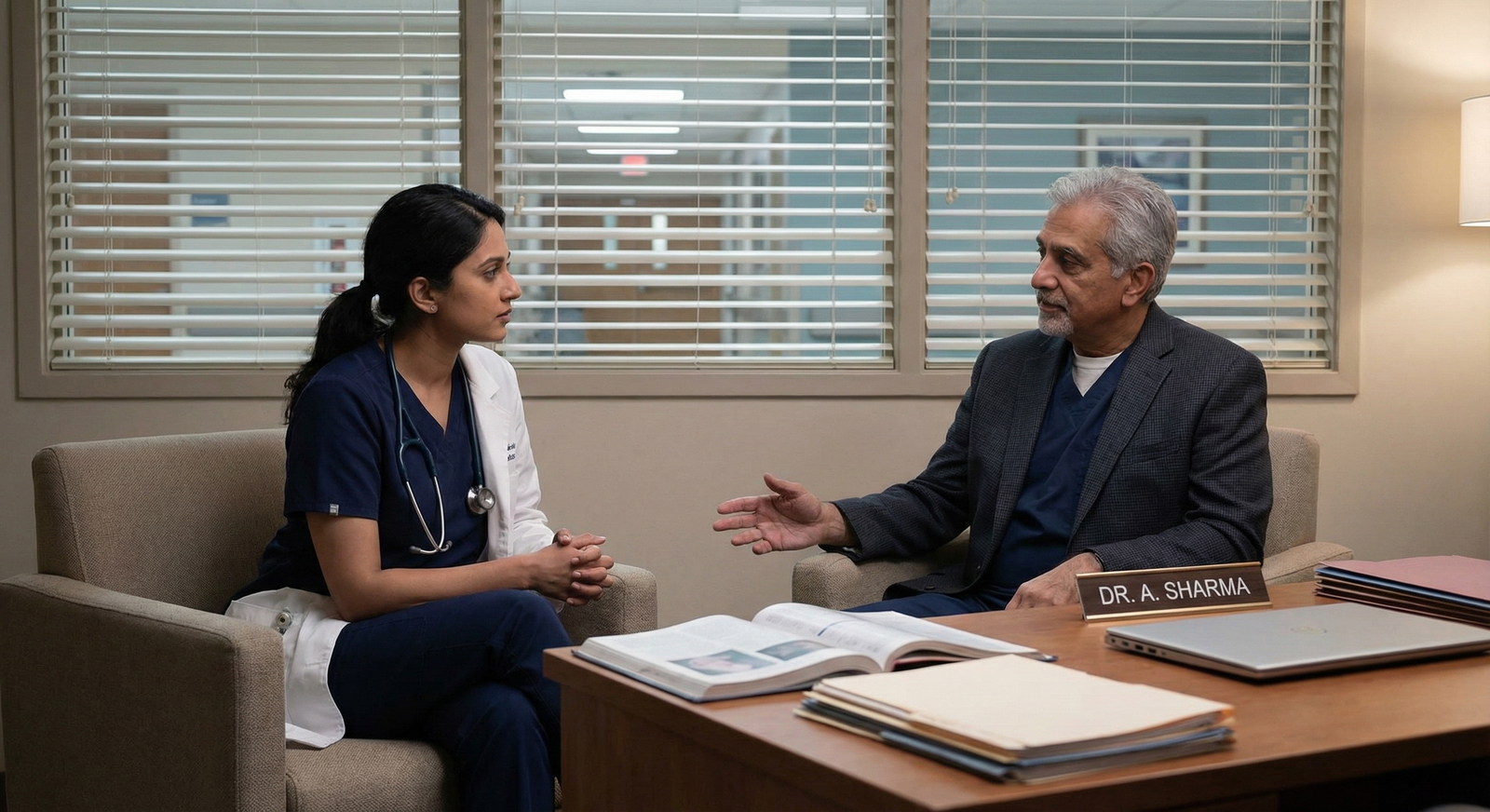
Short contacts can be helpful, but mentorship in medicine is what truly changes trajectories. As a US citizen IMG, you should aim to build a small, diverse “advisory board” of mentors, not just one person.

Types of Mentors You Need
Career/clinical mentor (specialty-focused):
- Ideally in your intended specialty and based in the U.S.
- Helps you understand the field, build your CV strategically, and navigate residency applications.
Process/IMG-focused mentor:
- Might be a former or current US citizen IMG or IMG-friendly faculty
- Guides you through issues like exams, visas (if ever relevant), timing of electives, and typical pitfalls
Research or academic mentor:
- Provides research, QI, or academic projects and possibly abstracts/posters
- Enhances your scholarly profile and connects you with others in the field
Peer mentor (resident or senior student):
- Someone just ahead of you in the process
- More approachable for frequent, practical questions
You can sometimes find multiple roles in one person, but don’t rely on that. Diversity of mentors protects you from biased or limited perspectives.
How to Find Potential Mentors as a US Citizen IMG
During U.S. clinical electives or audition rotations:
- Identify attendings or senior residents who:
- Give feedback thoughtfully
- Enjoy teaching
- Show interest in your progress
- Ask for a brief end-of-rotation meeting:
“Could we schedule 15 minutes before I leave to discuss my performance and get your advice on next steps as a US citizen IMG?”
- Identify attendings or senior residents who:
Via conferences and professional organizations:
- Many specialty societies have mentorship programs for students and IMGs.
- Join student/trainee sections and complete mentorship request forms honestly.
Through alumni and social media:
- Speak with graduates from your school who matched in the U.S.
- Look for residents or young attendings on platforms like Twitter/X or LinkedIn actively discussing your specialty; approach respectfully.
Cold outreach to faculty:
- Preferably those with demonstrated interest in education, diversity, or IMG support.
- Use their professional profiles on institutions’ websites.
How to Ask for Mentorship (Without Making It Awkward)
Instead of, “Will you be my mentor?” begin with a smaller, concrete ask:
- “Would you be open to me emailing you occasionally for advice as I navigate [specific area]?”
- “Could I set up a 20-minute call to ask your advice on preparing for Internal Medicine residency as a US citizen IMG?”
If the relationship grows naturally over time, the “mentor” status becomes obvious without a formal label.
Maintain and Respect the Relationship
Prepare for every interaction:
- List 2–3 specific questions
- Send materials they might need ahead of time (CV, draft PS, etc.)
Respect their time:
- Ask for short meetings (15–20 minutes)
- Be punctual and concise
Act on their advice and report back:
- Example email after following advice:
“Thank you for suggesting I pursue a sub-internship and reach out to Dr. X about research. I completed the sub-I and just started working with Dr. X on a QI project. Your guidance has been invaluable.”
- Example email after following advice:
Do not only show up when you need a letter or favor.
- Periodic updates (2–3 times per year) demonstrate that the relationship is meaningful to you.
Mentors are more likely to advocate for you—including pushing for you at their programs—if they see you as engaged, dependable, and appreciative.
Day-to-Day Networking: Emails, Rotations, and Online Presence
Networking doesn’t only happen at events. For a US citizen IMG, your everyday interactions—especially during U.S. rotations—are your most powerful networking tools.
High-Yield Networking During Clinical Rotations
Every rotation in the U.S. is both an educational and networking opportunity. Programs often heavily weigh evaluations and letters from your U.S. supervisors.
Key behaviors that build a strong reputation:
- Show up early and stay engaged; offer help without being overbearing.
- Be prepared: read about your patients the night before.
- Ask thoughtful clinical questions, not just “pimping” answers.
- Be polite and positive with all staff: nurses, coordinators, techs, and peers.
At the end of the rotation:
- Ask for feedback:
- “Do you have any suggestions for how I can improve and be a stronger applicant?”
- If feedback is positive, consider:
- “Would you feel comfortable writing me a strong letter of recommendation when the time comes?”
You can also use the last week to identify:
- Faculty or residents who might be willing to review your CV
- Research or QI projects you might help with remotely
Writing Effective Networking Emails
Your emails reflect your professionalism. A simple, respectful structure goes a long way.
Template for initial outreach to a potential mentor/faculty:
Subject: US Citizen IMG Interested in [Specialty] – Request for Brief Advice
Dear Dr. [Last Name],
My name is [Name], and I am a US citizen IMG in my [Year] at [School] in [Country]. I am strongly interested in [Specialty] and plan to apply for [Match Year].
I came across your work in [context: conference talk, paper, program website, referral from X]. Your focus on [specific area] particularly resonated with me. I would be very grateful for any brief advice you might have regarding [specific question, e.g., how a US citizen IMG can best prepare for residency in your field / finding research opportunities / strengthening my application].
If possible, I would appreciate the opportunity to connect by email or a short 15–20 minute call at your convenience. I’ve attached a brief CV for context.
Thank you for considering my request and for your time.
Sincerely,
[Full Name]
[School, Year]
[Email] | [Phone (if appropriate)] | [LinkedIn (optional)]
Follow-up rules:
- If no response after 10–14 days, send one polite follow-up.
- If still no response, move on without taking it personally.
Using Social Media and Online Platforms Wisely
Online spaces are increasingly important for medical networking and visibility, especially if you’re abroad.
Platforms to consider:
LinkedIn:
- Maintain an updated profile.
- Connect with residents, faculty, and peers you actually interact with.
- Post or engage occasionally with content related to your specialty.
Twitter/X (many academic physicians are active):
- Follow leaders in your field, program accounts, and specialty societies.
- Engage by liking, retweeting, or adding brief, professional comments.
- Avoid controversial or unprofessional topics under your real name.
Cautions:
- Never vent about programs, exams, or colleagues publicly.
- Avoid excessive messaging on social networks—use email for formal outreach.
- Keep a consistent, professional image that aligns with your goals.
Putting It All Together: A Networking Strategy Timeline for US Citizen IMGs
To make this actionable, here’s a general timeline. Adjust depending on your school’s curriculum and your personal situation.
Early Years (Pre-Clinical / Early Clinical)
- Clarify your story and long-term specialty interests (even if tentative).
- Join at least one specialty society’s student/trainee section.
- Begin light networking online (follow programs, attend virtual webinars).
- Seek local mentors at your school or via alumni who matched in the U.S.
Mid-Training (1–2 Years Before Applying)
- Strengthen your CV with:
- Research or QI projects (ideally with U.S.-based or internationally connected faculty).
- Leadership or teaching roles.
- Attend at least one major or regional conference (in-person or virtual).
- Begin targeted outreach to:
- Potential mentors in your specialty
- Alumni and residents at desired programs
- Plan U.S. clinical electives strategically (IMG-friendly institutions, your specialty, ideally sub-internships).
Application Year
- Maximize networking during U.S. rotations:
- Aim for strong letters and clear, positive reputations.
- Continue mentorship medicine relationships:
- Seek feedback on your CV, personal statement, and program list.
- Attend virtual or in-person residency fairs and open houses:
- Prepare smart questions about programs’ culture, support for IMGs, and educational structure.
- Maintain professional communication with contacts:
- Brief updates when major steps occur (ERAS submission, interview invitations, etc.).
Post-Application / During Interviews
- Use interview days as networking opportunities:
- Ask residents and faculty thoughtful questions.
- Be attentive and respectful during socials.
- Follow up selectively with thank-you emails:
- Especially to people with whom you had substantive conversations.
- Keep in touch with key mentors about your interview experiences and evolving preferences.
FAQs: Networking in Medicine for US Citizen IMGs
1. I’m shy and introverted. Can I still be effective at networking?
Yes. Networking is not about being loud or extroverted; it’s about being consistent, respectful, and prepared. You can:
- Focus on one-on-one conversations instead of large group mingling.
- Prepare scripts and questions in advance.
- Use email and scheduled calls, which often feel more comfortable than spontaneous conversations. Over time, small, authentic interactions add up to a powerful network.
2. How important is conference networking compared to exam scores for US citizen IMGs?
Exam scores and clinical performance are foundational; they get your application looked at. Conference networking does not replace strong metrics, but it can:
- Provide insider guidance that helps you build a stronger application.
- Get your name recognized at specific programs.
- Lead to research, mentorship, or elective opportunities.
For a US citizen IMG, combining solid scores with smart networking is far more powerful than relying on either alone.
3. Is it acceptable to ask someone I met briefly for a letter of recommendation?
In general, no—unless you have had substantial interaction with them (e.g., a full rotation, major project, or extended collaboration). A letter from someone who barely knows you often reads generic and carries less weight than a detailed letter from someone who supervised you closely.
Instead, use brief interactions to:
- Ask for advice
- Explore opportunities for a more substantial relationship (like a project or elective)
- Build trust over time before requesting a letter
4. How can I tell if a program is truly IMG-friendly through networking?
Use your conversations strategically:
- Ask residents:
- “How many IMGs are in your current classes?”
- “How does the program support IMG residents in transitioning to the U.S. system?”
- Look at program websites and current resident lists.
- Ask mentors familiar with U.S. training:
- “Which programs have a track record of supporting IMGs in [Specialty]?”
- Pay attention to tone during interactions:
- Do people seem open and engaged when you mention you’re a US citizen IMG?
- Do they highlight diversity and inclusion efforts, or seem indifferent?
Over time, these data points will help you build a realistic, IMG-aware program list.
By combining deliberate medical networking, targeted conference networking, and thoughtful mentorship in medicine, you can transform the challenge of being a US citizen IMG into a compelling professional story—and significantly expand your chances of securing the residency and career you’re working toward.