
Afraid I’ll Be the Oldest in My Class: Social Realities of Late Matriculation
What if you finally get into med school… and then realize you’re the oldest person in the room by a decade and everyone can tell?
That’s the loop my brain loves. Not “Will I get in?” but “What if I get in and it’s socially awful?”
So let’s talk about the thing nobody really wants to say aloud: the weird, specific fears that come with starting medicine “late.”
Not “nontraditional” in the cute brochure sense. I mean late-late. Late 20s. 30s. 40s. When your classmates’ parents might be your age.
You’re not asking, “Is it too late?” You’re asking, “Am I signing up for four years of feeling like the tired chaperone at a college party I never agreed to attend?”
How Old Is “Too Old” Really… Or Am I Just Spiraling?
The admissions office loves to say, “We value diverse paths.” Cool. But what they don’t spell out is what that actually looks like when you’re sitting in anatomy lab next to someone who was in high school when you started your first job.
Here’s what I’ve actually seen and heard, not brochure fluff.
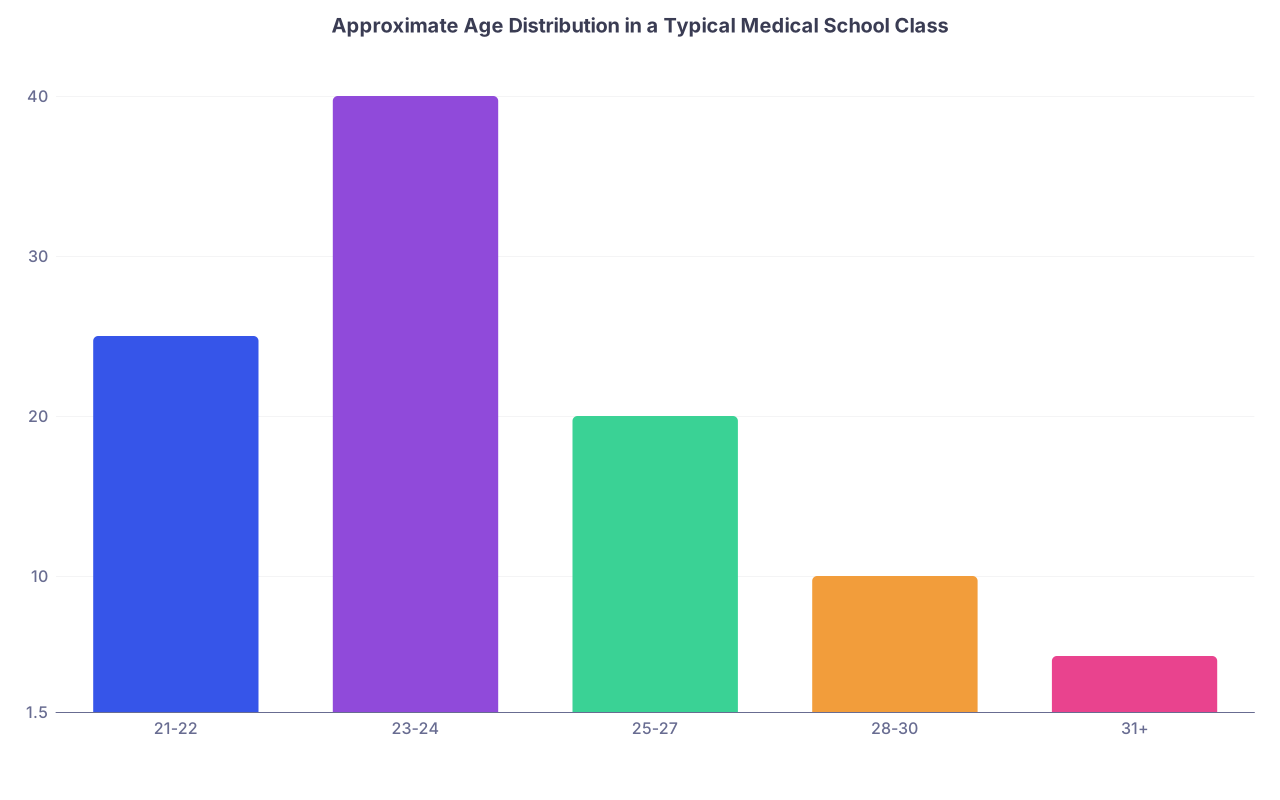
| Category | Value |
|---|---|
| 21-22 | 25 |
| 23-24 | 40 |
| 25-27 | 20 |
| 28-30 | 10 |
| 31+ | 5 |
Most US med school classes are heavily skewed toward early-mid 20s. But every single class I’ve seen had:
- A handful of people 28–32
- At least 1–3 people 33+
- Sometimes one person late 30s/early 40s
You know what happens to those older people? They don’t become mascots. They become… students. People forget after week 3. You think your age is on a neon sign above your head. It isn’t. Everybody’s too busy trying to remember glycolysis.
But yeah, you will notice the gap more than they do. It’s like an internal siren:
- “They’re talking about TikTok trends I’ve never heard of.”
- “They’re excited to move out of their parents’ house; I’m stressing about my 401(k).”
- “They’re fighting with roommates; I’m worried about my spouse’s insurance.”
So no, you’re not making it up. There is a real social gap. The question is whether it’s survivable. And it is. But not if you pretend it’s not there.
What It Actually Feels Like Day to Day
Everyone wants to talk about “nontraditional strengths.” That’s nice, but let’s be brutally honest about the parts that feel off.
Orientation Week Is Where the Age Gap Slaps You in the Face
Orientation is peak “everyone’s 23 and thinks free pizza is a personality trait” energy.
You will absolutely have at least one of these moments:
- A classmate says, “Oh my god, you’re married??” like you revealed you’re secretly 65.
- Somebody mentions they were in middle school on a date you remember from your first job.
- The school does an icebreaker where you line up by age and you end up on the far edge with one other person and a forced smile.
You might go home that first week thinking, “I made a huge mistake. I don’t fit. I’m too old. I can’t do four years of this.”
Let me be blunt: that feeling is common. And it usually fades.
Because very quickly, the social focus shifts from “Who’s fun?” to “Who can I stand to sit with for four hours while we memorize pharmacology?” And suddenly your age isn’t the main filter.
Group Work and Labs: Where Being Older Can Feel Weird and Useful
There’s always that moment in anatomy lab when someone calls you “the mom” or “the dad” of the group. Meant as a joke. Lands like a reminder.
But in group stuff, your age starts to be an asset:
You’re more comfortable:
- Saying, “We’re off topic, let’s refocus.”
- Admitting, “I don’t understand this; can someone walk me through it?”
- Setting boundaries: “I can’t meet at 10 p.m.; let’s find a reasonable time.”
You may feel like the boring one. The “too serious” one. But you also often become the person people trust when stuff hits the fan.
I’ve watched a 32-year-old ex-engineer quietly become the default tutor for half the class. I’ve seen a 35-year-old ex-ICU nurse be the only one who didn’t freak out the first time someone fainted in lab.
No one cares that you’re older at 2 a.m. before an exam if you’re the one who can explain renal physiology in plain English.
Social Life: This Is Where It Pinches the Most
Here’s the part you’re probably dreading: you don’t actually want Thirsty Thursday. You want to pass your exams, pay your bills, maybe tuck your kid in, and not die from cortisol.
So yeah, some realities:
- You will be invited to bar crawls you don’t want to go to.
- You will skip some things and later wonder, “Am I isolating myself?”
- They’ll talk about dating apps; you’re thinking about mortgage rates or daycare.
You’re not going to be the center of the social scene. That can hurt more than you expect, especially if you remember having that energy once.
But you don’t need to be everyone’s best friend. You need:
2–4 solid people you can study with, text when you’re losing it, and be honest with. That’s it. Not 120 new best friends.
Honestly, I’ve seen older students end up with the most stable, loyal friend groups. Smaller. Quieter. Less Instagram. More, “Let’s review and then get out of here.”
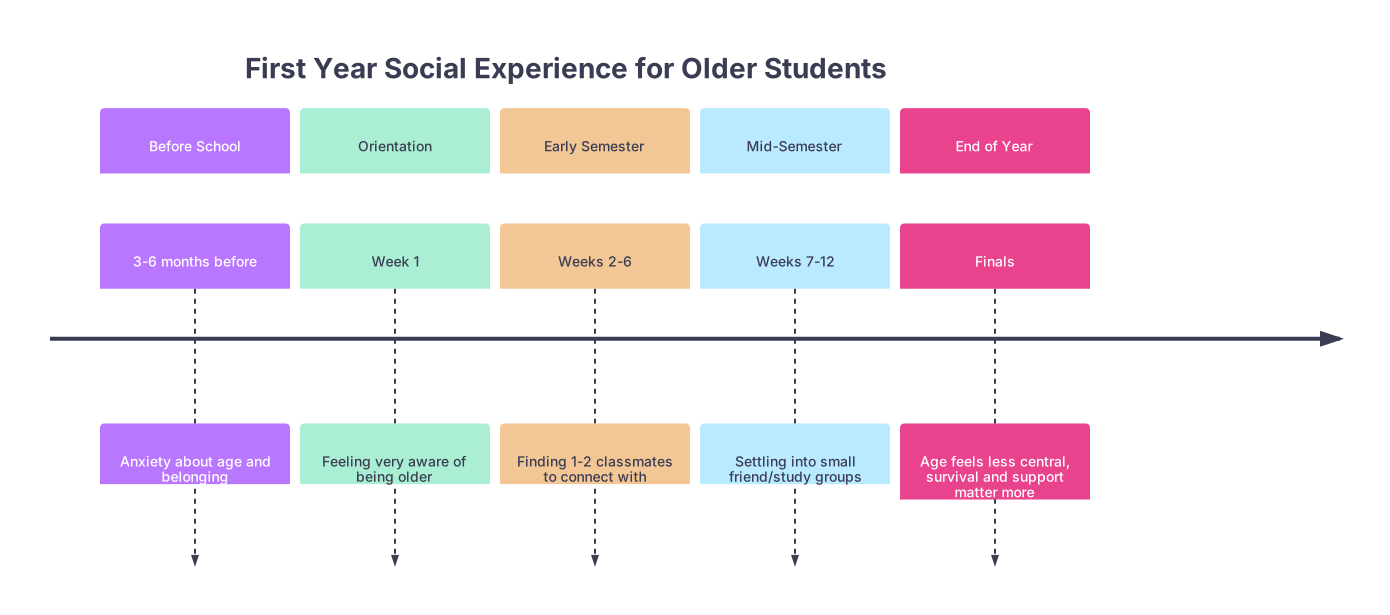
| Period | Event |
|---|---|
| Before School - 3-6 months before | Anxiety about age and belonging |
| Orientation - Week 1 | Feeling very aware of being older |
| Early Semester - Weeks 2-6 | Finding 1-2 classmates to connect with |
| Mid-Semester - Weeks 7-12 | Settling into small friend/study groups |
| End of Year - Finals | Age feels less central, survival and support matter more |
The Stuff Nobody Says Out Loud (But You’re Definitely Thinking)
Let’s just drag the worst-case thoughts into the light.
“Will They Respect Me Less? Or Weirdly More?”
Here’s the pattern I’ve seen:
- A small minority of people will be awkward about your age at first. That fades when they realize you’re not their parent.
- A chunk of people will low-key assume you’re more competent, even when you’re just as lost. That’s its own weird pressure.
- Most people just file you under “older, cool, whatever” and move on.
You might get comments like:
- “You’re so brave starting now.” (Translation: I can’t imagine doing that at your age.)
- “I could never go back to school later.”
- “Wait, you had a whole other career?”
They’re not trying to insult you. But yeah, it stings sometimes. You start hearing “later” and “older” as synonyms for “behind.” Even when they’re not.
You’ll probably overcompensate for a while. Trying to prove that you’re not slow, not rusty, not out-of-touch. That’s exhausting. Eventually, the material itself will wring that out of you, because no one has energy left for image management in med school.
“What If I’m At a Totally Different Life Stage?”
You might be:
- Married when everyone else is swiping right.
- Divorced when everyone else is getting their first serious partner.
- Parenting while classmates are asking, “Can you imagine having kids right now??”
This can feel isolating as hell.
You’re worrying about daycare closing early while your classmates are worrying about missing the school shuttle.
You’re scheduling around your partner’s job while they’re scheduling around fantasy football.
Are your priorities different? Yes. Does that make you incompatible? Not necessarily. It just means your social overlap will be narrower.
Your people likely end up being:
- Other nontrads (even if they’re just 2–3 years older than the rest).
- The quieter, more serious 23-year-olds who feel older than they are.
- Residents/attendings/mentors you connect with more easily than your peers sometimes.
You’re allowed to grieve not doing this at 22. You’re also allowed to prefer who you are now.
Practical Ways to Not Feel Like the Alien in the Room
You can’t change your age. You can change how isolated you end up feeling.
1. Find the Other “Weird” Ones Early
You are almost never the only one who feels out of place. You might not be the only one who’s older. But even if you are, you’re not the only one:
- With a family
- From a very different background
- Changing careers from something intense (military, nursing, finance, teaching, etc.)
Look for people who:
- Don’t automatically go to every social event
- Mention partners, kids, or previous jobs
- Sit in the same general area consistently and actually look like they’re here to work
Those are your likely humans.
2. Be Honest Once. Not Dramatic. Just Honest.
You don’t need a monologue about your age. But you can straight-up say to someone you click with:
“Honestly, I was worried I’d be the oldest one here and feel out of place, but you’ve been great to talk to.”
Nine times out of ten? They say something like, “Oh my god, I feel out of place too, just for different reasons.”
The more you try to pretend you’re not noticing the age gap, the more it eats you alive. Say it once. Out loud. To someone safe. The pressure drops.
3. Decide on Your “Yes” and “No” in Advance
You can’t say yes to everything or you will burn out twice as fast as the 22-year-olds living on Celsius and vibes.
Before the semester starts, make a loose promise to yourself:
- I’ll go to X types of social things (maybe one big thing a month).
- I’ll prioritize Y (sleep, family time, workouts, etc.).
- I’m okay with missing Z and not beating myself up for it.
You will never please both sides: the part of you that wants to be “in” and the part of you that wants to survive. Choose survival.
4. Use Your Age Where It Actually Helps
You’ve probably done hard things already. Boring, unglamorous, adult hard things.
Use that:
- You know how to email professionally. Offer to help with club stuff or emails to admin.
- You’re used to structured days. Build a routine and let people join you.
- You know what it’s like to fail or be wrong. Be the one who normalizes saying, “I need help.”
| Aspect | Advantage of Being Older | Pain Point You’ll Likely Feel |
|---|---|---|
| [Time Management](https://residencyadvisor.com/resources/nontraditional-path-medicine/advanced-timeblocking-techniques-for-working-professional-premeds) | More experience juggling responsibilities | Less tolerance for chaos and last-minute plans |
| Emotional Resilience | Better at handling setbacks | Higher self-criticism when you struggle |
| Social Dynamics | Better at reading people and boundaries | Feeling “out of sync” with party culture |
| Career Perspective | Clearer sense of why you’re here | Harsher awareness of opportunity cost |
| Money & Life Admin | More financial literacy | Real financial stress vs theoretical worry |
5. Accept That Some Days Will Just… Hurt
There will be days you watch a group of classmates laughing about something you don’t get and you’ll feel it deep: “I don’t belong here.”
There will be days you wish you’d done this at 21 just to skip this specific flavor of loneliness.
Those feelings don’t mean you made the wrong decision. They mean you’re paying the real social cost of starting late. Just like there are real costs of starting early (burnout, immaturity, regret).
You don’t get a cost-free timeline in medicine. You just get to pick which trade-offs you can live with.

Will I Regret Starting Late More Than I’d Regret Not Doing It?
This is the real fear under everything: “What if I blow up my life, feel out of place for a decade, and end up wishing I’d just stayed in my old job?”
I’ve seen older med students who hated parts of it. Who cried in parking lots. Who questioned everything.
I’ve also seen older med students who said, even while exhausted, “I’d rather be the oldest person in the room than be 45 still wondering what would’ve happened if I’d tried.”
The regret you can live with is personal. Some people genuinely decide, “I’d rather have a stable, known life than gamble on this at 35.” That’s valid.
But if you’re reading this, you’re probably already deeply in the “I can’t shake this” stage. Where medicine keeps clawing its way back into your brain no matter how much you try to be “realistic.”
If that’s you, then yeah, you may have days where you hate being the oldest. But odds are you’d hate never trying even more.
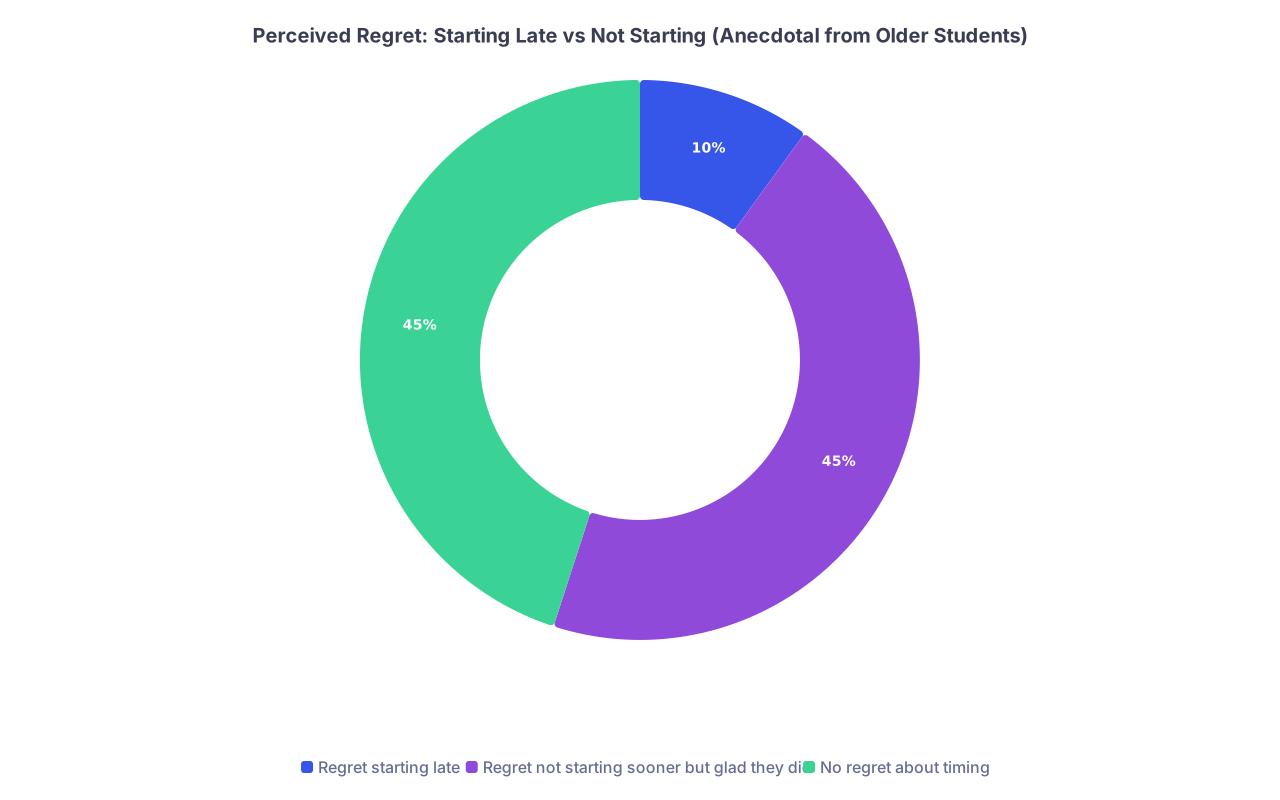
| Category | Value |
|---|---|
| Regret starting late | 10 |
| Regret not starting sooner but glad they did | 45 |
| No regret about timing | 45 |
Quick Reality Check Before You Spiral Again Tonight
You will not be the only older person in medicine. Not in school. Not in residency. Not in practice.
People start over after:
- Military careers
- Whole PhDs
- Nursing/PA/paramedic work
- Teaching
- Tech and finance and random corporate jobs
And they don’t just “manage.” Many of them end up as the residents and attendings the students trust most.
You’ll feel too old sometimes. You’ll also feel relieved you’re not 22 and falling apart over every quiz.
It’s a trade. Not a sentence.

FAQ: Late Matriculation & Being the Oldest in Class
1. Will being older hurt my chances of getting in?
Not directly. Schools don’t reject you for your birth year. They reject you for weak stats, weak narrative, or red flags. Being older does raise the bar on your explanation. They’ll implicitly ask, “Why now? Why medicine after all this time?” If your story is clear, your academics are solid (or trending upward), and your clinical exposure is real, your age is more curiosity than liability.
2. What if I actually am the oldest person in my class?
Honestly? Then you’re a short-lived novelty for like two weeks. People will joke, ask your previous career, maybe make one comment about you “having your life together.” Then they go back to panicking about exams. Being the oldest might feel like a big deal to you. To them, it’s just one more data point in a sea of new faces.
3. Will I have trouble making friends with younger classmates?
You probably won’t be best friends with everyone, but you don’t need to be. You’ll likely gravitate toward people who share your vibe more than your age: calmer students, other nontrads, commuters, people in long-term relationships. You might not connect with the hardcore party crowd. That’s fine. Most older students end up with a smaller, tighter circle—and that’s usually enough.
4. How do I answer “Why medicine now?” without sounding defensive?
Be direct and specific. Something like: “I spent X years in [previous field]. I liked [A], struggled with [B], and realized I kept being drawn to [clinical/human/impact side]. I tested that interest with [shadowing, CNA, volunteering], saw the day-to-day reality, and chose to pivot even though it meant starting over.” Own the delay without apologizing for existing.
5. What about starting med school with kids or a spouse—does that make everything worse socially?
It makes things different, not automatically worse. You’ll skip some social events; you might leave campus earlier. You’ll probably feel more distant from the “school is my whole life” crowd. But you’ll also have an identity and support system that isn’t tied to test scores. Practically, it’s harder. Emotionally, it can actually anchor you if your partner or family is supportive.
6. Is there an age where it’s honestly too late to start?
“Too late” is less about a specific number and more about your personal tolerance for the trade-offs: years of training ahead, debt, energy, family plans, and how long you realistically want to practice. There are people who start in their late 30s and even early 40s and are glad they did. But past mid-30s, you need to run the math and the life projection honestly: not “Can I technically do this?” but “Will I be okay living this path at 45, 55, 65?”
If you remember nothing else:
- You’ll feel older. You won’t be an alien.
- You don’t need 100 friends. You need a handful of real ones.
- The regret of trying late is usually smaller than the regret of never trying at all.