

What if that one stupid sentence you said to a program… is now the reason you don’t match?
Yeah. That thought. The one that shows up at 1:37 a.m. and will not shut up.
You told a PD you’d rank them #1.
You asked, “If I rank you highly, will you rank me highly?”
You sent an email that might be “coercive” under NRMP rules.
And now your brain is screaming: Did I just commit an NRMP violation? Am I in trouble? Can they report me? Could I get banned?
Let’s untangle this before you convince yourself your whole career is over.
First: What “Pressuring a Program” Actually Means (NRMP Reality Check)
Let me be blunt: most of us don’t even read the NRMP rules until we’re already halfway into breaking them.
You’re probably spiraling because of some version of this:
- You wrote in an email: “You’re my #1” or “I will rank you first.”
- You asked a PD or APD: “Where will I be on your rank list?”
- On an interview day or call you said: “If you rank me highly, I’ll rank you highly.”
- You hinted that you’re ranking them high so they’ll “feel good” about ranking you.
And now you’ve discovered that NRMP says programs and applicants cannot solicit or require statements like that. No asking people to commit, no demanding promises.
Here’s the part everyone forgets when they’re panicking:
NRMP is way more focused on coercion and patterns of abuse than on one overeager email from an anxious MS4.
They care about stuff like:
- Programs saying: “We’ll only rank you if you tell us we’re your #1.”
- People being forced to reveal ranks.
- Programs punishing you if you don’t play along.
You, nervously blurting out “You’re my top choice”… that’s not the hill NRMP is trying to die on. It’s technically in the gray zone, yes. But it’s not the apocalypse.
Did I Actually Break a Rule? Or Am I Just Horrified I Overshared?
Let’s divide this into three levels of “oh no” and you put yourself where you actually belong.

Level 1: Harmless but Cringey
Stuff like:
- “I really loved your program and could definitely see myself there.”
- “You’re one of my top programs.”
- “I’m strongly considering ranking you very highly.”
This is not an NRMP problem. This is just normal, slightly embarrassing, human behavior. Programs get dozens of these messages. They don’t report this. They barely remember it.
If this is what you did, you’re not in trouble. Period.
Level 2: Overcommitment but Usually Fine
Now we’re talking about:
- “You are my #1 choice”
- “I will rank you first.”
- “You’re my top program on my rank list.”
NRMP’s own language says people should not ask for or require these statements. But you volunteering it? That’s different from being coerced.
Is it ideal? No.
Is it common? Extremely.
Is it a punishable offense? Almost never, unless it’s attached to some larger, weirder behavior.
What might happen realistically:
- The program rolls its eyes and files your email mentally under “love letters.”
- They assume you probably sent similar messages to other places.
- They do not call NRMP over a single “you’re my #1” email.
Level 3: Actual Red-Flag Territory
You’re here if you did things like:
- “If you can tell me where I will be on your rank list, I will guarantee I rank you highly.”
- “I’ll withdraw from other interviews if you tell me you’ll rank me to match.”
- You pressured them repeatedly after they didn’t respond.
- You implied you’d break your Match contract or do something sketchy.
At this level, you’re not just oversharing. You’re actively trying to manipulate the Match process.
Does that mean NRMP is definitely coming? No. Still unlikely. But it is the sort of thing that, if it became a pattern or turned ugly, could get attention.
Most people are not actually in level 3. They just feel like they are because anxiety turns everything to nuclear-scale disaster.
Can You “Undo” What You Said? What To Do Now
You can’t un-send an email or un-say something in an interview. But you can stop yourself from making it worse.
Here’s how I’d handle it, depending on what you did.
If you only said “You’re my #1” once in an email
Honestly? I wouldn’t send a follow-up at all.
You’re imagining that some PD is sitting there with your message printed out, highlighter in hand, muttering, “NRMP violation… interesting.”
They’re not. They’re skimming on their phone between cases.
If you try to send some panicky “Correction: I actually meant you’re one of my top choices and I didn’t intend to violate NRMP policy” email, you do three things:
- Draw way more attention to something they probably barely noticed.
- Make yourself sound confused, anxious, and high-maintenance.
- Make it weird.
Silence is your friend here. Let it die.
If you said it in an interview conversation
Same rule: do nothing now.
People say all kinds of things when they’re nervous on Zoom or in person. Faculty know that. PDs know that. People exaggerate, say they “loved the program,” call it “a perfect fit,” mention “top choice” all the time.
No one is filing a report because you panic-blurted something dumb at 2:37 p.m. during your 5th interview of the week.
If you actively asked them about their rank list or implied a deal
This is the only time I’d consider a follow-up—but even then, it needs to be calm, professional, and not self-incriminating.
Something like:
Dear Dr. [Name],
Thank you again for the opportunity to interview at [Program]. I realized after our conversation that I may have asked a question about ranking that could have been inappropriate under NRMP guidelines. I apologize if that put you in an uncomfortable position.
I want to be clear that I fully support and will abide by all NRMP Match policies. I value the integrity of the Match process and did not intend to create any obligation or expectation on either side.
Sincerely,
[Your Name], AAMC ID [#]
Short. Mature. Doesn’t overexplain. Doesn’t dig yourself into a deeper hole. Then you stop. No second apology. No “did this cause a problem?” follow-up.
Are They Going to Report Me? Worst-Case Scenario Thinking (That Almost Never Happens)
Let’s walk through the nightmare scenario you’re replaying in your head and compare it to what actually happens.
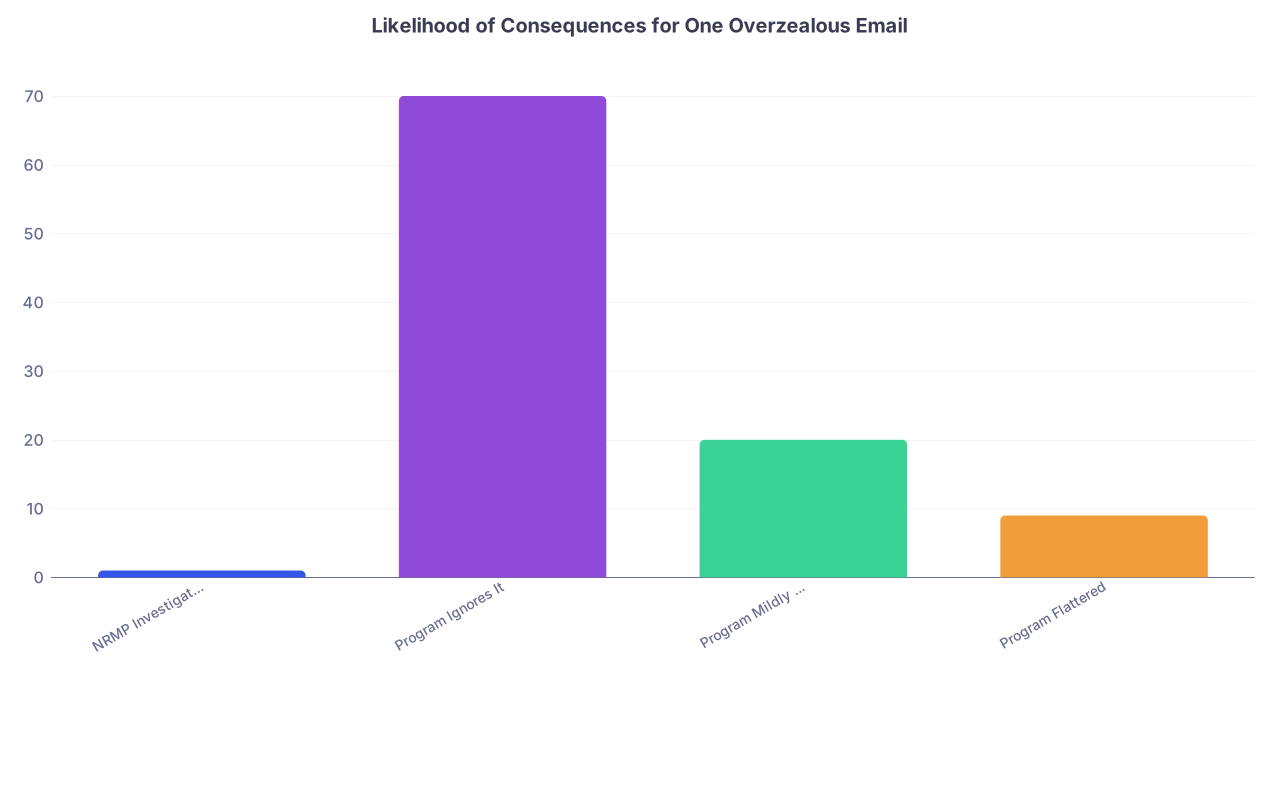
| Category | Value |
|---|---|
| NRMP Investigation | 1 |
| Program Ignores It | 70 |
| Program Mildly Annoyed | 20 |
| Program Flattered | 9 |
You’re imagining:
- PD prints your email.
- Calls NRMP.
- NRMP opens a Case File of Doom under your name.
- You get banned from the Match, medical school calls a professionalism committee, and your life collapses.
Here’s the reality:
Programs are not eager to invite NRMP scrutiny over one random applicant’s email. An NRMP investigation drags them into a mess too. Documentation, interviews, hearings. Most PDs do not have the time or patience for that unless something is truly egregious.
What actually happens almost every time:
- They ignore it, or
- They maybe roll their eyes, or
- They like the flattery but don’t trust it, and
- They rank you wherever you would have been ranked anyway.
You are not as powerful in this system as your anxiety thinks you are. One sentence does not fundamentally alter how a program behaves—unless it’s aggressively unprofessional or creepy. “You’re my #1” does not qualify.
Will This Hurt My Chances With That Program?
This is the part you’re probably less worried about formally and more worried about emotionally: did I just shoot myself in the foot?
Maybe. But probably not as much as you think.
Programs have seen everything:
- Applicants saying “you’re my #1” to multiple programs in the same city.
- People sending copy-paste “you’re my top choice” emails with the wrong program name.
- Residents who later laugh about all the fake “you’re my first choice” love letters they sent.
Most PDs are jaded enough to know: post-interview communication is a mess of anxiety, flattery, and half-truths. They take all of it with a massive grain of salt.
Real factors that actually move your position on their rank list:
- Your interview performance.
- Your letters.
- Your fit with their culture.
- Red flags in professionalism, behavior, or judgment.
Overeager but harmless flattery? Extremely minor influence.
If you acted normal otherwise—showed up on time, were respectful, didn’t say anything offensive—you’re probably fine. At worst, they mentally tag you as “a little anxious” and move on.
How to Not Make It Worse Going Forward
This is the part you can control. You already sent the thing or said the thing. Fine. From this point on, don’t feed the disaster.
Here’s how I’d handle the rest of the season:
- Stop ranking games. Make your real rank list based on where you actually want to be and where you realistically belong academically. Not based on who you “promised” or who you emailed.
- No more promises. No “you are my #1,” “I will rank you first,” or “I’m committing to your program.” If you want to express enthusiasm, you can say:
“Your program is one of my top choices due to X, Y, Z.”
That’s strong but not binding. - Never ask how they’ll rank you. Just don’t. It makes you look naive at best and manipulative at worst.
- Don’t double-message. If you already emailed once, don’t send another “just checking if you saw my last email” or “I still plan to rank you highly” follow-up. Let them breathe.
- Accept that silence is normal. Programs are not ignoring you because you broke a rule. They’re ignoring you because they’re busy, indifferent, or philosophically against post-interview contact.
You can’t retroactively be the chill, cool, NRMP-rule-perfect applicant. But you can avoid adding new fuel to the fire.
Psychological Part: Your Brain Wants a Disaster Story
Here’s the uncomfortable truth: part of you wants this to be the main character moment.
“If I don’t match, it’ll be because of that email. That one thing. That’s the reason.”
It gives your brain a neat narrative. A villain. A critical scene.
The boring reality is uglier and less cinematic: Match outcomes usually come down to a messy stew of numbers, fit, timing, and randomness. One overeager email doesn’t decide your entire future.
You’re not the only one who’s done this. I’ve seen:
- People accidentally send “You’re my #1” to two programs cc’ing the wrong PD.
- Someone address a love-letter email to the wrong specialty.
- Applicants openly tell residents, “You’re my safety program, but I like you.”
They still matched. Maybe not always at that specific place. But they matched.
You are not uniquely doomed.

| Step | Description |
|---|---|
| Step 1 | Interview Day |
| Step 2 | Initial Thank You Email |
| Step 3 | Neutral Enthusiastic Email |
| Step 4 | Stop Emailing |
| Step 5 | No More Rank Talk |
| Step 6 | Submit Honest Rank List |
| Step 7 | Match Outcome |
| Step 8 | Want to Express Interest |
What You Should Do Today
Here’s the concrete move:
Write down exactly what you said or sent, word for word. No dramatizing. No “basically I told them I’d sell my soul.” Just the actual text or paraphrased sentence.
Then ask yourself:
- Was it cringey or coercive?
- Did I demand something? Or just overshare?
If it’s just flattery or a “you’re my #1” type thing, your action step is: do nothing else with that program. Focus on making a sane, honest rank list.
If it crossed into pressure or deals, send that short apology email I wrote earlier. Then stop. No spirals, no extra explaining.
After that, open your rank list and look at your top three programs. For each one, ask: “If I had never sent that email or said that thing, would I still want them in this order?” If the answer is yes, you’re fine. If no, fix your list.
FAQ (Exactly 6 Questions)
1. Can NRMP actually punish me for telling a program they’re my #1?
It’s technically not ideal under the spirit of NRMP rules, but in practice, NRMP isn’t going after applicants who voluntarily say “you’re my #1” once in an email. They care far more about coercion, patterns of misconduct, and clear Match manipulation. For a single, unsolicited “you’re my top choice” message, the odds of formal consequences are extremely low.
2. Should I email the program to “take it back” or clarify?
Usually no. Sending a second anxious email puts a spotlight on something they probably barely registered. Unless you explicitly tried to make a deal or demanded rank information, you’re better off letting it go and not mentioning it again. Over-apologizing can make you look unstable, not professional.
3. What exactly am I not allowed to ask a program?
Avoid anything that tries to pry into their rank list or create an agreement. Don’t ask “Where am I on your rank list?”, “Will you rank me to match?”, or “If I rank you highly, will you rank me highly?” Also don’t suggest trades or conditions like, “If you rank me high, I’ll cancel my other interviews.” That crosses into actual NRMP trouble territory.
4. Does telling multiple programs they’re my “#1” hurt me?
Ethically, it’s not great. Practically, programs assume applicants are not 100% honest in these messages. If they somehow found out, it might slightly hurt their perception of your integrity, but most of the time they never compare notes. The more real damage is internal: it can cloud your thinking and push you to rank based on guilt instead of fit.
5. Will a program rank me lower because I seemed too desperate?
If you were otherwise professional and normal, probably not in any meaningful way. Desperation is common in this process; PDs know applicants are stressed and say overly intense things. The main reasons people get pushed down or off a rank list are serious professionalism issues, weak interviews, or major red flags—not one overeager email.
6. How do I show strong interest without stepping near NRMP violations?
Keep it specific and non-binding. Say things like, “Your program is one of my top choices due to your strong [X feature],” or “I would be very excited to train at [Program] because of [Y].” Focus on why you like them, not how you’ll rank them. No promises, no numbers, no deals—just clear, enthusiastic interest.
Open your sent folder right now and find the email that’s haunting you most. Read it once, out loud, exactly as written. Then decide: is this truly a disaster, or just embarrassing? Once you’ve answered honestly, close the email, and spend the next 20 minutes adjusting your rank list—not rewriting the past.


