Big-city doctors are not automatically richer. In many cases, they are quietly poorer.
The myth is persistent: “If you want to make real money, go to the city. That’s where the big hospitals and big salaries are.” I hear variations of this every year from residents mulling job offers. And every year, the numbers tell a different story.
Let me be blunt: raw salary comparisons between big metro and small town are almost useless. The meaningful question is not “Who has the bigger paycheck?” but “Who keeps more, has better leverage, and lives a less constrained life per dollar earned?” On that front, small-town physicians win more often than most people want to admit.
Let’s dismantle the usual talking points one by one.
Myth #1: “Big cities pay more, so you’ll come out ahead”
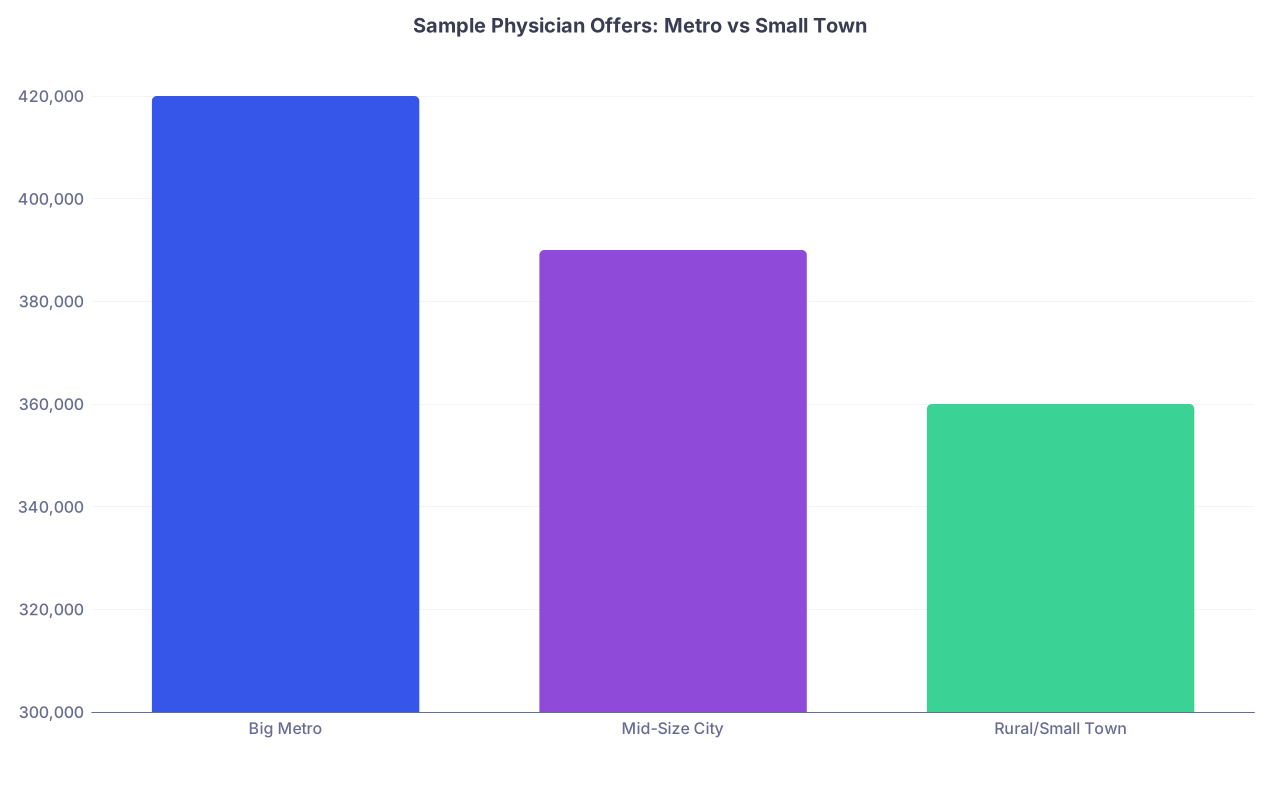
At face value, this sounds true. If you look only at base salary offers on paper, major metros often show higher absolute numbers, especially for academic or large system jobs. But when you factor in cost of living and tax drag, the story flips.
| Category | Value |
|---|---|
| Big Metro | 420000 |
| Mid-Size City | 390000 |
| Rural/Small Town | 360000 |
A naïve reading: “See? Metro wins.”
Now adjust for cost of living. Large coastal metros can easily run 40–80% higher living costs than a secondary or rural market. The difference in effective purchasing power and savings potential is often shocking.
| Category | Value |
|---|---|
| Big Metro | 420000 |
| Mid-Size City | 390000 |
| Rural/Small Town | 360000 |
I’ve seen this pattern repeatedly in actual contracts:
- Big coastal city hospitalist: $330k base, brutal rent or $1.5M starter home, high state taxes, daycare prices that make you question life choices.
- Small Midwestern town hospitalist: $290k base, $450k for a 4-bedroom house, state taxes lower, everything from groceries to car insurance cheaper.
On paper: $40k “loss” going small town.
In reality: the small-town doc might save $40–60k more per year than the “higher paid” urban colleague.
People vastly underestimate the impact of housing. Physicians don’t buy cheap apartments; they buy the “doctor house” in a good school district. That choice alone can turn a supposedly better big-city salary into a financial treadmill.
Myth #2: “Rural jobs pay more only because the work is miserable”
You will often hear a smug version of this: “Yeah they pay more, but you’ll be working yourself to death with no support.” Sometimes true. Mostly exaggerated.
Recruiters and compensation surveys consistently show this: less desirable locations—rural, remote, or small town—often offer:
- Higher base pay or higher RVU rates
- Signing bonuses that are actually meaningful
- Loan repayment or forgiveness packages big cities rarely match
- Faster partnership tracks in private groups

The supposedly “miserable” work conditions also need reality checked.
Big city misery looks like this:
- 45–60 minute commute each way in stop-and-go traffic
- Parking wars around the hospital
- Call schedules designed around a bloated academic bureaucracy
- RVU targets ratcheted up every year because administration knows you’re replaceable—there’s a line of fellowship grads wanting the brand name
Small town misery (at its worst) looks like:
- True 24/7 responsibility for a wide catchment area
- Less subspecialty backup, more decisions coming down to you
- Everyone knows you; personal anonymity is gone
But here’s the part big-city loyalists skip: small towns are often more flexible. You want 0.8 FTE with full benefits? I’ve seen community and small-town hospitals bend over backwards for that. Try asking a big-name academic center in a top-10 metro for 0.8 FTE as a new hire and watch the eyebrows go up.
There are small-town horror stories: unsafe call, understaffing, antagonistic hospital boards. But big cities have their own: malignant departments, RVU sweatshops, toxic leadership hidden behind reputation and glossy branding. Misery is not an exclusively rural phenomenon.
Myth #3: “The job security is better in big cities”
This one is just wrong.
Large systems in major metros can and do:
- Flip entire groups from private to employed
- Bring in national staffing companies overnight
- Shift service lines across campuses, leaving you commuting between sites you never agreed to cover
- Shut down or “reorganize” departments, especially if you’re in a niche field
In a large city, you are one of many. There is always another fellowship grad who will take less or accept worse call if the name on the badge is shiny enough.
In a smaller community, once you are established, you become infrastructure. When a hospital has two general surgeons and you’re one of them, you have bargaining power. Losing you isn’t a minor HR problem; it’s a community crisis.
I’ve watched small-town physicians renegotiate call, demand new scopes, push for in-house ultrasound, even influence admin hires—because replacing them would take 12–18 months and probably require another big signing bonus.
So no, urban density doesn’t equal job security. It often equals replaceability.
Myth #4: “You’ll make it back later with urban side gigs”
This is the fantasy: “Sure, the W‑2 might be similar, but in a big city I’ll moonlight, do concierge, pick up telemed, maybe build a side business. So my upside is bigger.”
Sometimes that works. More often, it runs straight into two hard walls: time and competition.
Let’s be honest. If you’re working full-time clinically in a high-acuity urban job, your free time is shredded by:
- Commute time
- Administrative nonsense unique to big institutions
- Higher baseline stress and burnout
Compare that with a small-town doc who has:
- A 7-minute commute
- No parking chaos
- Far fewer meetings designed purely to produce PowerPoint slides
That small-town doc has hours back every week. Enough to take telemedicine shifts from their home office. Enough to run a small niche private clinic on the side. Enough to invest time into something that compounds.

| Step | Description |
|---|---|
| Step 1 | Total Weekly Hours |
| Step 2 | Clinical Work |
| Step 3 | Commute |
| Step 4 | Admin |
| Step 5 | True Free Time |
| Step 6 | Long commute |
| Step 7 | More meetings |
| Step 8 | Less time for side work |
| Step 9 | Short commute |
| Step 10 | Fewer meetings |
| Step 11 | More time for side work |
I’ve seen rural family physicians quietly clear six figures annually in telehealth or niche cash-pay services, largely because they aren’t burning 8–10 hours a week sitting in traffic or fighting for OR time in a massively over-subscribed tertiary center.
The other problem? Competition density. Want to open a concierge practice or boutique clinic in a wealthy big city zip code? So does every other burnt-out subspecialist. Good luck differentiating yourself.
In a small town, you’re the only one doing X. That “only one” status prints money if you know what you’re doing and keep your overhead sane.
Myth #5: “Small towns are bad for long-term wealth building”
This one mostly comes from people who haven’t done a balance sheet comparison beyond salary.
Wealth is about what you keep and how fast your assets grow, not how fancy your paycheck looks. On that scoreboard, small-town life has structural advantages.
Consider a 10-year horizon comparing two internal medicine physicians:
| Factor | Big Metro IM | Small Town IM |
|---|---|---|
| Base Salary | $330k | $290k |
| Cost of Living Differential | +60% | Baseline |
| Annual Savings Rate | ~$70k | ~$120k |
| Home Price (4BR) | $1.4M | $450k |
| Time to Pay Off Loans | 10–12 years | 5–7 years |
| Side Income Potential | Moderate | High (tele, niche) |
Over 10 years, that $50k/year savings gap is half a million dollars before investment returns. Add compounding and it’s worse for the “high-paid” city doc.
On top of that:
- Lower housing costs mean you hit “housing done” much faster. Instead of chasing a forever-home upgrade at $2M+, you’re done at $600k and can redirect cash toward investing.
- Lower lifestyle pressure helps. Big cities are endless temptation machines: private schools, trendy restaurants, constant travel, luxury car normalization. You have to swim upstream just to maintain a sane burn rate.
- Asset opportunities are different. Small-town physicians quietly buy medical office buildings, stakes in ASCs, or even local businesses at far more reasonable multiples than anything you’d see in major metros.
Is wealth building impossible in big cities? Of course not. But the default gravity there pulls toward lifestyle inflation. In a small town, gravity actually favors the person trying to save and invest.
Myth #6: “Reputation and networking in big cities will pay off financially later”
This argument: “I’ll start in the big academic center, build my reputation, then I can write my own ticket anywhere.”
Sometimes true for academic superstars or niche proceduralists who become the name in their field. For the vast majority of physicians? Overrated.
Here’s what usually happens:
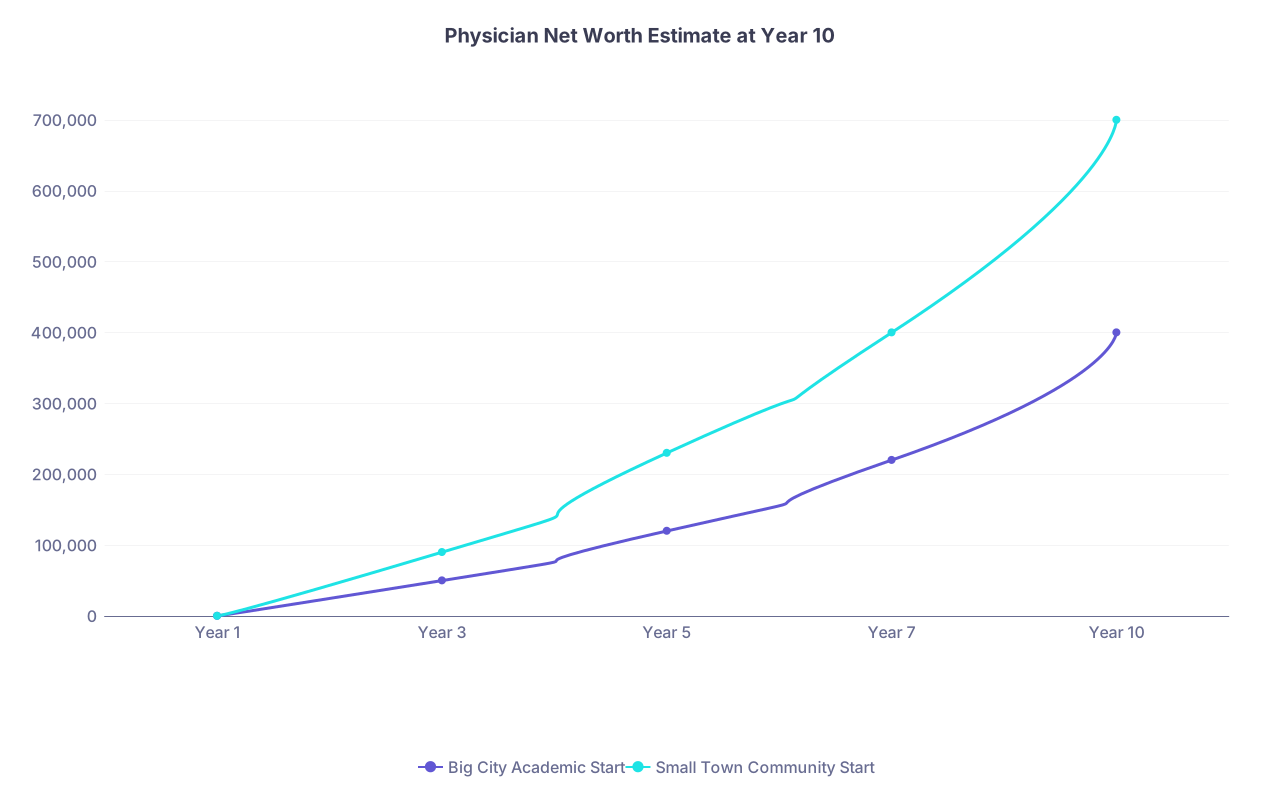
You spend your 30s grinding in a big-name center, getting paid below market “for the prestige,” living in an overpriced condo, with no time or energy to build anything outside medicine. At 40, you realize the golden path is actually just a burned-out trail many people regret.
Then you move…to a smaller city or town. For higher pay, less nonsense. The networking and prestige? Nice. But financially, you often would have been better off starting there 5–8 years earlier.
| Category | Big City Academic Start | Small Town Community Start |
|---|---|---|
| Year 1 | 0 | 0 |
| Year 3 | 50000 | 90000 |
| Year 5 | 120000 | 230000 |
| Year 7 | 220000 | 400000 |
| Year 10 | 400000 | 700000 |
I’ve watched plenty of people go urban → small-town or mid-market for that very reason. The reverse—small-town → big city for better pay—is rarer than people assume.
Networking is useful. Name recognition has value. But if the primary metric is “How much wealth do I build in my working years?” then the shiny urban brand rarely wins without significant sacrifice.
Myth #7: “You can’t have a good life in a small town, so the money isn’t worth it”
This is the last defense of the big-city believer: “I know it’s more expensive, but I love the culture, diversity, restaurants, etc. Small towns are boring suburbs with chain restaurants and bad schools.”
Sometimes you look at a map and agree. Some towns are genuinely not places you want to live, money aside.
But the caricature is lazy. There are tiers here:
- Truly rural: 1–2 stoplights, hours from a major airport
- Small town: 20–80k population, basic amenities, regional hospital
- “Small city”: 100–300k population, university presence, decent airport access, multiple hospital systems
That last category quietly offers some of the best financial and lifestyle arbitrage in medicine: physician comp closer to rural, amenities closer to urban.

The “but I need X” argument (concerts, certain schools, long list of ethnic restaurants) is valid if you’re actually using those things regularly. Many big-city physicians are too tired to enjoy them. They live in great cities but experience them like exhausted commuters, not residents.
Meanwhile, the small-town doc:
- Shows up to their kid’s sports games
- Has a 7-minute door-to-door commute
- Knows half the hospital staff by name
- Takes actual vacations with the money they’re not pouring into housing
Lifestyle is personal. The mistake is turning “I prefer big cities” into “Big cities are better financially.” They usually aren’t.
The Real Question: What Do You Optimize For?
Let’s put this cleanly. You’re choosing between big city and small town. The relevant comparison is not just salary. It’s this cluster of variables:
| Factor | Big City | Small Town / Smaller City |
|---|---|---|
| Nominal Salary | Often higher | Sometimes lower |
| Cost of Living | High to extreme | Low to moderate |
| Savings Potential | Often constrained | Often excellent |
| Commute/Time Cost | High | Low |
| Job Leverage | Lower | Higher once established |
| Side-Gig Time | Less | More |
| Prestige/Brand Name | Higher | Variable |
| Competition Density | High | Low to moderate |
If your goal is:
- Maximize prestige and academic profile → big city may win
- Maximize lifetime wealth and time freedom → small town or small city wins far more often than people admit
The biggest myth is not that “big cities pay more.” It is that “pay” should be measured only in pre-tax W‑2 numbers. For physicians, that’s a childish metric.
What actually matters:
- How much you keep after taxes and realistic living costs
- How much control you gain over your time and schedule
- How much leverage you have with your employer or group
- How hard the environment pushes you toward or away from burnout
On those metrics, the small-town or small-city job is usually the superior financial choice, even if the starting salary number is a bit lower.
If you remember nothing else, remember this:
- Big-city salaries often look higher but produce less net wealth once you factor in taxes, housing, and lifestyle drag.
- Small-town and smaller-city jobs frequently offer better leverage, more time, and higher savings potential per dollar of income.
- The “go to the city to make more” narrative is outdated. If you care about actual financial outcomes, stop worshiping the zip code and start running the numbers.