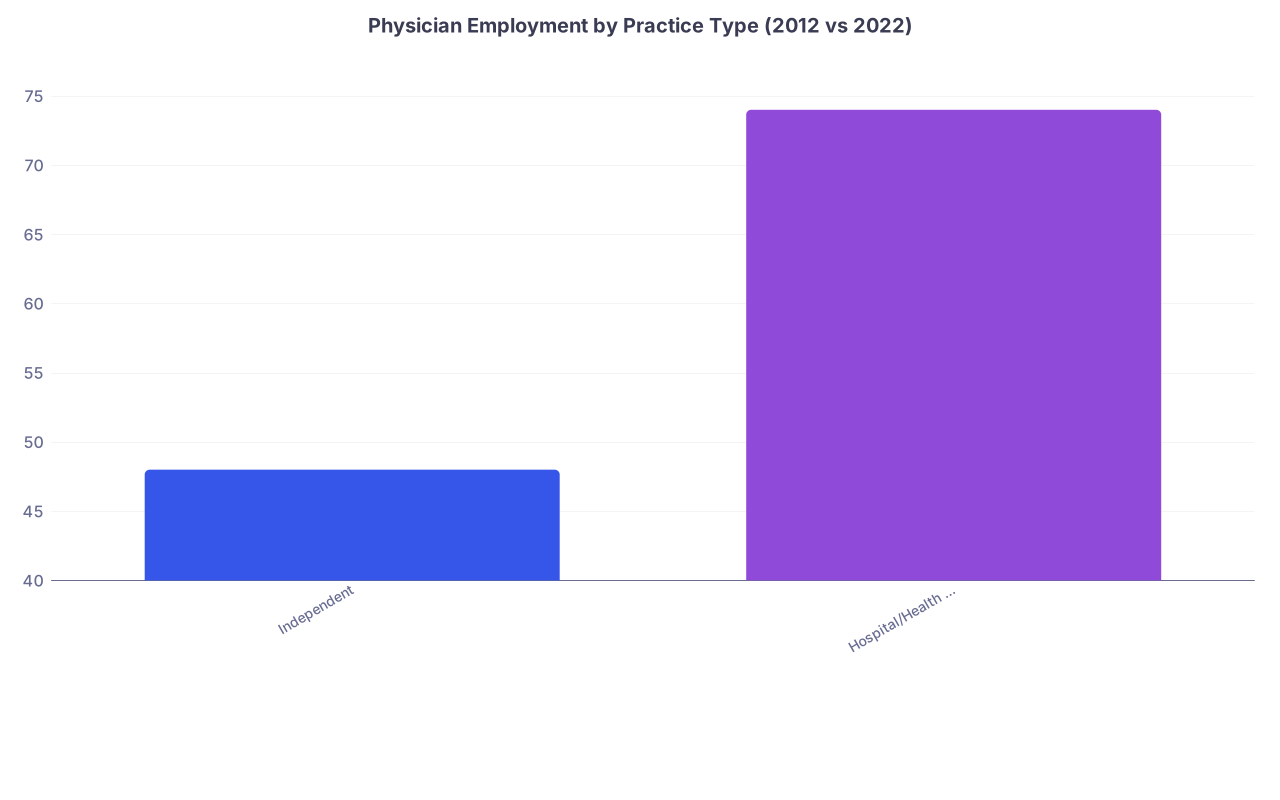
| Category | Value |
|---|---|
| Independent | 48 |
| Hospital/Health System Employed | 74 |
Is Private Practice Dying Financially? Not Even Close — But the Game Changed
The obituary for private practice has been written so many times it should get its own CPT code.
“Private practice is dead.”
“You’ll never make real money outside hospital employment.”
“Only suckers open clinics now.”
Those claims are wrong. Flat‑out wrong.
Private practice is not dying financially. It’s consolidating, reshaping, and getting more polarized. The gap is widening between highly profitable, well‑run independents and struggling, under‑scaled solo shops. If you do it badly, you can absolutely get crushed. If you do it right, you will almost always beat employed comp over a career.
Let’s walk through what the numbers actually show — not the hallway gossip or Twitter rage threads.
What The Income Data Really Shows
Public data first. Feelings later.
| Source (Year) | Specialty Type | Independent Median | Employed Median |
|---|---|---|---|
| MGMA 2023 | Primary Care | Higher | Lower |
| MGMA 2023 | Surgical Specialties | Higher | Lower |
| Medscape 2024 | All Physicians | ~$15–25k higher* | — |
*Medscape doesn’t always label “independent vs employed” perfectly, but year after year, self‑employed docs report higher income.
Broad patterns from MGMA, AMGA, Medscape, and multiple consulting analyses:
- Independent physicians typically earn more than employed peers in the same specialty and region, often by 5–20%, sometimes much more in high‑RVU fields.
- Median employed comp has been rising, but owner income rises faster when practices are scaled and business‑savvy.
- The physicians who really get hammered?
- Low‑volume, poorly managed practices
- Tiny groups with no leverage on payors or hospitals
- Docs who refuse to adapt (no ancillaries, no negotiation, no modern ops)
Here’s a rough income gradient that actually matches reality:
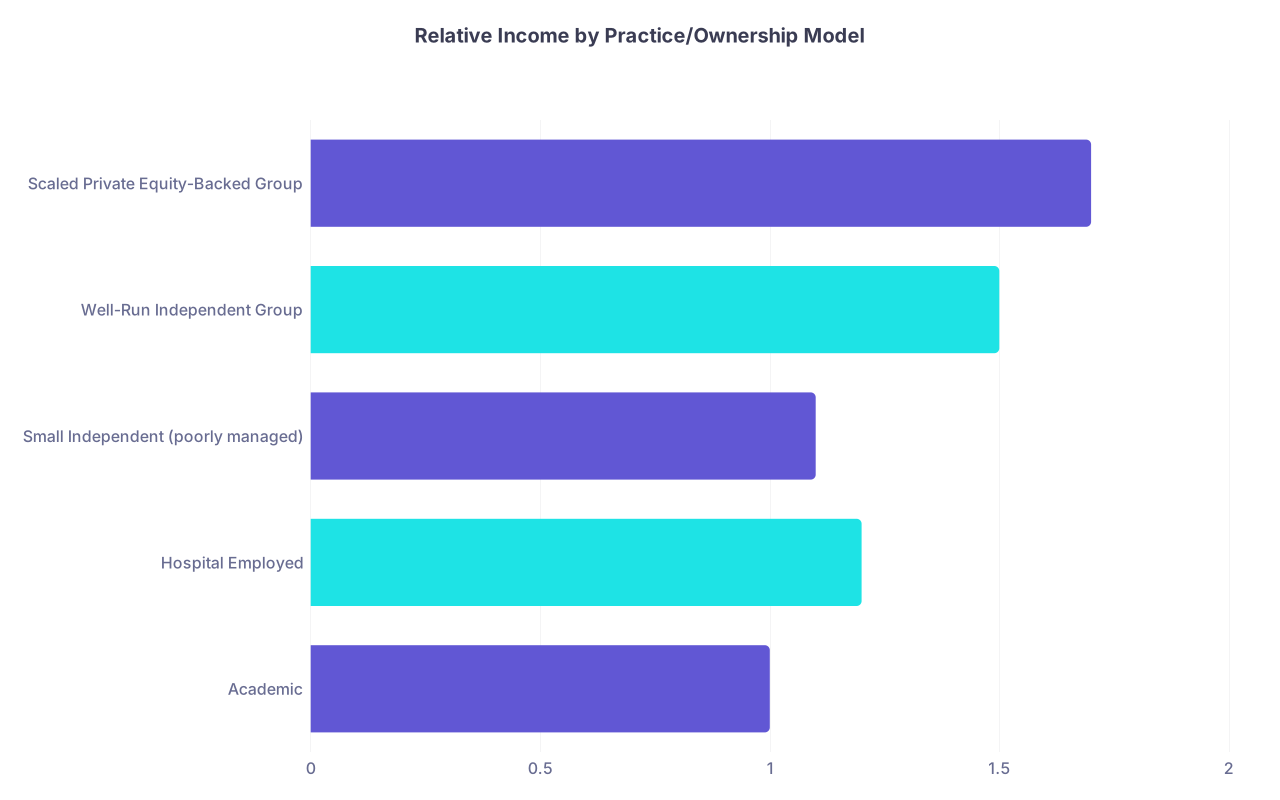
| Category | Value |
|---|---|
| Academic | 1 |
| Hospital Employed | 1.2 |
| Small Independent (poorly managed) | 1.1 |
| Well-Run Independent Group | 1.5 |
| Scaled Private Equity-Backed Group | 1.7 |
Is this exact? No. Directionally, it’s what every serious compensation survey and private consulting dataset keeps showing.
Private practice isn’t dying financially. Mediocre private practice is.
The Real Shift: Who Owns The Practice, Not Whether It’s Profitable
People mix up two very different questions:
- Is private practice becoming less common?
- Is private practice becoming less profitable?
On #1, yes, ownership is clearly shifting.
- AMA data: in 2012, 60%+ of physicians were owners.
- By 2022, only about 46% were owners; hospital employment and corporate ownership exploded.
On #2, profitability, the story flips:
- Hospitals keep “integrating” physician practices because physician work is unprofitable? No.
- They do it because a physician network is insanely valuable for:
- Controlling referrals
- Leveraging facility fees and hospital-based billing
- Negotiating with insurers as a system
If private practice were truly dying financially, large health systems and private equity would not be buying them on repeat cycles at rich multiples. You do not see a decade-long land grab around a collapsing asset class. That’s not how capital behaves.
Here’s the myth in plain language:
“Private practice is dying financially” = “I saw 3 burned‑out solo internists sell to the hospital and assumed that’s the whole market.”
Wrong denominator. Wrong inference.
Where Private Practice Still Crushes Employed Compensation
Let’s talk specialties and models where independent practice routinely wins on money.
High‑RVU, Procedure‑Heavy Fields
Think:
- Orthopedic surgery
- Ophthalmology
- Gastroenterology
- Dermatology
- Cardiology (especially invasive)
- Anesthesia, radiology in certain markets
In these specialties, independent practices can:
- Capture technical fees (not just professional fees)
- Layer in ancillary services:
- Imaging
- In‑office procedures
- ASCs
- Infusion centers
- Cosmetics / cash-pay
- Negotiate better commercial reimbursement than individual employed docs can even see
I’ve seen groups where a partner-level orthopedic surgeon clears $900k–$1.2M annually while nearby hospital-employed orthos sit at $600–750k with RVU pressure and less autonomy.
Same with GI: high‑functioning groups with ASC ownership can dwarf hospital salaries over time, even if year 1–2 guarantees look lower.
Even in Primary Care, the Story Isn’t as Bleak as Twitter Says
Primary care is the favorite example people use to scream that private practice is dead. Yes, it’s tough. Yes, payer rates are garbage in many markets.
But even here, data shows:
- Independent PCPs running lean, optimized clinics (scribes, MA-driven workflows, tight scheduling, chronic care management, value‑based contracts) can beat employed comp by $50–150k annually after the ramp.
- Direct primary care (DPC) and concierge practices have lower patient volume but very high revenue per patient, and many docs report net incomes competitive with or higher than employed outpatient roles, plus sanity.
The PCPs who get crushed are typically:
- High overhead, low volume, dependence on a couple weak commercial contracts
- No experimentation with alternative payment models
- Stuck in 1998 workflows with 2024 margins
That’s not “private practice died.” That’s “you ran a fragile business in a harsh environment.”
So Why Do So Many Doctors Say Private Practice Is “Dead”?
Because of three things that have nothing to do with actual long‑term income potential:
Short-term guarantees look seductive.
Hospitals throw:- $300–600k guarantees
- $25–50k signing bonuses
- Student loan repayment
at new grads. It feels safe, especially with debt and no business training.
Early years in private practice are ugly.
- 6–18 months ramp-up
- Unpaid administrative time
- Learning curve on billing, coding, staffing
Meanwhile your residency co‑resident in hospital employment is “stable” on day one.
Docs confuse complexity with failure.
Owning a practice means:- Negotiating leases
- Firing underperforming staff
- Supervising billing upgrades
- Reading payer contracts that feel intentionally hostile
Many physicians interpret “this is hard” as “this is unviable.”
But difficulty and unprofitability are not the same thing.
Plenty of businesses are painful to run and wildly profitable once systematized. Private medical practice is one of them.
The Real Financial Threats (And How Owners Beat Them)
Let me be direct: private practice can absolutely implode financially if you ignore the economics. The threats are real, but they’re predictable.
1. Payer Rate Pressure and Contract Games
Insurers will:
- Delay credentialing
- Deny clean claims
- Pay you 70% of what the hospital across the street gets for the same CPTs
This is why many small, isolated practices get run over.
How owners who survive handle it:
- Join or form independent practice associations (IPAs) or clinically integrated networks (CINs) to gain negotiation leverage.
- Aggressively track payer performance and fire worst offenders when feasible.
- Build a meaningful percentage of revenue outside pure fee-for-service:
- DPC patients
- Membership/retainer models
- Cash-pay services (procedures, aesthetics, med weight loss, etc.)
2. Overhead Creep
Rent, staff wages, malpractice, EHR, IT, compliance — they all drift up. If your revenue per visit doesn’t rise but your overhead does, your margin vanishes slowly and then all at once.
Well‑run practices:
- ruthlessly track key metrics:
- revenue per visit
- staff cost per RVU
- days in A/R
- redesign workflows so MAs and scribes handle everything that doesn’t need an MD/DO brain.
- share resources via group practices: centralized billing, shared imaging, shared call.
3. Regulatory and Admin Burden
MACRA, MIPS, prior auth hell, quality reporting, audits. This hits everyone — employed and independent — but owners feel the overhead directly.
What separates winners from quitters:
- They centralize admin functions (billing, quality reporting) at the group level.
- They invest in robust RCM (revenue cycle management) early, not as an afterthought.
- They get legal/compliance help for big changes instead of “winging it” and paying later.
Does that sound like a hassle? Yes. Welcome to running a business. The upside is that you keep the value you build instead of handing it all to a system CEO.
Income Trajectories: Employed vs Owner Over a Career
Here’s the uncomfortable truth: many residents and young attendings choose the highest guaranteed salary in the first 2–3 years and never think in 10‑, 20‑year timelines. That’s how you lose millions without realizing it.
Typical patterns I’ve seen, backed by consulting work and comp analyses:
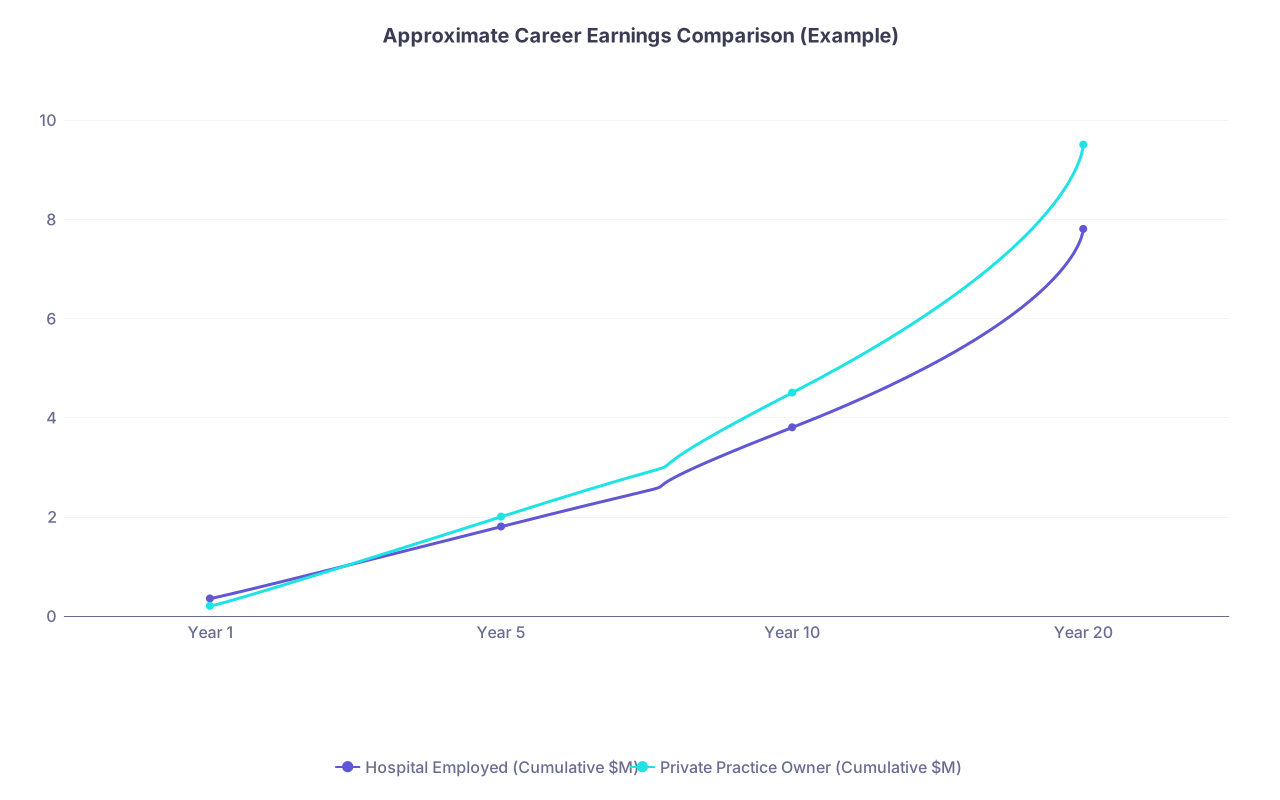
| Category | Hospital Employed (Cumulative $M) | Private Practice Owner (Cumulative $M) |
|---|---|---|
| Year 1 | 0.35 | 0.2 |
| Year 5 | 1.8 | 2 |
| Year 10 | 3.8 | 4.5 |
| Year 20 | 7.8 | 9.5 |
Interpretation of a very rough but realistic scenario (adjust to your specialty and region):
- Years 1–2: Employed physician “wins” on cash, especially with sign‑on bonuses and loan paydown.
- Years 3–7: Income starts to cross as ownership buy‑ins vest and ancillary revenue kicks in.
- Years 7–20: Owner pulls ahead by $100–300k per year, plus practice equity and ASC shares.
You may still choose employment. Fine. Lifestyle, risk tolerance, geography — all valid reasons. But do not pretend that the financial upside is equivalent. It isn’t.
The New Private Practice: Not Solo, Not 1990s
The cliché image of private practice — one doc, one partner, one office — is what’s actually dying. That model lacks leverage in contracting, can’t spread overhead, and usually has no exit strategy.
The private practices that are thriving financially now tend to look like this:
- Multi‑specialty or single‑specialty groups (not solos)
- 10–100+ physicians
- Multiple locations, some with ASC or procedural space
- Professionalized management:
- Full‑time administrator/CEO
- In‑house or contracted high‑level RCM
- Compliance and HR processes that resemble a real company
In other words, they’re businesses, not hobbies with a prescription pad.
Many are partially or majority physician‑owned even when they take on PE capital or joint ventures with hospitals. The doctors who get in early on those structures often do extremely well — both on annual comp and on equity events.
What Physician Income Trends Actually Reveal
Let’s strip it down to what the last decade of compensation and ownership data really says:
Independent practice is less common but more bifurcated.
- Weak, under‑scaled groups sell or close.
- Strong, scaled groups and PE‑backed platforms mint serious money.
Owner-physicians still, on average, earn more than employed physicians in similar roles.
- The gap varies by specialty, region, and execution quality.
- There is real risk and a slog phase, but the payoff is tangible, not theoretical.
Hospitals and corporate players are not buying practices out of charity.
- They see value — in your downstream revenue, your referral patterns, your negotiating power.
- When you sell early, you cash out that value once and then watch someone else own the upside.
The “private practice is dead” narrative is mostly from physicians who:
- Lived through a badly run practice
- Never saw well‑managed groups’ books
- Or opted for employment and need to justify it emotionally
You do not have to own a practice. You do not have to be an entrepreneur. But do not confuse “hard, uncomfortable, unfamiliar” with “financially doomed.”
Private practice is not dying financially. It is evolving, consolidating, and punishing complacency. For the physicians willing to treat it like a business instead of a nostalgia project, the money is still very much there.