
The biggest financial risk of taking a clinical break is not the lost income during the gap. It’s coming back wrong—and locking yourself into years of under-earning.
You’re not “starting over,” but the market will treat you like you are unless you’re deliberate. Let’s fix that.
This is about one thing: how to return to clinical work and rebuild (or improve) your physician income after time away—whether that’s 6 months, 3 years, or a decade.
Step 1: Get Clear on Your Starting Point (Harsh Reality Check)
Before you talk to a single recruiter, you need a brutally honest snapshot of where you stand. Otherwise you’ll accept the first thing thrown at you and lose tens of thousands a year.
A. Define your break
You’ll be asked about this repeatedly—by credentialing, employers, malpractice carriers. Get your story straight now.
Write down, literally:
- Start and end dates of clinical work
- Exact reason(s) for the gap (family, burnout, non-clinical job, illness, immigration, discipline, etc.)
- Whether you did any medical-adjacent work during the gap (telehealth, chart review, consulting, pharma, admin)
Then refine it into a 2–3 sentence, non-defensive explanation you can repeat:
- “I stepped away from full-time clinical work from 2020–2023 to care for a family member and worked part-time in telemedicine. I’ve maintained my license and CME and am now committed to full-time clinical practice again.”
- “After eight years in academic cardiology, I moved into industry as a medical director from 2018–2022. I’ve maintained my board certification and CME and am transitioning back to direct patient care with a focus on outpatient cardiology.”
You want calm, factual, and forward-looking. No novels. No apologies.
B. Know your paper status
You cannot negotiate income intelligently if you do not know where you stand on:
- State license(s) – active, inactive, or lapsed? Any disciplinary history?
- Board certification – current, expired, or eligibility issues?
- DEA / state controlled substance registration
- Hospital privileges – fully lapsed or recently resigned in good standing?
- Malpractice history – any gaps, tail coverage, open claims?
| Issue | Income Impact Risk |
|---|---|
| Lapsed license | High |
| Expired board certification | High |
| 12+ month clinical gap | Medium–High |
| No recent references | Medium |
| Open malpractice claim | Medium–High |
If any of these are broken, your first “income rebuilding” step is actually “credential triage,” not job hunting.
Step 2: Fix Licensing and Clinical Currency Before You Sell Yourself
Hospitals and groups don’t pay top dollar for “projects.” They pay top dollar for plug-and-play.
You may need 3–12 months of behind-the-scenes work before your income ramps back to normal. That’s not a failure; it’s the investment phase.
A. Clean up your credentials
Order of operations:
Licenses
- Reactivate or reapply in at least one target state.
- If you’re moving states, start that process now; some boards are glacial.
- If you had any discipline, consider a health lawyer who does licensing work; don’t wing it.
Board certification
- If you’re lapsed: contact your board immediately to understand your path back.
- Some boards require a reentry plan or supervised practice; that affects what jobs are realistic and when.
- If you’re still certified but rusty, load up on CME in your actual practice area—not random filler.
DEA / controlled substances
- Renew if expired; if it was surrendered for any reason, that’s a whole separate legal conversation.
- Until this is sorted, your income options narrow drastically (think urgent care without narcotics, telemedicine triage, etc.).
B. Prove recent clinical competence
This is the real sticking point for long breaks (roughly >2 years out of practice, depending on specialty).
If your CV screams “no hands-on clinical work since 2019,” you’re going to see:
- Lower base offers
- Hesitation on production-heavy contracts
- “Trial” periods with lower pay
- Denied hospital privileges without a formal reentry plan
Options to rebuild clinical currency:
- Formal reentry programs – structured, supervised return (expensive, but sometimes required by boards/hospitals).
- Short-term locums with heavy supervision – rural hospitals are sometimes more flexible if you’re transparent and safe.
- Shadowing plus simulation training – not billable, but helpful for skills and hospital comfort.
- Telemedicine in your specialty – better than nothing, especially for fields like psych, IM, peds.
Do not lie or “round up” your recent experience. Recruiters talk. Credentialing folks read every date.
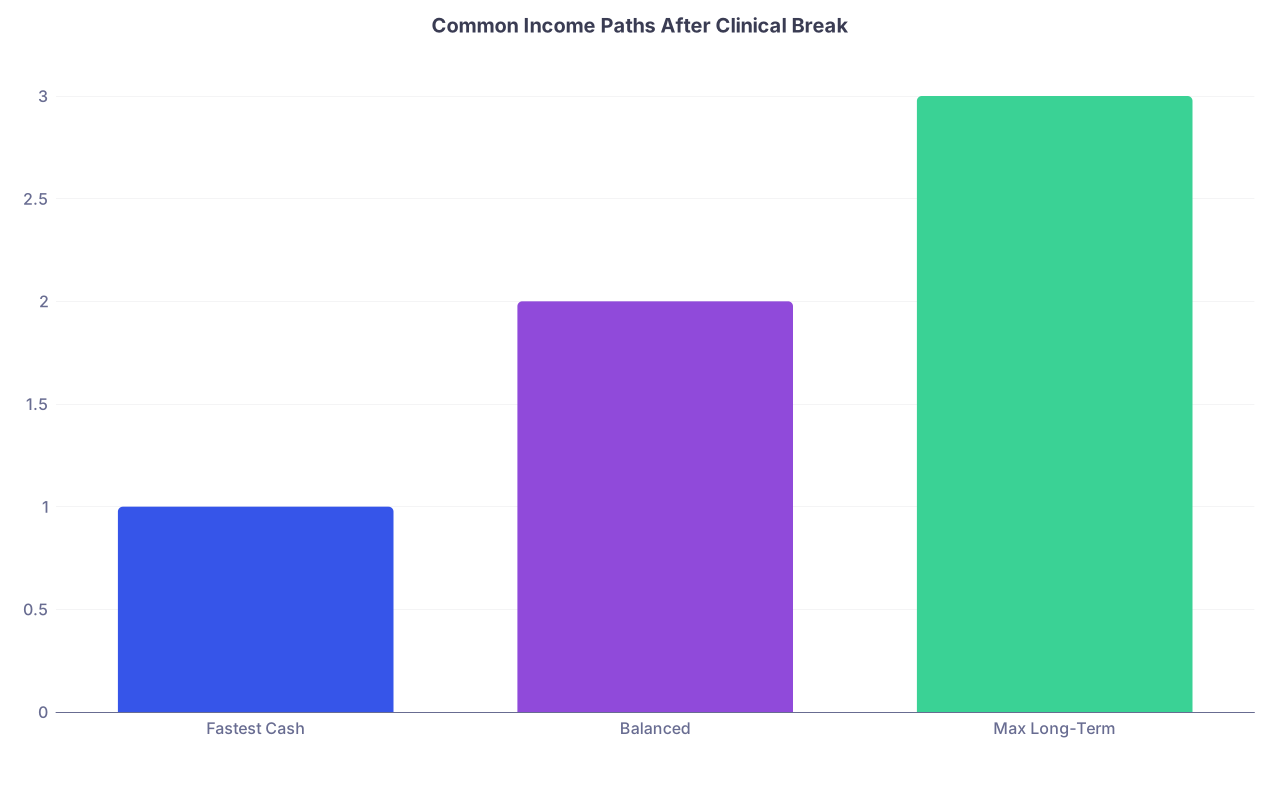
Step 3: Decide Your Income Strategy: Speed vs Ceiling
You can absolutely come back and earn as much or more than before. But not necessarily in month one. You need to pick what you optimize for initially.
| Category | Value |
|---|---|
| Fastest Cash | 1 |
| Balanced | 2 |
| Max Long-Term | 3 |
Roughly three paths:
Fastest cash – Any job that starts soon at decent pay
- Typical: hospital employed, urgent care chains, telehealth.
- Often lower long-term ceiling but immediate paycheck and benefits.
- Best if: you need income now, have debt pressure, or your savings are thin.
Balanced ramp – Mid-paying start with clear upside in 12–24 months
- Typical: RVU + base contracts, large multispecialty groups, some private practices.
- You accept a somewhat soft start volume-wise but with good long-term comp.
Max long-term income – Take more time retooling and being picky
- Typical: high-output procedural fields, strong private practice buy-ins, partnership tracks.
- You might do locums or part-time while you hunt and negotiate aggressively.
Be honest with yourself:
If you’ve been out 3 years, have three kids, a big mortgage, and no locums income, trying to “optimize for peak earning in year 4” while ignoring cash flow is fantasy. Choose a path that matches your real life.
Step 4: Understand How Your Gap Changes Negotiation
You don’t need to beg for crumbs. But your leverage is different. If you pretend it’s not, you’ll negotiate like you’re still fresh out of a busy practice and get quietly passed over.
A. Where you actually lose leverage
Sign-on and relocation bonuses
Some systems will shave these when they think they’re “taking a chance” on you after a gap.High guarantees
If your last documented RVU data is 4–5 years old, they’ll be hesitant to give a massive base tied to past performance.Procedural privileges
For surgeons, procedural IM, anesthesia, etc., gaps on core cases can trigger proctored requirements and lower initial productivity.
You can’t ignore this. You work around it.
B. Where you still have leverage
Plenty of employers are desperate for bodies. Even “rusty” ones.
You have leverage if:
- Your specialty is shortage-heavy (psych, primary care, anesthesia, EM in certain regions, path in some markets).
- You’re willing to work nights, weekends, underserved areas, rural.
- You have any niche skills (language, subspecialty fellowship, EMR expertise, QI background).
Lean hard on those.
If you walked away from a prior job with good RVUs, solid collections, or leadership roles—even if they’re a few years old—those are still selling points. You frame them as “my baseline once re-ramped,” not current output.
Step 5: Choose the Right Job Structure for a Reentry Year
Not all clinical roles are equally kind to someone coming off a break. Some will crush you with complexity and quotas before you’ve found the dictation shortcut key.
A. Employed vs private practice vs locums
Here’s the trade-off in this specific situation—returning after a break:
| Model | Pro | Con |
|---|---|---|
| Hospital employed | Stable pay, benefits | Less control, RVU pressure |
| Private practice | Higher ceiling, partnership | Risky ramp, buy-in cost |
| Locums | Fast cash, flexibility | No benefits, variable volume |
For most physicians after a significant break, employed + RVU with a guaranteed base is the safest on-ramp for rebuilding income. Not always, but often.
What I see work well:
- Year 1: employed role with guaranteed base and modest RVU/bonus structure. Possibly mix in telehealth.
- Year 2–3: reassess. Move to higher-paying practice, negotiate partnership, or shift to more RVU-heavy comp once you’ve proved current productivity.
B. Contracts to avoid (at least for year 1)
Watch for these landmines:
- Pure production with no guarantee (“You eat what you kill from day one”)
- Heavy call burden + high complexity + no mentorship in your first job back
- “Partnership track” where you’re severely underpaid during the 2–3 year ramp without transparency on partner income
If you are going to take a production-heavy job, you’d better have:
- A credible plan to rebuild volume fast
- Existing referral networks or clear marketing support
- A strong sense of your pre-break productivity and how fast you can get back there
Step 6: Stack Short-Term Income While You Rebuild
You don’t have to choose between “fully employed” and “no income.” Think mix-and-match.
Good short-term income bolsters your negotiating position. You’re no longer desperate; you’re selective.
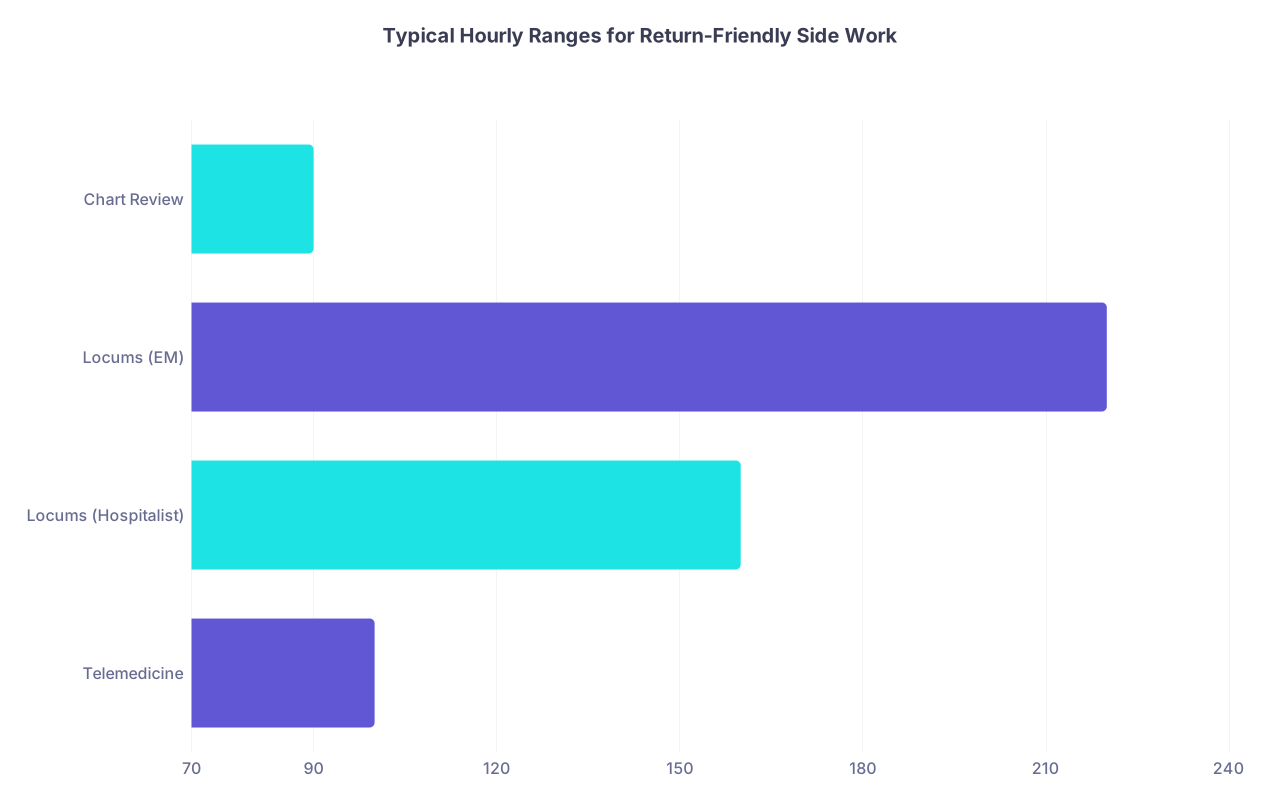
Practical add-ons during the ramp:
- Telemedicine – Primary care, psych, urgent care video visits. Can start pretty fast.
- Locums shifts – Especially after you’ve done one credentialing file; each additional site is easier.
- Chart review / utilization review – Less clinical rust issue, though pay per hour can be lower.
- Per diem ED or hospitalist – Weekend or night shifts to accelerate cash flow.
| Category | Value |
|---|---|
| Telemedicine | 100 |
| Locums (Hospitalist) | 160 |
| Locums (EM) | 220 |
| Chart Review | 90 |
These numbers swing wildly by region and specialty, but the relative pattern is accurate: locums and EM-type work usually pay more per hour than telemedicine and chart review.
The key move: don’t disclose every side gig to your primary employer in negotiation. They’re buying your main hours and your skillset, not your entire economic life.
Step 7: Negotiate Compensation With the Gap in Mind
This is where physicians routinely give away money after a break because they feel “grateful” just to be back.
Stop that. Grateful is fine. Underpaid for three years is not.
A. Use structure to protect your downside
If you’ve been out a while, pushing for “top of market RVU conversion factor” on day one is less important than these three things:
- Solid base guarantee for at least 12–24 months
Long enough to ramp back to full volume without panic. - Reasonable expectations written into the contract
If they expect full 90th percentile productivity in 3 months, that’s a setup. - No crazy repayment terms for bonuses
If they front you a sign-on or stipend, make sure forgiveness terms are reasonable (e.g., forgiven over 2–3 years, not all due back if you leave at 23 months for a family emergency).
B. Anchor on your pre-break value, not on your current insecurity
Your talking points should sound like this:
- “In my last full clinical year, I produced X RVUs and collected approximately $Y. After a brief ramp period, I expect to return to that range based on the patient volumes you’re describing.”
- “Given my prior leadership experience as chief of service and my fellowship training, I’m targeting a base in the $___ range with a standard RVU bonus structure.”
You acknowledge the ramp, but you don’t erase your history.
C. Do not volunteer discounts because of your break
Common physician self-sabotage lines:
- “I’ve been out a few years, so I’m fine starting lower and proving myself.”
- “You can start me at the low end of your range.”
- “Whatever your usual starting salary is, that’s fine.”
No. Just no.
You can accept less if the situation genuinely demands it. But make the employer ask. And if they say, “Because of the break, we can only do $X,” your follow-ups are:
- “What metrics and time frame would we need to meet to move to $Y?”
- “Are you open to a structured increase after year one based on RVUs and quality metrics?”
- “Could we shift some of this into a guaranteed bonus or additional CME funds?”
You’re problem-solving, not begging.
Step 8: Plan a 2-Year Income Rebuild, Not a 2-Month Miracle
The mistake is thinking: “Once I get a job, I’m done.” You’re not done. You’re at the starting line of the rebuild.
A realistic two-year arc might look like this:

| Step | Description |
|---|---|
| Step 1 | Month 0 - Break Ending |
| Step 2 | Month 1-3 - Credentials and CME |
| Step 3 | Month 3-6 - Short-term Telemed or Locums |
| Step 4 | Month 4-9 - Sign Employed Offer |
| Step 5 | Month 6-18 - Ramp Volume and Skills |
| Step 6 | Month 12-24 - Re-negotiate or Change Jobs |
Tactically in the first 24 months:
- Track your RVUs, collections, and patient volume from day one. You’ll need this for your next negotiation.
- Aggressively cut low-value admin time. You’re in rebuild mode; your hourly rate matters.
- If the job isn’t aligning with your income trajectory by month 12–18, start quietly looking. Do not sit stuck for five years because you’re “loyal.”
Step 9: Legal and Malpractice Landmines That Can Blow Up Your Income
You said you wanted financial and legal angles, so here’s the unsexy but essential part. Ignore this and you can undo all your income gains with one letter from a lawyer.
A. Tail coverage from your pre-break job
If you left clinical practice without proper tail coverage, that problem does not magically disappear when you return.
- Confirm you had either occurrence coverage or purchased tail when you left.
- If you did not, talk to a malpractice broker or lawyer about options now—before you sign a new contract.
- Some new employers will help with tail if they’re desperate enough, but many will not.
B. New malpractice during the rebuild
Do not cheap out on limits or accept bizarre policy structures just to save a few hundred dollars. You’re re-entering clinical risk.
Ask bluntly:
- Are you fully covered by the employer’s policy or partly self-insured?
- Who pays for tail if you leave? At what triggers?
- Are there any coverage exclusions relevant to your gap or prior non-clinical work?
C. Regulatory issues from your gap
If your break was due to:
- Substance use treatment
- Mental health leave
- Prior board action
- Billing or documentation investigations
You absolutely need to talk to a health law attorney before submitting sweeping disclosures on credentialing forms. Do not lie. But do not over-confess either. There is an art to framing, timelines, and documentation here.
One badly worded explanation can torpedo multiple opportunities and delay your return for months.
Step 10: Protect Your Future Earning Power This Time
Last piece. You’re coming back. Do not sleepwalk into the same dynamics that pushed you out in the first place.
From an income standpoint, that means:
- Build a buffer. Aim for at least 3–6 months of living expenses in cash once you stabilize. It’s both mental protection and negotiation power.
- Document everything. Keep copies of contracts, compensation statements, RVU reports, clinic schedules. These are leverage in future negotiations.
- Keep one foot in marketable skills. Don’t let your board cert, key CME, or procedural numbers slide again if you can help it. Reentering once is hard. Twice is brutal.
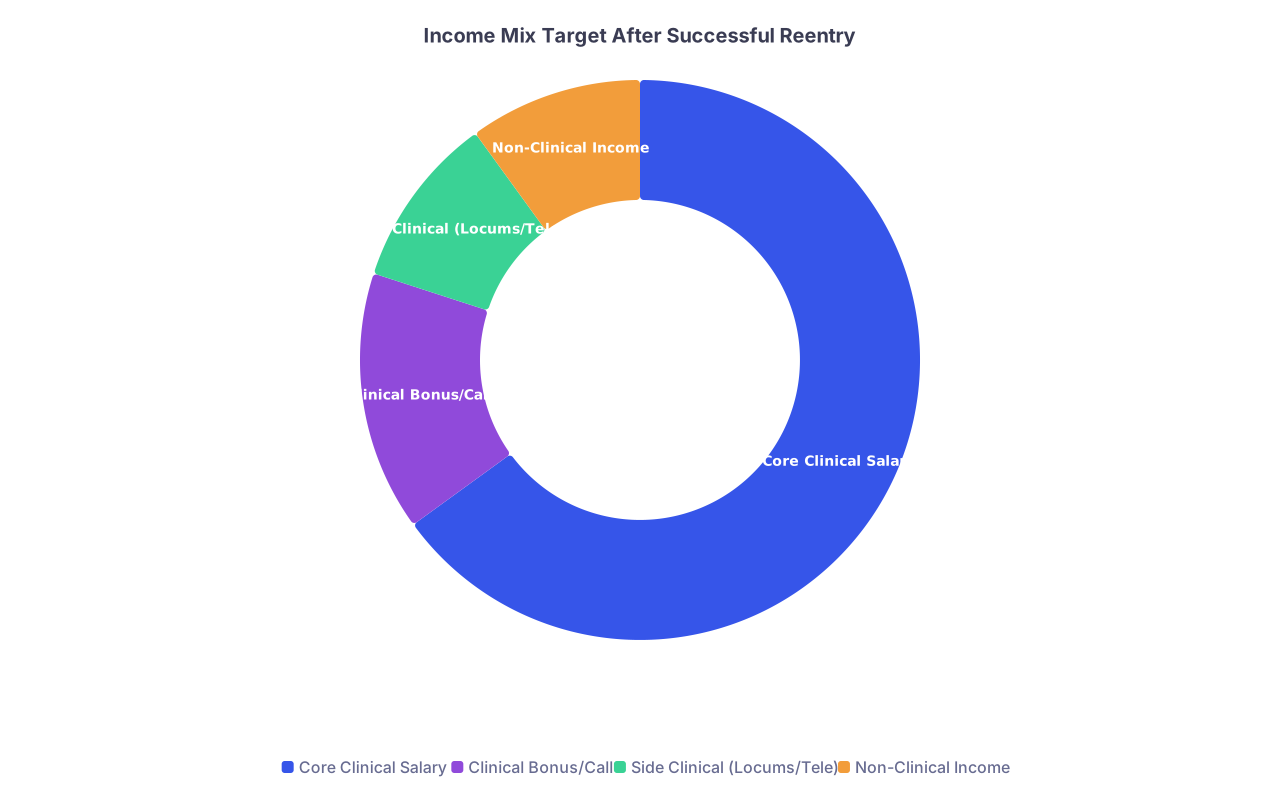
- Consider non-clinical income streams thoughtfully. Now’s actually a decent time to cultivate one—but not at the expense of rebuilding your core clinical earning power.
| Category | Value |
|---|---|
| Core Clinical Salary | 65 |
| Clinical Bonus/Call | 15 |
| Side Clinical (Locums/Tele) | 10 |
| Non-Clinical Income | 10 |
That’s a reasonable end-state target for many physicians: majority from stable clinical salary, meaningful but not life-dominating bonus/call, plus small but growing side and non-clinical income.
FAQs
1. How long of a break triggers serious income and credentialing problems?
Once you cross 12 months fully out of hands-on practice, eyebrows go up. At 2+ years, you’re in true reentry territory where hospitals and boards may ask for formal plans, supervision, or extra CME. Income-wise, I see the biggest impact in that 2–5 year gap range: lower initial offers, more “prove-it” structure. Over 5 years out, you should assume you’ll need a structured reentry (possibly with reduced pay at first) and plan financially for a longer rebuild.
2. Is it better to take a lower-paying job quickly or wait for the “right” high-paying one?
If you have less than 6–9 months of living expenses, take the decent job sooner and stabilize your cash flow. You can always treat it as a 12–18 month bridge role while you rebuild skills and negotiate from strength. If you’re financially secure and your skills are not too stale, then waiting and being choosy can pay off. The mistake is refusing a solid offer out of pride when you’re broke and rusty. The second mistake is clinging to a mediocre job for years out of fear once you’ve already rebuilt your value.
3. How transparent should I be about my break during interviews and negotiations?
Be factual, concise, and consistent. You owe them the truth about dates, reasons that affect patient safety, and any regulatory issues. You do not owe them your entire emotional history. Two to three clear sentences about why you left, what you did to stay engaged or get current, and why you’re ready now is enough. After that, pivot hard to your skills, prior performance, and what you bring to their practice. Oversharing tends to lower offers. Lying gets you fired. The middle path—controlled, honest, forward-focused—is where your income recovers fastest.
You’ve already done the hardest part: deciding to come back. Now it’s about sequencing the next 24 months intelligently so you don’t pay for that break twice—once in lost time, and again in permanently reduced earnings. Get your credentials tight, pick a realistic income strategy, negotiate like your past experience still counts (because it does), and treat year one as your launchpad, not your ceiling.
Once your income is back and stable, the next step is optimizing what you keep—debt payoff, investing, maybe partial financial independence so you never feel trapped in a bad job again. But that’s a different playbook for a different day.