
The usual “follow your passion” specialty advice falls apart the second you’re paying for daycare.
If you’re raising kids during training or planning to soon, you cannot separate “what specialty should I choose?” from “what lifestyle and pay structure can actually support a family without destroying us.” You’re not choosing an identity; you’re choosing how your time, money, and stress will look for the next 20–30 years.
Let’s walk through how to make those choices like someone who has rent, daycare, and a partner who’s one night float away from walking out.
Step 1: Get Honest About Your Actual Constraints
Before you touch specialties, you need a clear picture of what your family situation demands. Not vibes. Numbers and non-negotiables.
The three realities you need on paper
Time
- Do you have another caregiver with a flexible job? Or are you the primary predictable adult?
- Any special needs, medical issues, or lack of local family?
- How many evenings/weekends can you realistically be gone before your home life collapses?
Money
- Current debt: federal loans, private loans, other debt.
- Local childcare costs: full-time daycare vs nanny vs family help.
- Partner’s income: stable, variable, or none.
- Emergency buffer: do you have one? (Most trainees don’t. That’s fine—just be honest.)
Location
- Are you geographically tied? (Co-parenting, spouse’s job, custody agreements, immigration constraints.)
- Are you in a HCOL city where a “good” salary evaporates into housing and daycare?
Put it into rough numbers. Something like:
- Loans: $300k at ~6–7%
- City daycare: $1,800–$2,500/month per kid
- Partner income: $0–$70k (or more)
- Geographic flex: yes/no
You’re not doing financial planning yet; you’re defining the sandbox. That sandbox will make some specialties obviously stupid for your situation and some surprisingly smart.
Step 2: Understand “Family-Friendly” Pay vs Just “High” Pay
Not all high-paying specialties are family-friendly. Some are golden handcuffs. You get money in exchange for your sanity and presence at home.
The key concept: how and when the money is earned. Not just total dollars.
Here’s what matters for raising kids:
- Schedule predictability
- Call type (home vs in-house, predictable vs chaos)
- Income stability (salary vs wRVU roller coaster)
- Part-time/proration feasibility (can you cut to 0.6–0.8 FTE and still live?)
Think about specialties in three big buckets:
| Category | Examples | Core Tradeoff |
|---|---|---|
| High pay, high chaos | Trauma surg, cards, neurosurg, EM | Money for time and stress |
| Solid pay, more control | Anesthesia, radiology, gas pain, EM in right shop, hospitalist | Good income with negotiable lifestyle |
| Lower pay, high control | Outpatient peds, FM, psych, certain non-procedural fields | Less money, more predictability |
You can raise kids in any of these. The question is: what does your support system allow you to absorb?
Step 3: The Shortlist – Specialties That Often Play Well With Family Life
I’m not ranking “best specialties.” I’m telling you where I repeatedly see parents build livable setups without burning out their marriages or missing every milestone.
1. Outpatient Primary Care (FM, Outpatient IM, Outpatient Peds)
Not glamorous, often underpaid relative to training, but for families? Quietly powerful. Why?
- Predictable daytime work (usually 8–5ish, some evenings)
- Minimal true emergencies
- Increasing options for 4-day weeks and 0.6–0.8 FTE
- Telehealth and hybrid schedules possible
Money reality: Often $180k–$260k in many regions, more in high-need or rural areas with loan repayment. It’s not derm money, but it’s schedule + presence money.
This works especially well if:
- Your partner earns decently or you’re in LCOL areas.
- You’re willing to chase loan repayment programs (NHSC, state programs, FQHCs).
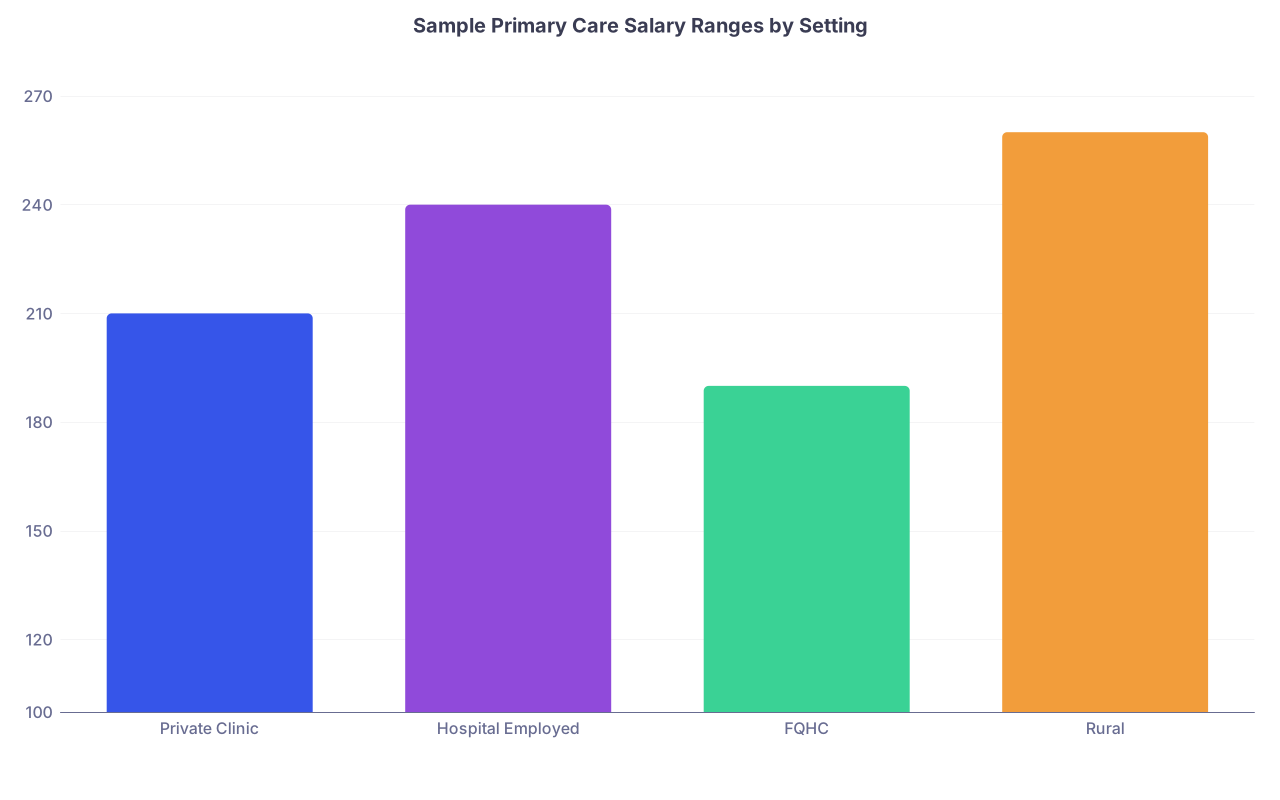
| Category | Value |
|---|---|
| Private Clinic | 210 |
| Hospital Employed | 240 |
| FQHC | 190 |
| Rural | 260 |
2. Hospitalist (Adult or Peds)
The 7-on/7-off model can either destroy you or save you, depending on your support system.
Upsides:
- High base pay relative to length of training (often $250k–$350k+)
- True days off when off (no panel of inbox messages)
- Shift trading possible in decent groups
Downsides:
- When you’re on, you’re gone. Nights, weekends, holidays baked in.
- Spouse needs resilience and backup childcare for your “on” weeks.
This works when:
- You have strong childcare backup (grandparents, reliable partner, nanny).
- You use your “off” weeks to BE THERE—school events, doctor visits, actual parenting.
I’ve seen this model work very well for dual-physician couples who stagger shifts and have one reliable nanny, or for solo parents who arrange their life around clusters of intense time on, followed by real availability.
3. Anesthesiology
Anesthesia is underrated in “family-friendly” conversations because people focus on early mornings and call. But structurally:
- Shift-based work. When cases are done, you go home. No clinic inbox.
- Groups often have:
- 8-hour, 10-hour, 12-hour shifts
- Part-time and job-share options
- Good pay almost everywhere.
Real-world parent setup:
- 0.8 FTE doing mostly 8-hour rooms, limited call.
- Or full-time with a strong nanny and non-medical spouse.
The catch: your lifestyle depends heavily on group culture. Some private groups will own you. Hospital-employed or academic groups may offer more predictable guardrails with slightly lower income.
4. Radiology (Especially Outpatient/Daytime)
Rads is a quiet family powerhouse if you play it right.
Pros:
- Lots of remote work options especially post-pandemic.
- Highly shiftable hours (evenings, nights, weekends) if your home situation needs that.
- No patients calling you at home.
Cons:
- Certain tracks (IR, neuro IR) move back toward high-intensity call.
- Sitting all day reading while your own kids are clogging the Wi-Fi can be…not ideal.
I’ve watched rads parents do 0.7 FTE from home, aligning reading blocks with school hours, and it works absurdly well for family logistics.
5. Psychiatry
Psych has its issues (access, burnout, admin), but the structure is family gold:
- Nearly all outpatient if you want it.
- Telehealth widely accepted.
- Easy to cap at 3–4 days/week and still make a reasonable living.
If you mix:
- 0.7–0.8 FTE outpatient work, plus
- Some moonlighting or telepsych blocks,
you can hit $200k–$300k in many regions with very high control over your schedule.
6. “Hidden” Family-Friendly Tracks in Traditionally Tough Fields
Even in brutal specialties, there are subtracks that behave differently:
- EM – In terrible shops: miserable. In well-staffed, well-paid community groups: 8–12 shifts/month can support a family if you tolerate nights/weekends.
- Gen surg – Outpatient-focused practices (hernia, breast, endocrine) with call sharing and PAs can be surprisingly manageable.
- OB/Gyn – Laborist models (in-house OB shifts without full clinic panel) offer block scheduling and clean on/off boundaries in some hospitals.
Do not assume the stereotype is the only version of the specialty.
Step 4: How Pay Structure Actually Affects a Family With Kids
Same specialty. Different job structure. Totally different family life.
Key pay structures you’ll see
Straight salary
- Most predictable for parenting and budgeting.
- Common in academic, VA, and many hospital-employed roles.
- Usually lower ceiling, higher floor.
Base + productivity (wRVU or collections)
- You make more if you see more.
- Can punish part-timers or people who need to leave on time.
- Can also let you work more for a shorter period and then cut back.
Pure productivity / partnership draw
- Classic in private practice and some groups.
- Potentially highest income.
- Often worst for young parents unless the group explicitly supports reduced hours.
Shift-based pay
- EM, hospitalist, anesthesia, telerads.
- Very transparent: X dollars per shift. Add or drop shifts as needed.
- Excellent for concrete planning, good for building in family time.

If you’re raising kids, schedule predictability beats an extra $50k almost every time. That $50k often evaporates into last-minute childcare, convenience spending, and marital therapy.
I’d rather see you in a slightly lower-paying employed position with:
- No surprise add-on clinics
- Protected time off
- Part-time/0.8 FTE options
than in a $500k job where your kids know the babysitter’s car better than yours.
Step 5: Matching Specialty Choice to Your Specific Family Setup
Let’s walk through concrete scenarios I see all the time and how I’d think about them.
Scenario A: Resident with two kids, non-medical spouse, no family nearby
You need:
- Predictable daytime hours.
- Employer-sponsored benefits (health, disability, retirement match).
- Minimal evening/weekend chaos.
Realistic specialty targets:
- Outpatient FM/IM/peds
- Psych
- Daytime rads (not heavy IR)
- Non-OB-heavy Gyn, rheum, endocrine, allergy
Red flags:
- Procedures with high emergency call (trauma surg, vascular, interventional anything)
- Jobs where “you can leave at 5” is culturally a joke
Scenario B: Dual-physician couple, planning 1–2 kids, maybe grandparents nearby
You have more options but need coordination.
One possibility:
- One partner: shift-based (ED, hospitalist, anesthesia) with clusters of time off.
- Other partner: outpatient with steady daytime schedule.
Or:
- Both in moderate-load specialties (e.g., anesthesia + rads) with a nanny and grandparent backup.
What to avoid:
- Both doing high-intensity call specialties with no family nearby. I’ve watched that movie. It ends with resentment and a very expensive nanny effectively raising your kids.
Scenario C: Single parent in training (or likely to be one)
You need to be brutal about your constraints. The hero narrative will not save you. Support will.
Priorities:
- Geographic stability
- Predictable hours
- Benefits and job security
Best aligned:
- Outpatient-heavy fields with telehealth capability (FM, IM outpatient, psych)
- VA or government positions later (excellent benefits, more predictable schedules)
You can absolutely be a single parent surgeon. But the margin for childcare disasters is razor-thin unless you have serious support (family nearby, co-parent fully involved, or live-in help).
Step 6: Using Loans and Moonlighting Strategically, Not Desperately
You will be tempted to “just fix it with more shifts.” That’s how people burn out and their kids learn to stop expecting them.
You’re better off:
- Choosing a moderate lifestyle specialty that allows:
- 0.8–1.0 FTE job that’s sane.
- Targeted moonlighting during specific seasons (pre-school, pre-house purchase).
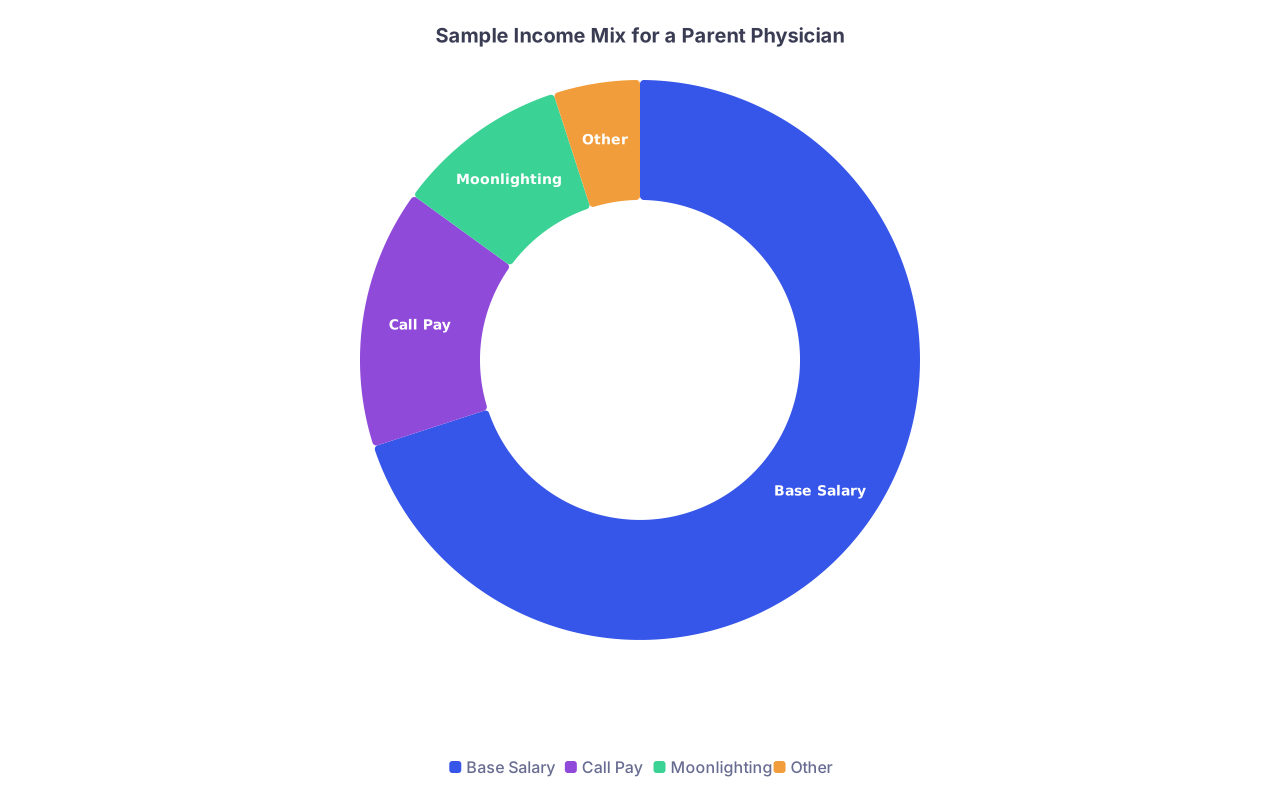
| Category | Value |
|---|---|
| Base Salary | 70 |
| Call Pay | 15 |
| Moonlighting | 10 |
| Other | 5 |
Rather than:
- A high-end productivity job where you’re always one RVU away from picking up “just one more half day.”
Loan strategy for people raising kids:
- Get on an income-based repayment plan early.
- If you’re academic-bound or public-sector leaning, run the math on PSLF (Public Service Loan Forgiveness).
- Do not assume you must pay your loans off in 5–7 years at the expense of seeing your kids. A 15-year payoff with a present parent is usually a better life.
Step 7: When You’re Already Locked Into a “Non–Family-Friendly” Specialty
Say you’re PGY-3 in gen surg with one kid and another on the way. You’re not switching to psych at this point. Fine.
You still have choices:
Choose a more controllable fellowship
- Breast surg, endocrine, minimally invasive, colorectal in the right group, etc.
- Avoid always-on trauma if your home life is already stretched.
Target employed jobs, not the most “prestigious” groups
- Academic or hospital-employed often means:
- More standardized schedules
- Guaranteed salary
- Better benefits
- Academic or hospital-employed often means:
Buy predictability with money
- Pay for more childcare than you think you “should” need.
- Use housekeeping services, grocery delivery, etc.
- You’re buying time with your kids and sleep for yourself.
Negotiate your first job with your family in mind
- Ask specific questions:
- “How many nights am I actually in the hospital?”
- “How many weekends do partners truly work?”
- “Do you have any partners at 0.6–0.8 FTE? How is that structured?”
- Ask specific questions:
If an interviewer brags about how “our people are always available,” translate that to: “You will never fully be off.”
Step 8: How to Evaluate a “Family-Friendly” Job Offer
Do not trust the brochure language. Everyone says they value work–life balance.
You care about:
- Hours
- Call
- Schedule flexibility
- Pay stability
- Culture around boundaries
Here’s a quick comparison grid you can mentally run through for offers:
| Factor | Job A | Job B |
|---|---|---|
| Base salary | $240k | $280k |
| Call type | Home q4 | In-house q6 |
| Work hours | 4x10s | 5x8s + admin creep |
| Part-time option | Yes, formal | “Maybe later” |
| Telehealth/remote | 1 day/week | None |
For a parent with two kids, Job A might be far better despite lower salary because:
- 4x10s = you get 1 weekday off for kid stuff.
- Formal part-time option means you can actually downshift later instead of begging.
Ask current physicians with kids in the practice:
- “What time did you leave yesterday?”
- “Who covers your inbox on vacation?”
- “Does anyone here work 0.7–0.8 FTE without being punished financially?”
If they dodge, assume the answer is bad.
Step 9: Timing Kids Around Training and Early Career
You cannot perfectly time kids around training. Fertility doesn’t care about your block schedule. But you can choose less-suicidal timing.
General pattern that tends to work better:
- Kids during med school / early residency if you have external support and can live cheaply.
- Or kids during late residency/fellowship if you can batch the chaos and then choose your first job around your new reality.
- Avoid: “We’ll just have our first kid my first year as an attending in a brutal private group.” People do it. Most regret the combo.
Use the last 6–12 months of training to:
- Clarify your non-negotiables (no more 80-hour weeks)
- Build a minimal emergency fund
- Line up a job that matches where your family is headed, not who you were as a single MS2.
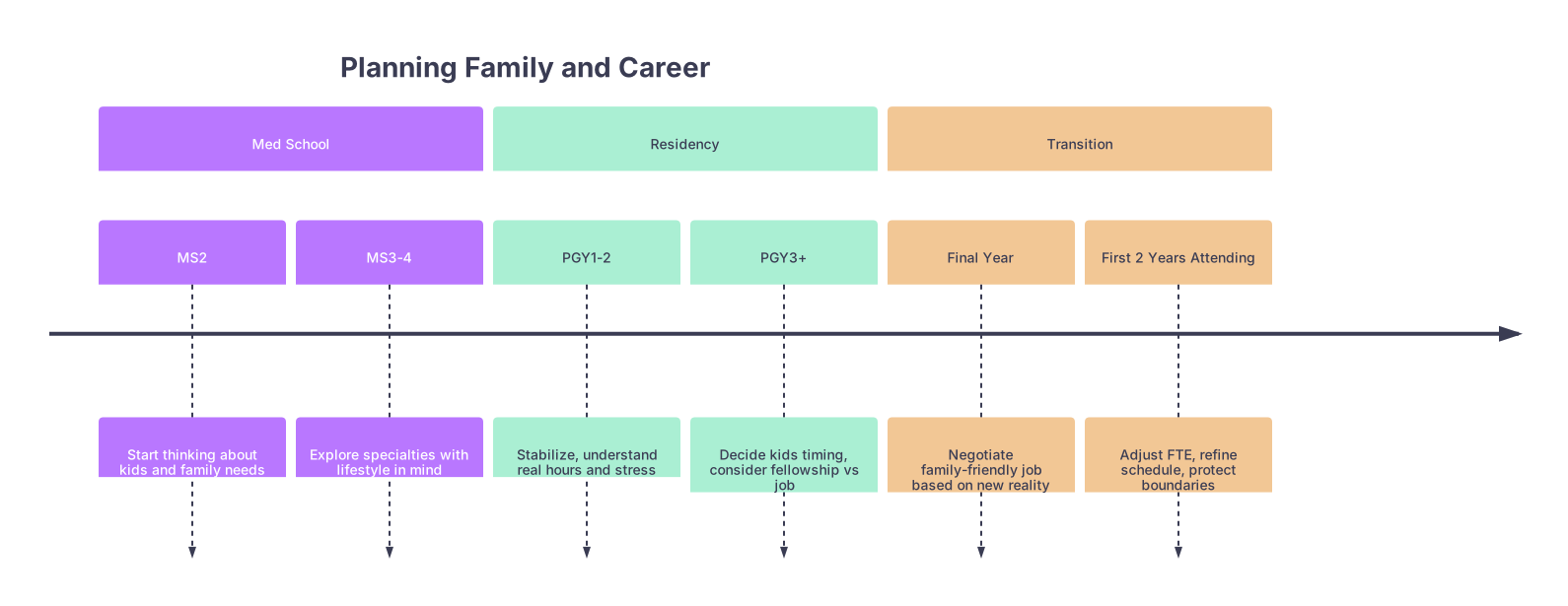
| Period | Event |
|---|---|
| Med School - MS2 | Start thinking about kids and family needs |
| Med School - MS3-4 | Explore specialties with lifestyle in mind |
| Residency - PGY1-2 | Stabilize, understand real hours and stress |
| Residency - PGY3+ | Decide kids timing, consider fellowship vs job |
| Transition - Final Year | Negotiate family-friendly job based on new reality |
| Transition - First 2 Years Attending | Adjust FTE, refine schedule, protect boundaries |
Quick Reality Checks Before You Commit
Three blunt questions to ask yourself before you sign up for a path:
- If my partner got sick or lost their job, would this specialty/job still be survivable with kids?
- Does this path require me to be functionally absent for 5+ years straight? Am I actually okay with that?
- Am I choosing this specialty for me now…or for the person I was before I had kids?
You don’t need a “perfect” specialty. You need a setup where your future self, with a sick toddler at 2 a.m. and a loan payment due, won’t resent you for ignoring reality.

FAQs
1. Is it irresponsible to choose a lower-paying specialty when I have big loans and kids?
No. What is irresponsible is choosing a high-paying specialty you secretly hate and then trying to medicate your misery with spending. Plenty of physicians in primary care, psych, and other “lower-paid” fields:
- Use income-driven repayment or PSLF.
- Live in reasonable-cost areas.
- Build net worth steadily over 10–20 years. and they see their kids. A $250k thoughtful career with presence beats a $600k burnout career with absentee parenting. Every time.
2. Can I switch specialties if I realize mid-residency that my chosen field isn’t compatible with my family?
Yes, but it will hurt for a while. People switch out of surgery, OB, and EM into psych, FM, rads, and anesthesia specifically because of family realities. That said:
- You’ll likely add years of training.
- Income is delayed.
- Childcare and partner stress might spike during the transition. If you’re considering this, talk to:
- A mentor in the target specialty with kids.
- Your GME office about logistics and timing. Do not stay in a field you hate just because you’re “too far in.” That’s sunk cost talking, not strategy.
3. How much should money matter vs “passion” when I have or want kids?
More than your attendings probably admit. Passion matters—it keeps you from burning out at year 7. But “passion” that requires 80 hours/week and constant call with no support at home is not sustainable. Aim for:
- A specialty that you can tolerate and sometimes enjoy.
- A job that respects your time and pays enough to cover:
- Reasonable housing
- Childcare
- Loan payments
- Some savings You’re not choosing between money and meaning. You’re choosing a combination where your work, your bank account, and your family can all survive long term.
Key Takeaways
- “Family-friendly” is not just about hours; it’s about how and when you earn your money and how predictable your life is.
- You can raise kids in almost any specialty, but some combinations of specialty + job structure + family situation are objectively brutal. Avoid those.
- When in doubt, choose predictability and flexibility over maximizing income, especially in the first decade while your kids are small and your loans feel enormous.