
Your productivity-based pay is not “mysterious.” If your salary has stalled, there are specific levers you can pull—and if you do not pull them, someone else will keep that money.
I am going to walk you through those levers.
This is not a pep talk about “working harder.” You are already working hard. The problem is usually that your time, coding, and contract are misaligned with how your employer prints money from your work. Fix that alignment, and your paycheck moves.
Step 1: Diagnose Why Your Productivity Pay Stalled
Before you change anything, you need a blunt diagnostic. No more “I think” or “it feels like.” You want numbers. On paper.
1. Get Your Core Data (Do This Within 7 Days)
Ask your practice administrator, compensation office, or HR for the following—specifically in writing:
- Last 12–24 months of:
- Work RVUs per month
- Collections per month (if you are on collections-based pay)
- Payer mix by percentage (Medicare, Medicaid, commercial, self-pay)
- No-show and cancellation rates
- Panel size (for primary care) or procedure/surgical case volume (for proceduralists)
- Your current compensation plan document:
- RVU rate ($ per wRVU)
- Thresholds for bonuses
- Any caps or clawbacks
- Definitions of “productivity” (RVU, collections, visits, etc.)
- Benchmark data your group uses:
- MGMA / AMGA percentile targets they reference
- Any internal productivity targets per FTE
If they stall or hand-wave, respond with:
“To optimize my productivity under our current model, I need my wRVU data, compensation formula, and benchmarks. This is standard information and necessary for me to meet targets.”
You are not asking for a favor. You are asking for the rulebook of the game they claim you are playing.
2. Compare Yourself to Benchmarks
Once you have your data, line it up against something real. Use MGMA/AMGA if you have access through your group. If not, your partners’ numbers are your internal benchmark (you already know who is “top producer” and who is not).
Create a simple snapshot:
| Metric | You (Annualized) | Group or MGMA Target |
|---|---|---|
| wRVUs | 6,200 | 7,000 |
| $/wRVU | $48 | $52 |
| Total Comp | $300,000 | $340,000 |
| Clinic Sessions/Wk | 8 | 9 |
| No-Show Rate | 18% | 10% |
You are looking for:
- Are your wRVUs low relative to peers?
- Is your $/wRVU low relative to peers?
- Are you producing average RVUs but getting below-average pay?
- Are clinic sessions, OR blocks, or access points limiting volume?
Different problems. Different solutions.
Step 2: Understand Exactly How Your Productivity Is Calculated
You cannot fix what you do not understand. I have sat with physicians who were 10 years into a job and still could not recite their formula. That is how you get underpaid.
1. Decode Your Compensation Formula
Most productivity-based models boil down to one of these:
- Pure RVU:
Total Compensation = Base (maybe) + (wRVUs × $/wRVU) – overhead/advances - Tiered RVU:
- First X wRVUs at one rate, next tier at higher rate, etc.
- Collections-based:
- You get a percentage of what comes in after overhead
- Hybrid:
- Modest base + RVU bonus above threshold + quality or citizenship bonuses
Write out your actual formula with real numbers. Example:
“I get a base of $200,000. Then $44 per wRVU for all wRVUs above 5,000 per year, reconciled quarterly, with no cap. Last year I had 6,200 wRVUs.”
That means:
6,200 – 5,000 = 1,200 bonus RVUs × $44 = $52,800 bonus
Total comp = $252,800 (before any other incentives)
Now you can ask: is the problem the volume (6,200 is low), the rate ($44 is low), or the threshold (5,000 is high)?
2. Confirm What Does and Does Not Count
This is where physicians get silently robbed.
Ask clearly:
- Do procedures, imaging reads, inpatient consults, and follow-ups all generate RVUs?
- Do I get RVU credit for:
- Telehealth visits?
- Phone visits / e-visits?
- Chronic care management?
- After-hours call follow-ups?
- Do shared/split visits (APP + physician) count for me, the APP, or are they split?
If it does not generate CPT codes and RVUs in the system for you, it is charity from a productivity standpoint. That does not mean you never do it. But you stop pretending it pays.
Step 3: Fix Coding and Documentation Before You Add More Work
Most physicians are leaving 5–25% of wRVUs on the table through undercoding, poor documentation, or failure to capture billable work. Fixing that is the cleanest raise you will ever get.
1. Do a Targeted Coding Audit (30 Charts Can Change Your Income)
Ask for a focused audit of your last 30–50 visits and procedures. Not a punitive compliance audit. A revenue optimization review. Language matters.
Tell them:
“I want to ensure my coding accurately reflects my work. Can your coding team review 30–50 recent charts and show me where I am undercoding or missing billable services?”
You want specific, actionable feedback:
- How many level 4 visits should have been level 5 with better documentation?
- Are you documenting time properly when appropriate (especially for complex visits)?
- Are you consistently including:
- Detailed HPI
- Relevant ROS and exam
- Clear medical decision-making elements
- Are procedure notes complete for maximal allowable RVUs?
Then you adjust this week, not “sometime later.”
2. Standardize Your Documentation for Common Scenarios
Create templates or smart phrases that make correct documentation the default:
- For complex chronic care visits (e.g., diabetics with CKD and CHF)
- For hospital follow-ups where management is complex
- For procedures that require specific elements to support the chosen CPT code
Do not over-document garbage. Document the medical reality in a way that justifies the correct code. You are likely already doing the work.
3. Capture All Billable Services
Ask coding/ billing:
- Which of these are billable in my system, and do I get RVUs for them?
- Transitional care management
- Chronic care management
- Prolonged services
- Telehealth follow-ups
- After-hours or weekend visits
- Same-day add-ons
Then create a tiny checklist you and your staff use to capture them.
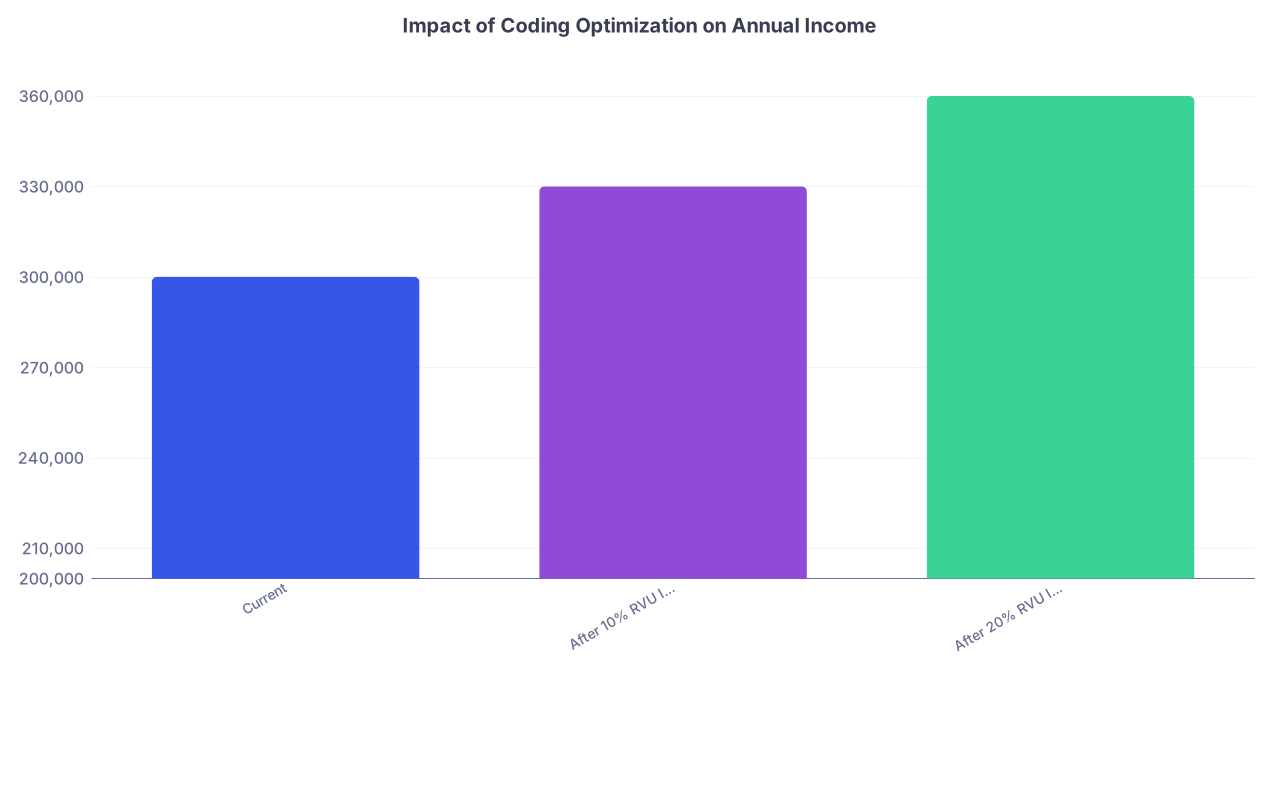
| Category | Value |
|---|---|
| Current | 300000 |
| After 10% RVU Increase | 330000 |
| After 20% RVU Increase | 360000 |
If your RVU rate is $50, a 10% RVU increase on 6,000 wRVUs is 600 extra RVUs = $30,000. Same hours. Smarter coding and capture.
Step 4: Optimize Your Schedule for Productivity, Not Punishment
Your schedule design is either an RVU machine or a throttling device. Many groups quietly cap your productivity by how they structure your day.
1. Analyze Your Template Like a Business, Not a Martyr
Look at:
- Number of appointment slots per day
- Mix of:
- New vs established patients
- Procedures vs visits
- Telehealth vs in-person
- Length of slots:
- 15, 20, 30, or 40 minutes?
- No-show patterns:
- Certain days, times, visit types?
The goal is not “more patients no matter what.” The goal is more high-value work per hour.
For example:
- If your 60-minute new patient visit generates 2.5 wRVUs
- But two 30-minute established visits generate 2.8–3.0 wRVUs
- And no-shows are higher in new patients
Then you may need to adjust your mix unless new patients drive downstream procedures.
2. Fix the Three Common Schedule Killers
Swiss Cheese Schedules
Scattered gaps kill RVUs. Work with scheduling to:- Cluster patients into dense blocks
- Use “same-day access” or “rapid access” slots for high-yield visits
- Implement a waitlist to backfill cancellations
Excessive Low-RVU Visits
If your day is dominated by brief, low-complexity visits that do not lead to procedures or significant MDM, your hourly productivity stalls.
Solutions:- Push appropriate follow-ups to telehealth when reimbursed
- Use APPs for straightforward, protocol-driven visits
- Convert frequent refill visits to protocol + annual comprehensive visits
High No-Show Rates
You cannot bill a no-show. Simple, but overlooked.
Tactics:- Overbook specific chronic offenders or high-no-show slots based on data
- Use automated text/email reminders with confirmation
- Implement a no-show policy with fees or re-scheduling rules (if your group allows)
Step 5: Leverage Your Team Instead of Doing Everything Yourself
Productivity-based pay punishes solo heroes. If you are doing work an MA, RN, or APP could do, you are basically donating your time.
1. Redesign Clinic Workflow Around Physician-Only Tasks
Sit down with your lead MA/RN and map the entire visit flow. Ruthlessly strip out tasks that do not require an MD/DO.
You should be spending physician minutes on:
- Medical decision-making
- Procedures
- Complex counseling
- Higher-risk decisions (admissions, changes in major meds, etc.)
Your team can handle:
- Rooming and vitals
- Protocol-based screening questions
- Vaccine administration under standing orders
- Pre-visit planning (labs, imaging, records)
- Refills that meet protocol criteria
- Patient instructions that do not require MD brainpower
Create a one-page “Division of Labor” sheet and train to it. If you are typing detailed instructions that could be templated or given verbally and documented briefly, you are wasting billable capacity.
2. Use APPs Strategically for Growth, Not Cannibalization
Done wrong, APPs cannibalize your procedures and follow-ups. Done right, they are RVU multipliers.
Good use cases:
- APP sees straightforward chronic follow-ups, you see the complex cases and procedures
- APP does pre-op or pre-procedure evaluation; you do the procedure and high-RVU decisions
- APP handles post-op checks where RVUs are low but time is consumed
Clarify with administration:
- Who gets the RVU credit?
- Are there shared-visit rules?
- Is there a team-based incentive structure?
If your APP generates 2,000–3,000 wRVUs that feed into your downstream procedures, your productivity can climb without adding more hours.
Step 6: Target High-Yield Work, Not Just More Work
Once coding, documentation, and scheduling are aligned, then—and only then—do you selectively add or shift volume.
1. Identify Your Highest RVU Activities
Look at your reports:
- Which visit types or CPT codes generate:
- Highest RVUs per hour?
- Best reimbursement?
- Downstream procedures or admissions?
Examples:
- For a gastroenterologist:
- Clinic consult → colonoscopy/EGD → pathology → follow-up
- For a cardiologist:
- New patient with chest pain → stress test → cath → follow-up
- For a hospitalist:
- Higher-complexity admissions and critical care time vs quick low-complexity discharges
You want more time in those lanes.
2. Rebalance Your Practice Mix
Concrete moves:
- Negotiate for more procedure block time if your procedures are RVU-rich and you are leaving demand unmet
- Convert duplicative low-value visits into APP visits, tele-visits, or protocol-driven care
- Reserve more slots for:
- New patients likely to need procedures
- High-complexity follow-ups
- Rapid-access consults from referring physicians
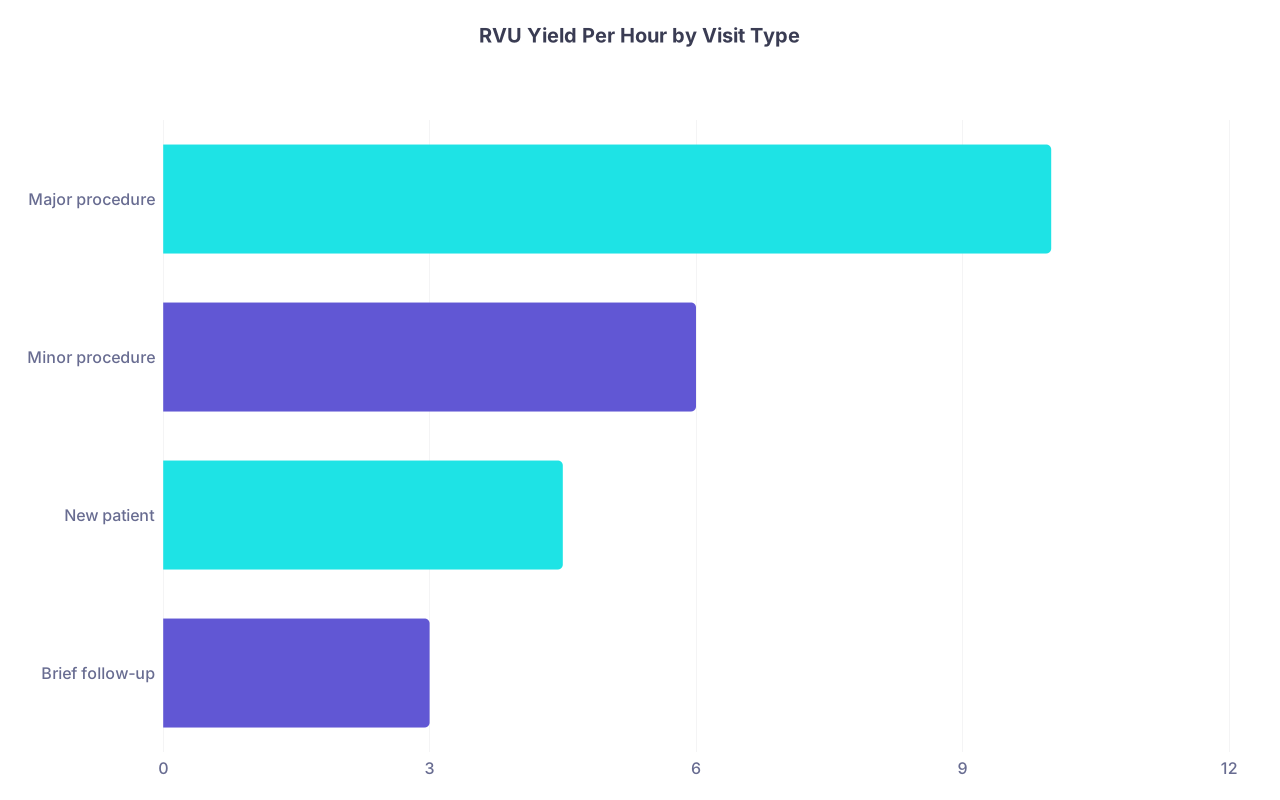
| Category | Value |
|---|---|
| Brief follow-up | 3 |
| New patient | 4.5 |
| Minor procedure | 6 |
| Major procedure | 10 |
If a major procedure is 10 RVUs in 60–90 minutes versus 3–4 RVUs per 30-minute visit, you arrange your schedule accordingly.
Step 7: Renegotiate the Parts of the Compensation Plan That Are Actually Negotiable
Too many physicians jump to “I need a new job.” Sometimes true. Often premature. First, see if the game rules inside your current job can be adjusted.
1. Know Which Levers Are Realistic
Things that might be negotiable, especially if you are a solid producer or in a shortage specialty:
- $ per RVU rate
- Lowering the RVU threshold before bonuses kick in
- Removing or raising caps on productivity bonuses
- Credit for hospital/committee/administrative time
- Protected time vs productivity expectations
- How APP-generated RVUs are attributed
Things that are often less negotiable (but not impossible):
- Institutional adoption of an entirely new compensation model
- Changing payer contracts
- System-wide overhead percentages
Go for the achievable 10–20% improvement, not the fantasy 200%.
2. Prepare a Data-Driven Ask, Not a Complaint
You walk into the meeting with:
- Your last 12 months of:
- wRVUs
- Total compensation
- Clinic sessions / OR time
- Benchmark data (MGMA/AMGA or internal)
- A specific proposal
Example framing:
“Over the last year, I produced 6,800 wRVUs, which is around 65th percentile for my specialty based on MGMA. My current effective rate is $46 per wRVU, while comparable positions are closer to $52–$55. I would like to discuss adjusting my RVU rate to $50 now, with a plan to reach $52 if I exceed 7,200 wRVUs next year.”
That is rational. Quantified. Hard to dismiss outright.
If they refuse everything, you have learned something important about your future there.
Step 8: Decide if You Need a Structural Change, Not Just Tweaks
Sometimes the model itself is broken for you:
- Chronic lack of OR/procedure time
- Administrative bloat or overhead that eats collections
- Payer mix so bad that no volume increase helps
- Toxic culture that weaponizes “productivity” while piling on unpaid admin work
At that point, optimizing inside the system is rearranging chairs on a sinking ship.
1. Compare Alternative Models Head-to-Head
Use a simple comparison table:
| Factor | Current Job (RVU) | Offer A (Hybrid) | Offer B (Collections) |
|---|---|---|---|
| Base Salary | $210,000 | $240,000 | $0 |
| wRVU Rate | $45 | $50 | N/A |
| Threshold | 5,000 | 4,500 | N/A |
| Collections Share | N/A | N/A | 40% after overhead |
| OR/Block Access | Limited | Moderate | High |
| Call Pay | Included | Separate | Separate |
Do the math on realistic scenarios, not recruiter fantasy. For each option, project:
- Conservative, realistic, and stretch RVU or collections estimates
- Total comp in each scenario
- Call burden and lifestyle cost
2. Use a Simple Timeline to Plan a Move
If you are leaning toward leaving, treat it like a project, not an emotional reaction.
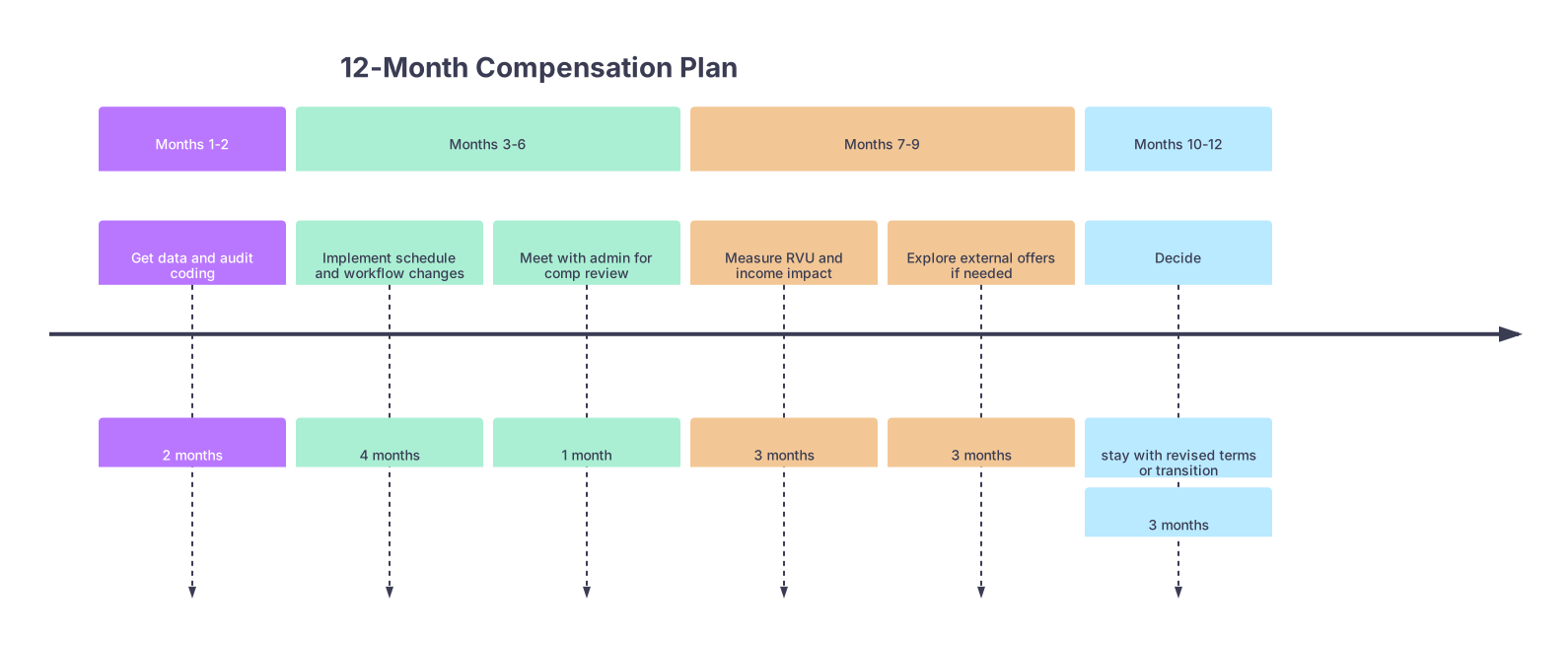
| Period | Event |
|---|---|
| Months 1-2 - Get data and audit coding | 2 months |
| Months 3-6 - Implement schedule and workflow changes | 4 months |
| Months 3-6 - Meet with admin for comp review | 1 month |
| Months 7-9 - Measure RVU and income impact | 3 months |
| Months 7-9 - Explore external offers if needed | 3 months |
| Months 10-12 - Decide | stay with revised terms or transition |
You give your current system 6–9 months of serious, documented effort. If the ceiling is still low, you use your improved productivity as leverage in the market.
Step 9: Protect Yourself Legally and Contractually
You are in the “Financial and Legal Aspects” phase whether you like it or not. Productivity-based pay is a contractual implementation of a business model. Treat it that way.
1. Understand Key Legal Clauses That Affect Pay
When reviewing your contract (current or new), pay attention to:
Compensation formula attachment
Is the formula, including $/wRVU and thresholds, explicitly written or just “as per policy”?Unilateral change language
Can the employer change comp structure or RVU rates unilaterally? With what notice?Non-compete and non-solicitation
If you leave, can you practice nearby? For how long? With what geographic radius?Call pay and stipends
Are they separate or baked into “base salary”?Quality and citizenship bonuses
Are they guaranteed, discretionary, or based on opaque metrics?
If any of this is fuzzy, an hour with a physician contract attorney will usually pay for itself many times over.
2. Watch for Stark/AKS and Fair Market Value Red Flags
If someone offers a wildly above-market $/wRVU or bonus structure, understand there are legal guardrails:
- Compensation must be consistent with fair market value (FMV)
- It cannot be tied directly to referrals in a way that violates Stark or Anti-Kickback rules
Legitimate organizations use MGMA/AMGA data as a sanity check. If an offer is dramatically above 90th percentile for comp with only 50th percentile expectations for work, you need legal eyes on it quickly.
Step 10: Build a Simple Personal RVU and Income Dashboard
You should not learn your productivity after the quarter closes. By then it is too late to adjust.
1. Track 3–5 Metrics Monthly
Set up a simple spreadsheet or note:
- wRVUs per month
- Visits / procedures per month
- Average RVUs per clinic day
- No-show rate
- Total compensation year-to-date
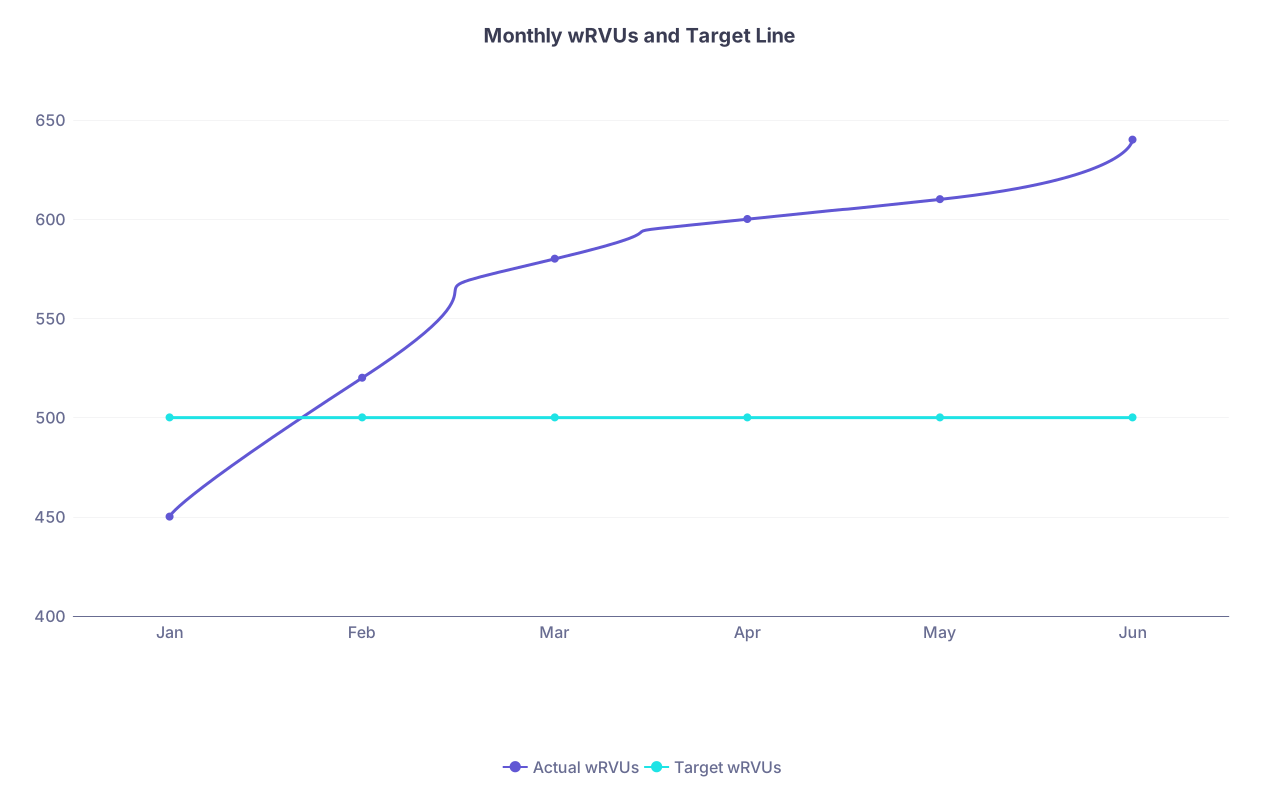
| Category | Actual wRVUs | Target wRVUs |
|---|---|---|
| Jan | 450 | 500 |
| Feb | 520 | 500 |
| Mar | 580 | 500 |
| Apr | 600 | 500 |
| May | 610 | 500 |
| Jun | 640 | 500 |
If you see three consecutive months below target, you do not wait for year-end. You adjust coding, schedule, or visit mix right then.
2. Review Quarterly With Your Administrator
Do not wait for them to call you in. You initiate.
Email agenda:
- Review my RVU and compensation trends
- Identify any coding or capture issues
- Discuss access, scheduling, and block time that affect productivity
- Review where I stand vs MGMA targets used for comp
You are signaling two things:
- You understand their business model.
- You intend to be paid fairly within it.
That changes how you are treated.
What You Should Do Today
Open your last month’s schedule and your last 20 notes.
- For notes: find 3–5 where you did complex work but probably undercoded or under-documented. Flag them. Then email your coder and ask for a brief review of those specific charts and how they would have coded them.
- For schedule: count how many slots were wasted by no-shows, poor clustering, or low-value visits that could have been handled by protocol or an APP.
Then send one email to your administrator:
“I would like to review my last 12 months of wRVUs, compensation calculation, and any benchmark data used for my role. I am working on optimizing my productivity under our current model and want to be sure I fully understand how it is measured.”
That one move starts the shift from “stuck salary” to “controlled, intentional income.”