
Side hustles rarely hurt your career. The fear around them is wildly overstated, especially in medicine.
Let me be blunt: most of what you’ve heard about physician side hustles “ruining your reputation” or “scaring off employers” is folklore, not data. Hospital administrators may grumble, attendings may roll their eyes, but when you actually look at the evidence on burnout, job mobility, and performance, the story is almost the opposite.
Side hustles, done right, tend to protect careers, not destroy them.
Let’s tear this apart properly.
The Myth: “Side Hustles Will Get You Blacklisted”
You’ve probably heard some version of this in the hallway:
- “That resident with the YouTube channel? PDs hate that stuff.”
- “If you start a consulting gig, admin will think you’re not committed.”
- “Private equity won’t hire anyone who looks ‘distracted’.”
I’ve sat in on those same conversations. I’ve heard program directors complain about residents “doing too much online.” Then a month later they’re bragging that their program has a rising TikTok doc because “it’s good for recruitment.”
Here’s what the data and real-world outcomes actually show:
Physician “multi-jobbing” is already normal.
Large surveys (e.g., AMA, Medscape) consistently show that 15–30% of physicians have some form of additional paid medical work: urgent care shifts, telemedicine, consulting, speaking, expert witness work, chart review. That’s just the overt stuff they report. If “having other income” was a career-killer, we’d see clear penalties in hiring, promotion, or leadership representation. We don’t.Burnout is a far bigger risk to your career than a side hustle.
Burnout drives early retirement, part-time shifts, errors, and outright exits from medicine. Side hustles, for many physicians, are one of the few levers they have to reduce financial strain and reclaim some autonomy. There’s solid evidence that autonomy and perceived control are key buffers against burnout.Employers already tolerate way more distraction than they admit.
I’ve seen residents spend hours on fantasy sports, attendings running real estate empires, hospitalists day-trading on night shifts. Those people didn’t “get blacklisted.” If they showed up, did good clinical work, and didn’t create liability, their side activities were either ignored or eventually admired.
The pattern is clear: what reliably hurts physicians is being overworked, underpaid, and boxed in. Not having a blog, a course, or a couple of short-term rentals.
What the Evidence Actually Suggests
The literature doesn’t say “side hustle = good” in big red letters. That’s not how research works. But we do have data on the pieces: multiple income streams, autonomy, burnout, and career longevity.
1. Burnout, autonomy, and multiple roles
Study after study has shown:
- Loss of autonomy is a core driver of burnout.
- Role conflict can be bad, but role diversity with control over time can be protective.
- Physicians who feel trapped financially are more likely to leave clinical medicine entirely.
When physicians add a side hustle that:
- they control,
- is not mandated by the hospital,
- and creates either income or meaning,
you’re hitting the autonomy lever hard.
Several surveys of physicians with “non-clinical side roles” (consulting, advising, content creation, entrepreneurship) show lower reported burnout and higher satisfaction, especially when those activities align with personal interests or values. Is it perfect RCT-level data? No. But the direction is consistent: autonomy and optionality are protective.
2. Financial stress and career decisions
Let’s talk money without the usual hand-wringing.
Physician debt and lifestyle creep have real downstream effects. Docs cut call, switch specialties, or leave medicine early because financially they feel cornered. That’s not speculation. That’s right there in survey free-text responses.
Adding even modest non-clinical income:
- shortens the timeline to student loan payoff,
- decreases reliance on RVU-chasing shifts,
- makes it easier to say “no” to toxic jobs.
None of those are career risks. Those are career stabilizers.
| Category | Value |
|---|---|
| Burnout | 68 |
| Compensation | 55 |
| Administrative Burden | 52 |
| Work Hours | 40 |
| Side Hustles | 5 |
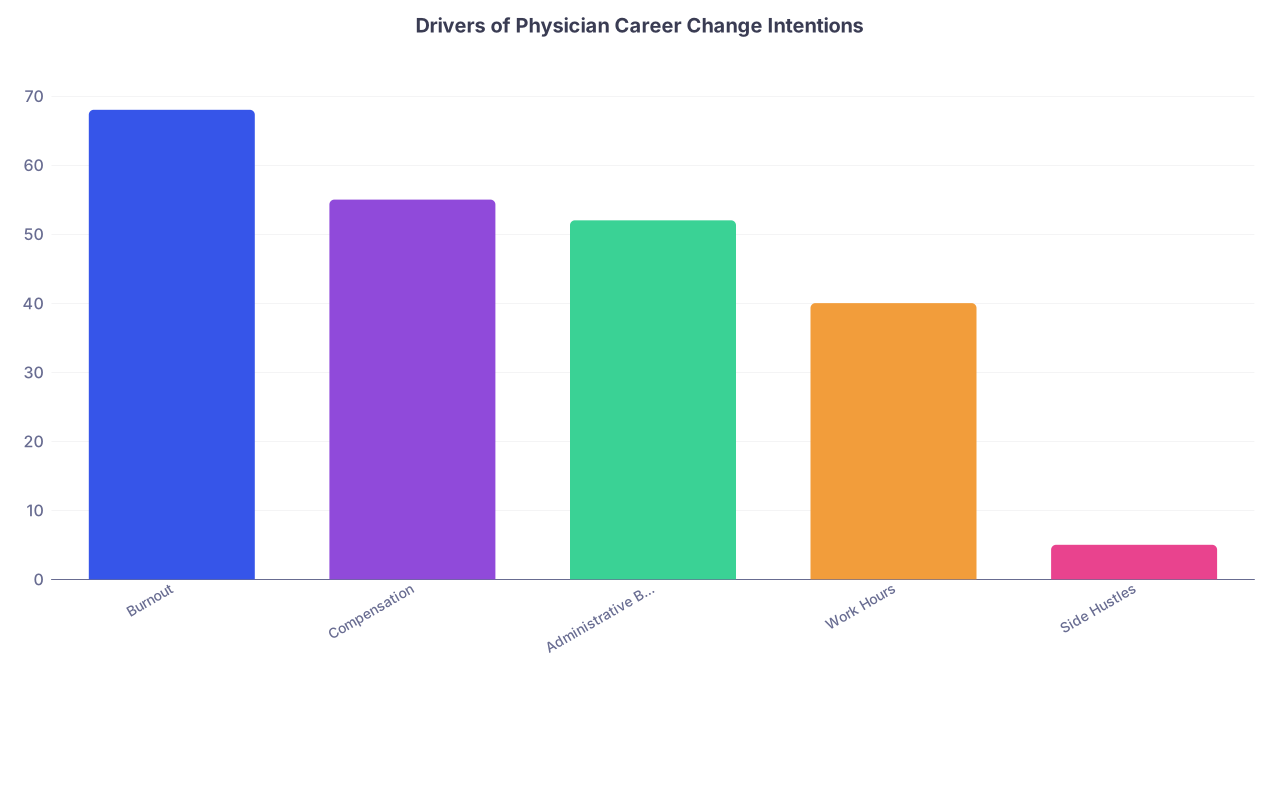
That last bar is the important one: in the data we do have, side hustles barely appear as a stated reason for leaving or changing roles. Burnout, pay, and admin nonsense dominate.
3. Performance and distraction
The scare argument goes like this: “If you’re running a business on the side, your clinical work will suffer.”
Where’s the evidence?
We do have data that:
- Excessive moonlighting while in training can correlate with worse exam performance and fatigue.
- Extreme work hours (80+ hour weeks) are associated with more errors.
Fair. But that’s not “side hustles are bad.” That’s “sleep deprivation is bad.”
What doesn’t exist is solid evidence that:
- A well-structured, time-limited side business,
- Done outside clinical hours,
- Within reasonable total workload,
systematically harms clinical performance or promotion. The few studies and case reports that touch on physician entrepreneurship tend to highlight improved leadership skills and innovation, not dangerous distraction.
What Actually Gets You in Trouble
Side hustles don’t hurt careers by existing. They hurt careers when physicians are careless, naive, or arrogant.
Here’s where people really blow themselves up:
Compliance and conflict-of-interest violations
- Using hospital email, branding, or proprietary data for your venture.
- Promoting your product or service to your own patients without disclosures.
- Failing to report outside income or roles when contracts require it.
Time theft
Not the “writing notes at home” kind. The “doing coaching calls from the work computer while you’re on the clock” kind. Admins don’t care that you have a side hustle. They care if you’re being paid for one job while working another.Reputation misalignment
- Public content that’s aggressively anti-vax, anti-science, or ethically suspect.
- Wild, unprofessional social media behavior that any halfway decent hiring committee will screenshot in 0.2 seconds.
That’s not a side hustle problem. That’s a professionalism problem.
| Scenario | Career Risk Level |
|---|---|
| Transparent consulting with contract | Low |
| Anonymous blog about clinical topics | Low–Medium |
| Selling supplements to own patients | High |
| Using hospital time for private clients | High |
| Real estate or index fund investing | Very Low |
Notice something? The risk tracks with ethics and transparency, not with “having other income.”
How Side Hustles Quietly Help Careers
Now the part nobody in residency orientation talks about: the upside.
1. You become less easy to bully
Hospitals and groups can smell financial desperation. That’s who gets:
- the worst schedules,
- the last-minute “can you just pick up one more call” texts,
- the lowest leverage negotiating contracts.
A side hustle that brings in even $2–3k/month changes your posture. You can say “no” without panicking about rent or loans. You negotiate differently. You exit toxic jobs faster. That is career preservation.
2. Optionality is insurance
Clinical medicine is physically fragile. One bad back injury. One neuro diagnosis. Refractory PTSD after a code. Suddenly your “stable” job isn’t.
Non-clinical income:
- Speaking
- Consulting
- Teaching
- Digital products
- Real estate
- Telehealth you can do with reduced hours
acts as insurance against forced early exit.
| Category | Value |
|---|---|
| Year 1 | 5 |
| Year 3 | 15 |
| Year 5 | 25 |
| Year 10 | 40 |
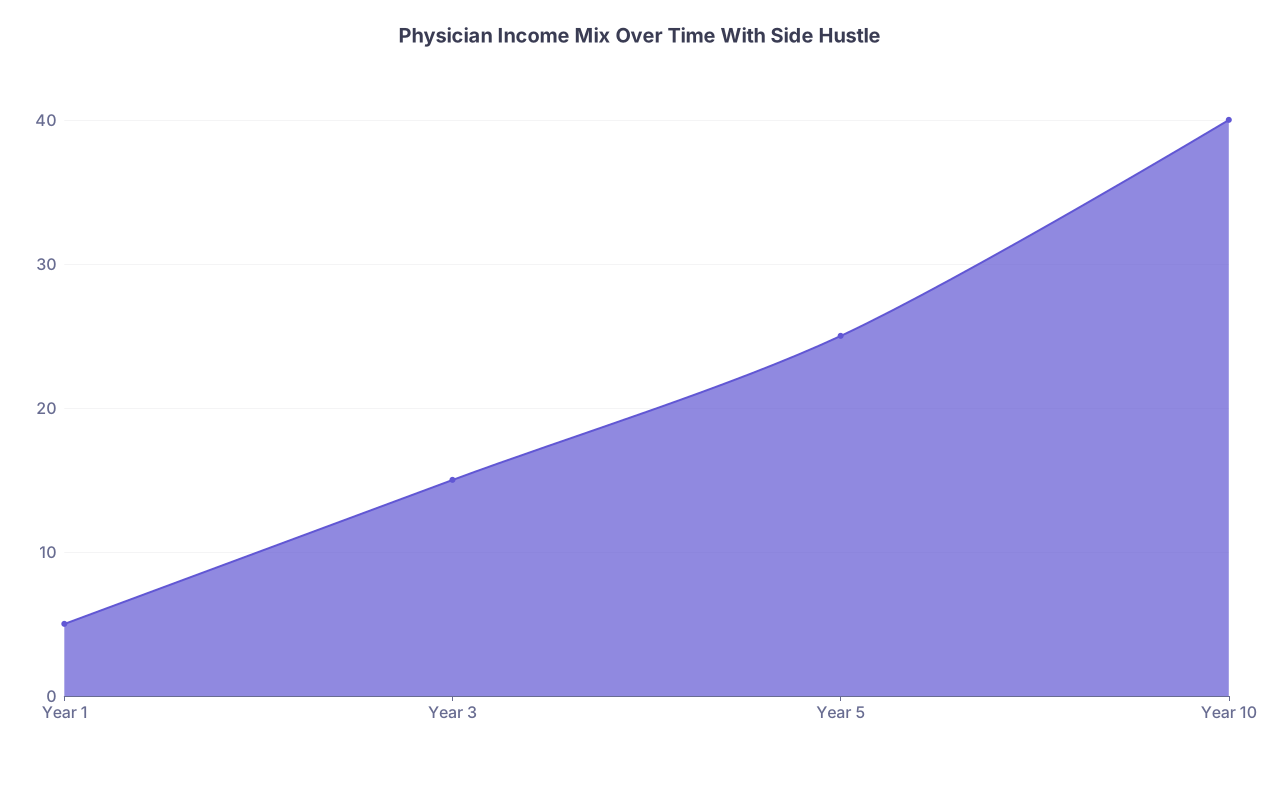
You don’t have to hit 40% non-clinical. But having anything outside your W-2 employer makes you less exposed.
3. Skill stacking beats single-lane careers
Some of the “weird” side hustles produce the most leverage later:
- The resident who ran a tiny medical education YouTube channel that turned into a funded curriculum project, then a faculty role.
- The hospitalist who started doing clinical documentation review as a side gig and ended up in a director-level CDI role with better hours and pay.
- The EM doc who built a niche in informatics through a “side project” dashboard and then jumped into a CMIO track.
I’ve watched this pattern repeat. The initial side hustle looks small and maybe even silly. Then five years later, it’s the main door out of a collapsing or toxic clinical environment.

4. Network effects you don’t get from clinic
Clinics and hospitals create tight but narrow networks: other clinicians, maybe some administrators.
Side hustles pull you into:
- tech,
- finance,
- education,
- media,
- policy.
That’s where future roles, advisory gigs, and exits come from. Most “alternative careers” you see on LinkedIn started as tiny side projects plus networking outside the hospital bubble.
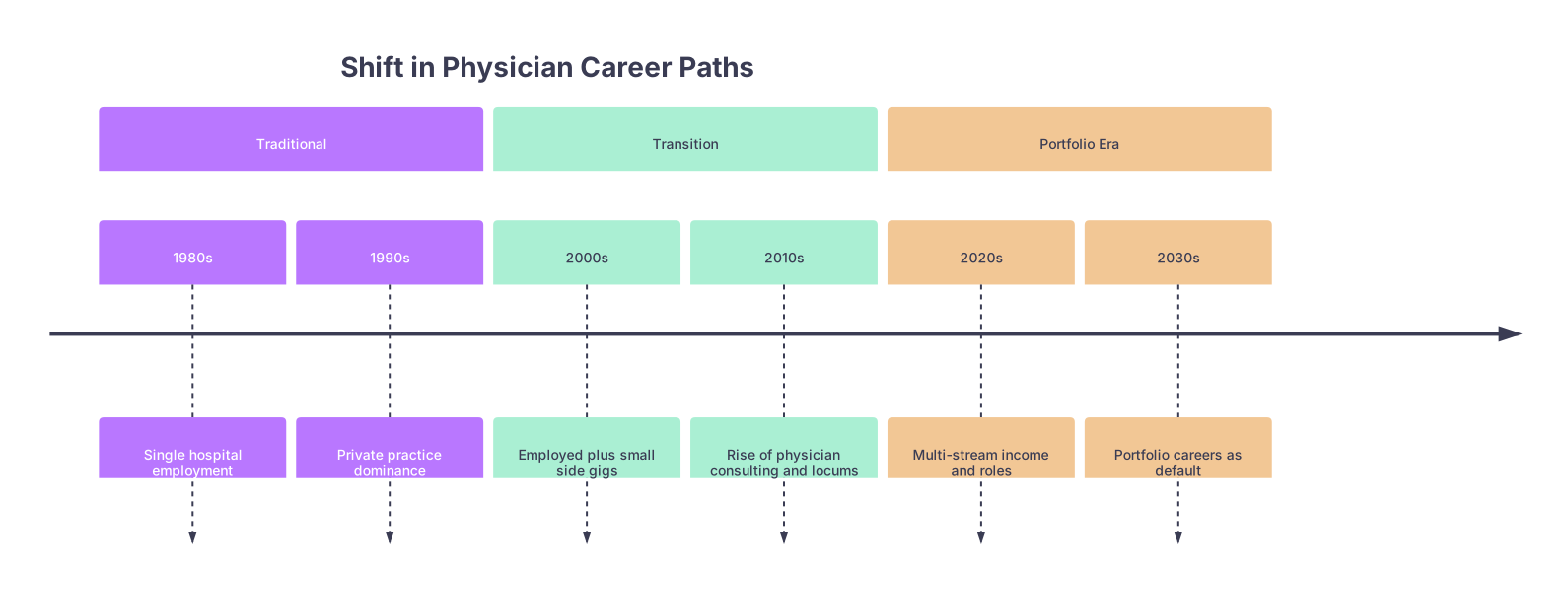
The Future: Medicine Won’t Be a Single-Track Career Anymore
The economy is shifting under medicine whether you play along or not.
- Telemedicine is commoditizing certain visits.
- AI will eat some low-complexity documentation and triage tasks.
- Private equity and corporate consolidators will keep squeezing margins.
Clinging to a monoculture career — “I am only a full-time clinician, forever, at one employer” — is the actual risk.
You’re already seeing it:
- Younger physicians with portfolios of work: 0.6 FTE clinic + 0.2 FTE telehealth + 0.2 FTE consulting or teaching.
- Academics who run labs and angel invest in health tech.
- Mid-career docs switching to fractional leadership roles because they built management or product skills on the side.
| Period | Event |
|---|---|
| Traditional - 1980s | Single hospital employment |
| Traditional - 1990s | Private practice dominance |
| Transition - 2000s | Employed plus small side gigs |
| Transition - 2010s | Rise of physician consulting and locums |
| Portfolio Era - 2020s | Multi-stream income and roles |
| Portfolio Era - 2030s | Portfolio careers as default |
In that landscape, having only one revenue stream and one professional identity is like relying on a single overgrown coronary artery and praying it never clots.
Side hustles are collaterals. They’re the bypass network.
How to Do Side Hustles Without Torching Your Reputation
Let’s be practical. Here’s what the data and real cases say does keep you safe.
1. Pick models with low ethical and legal friction
If you want to avoid headaches:
- Lean toward: writing, teaching, consulting, independent telehealth, real estate, index investing, non-medical e-commerce, software tools, paid speaking.
- Be more careful with: supplements, alternative therapies, MLM nonsense, procedures or products you directly profit from recommending to patients.
The box you want to live in: clearly disclosed, not dependent on your own patients, and not in conflict with your employer’s core business.

2. Build it off the clock and off the network
You don’t want the compliance office breathing down your neck because:
- You used the hospital logo on your website.
- Your side business emails are coming from your institutional email.
- Your product uses identifiable patient stories without consent.
Keep it clean:
- Separate devices, email, and drives.
- No hospital assets or credentials.
- Do the work on your own time, outside shifts, unless you have explicit written permission.
3. Don’t be an idiot online
You can be opinionated without being self-destructive.
The careers that get dinged are usually attached to:
- extreme misinformation,
- harassment,
- obvious conflicts of interest,
- or chronic unprofessional behavior.
What doesn’t usually cause lasting damage:
- reasonable criticism of health systems,
- advocacy,
- transparent entrepreneurship,
- educational content with a personal brand.

4. Document and disclose — on your terms
Most employment contracts now have language about:
- outside work,
- competing businesses,
- time commitments.
Read that section. If you can’t interpret it, hire a contracts attorney for one hour. That hour will be cheaper than guessing wrong.
Then:
- Disclose what you’re required to disclose.
- Put it in writing.
- Frame it as “professional development” and “innovation” — because often, it is.
Administrators are much more likely to support you if they can see how your side project might bring prestige, connections, or future collaborations to the institution.
Who Actually Should Be Cautious
Not everyone should run out and start a venture tomorrow. There are edge cases.
You should move slower if:
- You’re already at or over the edge of burnout and your sleep is trashed. Adding anything might push you over. Fix that first.
- You’re in a tightly controlled environment (certain military roles, very conservative religious hospitals, or sensitive leadership positions) where optics matter disproportionately. You need extra contract and policy scrutiny.
- You have poor impulse control with money, risk, or social media. A side hustle will just amplify your worst habits.
Even in those cases, the issue is you, your environment, or your current bandwidth — not the existence of side hustles in general.
| Category | Value |
|---|---|
| Positive | 45 |
| Neutral | 40 |
| Negative | 15 |
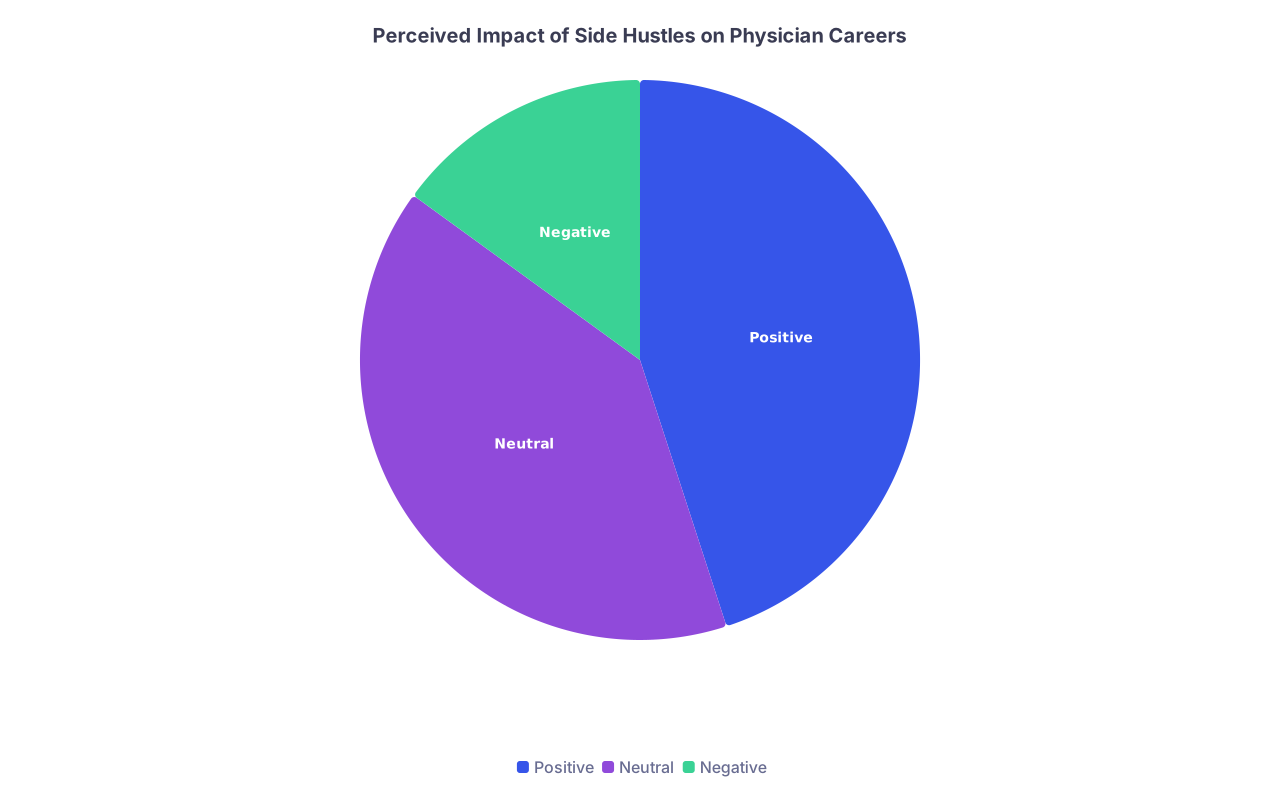
The majority see them as neutral or positive. The loud horror stories are the minority, and often self-inflicted.
The Bottom Line
Side hustles rarely hurt your career. The evidence and real-world patterns say something closer to the opposite:
- Burnout, loss of autonomy, and financial dependence on a single employer are far more dangerous to your long-term career than a thoughtful side hustle.
- The careers that do get damaged are usually undone by ethics, compliance, or professionalism failures — not simply by having other income.
- The future of medicine is multi-stream, portfolio-style careers. Side hustles aren’t a fringe hobby anymore; they’re becoming smart risk management.