
The biggest wasted asset most clinicians have is not their degree. It is their charting skill.
You already do high‑volume, high‑accuracy documentation under time pressure, in chaotic environments, while five people are interrupting you. That is a rare and monetizable skill. The problem is simple: you are only getting paid for it in one context—your clinical job—when you could be pulling in additional, flexible income doing nearly the same thing for different clients.
Let me walk you through how to turn your charting skills into real, paid work. Not a vague “you could try…” list. A concrete, step‑by‑step build that you can start this month.
Step 1: Understand what you actually sell (it is not “notes”)
You do not sell “charts.” You sell three things:
- Clinical accuracy – You can recognize nonsense. A non‑clinical scribe or coder cannot reliably flag “this med list contradicts the plan.”
- Speed under constraints – You already chart in 5–10 minute windows. That is gold for high‑volume work.
- Risk reduction – You naturally write in ways that protect against chart reviews, audits, and plaintiff attorneys.
Most side gigs screw up right here. They pitch themselves as generic “medical documentation help.” That puts you in a race to the bottom with $6/hour overseas scribes.
You are offering something different:
- Physician‑level or advanced‑clinician‑level review
- Reliable medical logic
- Audit‑resistant documentation structure
Write this down. Literally. You will use it in your outreach and profiles:
- “Fast, accurate clinical documentation with audit‑ready structure”
- “Board‑certified physician offering high‑quality charting and doc support”
- “Chart optimization focused on medical logic and medico‑legal safety”
You are not competing with cheap labor. You are competing with bad outcomes.
Step 2: Pick one or two charting-based income streams (not ten)
There are several ways to get paid for charting skills. Some are garbage for your time; some are excellent. Here is the short, honest list.
| Option | Typical Hourly Range | Remote? | Uses Clinical License Directly? |
|---|---|---|---|
| Virtual scribing (high-end) | $40–$120 | Yes | Indirectly |
| Clinical documentation improvement | $75–$200 | Yes | Yes |
| Chart review for legal/insurers | $100–$350+ | Yes | Yes |
| Note templates & EMR workflows | Project-based ($500–$5k+) | Yes | Sometimes |
| AI documentation QA & training | $80–$250 | Yes | Yes |
Skip low‑tier, point‑and‑click scribing platforms paying $12–$18/hour “as a favor because you are a physician.” That is an insult, not a side hustle.
Let us walk through each viable stream so you can choose 1–2 to start.
1. Premium virtual scribing / documentation support
Not the generic “scribe in the room, type what they say.” This is:
- High‑functioning remote documentation partner
- Helps other clinicians finish their charts, close encounters, and hit RVU or quality targets
- Often includes building templates, pre‑charting, and cleaning up post‑visit documentation
Who pays:
- Busy private practice docs (especially ortho, GI, cardiology, pain, psych)
- Small groups without money for big consulting firms
- Telemedicine groups wanting faster close times
This is viable as:
- Direct‑to‑physician contractor – You invoice the doctor monthly
- Through companies that market “remote documentation assistants” and look for physicians/NPs/experienced scribes
2. Clinical Documentation Improvement (CDI) & audit‑ready charting
CDI is not just for hospital coders. There is a niche for clinicians who:
- Understand DRGs, HCCs, risk adjustment, and quality metrics
- Can adjust documentation to reflect disease severity without upcoding
- Can teach other clinicians how to write better notes
You can do:
- Remote chart reviews for practices or small hospitals
- Focused projects: “Review 200 charts for CHF/CKD documentation gaps”
- Ongoing work: “2–4 hours per week to review charts and send queries”
You are paid for:
- Identifying under‑captured complexity
- Drafting improved wording
- Reducing denial risk
This is especially powerful if you are in IM, hospitalist, cardiology, pulm/ICU, oncology, or primary care. But any detail‑oriented clinician can learn it.
3. Chart review for legal, insurers, and utilization
This is where your charting literacy becomes cash.
Use cases:
- Med‑legal case review – Plaintiff or defense attorneys needing chart interpretation
- Utilization review / peer review – Insurers asking, “Was this stay appropriate?”
- Workers comp / disability chart summaries – Turning 1,000 pages into a 5‑page narrative
You:
- Read massive, messy charts
- Extract timelines, key events, and deviations from standard of care
- Write clear, structured reports
It is not glamorous, but the pay is solid and remote. And your note‑reading muscle is already trained from years of brick‑thick chart reviews during sign‑out or transfers.
4. Workflow, templates, and EMR optimization
You know those terrible EMR templates that generate five pages of nonsense and hide the actual plan? Someone got paid to build them.
You could do it better.
Work here looks like:
- Creating specialty‑specific smart phrases and templates
- Streamlining documentation workflows for small practices
- Building documentation “playbooks” for new hires
- Optimizing note structure for particular EMRs (Epic, Cerner, Athena, eClinicalWorks)
This is often project‑based and higher ticket:
- “Build and implement a full set of specialty templates for this 5‑doc practice”
- “Redesign workflow to reduce average charting time per patient”
5. AI documentation QA, training data, and oversight
The “future of medicine” is being built on clinical text. Most of that text is garbage. AI companies are desperate for:
- Clean, well‑structured example notes
- Human clinicians who can grade AI‑generated documentation
- Feedback about what is clinically unsafe or medico‑legally dumb
This can look like:
- Reviewing AI‑generated notes and scoring them
- Suggesting improved structures
- Labeling sections of notes (HPI, MDM, assessment, plan) for training data
This is one of the fastest‑growing charting‑related side gigs right now.
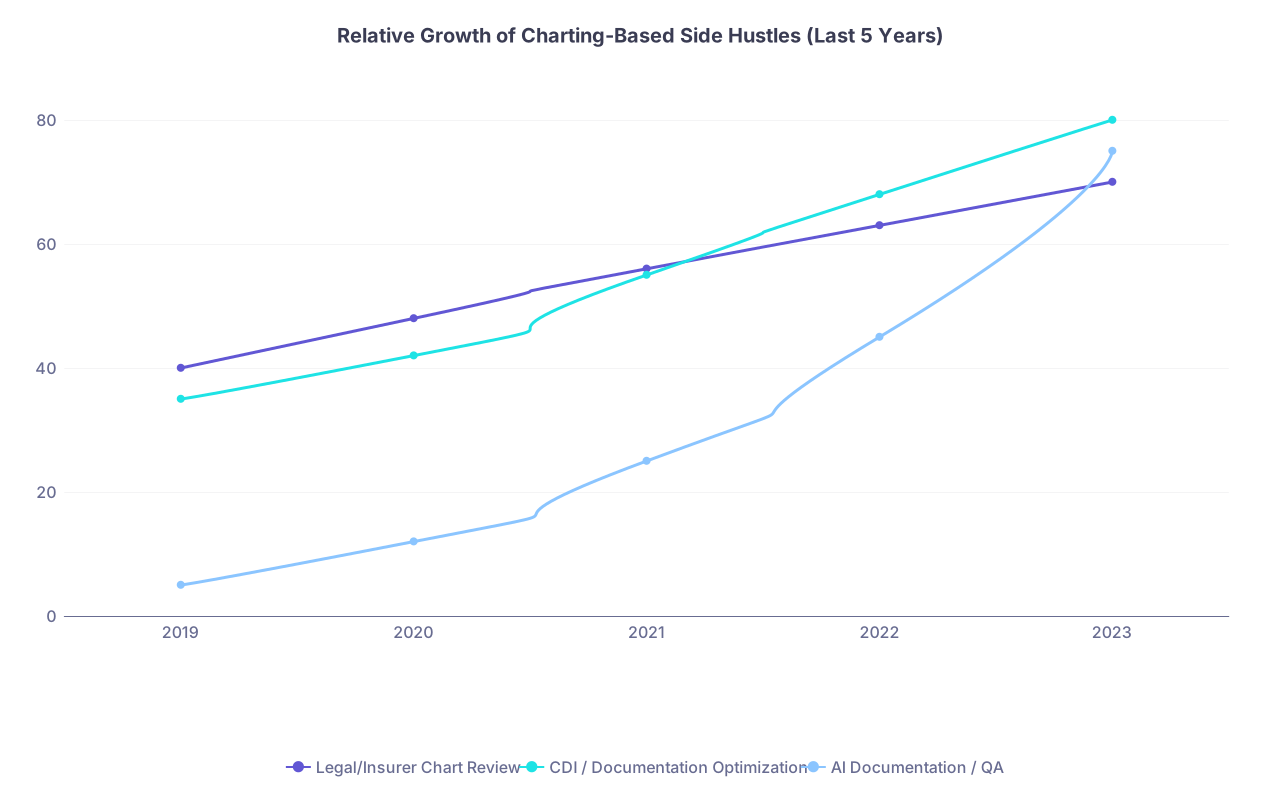
| Category | Legal/Insurer Chart Review | CDI / Documentation Optimization | AI Documentation / QA |
|---|---|---|---|
| 2019 | 40 | 35 | 5 |
| 2020 | 48 | 42 | 12 |
| 2021 | 56 | 55 | 25 |
| 2022 | 63 | 68 | 45 |
| 2023 | 70 | 80 | 75 |
You do not need to chase all of these. Pick:
- One “steady” option (virtual scribing / CDI)
- One “spiky but high‑pay” option (legal chart review / AI QA)
That mix gives you both predictable income and higher upside projects.
Step 3: Translate your charting experience into a “product”
“Internal medicine physician who documents carefully” is not a product.
“Hospitalist who can cut your denial rate by fixing documentation on sepsis, AKI, and heart failure” is.
You need to define:
- What you do
- For whom
- What outcome they get
Use this simple template:
I help [TYPE OF CLIENT] get [SPECIFIC RESULT] by providing [SERVICE], using my [CREDENTIAL/EXPERIENCE].
Examples:
“I help busy outpatient psychiatrists finish charts the same day by providing remote documentation support, using my 8 years of outpatient psych experience and deep familiarity with mental health documentation requirements.”
“I help small hospitalist groups reduce audit risk and denials by reviewing documentation for high‑risk diagnoses and suggesting specific CDI improvements, using my background as a board‑certified hospitalist who has sat through too many RAC audits.”
Write 2–3 of these. You will use them in:
- Emails to potential clients
- Your LinkedIn or Doximity summary
- Upwork profiles (if you go that route)
- Landing page copy if you build a simple website
Step 4: Build a minimal, credible presence (in one week)
You do not need a fancy brand. You need to look like a real professional, not a side‑project tourist.
Bare minimum:
Professional email
- Use your name:
[email protected]orinfo@[simplebusinessname].com - Buy a cheap domain if needed.
- Use your name:
One‑page online presence
Options:- LinkedIn profile, cleaned up and targeted to documentation/consulting
- Simple one‑page site via Carrd, Squarespace, or similar
Content on that page:
- Who you are (1–2 sentences)
- What you offer (3–5 bullet points)
- Who you help (1–2 bullet points)
- How to contact you (email, maybe Calendly link for 15‑min intro call)
1–2 work samples (de‑identified)
You are selling documentation quality. Show it.Examples:
- Before/after versions of a de‑identified note you “fixed” (HPI, MDM, plan cleaned up)
- Example template sets for a fictional specialty practice
- Snippet of a de‑identified chart summary for an attorney (change dates, names, locations)
Strip all PHI. Change ages, genders, locations. Make it clinically realistic but non‑identifiable.

Step 5: Set sane pricing from the start (and do not apologize)
If you underprice, you will fill your time with low‑value work and burn out. You already have one exhausting job. This side work must be worth it.
Here is a rational range for physicians and advanced clinicians:
Virtual documentation support / scribing+
- Direct to physicians: $60–$150/hour equivalent
- You can package as “per half‑day clinic session” (e.g., $300–$500)
CDI / documentation consulting
- Hourly: $100–$250
- Project: $2,000–$10,000+ depending on size
Legal / insurer chart review
- Med‑legal review: $200–$500/hour
- Utilization review / peer review: often $100–$200/hour via vendors
AI documentation QA / training
- Many early‑stage companies will try to pay peanuts. Do not.
- Reasonable: $80–$200/hour depending on responsibility and commitment.
To avoid being stuck in hourly billing forever:
- Use flat fees where possible
- Example: “$1,200 to review 50 charts and deliver findings + recommendations”
- Example: “$750 for creation of custom note templates for [specialty] practice”
And yes, you will feel awkward naming these numbers early on. Say them anyway. Technology and administrative vendors bill far more for far less clinical value.
Step 6: Where to actually find paying work
This is what you care about: who writes the checks.
Channel 1: Direct outreach to clinicians and small groups
This is uncomfortable. It also works.
Target:
- Solo or small practice owners in your specialty or adjacent
- Hospitalist groups that complain constantly about denials and audits
- Telemedicine practices with huge documentation loads
Approach script (email or DM):
Dr. [Name],
I am a [your specialty] with [X] years of clinical experience. I have been doing focused work on improving documentation workflows and reducing audit risk.
Looking at [your practice / typical [specialty] workflows], there are usually 2–3 quick documentation changes that save a few minutes per patient and reduce denial risk for complex visits.
I offer:
– Remote documentation support (helping finish and optimize notes)
– Targeted chart review for high‑risk diagnoses (sepsis, CHF, AKI, etc.)
– Custom templates / smart phrases tailored to how you actually practiceWould a brief 15‑minute call be useful to see if this could save you time or improve your denial rates?
Best,
[Name, credentials]
[Link to your one‑pager or LinkedIn]
You will send 20 of these and get maybe 3–5 responses. That is enough.
Channel 2: Vendor platforms and consulting firms
Look for:
- CDI vendors hiring part‑time clinicians
- Utilization review companies (e.g., eviCore, AIM, Magellan, etc.)
- Scribe and “documentation assistant” companies that seek physician leads for higher‑tier services
- AI documentation startups (search “[EMR company] AI documentation,” “[dictation company] clinical advisor”)
Search terms:
- “remote clinical documentation improvement physician”
- “physician chart reviewer remote”
- “AI documentation physician advisor”
- “telehealth documentation consultant”
Apply with a focused CV emphasizing:
- Volume experience (e.g., “documented 15–20 inpatient encounters per day”)
- EMR familiarity (Epic, Cerner, etc.)
- Any quality, CDI, or peer review work you have done
Channel 3: Freelance marketplaces (with filters)
Most clinicians hate platforms like Upwork and Fiverr because they see $15/hour offers. Ignore those. Set your filters and standards.
On Upwork or similar:
- Create a specialized profile: “Physician chart reviewer and documentation consultant”
- Set your minimum hourly rate high enough to filter junk (at least $100)
- Search for:
- “medical chart review”
- “clinical documentation”
- “EMR template”
- “medical summary”
Apply only to:
- Legal/insurer chart review
- Template building
- AI note QA
- CDI‑related tasks
You might land your first small project here, get a testimonial, and then move more to direct relationships where the real money is.
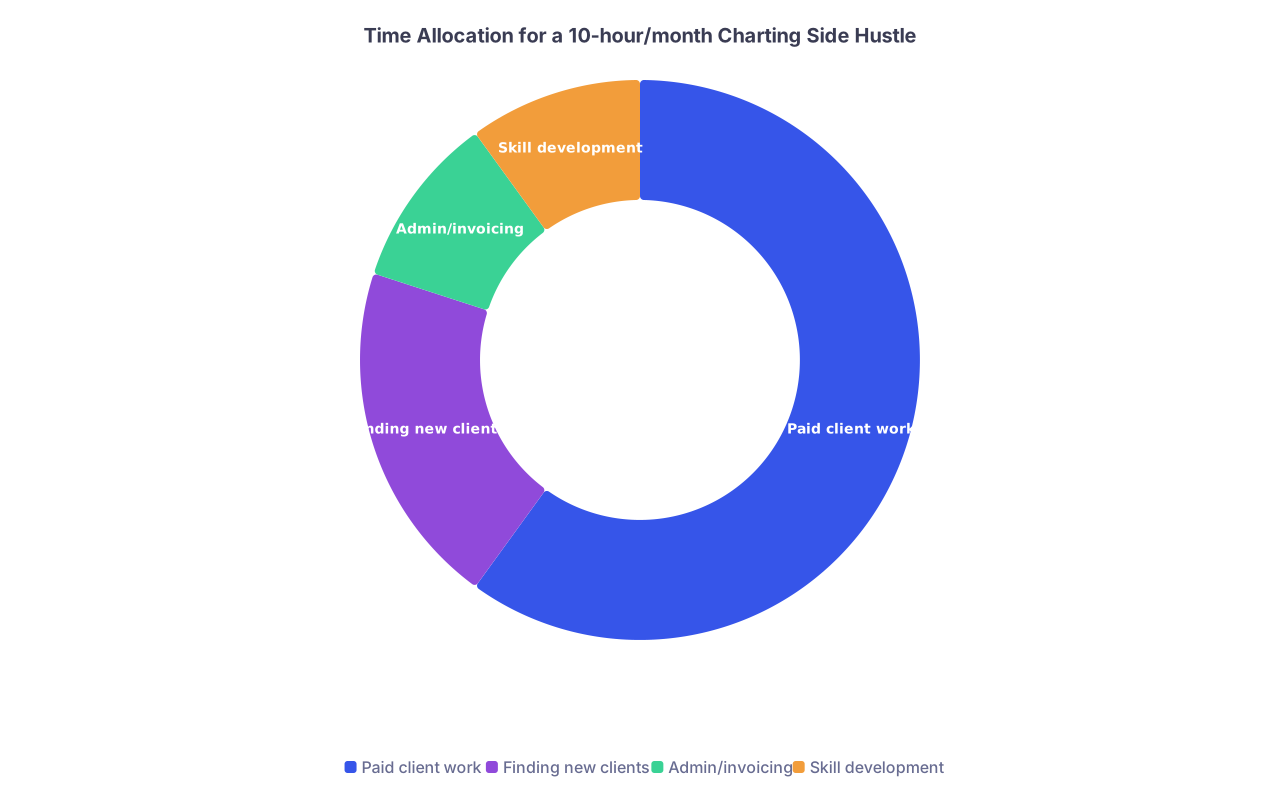
| Category | Value |
|---|---|
| Paid client work | 6 |
| Finding new clients | 2 |
| Admin/invoicing | 1 |
| Skill development | 1 |
Step 7: Build an efficient workflow so this does not drain you
You already know the pain of sloppy workflows from your day job. Do not recreate that.
Set up:
Tool stack (keep it light)
- Secure email (HIPAA‑compliant if you will see real PHI)
- Cloud storage with BAA (Google Workspace, Microsoft 365, or a HIPAA‑ready vendor)
- A basic spreadsheet to track:
- Clients
- Hours or deliverables
- Invoices sent/paid
Standard operating procedures (SOPs) for yourself
For each service, define:- How you receive charts (format, secure channel)
- How you name files
- How you structure your output (templates, report outline)
- How you deliver (PDF, Word doc, EMR note, etc.)
Time boundaries
Decide:- Which evenings or weekend windows you will use
- Max hours per month you will commit
- What rate makes it worth extending those hours
If your clinical job is already brutal, start with 5–10 hours per month, not 5–10 hours per week. Prove to yourself that this is additive income, not another stressor.

Step 8: Protect yourself: compliance, privacy, and contracts
You are dealing with PHI, legal exposure, and sometimes conflicts with your primary employer. Do not be naive here.
1. Check your employment contract
Look for:
- Moonlighting restrictions
- Non‑compete clauses (geographic/scope)
- IP ownership language (very rare issue but check)
If you are unsure, pay an attorney for a one‑hour review. Cheaper than a lawsuit or termination.
2. HIPAA / privacy basics
If you will see actual PHI:
- Use:
- Encrypted email or client portal
- Storage services with BAAs
- Have:
- A Business Associate Agreement (BAA) if you contract directly with practices
- A minimal privacy policy (if you have a website and intake forms)
If your work can be based entirely on de‑identified or synthetic data (AI training, template design), insist on that. Less risk for everyone.
3. Simple contracts
At minimum, your consulting agreement should state:
- Scope of work
- Payment terms
- Confidentiality expectations
- That you are not offering medical care or establishing a patient‑physician relationship (for non‑clinical consulting)
Do not overcomplicate. A 2–3 page agreement is enough for many small clients.
Step 9: Make your charting “better than average” (this drives referrals)
You are getting paid because you are better than the status quo. That means:
Clarity beats length
You know those bloated auto‑generated notes? They are bad medicine and bad business. Your notes should be:- Structured
- Legible
- Easy for a third party (auditor, attorney, reviewer) to follow
Explicit medical reasoning
Especially for legal or CDI work:- Spell out why diagnoses are present
- Tie interventions to specific problems
- Make risk/benefit reasoning clear
Standardized templates
Create your own:- HPI + MDM structure
- Chart summary templates for legal reviews
- CDI review templates (“Findings,” “Impact,” “Recommended doc change”)
These become your intellectual property. You will reuse them across projects, which means you earn more per hour as you get faster.

| Step | Description |
|---|---|
| Step 1 | Identify Niche |
| Step 2 | Define Service and Pricing |
| Step 3 | Set Up Tools and Presence |
| Step 4 | Client Outreach and Applications |
| Step 5 | Onboard First Client |
| Step 6 | Deliver High-Quality Work |
| Step 7 | Ask for Testimonial and Referral |
| Step 8 | Refine Workflow and Templates |
Step 10: Where this is headed (and why starting now matters)
The future is simple:
- AI will handle generic, boilerplate charting.
- Humans will handle complex reasoning, edge cases, audits, and oversight.
Guess which side pays better.
If you position yourself now as:
- The clinician who can design, audit, or oversee documentation systems
- The person who can ensure AI‑generated notes are safe, accurate, and billable
- The one who translates messy real‑world encounters into structured, usable data
You become more valuable as automation spreads, not less.
AI will absolutely eat entry‑level scribing jobs. It will not, for a long time, replace:
- Nuanced medico‑legal reasoning
- CDI strategy
- Custom workflow design across EMRs and specialties
Those are all documentation‑adjacent skills. Very close to what you do already, if you push your charting from “necessary evil” into “professional craft.”
Putting it all together: a 30‑day action plan
You do not need a year. Give this 30 focused days.
Week 1: Foundation
- Choose your primary service (e.g., “CDI + chart review for small hospitalist groups” or “virtual documentation support for outpatient psychiatrists”).
- Write your service statement (who you help, how, with what result).
- Set up:
- Professional email
- One‑page presence (LinkedIn or simple site)
- Create 1–2 de‑identified work samples.
Week 2: Pricing and outreach prep
- Decide your minimum acceptable rate or project fee.
- Draft:
- One outreach email for clinicians
- One profile description for vendor/platform applications
- Create 2–3 simple templates:
- Chart review template
- Example improved note
Week 3: Start the hunt
- Send 20 targeted outreach messages to clinicians you actually understand (your specialty or nearby).
- Apply to 5–10 relevant roles or projects:
- CDI vendors
- UR / peer review companies
- AI doc startups
- Select freelance projects
Week 4: Convert and refine
- Take any exploratory calls.
- For the first client, intentionally under‑scope (do not promise the world).
- Deliver obsessively high‑quality work.
- Ask for:
- Specific feedback
- A short testimonial (3–4 sentences)
- Permission to anonymize parts of the work as future examples
By the end of 30 days, your goal is not “replace my clinical salary.” It is:
- 1 paying client
- 1 completed project
- 1 testimonial or referral
From there, you scale deliberate, not desperate.