It’s 11:43 p.m. You just got home from a brutal call shift. You’re staring at your bank app, wondering how your checking account balance can be that low when you literally live at the hospital. Then you remember the email from GME: “Residents and fellows are not permitted to engage in outside employment without prior written approval.”
Your brain immediately goes to:
So… am I actually not allowed to do anything?
What if I already started something?
Can they fire me? Report me to the board? End my career?
Let’s walk through this like someone who’s actually scared of worst‑case scenarios. Because that’s you. And honestly, that’s me too.
First: Are You Actually “Banned” From All Outside Work?
Here’s the annoying part: programs love vague wording.
“Outside employment is prohibited.”
“Moonlighting is not allowed.”
“Residents must not engage in outside professional activities without approval.”
You read that and your stomach drops. But what they mean and what you hear are very different.
Here’s the distinction you need in your head:
- “Outside work” as in: clinical moonlighting, paid medical services, anything that smells like extra doctor work = almost always heavily regulated or banned.
- “Side gig” as in: low‑risk, non‑clinical, off‑hours, doesn’t touch patient care = usually lives in a gray zone… which they never bother to spell out.
Then you’ve got ACGME rules on top of that: 80‑hour workweeks, fatigue, duty hours. Programs are terrified that if you moonlight and something goes wrong, ACGME or a malpractice attorney is going to ask: “Did you know your resident was working 100+ hours a week?”
So they do the easy thing: they just say “no outside work.”
But they don’t actually mean:
- You can’t sell an old couch on Facebook Marketplace.
- You can’t get paid for a random freelance editing gig.
- You can’t get ad revenue from a blog you started in M1.
They mean:
“We don’t want you taking on additional clinical or time‑intensive commitments that mess with duty hours, fatigue, and liability.”
The problem is, they never say it that clearly.
The Real Risks: What’s the Worst That Could Actually Happen?
You’re probably already thinking in catastrophes, so let’s put them on the table and be honest.
Worst‑case scenarios (yes, the scary ones)
Disciplinary action
- Verbal/written warning
- Placed on remediation or probation
- Non‑renewal of your contract (in extreme, repeated, or deceptive cases)
Accusation of duty hours violation
- If you’re obviously working 40 hours a week on top of 70+ hours of residency, they’ll say you’re lying about duty hours.
- That can pull in GME, program director, maybe even institutional review.
“Professionalism” flag
- This is the one I hate the most because it’s vague and sticky.
- If they think you’re hiding something or you’re prioritizing money over training, some attendings will quietly put a star next to your name.
- That can bleed into letters, references, and the vibe you get from leadership.
Legal/contractual issues
- If your contract literally says “no outside employment” and you sign it, and then you pick up a separate W‑2 or 1099 gig, they could technically call it breach of contract.
- Would they? Usually not, unless something else went wrong too. But it’s there.
Board / license risk (rare but real if clinical)
- If your side gig is clinical without proper coverage, license oversight, or credentialing, and you screw up a patient – this isn’t just “oops.”
- That’s what programs are really afraid of. And honestly, they’re right to be.
So yeah. The worst‑case scenarios can be pretty bad. Which is why you feel sick reading that policy PDF.
But here’s the thing: most residents aren’t getting ripped out of programs because they did some online tutoring or ran a tiny Etsy shop. People get in trouble when:
- They lie about it
- It clearly interferes with performance or duty hours
- It involves patients, billing, or representing themselves as physicians outside the system
What Programs Actually Care About (Even If They Don’t Say It)
If you strip away the legalese and hospital paranoia, most program directors care about four things:
Patient safety and duty hours
If your side gig turns you into a zombie and you’re falling asleep during rounds, they don’t care how legit or non‑clinical it is. You’ll get called out.Liability and reputation
If you’re doing anything clinical or anything public with your name and “MD/DO” attached to it, they’re thinking:- Does this look bad for the hospital?
- Could this get us sued?
- Could this end up in the news?
Focus and performance
They’re constantly scanning for:- Are your notes late?
- Are you failing exams?
- Are you missing conferences?
If yes, your side gig becomes an easy scapegoat – even if it’s not really the cause.
Conflict of interest
- Working for a competitor hospital
- Promoting products to patients
- Taking money from pharma/med device in sketchy ways
That’s why generic “no outside work” clauses exist. It’s lazy policy-writing to cover a bunch of complex fears.
Types of Side Gigs: Red, Yellow, and Green Zones
Let’s color‑code this, because your brain needs a sanity map.
| Side Gig Type | Risk Level |
|---|---|
| Independent clinical moonlighting | Red |
| Telemedicine under your own LLC | Red |
| Paid medical expert content | Yellow |
| Tutoring / test prep teaching | Yellow |
| Blogging / YouTube ad revenue | Green |
| Investing / rental income | Green |
Red Zone: Stuff that will absolutely stress your program out
- Independent moonlighting (ER shifts at another hospital, urgent care, etc.)
- Telemedicine as a contractor under your LLC
- Any clinical care under your own NPI outside the residency framework
- Signing orders, making treatment plans, prescribing under a side employer
These are the gigs that scream:
- Duty hours risk
- Liability mess
- Credentialing and supervision questions
If your contract bans outside work, these are basically “don’t touch this without explicit written approval” territory. And even then, as a resident with no board certification yet? It’s often not worth the headache.
Yellow Zone: Things that are usually possible but need judgment
- Paid consulting for med‑ed companies
- Paid writing for medical blogs, question banks
- Teaching/tutoring USMLE/COMLEX/MCAT/undergrad
- Paid speaking (CME, conferences, school talks)
- Medical social media with sponsorships (this one can get sticky fast)
These aren’t directly clinical, but they involve your medical knowledge and sometimes your professional identity.
Programs care about:
- Time drain – are you working a “second job” many hours/week?
- Conflict of interest – pushing products? endorsing treatments on TikTok?
- Reputation – are you saying anything that looks unprofessional?
This is the category where you might want to ask permission strategically, especially if:
- It’s public (your name is clearly attached)
- It’s recurring and well‑paid (more than pocket change)
- You’re partnering with a recognizable company
Green Zone: Stuff that’s almost always fine
- Investing in index funds or stocks
- Owning a rental property or Airbnb
- Selling things online (Etsy, eBay, etc.)
- Creating digital products not tied to medicine (templates, art, etc.)
- Ad revenue from a hobby blog or YouTube not directly tied to your residency
You’re not being paid “for your time” in a traditional job way. You’re generating income from assets or content.
Most programs don’t even consider this “outside employment.”
They care about jobs, not your Vanguard account or the random $50 you made from selling a used textbook.
How to Read Your Contract Without Spiraling
I’ve seen residents skim their contract once, panic at the phrase “no outside employment,” and then refuse to do anything remotely side‑gig‑ish for 3 years. That’s one extreme. The other extreme is people who sign and just ignore it completely.
You need a middle ground.
Here’s how I’d dissect it:
Find the exact wording
Look for sections labeled:- “Outside employment”
- “Moonlighting”
- “Conflict of interest”
- “Professional activities”
Look for these clues
- Do they explicitly mention “clinical work” or “physician services”?
- Do they reference “duty hours” or “on‑call responsibilities”?
- Do they require written approval for outside work?
- Is consulting/teaching specifically allowed with approval?
Identify the enforcement vibe
Ask upper‑year residents (quietly):- “Does anyone here do tutoring/writing/consulting?”
- “Does the PD care about small non‑clinical side gigs?”
- “Has anyone ever gotten in trouble for outside work?”
You’ll hear things like:
“They don’t care as long as you don’t brag about it.”
or
“They’re super strict – they’ve shut people down before.”
Worst‑case vs. likely case
Worst case: they treat literally any money earned elsewhere as breach of contract.
Likely case: they’re mainly using this policy to block moonlighting and keep you from being exhausted.
It’s not that they can’t be strict. It’s that most programs are already drowning in actual problems and don’t have the bandwidth to police your $200/month tutoring gig unless it becomes an issue.
How to Do a Side Gig as Safely as Possible
If you’re going to do something anyway (which honestly, a lot of people do), you want to minimize the chance it blows up in your face.
1. Pick low‑visibility, low‑time‑commitment work
Ask yourself:
- Could I reasonably do this 3–5 hours a week max?
- Could I drop it completely during ICU or night float?
- Would anyone at work ever casually stumble onto it?
If your answer is:
“I’m doing full telemed days on my golden weekends,” that’s a problem.
If it’s:
“I edit question explanations for a Qbank from my couch for 4 hours a week,” that’s way less alarming.
2. Keep residency performance bulletproof
This matters more than anything.
If you:
- Show up on time
- Don’t miss pages
- Get charts done
- Pass your boards in‑training exams
- Are not the person attendings are constantly worried about
Then nobody is hunting for extra reasons to scrutinize your life.
Side gigs become “unacceptable” when:
- You’re already on thin ice
- You’re exhausted and it shows
- You have a pattern of lateness, sloppiness, or absences
You can’t afford to be borderline. If you’re going to have another source of income, your performance at your actual job has to be boringly solid.
3. Be careful with social media
If your face and real name and “Intern, XYZ Internal Medicine” are all over your profile, and you’re also:
- Promoting products
- Giving medical advice
- Posting about exhaustion and hating your residency
You’re creating a big flashing arrow that says: “Look at how I spend my off time.”
I’m not saying you can’t exist online. But:
- Don’t use hospital logos
- Don’t claim to speak for your institution
- Don’t offer specific medical advice
- Don’t share protected health info (obvious, but people still screw this up)
If you’re monetizing (ads, sponsorships), assume leadership could find it and ask themselves: “Does this make us look bad?” That’s their frame.
4. When should you actually ask for permission?
You’re right to be scared to ask, because once it’s out there, you can’t un‑ask. But there are times when not asking is worse.
You should seriously consider getting documented approval if:
- The gig is clearly connected to your MD/DO identity
- It involves a contract that names your credentials OR your institution
- It could be interpreted as clinical or quasi‑clinical work
- It’s with a big recognizable med‑ed or pharma company
The safest route:
- Phrase it as: “Professional development and teaching opportunity”
- Emphasize low time commitment and flexibility
- Put it in writing (email) and save the response
If they say no? Then you have a clean decision point: respect it or leave the program eventually. But at least you don’t end up secretly violating a direct answer.
Quiet Financial Wins That Don’t Look Like “Work”
If the whole conversation about “outside work” just raises your heart rate, there are ways to improve your finances without ever touching the employment question.
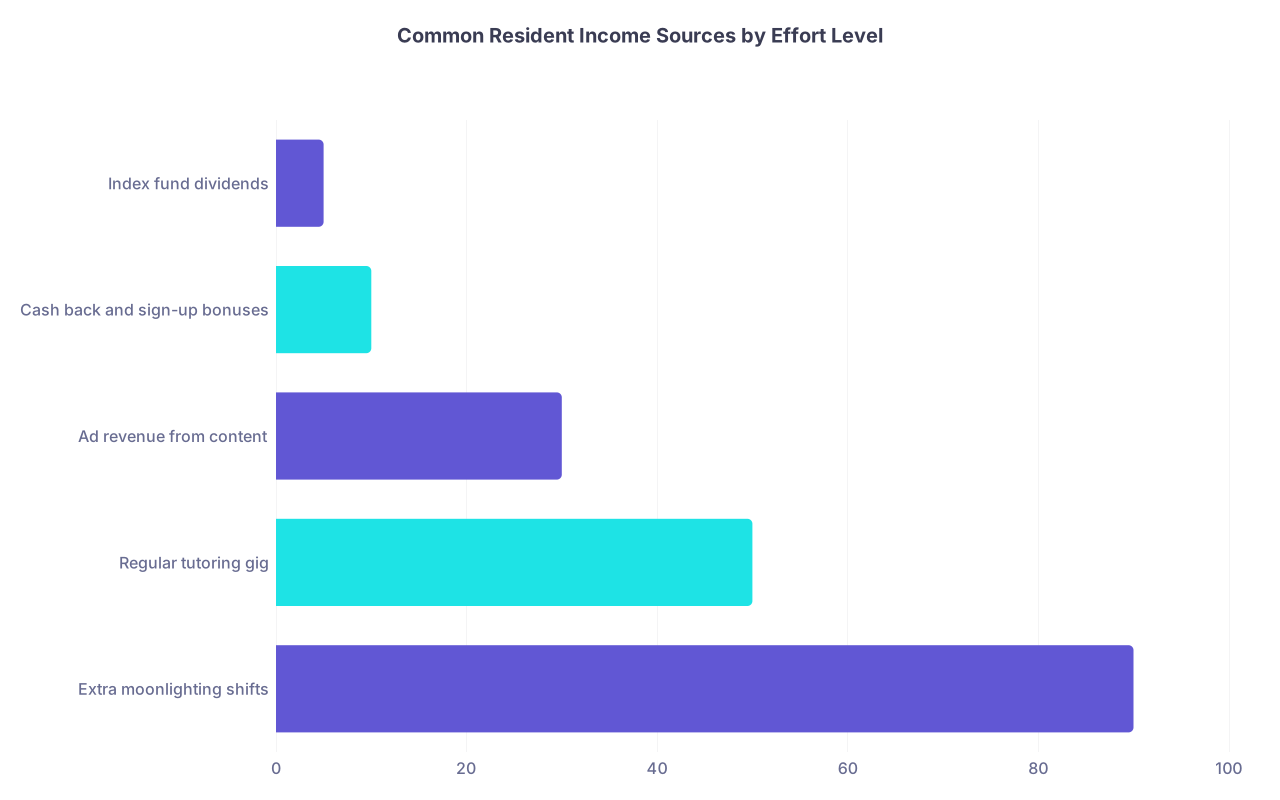
| Category | Value |
|---|---|
| Extra moonlighting shifts | 90 |
| Regular tutoring gig | 50 |
| Ad revenue from content | 30 |
| Cash back and sign-up bonuses | 10 |
| Index fund dividends | 5 |
Think in terms of:
- Passive or semi‑passive income
- One‑time moves that keep paying you quietly
Examples:
- Maximize employer match (if any) and Roth IRA early – boring, but huge long‑term payoff
- Reasonable house‑hacking if you’re in a stable program/location and not drowning already
- High‑yield savings and sign‑up bonuses
- Low‑maintenance online products that don’t require you to be “on” every week
These won’t fix a $300k loan balance overnight, but they also don’t scream “second job.”
A Reality Check You Probably Need
No, you’re not the only one thinking about this.
No, you’re not the only one bending or interpreting policies.
Most residents are doing something on the side:
- Quiet consulting
- Selling notes or decks from med school
- Freelance editing/writing
- Tiny YouTube or blog income
- Small investments
The residents who get burned are usually:
- Too visible
- Too tired
- Too sloppy
If you’re going to dip your toe in side gigs in a program that “bans outside work,” you have to be smarter, more discreet, and more honest with yourself about your limits.
And if your gut is screaming “this feels sketchy” about a specific opportunity, listen to it. There will be other ways to make money later that don’t put your residency – and eventually your license – at risk.

| Step | Description |
|---|---|
| Step 1 | Want a side gig |
| Step 2 | High risk - Avoid or get approval |
| Step 3 | Consider asking for written approval |
| Step 4 | Risk of fatigue and performance issues |
| Step 5 | Lower risk if performance solid |
| Step 6 | Is it clinical? |
| Step 7 | Public with your MD identity? |
| Step 8 | >5 hours per week? |

FAQs (You’re Not the Only One Panicking About This)
1. Can my program actually fire me for a small side gig?
Yes, they can if your contract prohibits outside employment and they decide to enforce it, especially if:
- You lied when asked directly
- It clearly interferes with performance
- It’s clinical or high‑risk
Will they usually do that over $200/month tutoring if you’re a strong resident? Almost never. But if you’re asking, “Is it theoretically possible?” – yes. That’s the gamble.
2. Do I have to report every single dollar I earn outside residency?
Not usually. Programs aren’t asking you to list every Facebook Marketplace sale. They care about employment or ongoing paid arrangements. If your institution has a conflict‑of‑interest form, read what it actually asks: usually it’s about relationships with companies, consulting, ownership stakes, etc. Not your Grandma paying you back for groceries.
3. Is it safer to start a side business as an LLC?
Legally, an LLC can protect you personally from some liability, which is good for business in general. But from your program’s perspective, “I have an LLC” doesn’t magically make outside work invisible or allowed. If anything, a formal business can look more serious. It’s not a cloak of invisibility for contract violations.
4. What if I already started a side gig before I noticed the ban?
You’ve got three choices:
- Quietly wind it down and don’t expand it during residency.
- Keep it small, non‑clinical, and low visibility, and accept the small residual risk.
- Come clean and ask for formal approval, knowing they might say no.
Which one is right depends on how visible it is, how big it is, and honestly, how strict your program is. If you’re on the radar already for performance issues, I’d lean much more conservative.
5. Is it safer to do non‑medical side gigs only?
Yes. Massively safer. If your side gig has nothing to do with medicine, your MD, your hospital, or patient care, you’ve eliminated most of the stuff programs freak out about: liability, reputation, conflict of interest. You still have to watch your time and fatigue, but in terms of “Will they see this as unprofessional?” – non‑medical gigs are way easier to justify.
6. Long‑term, should I just wait until after residency to build real side income?
If your program is strict and you’re genuinely anxious about getting burned, waiting is a perfectly rational choice. Residency is temporary. You can absolutely:
- Learn the skills now (writing, coding, business basics)
- Take notes and plan ideas
- Start small, quiet, low‑risk things
Then scale hard as an attending when nobody is counting your duty hours and your contract doesn’t treat you like a barely‑trusted child. Delaying three years is frustrating, but losing a residency spot is worse.
Key takeaways:
- “No outside work” usually means “no clinical or time‑heavy side jobs,” not “you’re banned from ever making a dollar elsewhere.”
- The less clinical, less visible, and less time‑intensive your side gig is, the safer it is – especially if your performance is solid.
- If your anxiety is screaming louder than the money you’re making, scale it down or pause. Protecting your residency and license is the priority, even when your bank account disagrees.