
The loudest people online are not the only ones making money. Not even close.
If you’re a physician (or trainee) who hates the idea of posting your face, voice, or opinions on the internet… and you keep hearing that “you have to build a personal brand” to have a profitable side hustle… I’m going to say the thing nobody on Instagram says:
You can make very real money and never post a single Reel.
You’ll just have to be more strategic and less impulsive than the “post content, see what happens” crowd.
And yes, I’m saying this as someone who sees the same nightmare scenarios you do:
- What if my program director sees it?
- What if a patient finds it and complains?
- What if I say something slightly wrong and it goes viral for all the wrong reasons?
- What if I get doxxed? Or reported? Or end up in some MedTwitter dogpile?
You’re not crazy for worrying about those. I’ve watched careers get dinged by one sloppy post. I’ve watched residents dragged into meetings over a meme. The fear is not imaginary.
But “I’m afraid to post online” does not equal “I can’t build a side hustle.” It just means you need business models that don’t depend on you dancing on TikTok.
Let’s go through this like a rational, anxious person who wants money but not chaos.
Step 1: Be Honest About Why You’re Afraid (It Changes Your Options)
“I’m afraid to post online” is actually like five different fears smashed together. They don’t all need the same solution.
Here are the big ones I see in physicians:
- Fear of professional repercussions (PD, chair, credentialing, boards, med staff office)
- Fear of medicolegal risk (standard of care arguments, “online advice,” discovery in lawsuits)
- Fear of privacy breaches (doxxing, patients finding your kids’ names, harassment)
- Fear of humiliation (colleagues judging, going viral for the wrong reason)
- Fear of incompetence exposure (what if I’m wrong publicly?)
Which ones hit you hardest? Because your “yes/no” to different side hustles depends on that.
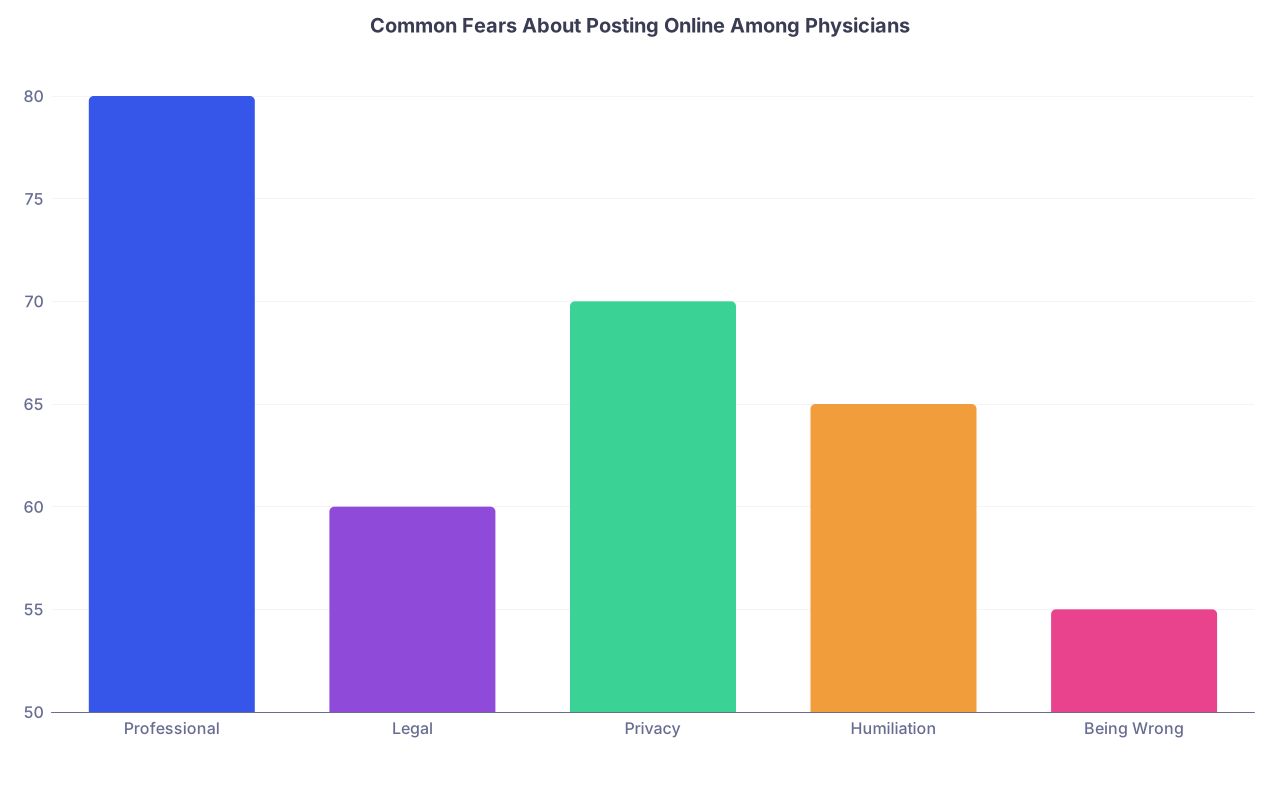
| Category | Value |
|---|---|
| Professional | 80 |
| Legal | 60 |
| Privacy | 70 |
| Humiliation | 65 |
| Being Wrong | 55 |
If your main fear is:
- Professional / legal → You probably shouldn’t build a front-facing medical advice brand. But you can do B2B consulting, anonymous work, or non-medical businesses.
- Privacy / doxxing → You want models that don’t require your real name or face. Think products, systems, or services that live behind a brand.
- Humiliation / being wrong → You’re probably fine with low-visibility, high-impact work: writing under a pen name, behind-the-scenes consulting, niche products.
The point: you’re not doomed. You just can’t copy what the loudest “physician influencer” is doing and hope your anxiety magically goes away. You need an aligned path.
Step 2: Understand the Side Hustles That Don’t Need a Public Persona
You’ve been sold this lie that every profitable side hustle equals:
“Post free content → build audience → monetize.”
That’s one path. It is not the only path.
Here are several physician-friendly side hustles where you never have to be “online famous,” and in some cases don’t have to be publicly visible at all.
1. Behind-the-Scenes Consulting (No Audience Required)
You can:
- Advise startups (digital health, med devices, telehealth platforms)
- Do protocol or policy review for clinics, insurers, or health systems
- Help with medical accuracy checking for health tech, education companies, or app developers
None of this requires a public audience. It requires:
- Credibility (CV, training, experience)
- A clear value proposition
- Quiet networking (email, LinkedIn, introductions) — not public posts
This is the classic “expert for hire” path. Your name might appear on internal documents or small contracts, but not on billboards.
2. Medical Writing Under Your Name or a Pen Name
You can make money writing:
- CME materials
- Board review questions
- Patient education content for companies or hospitals
- Articles and blog posts for health organizations
- Ghostwriting for other physicians or health brands
Most of that lives behind someone else’s brand.
You don’t need an IG account. You need samples of your writing and the ability to meet deadlines.
And yes, you can use a pen name if you’re doing more public-facing stuff (like consumer blogs) and don’t want it tied to your licensure and hospital gossip network.
3. Non-Medical Businesses Where You’re Invisible
This is wildly under-discussed in the “physician side hustle” world. You are allowed to:
- Run an e-commerce brand where nobody knows you’re a doctor
- Build a local service business (cleaning, lawn care, tutoring) with hired managers
- Operate a niche online store or product line (Etsy, Shopify, Amazon FBA)
- Create software or tools (even simple ones) under a company name
No MD branding. No white coat selfies. Just… a normal business.
You’d be shocked how many physicians quietly own mundane, profitable things like laundromats, storage units, or small SaaS tools. You’ll never see them post about it. That’s the point.
4. Real Estate (Boring, but Very Quiet)
You don’t have to put “doctor real estate investor” in your bio. You can:
- Buy small multi-family properties
- Invest in syndications
- Do short-term rentals (with good legal and risk planning)
Most of the work is offline or behind property management software. No TikToks required.
Is it completely risk-free professionally? No. But the connection between “I own a duplex” and “my hospital wants to discipline me” is… basically nonexistent.
Step 3: “But I Do Want to Use My Medical Brain… Without Being a Public Figure”
This is the tricky middle ground. You want to use your training, but don’t want to be a content creator.
You still have options.
| Side Hustle Type | Public Visibility | Uses MD/DO Training |
|---|---|---|
| CME / Board Question Writing | Very Low | Yes |
| Startup / Health Tech Consulting | Low | Yes |
| Chart Review / Expert Work | Low–Medium | Yes |
| Internal Corporate Education | Very Low | Yes |
| Ghostwriting Health Content | Very Low | Yes |
1. Chart Review / Expert-Type Work
Risk management, utilization review, peer review, case reviews for insurers — all of that uses your clinical brain without needing a public persona.
Caveats:
- You need experience and sometimes board certification.
- It’s not completely invisible, but your audience is like… a medical director, a legal team, and a PDF.
2. Internal Education & Training
Think:
- Developing in-house training modules for hospitals
- Creating onboarding materials for telehealth companies
- Running small, paid workshops for clinics or organizations
These are “B2B” (business to business), not “B2C” (business to public). The public never sees you.
3. Ghostwriting & Curriculum Design
You write or design; someone else’s name and brand sit on the cover or the website.
Ethical? If done transparently with the client and not used to fake expertise, yes. Common? Extremely.
Step 4: Anonymous / Pseudonymous Brands — Powerful but Tricky
Let’s talk about the magic word: anonymous.
“I’ll just be anonymous online and say whatever I want and make money and nobody will ever find out.”
No. That’s how you end up on Reddit screenshots in your department group chat.
But a disciplined, pseudonymous presence can work, especially if:
- You separate it carefully from your real-life identity
- You never post details that identify your hospital, location, or specific cases
- You don’t practice clinical medicine online (no individual medical advice)
You can build things like:
- A blog on a narrow topic (e.g., “physician mom budgeting” under a pen name)
- A small digital product brand (templates, study guides, checklists)
- An email newsletter that eventually sells guides/courses

| Step | Description |
|---|---|
| Step 1 | Want to use medical expertise? |
| Step 2 | Need licensure tie? |
| Step 3 | Use brand name only |
| Step 4 | Use real name with strict boundaries |
| Step 5 | Use pen name and generic credentials |
But be brutally realistic about two things:
- Anonymous ≠ risk-free. Enough breadcrumbs (graduation year, specialty, city, hospital size, niche details) and someone can figure it out, especially if you annoy the wrong person.
- An anonymous brand grows slower. People trust real names and faces more. You’re trading speed for safety.
For anxious brains like ours, that trade is often absolutely worth it.
Step 5: Ways to Grow Without “Posting Myself”
You might still need some online presence to get clients or customers. But that doesn’t have to be your face talking to the camera.
Here are lower-anxiety methods:
1. Long-Form Written Content (Under Your Name or Brand)
Blog posts. Articles. Guides. Case studies.
You write something useful, optimize it, and people find it via:
- Referrals
- Links from other sites
Slower than going viral on TikTok, yes. But also more stable and less emotionally violent.
2. Targeted Outreach (Instead of Broadcasting)
Instead of shouting into the void, you:
- Identify 20 companies you’d like to consult for
- Send thoughtful, specific emails about how you can help
- Ask your network for warm introductions
This is small, contained, and controlled. Your PD doesn’t need to see anything. Your colleagues will have no idea what you’re doing unless you tell them.
3. Paid Platforms That Don’t Require “Content”
Some examples:
- Marketplaces for medical writing
- Expert networks that connect you to companies for one-off calls
- Platforms where startups seek clinicians for feedback or advisory calls
You show up, do the work, get paid. No broadcasting required.
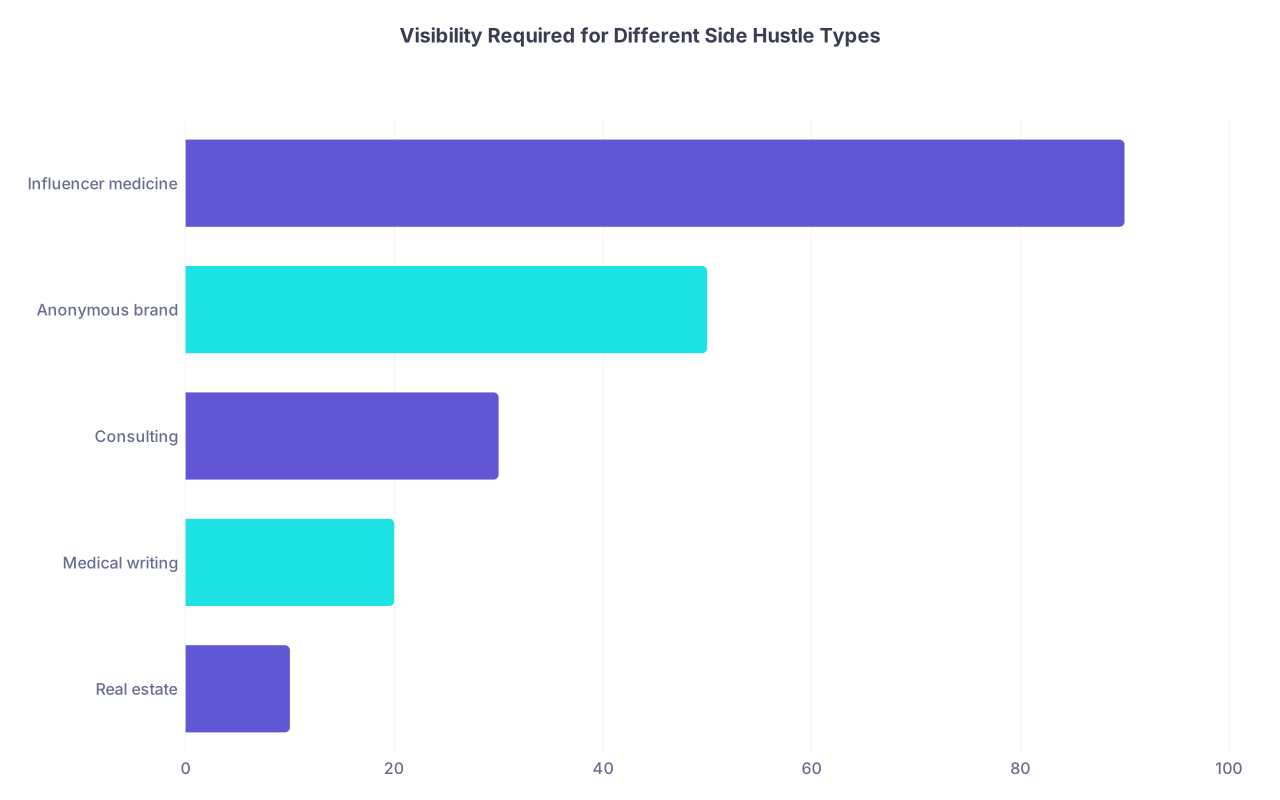
| Category | Value |
|---|---|
| Real estate | 10 |
| Medical writing | 20 |
| Consulting | 30 |
| Anonymous brand | 50 |
| Influencer medicine | 90 |
Step 6: Real Constraints You Can’t Ignore (So You Don’t Get Burned)
Your anxiety is trying to protect you from something. Some of that is irrational, some isn’t.
Here are real constraints for physicians:
- Employment contracts: Some ban outside clinical work, some require disclosure of any business activities. Read yours.
- Social media policies: Many hospitals have vague, overreaching policies. If your face + hospital + medicine is online, you’re exposed.
- Licensing boards: They don’t love misleading claims, practicing medicine across state lines online, or “miracle cure” type nonsense.
- Discovery risk: Public posts can show up in malpractice cases if they’re relevant enough.
So yeah, your instincts are not stupid. You’re not just “too sensitive.” Your risk calculation is different from a random 24-year-old influencer.
This is exactly why B2B, behind-the-scenes, and non-medical brands are so attractive for doctors who want money but not drama.
Step 7: A Simple Path if You’re Anxious But Want to Start Anyway
If you want something concrete, here’s a low-chaos route you can actually follow:
Pick a “visibility level” you can tolerate.
For example: “I’m ok with my name on a website, but not my face on social media” or “I only want to be visible to companies, not the general public.”Choose a model that matches that level.
- Super low: medical writing, internal education, e-commerce, real estate
- Low: consulting, expert calls, small anonymous brand
- Medium: blog/newsletter under your real name
Commit to one experiment for 6–12 months.
Not six days. Not one rejected email. One focused experiment.Set guardrails so you can actually sleep.
- No patient stories
- No identifiable institutional details
- No commenting on hot medical controversies under your real name
- Keep your employer fully out of your branding
Decide upfront what you’ll never do.
Example: “I will never give individual online medical advice” or “I will never show my kids or home online.” Hard lines make choices easier.

You do not have to want to be an influencer. You don’t even have to like the internet. You just have to be willing to treat a side hustle like a small, thoughtful experiment instead of a personality makeover.
FAQs
1. Can I build a profitable side hustle if I never show my face or real name?
Yes. Will it be slower than if you’re loudly posting short-form videos every day? Probably. But many profitable models don’t care who’s behind the scenes: e-commerce brands, medical writing, consulting found via referrals, B2B services, real estate. You’ll lean harder on quality, relationships, and usefulness than on charisma and virality. That’s doable.
2. What if my employer finds out about my side hustle and gets angry?
This is the nightmare scenario everyone replays at 2 a.m. Realistically, here’s what usually matters to them: Are you competing with them directly? Are you using their name or resources? Are you violating your contract? Read your contract. If it requires disclosure of outside work, you either disclose or pick something clearly outside their scope (non-medical, non-clinical). If you’re still panicking, aim for models with almost no institutional overlap, like non-medical businesses or anonymous writing.
3. Is anonymous or pseudonymous posting actually safe for physicians?
“Safe” is too strong. It’s safer, not safe. A well-managed pseudonym (no faces, no locations, no specific institution, no detailed cases) reduces risk a lot. But if you’re saying inflammatory things or revealing too many specifics, people can connect the dots. Use a pseudonym for creative freedom, not as a license to be reckless. Assume that if you’d be devastated to see a screenshot in your chair’s inbox, don’t post it.
4. Do I have to use my medical degree in my side hustle for it to be “worth it”?
No. That’s a weird guilt story medicine likes to tell: if you’re not maximally monetizing your MD/DO at all times, you’re “wasting” it. You’re not. If owning a boring but profitable non-medical business (storage units, an online store, a tutoring company) makes your life better and reduces burnout, that’s a win. Your degree already earns its keep from your main job. Your side hustle can be whatever preserves your sanity and autonomy.
5. How do I avoid medicolegal trouble if I do anything online?
A few hard rules go a long way: never provide individualized medical advice; never establish a doctor–patient relationship online; keep everything educational and general; avoid discussing cases with identifiable details; don’t contradict your own institution’s policies publicly; and don’t claim outcomes you can’t back up. If you’re mixing “doctor” branding with online activity, consider talking to a risk/legal person once, get clear guardrails, and stick to them.
6. I feel paralyzed. There are so many options and risks that I end up doing nothing. What’s the smallest safe first step?
Pick the lowest-visibility, lowest-anxiety option and give yourself permission to treat it as a test, not a life decision. For most anxious physicians, that’s something like: create a simple one-page website for consulting or writing services under your real name, or quietly take one small paid project through a reputable platform. No social media. No public posting. Just one client, one deliverable, one check. Once your brain sees, “Oh, I can make money without blowing up my career,” everything gets less terrifying.
Key points to keep in your head when you spiral:
- You do not need to be an online personality to build a profitable side hustle.
- There are plenty of low-visibility, high-sanity options that fit an anxious physician’s risk tolerance.
- Your job is not to become fearless — it’s to pick a model where your perfectly reasonable fear doesn’t run the whole show.