

The biggest tax mistake physicians make with side practices is thinking in 1‑year chunks instead of 5‑year arcs.
You do not build a tax‑efficient side business by “seeing what my CPA says in March.” You build it by treating your side gig like a small but serious enterprise—with a calendar, milestones, and deliberate moves that compound.
Here is your five‑year, time‑stamped roadmap: what to do, when to do it, and what you should have in place by each checkpoint.
Year 0–1: Concept to Legit Side Practice
Primary goal this year: Get the side practice legally clean, trackable, and separated from your personal life. You’re laying the foundation for every tax move that comes later.
Quarter 1: Idea → Entity → Clean Accounts
At this point you should:
Define the side practice clearly
- Examples:
- Telemedicine sessions 2–3 evenings a week
- Expert witness work
- Concierge micro‑panel (50–100 patients)
- Locums done under your own LLC instead of W‑2
- Why it matters: the type of income affects deductions, home office rules, liability, and future S‑corp decisions.
- Examples:
Choose and form an entity (do not drag this out)
- For most physicians starting out:
- Single‑member LLC taxed as a sole proprietorship is perfectly fine in Year 1.
- Skip the S‑corp (for now) until you have predictable profit.
- At this point, you should:
- File LLC with your state
- Get an EIN from IRS
- Draft a simple operating agreement (even if you’re solo—your future self will thank you)
- For most physicians starting out:
Separate your money on Day 1
- Open:
- 1 business checking account
- 1 business savings/tax reserve account
- 1 business credit card (if you can get it)
- Policy from the beginning:
- All side practice income flows into business checking
- You pay yourself via transfers (owner draws), not random commingling
- You’ll lose deductions and invite audits if you mix personal and business funds. Seen it repeatedly.
- Open:
Set up basic bookkeeping
- Options:
- Simple spreadsheet + monthly reconciliation
- Or QuickBooks/Xero/Wave if you prefer automation
- Must‑track categories from Day 1:
- Revenue by source
- Malpractice and business insurance
- CME specifically tied to the side practice
- Licenses, DEA, software (EMR, telehealth, Zoom, scheduling)
- Marketing, website, domain, legal/accounting fees
- Travel and mileage related to the side gig
- Home office (if used exclusively and regularly)
- Options:
Quarter 2: Start Working, Start Withholding
At this point you should:
Turn on estimated tax autopilot
- As soon as your side income looks like more than a hobby, assume:
- Federal estimated tax: 22–35% of net profit set aside
- State estimated tax: whatever applies locally
- Move that percentage into the business savings/tax reserve every month.
- As soon as your side income looks like more than a hobby, assume:
Get malpractice and appropriate insurance
- Policies to consider:
- Side‑gig malpractice (separate from employed coverage)
- General liability if you see patients outside the hospital
- Cyber liability if you’re doing telehealth and storing PHI
- All potentially deductible business expenses.
- Policies to consider:
Plug the obvious deductible gaps
- Start a dedicated phone line (or at least a separate line/plan)
- Pay for scheduling/EMR from the business account
- Use mileage or actual expenses for any business‑use vehicle trips
Quarter 3–4: First Tax Return With Side Income
By the end of Year 1, you should:
- Have one full tax year with Schedule C (or equivalent) for the side practice.
- Sit down with a CPA who regularly works with:
- Physicians
- Small service businesses
- S‑corp/retirement design (not just basic 1040 prep)
The agenda for that first real tax meeting:
- Review:
- Net income from the side practice
- Effective tax rate on that income
- Missed deductions
- Decide:
- At what profit level you’ll convert the LLC to S‑corp (or elect S‑corp status)
- When to start retirement contributions through the business
Year 2: Clean‑Up, Optimization, and Retirement On‑Ramp
Primary goal this year: Turn your “extra income” into a structured mini‑business with deliberate tax strategies.
Q1: Post‑Mortem on Year 1
At this point you should:
- Have a one‑page summary of Year 1 side practice:
- Gross revenue
- Expenses by major category
- Net profit
- Estimated vs actual tax paid
| Item | Example Amount |
|---|---|
| Gross Revenue | $80,000 |
| Operating Expenses | $20,000 |
| Net Profit | $60,000 |
| Effective Tax Rate | 32% |
| Tax Paid (Fed + State) | $19,200 |
From this, you and your CPA can make real decisions.
Q2: Decide on S‑Corp Timing (Realistically)
Here’s the blunt version: S‑corps are powerful, but they’re not magic and they’re not free.
At this point you should:
Run the S‑corp math (not guess)
- If annual net profit from the side practice:
- Under ~$60,000 → usually not worth S‑corp complexity yet
- $60,000–$150,000 → gray zone, often worth it
- Over $150,000 → you’re late if you haven’t already looked seriously
- Have your CPA:
- Model “Schedule C vs S‑corp” with:
- Reasonable salary
- Payroll tax savings
- Extra admin costs
- Model “Schedule C vs S‑corp” with:
- If annual net profit from the side practice:
If electing S‑corp, plan the transition
- File the S‑corp election (Form 2553) on time
- Set up payroll for yourself:
- Reasonable W‑2 salary based on market comp for your role
- The rest of net profit as distributions
- Calendar quarterly payroll tax deposits
You don’t need to become a payroll expert. But you do need to know the monthly cash flow pattern.
Q3: Turn On a Retirement Plan
At this point, your side practice should be contributing more than stress. It should be building real wealth.
Options, roughly in order:
Solo 401(k) (most flexible for physicians)
- Works well if:
- No W‑2 employees in the side practice other than you/spouse
- You can:
- Contribute as “employee” from side practice income (if not maxed through W‑2 job)
- Plus “employer” profit‑sharing contribution
- Works well if:
SEP‑IRA
- Easier, but:
- Less flexible if you later add non‑spouse employees
- Can complicate backdoor Roths
- Easier, but:
Practical sequence:
- Q3: Choose plan type + provider
- Q4: Fund initial contribution for Year 2 (even if modest)
Q4: Tighten Deductions, Institute Quarterly Reviews
By end of Year 2, at this point you should:
- Have:
- A standardized chart of accounts for the practice
- Quarterly P&L reviews (30 minutes with your CPA or bookkeeper)
- Routinely capture:
- Home office deduction (properly documented)
- Health insurance premiums if you’re paying them personally but eligible through S‑corp
- CME, conferences, memberships that support the side practice
Year 3: Scale Decisions and Advanced Tax Moves
Primary goal this year: Decide whether your side practice stays “compact and profitable” or becomes a legitimate secondary business with staff and systems.
Q1: Strategic Decision Point
At this point you should look 3–5 years ahead and decide:
- Is this side practice:
- A steady 1–2 day/week gig supplementing your main job?
- Or a growing business that might eventually rival or replace your employed role?
Your answer drives everything:
- Whether you hire staff
- How aggressive your retirement plan design becomes
- How you structure compensation and distributions
Q2: If Staying Small But Profitable
You focus on maximizing after‑tax income with minimal complexity.
At this point you should:
- Dial in:
- S‑corp salary vs distributions (revisit annually)
- Solo 401(k) or SEP contributions to the max that fits cash flow
- Clean up:
- Any messy commingling
- Old subscriptions you don’t use
- Redundant malpractice or insurance
Q2: If Planning to Scale
Different game.
Now you’re thinking:
- Part‑time admin
- Another physician or NP
- More locations or expanded hours
At this point you should:
- Revisit entity and tax structure
- Consider:
- Ownership structure if you’ll bring in partners
- Separate legal entity for IP or building ownership (if buying space)
- Consider:
- Look at more advanced retirement plan design
- Examples:
- Defined benefit/cash balance plan
- 401(k) with profit sharing optimized for owner benefits
- Only worth it if:
- You have stable high profits
- You’re willing to commit $50k–$150k+ per year to retirement
- Examples:
Q3–Q4: Systematize and Automate
By the end of Year 3, at this point you should:
- Have:
- Written policies for:
- Reimbursements
- CME
- Work‑from‑home setup
- Automated:
- Quarterly estimated payments
- Payroll tax filings
- Retirement contributions (at least partially)
- Written policies for:
Here’s where a lot of physicians screw up: they let “busy clinic life” become an excuse, and the side practice drifts. No reviews, no adjustments, just inertia. That’s how you overpay taxes and underfund retirement.
Set a recurring Year‑End Tax Review meeting every November from this point forward.
Year 4: Optimize for Lifestyle, Liability, and Exit Options
Primary goal this year: Your side practice should now be a stable machine. The next layer is risk protection and optionality.
Q1: Asset Protection and Risk Review
At this point you should:
Review your liability posture
- Confirm:
- Entity structure is correct and maintained (annual reports, minutes if required)
- You’re not signing contracts personally when the entity should be the party
- Upgrade:
- Umbrella insurance if personal exposure has grown
- Cyber and data protection as patient volume grows
- Confirm:
Audit contracts and agreements
- Look at:
- Telehealth platform contracts
- Independent contractor agreements
- Office leases (if any)
- Negotiate:
- Termination rights
- Indemnification clauses that dump too much risk on you
- Look at:
Q2: Tax‑Efficient Compensation Mix
By now, many physicians with successful side practices have:
- W‑2 income from main job
- W‑2 salary from S‑corp side practice
- K‑1 distributions from S‑corp
- Retirement contributions from both
At this point you should:
- Sit with your CPA and:
- Optimize:
- Which entity is sponsoring which retirement plan
- How you structure health insurance
- HSA usage if eligible
- Consider:
- Employer‑provided benefits through your own practice (within legal bounds)
- Optimize:
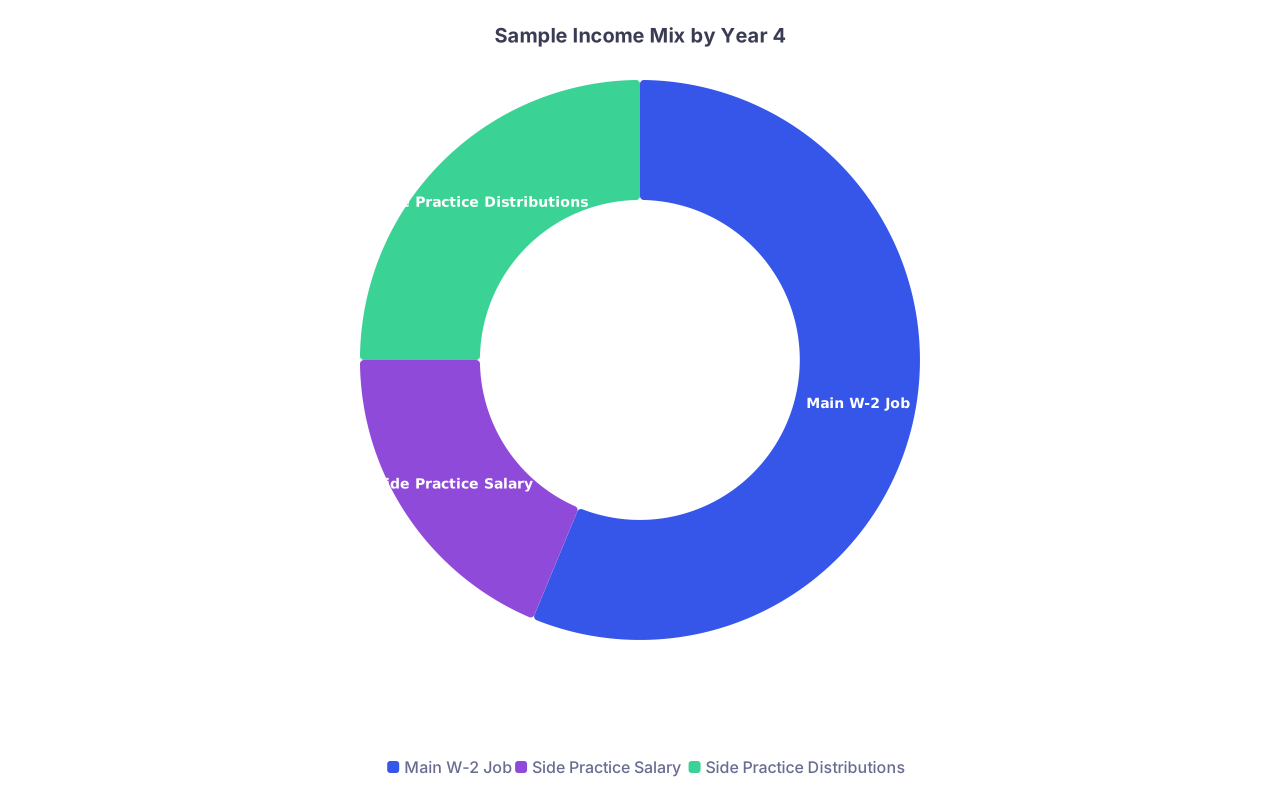
| Category | Value |
|---|---|
| Main W-2 Job | 180000 |
| Side Practice Salary | 60000 |
| Side Practice Distributions | 80000 |
The goal: maximum after‑tax income without making your compliance burden insane.
Q3: Prepare for Possible Sale or Step‑Back
Even if you don’t think you’ll ever sell, plan like you might.
At this point you should have:
- Clean financial statements for the last 3 years
- Clearly documented:
- Patient lists (de‑identified for valuation purposes)
- Contracts and key relationships
- Standard operating procedures
This matters for:
- Potential sale
- Bringing in a junior partner
- Or simply cutting back your own hours and hiring coverage
Q4: Mid‑Decade Checkpoint
End of Year 4, at this point you should:
- Know:
- Your five‑year CAGR (growth rate) of side practice income
- Your average effective tax rate on that income before and after S‑corp/retirement strategies
- Decide:
- Whether Year 5 is about growth, harvest, or partial exit
Year 5: Consolidate, Harvest, or Pivot
Primary goal this year: Use the infrastructure you’ve built to either grow intentionally or to cash in the benefits—lower taxes, more freedom, more retirement.
Q1: Choose Your Year 5 Theme
At this point you should pick one of three tracks:
- Growth Track
You want to expand: more patients, more revenue, possibly more staff. - Harvest Track
Keep operations stable, prioritize extracting cash in a tax‑efficient way and maxing retirement. - Pivot/Exit Track
Prepare to reduce your role, sell, or wind down gracefully without tax landmines.
Q2: Tax Planning by Track
If You’re on the Growth Track
At this point you should:
- Push:
- Marketing spend that has a clear ROI
- Additional staff or contractors
- Revisit:
- Advanced retirement (cash balance plan)
- Multi‑entity structures if real estate is involved
- Consider:
- Whether the side practice becomes your primary business in the next 3–5 years—this changes risk, insurance, and asset protection priorities
If You’re on the Harvest Track
Your objective is optimization, not expansion.
At this point you should:
- Max:
- All retirement space available
- HSA (if eligible)
- 529 plans if children are in the picture and state tax benefits apply
- Smooth:
- Salary vs distributions for ideal payroll tax outcome
- Cash flow so you’re not hit with surprise April bills
If You’re on the Pivot/Exit Track
Now tax timing matters.
At this point you should:
Plan the exit tax picture
- If selling:
- Clarify asset vs stock sale structure
- Understand ordinary income vs capital gains components
- If winding down:
- Time final distributions
- Cleanly close payroll, state accounts, licenses
- If selling:
Make a 2–3 year personal tax roadmap
- Especially if:
- You’ll drop clinical work
- Or move to a lower‑tax state
- You may want to:
- Shift some income/realization across years
- Coordinate Roth conversions or other moves when income drops
- Especially if:
Q3–Q4: Five‑Year Review and Next 5‑Year Sketch
By the end of Year 5, at this point you should have:
- A concise 5‑year history:
- Revenue, profit, and tax paid by year
- Total retirement contributions from the side practice
- Major one‑time expenses and why they were made
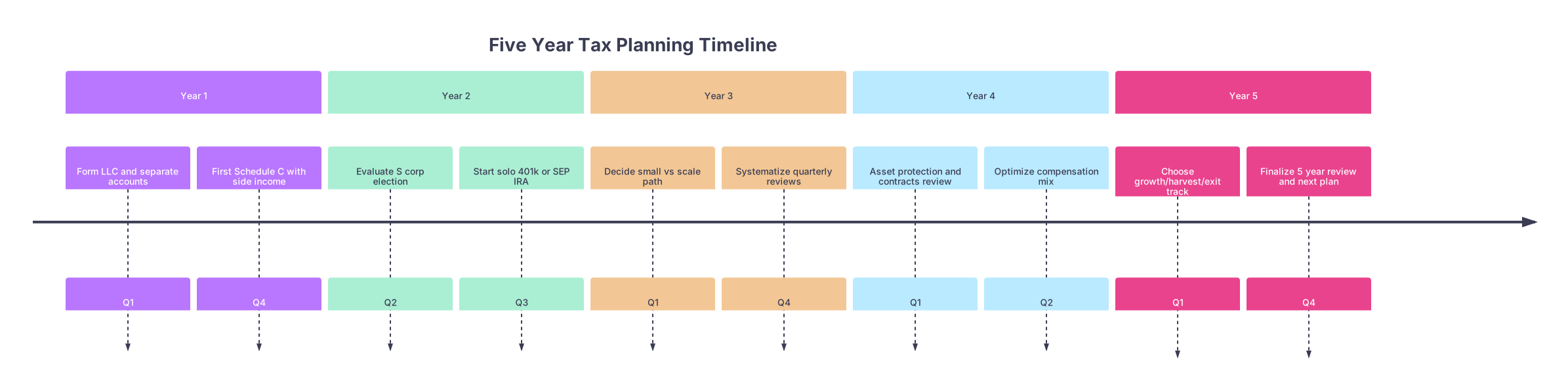
| Period | Event |
|---|---|
| Year 1 - Form LLC and separate accounts | Q1 |
| Year 1 - First Schedule C with side income | Q4 |
| Year 2 - Evaluate S corp election | Q2 |
| Year 2 - Start solo 401k or SEP IRA | Q3 |
| Year 3 - Decide small vs scale path | Q1 |
| Year 3 - Systematize quarterly reviews | Q4 |
| Year 4 - Asset protection and contracts review | Q1 |
| Year 4 - Optimize compensation mix | Q2 |
| Year 5 - Choose growth/harvest/exit track | Q1 |
| Year 5 - Finalize 5 year review and next plan | Q4 |
You should also have a clear decision:
- Double‑down and treat this as a true second business, or
- Keep it as a lean, efficient income stream, or
- Intentionally step back and enjoy what you’ve already built
Quick Year‑by‑Year Snapshot
| Year | Core Focus | Key Tax Moves |
|---|---|---|
| 1 | Legitimacy & Separation | LLC, EIN, clean books, estimated taxes |
| 2 | Structure & Retirement | S corp decision, solo 401(k)/SEP on-ramp |
| 3 | Scale vs Stay Lean | Salary vs distribution, plan design |
| 4 | Risk & Optionality | Asset protection, income mix, exit prep |
| 5 | Grow, Harvest, or Exit | Track-specific strategies, 5-year review |

Final Takeaways
- Treat your side practice like a small business from Day 1—separate accounts, real books, real deadlines.
- Make the big structural moves (S‑corp, retirement plans, advanced strategies) only after you’ve seen real numbers for at least a year.
- Every November, do a forward‑looking tax and strategy review; five years later, that one habit will be worth more than any single clever deduction.


