
Last week a hospitalist texted me a photo of three envelopes from her state’s Department of Revenue. Three. All stamped “IMPORTANT TAX INFORMATION.” She’d worked a W‑2 job, picked up some 1099 moonlighting, and done a telemedicine gig in another state. Now she’s convinced the state is going to audit her, garnish her wages, and maybe “take my license” — her exact words.
If your stomach just dropped because that feels a little too familiar, you’re not alone. Multiple physician jobs + state taxes = anxiety factory.
The ugly fear: what if my state comes after me?
Let me just say the quiet part out loud: yes, your state can absolutely come after you for taxes from multiple physician jobs.
And when you’re a doc, the numbers are big, the forms are confusing, and the letters are terrifyingly official. You start running through all the worst scenarios in your head:
- “What if they think I intentionally hid income?”
- “What if I messed up residency/fellowship part‑year residency rules?”
- “What if my 1099 moonlighting income triggers an audit?”
- “What if they say I owe for telemedicine in a state I barely worked in?”
Here’s the truth: the situation is almost always less catastrophic than the story in your head — but it can get expensive and messy if you ignore it or keep guessing.
Let’s pull this apart in a way that doesn’t sugarcoat it but also doesn’t catastrophize it.
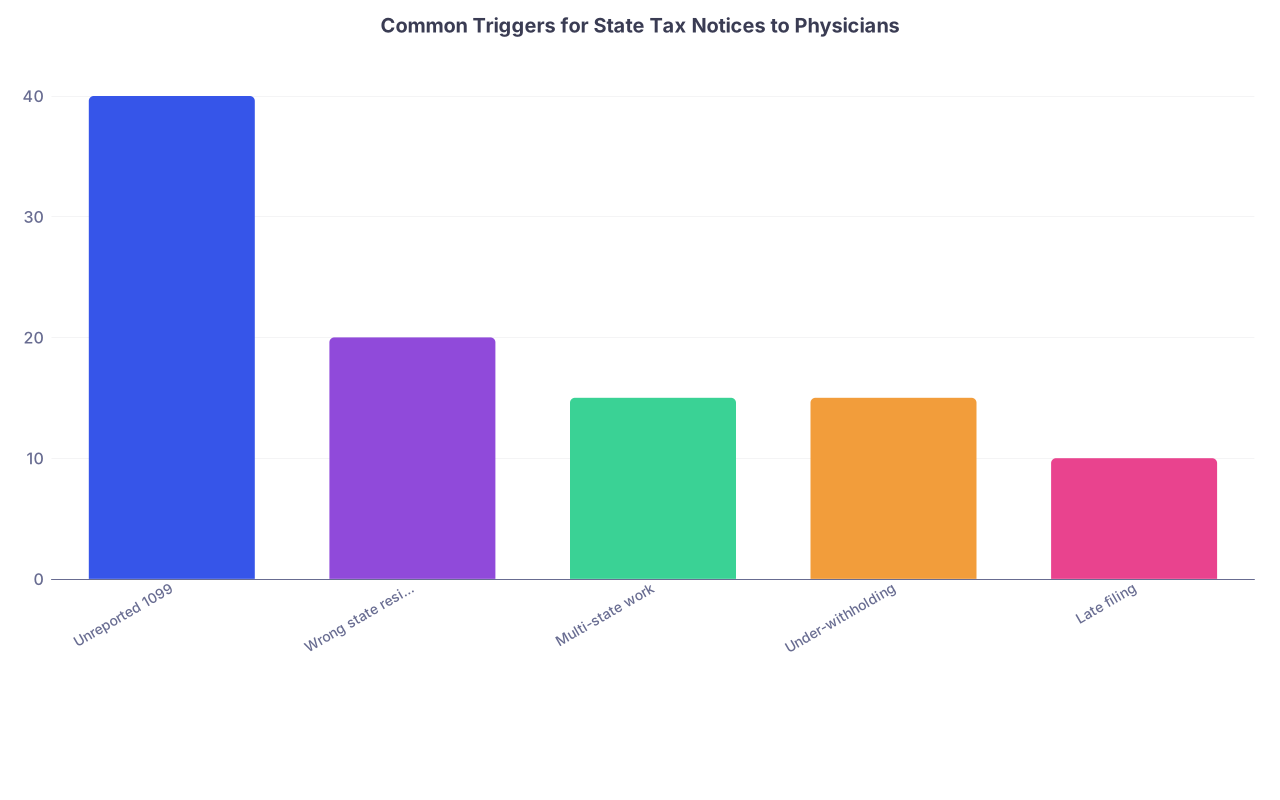
| Category | Value |
|---|---|
| Unreported 1099 | 40 |
| Wrong state residency | 20 |
| Multi-state work | 15 |
| Under-withholding | 15 |
| Late filing | 10 |
How state tax trouble starts when you have multiple jobs
Most of the horror starts with one of a few patterns. I’ve seen these over and over.
1. W‑2 + 1099 + “I thought the taxes were already taken out”
Classic setup:
- Main hospital job: W‑2, state withholding handled.
- Moonlighting: 1099, no taxes withheld.
- Maybe some telehealth or locums sprinkled in.
You file your federal return, maybe use TurboTax at midnight post‑call, and you think you’re good.
Then the state matches your reported income with the copies of your W‑2s and 1099s they got from employers. They see:
- You had income reported on a 1099
- You either:
- didn’t file a state return at all, or
- filed but “forgot” (or software failed) to include that extra income on the state side
Result: notice. Sometimes with penalties and interest already added.
The state doesn’t start here thinking you’re a criminal. They start here thinking: “We’re missing our cut. Send a bill.”
2. Multiple states and residency status confusion
This one is brutal for residents and early‑career attendings:
- You did residency in State A (half the year)
- Then fellowship or first job in State B (the rest of the year)
- You might’ve done telemedicine or locums in State C
And now you’ve got:
- Part‑year residency rules
- Possible nonresident returns
- Schedules that ask where you physically worked, when you moved, and where you were “domiciled” (your true home)
If you file only one state return when you really needed two (or more), or you claim nonresident where the state thinks you’re a resident, you can get:
- A notice that you never filed
- A notice that you underpaid as a “resident”
- Or the dreaded “We adjusted your return” letter
None of this means you’re doomed. But it does mean you have a paperwork mess to untangle.
3. Under‑withholding across multiple W‑2 jobs
Sneaky problem:
- You have two W‑2 jobs in the same state, or
- You switch jobs mid‑year, and both employers treat you like this is your only job
Each employer withholds like you’re making $180k, not $360k. At tax time, the state says, “Cute. You actually owe more.”
You don’t get a notice right away for this one — it usually hits when you file and discover a huge state balance you can’t easily pay. Ignore that balance long enough, and then the notices start.
What can your state actually do to you?
This is where the catastrophizing brain goes completely off the rails: jail, losing your license, ruined career, etc.
Here’s what’s realistic in most cases (assuming we’re talking negligence / mistakes, not deliberate tax fraud or evasion):
- Assess more tax
- Add penalties
- Add interest
- Send collections notices
- In more serious or long-ignored cases:
- Garnish wages
- Put a lien on property
- Potentially notify professional boards if things get extreme enough
Is your medical license getting yanked because you underreported a 1099 telemed job for $12k last year? No. That’s not the world we live in.
But could you:
- Owe thousands more than you expected?
- Get letters that scare the life out of you?
- Get sent to collections if you ghost them?
Yes. 100% yes.

What to do the minute you get a scary state tax letter
The worst thing you can do is shove the envelope in a drawer and “deal with it later.” That’s how a $900 mistake becomes a $4,500 nightmare.
Here’s the order I’d go in if this were me:
1. Actually read the letter. Slowly.
They usually tell you:
- What year they’re talking about
- What document triggered it (W‑2, 1099, no return, mismatch)
- What they think you owe vs what you paid
- Any deadlines to respond or pay
Don’t just panic at the number at the bottom. Look for:
- “Proposed assessment” vs “Final assessment”
- A response window (often 30–60 days)
- Whether they’re asking for proof, payment, or explanation
2. Pull everything for that tax year
You need to reconstruct that year clearly:
- All W‑2s
- All 1099s (telemedicine, locums, consulting, bonuses, stipends)
- Federal return
- State return(s) for that year
- Any big moves between states and dates of address changes
If you used software, download the full PDF — including worksheets and state schedules. Half the clues live in those ugly back pages no one ever reads.
3. Figure out if they’re actually right
Sometimes the state letter is:
- Partially right
- Completely wrong
- Or right on tax but wrong on penalties
Common patterns:
- You really did miss a 1099 on the state return
- You filed as a full‑year resident when you were part‑year
- You never filed for a year you should have
- They misclassified you because your employer reported something weird
If your brain is already melting at this step, that’s a sign: you need someone who lives in this world.
4. Strongly consider hiring a CPA or EA who knows physician multi-state issues
This is where people try to save $400 and end up paying $4,000 more than necessary.
You want someone who:
- Does multi‑state returns regularly
- Understands resident/part‑year/nonresident rules
- Has dealt with state notices, not just simple W‑2 returns
- Ideally has other physician clients (they know the quirks: locums, telemed, academic appointments)
You’re not just buying number crunching. You’re buying: “I’ll deal with this letter, talk to the state, and tell you what’s actually going on.”
| Situation | DIY Reasonable? |
|---|---|
| Small notice (<$500), clear missed 1099 in your home state | Maybe |
| Multi-state income and residency change | No |
| Multiple years of unfiled state returns | No |
| Letter mentions audit or examination | No |
| You don’t understand the letter after one careful read | No |
5. Respond before the deadline — even if you don’t have all the answers
States care a lot more about:
- “This person is engaging with us”
than - “This person made a perfect spreadsheet”
Often, your CPA can:
- Request more time
- File an amended return
- Dispute wrong numbers
- Negotiate payment plans if you can’t pay in full
But silence is what turns this from fixable mess into long-term nightmare.

| Step | Description |
|---|---|
| Step 1 | Receive State Tax Notice |
| Step 2 | Read Letter Carefully |
| Step 3 | Gather Tax Docs for That Year |
| Step 4 | Decide If State Is Right |
| Step 5 | Hire CPA or EA |
| Step 6 | Amend Return or Pay Balance |
| Step 7 | CPA Reviews and Responds |
| Step 8 | Set Up Payment Plan If Needed |
| Step 9 | Monitor For Follow Up Letters |
| Step 10 | Understand Issue? |
What if you worked in multiple states as a physician?
This is where everyone’s brain catches fire.
Typical physician scenario:
- You live in State A (no income tax, like TX, FL, WA)
- You moonlight for a hospital in State B (with income tax)
- You do telehealth for patients physically located in State C
- Your “home address” on forms is inconsistent
So who gets to tax you?
Very simplified version (not legal advice, just pattern‑spotting):
- States usually tax income where you physically performed the work or, increasingly, where the patient is.
- Some states require nonresident returns even for small amounts of income.
- Some states offer credits on your home state return for taxes you paid elsewhere.
Where this blows up:
- You never filed in the work state
- The work state has your 1099/W‑2 with their state code and says, “Hey, where’s your return?”
- Your home state also tries to tax the same income, and you didn’t take the proper credit
Result: double taxation, angry letters, you wondering why you ever agreed to that telemed shift.
For multi‑state work, you really should not be DIY‑ing this long term. One wrong year just repeats itself over and over until someone notices.
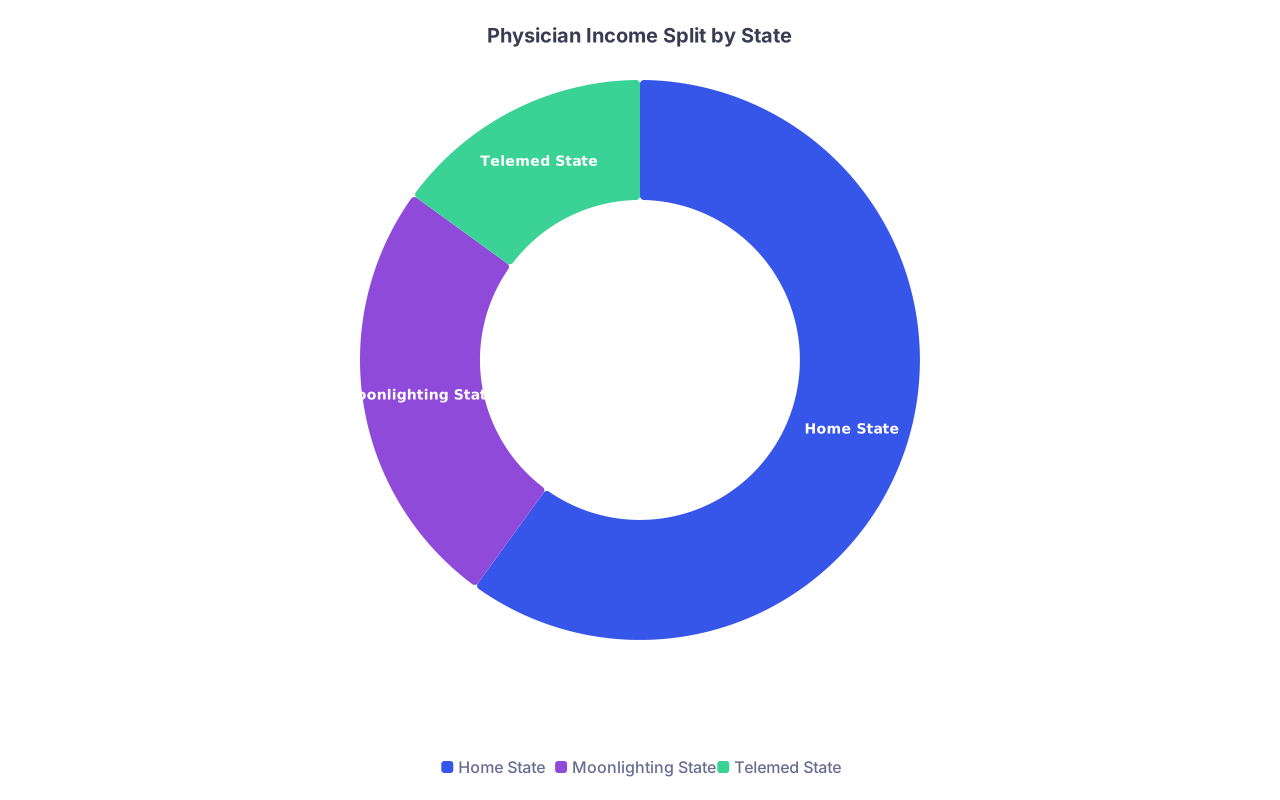
| Category | Value |
|---|---|
| Home State | 60 |
| Moonlighting State | 25 |
| Telemed State | 15 |
Worst-case scenarios… and what reality usually looks like
Your brain:
- Audit
- Criminal investigation
- License in danger
- Wage garnishment
- Years of back taxes
Reality in most physician multi-job situations:
- 1–3 years of returns need fixing
- Several notices, some very stern in tone
- You owe back tax + interest + penalties
- You might need a payment plan
- It’s stressful but boringly administrative, not career-ending
Where it can get uglier:
- You ignore this for years
- You throw away certified letters
- You move and never update your address
- You keep doing the same sloppy thing year after year with growing 1099 income
Then yeah, you can be looking at:
- Large balance due
- Collections
- Liens
- State possibly flagging you as “noncompliant,” which looks bad on any background check that digs deep enough
Not because you’re evil. Because you were drowning, exhausted, and hoped it would all just go away.
It doesn’t. But it also doesn’t have to blow up your life if you just face it now.

How to stop this from happening again (or at least make it less terrifying)
Once you clean up the mess, change the system. A few concrete moves:
- Pick one CPA/EA and stick with them for a few years. Let them learn your pattern: hospitalist, moonlighting, maybe future locums.
- Every time you add a job (W‑2 or 1099), ask: “What does this do to my state taxes?” Not just federal.
- Track which states you work in, and for what dates. A simple note in your phone: “Telemed – CA patients – Jan–Mar 2026.”
- Don’t let 1099 side income creep up without planning quarterly estimated payments. You don’t want a $20k state/fed bill in April with zero preparation.
- When you move states (residency to fellowship, fellowship to attending), talk to your tax person that year specifically about part‑year residency.
This stuff isn’t intuitive. It’s barely logical. You’re not stupid for not understanding it. You’re just in a profession that makes the tax system more complicated by default.
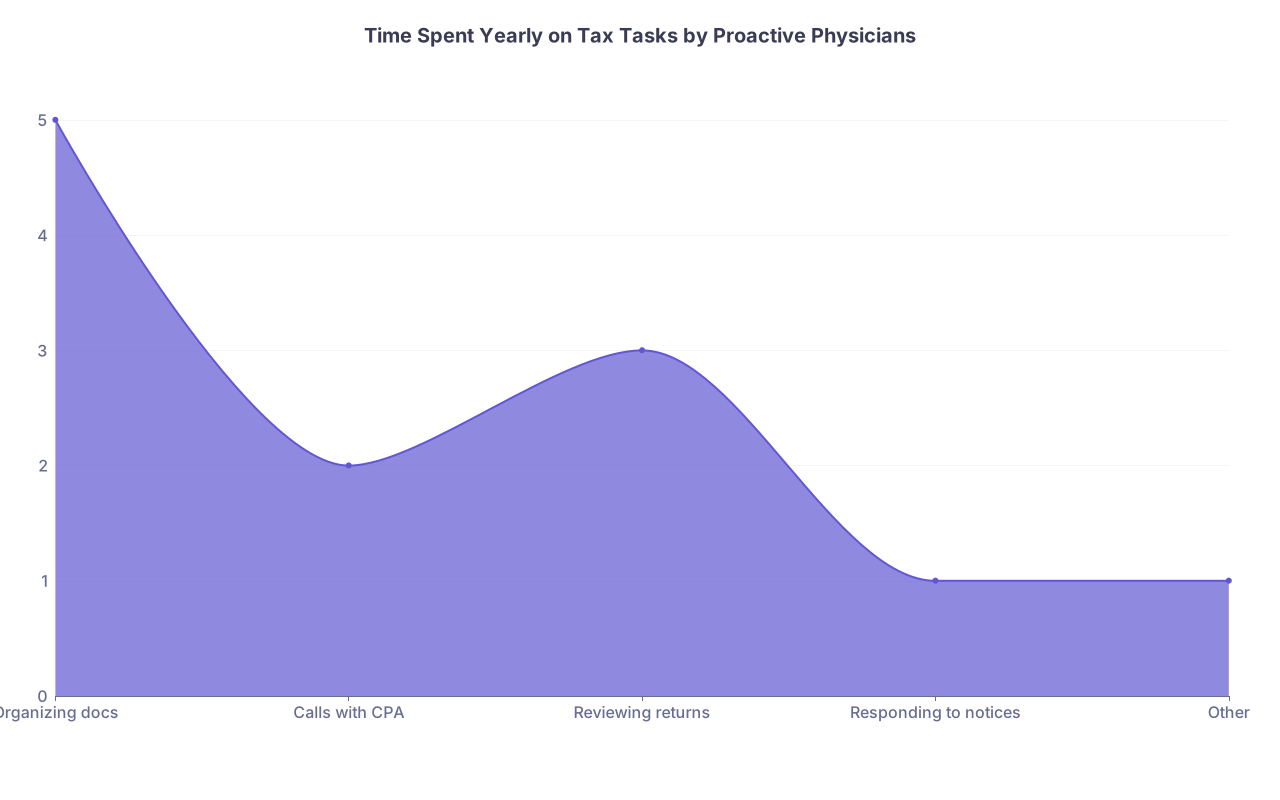
| Category | Value |
|---|---|
| Organizing docs | 5 |
| Calls with CPA | 2 |
| Reviewing returns | 3 |
| Responding to notices | 1 |
| Other | 1 |
FAQ (exactly what you’re probably still worrying about)
1. Can my state actually take my medical license over unpaid or messed-up state taxes?
In run‑of‑the‑mill situations? Extremely unlikely. Boards care far more about patient safety, impairment, and serious criminal behavior. Could an extreme pattern of long‑term, intentional tax evasion become a “professionalism” or “moral character” issue? Yes, hypothetically. But not “I missed filing a nonresident return for my telemed job.” You’ll get bills and maybe collections, not an immediate board action.
2. I just realized I never filed in a state where I moonlighted. Should I wait for them to notice or file now?
Don’t wait. States have years to come after you, and the longer you wait, the more interest and penalties pile up. Talk to a tax pro and look into filing those missing returns proactively. In many cases, quietly fixing it before they chase you works in your favor when it comes to penalties and tone.
3. What if I can’t afford to pay what they say I owe?
That’s not the end of the story. You can usually: set up a payment plan, sometimes negotiate penalties, or adjust the number if they’ve miscalculated. The key is: don’t ignore the letter because you’re scared you can’t pay. Respond, explain your situation, and let a professional advocate for you. The state wants your money, not your destruction — they’ll usually work with you.
4. Does using tax software instead of a CPA make me more likely to get in trouble?
Software is fine for simple, single‑state W‑2 income. Once you add: multiple states, 1099 income, part‑year residency, or telemed/locums, the risk of getting something wrong goes up fast. The software won’t stop you from making wrong assumptions. It’ll just faithfully file your wrong assumptions. That’s where a human who does multi-state returns all day is worth every dollar.
5. I already filed, and now I realized my state return is probably wrong. Can I fix it before they contact me?
Yes. Amended returns exist exactly for this reason. You (or your CPA) can file an amended state return, correctly reporting your income and residency. Doing this before the state sends a notice often reduces drama and sometimes penalties. It’s you saying, “I caught my mistake and fixed it,” which is a very different story than, “You caught me after five years.”
Open your latest state tax notice or your last state return right now and underline any job, state, or income source you’re not 100% sure you handled correctly. That’s your starting list. Then, before the end of this week, email a CPA/EA who handles multi-state physician returns and attach that list. Don’t wait for another envelope to show up.