

What if a tax mistake you make this year, because you couldn’t afford a fancy CPA, comes back in five years and blows up your life—penalties, interest, maybe even a board complaint if someone decides it looks shady?
Yeah. That’s the kind of thing that keeps my brain wide awake at 1:47 a.m.
You’re training, or early attending, not raking in private-equity-chief-of-surgery money yet, and you’re staring at TurboTax wondering:
Am I quietly sabotaging my financial future because I’m too broke to hire the “doctor CPA” everyone on podcasts keeps name-dropping?
Let me be blunt: you can mess things up. But most residents and new attendings wildly overestimate how catastrophic their DIY taxes will be, and underestimate where the actual landmines are.
Let’s walk through it like two anxious people trying not to ruin our future selves.
What Actually Shows Up Later (And What Doesn’t)
First, separate the scary stories in your head from what really matters long-term.
Stuff you’re probably worried will haunt you later:
- “If I miss some deduction now, I’m doomed forever.”
- “If I use TurboTax instead of a specialist, programs/banks/hospitals will think I’m irresponsible.”
- “If I don’t structure everything perfectly from PGY-1, I’ll never catch up.”
Here’s the ugly-but-true version:
Missing deductions now rarely ruins the future.
It just means you overpay. It hurts, but it’s not a moral failing and it doesn’t follow you around as some scarlet letter.Most early-career returns are boring in the grand tax scheme.
W-2 income from residency/fellowship, maybe some 1098-E for student loan interest, maybe a tiny 1099 from moonlighting. The IRS isn’t giving these returns celebrity treatment.Big structural decisions can matter later.
Things like:- Filing status (married filing jointly vs separately) in PSLF years
- Whether you start a side gig as a sole prop vs LLC/S‑Corp once the money is meaningful
- How you document and track basis in retirement accounts / backdoor Roths
Those are the decisions that echo forward. Not whether you categorized $90 of exam fees as “work expenses” in 2022.
DIY vs High‑End CPA: What’s Actually at Stake?
Let me not sugarcoat this: high‑end physician CPAs can be great. Especially once you’re a high-income attending with partnerships, K‑1s, or serious 1099 income.
But during training and early attending years, the tradeoff looks more like this:
| Option | Pros | Cons |
|---|---|---|
| DIY Software | Cheap, fast, decent guidance | Easier to miss nuance |
| Local CPA | Moderate help, affordable | Not always physician-savvy |
| Niche MD CPA | Best strategy, low stress | $$, often overkill early |
If your situation is:
- W‑2 resident/fellow only
- No major investments beyond maybe a simple brokerage
- No backdoor Roth yet, no 1099 side gig, no rental property
…then a carefully done DIY return, or a normal CPA, is usually fine. Like, genuinely fine. Not “fine but secretly disastrous.”
Where DIY becomes risky is once your life gets more tax‑complicated:
- Significant moonlighting / 1099 telemedicine
- Starting a cash-pay side business, LLC, or S‑Corp
- Large taxable investments
- Backdoor Roth IRA (and definitely if you have pre-tax IRA balances)
- Employee stock stuff (RSUs, ESPP, etc.)
At that point, yes—making it up as you go on TurboTax can absolutely create messes that you’ll pay someone more to untangle later.
The Mistakes That Actually Haunt Physicians
If you’re going to be scared, be scared of the right ghosts.
1. Botched Backdoor Roths
This one? This really can boomerang.
Common screwups:
- Doing a backdoor Roth while holding a big pre‑tax traditional IRA or SEP IRA, then not understanding the pro‑rata rule.
- Not filing Form 8606 properly.
- Forgetting to report nondeductible contributions or conversions.
The result isn’t prison. It’s a headache: double taxation, amended returns, cleaning up basis years later when you can barely remember what rotation you were on, much less what you filed.
If you’re not 100% sure how to do a backdoor Roth:
Either learn it cold (for real, step-by-step) or get help. This is one area where DIY confusion absolutely does spill into future years.
2. PSLF and Filing Status Games
Residents on income-driven repayment trying to maximize PSLF can get cute and file “married filing separately” to keep payments low.
That can be smart. Or it can backfire if:
- You do it for no good reason and just pay more tax for nothing.
- You don’t coordinate with your spouse’s loans and income.
- A CPA later has no clean record of why you did what you did.
IRS doesn’t care about your PSLF strategy, but your total lifetime cost does. This is less “they’ll audit you later” and more “you silently burned tens of thousands because you winged it.”
3. Side Gig / 1099 Income Treated Like Free Money
This is the one that gets talked about in horror stories:
- Moonlighting or telemed income shows up on a 1099‑NEC.
- You treat it like W‑2 money—don’t pay quarterly taxes, don’t track expenses, don’t understand self-employment tax.
- Next year, surprise: a big tax bill plus penalties plus sudden panic.
Will that destroy your attending career? No.
Will it feel like getting punched in the face financially right when you’re about to “finally have money”? Yes.
If you have real 1099 income, even a few thousand, you at least need to understand the basics: quarterly estimates, deductible expenses, and that this is business income, not “extra casual money.”
4. Sloppy Recordkeeping, Not Wrong Numbers
Honestly, the IRS cares less about microscopic precision and more about: if they ask, can you show how you got there?
Future-you’s biggest problem often isn’t: “I mis‑typed a number.”
It’s: “I have no idea how I got to this deduction from three years ago, and I can’t prove it.”
What The IRS Actually Does With Your DIY Return
Another fear: “If I DIY, they’re more likely to audit me, right?”
No. The IRS doesn’t flag “TurboTax vs boutique CPA.” They flag patterns:
- Huge deductions out of proportion to your income
- Math that clearly doesn’t line up with information returns (W‑2s, 1099s, etc.)
- Things that scream “I’m gaming the system,” like big Schedule C losses every year that magically wipe out your tax.
Your residency return, done reasonably, is not their Super Bowl.
And even if they do send a notice, most early-career things are fixable with:
- An explanation
- An amended return
- Paying a difference plus interest/penalties
Annoying? Yes. Career-ending? No.
So… Will Your DIY Return Hurt You Later?
Let me answer the question directly:
If you’re a mostly W‑2 resident or early attending with a relatively simple situation, and you:
- Report all your income
- Don’t invent fake deductions
- Don’t try “clever” strategies you half-understand from TikTok
…then a DIY return is extremely unlikely to cause some future financial catastrophe.
Where it can hurt you later is:
- Missed opportunities (you overpaid when a good CPA could’ve helped you strategize).
- Messy multi-year things (backdoor Roth basis, PSLF strategy, self-employment setup).
- Stress and confusion because you never learned the basics and feel permanently behind.
That’s not nothing. But it’s not “I ruined my life because I couldn’t afford a $2,000 CPA during PGY‑2.”
When To Upgrade From DIY To Help (And What Kind)
Let’s be practical instead of just catastrophizing. Here’s when I’d stop relying on pure DIY and at least bring in a professional brain:
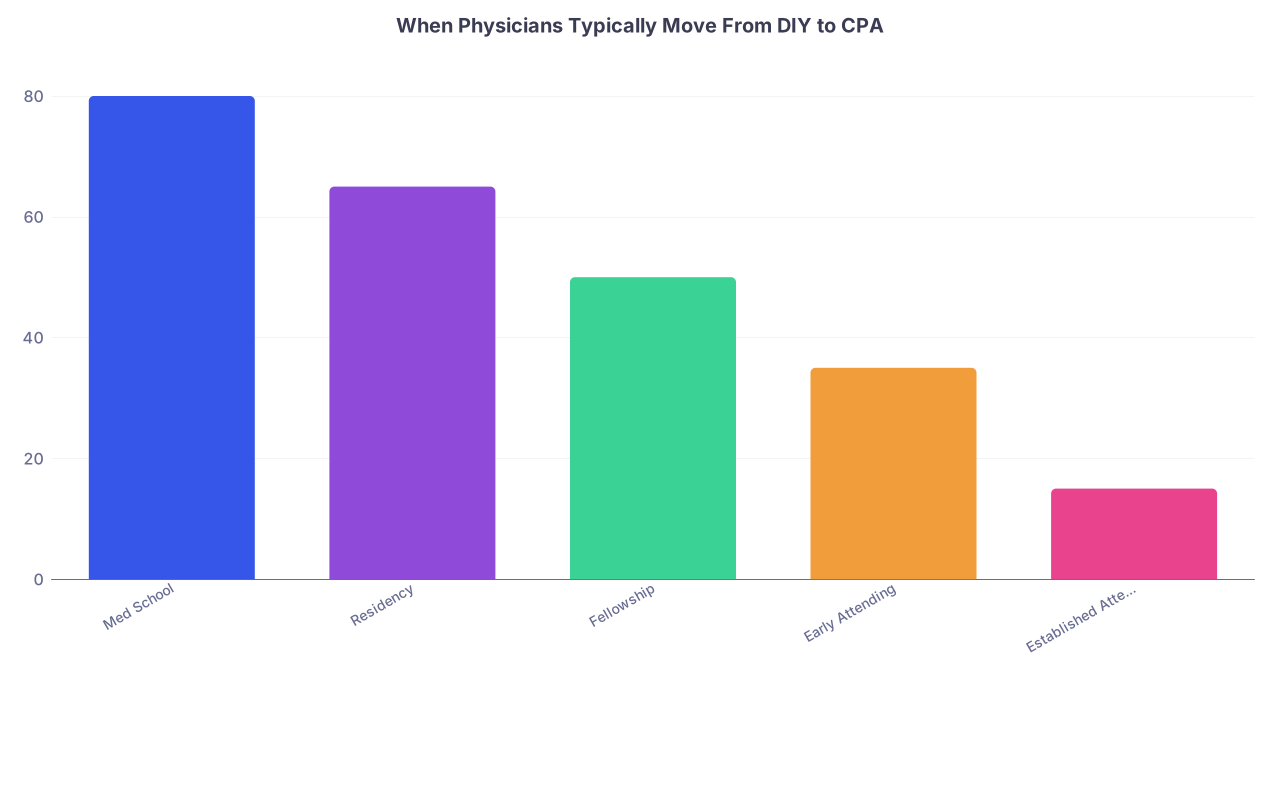
| Category | Value |
|---|---|
| Med School | 80 |
| Residency | 65 |
| Fellowship | 50 |
| Early Attending | 35 |
| Established Attending | 15 |
Rough guideline, not gospel:
DIY is usually fine
Med student, simple W‑2 resident, no big side income, no backdoor Roth, no rentals.Local/regional CPA can be enough
Moonlighting starts, married with loans, maybe dabbling in investing but not complex.Physician-specialist CPA becomes legitimately valuable
High-attending income, serious 1099/locums/telemed, private practice, K‑1s, multi-property, complex backdoor/mega backdoor Roth stuff.
You don’t have to go from “TurboTax by myself in my pajamas” to “$3k a year boutique firm” in one jump. You can staircase it.
How to DIY Without Setting Future-You on Fire
If you have to DIY right now—because money is real, and CPAs are not cheap—you can at least do it in a way that doesn’t boomerang.
1. Use Software, Not Pure Gut Instinct
No “I’ll just plug some numbers into a 1040 PDF online and wing it.” Use real software: TurboTax, H&R Block, FreeTaxUSA, whatever.
Let it walk you through the questions. Read the explanations. Don’t just speed-click.
2. Keep a “Tax Binder” (Digital Is Fine)
Documents to keep every year:
- All W‑2s, 1099s, 1098‑E (loans), 1098‑T if relevant
- Any IRA contribution confirmations
- HSA contribution and distribution statements
- A simple text or spreadsheet noting:
- Did I do a backdoor Roth? How much?
- Did I make estimated tax payments? When and how much?
- Any unusual events? (big move, legal fees, big education expense, etc.)
Future CPA will love you for this. Future you will love you more.
3. Don’t Fake Deductions “Because Everyone Does It”
That’s how you go from “overpaid a bit” to “uh, yeah, that’s fraud.”
Common gray zones where people get too creative:
- Exaggerated “home office” deductions for tiny side gigs
- Claiming personal vacations as “CME trips” with zero real CME
- Massive “uniform” deductions for scrubs and shoes without receipts or logic
If it would sound sketchy out loud to an auditor, you probably know it.
4. Ask For Limited, Targeted Help
You don’t always need full-service prep. Sometimes you just need:
- A one-hour consult to confirm your backdoor Roth plan
- A one-time review of your first 1099 year
- A strategy session on PSLF vs taxable forgiveness and filing status
Some CPAs/financial planners offer flat-fee sessions like this. It’s cheaper than full annual prep and still dramatically lowers future chaos.
Short Version: You’re Probably Not Ruining Everything
Here’s the reality I keep reminding myself:
You are allowed to be early-career, broke, and doing your best with imperfect tools. The tax code doesn’t require you to hire the fanciest CPA from day one. It requires:
- Honesty
- Reasonable effort
- Fixing things when you realize they’re wrong
You’ll make some suboptimal decisions. So does everyone. Most of them are reversible or at least containable.
The real disaster isn’t “I couldn’t afford a high-end CPA yet.”
It’s “I was so scared of messing up that I stayed financially clueless for a decade.”

FAQs
1. If I realize I messed up a past DIY return, am I in huge trouble?
Usually not. If you find a mistake:
- You can file an amended return (Form 1040‑X).
- If you owe more, you’ll pay the difference plus some interest and maybe a penalty.
- If you overpaid, you might even get money back.
The IRS generally saves the real pain for intentional cheating, not honest mistakes corrected proactively. Don’t let fear keep you from fixing what you now know is wrong.
2. Can I switch from DIY to a CPA later without it being a nightmare?
Yes. CPAs take over messy situations all the time. What makes their life (and your bill) much worse is disorganization, not the fact that you used software before.
If you keep each year’s return and key documents neatly saved, a future CPA can usually pick up from where you left off, clean what needs cleaning, and move forward. They won’t be offended you didn’t hire them in PGY‑1.
3. Do banks or credentialing committees care if I used TurboTax?
No. They care if your numbers are accurate, consistent, and verifiable—things like income, employment, debt. They don’t ask, “Did a high-end CPA do this?” They ask, “Can you provide a copy of your last two years of tax returns?”
DIY vs CPA doesn’t show up on any credentialing form or loan application. Sloppiness might. Missing returns might. But the software choice? No.
4. Is there any year where it’s especially important not to DIY?
Two times I’d be very cautious about going fully solo:
- Your first year with significant 1099 income or private practice income. That’s when entity choice, deductions, and estimated taxes get real.
- The first year you do a backdoor Roth (especially if you already have pre-tax IRAs or SEP/SIMPLE IRAs).
Those are inflection points that shape multiple future years. If money is tight, at least do a one-time consult around those transitions.
5. What’s one concrete thing I can do today to protect future-me, even if I still DIY?
Start your tax binder. Right now.
Create a folder on your computer or in cloud storage labeled “Taxes.” Inside it, make:
- “2024 – Filed Return”
- “2024 – Source Docs”
- “2024 – Notes”
Drop in your W‑2s, 1099s, and last year’s return. Open a simple text file and write what happened this year: “W‑2 from X hospital, started tiny 1099 moonlighting in October, no backdoor Roth yet,” etc.
Then next year, you’re not starting from zero with your heart racing—you’re building on something.
So do that: open your files right now and create that “Taxes” folder with a “2024 – Notes” file. Future-you, stressed at midnight in front of a tax screen, will be very, very grateful.


