

The average physician leaves thousands of dollars on the table every single open enrollment. Not because they do not earn enough, but because they click “same as last year” without a plan.
You are going to fix that—systematically, once a year.
This is your timeline-driven guide to turning open enrollment into an annual, tax‑smart reset of your financial life. I’m going to walk you through what to do 6 weeks before, during the actual enrollment window, and in the critical cleanup weeks after.
6–8 Weeks Before Open Enrollment: Set the Ground Rules
At this point you should not be touching the benefits portal. You’re just getting your financial map straight.
Week 1: Pull last year’s numbers
Block 45–60 minutes. No distractions.
Gather:
- Last pay stub from prior year
- Most recent pay stub from current year
- Last year’s tax return (Form 1040 + any state return)
- Current retirement statements (401(k)/403(b), 457(b), HSA)
- Spouse/partner benefits summary if they also work
Your goals this week:
Know your marginal tax rate.
Look at last year’s return:
- Find:
- Line with “Taxable income”
- Total tax paid
- Use a quick IRS bracket chart to identify your marginal bracket (e.g., 32% or 35%).
- Add your state marginal rate.
Why this matters: every pre‑tax dollar you shelter in the right account avoids federal + state. A 35% federal + 5% state marginal rate makes every extra $1 into a 40% tax decision.
- Find:
Know your current savings rate.
From your pay stub:
- Employee 401(k)/403(b) contribution year‑to‑date
- 457(b) contribution YTD (if available)
- HSA contribution YTD
- FSA contributions YTD
Add those up. Divide by your gross YTD income.
That’s your true savings rate. Most doctors guess and are wrong by 5–10 percentage points.
Decide your target savings rate for next year.
Rules of thumb I actually like:
- Attending < 5 years out: 25–30% of gross
- Mid‑career (5–15 years): 20–25% of gross
- Late‑career: depends heavily on existing assets and target retirement date
Pick a number. Write it down. Open enrollment is where you force reality to match that number.
4–6 Weeks Before: Strategy Before Details
Now you sketch your tax‑smart priorities. Still no benefit clicks yet.
Week 2: Rank your tax shelters
At this point you should decide what “wins” your dollars next year. For most employed physicians, the order looks like this:
| Priority | Account Type |
|---|---|
| 1 | HSA (if eligible) |
| 2 | 401(k)/403(b) match |
| 3 | 457(b) (good plan) |
| 4 | Max 401(k)/403(b) |
| 5 | Roth IRA/backdoor |
Adjust if you’re in a weird situation (bad 457(b), huge non‑compete risk, or planning early retirement).
HSA first. If you use a high‑deductible health plan (HDHP), the HSA is a triple‑tax‑advantaged beast:
- Pre‑tax contributions
- Tax‑free growth
- Tax‑free withdrawals for qualified medical expenses anytime
For a doc in a 37% federal + 5% state bracket, the max family HSA contribution (~$8k range; check the new year’s exact limits) saves ~42% immediately. That’s too good to ignore.
Week 3: Model next year’s contribution plan
Now you translate the savings rate you chose into actual dollars and accounts.
Estimate next year’s income:
- Base salary
- Typical bonus
- Call pay/shift differentials (average your last 2–3 years)
Multiply by your target savings rate.
Allocate in order:
Example: 42‑year‑old hospitalist, married filing jointly, making $350k, target 25% savings rate (≈$87,500):
- HSA family max: say $8,300
- 401(k)/403(b) employee contribution max: say $23,000
- 457(b) deferred comp: say $23,000
- Remaining to taxable brokerage or backdoor Roth, depending on income
This week you should end with a written target like:
- HSA: $8,300
- 401(k): $23,000
- 457(b): $20,000 (keeping some cash flow flexibility)
- Dependent care FSA: $5,000 (if you have kids in daycare)
- Parking/commuter: $1,200
You’ll convert those annual targets into per‑paycheck amounts once the new year’s limits are published (they creep up most years).
2–3 Weeks Before: Read the New Benefit Booklet Like a Lawyer
Now the employer finally posts the next‑year benefits. This is where most people space out. Don’t.
Week 4: Scan for changes that affect tax planning
At this point you should go line by line through:
- Medical plans
- Dental/vision
- HSA and FSA limits
- Retirement plan match formula
- 457(b) rules (if any)
- Disability and life insurance options
- Legal plans, malpractice add‑ons, identity theft, etc.
You’re looking specifically for:
Plan design changes
- Increase in deductibles or out‑of‑pocket max
- Premium changes vs last year
- HSA eligibility changes (new HDHP option or one removed)
Contribution limit changes
- Updated HSA/FSA limits
- Any change in match formula (e.g., 50% up to 8% vs 100% up to 4%)
- New Roth 401(k) feature or after‑tax contributions option
Fine print on 457(b)
This one gets missed constantly. Look for:- Is it governmental or non‑governmental?
- Are assets held in trust or subject to employer’s creditors?
- Distribution rules if you separate (lump sum? limited options?)
Governmental 457(b): usually excellent.
Non‑governmental 457(b): powerful but carries employer risk. Not something you overfund if your hospital’s balance sheet is shaky.
Open Enrollment Week: The Actual Elections
This is the week people rush. Don’t. Block a 90‑minute window, grab coffee, and go line‑item.
I’ll walk through the big decisions in the order you’ll see them.
Day 1: Health, HSA, and FSAs
Step 1: Pick your health plan first
Your medical plan choice drives your HSA eligibility, which drives a big part of your tax plan.
Use a simple annual cost comparison:
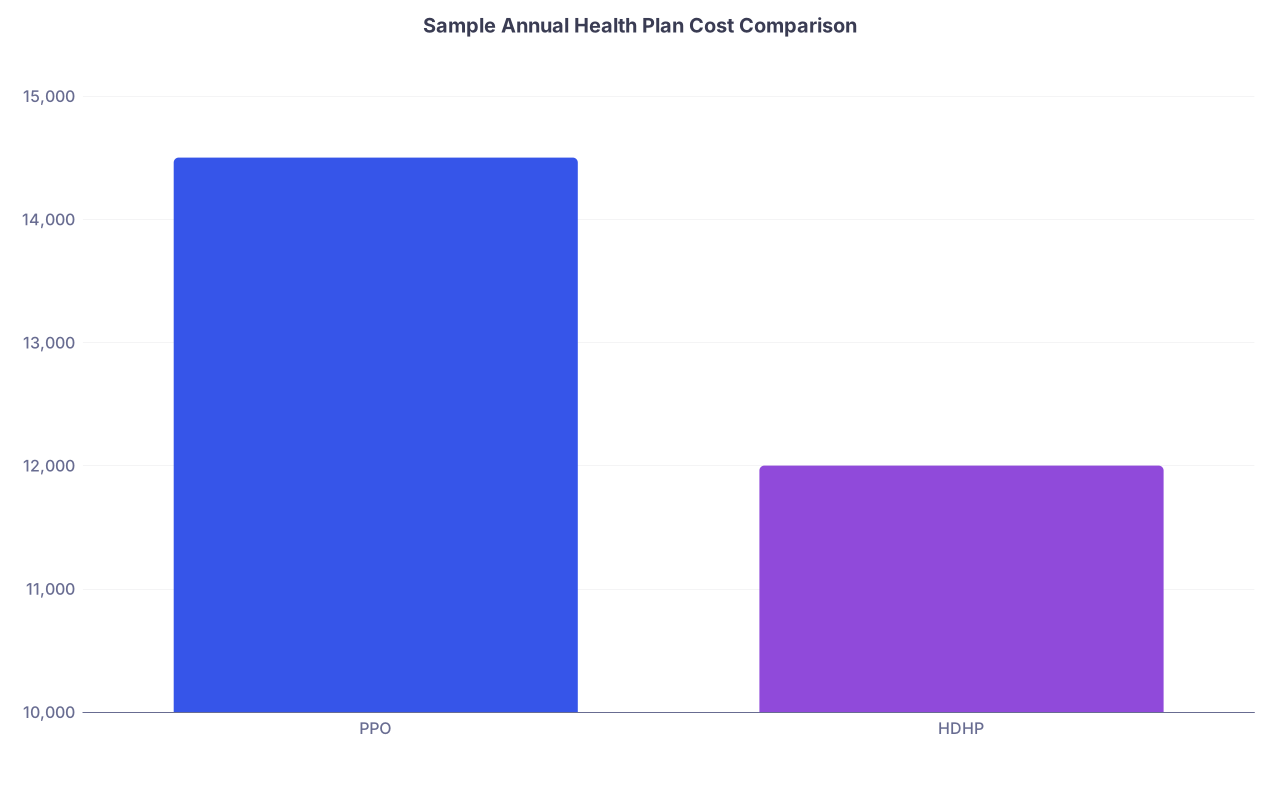
| Category | Value |
|---|---|
| PPO | 14500 |
| HDHP | 12000 |
Where each bar =
Premiums paid + Expected out‑of‑pocket – Employer HSA contribution (if HDHP)
Back‑of‑the‑envelope approach that works:
Estimate:
- Your typical year: mostly healthy, few visits
- Bad year: surgery, hospitalization, or kid breaks arm
Compare:
- Total premiums over the year
- Deductibles and out‑of‑pocket max
- Employer HSA contribution (often $500–$2,000)
If you and your family are generally healthy, HDHP + HSA often wins hard, especially in high tax brackets. If you have a chronically ill child who predictably hits the max out‑of‑pocket annually, a richer PPO/HMO may make more sense even if it’s slightly worse from a tax angle. Do the math, not the vibes.
Step 2: Set HSA elections (if HDHP)
At this point you should:
- Max the HSA unless:
- You’re barely cash‑flow positive
- Your spouse already maxes their own HSA and you’re comfortable with lower savings
If you can afford it, treat the HSA like a stealth retirement account:
- Pay current medical expenses out‑of‑pocket
- Save receipts
- Let the HSA grow invested for decades
Step 2b: FSAs – choose carefully
Two traps:
You cannot double dip HSA + general health FSA. If you enroll in a traditional health FSA, you usually lose HSA eligibility. The exception is a limited‑purpose FSA (dental/vision only). That’s compatible with HSAs and often underused.
FSAs are “use it or lose it.” Yes, there are grace periods and carryovers, but assume most unused money evaporates.
At this point you should:
If on HDHP + HSA:
- Enroll in limited‑purpose FSA only if you’re confident about:
- Orthodontics for kids
- Expensive contacts/eyeglasses
- Known dental work
- Enroll in limited‑purpose FSA only if you’re confident about:
If NOT on HDHP:
- Health FSA: project conservatively (I tell people to start with $500–$1,000 unless you have predictable recurring expenses)
- Dependent care FSA: if you’re paying daycare, nanny, or after‑school program, maxing this often makes sense up to the limit
Day 2: Retirement Plans – Where the Real Tax Savings Live
Now you attack the retirement section of the portal.
Step 3: 401(k)/403(b) elections
At this point you should:
Confirm the new year contribution limit (changes almost every year).
Decide your split:
- Traditional (pre‑tax) vs Roth
- For high‑income physicians still in their peak years, I usually favor mostly pre‑tax:
- You’re likely in a very high marginal bracket now
- There’s a decent chance your retirement marginal rate will be lower
- Roth 401(k) might make sense if:
- You’re early‑career and still in a lower bracket
- You expect massive future income (partnership, surgery center, etc.)
- You’re planning aggressive early retirement with decades of tax‑free growth
Set a percentage or flat dollar amount to target the annual max by year‑end.
Pro move:
- Use percentage, not fixed dollars, if your income varies with call/shift pay. That way your contributions scale up.
Step 4: 457(b) – only if you understand the risk
If you have a 457(b):
Governmental 457(b): usually green light if:
- Investment options are reasonable
- You’re not already strapped for cash flow
Non‑governmental 457(b): you need answers to:
- Are assets subject to employer creditors? (often yes)
- What happens if you leave? Forced lump sum distributions can create a tax nightmare.
At this point, decide:
- Yes or no to participating
- If yes, target contribution amount (usually after maxing 401(k)/403(b), but this can flip for some people if the 457 has stronger options)
Day 3: Insurance and “Extras”
Time to clean up the often‑ignored benefits that either protect income or quietly drain it.
Step 5: Disability insurance
Employer group disability is rarely perfect, but you should maximize the good parts:
- Long‑term disability:
- Aim for at least 60% of income coverage
- Check if benefits are taxable:
- Paid with pre‑tax premiums → benefits taxable
- Paid with after‑tax premiums → benefits generally tax‑free (this is better; you actually get closer to your real income)
If your employer gives you the choice, I usually prefer after‑tax premiums for a cleaner, more predictable safety net.
Short‑term disability: useful if you don’t have a large emergency fund and benefits start quickly. Less critical if you have 6+ months of expenses saved.
Step 6: Life insurance
At this point you should:
- Elect only enough employer life to cover:
- Basic replacement if you have no individual term policy
- A modest supplement if you do
Do not rely solely on employer life if:
- You might change jobs
- You have kids and a mortgage
Use cheap group coverage as a supplement, not the backbone. And avoid overpriced optional life that functions like badly‑designed whole life.
Step 7: Optional benefits filter
Now you’re into the weeds: legal plans, accident insurance, critical illness riders, ID theft services, pet insurance.
My short take:
- Legal plan: sometimes worth it if:
- You know you have estate planning work coming (wills, trusts)
- Accident/critical illness: usually poor value for physicians with solid emergency funds and disability insurance
- ID theft: decent if cheap, but many premium credit cards already include robust protections
Default: decline most “extras” unless you can name a specific, near‑term use.
Final 48 Hours of Enrollment: Double‑Check and Lock In
You’re almost done. At this point you should slow down again.
Day 4: Paycheck and Cash‑Flow Reality Check
Open a blank page and write:
- HSA per paycheck: $X
- 401(k) per paycheck: $Y
- 457(b) per paycheck: $Z
- FSA(s) per paycheck: $A
Then:
- Add them up.
- Subtract that from your current take‑home.
- Ask: does this new number actually work with your real monthly spending?
If you overshot:
- Don’t cut the HSA first.
- Shave back the 457(b) or FSA before touching the 401(k) match.
- Worst move: underfunding retirement while overshooting an FSA you might not fully use.
Day 5: Screenshot Everything
After you submit:
- Download or screenshot:
- Confirmation of health plan choice
- HSA, FSA, and dependent care elections
- Retirement contribution percentages
- Disability and life insurance coverage levels
Create a folder: Benefits_[Year] and toss everything in.
Future‑you will thank past‑you when HR makes a mistake or your pay stub looks off in February.
First Paycheck of the New Year: Trust but Verify
Your work isn’t done when enrollment ends. The system still has to execute what you planned.
At this point you should, on the first two paychecks of the new year:
- Verify:
- Health insurance premium matches the plan you picked
- HSA/FSA deductions match your elections
- 401(k)/403(b) and 457(b) contributions are coming out at the right level
- Employer match is applying correctly (if it’s per‑paycheck based, avoid front‑loading too much)
Catch errors early:
- HR and payroll mess up physician deductions more often than you think. I’ve seen 457(b) contributions missing for half a year because nobody checked.
Annual Rhythm: What Should Change vs. Stay Stable
Once you’ve run this process once, every year gets easier.
Each open enrollment season, you should:
Keep stable:
- Core savings rate (unless big income/life changes)
- Preference for HSA vs PPO, unless your health situation flips
- Retirement contribution priority order (HSA → match → 457/extra 401(k))
Re‑evaluate aggressively when:
- Partner gets or loses a job with benefits
- You have a baby
- One of you becomes self‑employed or takes a 1099 gig
- Your employer merges, gets acquired, or the hospital system’s finances get sketchy (revisit that non‑governmental 457(b))
To visualize the annual cycle:
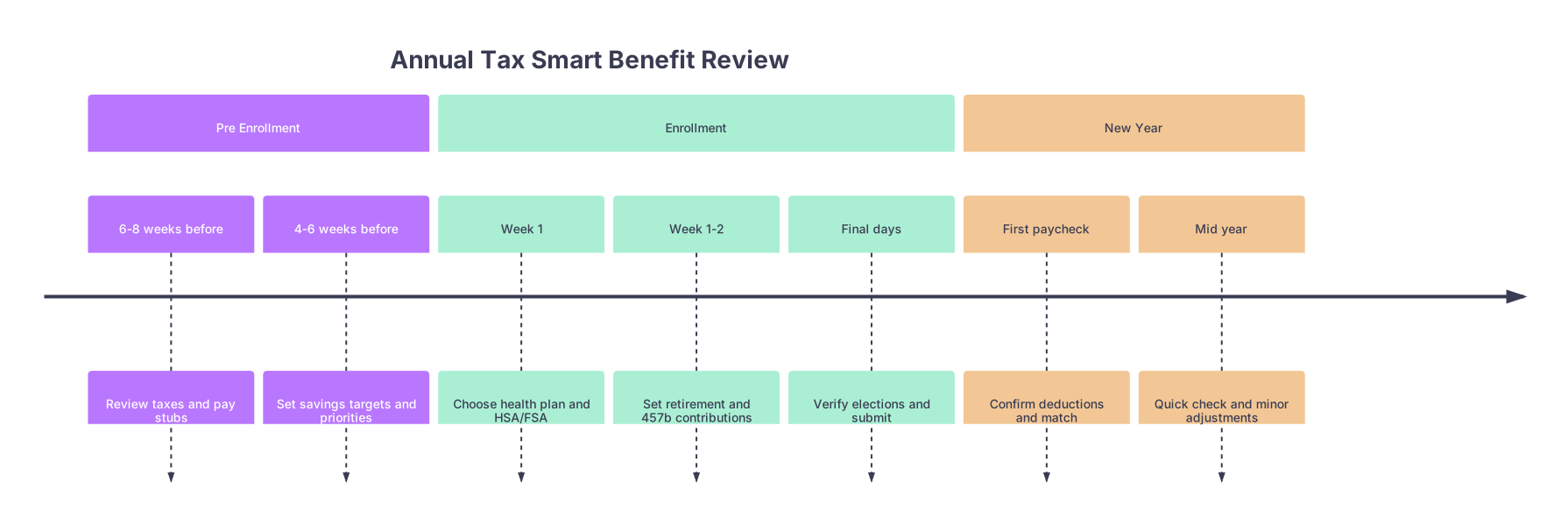
| Period | Event |
|---|---|
| Pre Enrollment - 6-8 weeks before | Review taxes and pay stubs |
| Pre Enrollment - 4-6 weeks before | Set savings targets and priorities |
| Enrollment - Week 1 | Choose health plan and HSA/FSA |
| Enrollment - Week 1-2 | Set retirement and 457b contributions |
| Enrollment - Final days | Verify elections and submit |
| New Year - First paycheck | Confirm deductions and match |
| New Year - Mid year | Quick check and minor adjustments |
The 3 Things to Remember
- Open enrollment is not “HR paperwork season.” It’s your annual, scheduled chance to move tens of thousands of dollars into tax‑favored buckets on autopilot.
- Sequence matters: health plan → HSA/FSA → retirement → 457(b) → insurance → extras. Click in that order, not the order the portal happens to show you.
- One focused hour before, one serious session during, and one audit of your first paycheck will put you ahead of 90% of your colleagues—for the rest of your career.


