
Most unmatched applicants have no idea how close they actually came to a position. Or how quickly their name was dismissed. Or who in that room tried to fight for them and lost.
Let me pull back the curtain on what really happens inside rank meetings, and how your file gets talked about when you end up unmatched.
This is not the sanitized NRMP brochure version. This is how program directors, coordinators, and faculty actually behave when they’re in a closed room, staring at a list of names and trying to protect their own service, their own sanity, and their own reputation.
How Rank Meetings Really Work (Not How You Think)
There’s a fantasy a lot of applicants believe: that rank lists are built carefully, rationally, and linearly. That everyone’s file is read in depth, discussed at length, and placed precisely where they “deserve” to be.
That’s not what happens.
At most programs, rank meetings fall into a few recognizable patterns. I’ve sat in them. I’ve watched the sausage get made.
The Typical Set-Up
You’ll see some version of this:
- Program Director (PD) at the head of the table.
- One or two Associate PDs.
- Chief residents.
- A couple of key faculty who regularly interview.
- Program coordinator with a spreadsheet open and a very tired expression.
There’s usually a big projected list on the wall or everyone is staring at a shared screen over Zoom: candidate name, school, scores, interview score, maybe flags or tags (URiM, couples match, home student, prelim vs categorical, etc).
By the time this group meets, an initial “draft” list already exists. That list is rarely built from scratch in the meeting. The meeting is where people move names up or down, kill a few, rescue a few, and negotiate landmines (politics, internal candidates, institutional priorities).

Who Actually Drives the List
Here’s the behind-the-scenes truth: 2–3 people drive 80% of the final list.
Usually: PD + one APD + the chief(s). Everyone else is “input.” Sometimes loud input, but still input. The PD is thinking about:
- “Can this person cover nights without melting down?”
- “Will my faculty hate working with them?”
- “Will this person quit, fail boards, or blow up my ACGME data?”
They’re not primarily thinking about fairness. They’re thinking about risk.
That mindset matters a lot when we talk about how unmatched candidates were discussed. Because what gets you quietly pushed down or off the list is almost always perceived risk.
How Candidates Get Sorted Before You Ever Hit the Rank Meeting
By the time the full committee sits down, you’re already in one of several informal buckets. Nobody calls them this out loud, but mentally, they’re there:
| Bucket | Rough Rank Range |
|---|---|
| Must-Match | Top 5–10% |
| Strong | Next 30–40% |
| Acceptable | Middle bulk |
| Risky | Lower third or removed |
| No-Go | Not ranked |
The truth: if you were unmatched, you were likely in one of three places:
- Lower “Acceptable” and simply got squeezed by numbers.
- In the “Risky” pile and dropped way lower than you think.
- Quietly moved into “No-Go” late in the process after an incident or concern surfaced.
Let’s break each down, because this is exactly how you’re talked about in the room.
Scenario 1: You Were “Fine,” But Got Outcompeted
A huge number of unmatched candidates fall into this category, and they never hear it.
You weren’t “bad.” You were just vanilla in a year where the denominator exploded.
How the Discussion Sounds
On the screen: You’re somewhere in the big middle—interview score fine, letters fine, no obvious red flags. Let me quote the kind of language I’ve heard, almost word-for-word:
“Yeah, they were good. Quiet on interview. Solid, but we’ve got a lot like them.”
“If we had more spots, I’d be okay with them.”
“Any strong advocates?”
[silence]
“Okay, leave them where they are for now.”
Translation: you are not important enough for anyone to spend political capital on. Nobody hates you. Nobody loves you. You sit where the algorithm first put you.
Now, as they reshuffle the top 40–60 names, add in couples match pairs, move up that one late super-strong applicant, and protect internal candidates, you drift down. Not intentionally. Just math.
Then the PD asks the key question: “Where do we think the list should end? How deep do we realistically go?”
Someone mentions last year’s fill rate and how far they had to go down the list. They cut the bottom chunk.
You’re in that chunk.
Nobody says, “Let’s deliberately screw this person.” You are simply in the part of the list where the conversation shifts from “who we want” to “who we’re never going to reach.”
You go unmatched and assume you were hated. In reality, you were never really discussed.
Scenario 2: The “Risky” Candidate They Were Afraid to Rank High
Programs fear risk more than they desire excellence. That’s the part applicants don’t grasp.
Scores a bit low. Step failure. Gap years. Odd story. Strange vibes in the interview. A weird LOR line. PDs will absolutely push you way down the list over a 30-second comment from one interviewer.
What They Say When You’re Discussed
Imagine your file comes up and someone says:
“I had concerns about their insight when we talked about their Step 1 failure.”
“They were pretty defensive when I asked about that leave of absence.”
“Faculty X said they were ‘not a team player’ on their home rotation.”
Watch what happens next:
The PD leans back and immediately thinks: I can’t afford a remediation project. I’d rather have a slightly weaker but safe candidate.
You might still end up on the list. But you slide. Sometimes a lot.
There’s a very common conversational move:
“Okay, let’s keep them on, but move them down below [three or four other names]. If we get to them and they match here, fine, but we’re not counting on them.”
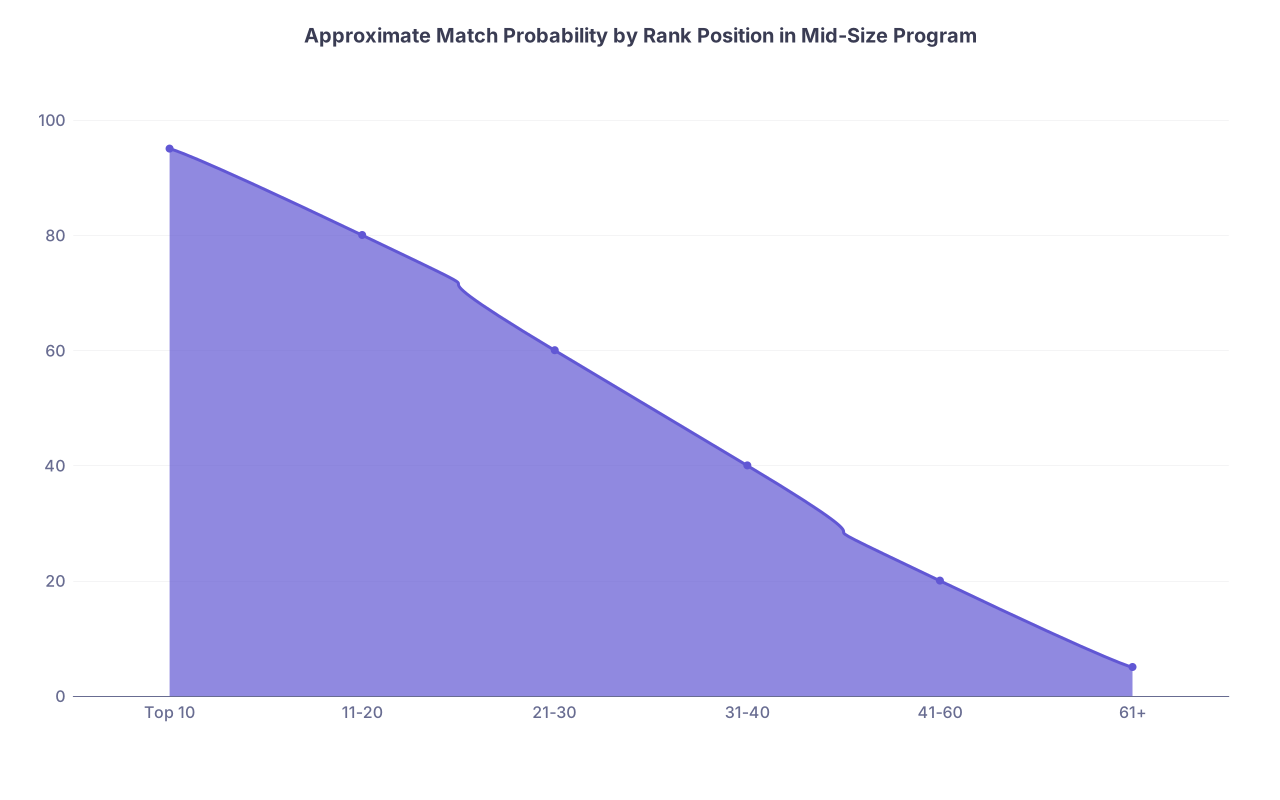
That one sentence can drop you 20+ spots. In a 10–12 position program, that can be the difference between matching and being nowhere near the cut.
| Category | Value |
|---|---|
| Top 10 | 95 |
| 11-20 | 80 |
| 21-30 | 60 |
| 31-40 | 40 |
| 41-60 | 20 |
| 61+ | 5 |
No, those percentages aren’t NRMP-official. But they’re pretty close to how PDs think about yield. They know by the time they’re into the 30s or 40s, odds are slim for a mid-size program in a competitive specialty.
You get consigned to the “if we get them, okay, but we’re not betting on it” zone.
If you want the blunt truth: any real or perceived professionalism or judgment issue is nuclear. PDs will forgive a Step bump before they forgive “weird vibes” or “rude to staff” or “odd email after the interview.”
Scenario 3: The Late Hit That Quietly Killed You
There’s a particularly brutal way unmatched candidates get taken out, and they usually never know it happened.
Some examples I’ve personally seen:
- A late email from a faculty member: “I’d like to update you on [Applicant]. I cannot strongly recommend.”
- A backchannel phone call from a PD at your home or away rotation: “Just so you know, we had concerns about reliability.”
- A coordinator raises an eyebrow and says, “That’s the one who was really rude to me on the phone.”
You think nobody cares what you said to the coordinator? They absolutely do. More than you realize.
How the Conversation Goes
Picture this interaction during the rank meeting:
APD: “Before we finalize, I did get some informal feedback on [Name]. They apparently had some issues with professionalism on a sub-I. Nothing formally documented, but it made me a little uncomfortable.”
PD: “Okay, move them down 20 spots. I don’t want to end up with them unless we have to.”
You’re still “ranked.” Technically. The program can even tell you with a straight face, “We did rank you.”
What they do not tell you is that you were ranked in the territory they never expect to reach. Functionally equivalent to not being ranked at all.
This happens more than you think. Especially when your application looks fine on paper but something about you set off someone’s radar.
How SOAP Candidates Are Talked About After They Go Unmatched
Once Match Week hits and the dust settles, there’s a second, grittier conversation: SOAP.
You need to understand those rooms too, because if you’re in SOAP or planning a reapplication, this is where your name lives next.

| Step | Description |
|---|---|
| Step 1 | Match Results |
| Step 2 | Quick review of near-miss candidates |
| Step 3 | SOAP planning meeting |
| Step 4 | Review unmatched list |
| Step 5 | Discuss specific issues or strengths |
| Step 6 | Screen by filters |
| Step 7 | Decide to offer SOAP interview or pass |
| Step 8 | Filled? |
| Step 9 | Known to program? |
How They View Unmatched Applicants in SOAP
Harsh truth: many programs assume an unmatched candidate is either risky, below their usual bar, or both. They’re not wrong mathematically—most strong, clean applications match somewhere.
But that doesn’t mean you’re doomed. It does mean you’re starting from a deficit.
The language shifts:
“We need people who can work. We don’t have time to remediate.”
“If they went unmatched, is there something we’re not seeing?”
“Did they overreach and not rank enough? Any explanation in their email?”
That last line matters. When you email programs during SOAP, they’re skimming for:
Is this person self-aware? Honest about what happened? Blaming the system? Delusional?
The self-pitying email, the vague “I was surprised I did not match” with no reflection—those turn people off fast.
Programs in SOAP are not trying to rescue you. They’re trying to plug holes safely.
The Specific Ways You Get Sabotaged (And How to Fix It Next Cycle)
Let’s get clinically specific. Here are the patterns that got applicants quietly buried in rank meetings, and what you actually do about each for a reapplication.
1. No One Was Willing to Go to Bat for You
The symptom:
Your feedback is vague: “We had a competitive applicant pool, and unfortunately you did not match.”
Translation: You didn’t have a champion. Nobody in that room said, “We should move them up.”
How that sounds inside:
“Anybody feel strongly about [Name]?”
silence
“Okay, we’ll leave them where they are.”
If you’re reapplying, you need to manufacture a champion. That comes from:
- Doing an away or prelim year where someone sees you work up close and is willing to pick up the phone.
- Building one or two relationships with faculty who will actually call a PD and say, “This one is worth another look.”
Letters alone are weak. Phone calls and emails between PDs change rank positions.
2. Soft Red Flags That Never Hit Your Inbox
You might have:
- Seemed arrogant with residents.
- Been weirdly dismissive of support staff.
- Over-shared or under-shared about personal issues.
- Sent odd emails (too familiar, too desperate, too entitled).
Nobody is going to email you and say, “Your vibe was off.” They just lower you on the list.
For a reapplication year, you need brutally honest feedback from someone who has no stake in protecting your ego. An APD, a trusted attending, a brutally honest mentor. Tell them: “I went unmatched. I need you to be completely blunt about what I give off.”
Then practice interviews with residents and staff too, not just senior attendings who already like you. The way you treat the person who checks you in absolutely gets reported.
3. The “Story” Problem
In rank meetings, people shorthand your entire application into a 10-second “story.”
Examples:
- “That’s the IMG with strong scores but no US letters.”
- “That’s the DO with the Step failure and the vague medical leave.”
- “That’s the MD/PhD who felt overqualified and lukewarm about us.”
If your “story” is hard to explain, confusing, or constantly triggers questions—your name comes with extra friction. And friction gets you pushed down.
When you reapply, your story has to be cleaner and easier to sell:
“Last year I overreached and under-ranked, then addressed my weak areas with a structured research year plus more clinical letters, and now I have [X, Y, Z] that directly show I can function as an intern.”
If a PD cannot summarize you in one clean sentence that makes sense, you’ll suffer in that room.
What Program Directors Don’t Tell You After You Unmatch
PDs are often more candid with each other than they are with you. Some things you’ll never hear directly but I’ve heard said behind closed doors about unmatched applicants:
- “They applied to too few programs for their profile. That was a strategy problem.”
- “They ranked us very low. We had them decently high; they just didn’t like us enough.”
- “Honestly, I thought they’d match somewhere. I was surprised they didn’t.”
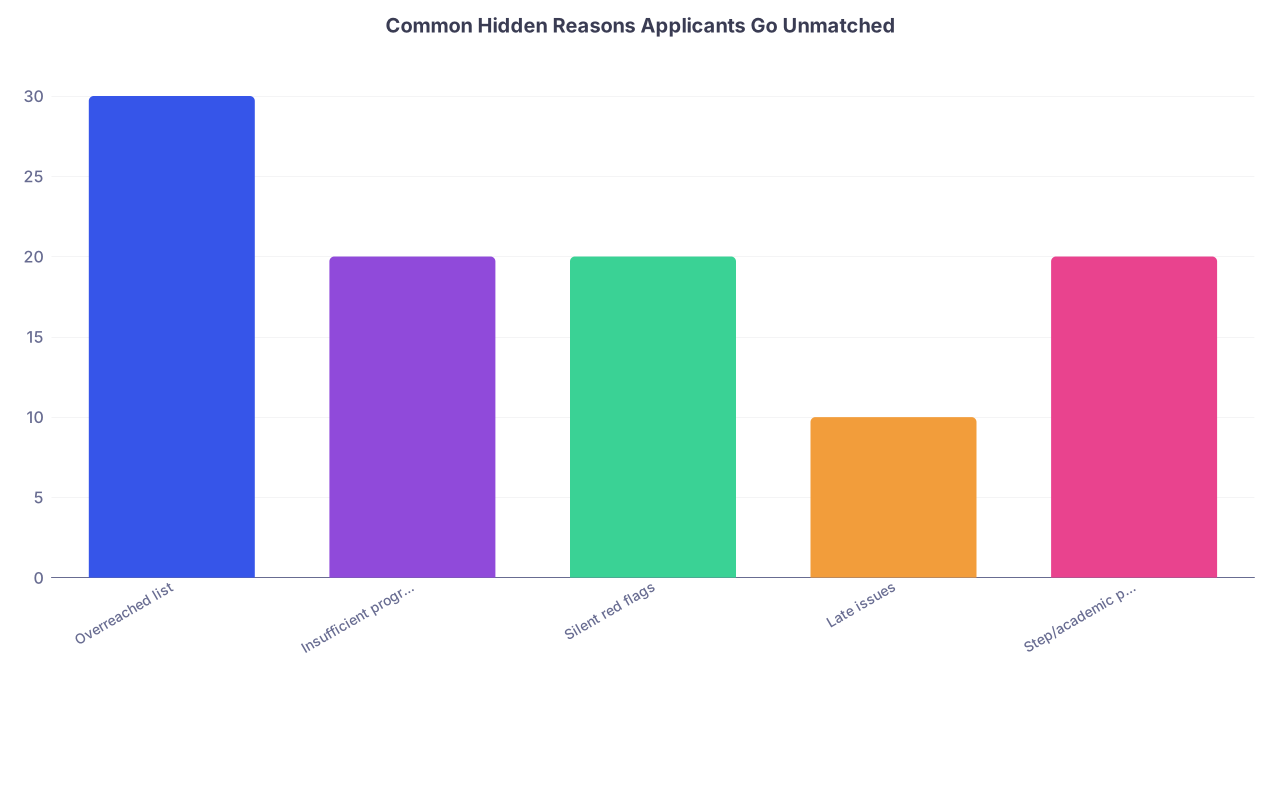
Yes, that last one happens. Sometimes you looked good, programs ranked you fine, but your list construction plus competition in your region killed you.
| Category | Value |
|---|---|
| Overreached list | 30 |
| Insufficient programs | 20 |
| Silent red flags | 20 |
| Late issues | 10 |
| Step/academic problems | 20 |
These aren’t NRMP categories. This is how PDs talk when they debrief a rough match.
How to Re-Enter the Room Differently Next Time
If you’re planning a reapplication, your actual goal isn’t just “improve my application.” That’s vague. Your goal is: change how my name gets talked about in the next rank meeting.
You want to move from:
“Fine, I guess, but I don’t feel strongly”
to
“I’ve worked with them. They’ll be solid. I’d be happy to have them.”
Or from:
“I’m worried about them for professionalism/insight”
to
“They had an earlier stumble, but their current PD says they’re reliable and teachable.”
That’s why a prelim year, a strong research year integrated into a department, or a focused additional clinical time with US faculty who actually know you can be game-changing. Not because of the line on your CV. Because of the sentence someone will say in a room when your name pops up.

If you already went unmatched, stop obsessing over whether you were ranked at this or that program. That’s noise. Focus on this question:
“If I sat in the next rank meeting at a program I’m applying to, what would I want someone in that room to be able to truthfully say about me that they couldn’t say this year?”
Then design your entire post-match plan around making that sentence true.
How to Ask Programs What Really Happened (And When They’ll Actually Answer)
Some PDs will give you real feedback. Many will not. You need to ask in a way that makes it easy for them to be honest without feeling trapped or defensive.
The smart way to ask:
- After Match, send a concise email to a small number of programs (2–4 where you interviewed).
- Acknowledge the reality: “I understand you have limited time and cannot share full details.”
- Ask one or two very targeted questions, like:
- “Were there specific aspects of my application that likely limited my position on your rank list (e.g., scores, interview performance, letters, gaps)?”
- “If you were advising me as a reapplicant, what would you see as the highest yield area to address over the next year?”
The wrong way:
- “Why didn’t you rank me?”
- “Can you please tell me what was wrong with my application?”
- “I thought my application was strong—was there a mistake?”
Those get you boilerplate or silence.
Sometimes, off the record, you’ll get a surprisingly blunt reply. I’ve seen PDs say:
- “We had concerns from interviewers about your maturity and insight.”
- “Your Step 2 score made you less competitive compared with our pool.”
- “We received mixed feedback from your away rotation.”
If you get something like that, that’s gold. Painful, but gold. That’s your to-do list for the next 12 months.

Final Reality Check
There’s a brutal asymmetry here: you live and die by a process you never see. You feel like your entire worth was judged and rejected. Inside the room, your name might have been on the screen for 30 seconds. Or never really debated at all.
So you internalize “I’m not good enough.”
While the truth might be closer to: “You were okay, but not easy enough to fight for, and not safe enough to risk.”
That’s cruel, but it’s very different from “You’re doomed.”
Your job after an unmatched cycle is not to re-litigate the past rank meetings. It’s to shape what happens in the next ones: get into rooms where people actually know you, reduce perceived risk, give them an easy story to tell about you, and make at least one person willing to spend political capital moving your name up the screen.
Do that, and the conversation in that closed room changes.
And when that changes, your Match result usually follows.