
It is July 2nd. You are two nights into intern year. Your sign-out list is a mess, your pager has not shut up since 5 p.m., and some well-meaning attending just said, “You’re interested in policy, right? You should get involved in advocacy this year.” You nodded. You have no idea what that actually means in the middle of a 28-hour call.
Here is the reality: you can build a serious health policy portfolio during residency. But not if you treat it like a vague side interest. You need structure. Year-by-year, quarter-by-quarter, sometimes week-by-week.
I am going to walk you through a practical roadmap: what to do in PGY‑1, 2, 3+ so that by graduation you have a coherent, defensible “policy story” that holds up in faculty searches, fellowship interviews, or public health job talks.
Big Picture: What a “Policy Portfolio” Actually Is
Before we go year-by-year, you need a target. A policy portfolio is not “I went to Advocacy Day once.”
By the end of residency, you want at least:
| Component | Target by Graduation |
|---|---|
| Policy Focus Area | 1–2 clearly defined topics |
| Policy Outputs | 3–6 concrete products |
| Roles & Positions | 2–3 leadership or formal roles |
| Skills | Writing, data, lobbying basics |
| Network | 5–10 policy mentors/contacts |
“Concrete products” = things you can point to:
- Policy briefs or white papers
- Op-eds in local/national outlets
- Testimony (even written) for a bill or local board
- Committee reports or resolution authorship for a medical society
- Quality improvement or research with explicit policy implications
At each stage of residency, you should be moving at least one of these levers: focus, output, role, skills, or network.
PGY‑1: Survival Mode with Intent (Months 1–12)
You are not going to redesign Medicaid in intern year. You are going to learn to call consults that do not annoy people and to write notes that get reimbursed. That is fine.
But you can still lay serious groundwork.
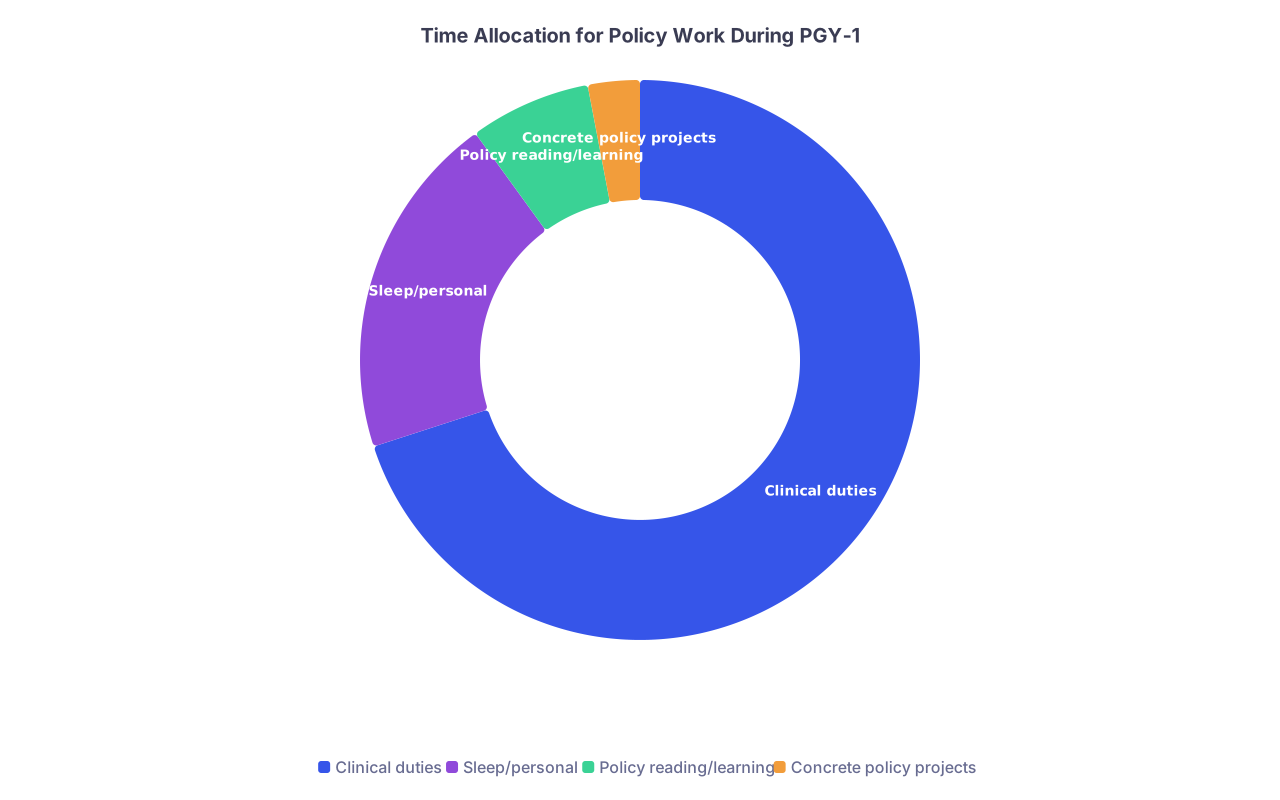
| Category | Value |
|---|---|
| Clinical duties | 70 |
| Sleep/personal | 20 |
| Policy reading/learning | 7 |
| Concrete policy projects | 3 |
Months 1–3: Orientation and Passive Intake
At this point you should focus on two things only:
- staying alive clinically
- quietly mapping the policy landscape.
Week-by-week checklist (first 8–10 weeks):
- Week 1–2
- Ask your program coordinator: “Who in our department works in health policy or health services research?”
- Write down 3–5 names. That is your starter list.
- Week 3–4
- Pick one health policy podcast and listen on your commute. (Example: Health Affairs This Week, Tradeoffs, The Dose.)
- Keep a simple note on your phone: “Policy ideas from wards” – 1–2 lines per interesting case.
- Week 5–8
- Skim your state medical society or national society’s advocacy page. Identify:
- Top 3 issues they are pushing this year
- Committees or councils that exist for trainees
- Attend one noon conference / grand rounds with policy content and email the speaker one sentence: “I am a PGY‑1 interested in X; could I have 15 minutes sometime this fall to hear how you got into policy?”
- Skim your state medical society or national society’s advocacy page. Identify:
That last move builds your network without committing you to any project.
Months 4–6: Define a Narrow Policy Focus
Random interest gets you nowhere. By 6 months into intern year, you should be able to complete this sentence in one breath:
“I am clinically training in ___, and I am especially interested in how policy affects ___ for ___ patients.”
Examples:
- Internal Medicine + Medicaid redeterminations + insulin access for adults with diabetes
- Pediatrics + school-based policies + asthma management in low-income kids
- Psychiatry + criminal legal policy + diversion for people with SUD
At this point you should:
- Write a 1-page “focus memo” for yourself:
- 1 paragraph: The clinical problem you care about
- 1 paragraph: The policy levers (payment, regulation, housing, criminal legal, education) that clearly touch it
- Bullet list: 5 “how could policy fix this?” questions
- Schedule 2–3 coffee chats (20 minutes each) with faculty or fellows who touch that space. Ask them only:
- “What would you do in residency if you were starting over and wanted to work on this?”
- “Who else should I talk to?”
- “Is there a low-risk project I can plug into this year?”
Do not volunteer to “help with anything.” That is how you end up formatting references at midnight.
Months 7–12: First Small Output
Second half of intern year, you should produce one small, real, outward-facing policy product. Not a 30-page paper. Something shippable.
Options that fit a brutal call schedule:
- Co-author an op-ed with a faculty mentor (you draft, they edit)
- Write a 1–2 page policy brief for your residency’s advocacy committee
- Serve as a resident representative giving comments at a hospital committee on a policy issue (visitor restrictions, equity dashboard, etc.) and document it
- Submit a resolution to your state medical society on a narrow issue you actually care about
Pick one. Then back-plan 6–8 weeks.
8-week micro-timeline for a first policy product (example: op-ed):
- Week 1: Identify topic linked to a patient story; send 2-sentence pitch to mentor
- Week 2–3: Draft 600–800 words on a post-call day; get feedback
- Week 4: Revise and target 2–3 outlets (local paper, STAT First Opinion, MedPage Today)
- Week 5–6: Submit; be prepared to cut or re-angle; resubmit if rejected
- Week 7–8: Once published, archive PDF + citation in a folder labeled “Policy Portfolio – PGY1”
That folder matters. You will forget half of what you did by PGY‑3.
PGY‑2: Shift from “Interested” to “Credible”
By PGY‑2, you are not new anymore. You have some control over your schedule. You can stop playing defense and choose.
At this point you should have:
- A defined focus area (or two at most)
- 1–2 small policy outputs
- Names of 2–3 mentors who know your interests
Now you build structure.
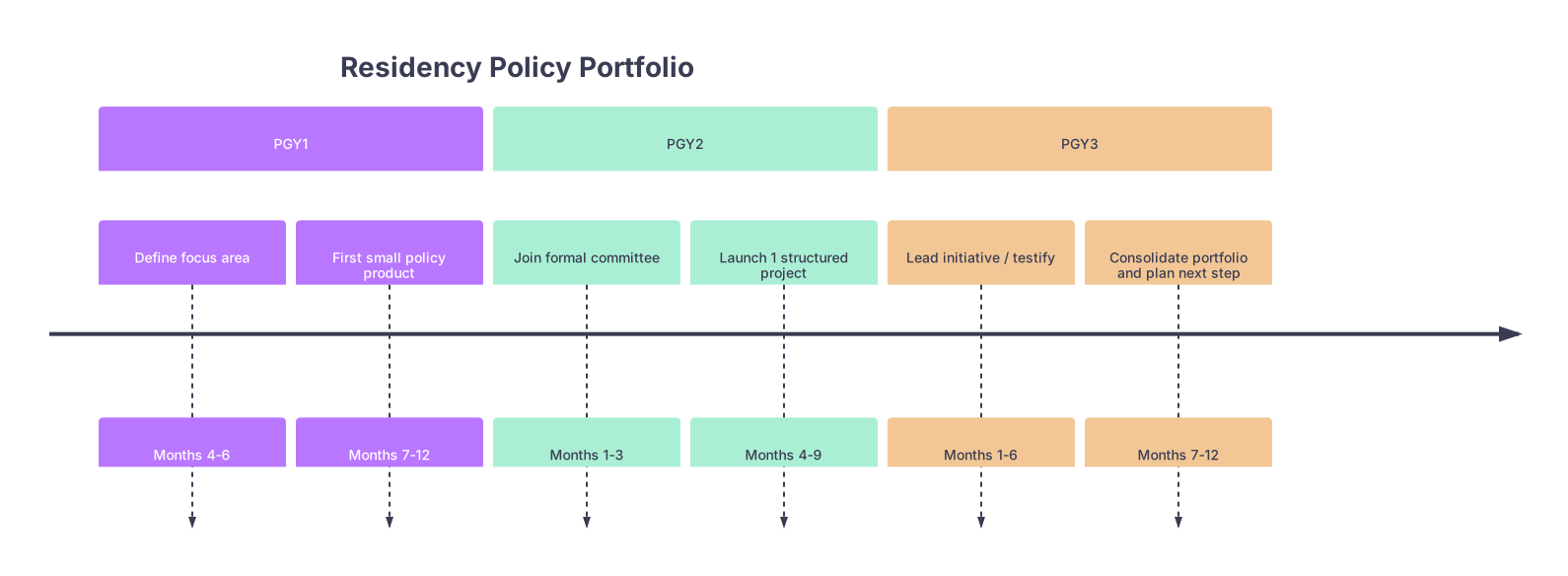
| Period | Event |
|---|---|
| PGY1 - Define focus area | Months 4-6 |
| PGY1 - First small policy product | Months 7-12 |
| PGY2 - Join formal committee | Months 1-3 |
| PGY2 - Launch 1 structured project | Months 4-9 |
| PGY3 - Lead initiative / testify | Months 1-6 |
| PGY3 - Consolidate portfolio and plan next step | Months 7-12 |
PGY‑2, Quarter 1 (Months 13–15): Formal Roles
At this point you should secure one formal policy-related role. Something that gives you:
- a title,
- a recurring meeting,
- and exposure to actual decision-makers.
Common options:
- Hospital:
- GME wellness committee
- DEI / health equity task force
- Quality improvement or patient safety committee looking at readmissions, sepsis bundles, etc.
- Professional organizations:
- Resident/fellow section in AMA, ACP, AAP, APA, ACEP, etc.
- State medical society resident council
- Specialty-specific advocacy or policy workgroup
- Academic:
- Center for health policy / health services research trainee affiliate
Do not join three committees. One or two, max. Show up, speak once per meeting with something concise and prepared, and volunteer only for tasks that fit your focus area.
PGY‑2, Quarter 2–3 (Months 16–21): One Real Project
Middle of PGY‑2 is your best window for a serious policy project before senior year chaos hits.
You want something that:
- has a clear deliverable (paper, report, testimony, QI proposal with policy angle)
- fits inside 6–9 months
- connects directly to your policy focus
Examples:
- Analyzing ED utilization before and after a local policy change (e.g., Medicaid expansion)
- Evaluating the impact of a hospital policy on language access, then drafting recommendations
- Surveying residents about how prior authorizations affect care, turning it into a brief for your specialty society’s advocacy team
Basic project timeline (6–9 months):
- Month 1: Clarify question + product. Draft 1-paragraph project aim and email to mentor for sign-off.
- Months 2–3: Get data access or IRB exemption (if needed). Build simple analysis plan.
- Months 4–5: Execute analysis or data collection in protected chunks (use electives wisely).
- Months 6–7: Draft output – could be:
- Policy brief
- Short research letter with explicit policy implications
- Slide deck for hospital leadership or legislative staff
- Months 8–9: Present at:
- Department grand rounds
- Hospital QI day
- Specialty society regional meeting
You are not chasing “publication at NEJM.” You are chasing: “I identified a policy-relevant problem, did structured work, and delivered something to a decision-making audience.”
PGY‑2, Quarter 4 (Months 22–24): External Visibility
Last part of PGY‑2, you should start getting your name outside of your hospital walls.
Tactics:
- Submit your project or op-ed series to:
- Health Affairs Blog
- Specialty society blog or newsletter
- Local public radio segment as a guest (yes, pitch yourself; editors like grounded clinicians)
- Go to one real policy or advocacy meeting, not just a clinical conference:
- State capitol Advocacy Day
- National advocacy summit for your specialty (e.g., ACP Leadership Day)
- Conference sessions focused on payment reform, social policy, etc.
Your goal is not to “network” in the business school sense. It is to have:
- 2–3 people outside your institution who know your work and could later write, “I have seen them engage meaningfully in policy” in a letter.
PGY‑3 (and 4+): Leadership, Testimony, and Coherence
Senior year is where you stop dabbling and start owning your story. Especially if you are heading toward fellowship, policy-oriented jobs, or academic tracks.
By now you should have:
- 2–3 policy outputs
- One structured project or committee role
- Clarity on whether you like this work enough to keep doing it
Now you scale select pieces and package the whole thing.
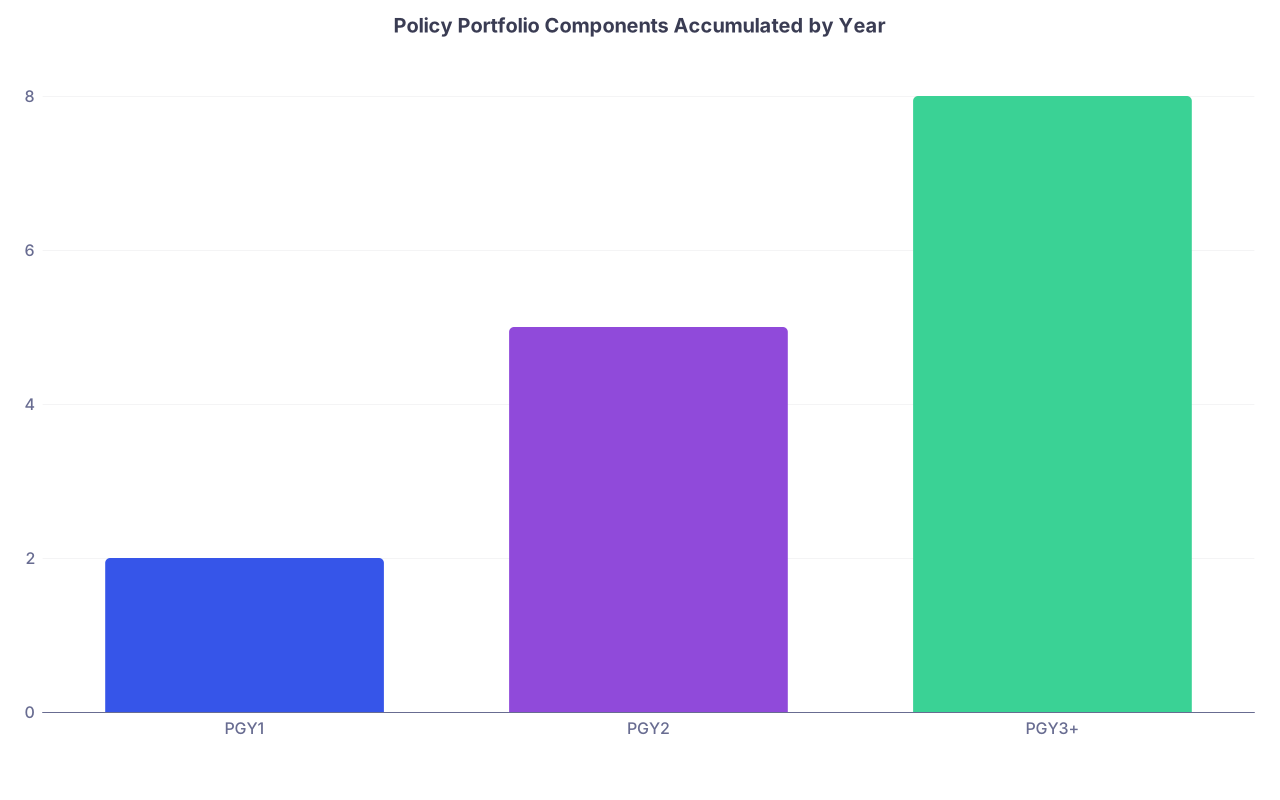
| Category | Value |
|---|---|
| PGY1 | 2 |
| PGY2 | 5 |
| PGY3+ | 8 |
(Think of “components” as total discrete products, roles, or major activities.)
Early PGY‑3: Take Ownership of One Thing
At this point you should lead one initiative. Not assist. Lead.
Options:
- Chair or co-chair a resident advocacy group or committee
- Be primary author on:
- A formal policy resolution for your state/national society
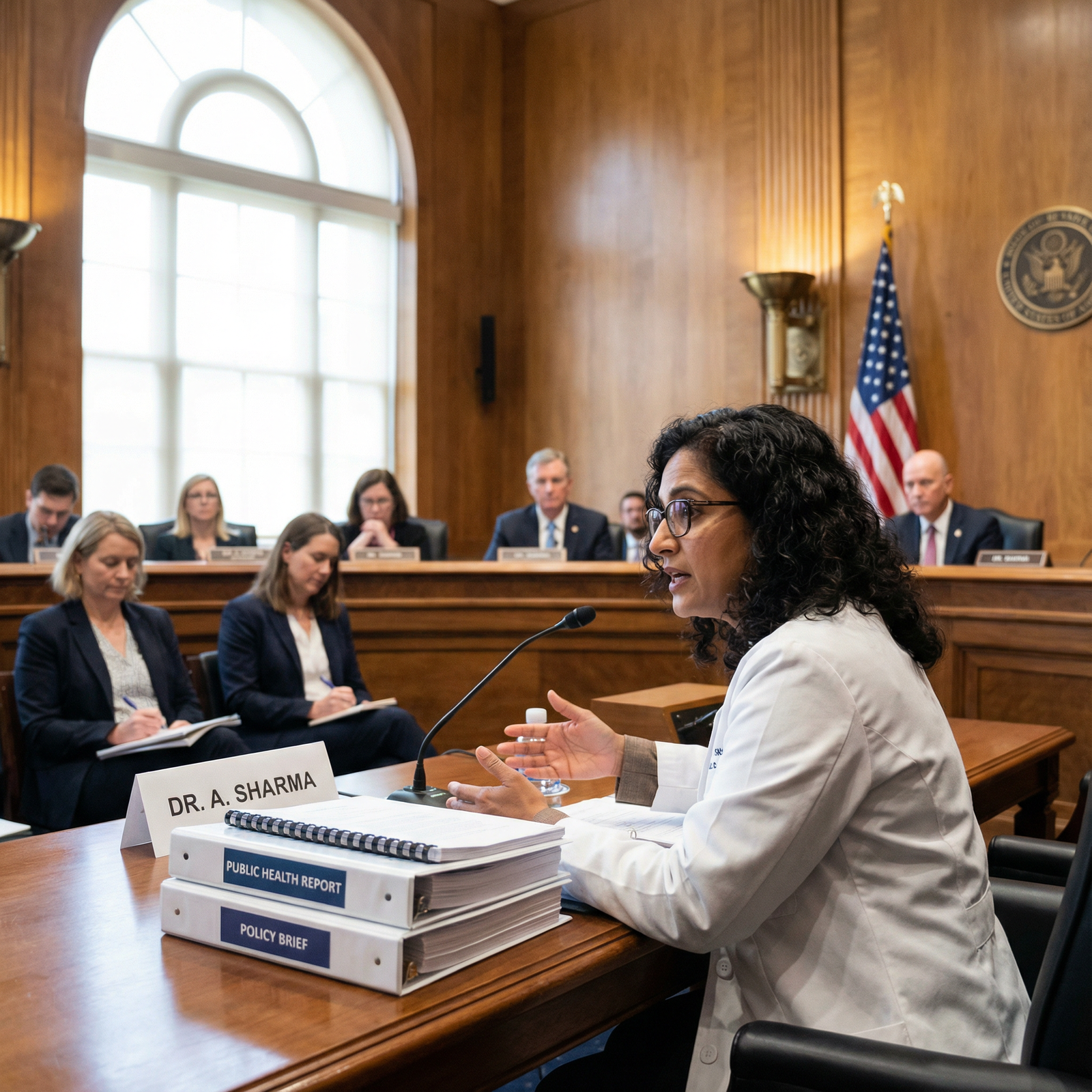
- Testimony to a city council, school board, or state committee (often written only; that still counts)
- Design and run a resident educational session on policy/ethics in your focus area
Leadership test: if you step away, the thing stalls. If someone else is clearly in charge, you are still in the “helper” zone.
Quarter-by-quarter senior year sketch:
- Quarter 1 (Months 25–27):
- Confirm leadership role; clarify expectations in writing
- Set 2–3 measurable goals (e.g., “Submit two resolutions,” “Testify once on harm reduction,” “Produce a resident-facing toolkit on Medicaid enrollment”)
- Quarter 2 (Months 28–30):
- Execute: do the unglamorous work (drafting, scheduling, revising)
- Document: keep copies of agendas you ran, memos you wrote, slides you presented
- Quarter 3 (Months 31–33):
- Push at least one product out the door (submitted, presented, or adopted)
- Ask for specific feedback from a mentor: “What would you highlight if you were writing about my policy work in a letter?”
- Quarter 4 (Months 34–36+):
- Shift to consolidation and framing for your next step
Mid–Late PGY‑3: Build the Actual “Portfolio”
This is where most residents drop the ball. They did good work, but it is scattered and invisible.
At this point you should sit down, once, for 2–3 hours and build a real portfolio document.
Components:
- Policy CV Section
On your CV, create a separate heading: “Health Policy and Advocacy Activities.” List:- Roles (with dates, committees, leadership positions)
- Outputs (op-eds, briefs, testimonies, resolutions)
- Selected talks or invited comments
- 2–3 Page Policy Narrative
A short narrative (for fellowship or job apps) structured like this:- Paragraph 1: Clinical identity + specific policy focus
- Paragraph 2: Key clinical experiences that pushed you into policy (patients, rotations)
- Paragraph 3: Concrete outputs and leadership in that focus area
- Paragraph 4: Ethical framework and how you think about tradeoffs (allocation, justice, autonomy vs public health)
- Paragraph 5: Where you want to go next (fellowship, MPH, academic, government)
- Portfolio Folder (digital)
One folder in your cloud drive with:- PDFs of op-eds, briefs, testimonies, committee reports you led
- Slide decks
- Abstracts/posters for projects with explicit policy implications
- A simple one-page bullet list of “Selected Policy Achievements”

You are not making a coffee-table book. You are making it absurdly easy for a mentor or interviewer to understand, in five minutes, that your policy interest is serious and coherent.
Ethics and Personal Development: Don’t Skip This
You asked for public health policy, personal development, and ethics. Good. Because policy without an ethical core is just technocratic cosplay.
Year-by-Year Ethical Work
PGY‑1: Name the tensions
- When a patient cannot afford meds, write it down.
- When you discharge someone to the street or a shelter, write that down too.
- Once a month, spend 15 minutes reflecting:
- What policy factors trapped this patient here?
- Where did my ethical instinct conflict with what the system allowed?
PGY‑2: Connect ethics to levers
- On rotations like ICU, psych, or OB, actively ask:
- “What policy forces are driving the ethical mess I am seeing here?”
- “Is the problem law, payment, workforce, stigma, or information?”
- Attend at least one ethics conference or hospital committee meeting where resource allocation comes up. Listen for phrases like “we cannot do that because of reimbursement” or “liability.”
PGY‑3+: Articulate a stance By end of residency, you should be able to explain, calmly and clearly, how you think about:
- Justice vs efficiency in public health decisions
- Individual autonomy vs population health in infectious disease, addiction, or behavioral health
- Physician responsibility in advocacy: where your line is (you do not have to be an activist, but you should know why)
This shows up in:
- How you write policy briefs (whose interests are centered)
- How you testify (do you mention structural racism, or do you sanitize it)
- How you mentor those coming behind you
Sample 3-Year Timeline Snapshot
If you want a one-glance roadmap:
| Timepoint | Minimum Target | Stretch Goal |
|---|---|---|
| End of PGY1 | 1 focus area, 1 small output | 2 outputs, 1 state/national connection |
| End of PGY2 | 1 formal role, 1 structured project | Regional/national presentation |
| End of PGY3+ | 1 leadership role, coherent portfolio built | Testimony or major policy publication |

Very Common Mistakes (And What To Do Instead)
I have watched residents repeat the same errors for years.
Being a policy tourist.
Going to one Advocacy Day, taking a picture with a legislator, then vanishing.- Instead: commit to one issue over years. Depth > breadth.
Joining too many committees.
Sitting on 4 groups, contributing to none.- Instead: 1–2 substantive roles where you are clearly useful.
Hiding your work.
Writing a killer brief that sits in your email.- Instead: present it, publish it, or at least archive and list it on your CV.
Overbuilding in intern year, burning out.
Saying yes to a big project 3 months into PGY‑1 and hating everything.- Instead: aim for one small product in PGY‑1, nothing more.
No clear narrative.
“I did housing, telehealth, incarceration policy, climate, and global health.” Fine, but incoherent.- Instead: choose a spine topic and let the others be side branches.
FAQ (Exactly 3 Questions)
1. How many hours per week should I realistically devote to policy work during residency?
PGY‑1: 1–2 hours most weeks, often in small chunks (commute podcasts, a post-call writing sprint once a month).
PGY‑2: 2–4 hours during lighter rotations or electives, close to zero during heavy ICU or nights.
PGY‑3+: 3–5 hours on average when leading a project, but again, it will be lumpy. Think project blocks, not rigid weekly quotas.
2. Do I need an MPH or formal policy degree during residency to be taken seriously?
No. Degrees help with skills and signaling, but residents routinely do meaningful policy work without them. What convinces people is clear focus, tangible outputs, and evidence you can finish things. If you want an MPH, great—time it with a research year, chief year, or dedicated leave, and make sure it ties to the portfolio you are already building.
3. What if my program has zero visible policy faculty or infrastructure?
Then you build sideways. Plug into your state medical society, your specialty’s national advocacy arm, or nearby universities’ schools of public health or law. Many policy mentors do not care which hospital you come from if you bring energy and follow-through. Use email and Zoom aggressively, and anchor your work in the patient population you actually see every day at your institution.
Today, take one concrete step: open a blank document and write a one-sentence version of your policy focus (“I am a ___ resident interested in how policy affects ___ for ___ patients”). Then email one faculty member who might care and ask for a 15-minute conversation this month. That is how the portfolio starts.