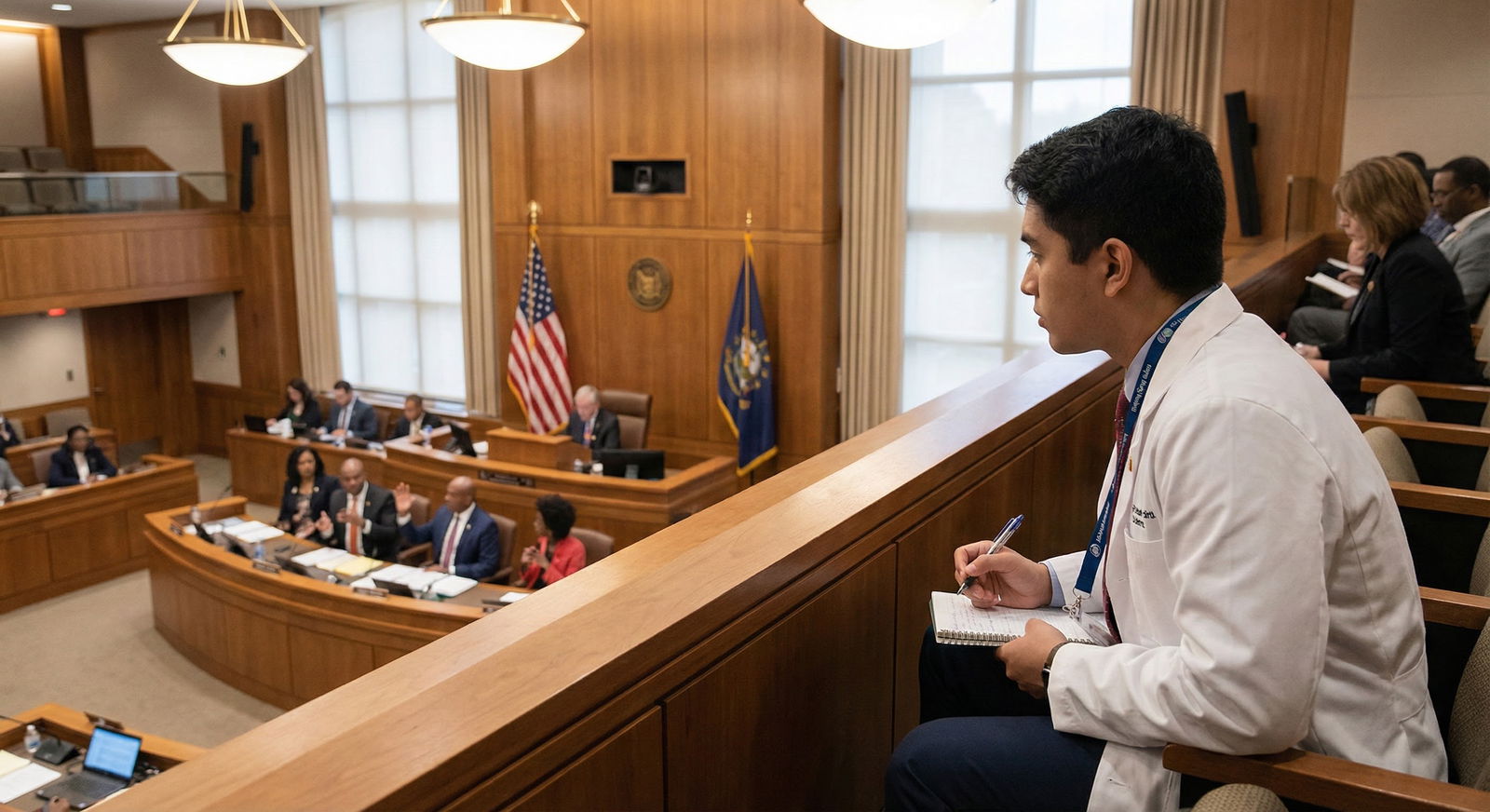
The biggest mistake medical students make in their first legislative session is showing up when bills are already on the floor. By then, you are background noise.
You do not influence a legislative session by tweeting, signing a petition, or flying in for one “Lobby Day” selfie in your white coat. You influence it by showing up early, consistently, and strategically, on a timeline that matches how the legislature actually works.
Here is exactly what that looks like—month by month, then week by week once the session starts.
Big Picture: The 12-Month Arc
Every legislature is different, but the rhythm is similar:
- 2–3 months before session: Power-building and prep
- First month of session: Find the real work and plug in
- Middle of session: Grind—testimony, amendments, coalition work
- End of session: Fast chaos, small windows that matter
- After session: Debrief and reposition for next year
At each point, you should be doing something specific. Not just “staying informed.”
Let’s assume:
- Session starts in January.
- You are a medical student with limited time but serious intent.
- You care about public health and medical ethics (scope-of-practice, reproductive health, mental health parity, gun safety, Medicaid coverage, etc.).
Adjust the months as needed if your state starts in February or March—the sequence stays the same.
Month -3: Power Audit and Issue Selection (October)
At this point, you should stop trying to “care about everything.”
You need to pick one or two priority issues and map where power actually lives.
Week 1: Decide What You Will Fight For
Block a single 2–3 hour session. No distractions.
You should:
List 5–7 topics you genuinely care about:
- Reproductive rights and access
- Harm reduction / overdose prevention
- Medicaid reimbursement / coverage expansion
- Firearm injury prevention
- Mental health parity
- Scope of practice / licensing
- Climate and health
Narrow down to 1–2 “session priorities” by asking:
- Are there likely bills this year? (Ask your state medical society, AAP/ACP chapter, AMA state society, local advocacy orgs.)
- Do any faculty, residents, or mentors already work on this?
- Would you be willing to testify on this on a weekday morning with two days’ notice?
If the answer is “no” to that last one, it is not your session priority.
Week 2: Map the Real Players
At this point, you should build an actual power map, not vibes.
For your state, identify:
- Governor
- House and Senate leadership
- Chairs and vice chairs of:
- Health committee
- Insurance committee (for payment/coverage issues)
- Judiciary (for abortion, liability, mental health, civil commitment)
- Your own representatives and senator
| Role | Name | Party | District | Email/Phone | Staff Contact |
|---|---|---|---|---|---|
| House Health Chair | |||||
| Senate Health Chair | |||||
| Your House Member | |||||
| Your Senator | |||||
| Relevant Committee Staff |
Then:
- Bookmark their official pages.
- Follow them and the relevant committees on whatever social media they actually use.
- Make one shared doc with all links and contact info.
Week 3–4: Find Your Policy “Home Base”
You do not want to be a lone med student emailing random legislators. You want to plug into existing infrastructure.
By the end of this month, you should have:
- Joined:
- Your state medical society’s student section
- At least one specialty society with strong policy arms (e.g., ACP, AAFP, AAP)
- Connected with:
- At least one faculty mentor who has testified or served on a state committee
- Any student-run health policy group on campus
Send a short, direct email:
“I am a [MS1/MS2/MS3/MS4] interested in working on [X issue] during the coming legislative session. I would like to help with tracking, testimony, and rapid response in any way that is actually useful to your team. Can we talk for 20 minutes sometime this month?”
You are signaling: “Use me; I am reliable labor.”
Month -2: Learn the Rules and Watch the Pre-Game (November)
At this point, you should stop guessing how a bill becomes law in your state and actually learn the path.
Week 1: Understand the Mechanics
You need the basics of your state’s process, not Schoolhouse Rock.
Spend one evening:
Find:
- Official “How a Bill Becomes Law” page on your legislature’s site.
- Calendar for:
- Bill prefiling deadline
- Committee deadlines
- Crossover deadline (when bills must pass one chamber to move to the other)
- Session adjournment (sine die)
Draw the path for a health bill, including:
- Introduction
- Committee assignment
- Public hearing
- Committee vote
- Floor vote
- Other chamber repeat
- Governor action
Then, overlay where physicians or students realistically show up:
- Pre-filing: behind-the-scenes drafting
- Committee: public hearings, proposed amendments
- Late session: urgent calls, floor amendments
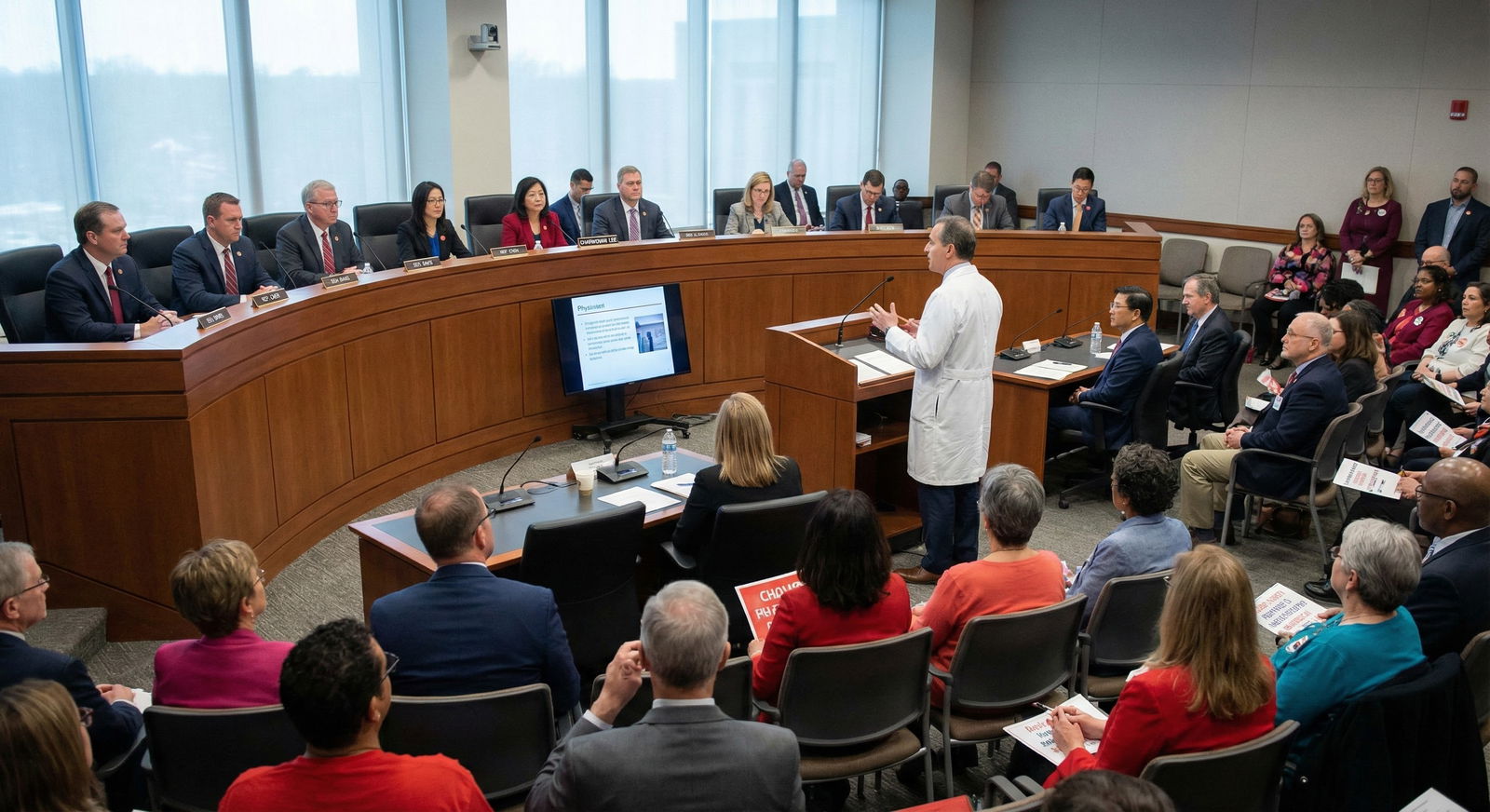
Week 2: Watch Archived Hearings
Most states archive video of committee hearings.
Pick:
- 2–3 recent hearings of the health committee and watch, with notebook open.
At this point, you should:
- Note:
- Who actually drives the questions (often the chair, a few dominant members).
- How long each witness gets (3 minutes? 5 minutes? Strict?).
- How they treat “expert” vs “random citizen” testimony.
- Capture phrases you hear repeatedly:
- “Chair, members of the committee…”
- “In my clinical practice…”
- “I urge you to vote no/yes on House Bill X.”
You are building a mental template for your own testimony.
Week 3: Get on the List
You want to be on the radar before a bill hits your issue area.
By end of this week:
- Ask:
- Your state medical society staff: “Can you put me on your health policy / advocacy action alert list for the coming session?”
- Any coalition working on your issue: “Please add me to your legislative update listserv or Slack.”
- Offer:
- “I am available for rapid turnaround on written testimony or data pulls evenings and weekends.”
Week 4: Build Your Baseline Narrative
You will not have time to write from scratch during peak session.
Draft three things now:
- A 150–200 word bio paragraph, policy-focused:
- Year in school
- Any relevant clinical experience
- Any research or lived experience in your issue area
- A 1–2 paragraph “values frame” for your issue:
- Example (mental health parity): “As a future physician, I see daily how untreated depression and anxiety drive ER visits, lost jobs, and broken families…”
- A 3-bullet “What we want legislators to do” list:
- “Support HB 123 to require parity enforcement”
- “Oppose any bills that would weaken network adequacy for mental health”
- “Fund X evidence-based program”
You will reuse these constantly—op-eds, email intros, testimony drafts.
Month -1: Pre-Session Positioning and Scheduling (December)
At this point, you should stop “preparing” and actually contact legislators.
Week 1–2: Schedule Pre-Session Meetings
Aim for 2–4 short meetings before session starts.
Priority order:
- Your own House and Senate members.
- One majority member of the health committee.
- One minority member (if different party) of health committee.
- If time, any legislator seen as a leader on your issue.
Your ask is simple:
- 15–20 minutes
- At the Capitol (if in session prep) or district office
- Or video if they prefer
Script your email as:
“I am a medical student at [School] and your constituent. I work with [State Medical Society/Coalition] on [X issue]. I would value 15 minutes before session to share what I am seeing in clinic and hear what health priorities you are considering for this year.”
Then actually show up prepared:
- 1 page, double-sided max:
- Who you are
- 3 key facts or stories
- 1–2 specific legislative asks (even if just “Please oppose any effort to…”)
Week 3: Learn the Calendars and Tools
By now, you should:
- Create:
- A bookmark or RSS feed for:
- Health committee agendas
- Full chamber calendars
- A spreadsheet or Notion board to track:
- Bill number
- Short description
- Position (support/oppose/watch)
- Status (intro, committee, floor, etc.)
- Your action (testified, emailed, met, etc.)
- A bookmark or RSS feed for:
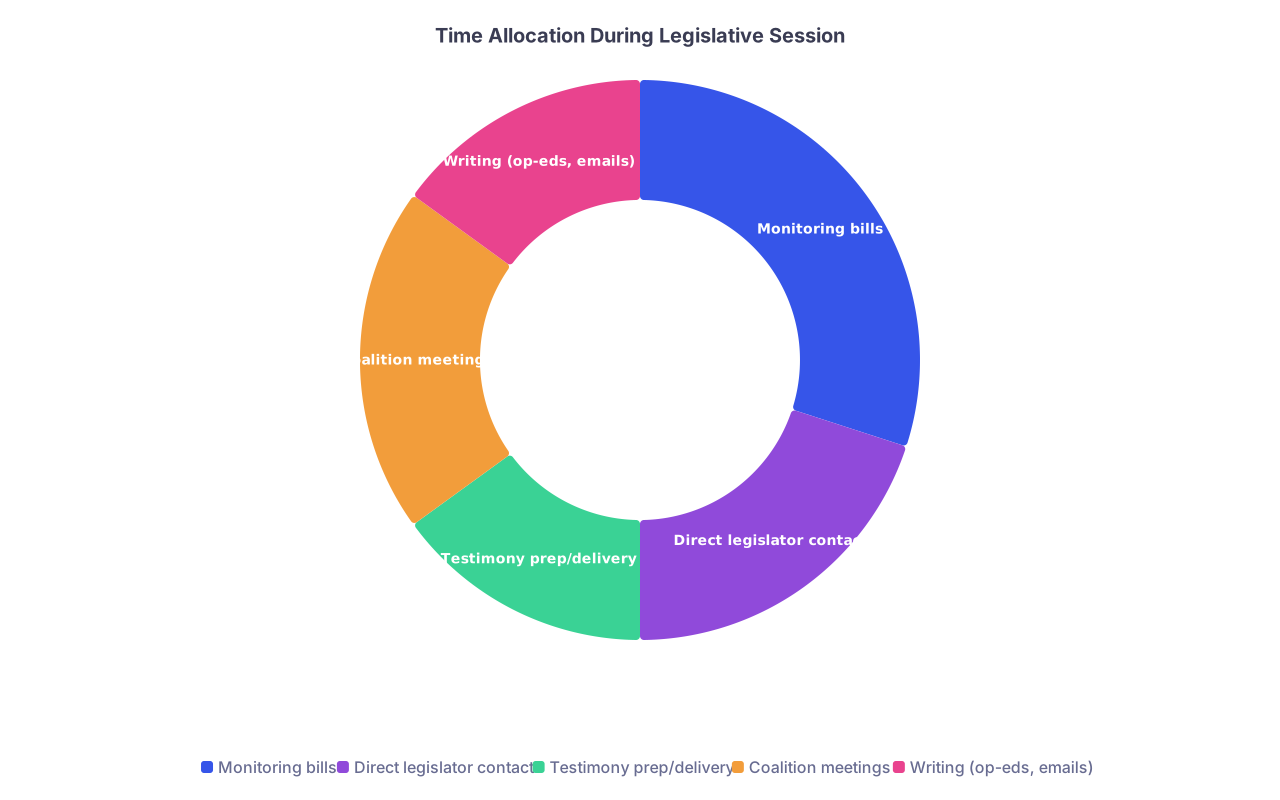
| Category | Value |
|---|---|
| Monitoring bills | 30 |
| Direct legislator contact | 20 |
| Testimony prep/delivery | 15 |
| Coalition meetings | 20 |
| Writing (op-eds, emails) | 15 |
Install whatever alert features your legislature’s site has (bill tracking, keyword alerts).
You want bills to hit your inbox, not discover them accidentally on Twitter.
Week 4: Block Your Schedule
Legislatures do not care about your exam calendar.
At this point, you should:
- Look at:
- Session start date and usual committee meeting days/times.
- Protect:
- At least one half-day per week as your “Capitol/advocacy” block.
- A 2–3 hour evening block once a week for:
- Reading bills
- Writing testimony
- Attending virtual hearings
Tell your course director / clerkship director now:
- “I am engaged in state health policy work this session and may need occasional flexibility for testimony or legislative meetings. I will give as much notice as possible.”
Most will accommodate if you are professional and early about it.
Month 0: Session Opens (January)
Now the game is live.
At this point, you should stop “planning” and start executing in 1–2 week sprints.
Week 1: Orientation at the Capitol
Your job this week is to learn the building and the routine.
- Spend one full day at the Capitol if possible:
- Watch the opening day from the gallery.
- Locate:
- Health committee room
- Clerk’s office
- Bill room / information desk
- Cafeteria / coffee (you will end up there repeatedly)
- Sit in on:
- Any early health-related committee meeting
- Introduce yourself briefly to:
- Committee staff you have already identified:
- “I am [Name], medical student working with [X group] on [issue]. I wanted to introduce myself in case you ever need a clinical perspective or data quickly.”
- Committee staff you have already identified:
You are not there to impress them. You are there to become familiar, not a stranger.
Week 2: Start Tracking and Triage
Bills are being filed fast.
At this point, you should:
- Each evening (15–30 minutes):
- Review new bill introductions with health keywords.
- Flag those that:
- Affect your priority issue.
- Have hearings scheduled within 1–2 weeks.
- Update your tracking sheet.
Define three categories:
- Priority A: Directly on your chosen issue, real chance of movement.
- Priority B: Important but less likely to move quickly.
- Priority C: “Interesting” but not your fight this year.
You will burn out if everything is Priority A.
Month +1: Testimony and Relationship-Building (February)
This is when your calendar starts to get chaotic. That is normal.
Weekly Rhythm Template
At this point, each week should follow a rough structure:
- Monday:
- Review committee agendas for the week.
- Confirm which hearings are must-attend vs optional.
- Midweek:
- Show up at 1–2 key hearings (in person if possible).
- Deliver testimony or stand with your coalition.
- Weekend:
- Update your bill tracker.
- Debrief with mentors / coalitions.
- Draft any needed written testimony for next week.

| Step | Description |
|---|---|
| Step 1 | Sunday - Review bills |
| Step 2 | Monday - Plan week |
| Step 3 | Midweek - Hearings and testimony |
| Step 4 | Thursday - Follow up emails |
| Step 5 | Weekend - Debrief and update tracker |
Testimony: How to Actually Do It
When a hearing on a Priority A bill is set:
3–5 days before:
- Confirm with your coalition or faculty:
- Are we supporting/opposing?
- What is our core message?
- Draft 1–2 pages written testimony:
- Open: Name, role, who you represent.
- 2–3 key points with 1–2 clinical anecdotes.
- Close: Explicit ask (“Please vote yes/no on HB X”).
Day of hearing:
- Show up early. Sign up to testify as “physician-in-training / medical student.”
- For oral testimony (3 minutes is typical):
- Use your written text as backup, but do not read it robotically.
- Lead with:
- “In clinic last month, I saw…” (legislators remember stories, not statistics).
- End clearly:
- “For these reasons, I urge you to vote no on House Bill 123.”
After your testimony:
- Hand staff your written copy.
- Email them a PDF that night with a short note:
- “Thank you for hearing my testimony today on HB 123. Please find the written version attached. I am happy to answer any follow-up questions.”
You are now on their radar as “the med student who actually shows up and sends things on time.” That is rare.
Month +2: Mid-Session Grind and Crossover (March)
This is where serious bills either die or cross over to the other chamber.
At this point, you should be more selective and more strategic.
Week 1–2: Tighten Your Focus
The volume of activity spikes, so:
- Re-evaluate all tracked bills:
- Drop dead bills from active attention.
- Reclassify:
- Some Priority B bills might become new Priority A if they unexpectedly move.
- Coordinate with your coalition:
- “Which 2–3 bills are truly critical in the next 2–3 weeks, where my presence as a medical student would be most useful?”
Week 3–4: Expand Beyond Testimony
By now, you should start branching beyond just hearings:
Concrete actions:
- Short, targeted emails to:
- Specific members before a key vote:
- “As a medical student and future physician in your district, I am asking you to support HB 456 on overdose prevention because…”
- Specific members before a key vote:
- In-district meetings during recess days:
- Quick coffee with your representative when they are home.
- Help with:
- Drafting or fact-checking talking points for your coalition or faculty.

If you are not exhausted yet, you are probably under-utilizing your access.
Month +3: Final Push and Rapid Response (April)
End of session is chaos. Amendments fly. Deals are cut fast.
At this point, you should expect short notice and imperfect information.
Structure Your Role in the Chaos
- Be clear with your mentors/coalition:
- When can you attend last-minute hearings?
- How fast can you turn around an updated testimony or data summary?
- Prepare modular content:
- 1-paragraph statements you can adapt quickly:
- “Any amendment that restricts X will harm Y because…”
- 1-paragraph statements you can adapt quickly:
During the final 2–3 weeks:
- Check floor calendars daily for Priority A bills.
- If something hits the floor:
- Send 2–3 highly targeted emails to key swing members or your own legislators, referencing:
- Floor amendment numbers if applicable.
- Send 2–3 highly targeted emails to key swing members or your own legislators, referencing:
- Accept you will not follow every detail. Focus on:
- Your key bills.
- Your relationships.
Month +4: Debrief, Reflect, and Document (May)
Session is over. Your work is not.
At this point, you should stop reacting and start processing.
Week 1: Document What Actually Happened
Within 1–2 weeks of adjournment:
- Update your tracker with final status of:
- Each Priority A and B bill.
- For each:
- Did it pass, fail, get amended beyond recognition?
- Did your side win, lose, or get partial wins?
Write a 1–2 page personal debrief:
- What surprised you?
- When did you feel most effective?
- When did you feel tokenized or ignored?
- What would you do differently next year?
This is not busywork. This becomes:
- Material for residency applications (health policy, advocacy).
- A check on your own ethics: Did you show up where you said you would?
Week 2–3: Debrief with Others
Schedule:
- 30–45 minutes with:
- Your primary faculty mentor.
- One coalition lead or society staffer.
Ask directly:
- “When I showed up, was it helpful? Where could I have been more useful next time?”
- “If I only had 10–20 hours to give next session, where should I put them?”
You will get more honest feedback now than in the heat of session.
Month +5 to +6: Integrate into Your Training and Ethics (June–July)
Advocacy without reflection easily turns into performance.
At this point, you should integrate what you saw into your identity as a physician.
Build Reflection into Your Training
You have two jobs:
Ethical reflection
- How did you handle:
- Pressure from attending physicians, faculty, or political groups?
- Disagreements within medicine (e.g., between specialties) on a bill?
- Did you ever:
- Oversell evidence?
- Hide uncertainty?
- Write honestly about at least one moment you are not proud of. That is where growth lives.
- How did you handle:
-
- Update your CV:
- “Testified before [State] House Health Committee on [Bill Title], [Date].”
- “Assisted in drafting policy briefings for [Organization] on [Issue].”
- Consider a brief piece:
- Op-ed, blog, or student journal reflection: “What My First Legislative Session Taught Me About Being a Doctor.”
- Update your CV:
Your future ethics and professionalism statements will be much less hypothetical after a session like this.
Summary: What Actually Matters
Three core points to remember:
- You influence a legislative session months before it starts, not the week your issue hits the floor. By Month -2, you should already know your issues, allies, and key legislators.
- During session, your power comes from showing up consistently, in the right rooms, with clear, story-based testimony and follow-up. One perfect “Legislative Day” in a white coat will not move much.
- After session, what you do with the experience—reflection, documentation, and relationship maintenance—turns a one-off experience into a foundation for a career in ethically grounded public health policy.
Follow the timeline once, and the second session will not feel mysterious. It will feel like work. The kind of work physicians should be doing.