
The biggest mistake in a new public health job is thinking “I’ll speak up more once I’ve settled in.”
By the time you “settle in,” the policy decisions have already moved on without you.
You’ve got 90 days. That’s your window to earn a seat in policy discussions—or to get mentally filed as “ops person,” “nice but quiet,” or “good worker bee.” Once that label sticks, it’s painful to shake.
Here’s your timeline for making sure that does not happen.
Days 0–7: Stop Trying to Impress; Start Trying to Understand Power
At this point you should forget about “showing how smart you are” and obsess over one thing: who actually shapes policy in this place.
Day 0–1: Before You Walk In
If you have not started yet, today you:
- Scan the org’s last 12 months of:
- Policy briefs
- Press releases
- Strategic plans or board minutes if available
- Write a one-page “context cheat sheet”:
- Top 3 priority areas (e.g., overdose response, maternal mortality, AMR)
- 2–3 controversial issues (e.g., vaccine mandates, harm reduction, abortion access)
- Key external players: ministry, CDC/WHO office, major NGOs, funders
Print it or keep it pinned on your desktop. This becomes your translation guide when you hear jargon in meetings.
Day 1–3: Map the Real Decision-Makers
Your new badge is still shiny. Use that “new person” excuse to ask nosy questions.
Priority actions:
Sit down with your manager. Ask these blunt questions:
- “Who in this team actually shapes policy recommendations?”
- “Which external bodies do we try hardest to influence?”
- “When something controversial comes up, who has final say?”
- “What’s the route from data → draft policy → official position?”
Start a “Power Map” notebook or file.
For each name you hear:- Role title
- What they really do in policy terms (e.g., “quietly rewrites everything,” “has Minister’s ear”)
- Issue areas they care about
- Any ethical hot buttons (e.g., very cautious about equity, privacy, resource allocation)
Watch the first meetings like an anthropologist.
In every meeting you attend, jot down:- Who talks early
- Who everyone looks at before moving on
- Who gets interrupted (and who does not)
- Phrases like “we can’t do that because…” (that’s organizational dogma)
You’re not trying to contribute heavily yet. You’re trying to decode the language and the hierarchy.
Day 4–7: Learn the Policy Rhythm
Every organization has a tempo: weekly briefings, monthly stakeholder calls, quarterly strategies. You need to know when decisions actually happen.
At this point you should:
Ask your manager:
- “What are the big decisions coming up in the next 3 months?”
- “What standing meetings feed into those decisions?”
- “Where do policy drafts usually start—this team or somewhere else?”
Build a simple 90-day calendar with:
- Recurring internal policy meetings
- External policy forums (city council hearings, ministry working groups, WHO calls, etc.)
- Deadlines for major reports or submissions
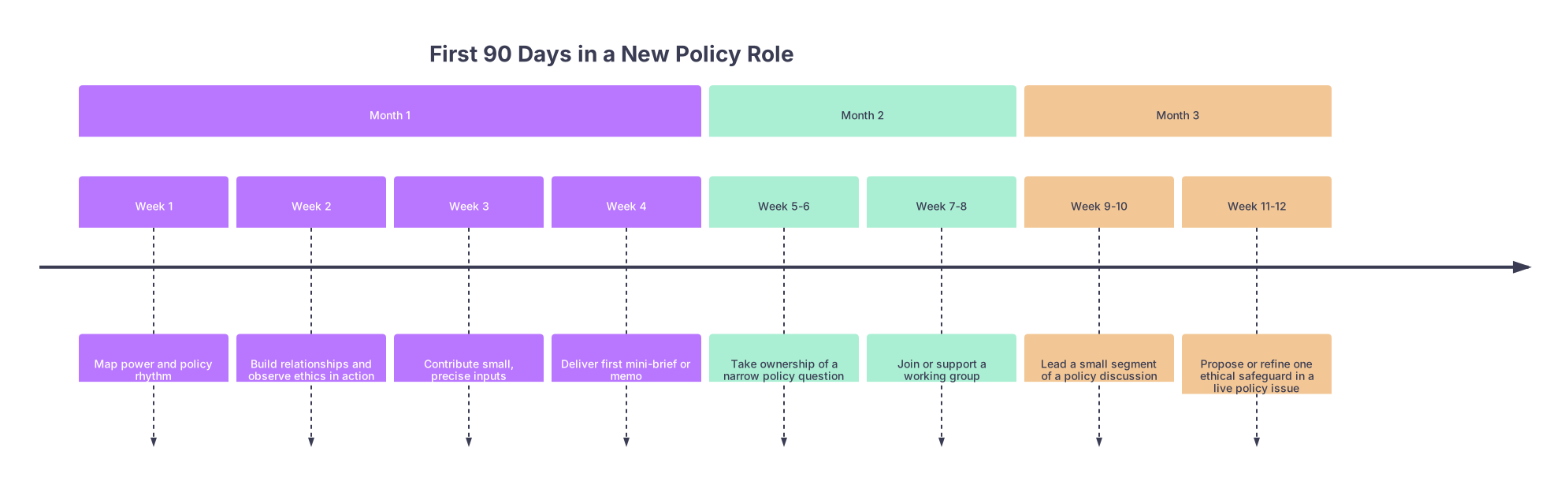
| Period | Event |
|---|---|
| Month 1 - Week 1 | Map power and policy rhythm |
| Month 1 - Week 2 | Build relationships and observe ethics in action |
| Month 1 - Week 3 | Contribute small, precise inputs |
| Month 1 - Week 4 | Deliver first mini-brief or memo |
| Month 2 - Week 5-6 | Take ownership of a narrow policy question |
| Month 2 - Week 7-8 | Join or support a working group |
| Month 3 - Week 9-10 | Lead a small segment of a policy discussion |
| Month 3 - Week 11-12 | Propose or refine one ethical safeguard in a live policy issue |
You’re building a mental calendar of where to insert yourself. Policy influence is mostly about timing.
Weeks 2–4: Become “The Person Who Spots Risk and Nuance”
By the end of the first month, you want people thinking: “They’re new, but they ask sharp questions and see the ethical angles.” Not “They’re eager and agree with everything.”
Week 2: One-on-Ones With Strategic People
At this point you should book short 15–20 minute meetings with:
- A senior policy advisor or equivalent
- Someone in monitoring & evaluation / epidemiology
- Someone in legal or compliance (if your org has them)
- A frontline practitioner or program manager who lives with policy consequences
Your script (roughly):
- “I’m trying to understand how policy decisions feel from your side.”
- “What’s a recent policy decision you thought went well? Why?”
- “What’s one that still bothers you ethically or practically?”
- “What blind spots do you see in how we make decisions?”
Take notes. You’ll hear patterns like:
- “We keep underestimating implementation capacity.”
- “Ethics review is always last-minute theater.”
- “We say we care about equity, but we never include community reps until the end.”
That’s your entry point.
Week 3: Start Offering Tiny, Targeted Contributions
You’re not writing full policy papers yet. You’re dropping well-aimed pebbles in the stream.
In meetings this week:
Ask 1–2 clarifying questions maximum per meeting, like:
- “How are we planning to involve affected communities before finalizing this?”
- “Have we looked at how this might impact uninsured groups specifically?”
- “Who’s accountable if this guideline increases workload without added resources?”
Volunteer for low-risk, high-visibility tasks:
- “I can draft a 1-page summary of the ethical considerations we mentioned.”
- “I’m happy to pull 2–3 quick examples of how other cities/countries handled this.”
You’re positioning yourself as someone who:
- Understands policy is not just data—it’s ethics, law, and implementation.
- Is willing to do the boring but critical homework behind good decisions.
Week 4: Deliver One Small, Written Product
By the end of the first month you should have one concrete thing with your name on it that touches policy.
Examples:
A 1–2 page ethics memo on:
- Data privacy in a new surveillance initiative
- Allocation criteria for limited resources (e.g., vaccines, naloxone, ventilators)
- Stigma and unintended consequences of a proposed screening program
A short background note for a working group:
- “Equity considerations in expanding telehealth”
- “Risks of excluding undocumented migrants from [X] program”
Key rules:
Keep it short and structured:
- Context (what’s happening)
- Ethical/clinical/legal issues (bullets)
- Options with trade-offs
- Your recommendation (even if modest: “we should at least…”)
Ask your manager:
“Can I send this to you as a draft for your feedback before the next discussion?”
This is where people start to see you as someone who can handle nuance.

Month 2 (Weeks 5–8): Own a Narrow Slice of Policy
Month 1 was about observation and small moves.
Month 2 is about ownership—of something small but real.
Week 5–6: Choose Your Niche and Go Deep
At this point you should select one policy topic where you can become “the person who really knows that issue.”
Pick something that:
- Is active in your organization right now (not dead strategy documents)
- Has a strong ethical dimension
- Is narrow enough that you can actually get your arms around it
Common examples:
- Criteria for prioritizing neighborhoods in an overdose outreach program
- Policies around consent and data sharing in a new registry
- Guidelines on use of AI risk scoring in resource allocation
- Standards for community engagement before launching pilots
Build a mini-dossier:
- 3–5 key scientific or policy papers (skim smartly, don’t drown)
- Current internal documents: draft SOPs, slides, guidance notes
- Notes from at least 1–2 conversations with people affected by the policy:
- Program staff
- Community liaison
- Clinicians
By the end of week 6, you should be able to answer if someone asks:
- “What are the main ethical trade-offs here?”
- “What have others tried, and how did it go?”
- “What’s the worst-case harm if we get this wrong?”
Week 7: Enter the Working Groups
You need to get into the rooms where language is drafted, not just presented.
Typical structures you might see:
| Forum Type | Your Goal in First 90 Days |
|---|---|
| Technical working group | Join as support, learn the pipeline |
| Ethics committee | Attend as observer if allowed |
| Policy steering group | Present short background or memo |
| Community advisory board | Listen more than speak, take notes |
At this point you should:
- Ask your manager directly:
- “Is there a working group or drafting team for [your chosen niche]? I’d like to support that work.”
- If that group exists:
- Volunteer to:
- Take minutes
- Compile references
- Track comments on a draft
- Volunteer to:
- If it does not exist:
- Offer something modest:
- “Would it be helpful if I put together a quick comparison of how two or three other jurisdictions handle this?”
- Offer something modest:
The trick: You earn a seat by doing unglamorous work that everyone else is too busy for—but you do it with a sharp ethical and policy lens.
Week 8: Start Pushing—Gently—on Ethics and Equity
By the end of Month 2, you should have enough context to raise better questions, not just generic ones.
Instead of vague “we should consider equity,” you push specifics:
- “If we require in-person visits for this program, which groups are we effectively excluding?”
- “Our eligibility criteria use employment status…are we comfortable with that as a proxy for ‘deservingness’?”
- “We’re collecting data on X—who has access, and how long is it kept?”
A simple framing that works in meetings:
“From an ethics and implementation standpoint, I see two risks here…”
“Is there appetite to build in one or two safeguards?”
You’re not accusing. You’re offering risk management.
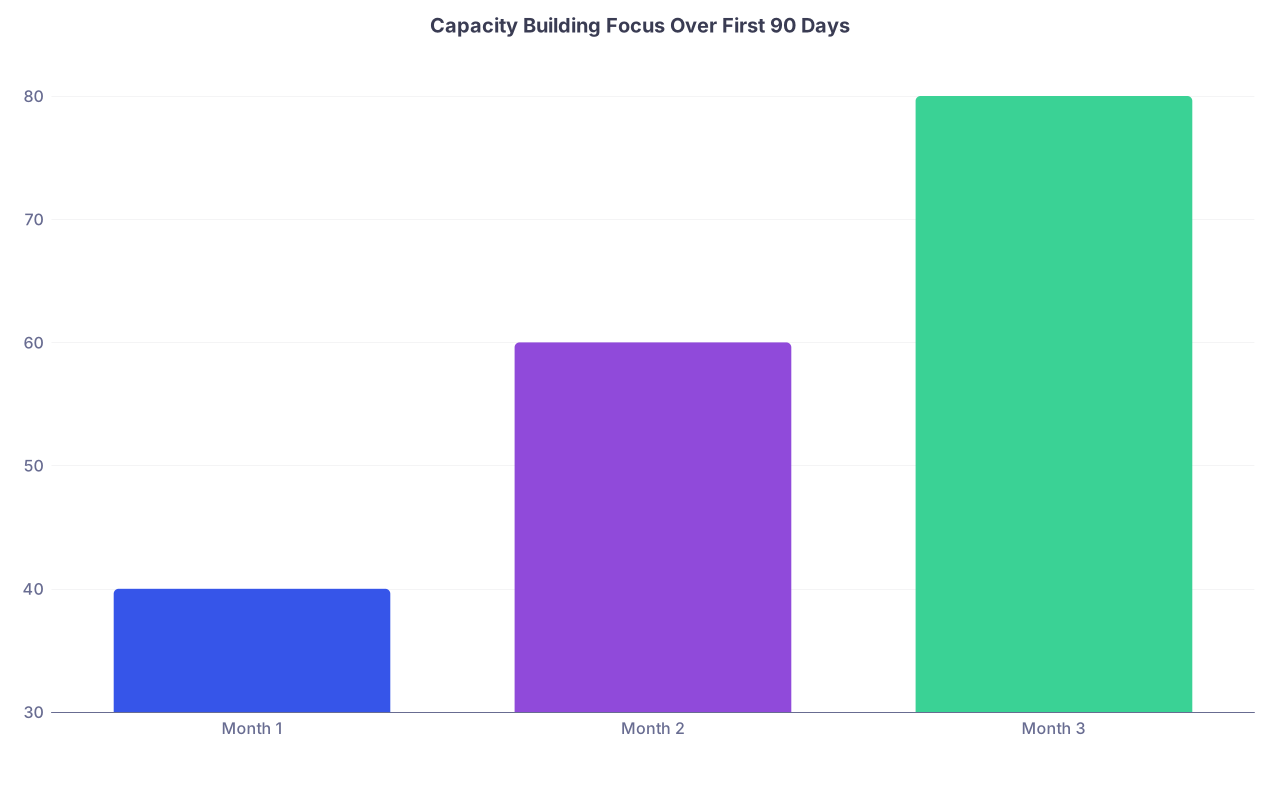
| Category | Value |
|---|---|
| Month 1 | 40 |
| Month 2 | 60 |
| Month 3 | 80 |
(Think of that bar chart as your influence curve. If it’s still flat by Month 3, you’ve waited too long.)
Month 3 (Weeks 9–12): Be Seen as a Thoughtful, Principled Contributor
These last 30 days are where you either step into policy discussions fully or get stuck as “helpful background person.”
Week 9–10: Speak Early, But Not Long
People remember when you speak as much as what you say.
If you only talk in the last 5 minutes of every meeting, you’ll be seen as reactive.
At this point you should:
- Aim to contribute once in the first half of key meetings you attend.
- Keep each contribution under 30–45 seconds.
- Focus on:
- Clarifying trade-offs (“If we choose X, we’re implicitly accepting Y…”)
- Naming missing stakeholders (“Whose voice is not in this room that we’re impacting?”)
- Surfacing implementation or ethical risks early, not at the end as an afterthought.
Example lines you can literally steal:
- “To make sure I’m understanding, our current proposal would prioritize speed over individual consent in [context]. Are we comfortable with that in all populations, or do we need carve-outs?”
- “If we don’t articulate our equity goal clearly here, the default will be easiest-to-reach groups. Is that acceptable for this program?”
You’re not grandstanding. You’re tightening the thinking in the room.
Week 11: Lead a Small Piece of the Discussion
By now, if you’ve followed this timeline, you’ve:
- Built trust with your manager
- Delivered at least one short memo
- Shown up consistently in a niche area
Use that capital.
Ask your manager:
- “At the next [working group / steering group] meeting, would it be useful if I present a 5-minute overview of the key ethical issues in [X], and possible options?”
Keep it clinical and structured:
- 1 slide or 1-page handout
- 3–4 bullet points max on:
- The problem
- The trade-offs
- Options
- Your recommended direction (even if it’s “we need more input from community/clinicians/legal before deciding”)
The goal is not to dominate. It’s to get everyone used to you as someone who can frame issues clearly and responsibly.

Week 12: Claim Your Role in Policy and Ethics—Out Loud
Reputations in organizations are often set by how you describe what you do.
At this point you should start explicitly linking your role to policy and ethics in casual conversation and email.
For example:
In an email:
“From my side, looking at the ethics and implementation risks on [X], I’d suggest we…”In a 1:1 with your manager:
“I’d like my long-term role here to include being one of the people who watches for unintended consequences and ethical blind spots in our policies. Can we plan for me to stay closely involved in [niche area] and maybe add one more topic over the next quarter?”
You’re telling people how to see you. They’re busy; they’ll take the shorthand you give them.
Threading Medical Ethics Through All 90 Days
This is public health policy. Ethics is not an optional garnish. It’s the main ingredient.
Here’s how you weave it in from Day 1 without sounding like a lecture:
| Timeframe | Ethical Focus |
|---|---|
| Week 1 | Listening for implicit values & norms |
| Week 2–4 | Asking targeted questions about impact |
| Month 2 | Producing one concrete ethics-informed product |
| Month 3 | Framing trade-offs and proposing safeguards |
Concrete behaviors at each stage:
Early weeks:
- Ask: “What’s our guiding principle here—maximizing total benefit, protecting the most vulnerable, something else?”
- Notice when “efficiency” quietly overruns “equity.”
Middle weeks:
- In drafts, flag statements like “hard-to-reach populations” and ask: “Are they hard to reach, or have we historically failed to reach them?”
- Push for explicit criteria in allocation or prioritization decisions.
Late weeks:
- Suggest ethics habits:
- “Should we always add a short ‘unintended consequences’ paragraph to major briefs?”
- “Can we build a quick checklist for equity and stigma before we finalize policies?”
- Suggest ethics habits:
You’re not the ethics police. You’re the person who insists we be honest about what we’re choosing.
Things That Will Quietly Kill Your Policy Credibility
Quick list so you can avoid the traps I’ve watched new hires fall into:
Talking a lot in the first week to “prove you belong.”
(You’ll prove you don’t understand the context.)Only ever asking questions, never taking a position.
Curiosity is great, but policy needs judgment.Hiding behind “evidence-based” as if data answers value questions.
It doesn’t. It informs them.Complaining about “politics” like it’s dirty.
Policy is managed conflict between values. That’s politics.Waiting to be “invited” into policy work.
No one sends that invitation. You shape your role by the work you ask for and the problems you help solve.
Your Next Step Today
Do one concrete thing in the next 20 minutes:
Open a blank page and write three headings:
- “Key policy influencers in my org”
- “Policy issues active in the next 3 months”
- “One niche where I could add ethical clarity”
Under each heading, list at least two bullet points—names, topics, ideas.
Then pick one person under heading 1 and send a short message:
“Could we grab 15 minutes sometime next week? I’d love to understand how policy decisions work here and how I can help.”
That’s how your first 90 days in this job stop being just “onboarding” and start becoming the foundation of your policy voice.