
The biggest mistake physician witnesses make is thinking testimony is about what you know. It is not. It is about how you present what you know under pressure, on the record, in a political arena that doesn’t play by grand rounds rules.
You have twelve weeks. That’s enough time to turn from “smart clinician who might get steamrolled” into “credible, calm, and ethically grounded expert the room trusts.”
Here’s your countdown.
Weeks 12–10: Get Your House (and Head) in Order
At this point you should stop treating this as “just another meeting” and start treating it like a public procedure with permanent consequences.
Week 12: Clarify Role, Scope, and Risks
You’ve just been invited. Before you say yes, or right after you do, you lock down the basics.
This week you should:
- Clarify what kind of testimony this is.
Is it:- Legislative hearing (state house, Congress)
- Regulatory/public health agency hearing (CDC, FDA, state health department)
- Courtroom/administrative proceeding
- Hospital board or licensing board
Each has different rules, different expectations, and different sharks in the water.
Define your role. Ask, in writing:
- Am I being called as:
- A fact witness (what I saw/did)?
- An expert witness (opinions based on my expertise)?
- A representative of an organization (medical society, hospital, agency)?
- Who are you speaking for? Yourself? Your department? Your institution?
- Am I being called as:
Loop in your institution and legal.
If you’re employed by:- A hospital
- A public agency
- A university
you do not freelance on policy without: - Compliance/legal review
- Clarification of whether this is personal or official capacity
- Conflict-of-interest screening
Assess personal and professional risk.
This is not paranoia; it’s adult planning:- Could this testimony conflict with your employer’s public position?
- Any industry relationships that might be used to attack your credibility?
- Any pending litigation where your public comments could surface?
| Question | Why it matters |
|---|---|
| Official vs personal capacity? | Controls review, sign-offs, and limits |
| Fact vs expert witness? | Defines what you can and cannot say |
| Active industry relationships? | Disclosure and credibility issues |
| Employer position on topic? | Avoids internal political fallout |
If you skip this week’s work, you’ll be cleaning up messes later. Or sitting with an attorney who looks very disappointed.
Week 11: Understand the Policy Battlefield
At this point you should stop reading only medical journals and start reading what lawmakers and advocates read.
This week you should:
Obtain all official documents:
- Draft bill or regulation
- Prior versions (if available)
- Committee briefing memos
- Any prior expert reports or staff summaries
Map the stakeholders.
Make a quick grid: who’s pushing, who’s blocking, and why.
| Stakeholder | Likely Position | Primary Concern |
|---|---|---|
| State Medical Society | Support w/ edits | Liability and workload |
| Hospital Association | Oppose | Cost and staffing |
| Patient Advocacy Group | Strong support | Access to care |
| Insurer Coalition | Quiet support | Cost containment |
-
- Read 5–10 recent news articles
- Note the phrases that keep repeating
(Example: “doctor shortages,” “bureaucratic red tape,” “patient choice”) - Those phrases will appear in questions. They always do.
Clarify the ethical core.
Strip the issue down to one sentence:- “This policy affects patient autonomy by…”
- “This regulation will likely worsen health disparities by…”
- “This proposal balances individual freedom with public safety by…”
You’re not just a technician. You’re a professional with fiduciary duties to patients and the public. Your ethical frame is your spine; you’ll need it when questions get hostile.
Week 10: Set Boundaries and Build a Support Team
Physicians who try to do this alone end up exhausted and reactive. At this point you should build a small, tight support structure.
This week you should:
- Name your “no-go zones.”
- Topics outside your expertise you will not opine on
- Party politics (you’re not there to stump)
- Hypotheticals far beyond evidence (“Doctor, would you force…”)
Write a simple sentence you’ll use:
“I’m not the right person to answer that; my expertise is in ___.”
Recruit 2–3 people:
- One legal or policy-savvy colleague (or institutional counsel)
- One trusted clinician peer to sanity-check your content
- One admin or tech-savvy person to help with logistics, slides, and deadlines
Confirm administrative details.
- Date, time, allotted speaking time, and Q&A format
- Submission deadlines for written testimony, CV, and disclosures
- Any formatting rules (page limits, font, no graphics, etc.)
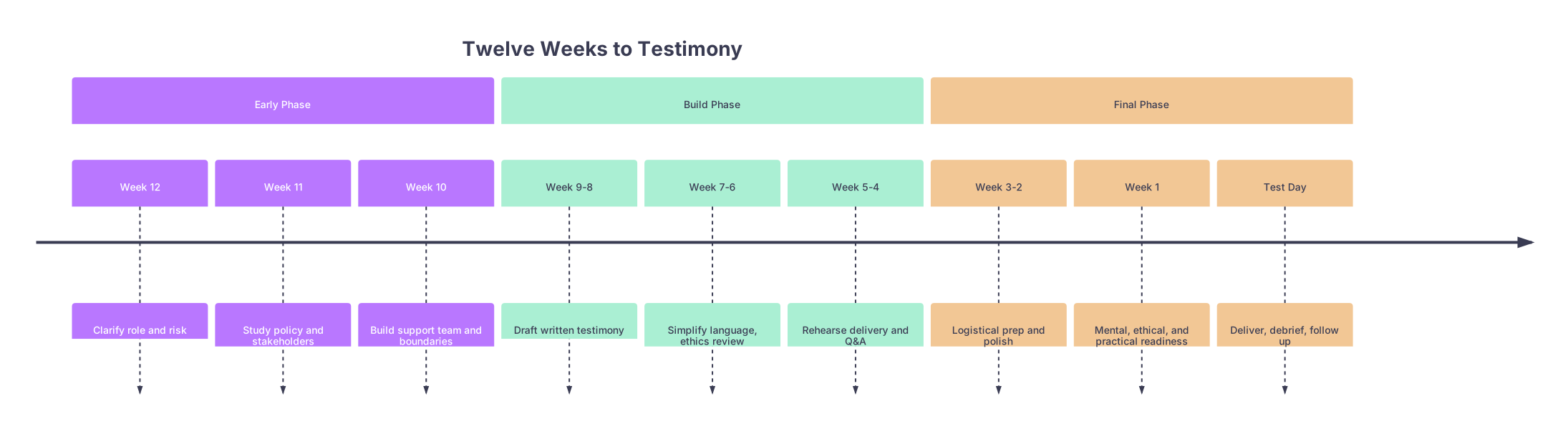
| Period | Event |
|---|---|
| Early Phase - Week 12 | Clarify role and risk |
| Early Phase - Week 11 | Study policy and stakeholders |
| Early Phase - Week 10 | Build support team and boundaries |
| Build Phase - Week 9-8 | Draft written testimony |
| Build Phase - Week 7-6 | Simplify language, ethics review |
| Build Phase - Week 5-4 | Rehearse delivery and Q&A |
| Final Phase - Week 3-2 | Logistical prep and polish |
| Final Phase - Week 1 | Mental, ethical, and practical readiness |
| Final Phase - Test Day | Deliver, debrief, follow up |
Weeks 9–7: Build Your Testimony, Ethically and Clearly
Now we move from “what is this” to “what exactly am I going to say, and how will it hold up under scrutiny.”
Week 9: First Draft – Facts, Not Flourish
At this point you should ignore style and chase precision.
This week you should:
- Draft your written testimony. Target 4–8 pages unless there’s a strict limit.
Rough structure:
- Brief introduction (2–3 sentences)
- Credentials (what makes your perspective relevant, not impressive)
- Clear statement of position (support, oppose, or conditional support)
- Evidence summary (data + clinical reality)
- Ethical analysis (patient welfare, justice, autonomy, beneficence, nonmaleficence)
- Concrete recommendations or amendments
- Short conclusion
Separate certainty from opinion. Literally mark up your draft:
- “High confidence” statements – backed by strong evidence
- “Moderate confidence” – emerging or mixed data
- “Professional judgment” – clearly labeled as such
Document your sources.
Footnotes or endnotes with:- Key randomized trials
- Major guidelines (CDC, WHO, specialty societies)
- High-quality observational data for real-world context
If you can’t show where a claim comes from, either find the source or delete the claim.
Week 8: Translate Medicine to Plain English
Your audience is not a room of subspecialists. It’s lawmakers, lawyers, reporters, and the public. At this point you should make your language uncomfortably simple.
This week you should:
Strip jargon.
Replace:- “morbidity and mortality” → “serious illness and death”
- “adjudicated outcome measures” → “outcomes reviewed by independent experts”
- “non-inferior” → “at least as effective as”
Use numbers that land.
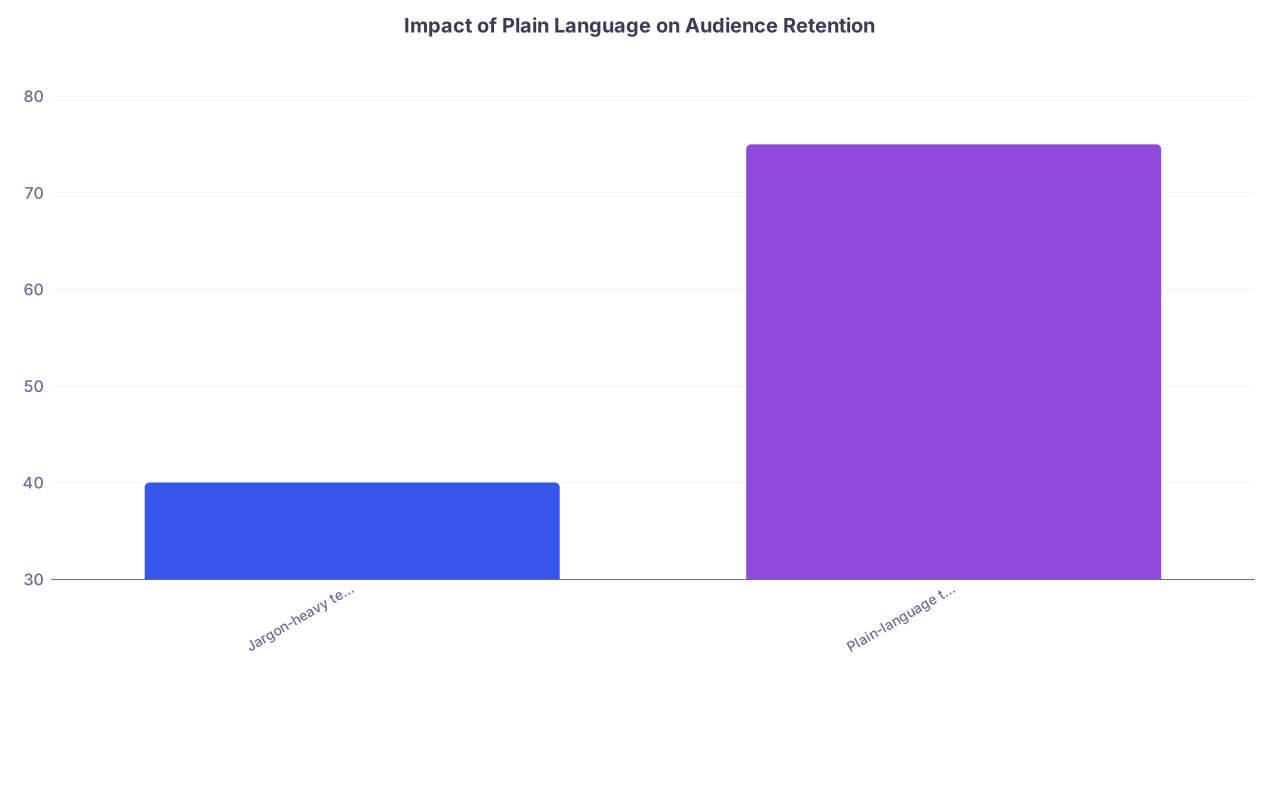
| Category | Value |
|---|---|
| Jargon-heavy testimony | 40 |
| Plain-language testimony | 75 |
(Those numbers are illustrative, but the pattern is real: people remember what they can repeat.)
- Bake in one or two stories.
Not sob stories. Anchors.- “Let me give you a typical example from clinic…”
- Keep it anonymous and representative, not extreme outliers
Ethically, be cautious:
No identifying details; no rare disease + unusual demographics.
The point is to humanize the data, not to parade a specific patient.
Run the draft by a non-physician.
- Ask them what they think your three main points are.
- If they miss, your draft is unclear. Fix it.
Week 7: Ethics Scrub and Conflict Disclosures
At this point you should make sure your testimony could be printed on the front page tomorrow without embarrassing you or your profession.
This week you should:
- Disclose conflicts clearly.
- All paid consulting, speaking, advisory roles
- Grants or institutional funding relevant to the issue
- Voluntary advocacy roles that might color perception
Short, direct, and early in the testimony:
“I have served as a paid consultant for ___ on issues related to ___. These views are my own.”
Check your argument against core medical ethics:
- Autonomy: Does the policy respect informed decisions, or does it coerce?
- Beneficence / Nonmaleficence: Are you honestly weighing harms and benefits, or cherry-picking?
- Justice: Who gets helped, who gets hurt, and are you naming that explicitly?
Watch for moral grandstanding.
If you’re writing things like “Any ethical physician would…” delete it.
Strong positions are fine; moral bullying is not. You’re there to clarify, not to posture.
Weeks 6–4: Train for the Arena (Delivery and Cross-Examination)
Now the focus shifts. Content is mostly there. Your job: make sure you do not fall apart or ramble under questioning.
Week 6: Script Your Core and Build a Question Bank
At this point you should know exactly what you would say if the chair cut you down to two minutes.
This week you should:
Write a 2–3 minute oral statement.
- That’s roughly 250–400 words.
- Aim for:
- One-sentence position
- Three key supporting points
- One short patient-centered example
- One clear recommendation
Create your “Q&A Bible.”
- 20–40 likely questions, grouped by:
- Data quality and limitations
- Patient impact
- Cost and access
- Ethical concerns
- Personal attacks / bias questions
- Draft short answers, with one key message each.
- 20–40 likely questions, grouped by:
Write three “bridge phrases” you’ll use constantly:
- “The key point I want to emphasize is…”
- “From a patient care perspective, what matters most is…”
- “The evidence we have shows…”
You are training yourself not to chase every hypothetical, but to guide the conversation back to what actually matters.
Week 5: Mock Hearing – Take the Hits Early
If you skip this, you’ll practice for the first time in front of cameras. That’s a bad plan.
This week you should:
-
- At least:
- 1 person playing hostile questioner
- 1 person playing sympathetic but clueless lawmaker
- 1 timekeeper
- Use a real table, real microphone if possible, and record video.
- At least:
Test the hard questions openly:
- Policy trade-offs: “So you’re okay with higher costs if…?”
- Ethical dilemmas: “Would you deny this treatment to your own family?”
- Credibility jabs: “You’re funded by X company; why should we trust you?”
Afterward, watch the video.
Look for:- Rambling after you’ve already answered
- Defensive body language: eye-rolling, crossed arms, smirks
- Overuse of filler: “so,” “like,” “to be honest”
Pick 2–3 specific behaviors to fix. Not ten. Two or three.
Week 4: Tighten, Simplify, Repeat
At this point your content should be mostly set. You’re sharpening, not rewriting.
This week you should:
Refine your 2–3 minute statement into something you can deliver without notes but still have in front of you as a safety net.
Cut anything that only impresses doctors.
- Detailed methodology descriptions
- Esoteric diagnostic criteria
- Name-dropping journals and impact factors
Practice staying calm under interruption.
- Have someone cut you off mid-sentence.
- Train responses like:
- “Yes, I’ll be brief: the main answer is…”
- “That’s a fair question; the short version is…”
The metric this week: your testimony should sound clear and grounded even if you’re given half the time you expect.
Weeks 3–1: Logistics, Mental Prep, and Ethical Centering
The last three weeks are about not sabotaging yourself with simple mistakes.
Week 3: Lock the Details and Submit Materials
At this point you should remove all uncertainty about paperwork and procedure.
This week you should:
Submit written testimony by the deadline.
- Confirm receipt
- Keep the exact version you submitted, with timestamp
Finalize CV and disclosures.
- Trim the CV to what’s relevant; no need for your college debate trophy
- Ensure disclosures match what you plan to say out loud
Clarify hearing procedures:
- Order of witnesses
- Time limits
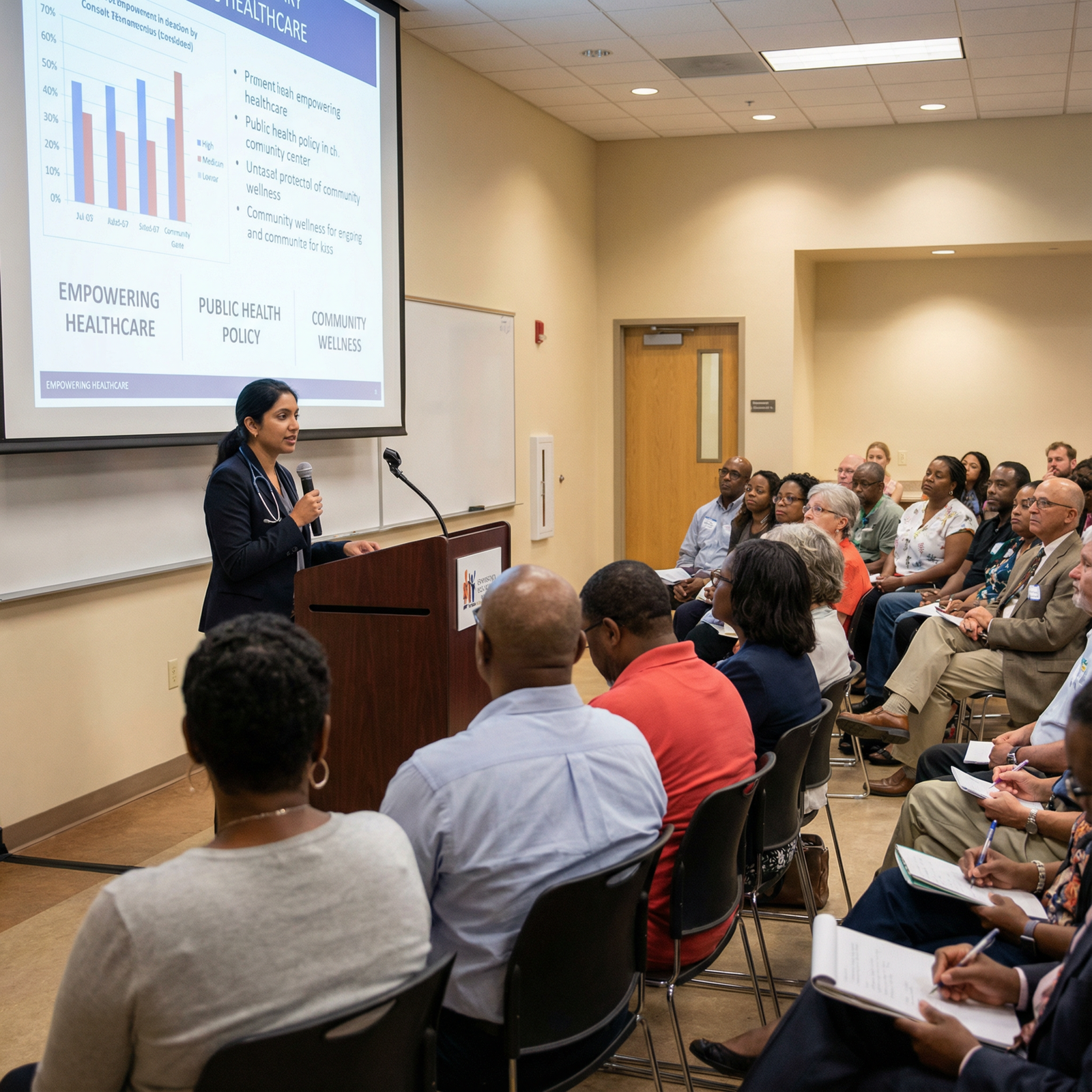
- Whether slides are allowed (often they aren’t)
- Remote vs in-person logistics
Have all confirmations in one folder (digital and printed). Scrambling for an email on the morning of testimony is amateur hour.
Week 2: Final Rehearsals and Stress Testing
At this point you should be rehearsing under near-real conditions.
This week you should:
Do at least two full run-throughs:
- Once alone, out loud, timing yourself
- Once with a small audience—ideally including your earlier mock panel
Refine your “I don’t know” responses.
- “I don’t know” is fine.
- “I don’t know, and here’s what we would need to study to answer that” is better.
- Avoid guessing; you’re on the record.
Plan for media.
- Draft 1–2 sentences you’re comfortable seeing quoted:
- “As a physician, my concern is that…”
- “We have to be honest about the trade-off between…”
- Decide what you will not comment on outside the room.
- Draft 1–2 sentences you’re comfortable seeing quoted:
Your stress will spike this week. That’s normal. Practice anyway.
Week 1: Ethics, Composure, and Practical Prep
This is where people either steady themselves or spin out.
Early in the week you should:
Revisit your ethical anchor.
- Write down, in one paragraph, why you’re doing this for patients and the public.
- Read it the night before and the morning of.
Set your boundaries clearly in your own head.
- What you will not answer (beyond scope, personal politics)
- What you will always bring back to (patient welfare, evidence)
Prepare physically.
- Clothing appropriate to the setting (conservative, comfortable, not distracting)
- Printed copies of:
- Testimony
- Key data tables or figure summaries
- Your question bank (as a quiet confidence booster)
Day before you should:
- Do one slow, calm run-through of your statement.
- Check travel, security, and timing details.
- Sleep. Seriously. You don’t want to be the doctor yawning on camera.
Test Day: Deliver, Hold Your Ground, and Exit Cleanly
At this point you’re not “preparing” anymore. You execute.
Before you speak:
- Arrive early, find the room, understand where you’ll sit.
- Watch how earlier witnesses are treated—tone, interruptions, time enforcement.
- Adjust your pace accordingly.
During your statement:
- Look at the decision-makers, not your paper. Brief glances down are fine; reading your entire statement is deadly.
- Hit your key three points early. If you get cut short, they still heard what mattered.
- Keep a neutral, steady tone—even if someone makes a speech disguised as a question.
During Q&A:
- Listen to the whole question. Many physicians start answering halfway through and walk into traps.
- Answer the question you were asked, then bridge—once—to your key message.
- When misquoted or mischaracterized:
- “Respectfully, that is not what I said. What I said was…”
After you finish:
- Stay until you’re excused; do not storm out or appear annoyed.
- If reporters approach and you’re not comfortable, use:
- “My written testimony is public and has the full details. I’ll let that stand on its own.”
- Document any misquotes or significant issues right after, while memory is fresh.
Then go home. Debrief with your small team within 48–72 hours. Note what you’d do differently next time while it’s vivid.
The Day After and Beyond: From Testimony to Ongoing Responsibility
Testimony is not a one-off performance. It creates a record and sometimes a new role.
In the days after you should:
Review the transcript when available. Correct factual errors if the procedure allows.
Reflect on ethical impact.
- Did your testimony get used in ways that distort your intent?
- If so, consider a brief written clarification, not a Twitter war.
Decide your future involvement.
- Will you be available for follow-up questions from staff?
- Are you willing to sign onto coalition letters or future statements?
- Do you need to debrief with patients or community partners who may be impacted?
You just stepped into the public record as a physician witness. That carries ongoing responsibility, not just bragging rights.
Three Things to Remember
- You’re there as a physician, not a pundit. Anchor every answer in patient welfare, evidence, and core medical ethics.
- Preparation is your protection. The twelve-week timeline isn’t overkill; it’s how you avoid being twisted, flustered, or used.
- Clarity beats brilliance. A calm, plain-spoken doctor with solid boundaries does more for public health policy than the smartest, sloppiest expert in the room.