
12% of subspecialist practices generate over 70% of their new patients from just 10 referring clinicians.
If you are building a single‑organ practice (cardiology, GI, pulmonology, nephrology, hepatology, etc.), that statistic should stop you. Because it is exactly why some practices feel “effortless” after year three—and why others are still begging for scraps from the hospital call pool.
Let me break this down specifically: you are not building a brand in the abstract. You are building a set of repeat, reliable referral pipelines from clearly defined sources, with clear rules, and predictable volumes. That is the real game.
Below I am going to walk you through how to do that like an adult, not like a PGY‑7 hoping “quality will speak for itself.”
1. Start With Ruthless Clarity: What Problems Are You Built To Solve?
Most new subspecialists massively overestimate how clear their “value proposition” is to referring physicians.
I have sat in too many meetings where a new specialist says something like, “Well, I do all of cardiology, so they can send me anything.” That is how you end up with a chaos inbox and no predictable referral streams.
You need to answer four questions with painful specificity:
- Which organ and which sub‑niche?
- Which problems will you solve reliably and fast?
- For which types of referrers?
- With what turnaround and communication style?
Example for a single‑organ cardiology practice:
- Organ: Heart
- Core sub‑niches: coronary disease risk, arrhythmia workup, pre‑op risk stratification
- Designed referrers: PCPs, hospitalists, orthopedics, bariatrics
- Promise: “Within 3 business days for urgent clinic evaluations, same‑week imaging, clear one‑page note back same day”
Notice what is not there: “I also do advanced heart failure, cardio‑oncology, structural, and echo reading for whoever.” That might be true clinically. But pipeline building starts narrow.
You want referrers to have a reflex:
“Old diabetic, needs pre‑op clearance? Send to Dr. X. She always gets them done in time, and I get a usable note.”
That reflex is what builds your panel. Not your fellowship CV.
2. Map Your Ideal Referral Sources Like A Supply Chain
Stop thinking of “referrals” as this amorphous blob. Think in discrete channels. Each channel has capacity, friction, and politics.
Broadly, for a single‑organ subspecialty, you have:
- Primary care (internal medicine, FM, geriatrics, NP/PA groups)
- ED and hospitalists (consults that turn into follow‑up)
- Surgical specialties (ortho, bariatric, general surgery, OB/GYN, etc.)
- Other organ specialties (endocrine → cardiology, rheum → pulmonology, oncology → GI/hepatology)
- Urgent care and retail clinics
- Self‑referrals (small but important in some markets)
Now, quantify them. Not perfectly. Roughly.
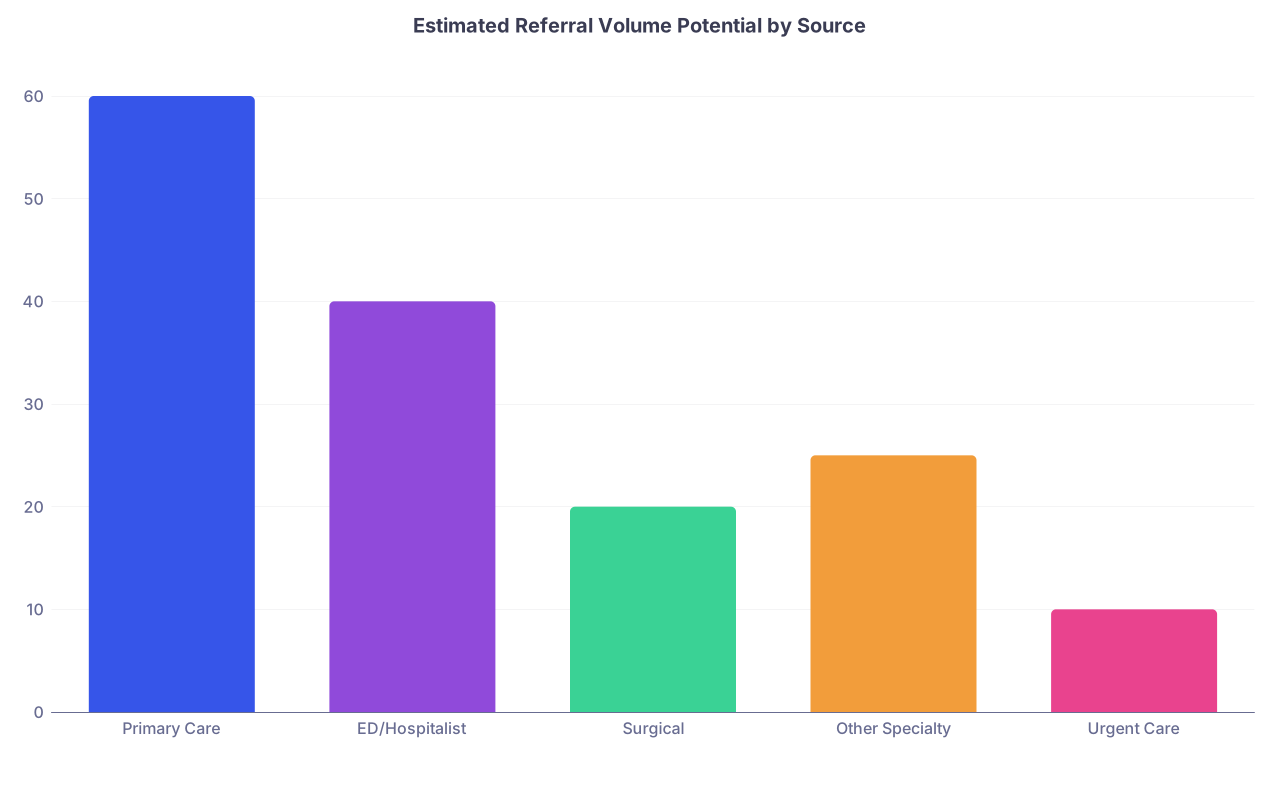
| Category | Value |
|---|---|
| Primary Care | 60 |
| ED/Hospitalist | 40 |
| Surgical | 20 |
| Other Specialty | 25 |
| Urgent Care | 10 |
The exact numbers do not matter; the direction does. In most markets:
- 5–15 primary‑care clinicians can fill most of a new subspecialist’s schedule if they actually use you consistently.
- ED/hospital referrals are volatile, politics‑driven, and sensitive to call coverage.
- Surgical pipelines are powerful but narrow (pre‑op, clearance, co‑management).
- Other subspecialists refer only when you solve a problem they care about and do not step on their toes.
So your first concrete task in the first 90 days post‑residency:
Build an actual list of:
- Every PCP clinic within 20–30 minutes
- Every hospitalist group covering your main hospitals
- Every high‑volume surgical group that touches your organ system
- Key related subspecialists whose complications overlap your organ
Put it in a spreadsheet. Name, clinic, email (if you can get it), office manager name, and—critically—annual patient volume relevant to your organ if you can estimate.
That list is your prospect map. You will not treat them all equally.
3. Choose 3–5 “Anchor Pipelines” To Build First
If you try to “be available” to everyone, you end up being indispensable to no one.
You need anchor pipelines—high‑yield referrers that you decide you are going to serve fanatically well. Start with 3–5 groups. Not 30.
Example for a GI single‑organ practice:
- Two large primary‑care clinics (each with 6–10 clinicians) that currently send a lot of colonoscopy and abdominal pain to a competing group that is chronically backed up.
- A bariatric surgery group frustrated by slow access for pre‑op endoscopy and post‑op complications.
- An oncology group that hates sending their chemo‑related diarrhea and transaminitis to a disorganized GI service.
That is it. Four targets.
You build specific offers for each, not generic marketing fluff.
For the bariatric group, your offer might be:
- “We guarantee pre‑op endoscopy within 10 business days and same‑day clearance notes.”
- Standardized post‑op pathways for GI complaints to keep them out of the ED.
- A direct cell or backline for their NP to discuss tricky cases.
For the oncology group:
- Protected slots for chemo‑related GI issues within 48–72 hours.
- Brief, template‑based feedback notes that answer exactly what oncologists care about: is this chemo‑related, do we need to change the regimen, can they continue treatment?
Anchors stabilize your volume and your schedule. Everything else is bonus.
4. Design The Operational Backbone Before You “Market”
Most new attendings go shake hands before they fix their operations. So they get one shot with a referrer… and then blow it with a 5‑week wait time and a 6‑page useless note.
You need a referral‑friendly practice backbone before you go out:
Scheduling template that matches your offer
- Dedicated new‑patient slots daily or on certain days.
- Protected urgent slots (e.g., “3 same‑week new slots held until 10 AM the day before”).
- Clear rules your staff can follow without improvising.
Referral intake process
- Single fax number and a single referral email or portal.
- Simple 1‑page referral form with exactly the minimum data you need.
- Internal rule: all referrals logged same day, triaged within 24 hours.
Triage rules
- What is “urgent” vs “routine” vs “procedural only”?
- For each category: target days to appointment.
- Who decides? You, not front desk.
Communication standard back to referrers
- Same‑day note (even if brief) for urgent visits.
- Within 24–48 hours for routine.
- Clear answer to the referrer’s specific question at the top of the note.
If your practice management system or EHR cannot support this, you will have to brute‑force with templates, macros, and good staff training.
I have seen small practices win huge pipelines because they simply did the basics:
- Answer the phone.
- See the patient in under 10–14 days.
- Send a legible, targeted note back.
That is embarrassingly rare.
5. Script The First 5–10 Referrer Meetings Like A Sales Call
Yes, you are a physician. You are also doing sales. Pretending otherwise is how you end up complaining in the doctor’s lounge about “no referrals” while the more pragmatic competitor eats your lunch.
You are not winging these meetings. You are running a structured conversation.
Basic structure for a first visit to a primary‑care group:
Open with credibility and clarity (2–3 minutes)
- Your background (fellowship, any local ties).
- One sentence on what your practice does distinctly.
Ask about their pain points (8–10 minutes)
- “What do you find most frustrating about getting patients to [cardiology / GI / pulm] now?”
- “Where are your patients falling through the cracks?”
- Shut up and take notes.
Offer specific solutions (5–8 minutes)
- “You mentioned pre‑ops taking 6–8 weeks. Here is what I can offer: I hold X slots / week for pre‑ops with a 10‑business‑day guarantee.”
- “You said you never know what happened to the patient. I send a one‑page summary the same day for urgent cases.”
Clarify logistics (5 minutes)
- How to refer (fax, portal, phone).
- What information you need.
- Typical wait times by category.
Close with a trial commitment (2 minutes)
- “Try sending me your next 5–10 [type] patients. If I cannot deliver what I just promised, you never have to use me again.”
Bring:
- A one‑page “referral guide”: problems you handle, what tests you prefer pre‑referral (if any), how to refer, expected wait times.
- A business card with a direct contact for your referral coordinator.
- If you are serious: a direct backline for clinicians to reach you for curbside questions.
This is not a “nice to meet you.” This is setting up a pilot relationship with very specific expectations on both sides.
6. Make The On‑Ramps Frictionless For Busy Clinicians
Referring physicians are overloaded. If it takes them more than 30–60 seconds to refer, you are losing volume to the path of least resistance.
Your job is to remove friction:
- Accept referrals in multiple ways: fax, phone, portal, secure email. Do not be dogmatic.
- Pre‑fill your referral form with clinic info if you are targeting a specific group and send it to them as a template.
- For anchor groups, train their MAs or referral coordinators: 10‑minute in‑service on “how to get your patients in quickly with Dr. X.”
One practical example I watched work in a pulmonology practice:
They created a laminated, color‑coded card for each PCP office:
- “Red” symptoms → same‑week slots (mass, hemoptysis, desat, etc.)
- “Yellow” → 2–3 weeks
- “Green” → routine, 4–6 weeks
On the back: fax number, phone, and “what we need” (CXR report, basic labs, brief story).
It sat on every PCP office desk. Guess who they thought of first when they saw hemoptysis.
7. Use Hospital Work Strategically, Not Desperately
Post‑residency, many young subspecialists lean heavily on hospital call and inpatient consults. That is fine. But understand the economics:
- Inpatient consultations are volatile.
- They are politically sensitive (service lines, call coverage, hospital contracts).
- They do not automatically translate into outpatient pipeline unless you force the issue.
You want to use inpatient work as a feeder, not as your long‑term primary business model.
Practical steps:
- For every inpatient consult appropriate for follow‑up, your note should include: “We will see the patient in our clinic in X days; appointment scheduled for [date/time].”
- Build a default process where your office automatically schedules follow‑up before discharge for certain diagnoses (new AFib, new heart failure, chronic liver disease, etc.).
- Communicate back to the hospitalists: “Every admitted new AFib or HF you consult us on, we guarantee a clinic follow‑up within X days after discharge.”
Hospitalists remember which consultants close the loop and keep patients from bouncing back to the ED.
For ED‑origin cases, similar story: work with the ED director to define criteria where they can safely discharge to your rapid‑access clinic instead of admitting. That creates enormous goodwill and a very sticky referral pipeline.
8. Balance Single‑Organ Breadth With Sub‑Subspecialty Depth
Here is the tension: you are a “single‑organ” practice (cardio, GI, pulm), but the market is getting used to subspecialization within that (EP vs interventional vs general cardiology, IBD vs motility vs liver, etc.).
If you are too broad, you are generic. If you are too narrow, you starve early.
The solution early in practice:
- Clinically, you manage the full organ spectrum that you are comfortable with.
- Marketing and pipeline‑building wise, you lead with 1–2 clear sub‑identities that referrers can remember.
Example for a new cardiologist:
- You are trained generally but have strong interest in prevention and imaging.
- Your marketing positioning to PCPs:
- “Rapid‑access cardiology for pre‑op and chest pain workup.”
- “Focused prevention program for diabetics and CKD patients.”
You still take valvular disease, basic HF, etc., but you do not advertise yourself as “I do everything.”
As your practice matures and you possibly bring in partners, you can segment:
| Physician | Primary Focus | Key Referral Types |
|---|---|---|
| Dr. A | Preventive/Imaging | PCP, Endocrine |
| Dr. B | EP | PCP, ED, Hospitalist |
| Dr. C | Heart Failure | Hospitalist, Nephrology |
| Dr. D | Structural | Cardiology, Cardiac Surg. |
At that stage, your internal triage routes specific cases to the right partner, but externally you still market a unified “we own the heart” identity.
9. Track Referral Data Ruthlessly From Day One
If you are not measuring, you are guessing. And physicians are terrible at estimating where their patients actually come from.
At minimum, your practice should capture for every new patient:
- Source type (PCP, ED, surgeon, self, other)
- Referring clinician name and practice
- Diagnosis category (broad bucket: AFib, chest pain, anemia, cirrhosis, COPD, etc.)
- Days from referral to appointment
Then, every quarter, actually look at it.
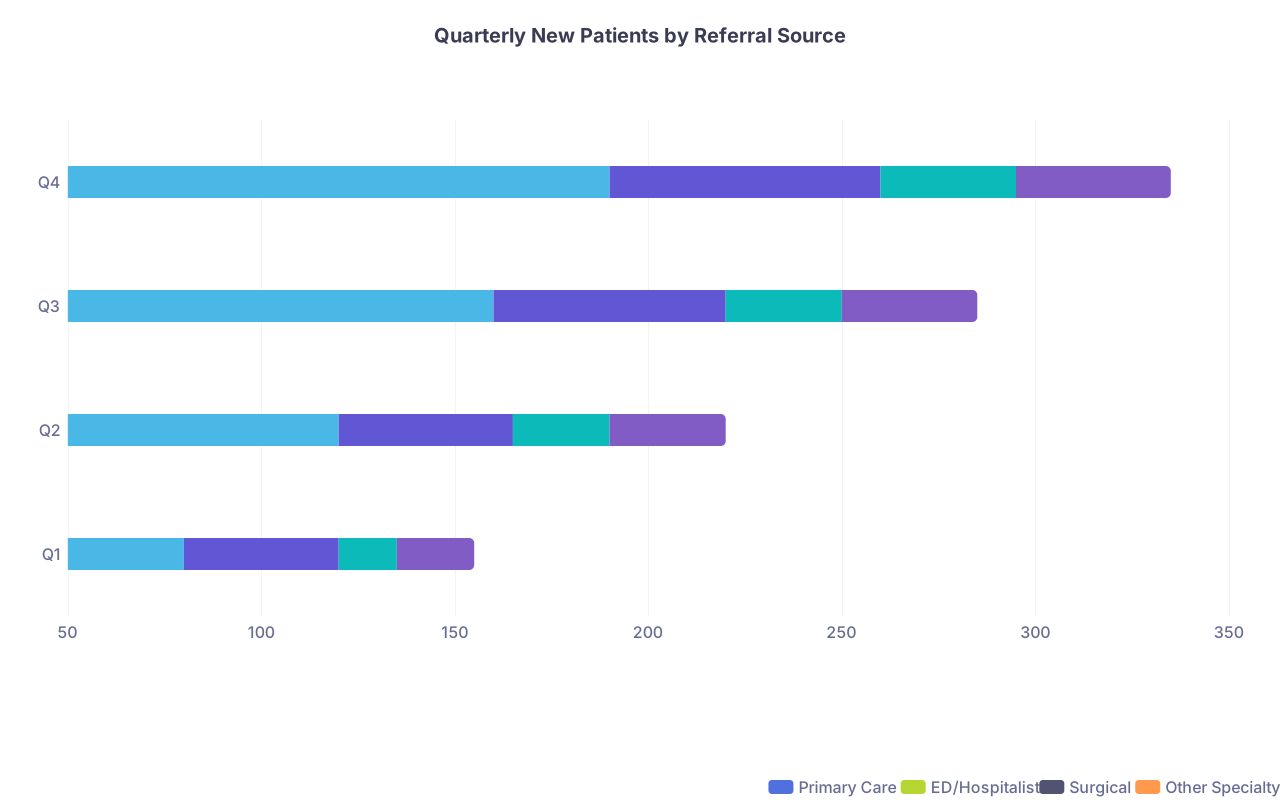
| Category | Primary Care | ED/Hospitalist | Surgical | Other Specialty |
|---|---|---|---|---|
| Q1 | 80 | 40 | 15 | 20 |
| Q2 | 120 | 45 | 25 | 30 |
| Q3 | 160 | 60 | 30 | 35 |
| Q4 | 190 | 70 | 35 | 40 |
You want answers to questions like:
- Which 10 clinicians sent the most patients in the last 3–6 months?
- What is your average wait time per source? Are your “anchor” groups getting the promised access?
- Are there high‑value sources stagnating or dropping?
Then act:
- Thank your top referrers. Real thank‑you. A call, a visit, not a mug.
- Fix bottlenecks for key groups where wait times are slipping.
- Drop or de‑prioritize channels that are consistently low‑yield despite outreach.
And if your EHR cannot produce this easily, have your front desk track referrer in a simple database or spreadsheet. It is that important.
10. Maintain The Pipeline: Consistency Beats Grand Gestures
The initial push takes effort. But the long game is about maintenance, not constant “marketing events.”
What actually works over 3–5 years:
- Quarterly or semiannual brief check‑ins with your top 10–15 referrers. That can be a 10‑minute visit, a quick video call, or a short email that says, “Here is what we have been seeing, what is working, what we can do better.”
- Short, focused education sessions tailored to their reality: 20‑minute lunch talk on “When to refer [X symptom] to me vs manage in PCP.” Not 60‑minute guideline recitation.
- Periodic updates to your referral guide if you change operations (e.g., added imaging, new same‑day slots, new partner).
- Being aggressively reachable for curbside questions in a way that fits your life. That can be email, a clinic backline, or a texting solution, depending on your risk tolerance and systems.
Do not overcomplicate. Referrers mainly care about:
- Speed of access
- Quality and clarity of your clinical work
- Communication that helps them, not just you
If you keep those three reliable, your pipeline stabilizes. If any one of them erodes, volume will leak to whoever is slightly less annoying.
11. Common Pitfalls That Kill Subspecialty Referral Pipelines
I have watched new practices sabotage themselves repeatedly with the same mistakes.
Top offenders:
Overpromising access.
Day 1 you tell everyone “I can see anything in 3 days.” Six months later you are at 6 weeks. That betrayal lingers. Be conservative in promises, aggressive in execution.Notes that do not answer the question.
Eight pages of templated nonsense and not a single line on: “Can this patient undergo surgery?” or “What follow‑up do you recommend for PCP?” That is how you become their last choice.Disrespecting PCP relationships.
Telling patients “your doctor should have sent you earlier” or openly contradicting them in your note is suicidal. You can disagree clinically without making your referrer look incompetent.Inflexible referral rules.
Telling a busy ED attending or PCP “we will not see them unless you get [lab/imaging] first” unless there is a very strong reason. The correct attitude is: “Send them, we will handle the workup.”Ignoring staff behavior.
Rude front desk, phone trees from hell, voicemail black holes—your staff can quietly destroy the relationships you just spent months building. You must monitor and coach this relentlessly.
12. Advanced: Building Multi‑Specialty Referral Ecosystems
Once your single‑organ practice is stable, you can start building upstream and downstream ecosystems.
Example: hepatology‑heavy GI practice.
Upstream:
- ED and hospitalists for acute liver injury, variceal bleeds.
- PCPs for chronic hepatitis, abnormal LFTs.
- Oncology for chemo‑induced liver toxicity.
Downstream / lateral:
- Transplant center relationships for expedited evaluation.
- Addiction medicine for alcohol‑related liver disease.
- Nutrition services.
You position yourself as the hub that simplifies life for everyone dealing with liver problems. PCPs do not need to know the transplant pathway; they just know “send to Dr. X, and her team handles the maze.”
For a cardiology example:
- Build a simple algorithm with nephrology for CKD patients with HFpEF: joint management templates, lab bundles, clear roles.
- Work with oncology on cardio‑oncology pathways: baseline imaging, surveillance, and rapid access slots.
These ecosystems make your practice sticky. If you become the node that “makes things easier” across multiple specialties, breaking referral habits away from you becomes very hard.
13. A Simple Execution Timeline For The First 12–18 Months
Let me make this very concrete. Imagine you just finished fellowship. Here is a realistic sequencing:
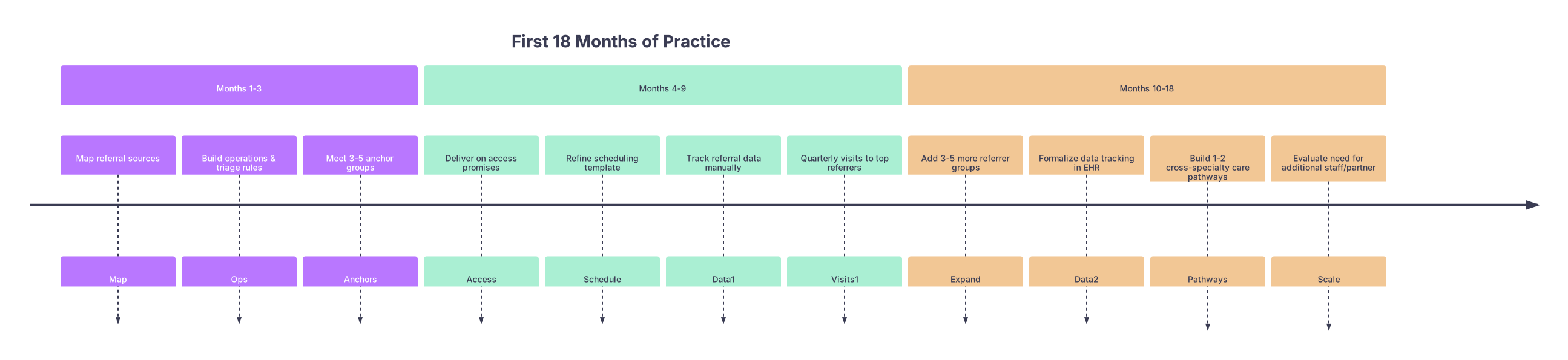
| Period | Event |
|---|---|
| Months 1-3 - Map referral sources | Map |
| Months 1-3 - Build operations & triage rules | Ops |
| Months 1-3 - Meet 3-5 anchor groups | Anchors |
| Months 4-9 - Deliver on access promises | Access |
| Months 4-9 - Refine scheduling template | Schedule |
| Months 4-9 - Track referral data manually | Data1 |
| Months 4-9 - Quarterly visits to top referrers | Visits1 |
| Months 10-18 - Add 3-5 more referrer groups | Expand |
| Months 10-18 - Formalize data tracking in EHR | Data2 |
| Months 10-18 - Build 1-2 cross-specialty care pathways | Pathways |
| Months 10-18 - Evaluate need for additional staff/partner | Scale |
No magic. Just deliberate sequencing.
The secret is not some clever marketing trick. It is clear positioning, reliable execution, and being slightly less frustrating than the alternatives.
FAQ (5)
1. How many active referring clinicians do I need to have a stable single‑organ practice?
For most subspecialties, 20–40 moderately active referrers is enough for a full, healthy panel. But your top 10 usually drive a disproportionate share of your volume. If you cultivate 8–12 strong, loyal referrers plus a long tail of occasional ones, you will usually be fine.
2. Should I pay for lunches, gifts, or sponsored talks to build referrals?
Food at brief educational sessions is common and generally acceptable within compliance limits. Trinkets and gift‑like behavior are overrated and can look desperate. If you are relying on swag instead of fast access and good communication, you are compensating for weak fundamentals.
3. How aggressive should I be about giving my personal cell to referrers?
Early on, selectively giving your cell to 3–5 anchor clinicians or a group’s lead NP can be high‑yield. Over time, it becomes untenable if everyone has direct access. A good compromise: a clinic backline that rings your nurse or MA first, with clear rules for when to escalate to you.
4. What about direct‑to‑consumer marketing for a subspecialty practice?
For single‑organ subspecialties, direct‑to‑consumer ads usually play a secondary role. They can help for certain niches (elective procedures, preventive cardiology, reflux, sleep) but they rarely replace referrer pipelines. I would not spend meaningful money on consumer marketing until your top referrer relationships and operations are tight.
5. How do I handle a referrer who constantly sends inappropriate or low‑yield referrals?
Do not silently resent them. Have a short, respectful conversation: “I appreciate you trusting me with these patients. Let me show you what I can handle most efficiently and what you can probably manage directly.” A simple referral guide with “refer vs manage” examples works well. If the pattern persists and is truly disruptive, you can quietly deprioritize scheduling those referrals without burning the relationship outright.
Key points to walk away with:
- Build 3–5 anchor referral pipelines first and serve them obsessively well.
- Make access, triage, and communication ridiculously simple and reliable.
- Track where patients come from, then double down on your highest‑yield relationships.