
The usual advice about “same‑day access” is a trap. Most clinics try to bolt it onto a traditional schedule and then wonder why everyone is miserable six months later.
If you want true high‑throughput, same‑day access without burning out, you have to design the clinic from the ground up like an urgent‑care/primary‑care hybrid with industrial‑engineering discipline. Not just “double book a few slots and hope.”
Let me break this down specifically.
1. Start With a Ruthless Capacity and Demand Model
You cannot build a sustainable same‑day system if you do not know your numbers. Hand‑waving is how you end up seeing 35 patients a day, charting until 10 p.m., and hating your life.
Step 1: Decide your true clinical capacity
By “capacity” I mean: how many visits you can do per day with your preferred intensity, documentation style, and life outside the clinic.
You choose this, or the default will be “as many as fit.”
For a same‑day oriented clinic, you need to be intentional about visit types and average visit length.
Typical starting point for a full‑time physician:
- 8‑hour clinical day
- 1 hour total “non‑visit” buffer (admin, bathrooms, micro‑huddles)
- 7 hours of visit time = 420 minutes
Now pick a target:
- New problem / acute visit: 15 minutes
- Chronic visit / complex: 20–25 minutes
- Procedures: blocked separately
If you lean hard into standardized acute workflows with strong MAs/scribes, you can push acute visits down to effective 10–12 minutes of physician face‑time.
Let’s be concrete:
You design:
- 70% of your day = same‑day acute slots, nominally 15 minutes
- 30% = pre‑booked chronic/complex, nominally 20 minutes
420 min x 0.7 / 15 ≈ 19 acute slots
420 min x 0.3 / 20 ≈ 6 chronic slots
So actual sustainable capacity ≈ 25 visits/day.
You can push this to 30–32 if you:
- Use scribes or really optimized note templates
- Push every possible task to standing orders and team protocols
- Maintain iron discipline on scope in acute visits
But do not start at 32. That is how people burn out before workflows are stable.
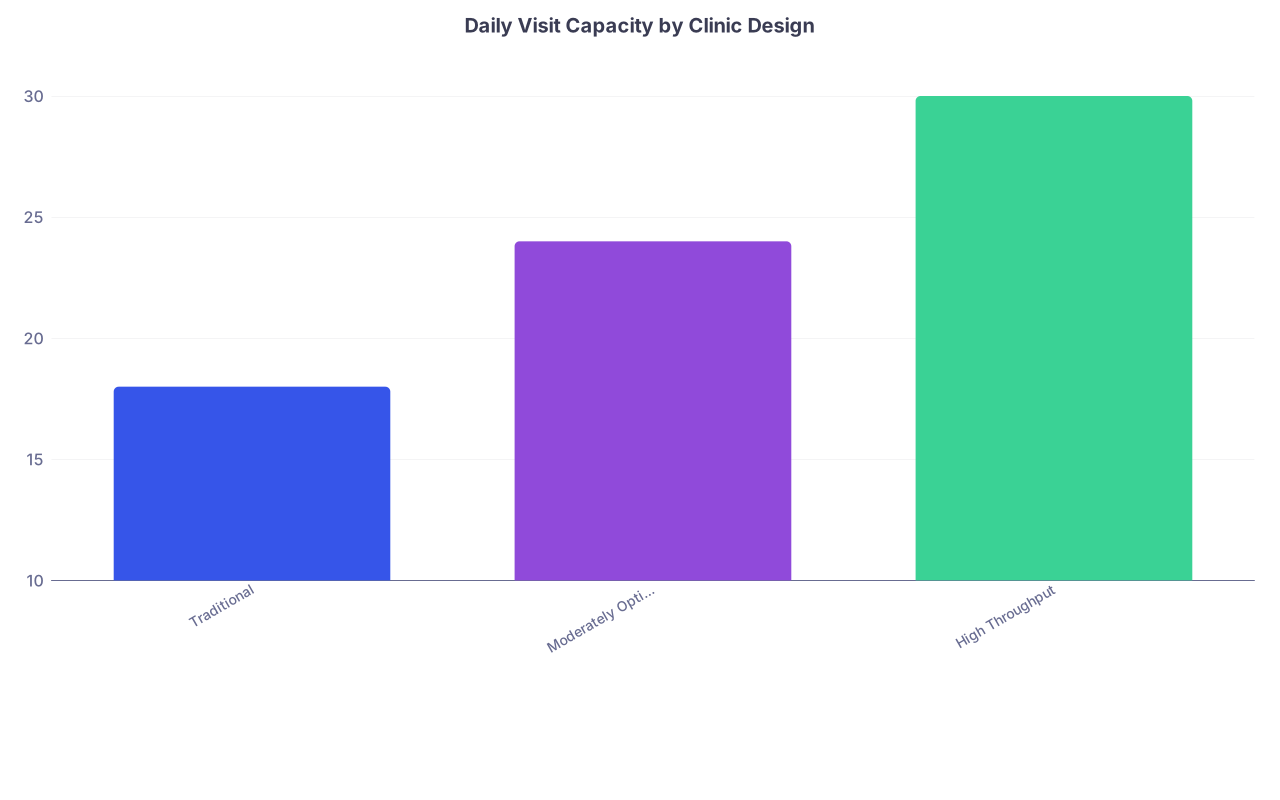
| Category | Value |
|---|---|
| Traditional | 18 |
| Moderately Optimized | 24 |
| High Throughput | 30 |
Step 2: Decide what “same‑day access” means in your clinic
Most systems lie to themselves. “Same‑day access” becomes “if you call at 8:01 you might get a 4:30 double‑booked slot.”
You need a clear operational definition, for example:
- 60–70% of all visits are bookable same‑day
- 2+ appointments per clinical hour are always reserved for same‑day until 9 a.m.
- A defined number of same‑day spots per half‑day (not “we’ll squeeze them in”)
Make it a number, not a vibe.
For our example physician at 25 visits/day:
- 17 same‑day slots
- 8 pre‑booked
Now match that against your intended panel size and demand.
Step 3: Back‑calculate panel size from visit demand
Same‑day clinics collapse when panel size and expectations do not match capacity.
Back‑of‑the‑envelope:
- Classic primary care: 2.5–3.0 visits per patient per year (mix of acute + chronic)
- A same‑day heavy model with good digital triage can often sit around 2.0–2.2 visits/year if you handle minor issues asynchronously
If you plan 25 visits/day, 4 days/week, 46 weeks/year:
25 x 4 x 46 = 4,600 visits/year
4,600 visits ÷ 2.2 visits/patient/year ≈ ~2,100 panel size
4,600 ÷ 2.5 ≈ 1,840 panel size
Most residents leaving training underestimate how quickly they can generate that demand if they market “same‑day.”
You should cap panel growth deliberately early on. Do not let your EHR or front desk accept endless new patients with “same‑day access” plastered everywhere. That is a recipe for schedule chaos in year 2.
2. Architect the Schedule Like an Assembly Line, Not a Patchwork
Same‑day access only works if your schedule template is stable and boring. If you are redesigning the template every week, you already lost.
Block structure that actually works
You want a repeating pattern that your team can memorize without thinking.
Example full day template:
- 8:00–9:00: Pre‑booked chronic/complex (3 x 20 min)
- 9:00–11:45: Same‑day block A (11 x 15 min, 1 built‑in buffer)
- 11:45–1:00: Lunch + admin
- 1:00–2:00: Pre‑booked chronic/complex (3 x 20 min)
- 2:00–4:45: Same‑day block B (11 x 15 min, 1 built‑in buffer)
You build at least two buffers of 15 minutes per half‑day. Hard‑protected. Unbookable by anyone except you or the lead MA when there is a clinical reason (not “Mrs. Jones really wants 4:15”).
Those buffers are where overflow, procedure overruns, or “this is getting scary” visits go. They are also where your sanity lives.

The non‑negotiable rules for same‑day slots
You need hard rules your front desk and MAs can follow without asking you 20 questions a day. For example:
- Same‑day slots release at 7:30 a.m. for phone and portal requests
- No one is “wait‑listed” for same‑day. Either they get in today or we give them protocol‑driven home management + next‑day
- Chronic care never goes into protected same‑day blocks unless you explicitly open them
Most clinics fail because some “VIP” patient gets wedged into same‑day blocks, which then vanish for actual same‑day needs. Do that enough and the promise dies.
3. Build Clinical Protocols and Triage that Filter Out the Nonsense
If you create same‑day access, you will invite every low‑acuity problem in town. That is not necessarily bad. Those are fast visits if you design them correctly. But you must prevent:
- Inappropriate acuity (NSTEMI in your waiting room)
- Time‑sink visits (6 chronic issues in a 15‑minute slot)
- Work that could have been handled asynchronously or by staff
Standardized nurse/MA triage
You need written, tested protocols. Not a half‑remembered UpToDate search at the front desk.
Categories to protocolize:
- URI / sore throat / flu‑like symptoms
- UTI symptoms
- Back pain without red flags
- Stable rashes
- Medication refills and lab checks
- “I ran out of my blood pressure meds”
Each protocol needs:
- Red‑flag criteria → “Send to ED or urgent care now”
- Yellow‑flag criteria → “Same‑day slot required with clinician”
- Green‑flag criteria → “Can be managed via portal/phone with scripts/labs ordered under standing protocol + next‑available follow‑up”
This is where you legally and operationally use standing orders and clear MD oversight. I have seen clinics shave 15–25% of “visit” volume into asynchronous workflows just by having robust refill and minor‑issue protocols.

| Step | Description |
|---|---|
| Step 1 | Patient request |
| Step 2 | Send to ED |
| Step 3 | Book same day |
| Step 4 | Asynchronous care |
| Step 5 | Emergent red flags |
| Step 6 | Protocol available |
| Step 7 | Green yellow red |
The “one‑problem per visit” rule (and when to bend it)
Same‑day clinics die when every acute slot turns into “while I am here, can we also…”
Your staff must be trained to set expectations before the physician walks in:
- “Today’s visit is for your sore throat. If you have other chronic issues to discuss, Dr. X usually prefers to schedule a follow‑up so you both have enough time.”
You, as the physician, then enforce it kindly but firmly:
- “I want to give your blood pressure and diabetes the time they deserve. Right now we only have time to safely deal with your strep test and treatment. Let us schedule a 20‑minute visit this week for the rest.”
If you fold in “while I am here” problems every time, your schedule degrades by 10–20 minutes per hour and you start running 60–90 minutes late by afternoon.
4. Design the Physical Space for Flow, Not Decor
Same‑day, high‑throughput clinics are won and lost on the floor plan. This is where many private practices cheap out and regret it forever.
Core layout principles
There are a few non‑negotiables:
- Central team “bullpen” or pod from which all exam rooms are visible/accessible
- At least 2 rooms per clinician (3 is luxury, but 2.5 average per FTE is ideal for throughput)
- Supplies standardized in exactly the same location in every room
- Clear “flow” direction: check‑in → vitals → room → check‑out, with minimal back‑tracking
If your MA has to hunt for tongue depressors in each room, your throughput is dead on arrival.
For a single‑physician, same‑day focused startup, a lean but effective layout:
- 1 check‑in/check‑out desk
- 1 vitals / intake station
- 4 exam rooms
- 1 procedure room (shared)
- 1 central team station with 3–4 workstations

5. Build a Team‑Based Care Model from Day One
If you think you will do a same‑day, 25–30 patient/day clinic as a solo physician with one MA “helping” you, you are planning burnout. That model died 10 years ago.
Minimum viable staffing for high‑throughput same‑day
For 1 physician FTE:
- 1.5–2.0 MA or nurse FTEs (cross‑trained for triage, rooming, procedures, and check‑out tasks)
- Shared front desk/phone staff (0.5–1.0 FTE depending on volume and how much you push to online booking)
- Consider part‑time scribe (in‑person or virtual) once volumes exceed ~22/day
| Role | FTE Range | Core Functions |
|---|---|---|
| Physician | 1.0 | Diagnosis, treatment plans |
| MA/Nurse | 1.5–2.0 | Rooming, triage, protocols |
| Front desk | 0.5–1.0 | Check-in, phones, scheduling |
| Scribe (opt) | 0.3–0.5 | Documentation, orders |
The key is role clarity, not just headcount.
Push everything possible off the physician
Your MAs/nurses should:
- Enter chief complaint and structured HPI elements
- Update meds, allergies, PMH, FH, SH every visit
- Follow standing order sets: vitals, vaccination, basic labs for defined complaints
- Start order sets in EHR by protocol (e.g., UTI workup template)
- Close as many open care gaps as possible during intake (A1c, microalbumin, vaccines)
Your front desk:
- Uses defined scripts for same‑day triage handoff to nurse
- Manages portal messages with structured templates (“refill protocol triggered → routed to MA, not MD”)
- Does not schedule “recheck in 6 months” by guess; uses disease‑specific follow‑up intervals you defined and wrote down
A same‑day clinic is fragile when the physician is the bottleneck for every trivial decision.
6. Use Technology Aggressively, but Very Specifically
“Digital front door” is not a buzzword here; it is how you offload low‑value work.
Online booking with rules
Open scheduling is dangerous if naive. You want:
- Patients can book same‑day acute slots online only for defined low‑risk chief complaints
- Anything triage‑sensitive (chest pain, breathing issues, abdominal pain, psychiatric complaints) triggers a “call nurse” workflow or asynchronous questionnaire reviewed quickly
Most modern EHRs (Athenahealth, Elation, DrChrono, etc.) allow reason‑for‑visit based online booking rules. You must take the time to configure those.
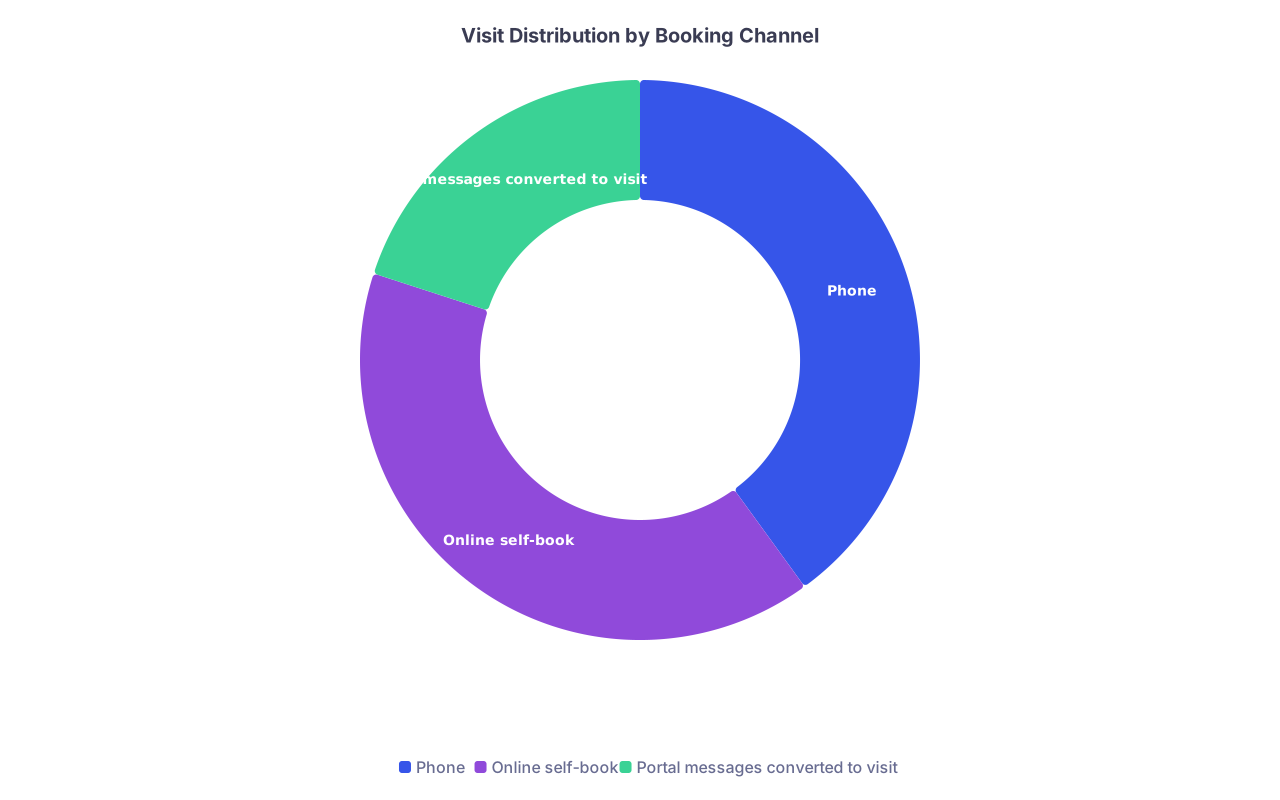
| Category | Value |
|---|---|
| Phone | 40 |
| Online self-book | 40 |
| Portal messages converted to visit | 20 |
Templates that actually save time
You need:
- Complaint‑based note templates (URI, UTI, back pain, rash, med refill, minor injury)
- Smartphrases/macros that pull in vitals, patient instructions, common plan text
- Order sets for same‑day frequent flyers (bronchitis/asthma exacerbation, suspected strep, otitis media, etc.)
The goal: 70–80% of same‑day visits are “fill in the blanks” not “type from scratch.”
If you are charting every note from a blank canvas, throughput will plateau and burnout climbs.
7. Protect Your Brain and Your Boundaries
You are not building a heroic urgent care where you “do everything for everyone all the time.” You are building a repeatable system.
Here is where most physicians sabotage themselves.
Hard limits on after‑hours and inbox work
If your inbox is a second job, your schedule design is meaningless.
You need policies like:
- Cutoff for same‑day electronic requests (e.g., messages after 3 p.m. are “next business day” by default)
- MA/nurse filters every message before it reaches you, with standing orders to complete simple tasks (refills, minor questions, lab result scripts)
- Dedicated 30–45 minutes per day in your template for inbox/results
You also need the courage to say: “No, I do not respond to portal messages at 9 p.m.” That sounds harsh now. It is much easier than breaking that habit later.
Reasonable diagnostic and treatment scope in same‑day slots
Do not turn every acute visit into a full functional‑medicine workup.
For same‑day care you should:
- Address the stated problem + immediate safety
- Order only what is needed to prevent harm and make the next step clear
- Arrange follow‑up visit for complex or chronic discussions
If your same‑day workups routinely include 20‑minute counseling on diet, sleep, and marital strain, the math will not work.
8. Money: Make Sure the Economics Back the Throughput
You can build the most elegant clinic in town and still go broke if your reimbursement model and payer mix do not support the work.
Understand where the revenue actually comes from
For a same‑day, high‑throughput clinic in typical U.S. fee‑for‑service:
- High percentage of level 3/4 E&M visits
- Some procedures (injections, basic procedures, EKGs, simple suturing)
- Occasional ancillaries (labs, vaccines, maybe X‑ray if you invest)
You absolutely need to code accurately and not under‑document. Same‑day does not mean “cheap care.”
If average reimbursement per visit is $110–$140 and you see 25 patients/day, 4 days/week:
Let’s pick $125 average:
25 x 4 x 46 weeks x $125 ≈ $575,000 gross pro fees per year.
Subtract overhead (staff, rent, supplies, malpractice, EHR, billing) which in a lean private practice might run 45–55%. So you land around $260–$315k before your own benefits and taxes.
If you do not like those numbers, you have options:
- Increase visits per day carefully with better workflows and maybe scribes
- Add high‑value procedures in scope of practice
- Layer on membership/retainer fees for priority same‑day access (hybrid concierge)
- Negotiate direct‑to‑employer arrangements for “rapid access primary/urgent care”
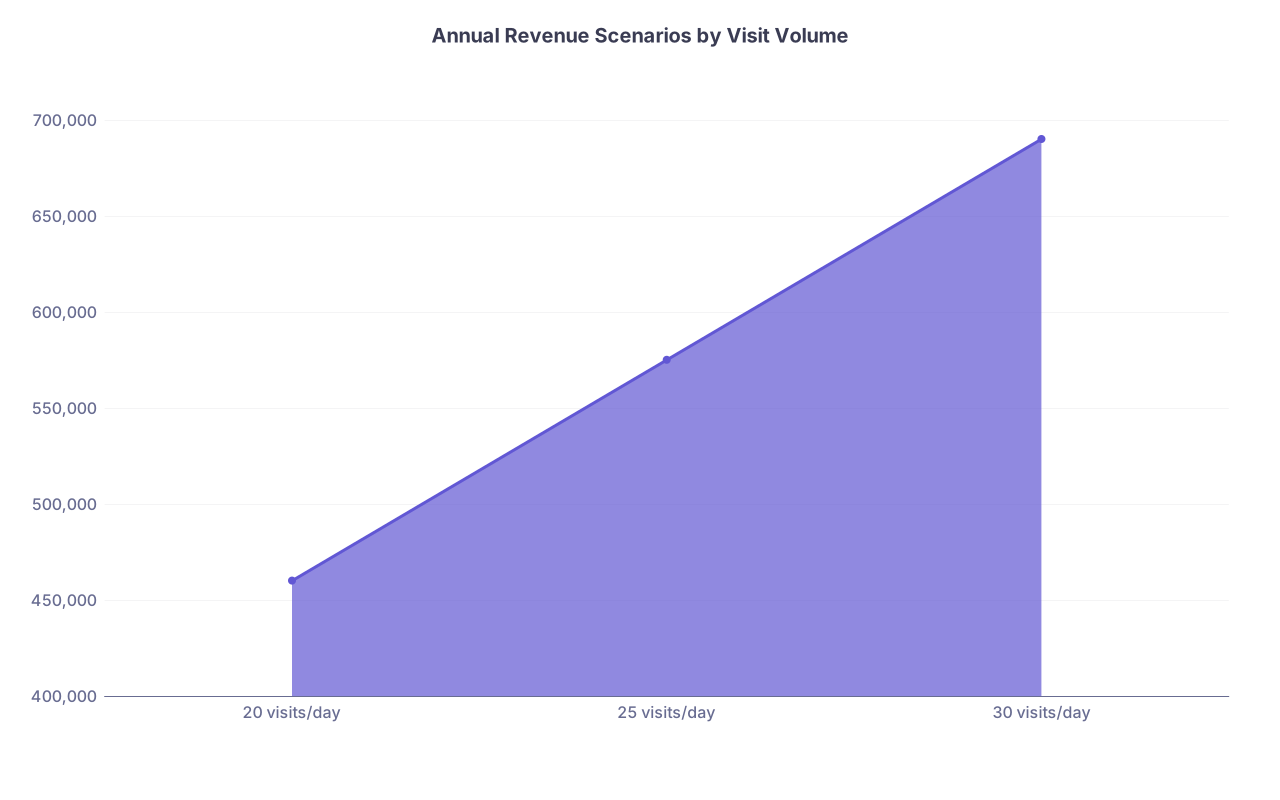
| Category | Value |
|---|---|
| 20 visits/day | 460000 |
| 25 visits/day | 575000 |
| 30 visits/day | 690000 |
The point: same‑day, high‑throughput is financially reasonable if you keep overhead under control and do not underbill out of guilt.
9. Launch Strategy: How to Turn on Same‑Day Access Without Chaos
Here is how I would sequence this as a fresh graduate starting private practice.
Phase 1 (Months 0–3): Low volume, perfect the system
- Cap at 12–15 patients/day, 3–4 days/week
- Use the full same‑day template, but let slots go unused
- Iterate triage protocols weekly with your MAs
- Build and refine templates and order sets
- Measure: average visit length, on‑time performance, inbox volume, staff overtime
During this phase, you want boredom, not busyness. You are tuning an engine.
Phase 2 (Months 4–9): Gradual volume ramp
- Increase same‑day slots to hit 18–22/day average
- Start modest marketing of “same‑day access” to local employers and community
- Add one more MA FTE or scribe once you consistently hit >20/day
Watch for red flags:
- You are staying >60 minutes after closing most days
- More than 10% of charts are left open overnight
- Staff turnover or chronic frustration at front desk
Those are system problems, not “try harder” problems.
Phase 3 (Months 10+): Mature high‑throughput
- Stabilize at 22–30 visits/day based on your preference and team capacity
- Enforce panel size caps and new patient limits
- Consider layering in limited extended hours (e.g., one late evening; do not open your schedule 7 a.m.–7 p.m. five days/week as a solo physician)
Use monthly reviews:
- Visit counts by type (acute vs chronic)
- No‑show and late‑cancel rate
- Average time behind schedule at noon and at end of day
- Revenue per visit and overall overhead trends
You are not trying to “maximize” visits. You are trying to sit on the optimal throughput line where patient access is excellent, quality is high, and you still like practicing medicine.
10. What Actually Prevents Burnout in This Model
Let me be blunt: a “high‑throughput same‑day clinic” is an inherently high‑intensity environment. You will not make it sustainable just by meditating before clinic.
What does work, consistently:
Predictable days.
Same start and end times. Fixed schedule template. Very few surprises. Your nervous system handles pace better than unpredictability.A competent, stable team.
One solid MA who has been with you a year is worth more than any software upgrade. Pay them well. Invest in them. Give them autonomy within protocols.Aggressive scope management.
You decide what problems belong in same‑day 15‑minute slots and you enforce that. Politely but consistently. The minute you say yes to everything, burnout is scheduled.Protected non‑clinical time.
At least half a day per week with no patient care. Use it for quality work, system improvements, and life administration.Clear off‑switch.
Clinic doors close. Inbox is handed off by protocol. Your phone is not the on‑call line unless you are being paid very, very well for it.
11. A Quick Reality Check Before You Jump
A lot of residents fantasize: “I’ll open a walk‑in-friendly clinic, see a ton of straightforward URIs, and make good money.” Parts of that are true. Parts are delusional.
Reality:
- You will get a lot of simple cases. You will also get the chaotic ones no one else wants to see same‑day.
- You will have to say “no” more often than you did as a resident. To patients. To staff. To yourself.
- Your first year will feel like piloting a new plane while reading the manual.
But if you are deliberate, you end up with something most employed doctors never see: a clinic where patients can almost always be seen the day they call, staff know exactly how the day will run, and you go home on time more often than not.
That does not happen by accident. It happens because you treated schedule design, workflows, and protocols with the same seriousness you gave to learning medicine.
The Short Version
- High‑throughput same‑day access works only when you design around capacity, not hope: fixed daily visit targets, rigid templates, and strict rules for same‑day slots.
- Burnout is prevented upstream with protocols, team‑based care, and hard scope boundaries for what belongs in a 15‑minute acute visit (and what does not).
- If you launch slowly, iterate your systems, and resist the urge to say yes to everything and everyone, you can build a same‑day access clinic that is fast for patients and still livable for you.