
Most new private practices either drown in follow‑ups or starve on new patients. The ratio is wrong from day one.
Let me break this down specifically, because the usual advice of “just get busy” is how clinics end up packed, exhausted, and flat‑lined by year three.
You are not just filling a schedule. You are engineering a patient mix that determines:
- Your long‑term revenue ceiling
- Your burnout risk
- Your ability to hire, expand, or ever cut back your hours
The lever people ignore: the balance between new‑patient and follow‑up visits.
1. The Core Concept: Your Panel Is a Factory, Not a Waiting Room
Your patient panel behaves like a production system.
Every new patient you see has three basic characteristics:
- How often they come back (visit frequency)
- How long they stay in the practice (retention)
- How much revenue (or RVUs) they generate over that lifespan
Your new‑to‑follow‑up ratio (I will call it N:F) is how fast you are “loading” this factory versus maintaining what you already built.
Most new attendings think in days or weeks:
- “I need to fill Tuesday afternoons.”
- “I want four new patients per day.”
Wrong time horizon. The real question:
What N:F ratio builds a sustainable, appropriately sized panel for your specialty and practice model within 2–3 years—without burning you out?
That answer is very different for a cash‑pay psychiatry clinic vs a high‑turnover orthopedics practice.
Let us quantify it.
2. The Math Behind Your New‑Patient vs Follow‑Up Mix
You do not have to love math. But if you ignore it, you end up with a 6‑month waitlist, 10‑minute follow‑ups, and no room for growth.
2.1 Basic definitions
- N = number of new patients seen per week
- F = number of follow‑up visits per week
- V = total visit slots per week (N + F)
- N:F ratio = N / F (or N as % of total visits)
You also need:
- Average follow‑up frequency (how often your typical patient returns)
- Average panel lifespan (years a patient stays with you)
Different specialties have very different “true” panel sizes and visit demands.
Here is a simplified comparison.
| Specialty | Typical Panel Size | Average Visits/Patient/Year | Visit Mix at Maturity (New : Follow‑Up) |
|---|---|---|---|
| Adult Primary Care | 1,500–2,000 | 2–3 | ~10–15% new |
| Endocrinology | 1,000–1,500 | 3–4 | ~10% new |
| Psychiatry (med management) | 250–600 | 6–12 | ~5–10% new |
| Orthopedics (mixed acute/chronic) | 1,000–2,000 | 1–2 | ~15–25% new |
| Dermatology | 1,500–2,000 | 1–2 | ~15–20% new |
During ramp‑up, the new‑patient percentage should be much higher than these “steady‑state” numbers. That is how you build to that mature panel in a sane timeframe.
2.2 A concrete example: outpatient IM/FM
Assume:
- You want a panel of 1,800 patients by year 3
- Each patient averages 2.5 visits per year
- You work 46 weeks per year
- Target schedule: 22 patients per day, 4 days per week → ~88 visits/week
Total visits per year: 88 × 46 ≈ 4,048 visits
At full panel:
- 1,800 patients × 2.5 visits/year ≈ 4,500 visits/year
- So 4,048 visits is reasonable, you are in the right ballpark
Now the mix.
Year 1 you obviously do not have 1,800 patients. If you want to be near there by the end of year 3, you need something like:
- Year 1: 800 new patients
- Year 2: 600 new patients
- Year 3: 400 new patients
That gets you to 1,800 (ignoring attrition for simplicity).
Break that down by week:
- Year 1: 800 ÷ 46 ≈ 17 new patients per week
- Year 2: 600 ÷ 46 ≈ 13 new per week
- Year 3: 400 ÷ 46 ≈ 9 new per week
With 88 visit slots per week:
- Year 1: 17 new / 71 follow‑up → ~19% new
- Year 2: 13 new / 75 follow‑up → ~15% new
- Year 3: 9 new / 79 follow‑up → ~10% new
The key: your N:F ratio should be intentionally higher early and drift down toward that ~10–15% new mark as your panel matures. If you stay at 25–30% new at year 3 in primary care, you are overloading your panel and guaranteeing burnout or endless waitlists.
Now apply that thinking to your own specialty.
3. Target Ratios by Specialty and Practice Model
You do not need an exact formula. You need a defensible target range. Let us put some numbers on the board.
3.1 General guidelines
Think of three phases: launch, ramp, and mature.
- Launch (months 0–6): aggressively higher new‑patient share
- Ramp (months 6–24): still new‑heavy, but tapering
- Mature (24+ months, or once panel “feels full”): stabilized lower new‑share
Here is a solid starting framework.
| Specialty / Model | Launch % New | Ramp % New | Mature % New |
|---|---|---|---|
| Primary Care (insurance-based) | 25–35% | 15–25% | 8–15% |
| Endocrinology/Rheum/Cardiology OP | 20–30% | 12–20% | 8–12% |
| Psychiatry (insurance-based) | 20–25% | 10–15% | 5–10% |
| Psychiatry (cash, 60‑min follow‑ups) | 10–20% | 8–12% | 3–8% |
| Orthopedics / ENT / Derm | 30–40% | 20–30% | 15–25% |
| Concierge Primary Care | 15–25% | 10–15% | 5–10% |
These are not “perfect” numbers. They are guardrails. If your actual mix is far outside these bands, you have a structural problem.
3.2 Red flags by specialty
I have seen these patterns over and over:
- PCP seeing 30% new at year 4 → panel bloat, no room for acute visits, staff drowning in refill calls
- Psych cash clinic with 20% new and 45‑min follow‑ups → no continuity, churn, marketing hamster wheel
- Ortho with 5% new for months → slow bleed of cases, OR starts shrinking, no pipeline
If your new‑patient percentage is:
- Too high for too long → you are building a panel faster than your systems, schedule, or sanity can support
- Too low early on → your practice will look “busy” on paper but cannot grow revenue or support another clinician
4. How Your Ratio Drives Revenue, RVUs, and Burnout
The N:F mix is not just an abstract percentage. It directly changes your:
- Adjusted revenue per hour
- Documentation load
- Complexity mix
- Staff workflows
4.1 New vs follow‑up reimbursement reality
In a typical insurance‑based clinic:
- New‑patient visits bill at higher codes (99203–99205)
- Follow‑ups bill lower (99213–99215)
- Time‑based or complexity‑based coding can blur this, but the trend is consistent
New visits also:
- Take more time
- Require more documentation
- Create more downstream tasks (labs, imaging, referrals, portal messages)
So early on, higher new‑patient share raises your RVUs and revenue per visit, but also:
- Increases cognitive and documentation load
- Extends after‑hours charting if you are not careful
- Increases risk of burnout if your template is not paced properly
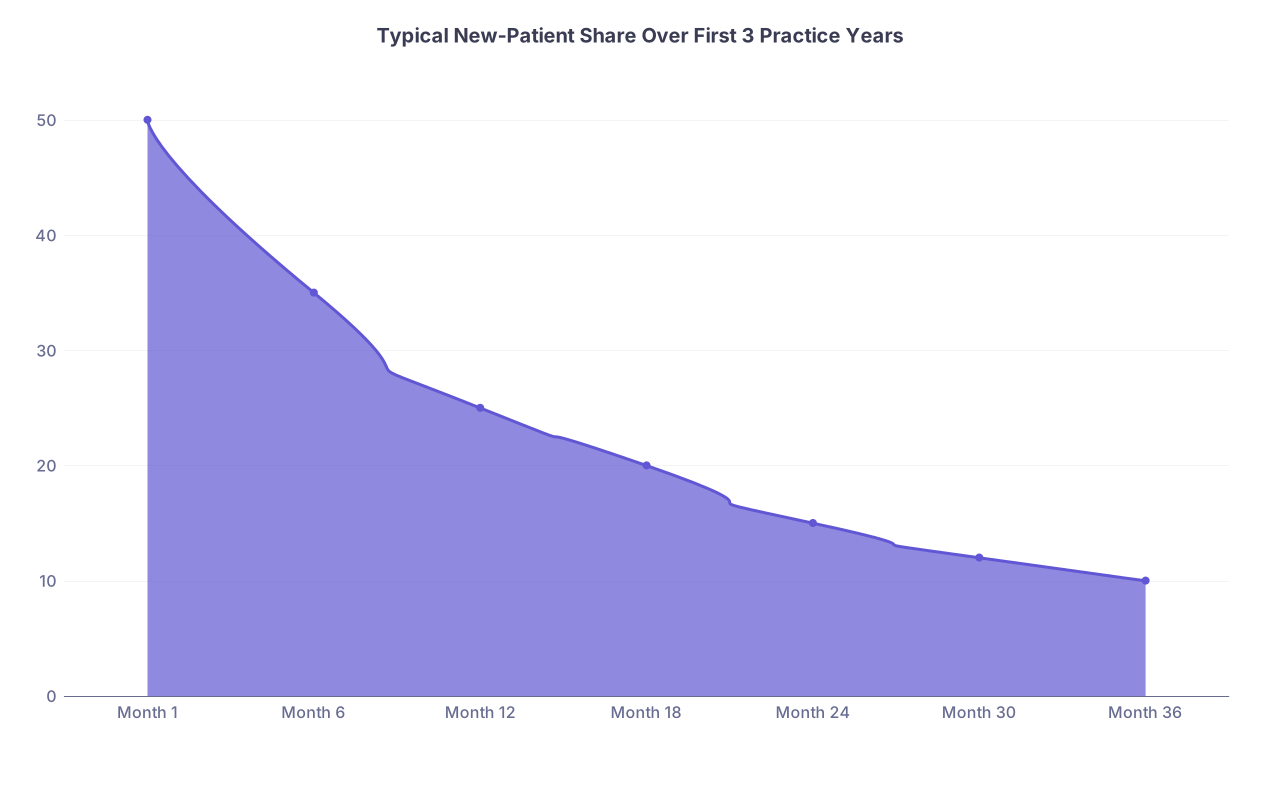
4.2 Visualizing new‑patient share over time
Here is how a healthy growth curve often looks over the first three years (pooled across multiple outpatient specialties):
| Category | Value |
|---|---|
| Month 1 | 50 |
| Month 6 | 35 |
| Month 12 | 25 |
| Month 18 | 20 |
| Month 24 | 15 |
| Month 30 | 12 |
| Month 36 | 10 |
If your line stays flat at 30–40% beyond 18–24 months, you did not adjust scheduling and referral policies as your panel filled. That translates to:
- Chronic overbooking
- No space for acute/same‑day slots
- Angry follow‑ups booked 3–4 months out
On the other hand, if you drop to 5–10% new by month 6, something is wrong with:
- Referral sources
- Marketing
- Access (no online booking, phone access poor)
- Payer mix or network status
5. Designing Your Template for the Right Ratio
Here is where this becomes real. If your schedule template does not enforce your target mix, you will default to chaos. Front desk will “just put them where there is space,” and you will lose control.
5.1 Start with hard numbers, not vibes
Decide:
- How many clinic days per week (3–5 usually)
- How many visit slots per day (be honest; not residency pace)
- Visit lengths for new vs follow‑up
Example: new outpatient internist, 4 clinic days/week
- 20 slots per day = 80 slots per week
- New visits = 40 min; follow‑ups = 20 min
- Launch phase target: 30% new
You therefore want roughly:
- 24 new visits/week
- 56 follow‑ups/week
Your template should literally reserve:
- 6 new‑patient slots per day
- 14 follow‑up slots per day
Not “soft suggestions.” Hard slots labeled “NEW” in your EHR schedule.
If you do not lock this in, schedulers will fill your follow‑up slots with new patients during launch, you will feel slammed, and your charting will bleed into the evening.
5.2 Time‑blocking acute vs chronic vs new
A more refined approach—very useful in primary care and some specialties:
- AM: mostly follow‑ups + a couple of new slots
- Midday: 1–2 acute/same‑day slots
- PM: mix of new and established, plus overflow acute
Do not underestimate same‑day access. If your schedule is filled edge‑to‑edge with chronic follow‑ups and new visits, your own existing patients will end up in urgent care, and your panel quality deteriorates.
5.3 Tightening or loosening new‑patient availability
Your adjustment knobs:
- Number of dedicated new slots per session
- How far out new patients can be booked (e.g., not >4–6 weeks)
- Whether any follow‑up slots can be converted to new if unused near the date
A sophisticated model:
- Reserve new slots up to 2–3 weeks out
- At T‑72 hours, any unused new spots convert to follow‑up/acute
- At T‑24 hours, some follow‑up slots convert to acute/same‑day only
You can implement this with scheduling rules and staff training. You are teaching your system to self‑regulate the N:F ratio while preserving access.
6. Adjusting Your Ratio Over Time: The 3‑Phase Plan
Most practices fail because they never formally shift their ratio targets. They keep operating like a “launch” clinic 3 years in—or they act “mature” at month 4 and stall.
Here is how to do it deliberately.

| Step | Description |
|---|---|
| Step 1 | Launch 0-6 months |
| Step 2 | Ramp 6-24 months |
| Step 3 | Mature 24+ months |
| Step 4 | High new share 25-40 percent |
| Step 5 | Moderate new share 15-25 percent |
| Step 6 | Low new share 5-15 percent |
| Step 7 | Expand referral sources |
| Step 8 | Monitor panel size |
| Step 9 | Tighten acceptance rules |
6.1 Phase 1: Launch (0–6 months)
You are unknown. Visibility is low. Your panel is microscopic. Your problems:
- Empty half‑days
- Staff underutilized
- Cash flow unstable
Your goals:
- Fill days with a heavy proportion of new visits
- Shorten new‑patient appointment length gradually as you gain efficiency
- Capture contact info and build recall systems (so these new patients become follow‑ups)
Actions:
- Set new‑patient share to top of recommended range (e.g., 30–40% for many specialties)
- Aggressively open new slots, including early mornings / late days if demand exists
- Lower barriers for new appointments (online booking, short wait times)
6.2 Phase 2: Ramp (6–24 months)
At this point, your follow‑ups are starting to fill space. That is the moment many physicians panic and stop accepting new patients altogether. Overreaction.
Instead:
- Dial your new share down gradually—say from 30% → 25% → 20%
- Watch your follow‑up demand carefully: are you booking chronic patients 3–4 months out? Too tight.
- Protect some new‑patient slots for referrals you care about (key PCPs, surgeons, etc.)
This is the phase to:
- Recruit additional staff if phone volume and portal messages spike
- Consider adding an NP/PA or second physician if follow‑up load is ballooning and you cannot reduce panel size
- Reassess visit length (maybe 60‑min new visits drop to 40 or 45 as systems improve)
6.3 Phase 3: Mature (24+ months)
Your panel is near target. The main risk now is overstuffing.
If you “feel” full but are still accepting every new patient who can get on your schedule, you will:
- Have no time for urgent needs of existing patients
- See more no‑shows and reschedules because wait times are long
- Spend nights catching up on charts
At this stage you:
- Intentionally reduce new‑patient share to the lower end (5–15% for most)
- Possibly restrict new‑patient criteria:
- Certain age bands
- Certain insurance plans
- Certain conditions you are focused on
- Open new access strategically:
- For referrals from selected colleagues
- For higher‑reimbursement payers
- For procedures or services aligned with your strategy
Your mature N:F ratio is how you keep the panel stable rather than endlessly exploding.
7. Tactics to Fix a Broken Ratio (Too Many or Too Few New Patients)
Let us talk rescue operations. You open your EHR reports and see:
- 4% new patients for the last 3 months
- Or 35% new patients and everyone is furious about wait times
Both are fixable, but the levers differ.
7.1 If your new‑patient share is too low
Symptoms:
- Little growth month to month
- Revenue “stuck”
- Heavy dependence on a shrinking pool of existing patients
Interventions:
Open more new‑patient slots
Increase dedicated new slots per session. Yes, you will temporarily extend follow‑up wait times by 1–2 weeks. That is acceptable to avoid stagnation.Shorten nonessential follow‑up frequency
Many clinics mindlessly bring everyone back in 3 months. Audit this. Some can be 6 months or 12 months with good lab/portal protocols.Expand and clean up referral channels
- Make it easy for referring clinics: one‑page referral form, direct fax, online portal
- Call top 10 referring offices personally, remind them you are accepting new patients
- Fix access issues: long phone waits, no online scheduling, confusing website
Review panel hygiene
If 20%+ of your charts are essentially “inactive” (no visit in 18–24 months), clean them out. Do a reactivation campaign or discharge. Your true panel is smaller than you think.
7.2 If your new‑patient share is too high
Symptoms:
- Follow‑ups booked out 3–6 months
- Inbox and refill chaos
- You feel like every day is “first‑date energy” with strangers
Interventions:
Reduce new‑patient slots per session
Drop from, say, 6 to 3 new slots per day. That alone doubles your follow‑up capacity.Tighten new‑patient criteria
- Stop accepting certain low‑yield payer plans that reimburse poorly
- Require specific referral question or diagnosis (stop “general checkups” if you are a specialist)
- Prioritize complex or procedure‑generating cases that fit your skill set
Extend panel via team‑based care
If you are at capacity but do not want to slam the door on new patients:- Add NP/PA for stable follow‑ups
- Create protocols/standing orders to handle routine refills and labs without an in‑person visit every time
Introduce “graduation” and transfer policies
Especially for specialists:- After problem stabilizes, actively return care to PCP
- Discharge guidelines: e.g., seizure‑free for X years, diabetes at goal with PCP comfortable
8. Monitoring: How to Actually Track Your N:F Ratio
Most practices do not measure this. They just “sense” they are busy. That is amateur hour.
You need:
- A simple monthly report
- Trends over at least 6–12 months
- Integration with revenue/RVU data if possible
At minimum, track monthly:
- Total visits
- Number of new‑patient visits (use visit type or CPT)
- % new vs follow‑up
- Average days to third next available new appointment
- Average days to third next available follow‑up
That last metric (third‑next‑available) is what access nerds use to quantify wait times realistically.
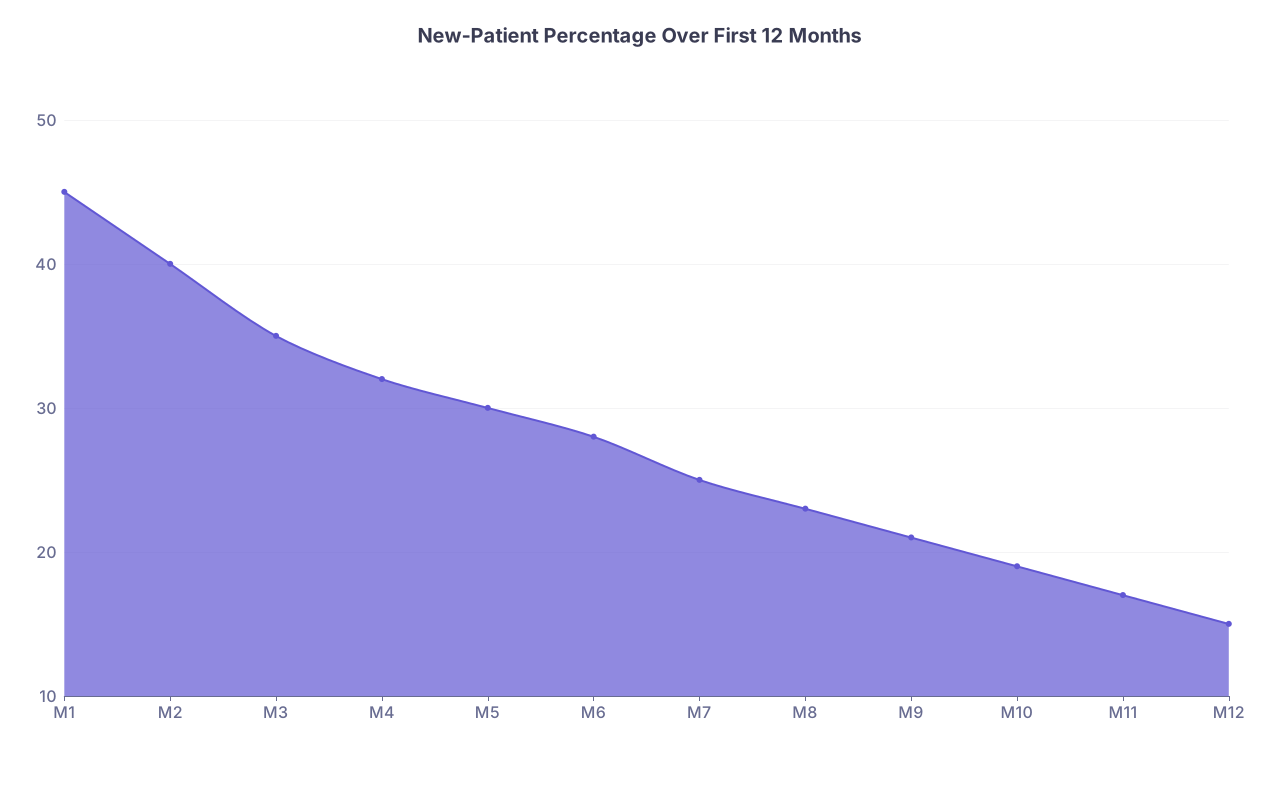
A sample of what you might see in a healthy growing clinic:
| Category | Value |
|---|---|
| M1 | 45 |
| M2 | 40 |
| M3 | 35 |
| M4 | 32 |
| M5 | 30 |
| M6 | 28 |
| M7 | 25 |
| M8 | 23 |
| M9 | 21 |
| M10 | 19 |
| M11 | 17 |
| M12 | 15 |
If your line is zig‑zagging wildly—10% one month, 35% the next—you have scheduling chaos. Tighten templates and educate your front desk.
9. Special Cases: Cash‑Pay, Hybrid, and Telemedicine Practices
Not every clinic lives on 99214s and RVUs. Your ratio strategy shifts if you are:
- Direct primary care / concierge
- Cash‑pay psychiatry or therapy
- Telemedicine‑heavy practices
9.1 Direct primary care / concierge
Your panel size is intentionally smaller (e.g., 400–800 patients), with subscription revenue. Here:
- High new‑patient share early (to fill subscriptions)
- Very low ongoing new share once panel is near target (maybe 3–5% per year, to offset attrition)
- You must be ruthless about closing to new patients when full, or quality drops and word‑of‑mouth turns on you
9.2 Cash‑pay psychiatry / therapy
Most cash psychiatrists:
- Do 60‑min new, 30–45‑min follow‑ups
- See far fewer patients per day (8–10 instead of 18–24)
- Depend heavily on patient retention
Too many new, not enough follow‑ups = marketing treadmill.
Your sweet spot in maturity is typically:
- 5–10% new (1–2 new patients per week)
- 90–95% established
The focus is not volume. It is lifetime value per patient and stability.
9.3 Telemedicine‑heavy practices
Telemed can skew things:
- Higher no‑show rates if not well‑managed
- Easier for patients to “shop” and churn
- Temptation to keep N:F high to chase growth
You must:
- Track retention explicitly: how many new patients have ≥2 follow‑up visits?
- Not confuse high new counts with a healthy panel. If 60% never return, your N:F ratio is misleading.
10. Turning Ratios into Strategy: What To Decide Now
You are post‑residency, or about to leave your employed job to open (or reboot) a practice. Before you sign a lease or hire a medical assistant, sit with this and answer—on paper:
- What is my target panel size by the end of year 3?
- How many visits per week can I sustain without hating my life?
- For my specialty, what new‑patient percentage makes sense:
- Months 0–6
- Months 6–24
- Months 24+
- What specific numbers does that translate to:
- New patients per week
- Follow‑ups per week
- New slots per clinic session
- What rules will my staff follow:
- How far out can new patients be booked?
- When do new slots convert to follow‑ups/acute?
- Who is prioritized for limited new slots?
You do not need a 50‑page business plan. You need a one‑page ratio and schedule plan that you actually enforce.
Because here is the uncomfortable truth:
Most “busy” doctors in private practice are not thriving. They are trapped in a lopsided panel built by accident, not design. New‑patient vs follow‑up ratios set that trap years earlier, silently.
You have the advantage of thinking about it now.
FAQ (Exactly 5 Questions)
1. How do I know when my panel is actually “full” and I should cut back new patients?
Use objective signs, not just feelings. You are close to full when:
- Third‑next‑available follow‑up visit is >4–6 weeks for stable conditions
- You routinely have to double‑book to accommodate acute needs
- Your inbox and tasks are spilling into nights and weekends despite reasonable efficiency
At that point, gradually lower new‑patient slots and consider raising the bar on who you accept as new.
2. What if my employer or health system pushes me to keep new‑patient volume high?
You need data. Show them:
- Your new‑patient percentage compared with internal benchmarks or MGMA norms for your specialty
- Access metrics for follow‑ups (wait times increasing)
- Evidence of panel overload (no‑shows, message volume, refill backlog)
Argue for a controlled taper of new slots, not a shutdown, tied to metrics. If they refuse, you are in a volume‑over‑value environment and should plan your exit accordingly.
3. Should I ever completely close to new patients?
Short‑term closures or restrictions can be reasonable when you are acutely overcapacity or onboarding a new clinician. Indefinite closure is risky:
- Natural attrition will shrink your panel
- Referral sources forget you and move on
Better strategy: narrow criteria for new patients (diagnoses, payer mix, referral sources) instead of an absolute wall.
4. How quickly can I safely change my new‑patient ratio without upsetting referrers?
Avoid sudden, drastic changes. A good pattern:
- Adjust new‑patient slots by 10–20% at a time, reassess every 2–3 months
- Communicate clearly with key referrers: “We are tightening access for a few months to make sure current patients can get in; here is how to get urgent cases seen.”
Referrers care about reliability and clarity more than unlimited access.
5. What software or tools do I need to track and manage these ratios?
You do not need fancy analytics. Minimum:
- An EHR that clearly distinguishes new vs established visit types
- Ability to export basic scheduling data to Excel or a simple BI tool
- A monthly report (even if manually created) with total visits, new‑patient count, % new, and wait times
If your current system cannot give you even that, the limitation is not your ratio strategy; it is your infrastructure. Put a system upgrade on your 12‑ to 18‑month roadmap.
With your new‑to‑follow‑up ratios defined and your template designed around them, you are not just “seeing patients.” You are building a practice that can grow, stabilize, and eventually support partners or a softer schedule. The next piece is layering on hiring and delegation around that growth curve—but that is a story for another day.