The biggest mistake new clinic owners make is underestimating how much cash they need—and overestimating how fast money will come in.
You do not want to learn this lesson with payroll due on Friday.
Here’s the answer you’re looking for: most new outpatient clinics should have at least 6–12 months of operating expenses in cash or liquid reserves on top of build-out/startup costs and your own personal emergency fund. Aggressive or risky to go lower, overly conservative to go much higher unless you’re in a tough market or high-overhead specialty.
Now let’s make that concrete.
The Core Rule: 3 Buckets of Cash You Actually Need
When you ask, “How much cash reserve should I have before opening a clinic?” you’re really asking about three different buckets:
- Startup / one-time costs – spent before you see a single patient.
- Operating reserve for the clinic – to cover months when revenue is lower than expenses.
- Personal cash buffer – so your household doesn’t collapse while the clinic ramps.
You need a plan for all three. If you only plan for one or two, you’re gambling.
Bucket 1: Startup / One-Time Costs
These are costs you pay before you open the doors:
- Legal and accounting setup
- Credentialing / payer enrollment fees
- Lease deposits and first month’s rent
- Build-out / renovations
- Furniture, fixtures, and equipment (FF&E)
- EHR and IT setup, hardware
- Initial supplies and medications
- Initial marketing and branding
Ranges vary wildly by specialty and market, but realistic ballparks for a basic outpatient clinic (no fancy imaging, no ASCs):
| Item | Approximate Range (USD) |
|---|---|
| Legal + Accounting Setup | $3,000 – $8,000 |
| Lease Deposit + 1st Month | $5,000 – $20,000 |
| Build-out / Renovations | $20,000 – $150,000 |
| Furniture & Equipment | $15,000 – $75,000 |
| IT, EHR, Phones, Hardware | $8,000 – $30,000 |
| Initial Supplies & Meds | $5,000 – $25,000 |
| Branding & Marketing Launch | $3,000 – $15,000 |
You can finance some of this with a bank loan or line of credit. That’s fine. But your cash reserve calculation should exclude the one-time build-out items. Those are sunk costs. The real survival risk comes later when your rent, payroll, and malpractice premiums hit every month while insurance claims sit in limbo.
The Number That Actually Matters: Monthly Burn Rate
Your monthly burn rate is what decides how big your reserve must be.
Burn rate = Total monthly operating expenses – realistic monthly revenue
(For the first 3–6 months, assume revenue is way lower than your “ideal” projections.)
Major expense categories:
- Rent and CAM (common area maintenance)
- Staff salaries (+ payroll taxes + benefits)
- Malpractice insurance
- EHR, billing software, phone, internet, IT
- Medical and office supplies
- Marketing
- Loan payments (if applicable)
- Your own salary (if you choose to draw one early)
Here’s a simplified example of a lean solo outpatient clinic (family medicine, non-hospital-owned, moderate COL city):
- Rent: $4,000
- Staff (1 MA, 1 front desk/biller): $9,000
- Payroll taxes/benefits: $2,000
- Malpractice: $1,200
- EHR + IT + phones: $1,000
- Supplies: $1,000
- Marketing: $1,000
- Misc (licenses, bank fees, etc.): $800
- Modest owner draw: $4,000
Total monthly operating = $24,000
Month 1–3 revenue might be $0–$8,000/month depending on how quickly you’re credentialed and how fast patients appear. Realistically, expect a burn of $15,000–$24,000/month at the beginning.
If you want a 6-month operating reserve, you’re looking at:
- 6 × ~$20,000 average early burn ≈ $120,000
- 12-month reserve ≈ $240,000
That’s just for the clinic. Not your mortgage and groceries at home.
Why 6–12 Months? Because Cash Flow Lies to Optimists
Every new owner thinks they’ll be on the low end of time-to-profitability. “I’ve already got local contacts.” “My referral base is strong.” “I’ll do some social media marketing.”
Then:
- Payer credentialing takes 90–180 days instead of 60.
- First checks arrive 30–60 days after you start seeing insured patients.
- Some claims get denied or sit in “pending” due to paperwork quirks.
- Patients no-show more than you expected.
- Referrals trickle in, they don’t flood.
You can absolutely get lucky. But a 6–12 month reserve is about buying time for things to go slower than planned without you panicking, cutting corners, or making dumb decisions (like joining a terrible contract just for cash).
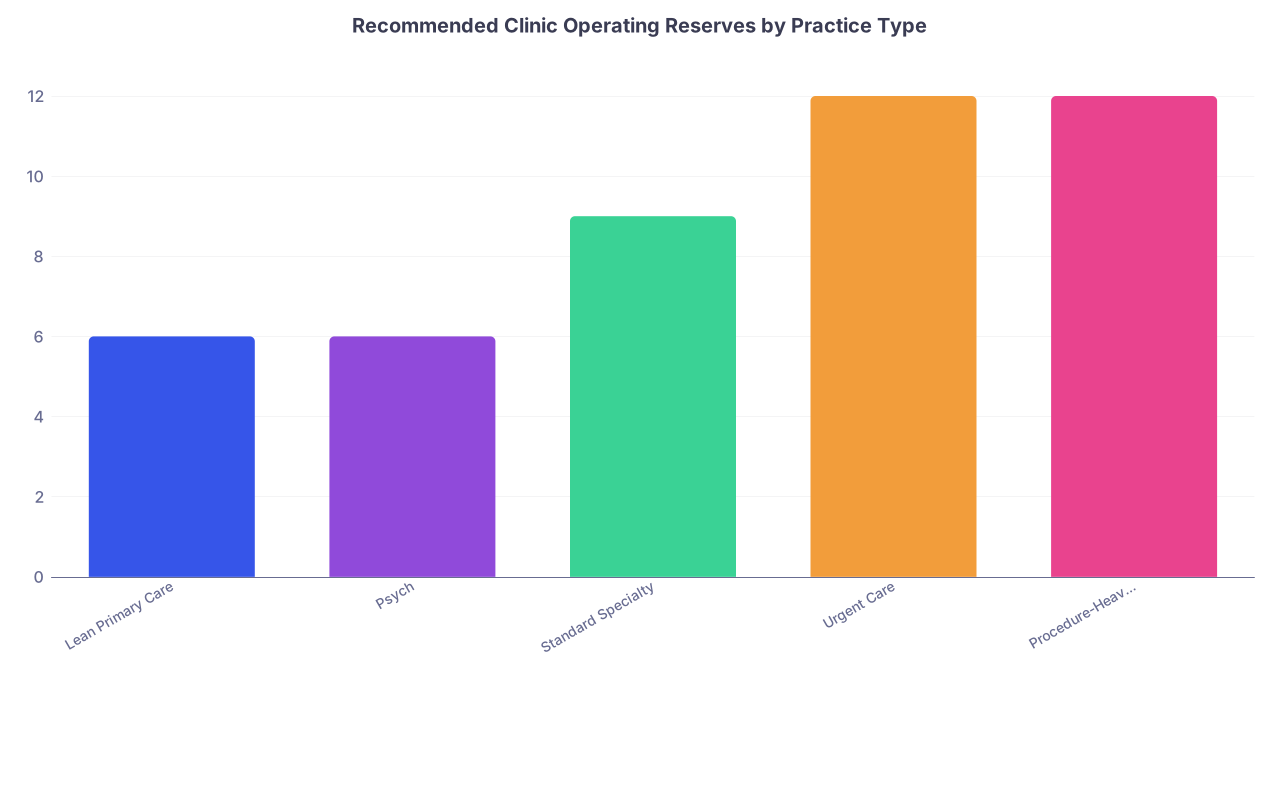
If you’re in a high-overhead specialty (ortho, derm with devices, GI with scopes, urgent care with extended hours), you lean closer to 12 months. If you’re in low-overhead, lean primary care or psych, you can reasonably aim closer to 6–9 months if you’re otherwise risk-tolerant and have backup income options.
| Category | Value |
|---|---|
| Lean Primary Care | 6 |
| Psych | 6 |
| Standard Specialty | 9 |
| Urgent Care | 12 |
| Procedure-Heavy Specialty | 12 |
(Values = suggested months of operating expenses in reserve.)
Don’t Skip This: Your Personal Cash Reserve
Clinic cash is not the same as your life cash.
If you depend on this clinic for your household income from day one, you’re putting your family on the same rollercoaster as your claims. That’s not brave. It’s reckless.
You want a separate personal emergency fund. For most physicians, that means:
- 6 months of personal living expenses if you have a spouse/partner with stable income.
- 12 months if you’re the sole or primary earner and opening a riskier, higher-overhead clinic.
Example:
- Mortgage + utilities: $3,500
- Groceries / household: $1,500
- Insurance, car, student loans: $2,000
- Childcare: $1,500
- Misc: $1,500
Total = $10,000/month.
You should have $60,000–$120,000 in personal reserves, separate from practice reserves.
Can you pay yourself from the clinic? Yes, eventually. Early on, treat any owner draw as a bonus, not as guaranteed income. If the clinic has to starve so you can pay your personal bills, both suffer.
How to Actually Calculate Your Number
Let’s walk through a realistic calculation so you can stop guessing.
Step 1: Estimate Monthly Operating Expenses
Use real quotes, not wishful thinking:
- Get actual lease quotes from 2–3 locations.
- Get salary data for MAs, front-desk, and billers in your area.
- Call malpractice carriers for exact premiums.
- Price your EHR, phones, billing, and clearinghouse.
Add 10–15% padding for “stuff you forgot”.
Say you land on:
- Monthly operating expenses: $30,000
Step 2: Decide When You Expect to Break Even
Breakeven = months when monthly net revenue ≈ monthly expenses.
Typical breakeven windows:
- Super-lean primary care, strong referral pipeline: 6–9 months
- Standard outpatient specialty with average marketing: 9–18 months
- High-overhead or procedure-heavy: 12–24 months
Be conservative. If your gut says “Probably 6 months,” plan for 9–12.
Let’s assume you want 12 months of runway.
Step 3: Project Revenue Ramp (Conservatively)
Simple rule-of-thumb ramp for many clinics:
- Month 1–3: 0–25% of target volume
- Month 4–6: 25–50%
- Month 7–12: 50–100%
Overlay average collections per visit and expected visit counts. Then build a month-by-month spreadsheet with:
- Visits
- Collections
- Fixed expenses
- Variable expenses
Now calculate monthly net (profit or loss). Sum the cumulative losses from Month 1 until you hit breakeven. That’s your minimum clinic reserve.
In many real-world models, this ends up being 5–10 months of full operating expenses. I typically tell physicians to fund the higher of:
- 6 months of full expenses, or
- The total projected cumulative loss to breakeven plus a 3-month buffer.
Ways to Reduce the Required Cash Reserve (Without Being Stupid)
You might read these numbers and think, “There’s no way I can sit on $150–300K in cash before starting.” That’s common. There are ways to legitimately shrink your reserve requirement.
Start very lean on staff
One MA, one cross-trained front desk/biller. Maybe even start without a biller if you outsource billing.Sublease or shared space
Rent by the session or half-day within an existing clinic. Avoid a big build-out early.Start part-time while keeping a job
Two or three clinic days a week while you maintain employed work. Slower growth, but much safer financially.Avoid buying big equipment early
Delay scopes, lasers, or imaging unless they’re absolutely core to your model.Negotiate free rent / TI (tenant improvement)
Landlords will sometimes give 3–6 months of free or reduced rent or contribute to build-out. That effectively adds to your reserve without you holding more cash.Use a working capital line of credit
This is your emergency parachute, not your day-to-day bank. Have it in place, hope to never need it.
There’s a line here: lean is smart, cheap is dangerous. Don’t sacrifice billing quality, malpractice, or basic staffing to cut corners.
How Liquidity Should Look: Cash, Credit, and What’s “Enough”
Your “reserve” doesn’t all need to be sitting in one checking account doing nothing. But it must be:
- Liquid (or quickly accessible within a few days).
- Stable (no stock market roulette).
- Clearly separated between personal and practice.
A reasonable structure for a clinic targeting $150,000 total liquidity might look like:
- $80,000 – clinic operating reserve in business savings
- $20,000 – clinic checking (for regular payables)
- $50,000 – personal emergency fund in high-yield savings
- Plus: $75,000–$150,000 unsecured line of credit as backup
The bank line doesn’t “count” toward your base reserve, but it helps you sleep better.
Specialty, Market, and Model: How They Shift the Number
Different setups demand different cushions.
- Cash-pay psych or therapy: Lowest reserve requirement. You can start very lean, sublease, minimal staff.
- Insurance-based primary care: Moderate reserve. Credentialing delays and slow ramp.
- Urgent care: High reserve. Extended hours, lots of staff, and marketing-intensive.
- Elective procedure practices (cosmetic derm, plastics): High reserve. Marketing-heavy, device-heavy, volatile demand.
- Rural / underserved markets: Sometimes faster ramp, but more payer mix risk. I still advise 9–12 months.

The Psychological Side: Cash as a Decision-Making Tool
This part isn’t on spreadsheets, but it matters a lot.
Owners with thin reserves:
- Panic at the first slow month.
- Accept bad payer contracts.
- Add services they don’t understand just to chase revenue.
- Burn out because they feel desperate, not strategic.
Owners with adequate reserves:
- Can let marketing work over 6–12 months instead of 4 weeks.
- Can fire a toxic staff member without fearing immediate collapse.
- Can refine their schedule, visit length, and clinical model to match their long-term goals.
Reserves don’t just keep the lights on. They protect you from making lousy business decisions out of fear.
Tying It All Together: A Concrete Target Example
Let’s put this into a realistic target for a post-residency physician starting a modest insurance-based outpatient clinic in a mid-cost city.
Assume:
- Monthly operating expenses: $25,000
- Planned timeline to breakeven: 9–12 months
- You’re the primary earner; household needs $8,000/month
Reasonable targets:
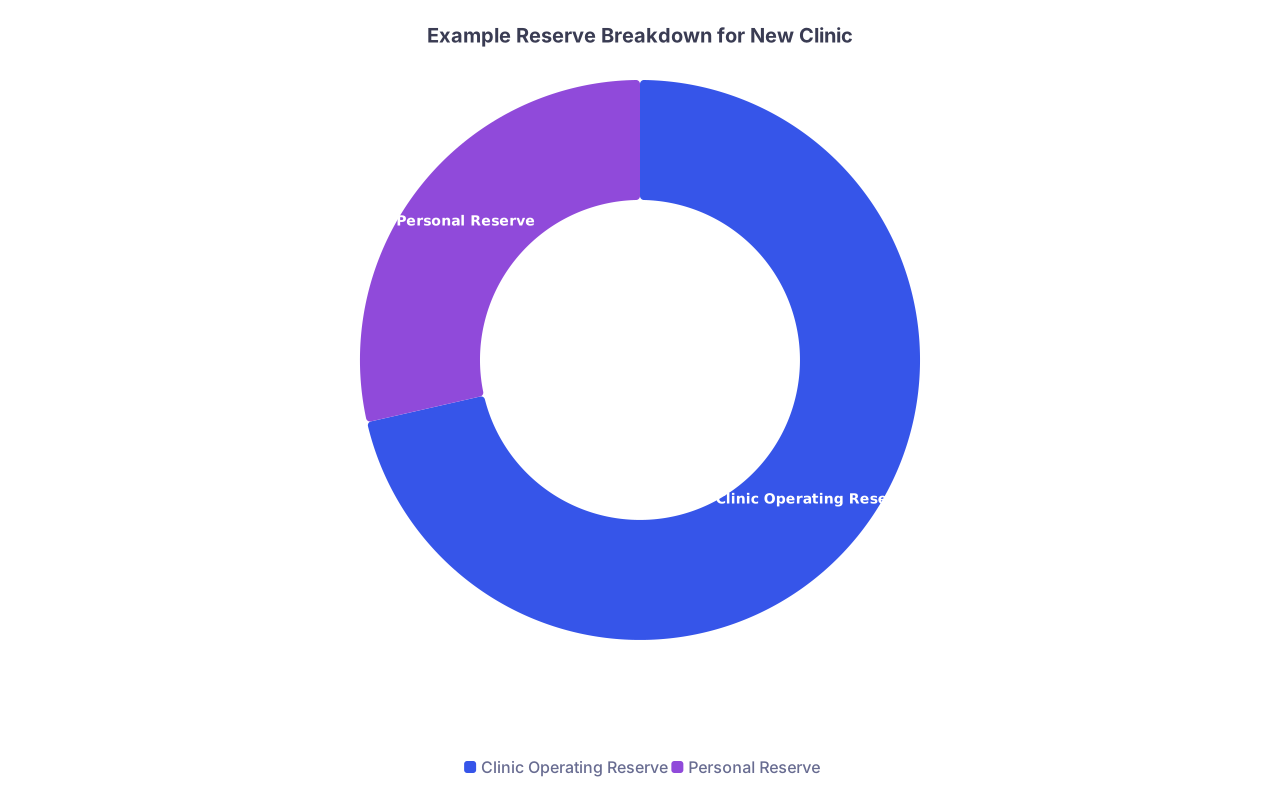
Clinic operating reserve: 9 months × $25,000 = $225,000
(Could survive on 6 months, but 9 gives real breathing room.)Personal reserve: 9–12 months × $8,000 = $72,000–$96,000
Total: ~$300,000 in combined reserves, before counting any startup build-out dollars.
Too high? Then either:
- Lower monthly operating expenses (smaller space, fewer staff, part-time start),
- Increase outside income while ramping (PRN shifts, telemedicine, part-time employed role),
- Or accept a higher risk profile and a shorter runway—consciously, not by accident.
| Category | Value |
|---|---|
| Clinic Operating Reserve | 225000 |
| Personal Reserve | 90000 |
A Simple Decision Flow: Are You Financially Ready to Open?

| Step | Description |
|---|---|
| Step 1 | Estimate Monthly Clinic Expenses |
| Step 2 | Multiply by 6 to 12 |
| Step 3 | Compare to Current Liquid Assets |
| Step 4 | Delay opening or reduce overhead |
| Step 5 | Keep employed work and build savings |
| Step 6 | Finalize plan and set opening date |
| Step 7 | Have at least 6 months clinic reserve? |
| Step 8 | Have 6 to 12 months personal reserve? |
Here’s what to do today:
Open a blank spreadsheet and calculate your actual estimated monthly clinic expenses based on your target location and staffing. Multiply that by 6 and by 12. Then write down your current liquid savings. If the gap between those two numbers makes your stomach drop, you’re not ready to open yet—you’re ready to fix the plan.