
The usual advice about buying vs leasing your first medical office is dangerously oversimplified. “Build equity, don’t pay someone else’s mortgage” sounds smart—until a bad real estate decision tanks your new practice.
Let’s cut through the noise.
If you’re a brand‑new physician owner, your practice survival matters more than your real estate returns. You can’t cash flow a building with exam rooms sitting half‑empty.
Here’s how to think about buy vs lease like a business owner, not just like a doctor with a loan pre‑approval.
The Real Question: What Are You Optimizing For?
You’re not choosing between “buying is good” and “leasing is bad.” You’re choosing between:
- Maximizing practice flexibility and preserving cash (leasing)
- Maximizing long‑term control and potential wealth (owning)
At this stage—post residency, early career—most new physician owners should prioritize:
- Cash preservation
- Risk reduction
- Location flexibility
Owning can still make sense. But only if you tick specific boxes. I’ll show you exactly which ones.
When You Should Almost Always Lease First
Let me be direct: if this is your first private practice and you’re within your first 3–5 years out of training, the default answer is:
Lease first. Revisit buying after you prove the practice.
Here’s when leasing is clearly the smarter move.
1. Your patient volume is a guess, not a fact
If you can’t answer these confidently:
- How many new patients per week will you attract by month 6?
- How many exam rooms will you truly use in year 1 vs year 3?
- What’s your realistic staff footprint (MAs, front desk, NP/PA, biller)?
…then you have no business locking yourself into a building that can’t easily grow or shrink with you.
Leasing gives you:
- The option to start smaller and expand within the building or into adjacent space
- A chance to learn your market: referral patterns, payer mix, no‑show rates
- The ability to move to a better location once you know where your patients actually come from
Buying too early is how you end up with a gorgeous, half‑empty suite in the wrong part of town.
2. Your savings are thin and your loans are thick
If buying will:
- Eat your startup capital
- Force you to underinvest in staff, marketing, or tech
- Make you stressed about every month’s overhead
…you’re making the classic “asset rich, practice poor” mistake.
Your clinical revenue engine is more important than the building it sits in. Underfund that, and the building becomes a liability, not an asset.
3. You don’t have a stable 5–10 year personal plan
If any of these are even moderately likely:
- You might change cities for family reasons
- Your spouse/partner’s job may pull you elsewhere
- You’re still figuring out whether you like private practice vs employment
- You’re considering fellowship or subspecialization down the line
Then do not strap yourself to a building that assumes you’ll be rooted for a decade.
Leasing keeps your options open. That flexibility has real financial value—even if it doesn’t show up on a spreadsheet.
When Buying Can Actually Be the Right Move
Now, buying your office isn’t crazy. It can be brilliant. I’ve seen orthopedic groups, dermatologists, and GI practices build serious wealth off their real estate.
For a new solo or small group physician owner, buying can make sense if you meet most of these:
1. You have a proven patient base or a guaranteed pipeline
Strong reasons to buy:
- You’re taking a large, loyal panel with you from a previous practice
- You’re in a specialty with predictable demand and strong referral relationships already in place
- You’re joining or forming a group with experienced partners and stable volume
If you can model your volume and growth with reasonable accuracy, sizing a building becomes less of a guess and more of a calculated bet.
2. You’re truly committed to a specific geography long-term
Buying starts to make sense if:
- You grew up in the community and plan to stay
- Your kids are in schools you don’t plan to leave
- Your spouse has an anchored local career
- You know the submarket cold (traffic patterns, competing practices, hospital relationships)
Real estate rewards stability and time. If your life lines up with that, now we’re talking.
3. The building itself is a good investment, independent of your practice
This is the part most doctors miss.
You shouldn’t buy a building that only makes sense if your practice thrives. You want a building that:
- Could be leased to other medical or professional tenants
- Is in a location that patients already go to for care (near hospitals, surgery centers, medical corridors)
- Has parking, accessibility, and zoning that fit medical use long term
And the numbers should work like this:
- A bank will finance with reasonable terms
- Market rent from your practice would cover the mortgage, taxes, insurance, and maintenance
- If your practice failed, another tenant would plausibly move in within a normal vacancy time
If it’s only a good deal “because my practice will crush it,” that’s not investing. That’s gambling.
Side‑by‑Side: Leasing vs Buying in Your First 5 Years
| Factor | Lease First 5 Years | Buy Early Career |
|---|---|---|
| Upfront Cash Needed | Lower | Much higher (down + buildout) |
| Flexibility | High | Low to moderate |
| Practice Risk | Lower | Higher |
| Control Over Space | Moderate | High |
| Long-Term Wealth Play | Indirect (via practice) | Direct (real estate + practice) |
The Real Financial Tradeoffs (With Numbers)
Let’s put some numbers on this. Assume you need 2,000 sq ft for a small solo practice.
Leasing scenario
- Market rent: $30/sq ft/year
- Annual rent: 2,000 × $30 = $60,000
- Buildout: often shared or landlord‑funded with a tenant improvement allowance (TI)
- Security deposit: 1–3 months’ rent
Downside: rent will rise over time, and you’ll never “own” the building.
Upside: you keep your capital for:
- Staff
- Technology
- Marketing
- Working capital buffer
Buying scenario
Assume:
- Building or condo cost: $600,000
- Down payment: 10–20% = $60,000–$120,000
- Loan term: 20–25 years
- Interest: 6–7% (varies by market and lender)
Your annual “occupancy” cost becomes:
- Mortgage principal + interest
- Property taxes
- Insurance
- Maintenance and repairs
- Common area or association fees (if condo)
Sometimes your monthly cost will be similar to market rent, especially after tax benefits. Other times, it’ll be higher at first, lower later.
Here’s the punchline:
If using that extra $60k–$120k (plus ongoing capital reserves) to strengthen your practice generates more profit than the building’s appreciation and loan paydown, you’re better off leasing early on.
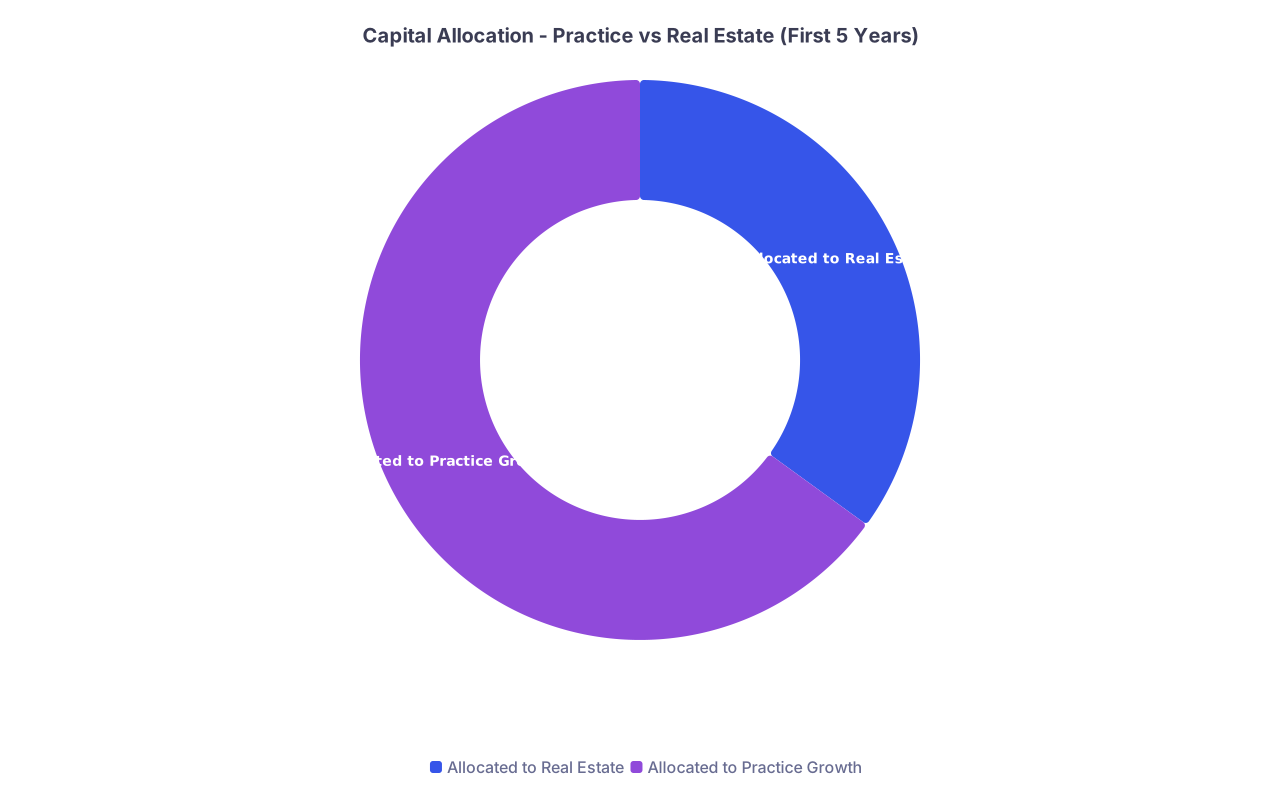
| Category | Value |
|---|---|
| Allocated to Real Estate | 35 |
| Allocated to Practice Growth | 65 |
A lot of new owners underestimate just how much cash a young practice can consume in the first 24 months.
Control, Customization, and Landlord Reality
One of the strongest emotional reasons doctors want to buy: control.
You don’t want a landlord telling you you can’t:
- Put a small in‑office procedure room
- Install imaging or specialized equipment
- Change signage
- Knock down walls or reconfigure space
Fair. Landlords can be annoying. But here’s what actually matters:
- A well‑negotiated medical office lease can give you most of the control you need
- You can get long terms (7–10 years) with renewal options
- You can negotiate specific rights (exclusive use, first right of refusal on adjacent suites, signage rights, after‑hours access)
Owning gets you maximum control, but also:
- You’re now the landlord
- You deal with roofing issues, HVAC replacements, parking lot resurfacing, and CAM reconciliations
That’s fine if you’re wired that way or you hire solid property management. If you’re not, it’s a distraction from what actually makes the money: seeing patients.
A Simple Decision Framework You Can Actually Use
Let’s turn this into a clear, no‑BS decision path.

| Step | Description |
|---|---|
| Step 1 | New Physician Owner |
| Step 2 | Lease - Keep Flexibility |
| Step 3 | Buy Can Make Sense |
| Step 4 | First Independent Practice |
| Step 5 | Stable 5 to 10 Year Location Plan |
| Step 6 | Strong Patient Base or Group? |
| Step 7 | Adequate Cash After 20 Percent Down? |
| Step 8 | Building Works As Standalone Investment |
If at any point you’re hesitating, you’re probably not in “buy now” territory.
Practical Advice by Specialty Type
Quick reality check by broad category:
Primary care, pediatrics, outpatient psych
Growth is often gradual, panel building takes time, and geography can shift. Lean strongly toward leasing first.Procedural specialties (GI, ortho, ENT, derm, ophthalmology)
If you’re building an ASC or procedure‑heavy model with known referral sources and partners, owning the building can be part of a bigger strategy. Still—don’t buy solo if everything hinges on your personal volume.Hospital‑aligned specialties (cards, pulm, heme/onc)
Your economic life may be tightly tied to hospital systems that can change contracts and call structures. Owning early can be riskier unless it’s near a stable multi‑hospital hub.Highly localized, community‑anchored practices
Think rural family med, small‑town pediatrics. If you’re “the doc in town” and plan to be for 20 years, owning can make a lot of sense once the practice is stable.
Smart Middle Ground Strategies
You’re not stuck with a binary choice.
Consider these hybrid approaches:
Lease with an option to purchase
Negotiate the right (not obligation) to buy the suite or building at a predetermined formula after 3–5 years. This lets you “test drive” the location and market first.Start with a small leased space, plan a future owned flagship
Use a lean leased office to build your panel and systems. Once cash flow stabilizes, design and build your long‑term home—this time with real data about what you truly need.Buy with partners through an LLC
Separate real estate ownership from the practice entity. Own the building through a real estate LLC with partners (possibly non‑physician investors or retired docs). Your practice pays rent to that LLC at fair market value. This spreads the risk and capital needs.Condo‑style ownership in a medical office building
Instead of a freestanding office, buy a condo unit in a multi‑tenant medical building. Often less capital intensive and easier to sell later.
FAQs: Buy vs Lease for New Physician Owners
1. Is it always a bad idea to buy medical office space right out of training?
No. It’s not automatically bad—it’s just high risk unless you have a stable location plan, strong patient base, and enough cash that the down payment doesn’t choke your practice. For 80–90% of brand‑new solo or small group practices, leasing first is the safer and smarter move.
2. How long should I lease before considering buying?
A good rule of thumb: prove your practice for 3–5 years first. By then you’ll know your true space needs, growth curve, payer mix, and whether you actually like private practice in that community. If you’re bursting at the seams, consistently profitable, and rooted in the area, then start shopping to buy.
3. What lease terms should I look for as a new physician owner?
Aim for: a 5–7 year initial term with renewal options, tenant improvement support, flexibility to sublease or assign under certain conditions, and clear language about exclusivity (no competing practice next door), signage, and after‑hours access. Try to include rights of first refusal on adjacent suites if you anticipate growth.
4. How do I know if the building is a “good investment” separate from my practice?
Ask: Would another medical or professional tenant reasonably lease this space if I moved out? Does the location have strong fundamentals (near hospitals or major roads, good parking, medical zoning, established health‑care corridor)? Do the numbers pencil out at market rent, not some imaginary premium? If the only way it works is “because my practice will crush it,” be skeptical.
5. Should I use my personal name or practice entity to buy the building?
Usually, neither directly. The typical structure is: a separate real estate LLC owns the building; your practice entity signs a lease and pays rent to that LLC. You (and possibly partners) own the LLC. This keeps liability and finances cleaner. Work with a healthcare attorney and CPA—don’t wing the structure on your own.
6. Who should I have on my “team” before deciding to buy?
Bare minimum: a healthcare‑savvy CPA, a real estate attorney experienced in medical space, and a commercial broker who regularly handles medical office in your market. Ideally also a banker who does physician or SBA loans. If any of those three (CPA, attorney, broker) shrug when you ask about Stark, anti‑kickback, or medical buildouts, find different people.
Bottom line:
- As a new physician owner, your first priority is building a stable, profitable practice—not owning a building.
- Leasing first usually gives you the flexibility and cash runway you actually need.
- Buying becomes attractive only when your location, volume, and finances are stable enough that the real estate is a solid investment even if your practice changes.