
You absolutely can open a clinic while working as a hospitalist. The myth is not that it’s impossible. The myth is that it’s either easy “passive income” or career suicide. It’s neither.
What you’re really asking is: can you run two demanding careers at once without burning your life to the ground? The answer depends on how you structure it, what you delegate, and how honest you are about money and time.
Let’s separate fantasy from actual, boots-on-the-ground reality.
The Big Myths About “Hospitalist by Day, Clinic Owner by Night”
Let me start with the nonsense I hear again and again.
Myth 1: “You can just hire an NP/PA and it runs itself.”
No, it does not. I have watched multiple people try this exact play:
- Full‑time 7-on/7-off hospitalist
- Open a primary care or urgent care clinic
- Hire a full-time NP or PA
- Show up “once a week” to sign charts
Twelve to eighteen months later: either the clinic is bleeding cash, the owner is under investigation, or they quietly shut it down and pretend it never happened.
Why? Because:
A new clinic is a sales and operations problem, not a clinical coverage problem. Having a warm body seeing patients doesn’t mean:
- Your phones are answered professionally
- Your billing is accurate
- Your collections are above 90% of allowed
- Your scheduling and patient flow make sense
- Your payer contracts are even remotely favorable
Supervision and oversight for APPs are legal and business liabilities, not mere formalities. You are:
- On the hook for their medical decisions
- Potentially required to review X% of charts
- Financially responsible if coding is off or care is substandard
Treating an NP as a business plug-and-play is how people end up in front of medical boards or with $300k+ in recoupments after a payer audit.
Myth 2: “If I just do 7-on/7-off, I can run a clinic on my off weeks.”
Let’s be blunt. After seven days of 12+ hour hospitalist shifts, with cross-cover, admits, codes, and family meetings, you are not a fresh entrepreneur. You’re a tired human.
Could you physically go to a clinic on your off week? Sure. But you’ll be doing:
- Hiring/firing
- Dealing with credentialing issues
- Fixing billing problems
- Arguing with payers
- Handling staff drama
- Answering patient complaints
That’s not “my relaxing off week hustle.” That’s a second full-time job.
The doctors who make this work either:
- Drop to 0.6–0.8 FTE hospitalist
- Or treat the clinic as a 5–10 year build, not a quick money grab
If you try to run both at 1.0 FTE intensity, something will give: your clinic, your hospital job, or your health.
Myth 3: “Clinics print money once you’re open.”
This one is persistent, especially in IM/Hospitalist forums where people share cherry-picked screenshots of revenue months from mature practices.
Reality for new clinics:
- Ramp-up is slow unless you inherit a panel, acquire a practice, or dump serious money into marketing.
- Payer mix and contracts matter more than your clinical skill.
- First 12–24 months are usually tight: build-out costs, staff, EHR, malpractice, and your own time.
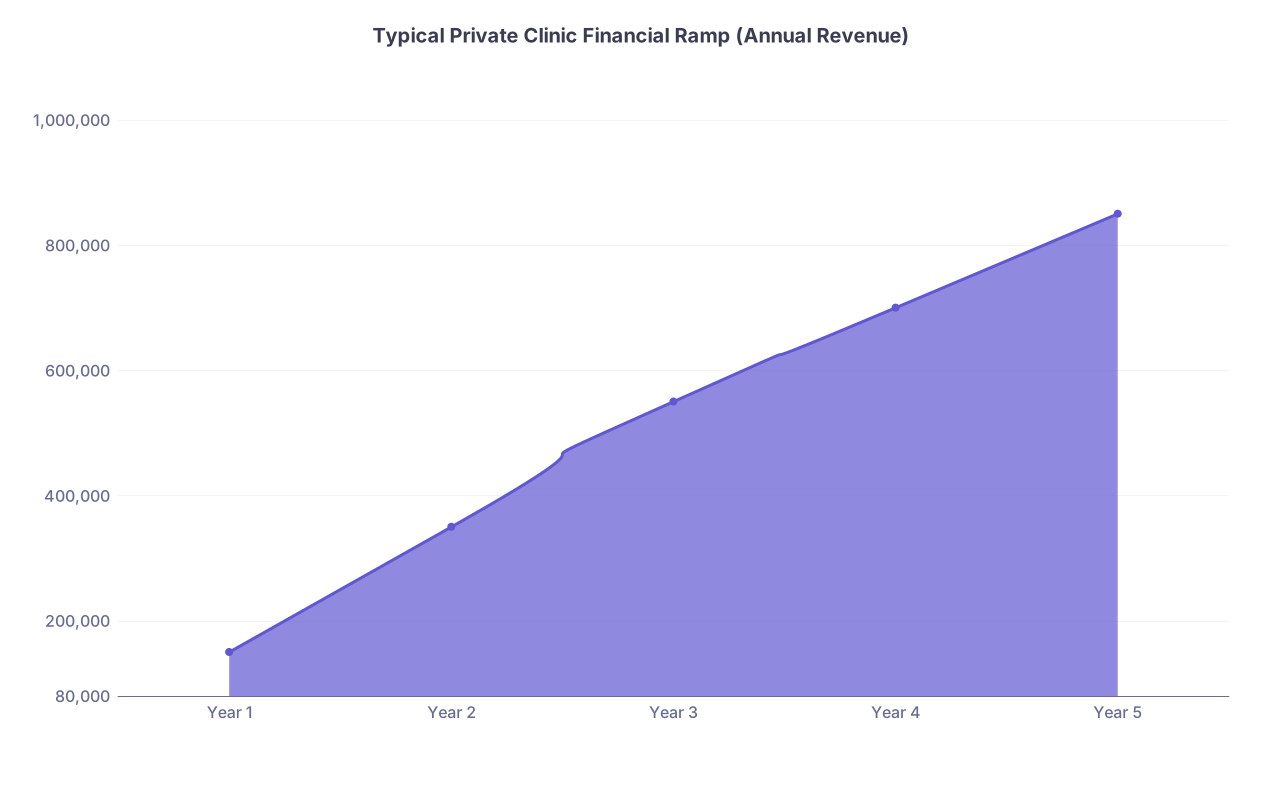
| Category | Value |
|---|---|
| Year 1 | 150000 |
| Year 2 | 350000 |
| Year 3 | 550000 |
| Year 4 | 700000 |
| Year 5 | 850000 |
Those are ballpark gross numbers for a small primary care or niche clinic that’s actually functioning and growing. Net to you after expenses? Often 30–50% of that, if run decently. And Year 1 is frequently worse than this chart.
Owning a clinic can absolutely beat a hospitalist W‑2 over 5–10 years. But not without risk, time, and pain upfront.
The Reality: What It Takes To Run Both Without Imploding
Let me stop swatting myths and talk about what does work.
1. You need a realistic workload strategy
Full-time 7-on/7-off + fully running a startup clinic = bad math. The numbers of hours do not add up.
Here are models I’ve seen actually work for hospitalists opening clinics:
| Model | Hospitalist FTE | Clinic Role | Timeline to Clinic Full-Time |
|---|---|---|---|
| Hybrid Builder | 0.6–0.7 | 2–3 clinic days/week | 2–4 years |
| Owner-Director | 0.8–1.0 | Oversight + 1 clinic day/week | Often stays hybrid long-term |
| Aggressive Builder | 0.5 | 3–4 clinic days/week | 1–3 years |
If you insist on:
- Full-time nights
- Full-time days in a busy hospitalist program
- And a brand-new clinic
You’re not “hustling.” You’re setting up a burnout speedrun.
The physicians who win this game:
- Intentionally cut their hospitalist shifts (and accept lower short-term income).
- See the clinic as a business build, not a moonlighting gig.
- Plan for 2–3 years of dual-role life, then choose.
2. You must decide: owner-operator vs owner-director
This is the fork in the road. Be honest with yourself.
Owner-operator
You are the main clinician or one of the main clinicians in the clinic.
Pros:
- Faster trust-building with patients
- Better clinical oversight
- Higher margins per visit
Cons:
- You really cannot stay 1.0 FTE as hospitalist long-term
- Your personal time is the limiting factor
Owner-director
You keep most of your clinical time as a hospitalist and hire clinicians (NP/PA/MD/DO) to staff the clinic. You function as:
- Medical director
- Quality and compliance supervisor
- Strategic and financial decision-maker
Pros:
- You keep hospitalist income stability
- Your clinic can grow without you seeing every patient
Cons:
- Heavier reliance on hiring and management skills
- High risk if your first hire is bad or turnover is high
- You still have legal exposure and overhead without direct control of every clinical decision
If you want to stay 1.0 FTE hospitalist and “have a clinic on the side,” owner-director is your only remotely sane option. But that means you’re basically starting a small multi-provider business, not just “a place I see my own patients once in a while.”
The Numbers: What You’re Actually Signing Up For
Let’s cut through vague “it’s expensive” talk and outline the main cost buckets and revenue realities.
Startup costs you cannot wish away
You can keep it lean, but you cannot make it free. For a modest outpatient clinic (think small primary care, concierge-lite, or niche service), ballpark in the U.S.:
- Build-out / leasehold improvements: $30k–$150k (depends heavily on market and shell condition)
- Furniture and equipment: $10k–$40k (exam tables, vitals, basic diagnostics)
- EHR and practice management system setup: $2k–$10k upfront or monthly
- Credentialing and contracting: usually a 6–9 month time cost, plus a few thousand in fees if using outside help
- Legal, entity setup, compliance consulting: $3k–$15k
- First 3–6 months of staff salaries (front desk, MA, maybe biller): easily $40k–$100k
Realistic total: $60k–$250k in startup and early runway, depending on how fancy you go and your local costs.
If you’re thinking, “I’ll just use a cheap shared space and no staff,” you’re not describing a clinic. You’re describing a side-gig consult room.
Revenue reality with a part-time owner
If you staff your clinic lightly while working as a hospitalist, here’s what early-month revenue often looks like for an insurance-based clinic (assuming gradual growth, not a bought panel):
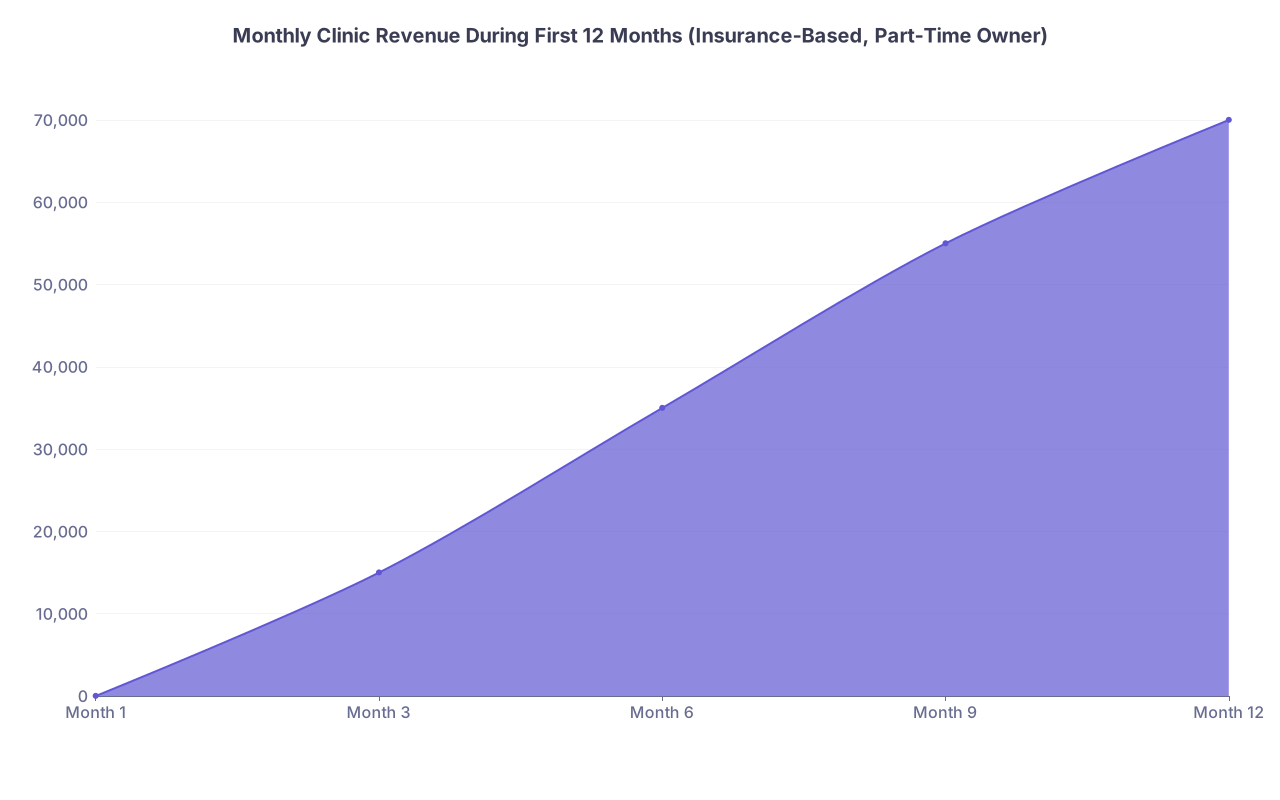
| Category | Value |
|---|---|
| Month 1 | 0 |
| Month 3 | 15000 |
| Month 6 | 35000 |
| Month 9 | 55000 |
| Month 12 | 70000 |
Net to you after:
- Rent
- Staff
- Malpractice
- Software
- Billing fees
- Supplies
That $70k/month gross by Month 12 becomes maybe $20k–$35k/month net (and that’s if things are going reasonably well). Which sounds great—until you realize it took a year of risk, attention, and double-work to get there.
Again: long-term, this can absolutely crush W‑2 hospitalist income. Short-term, it’s fragile and requires your active involvement.
The Time Trap: Oversight, Compliance, and Actual Supervision
Where most hospitalist-clinic owners get blindsided is not money. It’s time and regulatory friction.
APP supervision isn’t “sign once a month and forget it”
Depending on your state and payer rules, supervision might require:
- X% chart review (often 10–20%)
- Availability by phone during their clinic hours
- Co-signing certain visit types
- Documented collaborative meetings or protocols
When you’re:
- On night shifts
- Answering cross-cover pages
- Handling codes and admits
…you’re not exactly in a good place to:
- Take a call about a borderline chest pain workup from your NP
- Review and correct their billing codes before submission
- Handle a complaint about care quality
If your NP/PA is excellent and experienced, this can be manageable. If they’re green, you’ve effectively taken on a remote attending role plus practice owner.
Compliance and payers don’t care you’re “busy at the hospital”
If:
- Your coding patterns look suspicious
- Your documentation doesn’t match billed levels
- Your APP’s prescriptions raise red flags
- Your telemed documentation is weak
The payer or board will not say, “Ah, they’re a busy hospitalist, never mind.” They will ask for records. They will interrogate supervision. They will consider recoupments.
Running a clinic as a side business doesn’t exempt you from full-time regulatory treatment.
Ways to Make It Actually Work (Instead of Just Sound Good)
Now, let’s talk about how people successfully do this without burning out or ending up on Reddit as a cautionary tale.
Strategy 1: Start with a focused, high-yield niche
Trying to build a full-spectrum primary care clinic while full-time in the hospital is asking for chaos. A focused niche clinic is easier to systematize:
- Sleep clinic (with an NP seeing follow-ups, you interpreting studies)
- Weight management / metabolic clinic
- Cash-based preventive cardiometabolic clinic
- Limited-scope telemedicine focused on a specific condition
Smaller scope = fewer variables = easier oversight.
Strategy 2: Stay out of the billing weeds—professionally
In a dual-career setup, you cannot be your own biller and coder. That’s delusion.
You need:
- A solid billing company or in-house experienced biller
- Periodic external chart and coding audits
- Clear protocols for visit types and documentation
This is where people try to save a few hundred dollars a month and end up losing tens of thousands in lost revenue or payer clawbacks.
Strategy 3: Be deliberate with your hospitalist schedule
Do not just assume your current schedule is fixed.
I’ve seen workable patterns like:
- Hospitalist: 0.7 FTE days, no nights, predictable blocks
- Clinic: 2 full days/week in-person, 1 half-day telemed
- Remaining time: business operations, hiring, marketing
Or:
- Keep 7-on/7-off, but:
- During “off” week: 3 clinic days, 2 admin days, 2 actual rest days
- On “on” week: clinic closed or covered entirely by APP/locum, you handle only urgent oversight
If you’re using every “off” day for clinic work, you do not have an off week. You have two jobs and no recovery.
Strategy 4: Treat the clinic like a startup, not a hobby
That means:
- Weekly metrics review (new patients, total visits, AR, denials, no-show rate)
- Monthly P&L review
- Clear growth milestones: when to hire, when to add hours, when to stop the bleeding
Owning a clinic “on the side” while never looking at your numbers is how you wake up two years in and realize staff got raises but you didn’t.
Reality Check: When You Should Not Do This (Yet)
I’ll be blunt again. You probably should not open a clinic while working as a hospitalist if:
- You have no buffer (less than 6–12 months of personal + business expenses)
- You hate business, systems, and staff management
- You’re already on the edge of burnout
- You’re chasing this solely because you’re angry about “admin” and think ownership automatically fixes that
Owning a clinic swaps hospital admin for:
- Landlords
- Payers
- Staff
- Regulators
- Angry patients with Google reviews
If that sounds worse than your current life, you’re not crazy. For some people, it is.
The Bottom Line: Myth vs Reality
Let’s land this plane.
- Yes, you can open a clinic while working a hospitalist job. But not as an easy “passive” side hustle. It’s a second career that requires real time, money, and attention.
- The sustainable paths involve either cutting your hospitalist FTE or deliberately structuring your clinic as a niche, systematized business with strong delegation and oversight.
- Long-term upside is real: ownership can absolutely out-earn hospitalist W‑2 income and give you more control. Short-term, it will stress your schedule, your finances, and your tolerance for chaos. Plan for that, or don’t do it.
If you’re still interested after reading this, you’re probably the kind of person who might actually pull it off.