
The old rule of thumb that “a medical practice breaks even in 18–24 months” is statistically obsolete.
The data coming out of 2020–2024 financials shows a very different picture: for most new outpatient practices, you are looking at 30–48 months to true operating break‑even, and 60+ months to recover your start‑up capital if you count your own foregone salary.
Let’s walk through what the numbers actually say, not what senior partners told you in the hallway.
1. What “Break‑Even” Really Means Now
First problem: people use “break‑even” to mean at least three different things. The distinction matters because it changes the timeline by years.
There are three main break‑even definitions I see in real pro formas:
Cash‑flow break‑even:
Monthly cash collections ≥ monthly operating expenses (rent, staff, supplies, malpractice, EMR, etc.), excluding owner salary and loan principal.Owner‑income break‑even:
Practice profit (after expenses, including staff) = your target market salary (what you could earn employed in your specialty in that region).Total investment break‑even:
Cumulative net cash flow from the practice = start‑up investment + cumulative owner opportunity cost (the income you gave up by not taking/keeping an employed job).
Here is how those timelines shake out across specialties, based on ranges I see in current financial models, lender underwriting, and benchmarking data.
| Specialty Type | Cash-Flow Break-Even | Owner-Income Break-Even | Total Investment Break-Even |
|---|---|---|---|
| Primary care (FM/IM) outpatient | 18–30 months | 36–48 months | 72–96+ months |
| Outpatient psych | 6–18 months | 18–30 months | 48–72 months |
| Ortho / procedural surgical | 24–36 months | 48–60+ months | 90–120+ months |
| Outpatient OB/GYN | 24–36 months | 48–60 months | 84–108+ months |
| Dermatology | 18–30 months | 36–48 months | 72–96 months |
These are realistic timelines on 2024 cost and payer mix data, not sales pitches from EMR vendors.
In plain English:
- Hitting cash‑flow break‑even in under 12 months is now the outlier, not the norm, outside of low‑overhead cognitive specialties (psych, some telemedicine‑heavy models).
- For most hospital‑based specialties going outpatient, matching an employed salary via your own practice is a 3–5 year project.
- Payback of your start‑up capital plus lost salary is commonly a 7–10 year horizon.
If you are planning on “being fine” by the end of year 2, your own numbers had better explicitly support that. Most do not.
2. The New Cost Structure: Why Timelines Stretched
Break‑even is not magic. It is a function of 3 variables:
- Fixed monthly overhead
- Net revenue per visit (or per wRVU)
- Visit volume ramp
The reason modern practices take longer to break even is that all three have shifted in the wrong direction for owners:
- Overhead is up
- Net revenue per visit is flat to down after payer mix and denials
- Volume ramps are slower because of staffing shortages and credentialing delays
Let’s quantify this.
2.1 Overhead Inflation: The Silent Break‑Even Killer
Commercial leases, staff wages, and software subscriptions have outpaced reimbursement.
A typical single‑specialty outpatient start‑up (1 physician, 3–4 staff) now sees:
- Clinic rent: $4,000–$8,000 / month for 2,000–3,000 sq. ft. in many metro areas
- Staff (front desk, MA, biller or outsourced RCM): $15,000–$25,000 / month loaded (wages + benefits + payroll taxes)
- Malpractice: $1,500–$3,000 / month
- EMR + PM + clearinghouse + telehealth stack: $1,500–$3,000 / month
- Utilities, supplies, small equipment, insurance, misc: $3,000–$6,000 / month
You are realistically looking at $25,000–$40,000 / month in fixed overhead before paying yourself a cent.
Let’s visualize how overhead components add up.
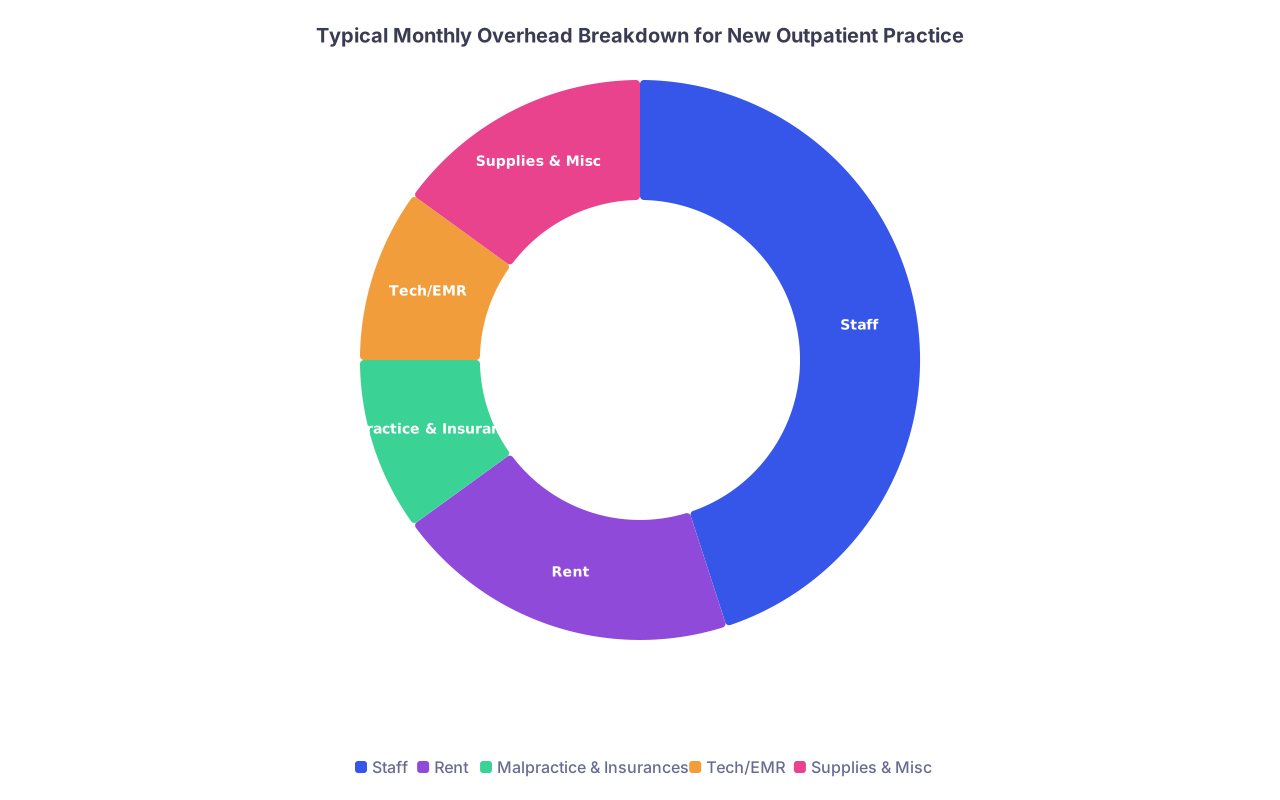
| Category | Value |
|---|---|
| Staff | 45 |
| Rent | 20 |
| Malpractice & Insurances | 10 |
| Tech/EMR | 10 |
| Supplies & Misc | 15 |
Staff is half the problem. And labor inflation is not reversing.
2.2 Net Revenue Per Visit Is Stagnant
Most young physicians optimistically plug in “$150 per visit” into a spreadsheet because the charge master says so.
That is not what you collect.
A more honest model for a mixed‑payer outpatient IM/FM practice:
- Average allowed: $115
- Collection rate (after denials, patient bad debt): 90%
- Net collected per visit: ≈ $104
If your overhead is $32,000 / month, your visit volume required to hit cash‑flow break‑even is:
Visits needed = 32,000 / 104 ≈ 308 visits per month
That is roughly:
- 77 visits per week
- 15–17 visits per day (assuming 4.5 clinic days)
Now put that in context: early months are nowhere close to 15–17 visits every day.
3. The Volume Ramp Reality: Why 12‑Month Break‑Even Is Rare
Almost every poorly‑built pro forma assumes an impossible volume ramp:
- Month 1: 10 patients/day
- Month 3: 15 patients/day
- Month 6: 20+ patients/day
That is fantasy for most new practices under current conditions.
Real data from 2022–2024 start‑ups (aggregated from lender underwriting and practice financial reviews) looks more like:
- Months 1–3: 4–8 patients/day equivalent
- Months 4–6: 6–12 patients/day
- Months 7–12: 10–14 patients/day
- Year 2: stabilize at 14–18 patients/day (or higher if access‑driven)
Let’s model a straightforward case.
3.1 Example: New Primary Care Practice
Assumptions:
Overhead: $30,000 / month (no owner salary)
Net revenue/visit: $105
Target daily volume ramp (4.5 clinic days/week):
- Months 1–3: 6 visits/day
- Months 4–6: 9 visits/day
- Months 7–12: 12 visits/day
- Year 2: 16 visits/day
- Year 3: 18 visits/day
We convert to monthly visits (using 4.33 weeks/month):
- Months 1–3: 6 × 4.5 × 4.33 ≈ 117 visits/month
- Months 4–6: 9 × 4.5 × 4.33 ≈ 175
- Months 7–12: 12 × 4.5 × 4.33 ≈ 234
- Year 2: 16 × 4.5 × 4.33 ≈ 312
- Year 3: 18 × 4.5 × 4.33 ≈ 351
Monthly revenue by phase:
- Months 1–3: 117 × 105 ≈ $12,285
- Months 4–6: 175 × 105 ≈ $18,375
- Months 7–12: 234 × 105 ≈ $24,570
- Year 2: 312 × 105 ≈ $32,760
- Year 3: 351 × 105 ≈ $36,855
Now compare revenue vs. $30,000 monthly overhead:
- Months 1–3: loss ≈ $17,715 / month
- Months 4–6: loss ≈ $11,625 / month
- Months 7–12: loss ≈ $5,430 / month
- Year 2: modest profit ≈ $2,760 / month
- Year 3: profit ≈ $6,855 / month
Cash‑flow break‑even (on a monthly basis) first appears in Year 2, assuming your assumptions hold.
That matches what I see: 18–30 months to consistent cash‑flow break‑even for primary care outpatient with traditional insurance.
Let’s chart how the monthly net margin evolves.
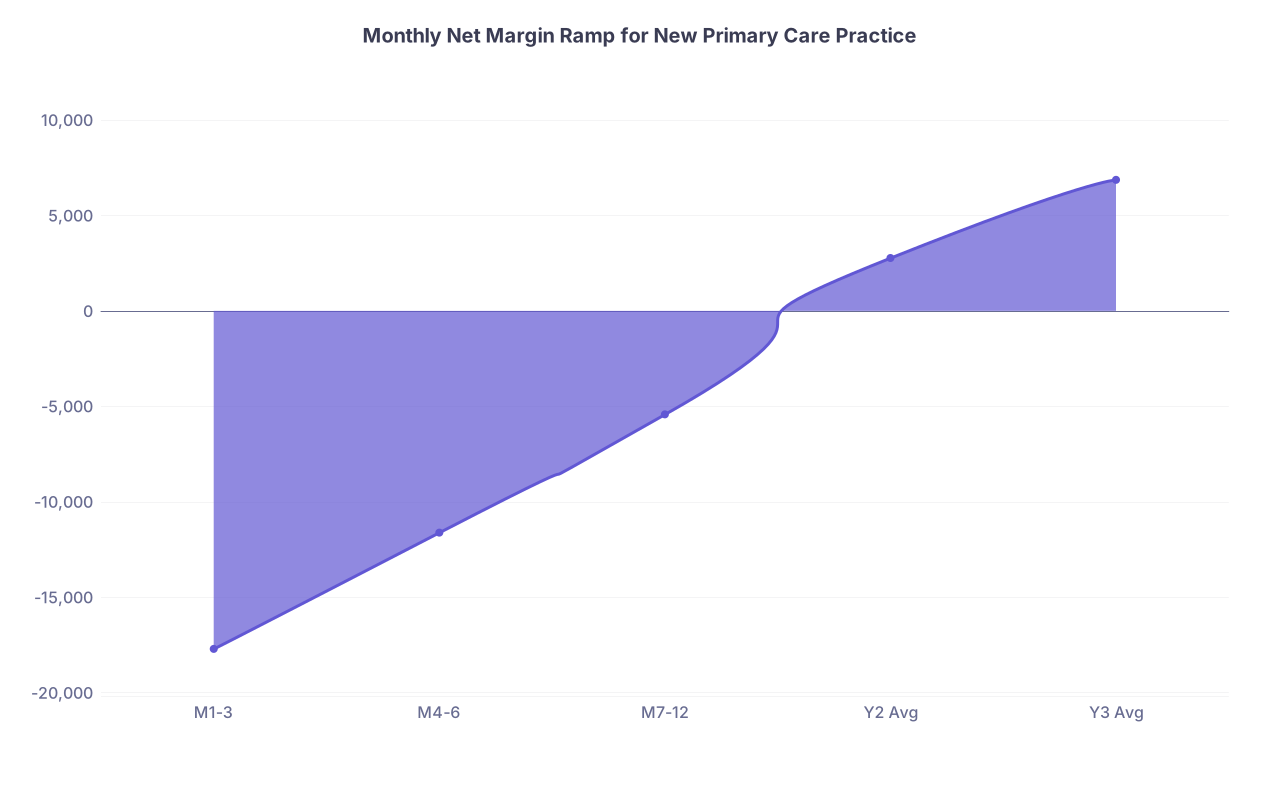
| Category | Value |
|---|---|
| M1-3 | -17715 |
| M4-6 | -11625 |
| M7-12 | -5430 |
| Y2 Avg | 2760 |
| Y3 Avg | 6855 |
Those first 18 months bleed cash. You need either external capital, spouse income, or a side gig to survive them.
4. Comparing Models: Traditional, Lean, and Concierge
The data is not uniformly grim. Some models realistically hit break‑even faster, but they trade something: access, payer mix, or scalability.
Here is a simplified comparison across three structures.
| Model | Overhead / Month | Net Revenue / Visit | Cash-Flow Break-Even Volume | Typical Break-Even Timeline |
|---|---|---|---|---|
| Traditional insurance | $30k | $100–110 | ~280–320 visits | 18–30 months |
| Lean micro-practice | $15k–$18k | $95–110 | ~150–190 visits | 9–18 months |
| Concierge/hybrid (small) | $18k–$25k | Effective $200–300 | 75–110 “equiv. visits” | 6–12 months |
4.1 Lean Micro‑Practice
Lean models compress timelines by attacking overhead:
- Smaller or shared space, sometimes subleased
- Fewer staff early (e.g., 1 MA + outsourced billing)
- Aggressive use of technology to avoid bloated front desk operations
Think overhead ≈ $16,000 / month instead of $30,000.
At $105 per visit, break‑even visits/month:
16,000 / 105 ≈ 152 visits/month
≈ 8 visits per day equivalent
That is attainable within the first 6–9 months for most markets if you are proactive about referral building and online presence. That is why you hear stories like “I was profitable in month 7.” The model, not the person, explains most of it.
4.2 Concierge / Membership Models
Well‑executed concierge or hybrid (membership plus insurance) models structurally front‑load the revenue via membership fees.
Simple construct:
- 300 members × $150 / month = $45,000 / month baseline
- Even if net overhead is $25,000–$30,000 / month, you start with margin before insurance visits.
But the time to acquire 300 members is not trivial. Many new concierge practices sit at:
- 80–150 members after 12 months
- 200–300 members by 24–36 months
So early “break‑even” for these practices often relies on the physician living on a low draw and banking on long‑term scaling. The optimism bias here is intense.
5. Specialty‑Specific Break‑Even Patterns
Specialty matters more than most residents realize. The revenue/overhead equation changes dramatically.
5.1 Psychiatry: The Outlier Favorable Case
Outpatient psychiatry is structurally friendlier:
- Higher net revenue/visit, especially with cash or out‑of‑network
- Fewer staff needed initially
- Ability to start tele‑only, drastically slashing space cost
Typical agile psych start‑up:
- Overhead: $10,000–$15,000 / month
- Net revenue/visit (mixed payer, moderate cash): $140–$200
Using $12,000 overhead and $160 net revenue:
12,000 / 160 = 75 visits / month
≈ 4 visits per day
Hitting that by month 3–6 is absolutely doable in most markets. Which is why psychiatry is full of credible “I was net positive in year 1” stories.
5.2 Procedural Surgical Specialties: Long, Capital‑Heavy Ramps
Conversely, orthopedic, ENT, and some OB/GYN models suffer from:
- High equipment leases
- Heavier staffing needs
- Complex payer behavior and prior auth drag
- Slower clinic build‑out and OR block alignment
An orthopedic practice may see:
- Overhead: $60,000+ / month from day 1 (staff, imaging, equipment, billing)
- Net revenue/visit is higher, but visit volume is highly constrained by OR schedules and referral networks.
I have seen realistic pro formas for ortho groups where:
- Cash‑flow break‑even: 24–36 months
- Owner‑income parity with hospital employment: 48–60 months
- Capital payback: 8–10+ years
If your co‑residents brag “our group was killing it by year 2,” ask to see the K‑1’s. The data usually says otherwise.
6. The Post‑2020 Headwinds: What Changed the Curves
None of this exists in a vacuum. The 2010–2019 “18–24 month break‑even” era was built on different conditions:
- Lower commercial rent
- Lower MA and RN wages
- Less staff turnover
- Shorter payer credentialing timelines
- Less administrative overhead from quality programs and prior auth
Post‑2020, three data trends stand out.
6.1 Labor Costs Up 20–35%
From aggregated MGMA + BLS data and payroll datasets:
- Medical assistant median hourly wages: up ≈ 20–30% since 2019 in many markets
- Front desk / patient service reps: very similar growth
- Billing staff: compounded by remote‑work competition from other industries
When staff cost is ~45–55% of your overhead, a 25% wage increase pushes total overhead up by roughly 10–15%. That alone shifts break‑even volume meaningfully.
6.2 Credentialing and Enrollment Delays
New practices now routinely report:
- 90–180 days to get in‑network with major commercial payers
- 60–120 days for Medicare/Medicaid enrollment finalization
- Several months of claims initially paid incorrectly while address/contract issues are resolved
Translation: early volume may be “busy” but not yet collectible at full contract rates. That flattens your first 6–9 months’ cash curve.
Let me map the practical cash curve you should assume.
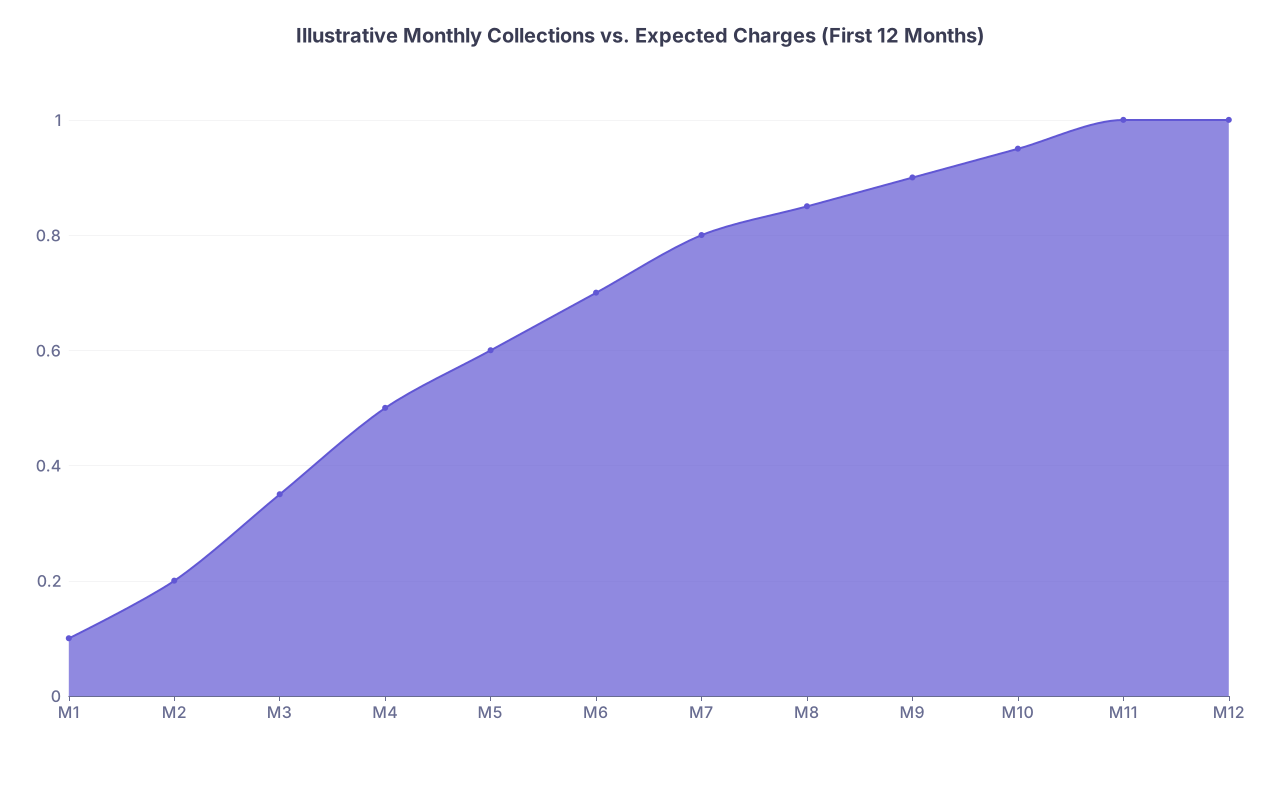
| Category | Value |
|---|---|
| M1 | 0.1 |
| M2 | 0.2 |
| M3 | 0.35 |
| M4 | 0.5 |
| M5 | 0.6 |
| M6 | 0.7 |
| M7 | 0.8 |
| M8 | 0.85 |
| M9 | 0.9 |
| M10 | 0.95 |
| M11 | 1 |
| M12 | 1 |
That pattern—collecting 10–35% of what you “should” in months 1–3—is why even healthy practices show worse year‑1 cash‑flow than their visit counts suggest.
6.3 Denials and Patient Responsibility
Two other structural changes:
- Higher patient deductibles => slower collections and higher bad debt
- Increased denial rates for documentation and auth issues => more rework
RCM data from mid‑size billing companies shows:
- Denial rates up 2–4 percentage points vs. 2015–2018
- Average days in A/R creeping from mid‑30s to mid‑40s or worse for many independents
Both push your effective net revenue per visit down a few dollars. Which lengthens break‑even.
7. Designing Your Own Break‑Even Model (Without Lying to Yourself)
You do not need a finance degree. You do need to stop using fantasy assumptions.
Here is the minimum viable model I make new owners run before signing a lease.
7.1 Build a 36‑Month Monthly Model, Not an Annual Summary
Annual “Year 1, Year 2, Year 3” summaries hide the pain. You want month‑by‑month columns for:
- Visits per month (by payer if possible)
- Net collected per visit (by payer if possible)
- Fixed overhead line items
- Variable overhead (supplies, etc., tied loosely to volume)
- Debt service (loan principal + interest)
Then derive monthly net income and cumulative cash position.
7.2 Use Conservative, Not Aspirational, Inputs
These inputs are a decent starting point for many outpatient, insurance‑based practices in 2024:
- Visit ramp: start at 4–6/day, reach 12–15/day by month 12
- Net revenue/visit: 10–20% lower than your contract schedule suggests, to account for denials and bad debt
- Overhead: 10–15% higher than your most optimistic landlord and recruiter quotes
- Collections lag: assume you collect only 50–60% of month‑1 charges by the end of month 2, and full normalization by month 6–9
Then answer two questions:
- When does monthly net income first go ≥ 0 and stay there?
- How negative does your cumulative cash position go before it starts recovering?
You want at least a 25–30% buffer above that maximum negative number in accessible capital (loan + cash reserves).
8. How Banks and Lenders Actually Underwrite Your Timeline
Banks, SBA lenders, and specialty finance firms are not guessing. They have thousands of practice start‑ups in their datasets.
What they generally assume now:
- 6–12 months of operating losses
- Cash‑flow break‑even usually not before month 12
- DSCR (debt service coverage ratio) targets being met only in years 2–3
If your projections show lush profits by month 6 and no negative cash months, seasoned lenders simply mentally discount your spreadsheet by 30–50% and size your credit line accordingly.
Here is how they often structure working capital relative to projected burn.
| Scenario | Projected Cumulative Loss | Working Capital Offered | Implied Buffer |
|---|---|---|---|
| Conservative PCP plan | $250k | $300k–$350k | 20–40% |
| Aggressive but plausible | $150k | $200k–$250k | 30–60% |
| Obviously over-optimistic model | $50k | Still $150k–$200k | 200%+ (they do not trust you) |
If your start‑up loan offer looks “too big,” it is usually because their data says your real losses will exceed your projections.
9. Strategic Implications for Post‑Residency Physicians
You are at the “post residency and job market” phase. You have choices. The break‑even timelines should drive strategy, not the other way around.
Here is the blunt version, based on the data:
- Starting cold from day 1 after residency with no external income is financially fragile unless you have substantial savings or spouse income. Expect 18–36 months before you can pay yourself anything approaching a market salary.
- A staged launch—employed part time while you ramp your practice 2–3 days a week—drastically reduces personal financial risk, even if it complicates your schedule.
- Choosing a lean practice model (smaller space, fewer staff, outsourced revenue cycle) can cut your break‑even time in half relative to a “I want the full suite and four exam rooms from day 1” mentality.
- Specialty and payer strategy matter more than people admit. A psychiatry or micro‑internal‑medicine practice with a hybrid membership model behaves very differently on the P&L than a traditional fee‑for‑service OB/GYN office.
Think like an investor evaluating a start‑up. Because you are one.

10. Summary: What the Financial Data Actually Suggests
If you strip out nostalgia and listen to the numbers, three conclusions stand out:
- The realistic cash‑flow break‑even for a new outpatient practice today is usually 18–36 months, not 12.
- Owner‑income parity with employed positions is a 3–5 year project for most insurance‑based models.
- Your only real levers are overhead discipline, payer/visit economics, and a sober volume ramp—everything else is noise.
Design your plan around those constraints, not around someone else’s war story from 2008.

FAQ (5 Questions)
1. Is it financially reckless to start a practice right after residency instead of working as an employed physician first?
Not necessarily, but the data says the risk is materially higher. If you go straight into ownership, assume 18–24 months with little to no personal income and substantial negative cash flow from the practice. Working 1–2 years as an employed physician first gives you capital, lender credibility, and often a built‑in referral network. In hard numbers, that can easily mean the difference between needing a $300,000 working capital line and getting by with $150,000 plus savings.
2. How much cash reserve should I have personally before opening a practice?
The more accurate question is: how long can you cover your personal burn rate with no income? If your personal expenses are $8,000 / month and your realistic timeline to draw even $5,000 / month from the practice is 18–24 months, then 12–18 months of personal expenses in liquid reserves (or guaranteed external support) is a rational target. Many new owners limp by with far less and simply cut lifestyle to the bone, but that decision is about tolerance for stress, not about the math.
3. Does buying into an existing practice shorten the break‑even timeline?
Usually yes, but not in the way people assume. Your cash‑flow break‑even as a new partner can be almost immediate, because the patient panel and operations already exist. However, the buy‑in itself is an investment that you need to recover. If you pay $300,000 for equity and earn $75,000 more each year than you would as an employee, your payback period is roughly four years. So you skip the initial losses but trade them for a multi‑year capital recovery timeline.
4. How much does joining value‑based or capitated contracts change break‑even?
If executed well, capitated or value‑based models can improve revenue per patient and smooth cash flow, which shortens break‑even timelines. But the variance is huge. A poorly negotiated capitated rate or quality metric structure can actually extend break‑even because you shoulder population risk without sufficient upside. Unless you can model panel size, per‑member per‑month payments, and realistic performance against metrics, you should not assume these contracts will save your P&L.
5. Which single metric should I watch monthly to know if I am on track for break‑even?
If I had to pick one, it would be net collections per physician FTE, per month, relative to fully loaded overhead per physician FTE. In practice, track: (a) total net collections, (b) total overhead (including your own salary if you want an honest view), and (c) visit volume. You want to see collections per visit stabilizing or increasing, overhead as a percent of collections trending down toward your target (often 50–60%), and the gap between collections and overhead shrinking steadily. If those three are moving in the right direction, your break‑even is a matter of when, not if.