
The fantasy that owning your own practice automatically fixes burnout is a lie.
You know it. I know it. You’ve probably heard some attending say, “Just grind it out now, then open a private practice and you’ll finally have control.” And part of you wants to believe it so badly. But the louder part of your brain is going:
“Wait… what if I just trade one type of burnout for something even worse?”
Same.
Let’s actually answer the question you’re too wired to sleep about:
Does private practice make burnout worse… or better?
The scary truth: private practice can absolutely make burnout worse
Let me rip the Band-Aid off first: yes, private practice can absolutely make burnout worse — especially in the first 1–3 years.
And honestly, most people who tell you otherwise either:
- Haven’t gone through the startup phase themselves, or
- Conveniently forget how miserable they were at the beginning
Here’s what spikes your burnout risk as an owner:
You don’t just have one job. You have five.
Clinician, HR, billing, marketing, IT, office manager. You go from “I see patients and chart” to “I see patients, chart, negotiate leases, hire staff, fight insurers, update the website, and fix the printer.”You’re financially exposed.
There’s a special kind of 3 a.m. panic that comes with a lease, payroll, malpractice premiums, and loans… all depending on you not getting sick, not burning out, not taking a real vacation.You lose the illusion of being ‘just a cog’.
When something isn’t working in a hospital job, you can tell yourself, “Administration is stupid, not my problem.” In your own practice? Every problem is your problem. No buffer. No villain to blame.You start out doing a lot of things badly.
Medicine trained you to be terrified of mistakes. Private practice requires you to make them. Often. On things no one taught you. That gap between “I should know” and “I actually don’t” can fry your nervous system.
So yeah. If you walk into private practice with no structure, no boundaries, and a heavy dose of people-pleasing? It can break you faster than an academic job with a malignant chair.
But that’s not the whole story.
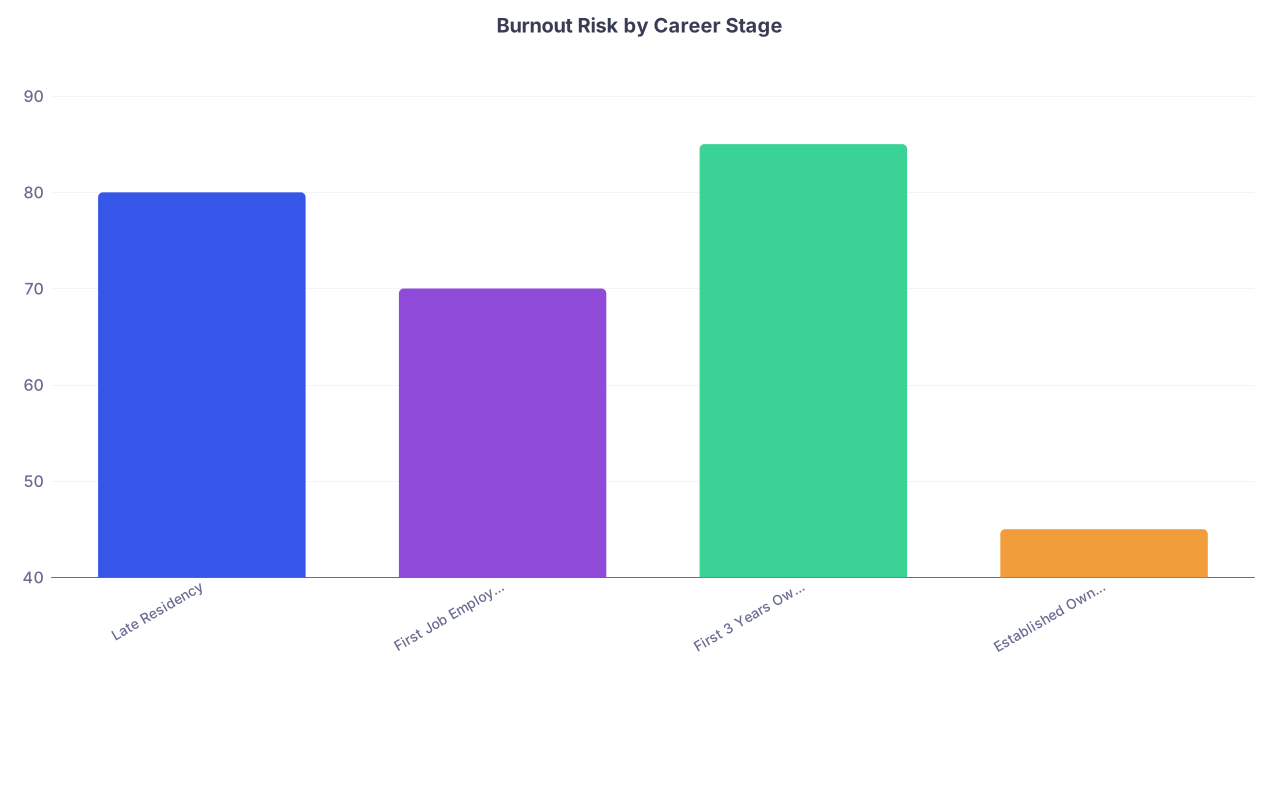
| Category | Value |
|---|---|
| Late Residency | 80 |
| First Job Employed | 70 |
| First 3 Years Owner | 85 |
| Established Owner 5+ yrs | 45 |
(Percentages are made up, but the shape is very real: burnout spikes when you’re new and overloaded.)
Where ownership actually can reduce burnout (once you survive the startup phase)
Here’s the part your brain doesn’t believe but needs to hear: long-term, the physicians I’ve seen who are least burned out are often:
- In small group or solo private practice
- Who made it past the chaos of the first 2–3 years
- And got really intentional about how they wanted to work and live
Owning your practice can lower burnout if you eventually use that control for:
Schedule sanity you actually enforce
Not the fantasy “four day workweek” you tell yourself in an employed job interview. Real constraints.
Things like:- Blocking off admin time daily that no one can book over
- Capping patient volume at what you can actually handle without crying in your car
- Designing longer visits if your specialty needs them (e.g., psych, rheum, complex IM)
Dropping the soul-sucking procedures or panels
You don’t have to:- Keep that toxic patient who verbally abuses your staff
- Take that insurer that pays trash rates and demands 47 prior auths a week
- Offer every single service just because it’s “standard” in your area
As an employee, saying “no” often isn’t an option. As an owner, it is.
Building a team culture that doesn’t feel like war
You can:- Hire kind, competent people and pay them decently
- Fire the person who’s making everyone's life hell
- Decide that “we don’t scream, we don’t shame, we don’t guilt” is actually the rule
Aligning work with who you actually are
You want to do 70% clinical, 30% teaching or admin?
You want to specialize within your specialty (e.g., adult ADHD, women’s cardiology, LGBT+ health)?
Private practice lets you tilt your work toward what doesn’t drain you.
So it’s not “private practice magically cures burnout.” It’s:
Private practice gives you power. And power either crushes you, or you learn to use it to protect your sanity.
The nightmare scenarios you’re imagining (and how real they are)
Let’s just say the quiet part out loud. The fears running on loop.

“What if I’m working more than ever and paying myself less than my employed friends?”
Very real possibility. Especially in the first 1–2 years.
You’ll probably:
- Earn less at first
- Work more hours than you want
- Spend a disgusting amount of time on non-clinical tasks that you’re bad at
But that’s startup life, not permanent life. The danger is thinking “This is just what being an owner is like” and never hiring, never delegating, never raising your rates or volume to sustainable levels.
If 3–4 years in you’re still:
- Paying yourself less than an employed doc in your area
- Working more hours than any human should
- Terrified to reduce clinic time because the numbers barely work
Then yeah — private practice may be causing burnout instead of curing it. That’s a signal, not a personal failure.
“What if a bad month financially sends me over the edge?”
The emotional volatility here is brutal.
Slow month? Two no-show-heavy weeks? Insurance delay on big claims?
You can get sent straight into “I’m a failure; I should have just taken that hospital job; what if I can’t make payroll?” spiral.
This is why owners who actually sleep at night usually have:
- A real cash reserve (3–6 months of expenses, not just “I hope it’s fine”)
- Conservative assumptions when expanding
- A line of credit for emergencies so that one bad month doesn’t equal “we die now”
That doesn’t remove anxiety. But it drops it from “catastrophic” to “loud but tolerable.”
“What if I get sick / pregnant / burned out and the whole thing collapses?”
This one hits hard because we’ve all seen a solo doc vanish from a practice and everything just… implodes.
Stuff that helps this fear not own you:
- Building toward group practice or at least having locum/moonlighter coverage options
- Disability insurance that doesn’t suck
- Processes and documentation so you’re not the only one who knows how anything works
Is there more risk than being one of 40 hospitalists on a schedule? Yes. Is it automatically irresponsible? No. It just means you can’t live in the “I’ll deal with that later” headspace forever.
“What if I discover I hate business and feel trapped?”
Honestly, this happens. Some people realize:
“I don’t want to manage staff.”
“I don’t want to negotiate with landlords or pay attention to metrics.”
“I just want to see patients and go home.”
That’s not weakness. That’s clarity.
You can:
- Sell your practice (even small practices have value if they’re not a total disaster)
- Merge into a group practice
- Hire an experienced practice manager and step back from the business side
You are not signing a blood contract to love entrepreneurship forever. You’re trying it.
Some specialties are more dangerous for burnout in private practice
Let me be blunt: it’s not the same for everyone.
| Specialty Type | Burnout Risk as Owner | Main Triggers |
|---|---|---|
| Outpatient Psychiatry | High | No-shows, emotional load, solo |
| Primary Care (IM/FM) | High | Volume pressure, admin burden |
| Surgical Subspecialty | Medium | OR access, call, staffing |
| Dermatology | Medium-Low | High demand, mix of cash pay |
| Anesthesia (groups) | Medium-Low | Group politics, contracts |
If your model depends on:
- High volume with low margins (primary care, some pediatrics)
- Challenging patient populations with low show rates (some psych, addiction, community clinics)
- High fixed costs (imaging, procedures, fancy equipment)
You have less margin for error. Translation: the practice has less room for you to protect your time unless you’re really intentional from day one.
You can still do it. But don’t pretend your risk is the same as a concierge internist seeing 6 patients a day at $2,500/year per patient.
What helps prevent burnout before you even open your doors
This is the part no one in training actually walks you through. You’re just supposed to “figure it out.”
So here’s a more honest playbook.

| Step | Description |
|---|---|
| Step 1 | Thinking about private practice |
| Step 2 | High burnout risk |
| Step 3 | Moderate risk |
| Step 4 | Clarify goals and deal breakers |
| Step 5 | Delay launch or lower risk model |
| Step 6 | Design schedule and boundaries |
| Step 7 | Hire help early |
| Step 8 | Monitor burnout signals |
| Step 9 | Why do you want it |
| Step 10 | Have financial cushion |
1. Get brutally honest about why you want a practice
If your true reasons are:
- “I just need to get away from my current job”
- “Everyone says this is the path to freedom”
- “I hate my boss”
That’s not enough. That’s running away, not choosing.
Better reasons that might actually sustain you:
- “I want to control how I see patients and how fast I move.”
- “I want to build a culture I can stand to be in for 10+ years.”
- “I want income upside and the ability to cut back later without asking permission.”
Write your reasons down. When things suck later (and they will), you’ll need to remind yourself what you were aiming for.
2. Design your non‑negotiables before you sign anything
Seriously, before lease, before loans, before website.
Examples:
- “I will not see more than X patients per day.”
- “I will have at least 1 half‑day per week blocked for admin.”
- “I will not take insurers that reimburse below $X per RVU.”
- “I will not answer patient messages after 6 p.m. on weekdays or on weekends, except for defined urgent paths.”
If you don’t pre‑decide these, the startup chaos will decide for you. And it will not be kind.
3. Build margin into your finances, even if it delays your dream
I know, I know. You’re tired of delaying your life.
But going into solo practice with:
- Massive debt
- No emergency fund
- No partner income or backup plan
…is like trying to do residency with no call room, no coffee, and no senior residents. Technically possible. Miserable in real life.
If you want to reduce burnout risk:
- Save at least a few months of personal expenses
- Don’t max out your startup budget “because the bank will lend it”
- Start lean — smaller space, fewer staff, fewer fancy toys — and add later
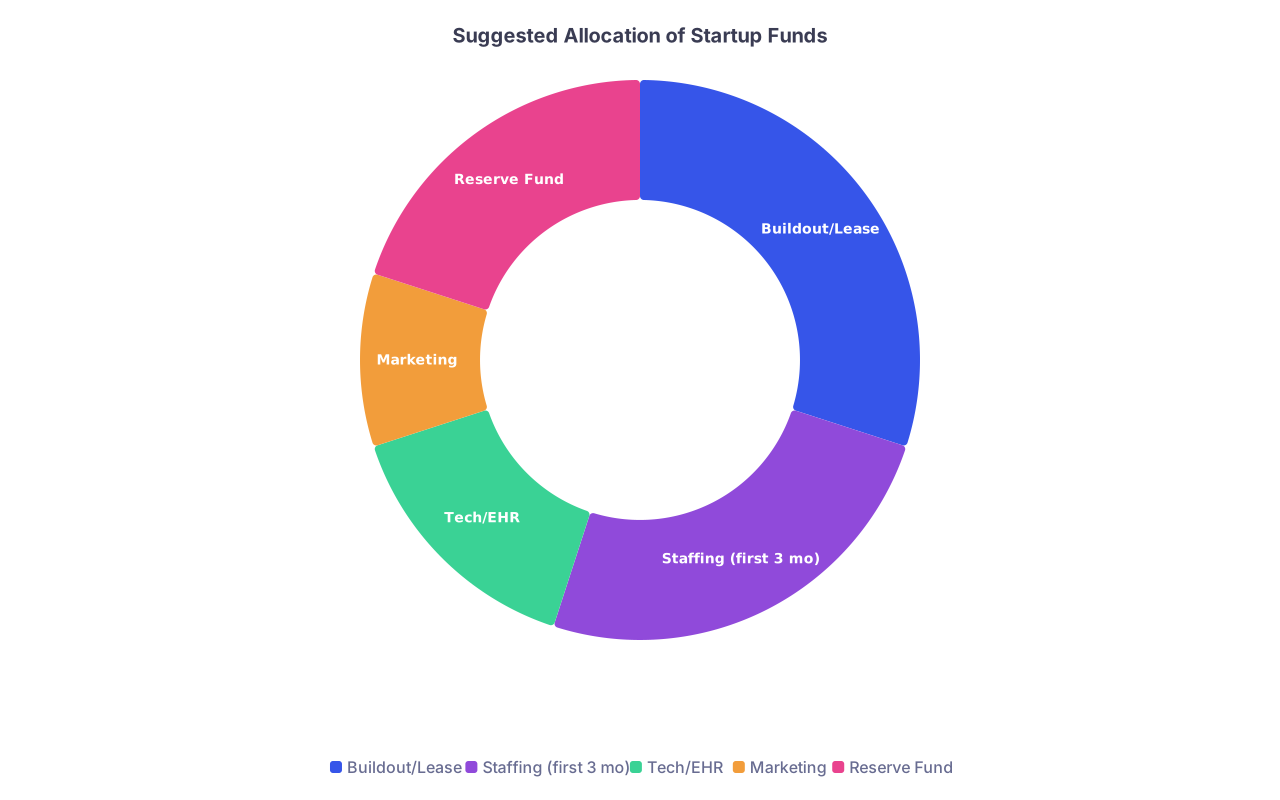
| Category | Value |
|---|---|
| Buildout/Lease | 30 |
| Staffing (first 3 mo) | 25 |
| Tech/EHR | 15 |
| Marketing | 10 |
| Reserve Fund | 20 |
The key part? That reserve fund. It’s not “nice to have.” It’s the thing between “stressful but okay” and “I’m Googling nonclinical jobs at 2 a.m.”
4. Decide what you’ll outsource early, even if it hurts
Common burnout trap: “I’ll do it myself until I’m busier.”
Translation: “I’ll wait until I’m already drowning, then I’ll look for a life jacket.”
Things that are usually worth getting help with earlier than your brain wants:
- Billing (coding, claims, chasing denials)
- Bookkeeping/accounting
- IT setup and support
- HR/payroll
You don’t have to hire full‑time staff for all of this. Plenty can be outsourced to services or part‑timers. But if you’re seeing patients and trying to personally manage every denial, every password reset, every QuickBooks entry… you’re going to snap.
5. Build a feedback system for your own burnout signs
Not some fluffy “self‑care checklist.”
I mean: decide in advance what metrics mean you’re sliding toward burnout, and what you’ll do when you hit them.
Examples:
- “If I’m consistently charting more than 1 hour at home 3 nights a week, I will reduce my daily patient cap by 2 slots for 3 months and reassess.”
- “If I start dreading clinic 3 days in a row, I will:
- review my schedule,
- identify who/what drains me most,
- change one thing within 2 weeks (boundary, policy, staffing, or payer).”
Is it perfect? No. But it keeps you from normalizing red flags.
The ugly comparison game: employed vs private practice burnout
You’re probably doing this mental math:
“Employed job: less stress, less money, more bureaucracy.
Private practice: more stress, more potential money, more control.
Which one fries my brain less?”
Let’s be clearer.
| Factor | Employed Physician | Private Practice Owner |
|---|---|---|
| Schedule control | Low–Medium | Medium–High (after startup) |
| Admin burden | Medium–High | High initially, then variable |
| Financial stress | Low–Medium | High early, then variable |
| Income upside | Low–Medium | Medium–High |
| Autonomy | Low–Medium | High |
Here’s the thing most people won’t say:
If you’re already on the edge of burnout, using private practice as your escape hatch can be very dangerous.
Why?
Because you’ll enter the hardest professional thing you’ve ever done while already depleted. It’s like starting fellowship straight from a 30‑hour shift you didn’t sleep on.
Sometimes the right order is:
- Stabilize first in a less‑toxic employed role
- Get therapy, rest, some financial cushion
- Then build your practice from a place of choice, not collapse
So… does private practice make burnout worse?
Here’s my honest answer:
- In the first 1–3 years: for most people, yes, it’s more intense, more anxiety‑provoking, and more burnout‑prone than an average employed job.
- Over 5–10 years: if you survive the early phase and actually use your autonomy well, private practice can absolutely lower burnout compared to being employed.
The real question isn’t “Is private practice good or bad?”
It’s:
Can you design your practice in a way that protects you from the version of burnout you’re most vulnerable to?
And are you willing to walk away or change course if the answer turns out to be “no”?
Your next step today:
Open a blank page and write two short lists:
- “Things my current job is doing that are burning me out”
- “Things my future practice must avoid or do differently so I don’t recreate the same hell”
If you can’t turn list #1 into concrete, testable rules for list #2, don’t sign a lease yet. You’re not escaping burnout—you’re just changing its costume.
FAQ (exactly 5 questions)
1. Should I work as an employed physician first before starting a private practice to lower burnout risk?
Honestly, yes, in most cases. One to three years as an employed doc can give you: a financial cushion, a clearer sense of what you hate (and want to avoid recreating), and some breathing room after residency/fellowship. Going straight from training burnout into owner‑burnout is possible, but it’s like doing back‑to‑back marathons on no training. If you’re already crispy, stabilize first, then build.
2. Is solo practice way more burnout‑prone than group private practice?
Usually, yes. In solo practice, every problem hits you first. No one to cover vacation, share call, or help with overhead. Group practice spreads risk, work, and emotional load. The tradeoff is less absolute control. If you’re terrified of burnout, strongly consider starting in (or growing into) a small group instead of staying truly solo forever.
3. Can I start part‑time private practice while keeping an employed job to reduce stress?
This is actually a smart transition for many people. Keep a part‑time employed role for stable income and benefits, and slowly build your practice 1–2 days a week. It’s more work in the short term, but less financial terror. Just be careful you don’t accidentally work 70‑hour weeks for two years “just until it’s established” and burn out anyway. Put a time limit and clear milestones on the dual‑job phase.
4. How do I know if I’m not cut out for ownership and should stay employed?
You don’t have to be “born an entrepreneur,” but some signs you might be happier employed: you hate managing people more than you hate lost autonomy; numbers and money talk stress you out so much you avoid them completely; and the idea of risk makes you physically ill, not just nervous. If your dream life looks like “seeing patients, good team, going home on time,” you might do better finding or negotiating a decent employed job rather than forcing yourself into ownership.
5. What’s one concrete burnout‑prevention move I can build into my practice from day one?
Block non‑clinical time on your schedule like it’s a VIP patient and refuse to compromise on it. At least 1–2 hours a day, or a half‑day a week, with zero patient slots. That’s where charting, calls, refills, and admin go. If you don’t do this, all that work bleeds into your nights and weekends, and burnout creeps in fast. This one boundary alone won’t save you, but without it, everything gets worse.